

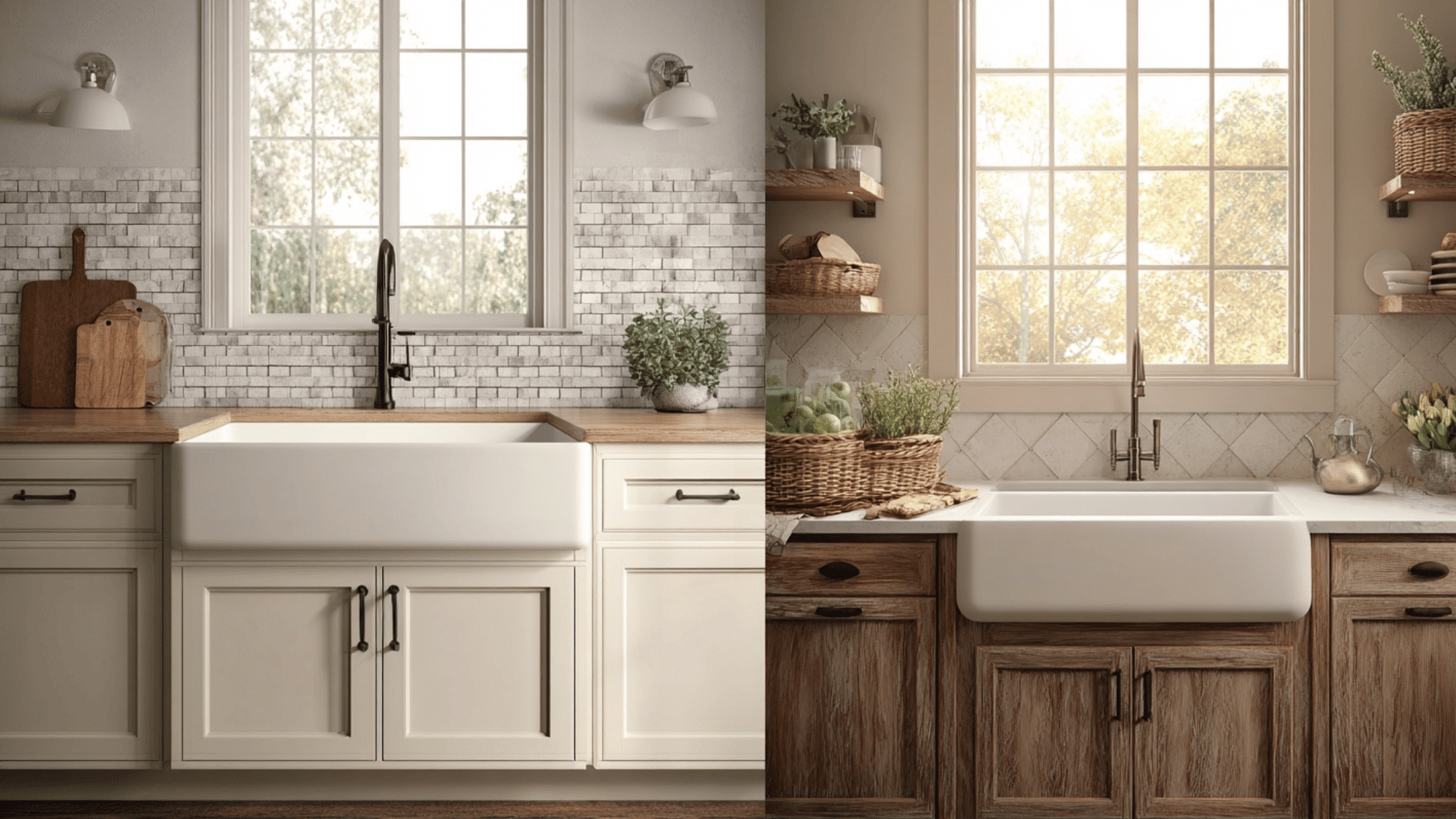
Looking at kitchen sinks can feel a bit overwhelming. There are so many styles to pick from. Two popular choices keep popping up: apron sinks and farmhouse sinks.
Some folks think they’re the same thing. But these sinks have unique features.
They look different, fit differently, and work differently in real kitchens. Picking the wrong one could mean dealing with daily frustration or spending more than needed.
This blog breaks down everything about apron sinks versus farmhouse sinks. It covers the style differences, installation requirements, and practical considerations. By the end, anyone can make the right choice for their space.
What is an Apron Sink?
An apron sink features a front panel that extends past the edge of the countertop. This exposed front becomes a visible design element in the kitchen.
The style gained popularity in traditional farmhouses but now appears in modern homes too.
These sinks come in several materials. Fireclay offers durability and a classic white finish. Stainless steel brings a contemporary feel. Cast iron provides weight and longevity with an enamel coating.
People love how the exposed front makes a statement. It adds character to the kitchen and eliminates the cabinet front, making cleanup easier.
What is a Farmhouse Sink?
Farmhouse sinks trace back to rural homes where large basins handled heavy-duty tasks. These sinks were built for washing large pots, produce, and even farm equipment.
The design reflected practical needs rather than decorative trends.
The extra-deep basin remains the standout feature. It accommodates oversized cookware and reduces splashing during use. The depth makes soaking and scrubbing much easier than standard sinks.
Today, farmhouse sinks fit perfectly in rustic kitchens with wood and stone accents.
They also complement modern farmhouse styles that blend clean lines with vintage charm. The look stays classic across different design approaches.
Apron Sink vs Farmhouse Sink: Side-by-Side Feature Comparison
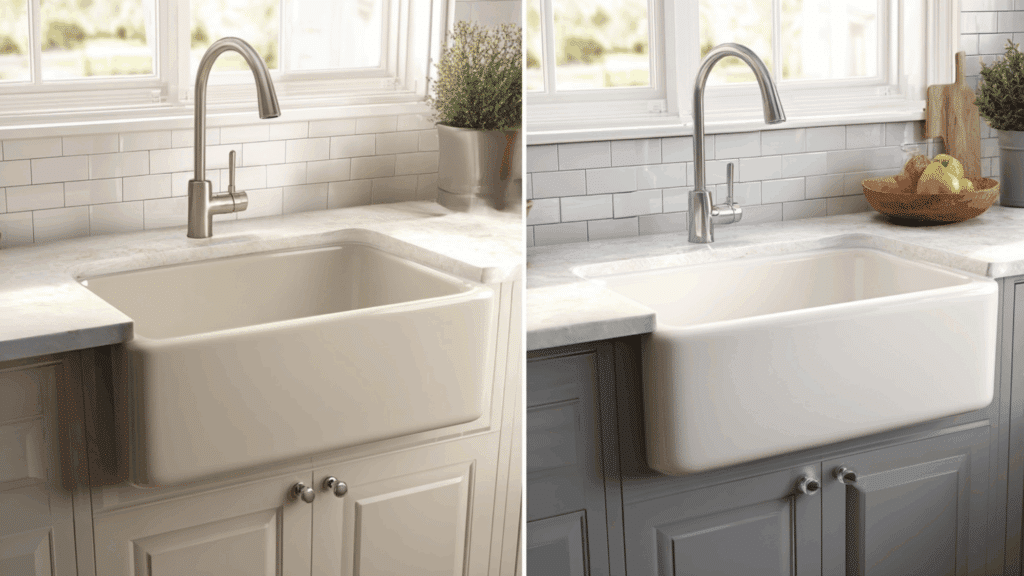
Choosing between these sinks means understanding how they differ in real kitchens. Here’s a detailed breakdown of what sets them apart.
1. Design & Appearance
Apron sinks lean toward sleek, modern aesthetics with clean lines and minimalist appeal. They work well in contemporary kitchens with flat-panel cabinets.
Farmhouse sinks embrace a more traditional vibe with visible texture and curves. They suit rustic spaces with shaker cabinets and natural wood finishes.
Both styles make the sink a focal point, but the overall feel differs significantly based on material choice and finish details.
2. Depth and Bowl Size
Farmhouse sinks typically offer deeper basins than standard apron sinks. The extra depth handles large stockpots, baking sheets, and roasting pans without trouble.
This makes them ideal for people who cook frequently or entertain often. Apron sinks can also be deep, but they vary more in size.
The deeper the basin, the better it prevents water from splashing onto countertops during heavy use and dishwashing.
3. Installation Differences
Both sink types require special cabinet modifications since the front extends past the counter edge.
Drop-in versions sit on top of the counter. Undermount styles attach from below for a cleaner look. Custom cabinetry often costs more because standard cabinets don’t accommodate the exposed front panel.
Professional installation is recommended to ensure proper support, especially with heavy materials like cast iron or thick fireclay that need reinforced framing underneath.
4. Comfort & Ergonomics
The apron-front design brings the sink closer to the user’s body. This reduces the need to lean forward while washing dishes or preparing food.
Less bending means less strain on the lower back during extended kitchen tasks. People with back problems or mobility issues find this design more comfortable.
Standard sinks sit farther back, requiring more reaching and awkward postures that cause fatigue over time during daily use.
5. Durability and Material Options
Fireclay sinks resist heat, scratches, and stains better than most materials. They maintain their finish for decades with proper care.
Stainless steel offers a lighter, more affordable option that handles dents better but shows scratches more easily. Cast iron with enamel coating combines durability with classic looks, but chips if heavy items drop into it.
Material choice affects both longevity and maintenance requirements, so it’s worth considering cooking habits and household activity levels.
6. Cleaning & Maintenance
The exposed apron front wipes clean quickly since there’s no cabinet edge trapping crumbs or moisture. This design prevents mold buildup in hard-to-reach crevices.
Fireclay farmhouse sinks need proper sealing to prevent staining from acidic foods or hard water.
Stainless steel shows water spots, but cleans up fast with a microfiber cloth. Regular maintenance keeps any sink looking good, but apron designs generally require less effort to keep spotless around the edges.
Pros, Cons & Buyer Considerations
Understanding the strengths and weaknesses of each sink type helps narrow down the best choice for specific kitchen needs.
Pros and Cons of Apron Sinks
Apron sinks offer modern appeal and ergonomic benefits, but they come with higher costs and installation challenges that require careful planning.
Pros:
- Stylish focal point: Creates visual interest and becomes the centerpiece of kitchen design.
- Comfortable workflow: Reduces bending and leaning, making kitchen tasks easier on the back.
- Works in modern kitchens: Fits seamlessly with contemporary design schemes and clean aesthetics.
Cons:
- Higher cost: Premium pricing compared to standard sinks due to specialized design and installation needs.
- Needs a custom cabinet fit: Requires modified or custom cabinetry, adding to overall renovation expenses.
Pros and Cons of Farmhouse Sinks
Farmhouse sinks provide exceptional depth and timeless style, though their heavy weight and fragile surfaces demand extra care during use and installation.
Pros:
- Deep and functional: Extra basin depth handles large cookware and messy tasks with ease.
- Refined farmhouse charm: Brings warmth and character that never goes out of style.
- Great for busy kitchens: Accommodates high-volume cooking and cleanup without constant splashing.
Cons:
- Heavy materials like fireclay: Weight requires reinforced cabinets and professional installation support.
- Can chip or crack if mishandled: Fireclay and cast iron may be damaged if heavy pots drop into the basin.
Which Sink is Better for Your Kitchen?
The right sink depends on how the kitchen gets used every day.
Someone who cooks large meals regularly needs different features than someone who prefers quick, simple dishes. Design preferences matter too, since the sink stays visible for years.
Budget plays a major role in the decision. Custom installation costs add up quickly, especially with heavier materials. Space limitations might rule out certain styles altogether.
Lifestyle factors make a difference as well. Families with kids need durability and easy cleaning. Home cooks want depth for oversized pots. Design enthusiasts prioritize aesthetics that match their vision.
Thinking through these practical considerations leads to a choice that works long-term instead of causing regret later.
To Conclude
Both apron sinks and farmhouse sinks bring style and function to any kitchen. The choice comes down to personal priorities.
Deep basins suit heavy cooking, while ergonomic designs reduce daily strain. Material selection affects maintenance and longevity.
Installing either style requires cabinet modifications and professional help. The upfront investment pays off with years of reliable use and visual appeal.
The perfect sink matches cooking habits and complements existing decor. Take time to measure the space and compare material options carefully for lasting satisfaction.