

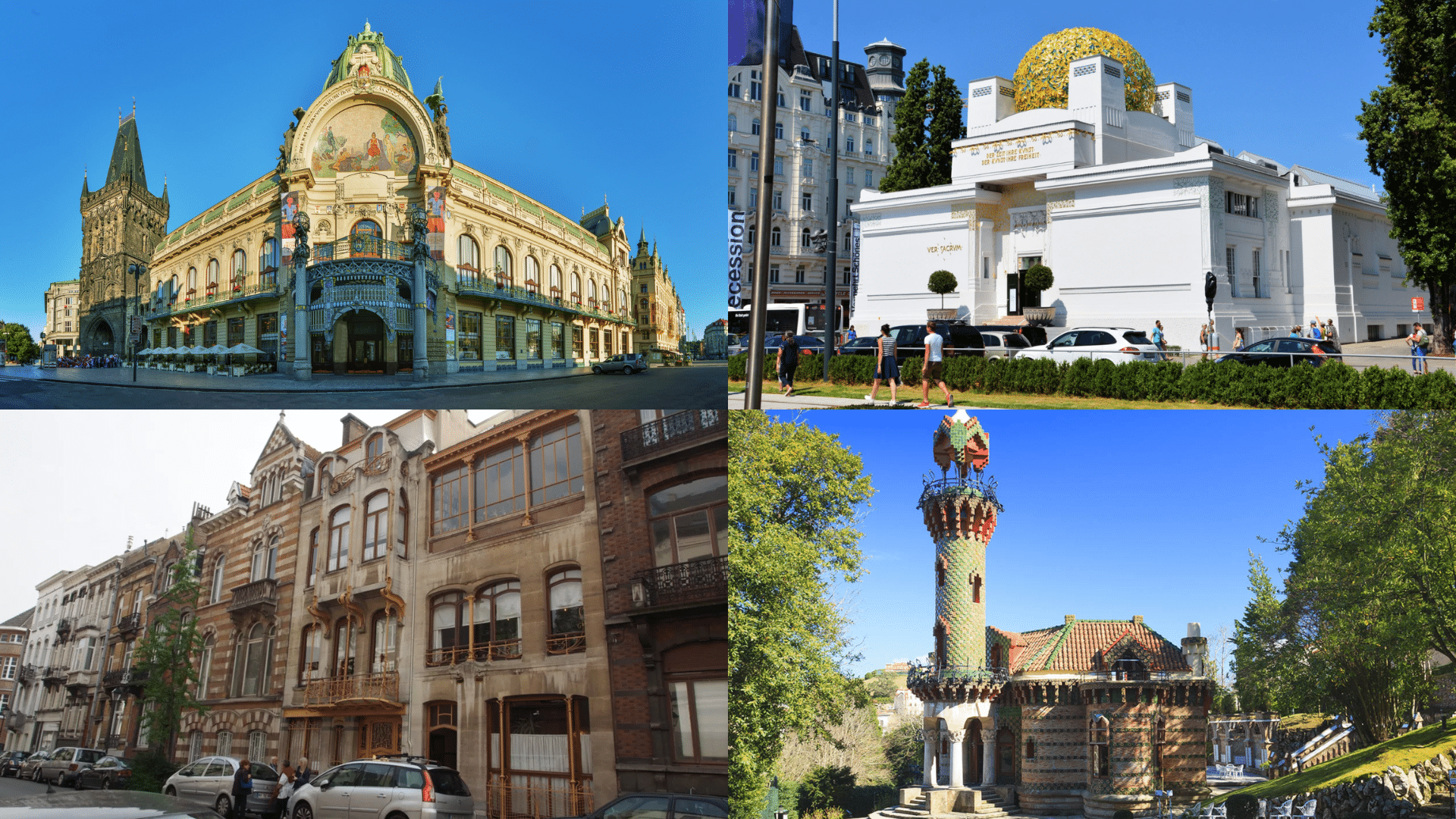
Some buildings make you stop and look twice. Flowing lines, plant-like details, and hand-crafted touches give them a softer feel than most modern structures.
That is the lasting appeal of Art Nouveau architecture, a style that mixes art and design in a very human way.
These buildings still catch attention today because they feel personal and thoughtful.
You see care in the shapes, the materials, and even the smallest details. Many cities around the world still protect these places because they tell a story about creativity and change.
In this post, I break down what defines the style, how it spread across different countries, and why it became popular beyond its place of origin.
You will also see standout examples worldwide, with simple notes on what makes each one special.
What Defines Art Nouveau Architecture Worldwide?
Art Nouveau architecture is easy to spot once you know what to look for. The style focuses on flowing lines instead of sharp edges, with designs inspired by plants, flowers, and natural shapes.
Buildings often feature curved windows, decorative ironwork, and detailed stone or wood carvings.
Another key feature is handcrafted detail, where even doors, railings, and tiles feel carefully designed.
Many examples use materials like glass, iron, ceramic, and wood in creative ways. Across different countries, the look stays consistent, even though local culture influences colors and patterns.
Architects wanted buildings to feel artistic, not factory-made. You often see nature-based patterns woven into walls, ceilings, and facades.
This focus on art, nature, and skilled work is what connects Art Nouveau buildings worldwide and makes them stand out, even today, in busy modern cities filled with plain designs.
Why Art Nouveau Architecture Became a Global Style?
Cities were growing fast, and people wanted designs that felt modern, artistic, and personal, reflecting new values, daily routines, and a break from strict historical building styles.
- Social Shifts Toward Modern Life: Cities were growing fast, and people wanted designs that felt new and different from old traditions. Art Nouveau architecture offered a fresh look that matched changing lifestyles.
- Industrial Growth and Mass Production: New machines made iron, glass, and steel easier to use. These materials allowed builders to create curved forms and detailed designs at a larger scale.
- New Building Techniques: Advances in construction made flexible layouts possible. Architects could experiment with shapes that were not practical before.
- Local Cultural Influence: Designers adapted patterns, colors, and symbols to reflect local history and taste. This helped the style feel familiar in each region.
- International Exhibitions and Travel: World fairs and increased travel spread ideas quickly. Architects shared designs across borders, helping the style grow worldwide.
Well-Known Art Nouveau Architecture Worldwide
These landmarks highlight how the style took shape across different regions, combining shared design ideas with local culture, materials, and city needs in unique and lasting ways.
1. Hotel Tassel in Belgium
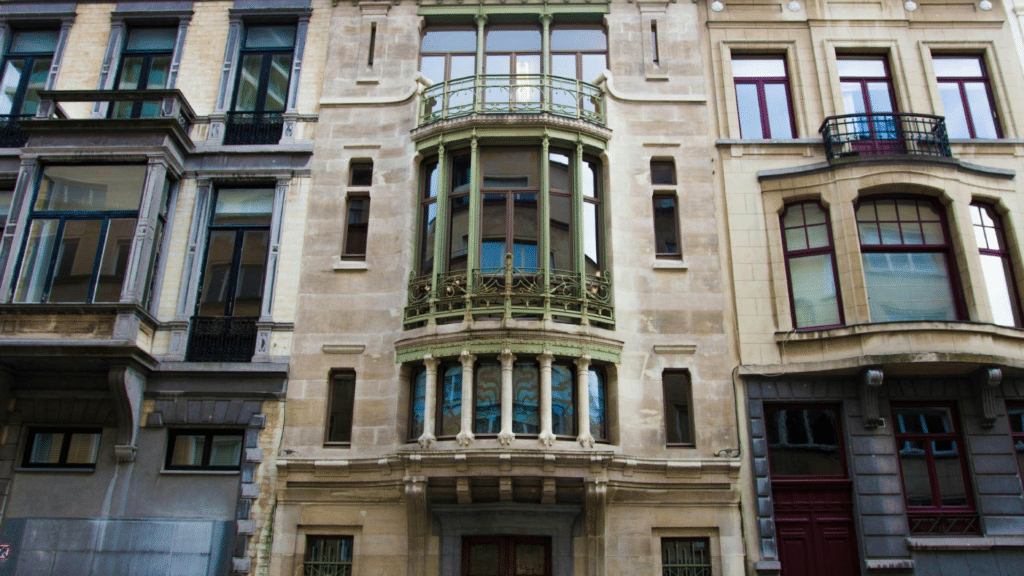
Hôtel Tassel is often seen as one of the first true examples of Art Nouveau architecture. Designed by Victor Horta in the late 1800s, the building features curved ironwork, open interiors, and flowing staircases.
Natural light plays a big role in the design, thanks to glass panels and smart layouts.
Every detail, from railings to wall patterns, follows the same design language.
The building shows how art, structure, and function can work together. It also set a strong foundation for future Art Nouveau buildings across Europe.
2. Casa Batlló in Spain
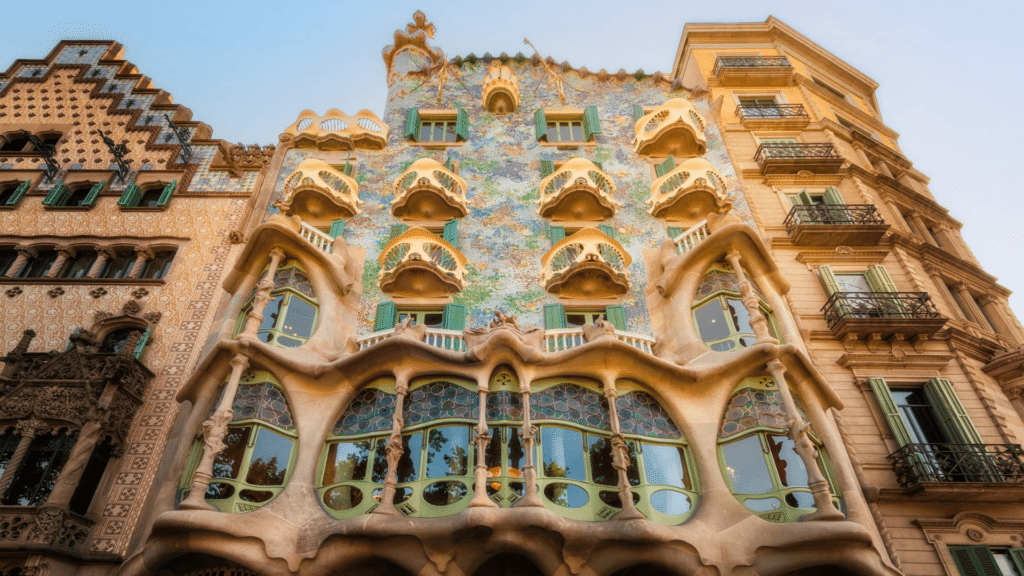
Casa Batlló stands out for its playful shapes and nature-inspired design. Antoni Gaudí reshaped the building with curved walls, bone-like columns, and colorful mosaic surfaces.
The facade looks almost alive, with flowing lines and organic forms that break away from straight edges.
Inside, light wells and open spaces help air and sunlight move freely.
Every detail feels planned, from the windows to the stair rails. This building shows how Art Nouveau ideas blended with local style, creating a bold and lasting landmark in Barcelona.
3. Casa Mila (La Pedrera) in Spain
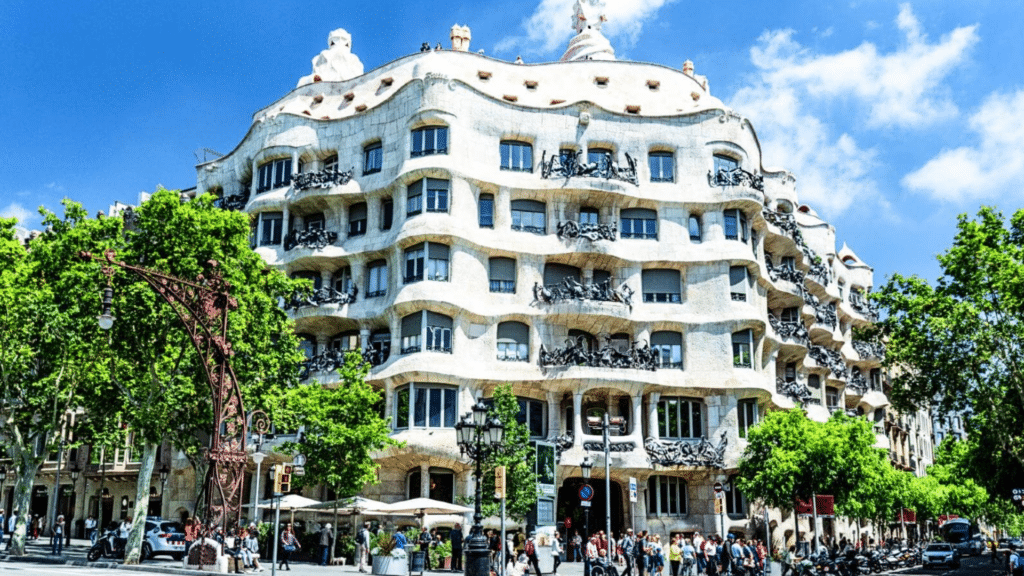
Casa Milà is known for its wavy stone exterior and sculpted balconies. Designed by Antoni Gaudí, the building avoids straight lines almost completely.
The rooftop features chimney structures that look more like artwork than utilities.
Inside, open floor plans allow flexibility and natural light. Iron railings and carved stone details follow organic patterns throughout.
Casa Milà reflects how Art Nouveau architecture can be both practical and artistic, proving that bold design choices can still support everyday living in a busy city.
4. Palau de la Música Catalana in Spain
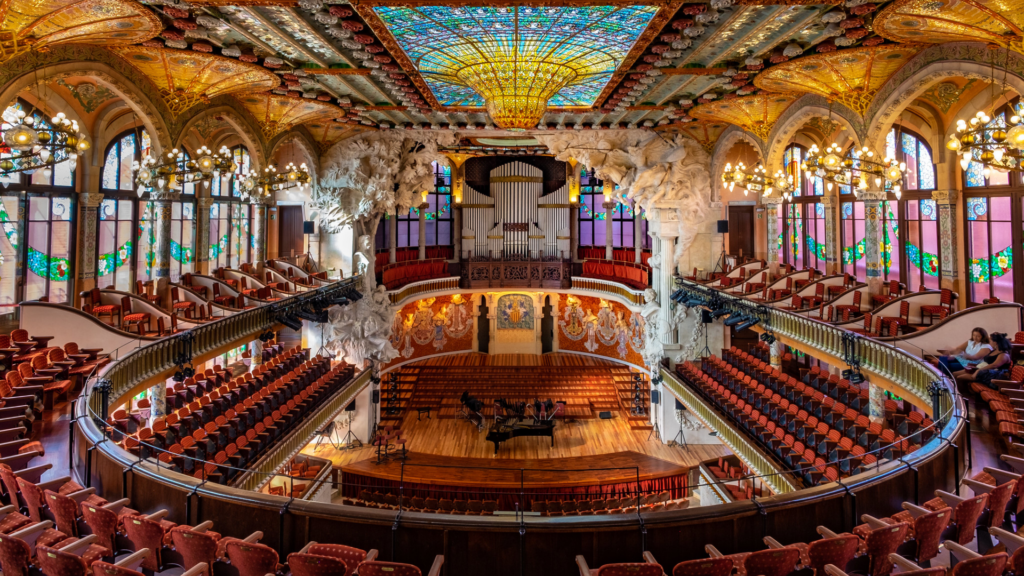
Palau de la Música Catalana is a striking example of how art and structure work together. Designed by Lluís Domènech i Montaner, the building uses colorful tiles, stained glass, and curved iron details.
Natural light fills the concert hall through a large glass skylight, making the space feel open and warm.
Floral patterns and sculpted figures appear across the walls and ceilings. This building shows how Art Nouveau architecture can create beauty while serving a clear public purpose.
5. Paris Métro Entrances in France
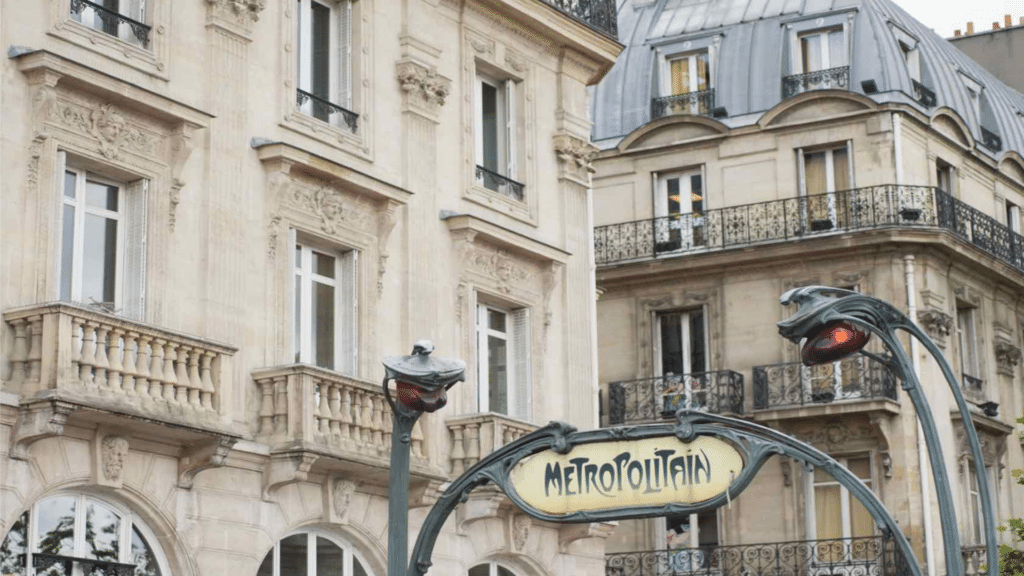
The Paris Métro entrances brought Art Nouveau architecture into everyday city life. Designed by Hector Guimard, these entrances feature curved iron frames and plant-like shapes.
The lettering, railings, and lamps all follow the same flowing style. Instead of hiding the function, the design celebrates it.
These entrances made public transport feel artistic and welcoming.
Their simple materials and repeated forms helped spread the style across the city, proving that Art Nouveau could work on a large, practical scale.
6. Secession Building in Austria
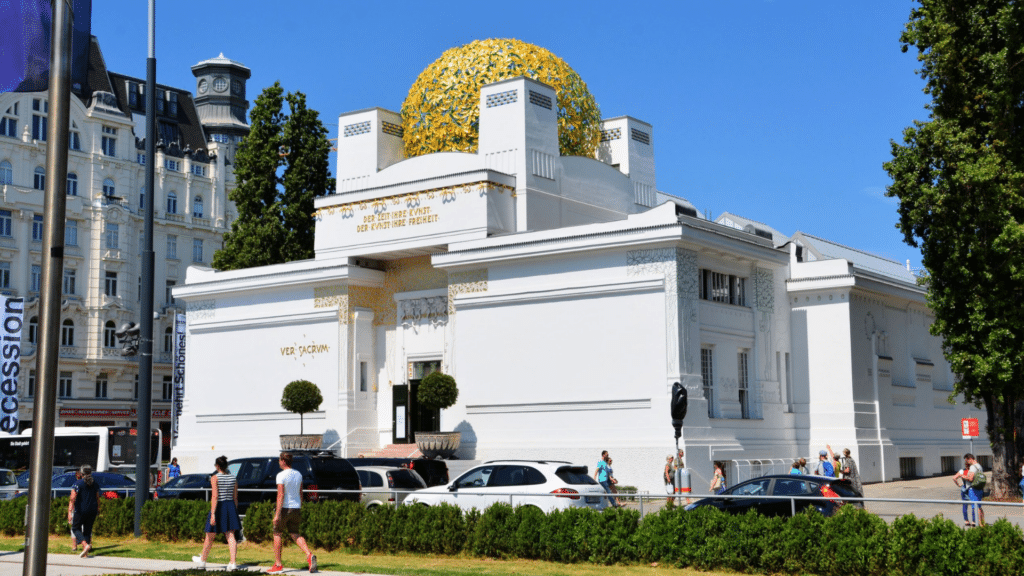
The Secession Building represents a more structured take on Art Nouveau architecture.
Designed by Joseph Maria Olbrich, it features clean walls paired with decorative details. The gold dome made of laurel leaves is the most recognizable element.
Inside, artwork and design blend into the architecture itself.
The building reflects a shift toward modern ideas while still valuing artistic expression. It shows how Art Nouveau could adapt to new thinking without losing its creative identity.
7. Museum of Applied Arts in Hungary
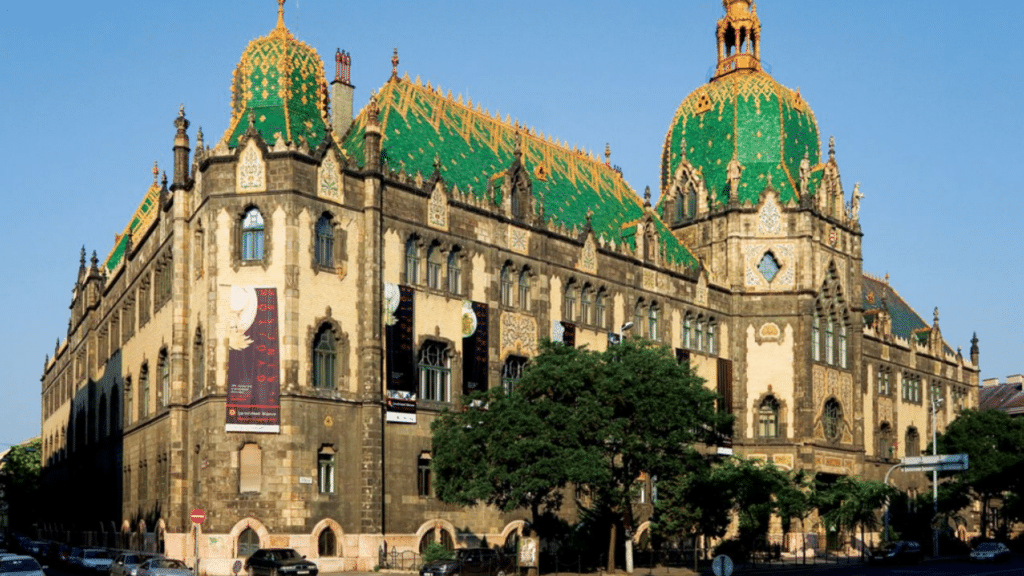
The Museum of Applied Arts is known for its bold use of color and pattern. Designed by Ödön Lechner, the building combines Art Nouveau architecture with local Hungarian influences.
Ceramic tiles, curved lines, and floral motifs cover the exterior and interior.
The roof design stands out with its bright colors and layered shapes.
This building shows how the style could reflect national identity while still following shared design principles seen across Europe.
8. El Capricho in Spain
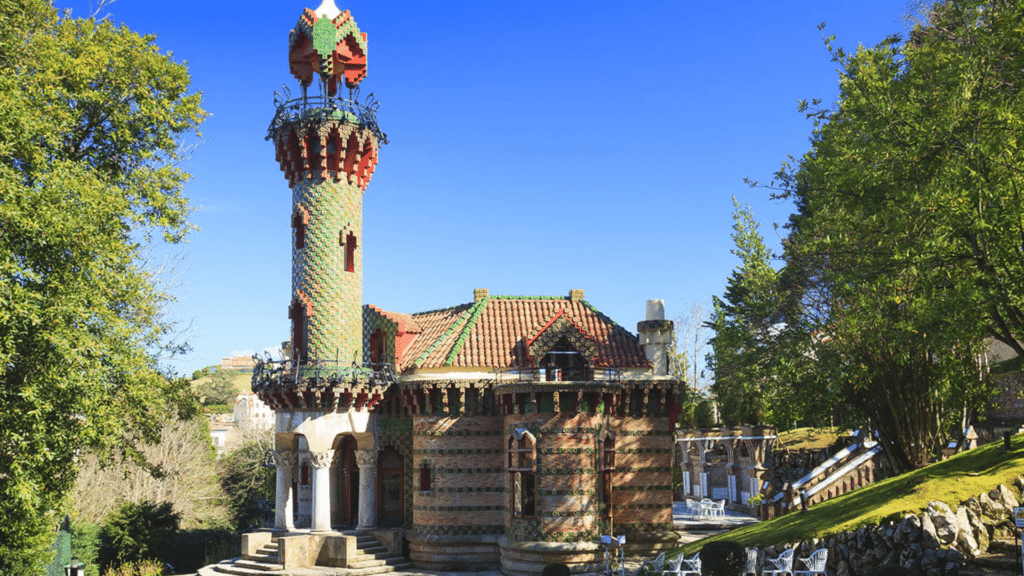
El Capricho is a playful and colorful example of Art Nouveau architecture. Designed by Antoni Gaudí, the building features curved forms, ceramic tiles, and nature-inspired details.
Sunflower patterns appear across the exterior, reflecting a strong connection to natural themes.
The layout follows light and seasonal movement, making the space feel thoughtful and lived-in.
This building shows how Art Nouveau ideas could feel personal and expressive while still respecting structure and function.
9. Riga Art Nouveau District in Latvia
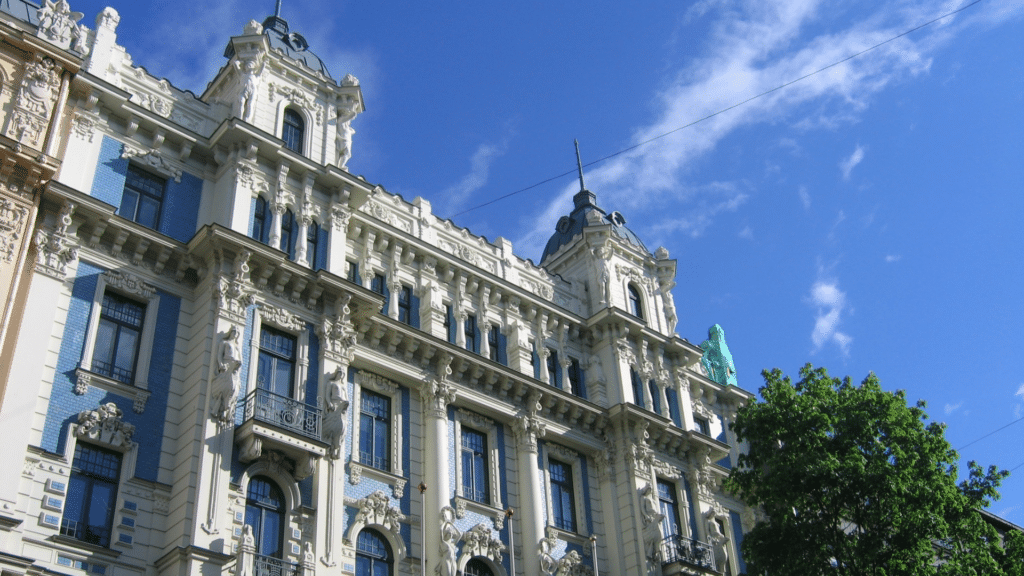
Riga is home to one of the largest collections of Art Nouveau architecture in the world. Many buildings feature detailed facades with sculpted faces, floral patterns, and curved lines.
The style appears across residential and public buildings, creating a strong visual identity.
Designers combined international trends with local culture, making the area unique. Walking through Riga shows how the style shaped entire neighborhoods, not just single landmarks.
10. Victor Horta House and Studio in Belgium
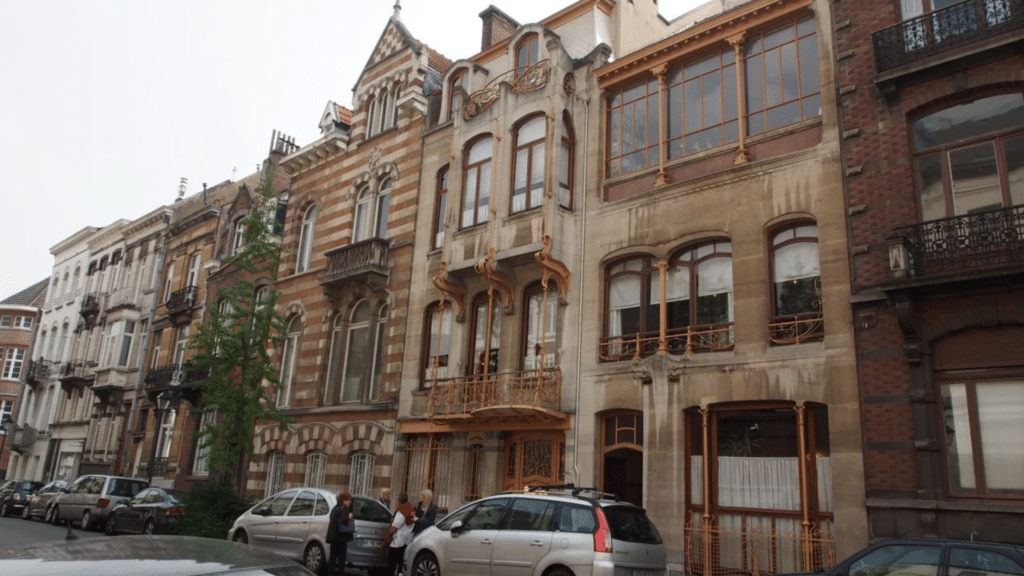
The Victor Horta House and Studio reflects the personal vision of one of the style’s leading figures.
The building uses open spaces, iron staircases, and natural light to connect rooms smoothly. Decorative details appear in railings, floors, and walls.
Every part feels intentional and connected.
This space shows how Art Nouveau architecture worked not only for public buildings but also for daily living and creative work.
11. Majolikahaus in Austria
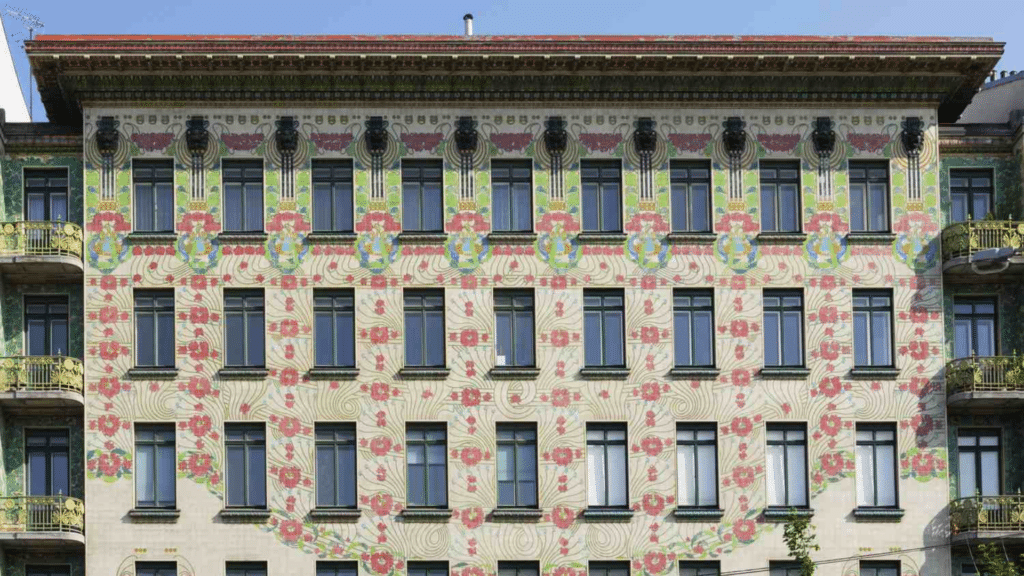
Majolikahaus is a well-known example of Art Nouveau architecture in Vienna. Designed by Otto Wagner, the building stands out for its colorful ceramic tile facade.
Floral patterns cover the exterior, giving it a bright and clean look that has lasted over time.
The tiles were chosen not only for style but also for easy maintenance. This building shows how decorative design and practical thinking worked together.
It reflects how Art Nouveau adapted to city living while still keeping a strong artistic identity.
12. Hôtel Solvay in Belgium
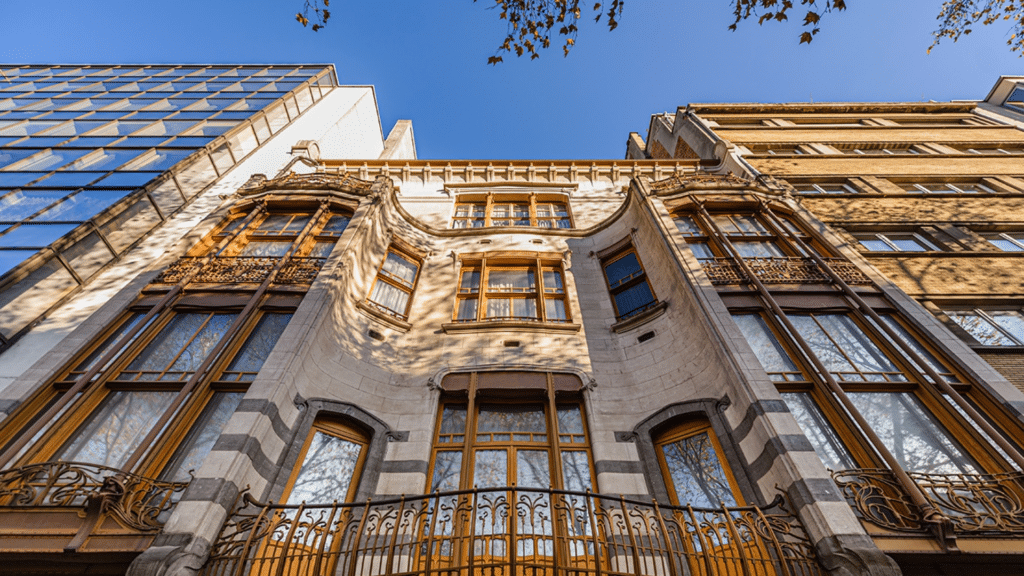
Hôtel Solvay is one of Victor Horta’s most detailed residential designs.
The building features curved iron railings, marble interiors, and large glass surfaces that bring in natural light.
Every space feels connected through flowing lines and repeated patterns. Materials were carefully selected to match the overall design.
This home shows how Art Nouveau architecture focused on unity, where furniture, structure, and decoration followed one clear vision. It remains an important example of high-end design from the period.
13. Municipal House in the Czech Republic
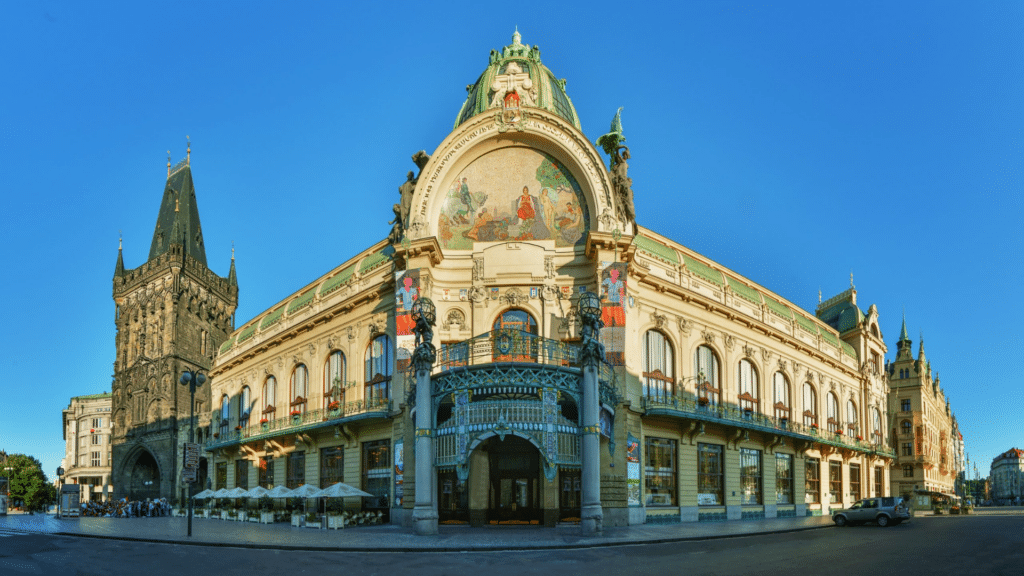
The Municipal House in Prague combines Art Nouveau architecture with civic purpose.
The exterior features decorative arches, mosaics, and sculpted details, while the interior includes murals, stained glass, and ornate halls.
Many artists worked together on the design, creating a strong sense of unity.
The building served as a cultural and social center for the city. It shows how Art Nouveau could scale up to public spaces while still keeping its artistic focus and attention to detail.
Why Art Nouveau Architecture Still Inspires Designers?
This section highlights how ideas from the style continue to show up in modern creative work. It focuses on practical influence rather than historical background.
- Organic Shapes in Modern Design: Designers still use flowing lines and curved forms to soften spaces. These shapes help rooms feel more natural and comfortable.
- Influence on Interior Details: Furniture, lighting, tiles, and railings often reflect Art Nouveau architecture through patterns inspired by plants and nature.
- Graphic and Visual Design Impact: Posters, logos, and packaging borrow from the style’s clean lines and decorative layouts, especially in branding and print design.
- Focus on Craft and Materials: Many designers value visible craftsmanship over mass-produced looks. This mindset comes directly from Art Nouveau principles.
- Support for Sustainable Design: Nature-based ideas encourage eco-friendly materials and thoughtful layouts. This approach aligns well with today’s focus on long-term, responsible design.
Conclusion
Art Nouveau architecture still matters because it reminds us that buildings can be both useful and artistic. These designs show care in every curve, window, and detail.
In a world filled with fast construction and simple boxes, this style feels thoughtful and human.
It also shows how creativity can cross borders and still respect local culture.
Many of these buildings have stood for over a century, yet they continue to feel relevant today. Seeing them in person helps you notice details that photos often miss.
If you enjoy history, design, or travel, these places are worth your time.
You may even start spotting similar ideas in modern homes, shops, or artwork.
Have you visited any Art Nouveau buildings or noticed its influence where you live? Share your experience or favorite example in the comments below.