

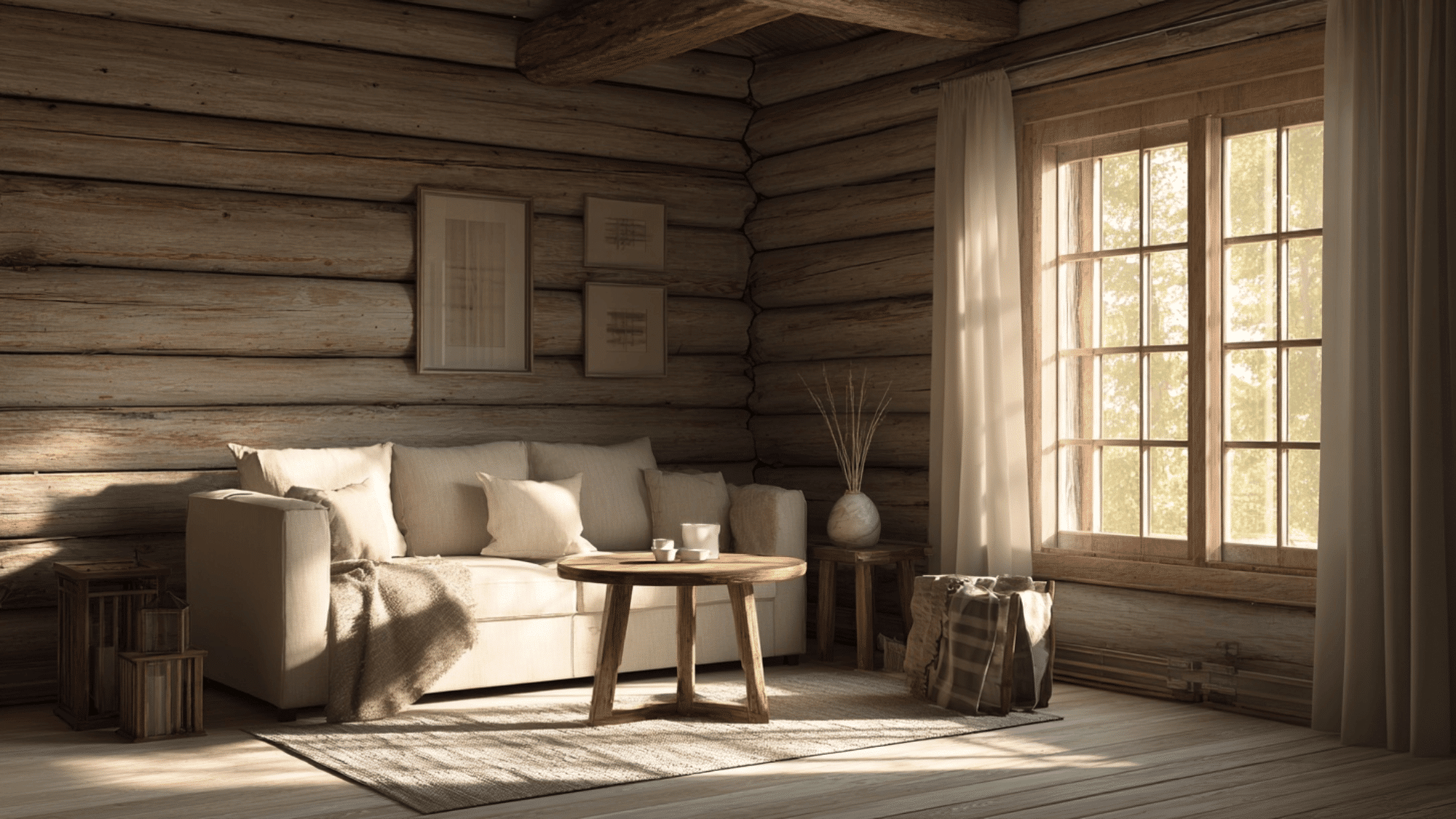
There’s something special about log cabins that pulls at the heartstrings.
Maybe it’s the warm glow of wood grain catching the light, or the way these spaces seem to wrap you in comfort the moment you step inside.
Today, they blend originality with modern comfort, creating spaces that feel both grounded and inviting.
From clever lighting tricks to furniture choices that actually make sense, designing these retreats takes thoughtful planning. Creating that perfect cabin atmosphere is more achievable than most people think.
Maximizing Natural Light in Log Cabins
Log cabins naturally lean toward darker interiors due to all that rich wood surrounding every surface. But that doesn’t mean living in shadows.
Smart design choices can flood these spaces with sunshine while keeping that cozy cabin feel intact.
Large windows positioned strategically, glass doors that open to nature, and skylights tucked into the right spots work wonders. Light-colored furnishings help bounce brightness around the room.
Mirrors placed across from windows double the effect. Even the finish on those log walls matters; some treatments reflect light better than others.
With the right approach, a log cabin can feel bright and airy without losing its character.
Cozy Log Cabin Living Room Design Ideas
The living room sets the entire mood for a log cabin. It’s where comfort meets style, and getting this space right means balancing natural textures with practical furniture choices that invite relaxation.
1. Exposed Log Walls with Matte Clear Finish

Exposed log walls give a cabin its authentic character while celebrating natural wood grain. A matte clear finish protects the logs without adding shine, keeping the look raw and grounded.
This approach enhances warmth, highlights texture, and creates a timeless backdrop that pairs well with stone, leather, and soft textiles.
2. Stone Fireplace as Central Focal Point
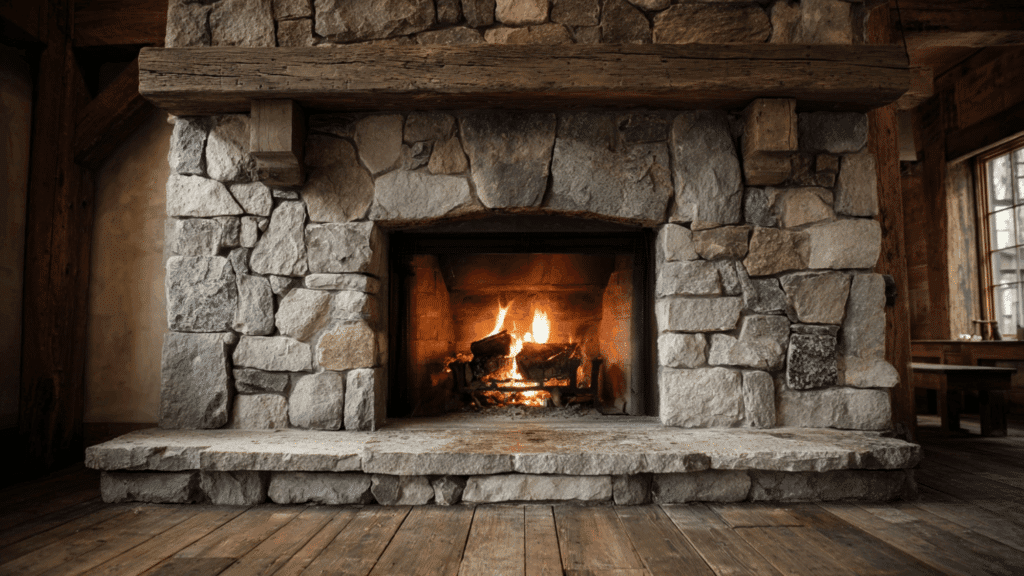
A stone fireplace anchors the cabin interior and instantly adds visual weight. Whether stacked stone or rugged river rock, it creates a natural gathering point.
The fireplace provides warmth both physically and aesthetically, reinforcing a cozy lodge atmosphere while balancing wood-heavy interiors with solid, earthy contrast.
3. Reclaimed Wood Beams Across Ceilings
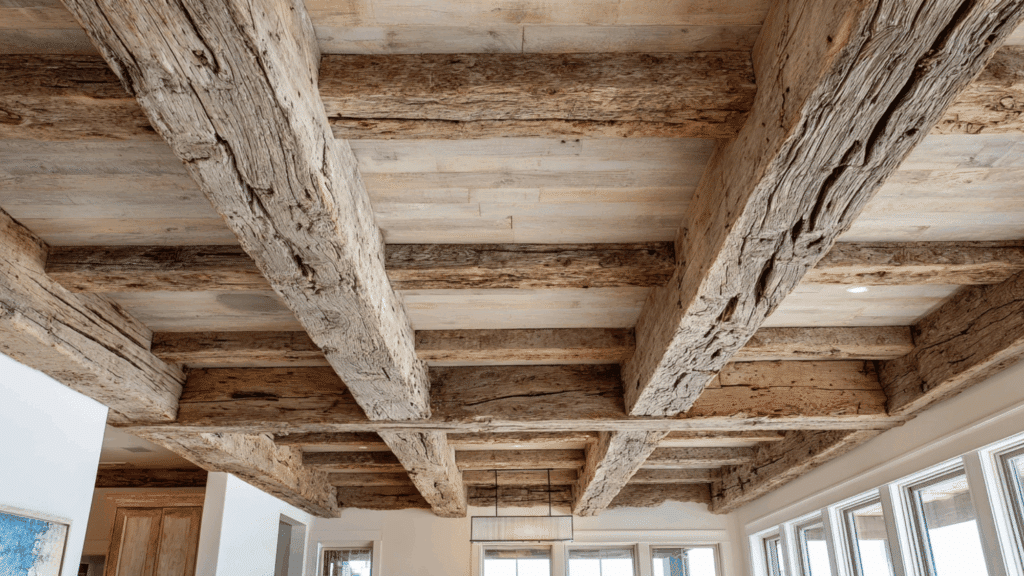
Reclaimed wood ceiling beams add history and character to cabin interiors.
Their aged texture and imperfections bring depth while visually defining the space.
Beyond aesthetics, beams help frame open layouts, enhance ceiling height, and reinforce a handcrafted feel that aligns perfectly with rustic and mountain-inspired living.
4. Antler-Inspired Chandelier Lighting

Antler-inspired chandeliers introduce dramatic rustic charm without overwhelming the room. Often crafted from resin or metal, they mimic natural antlers while offering practical lighting.
These fixtures work well above dining tables or living areas, creating a bold centerpiece that reinforces the cabin’s connection to nature.
5. Leather Sofas in Warm Brown Tones
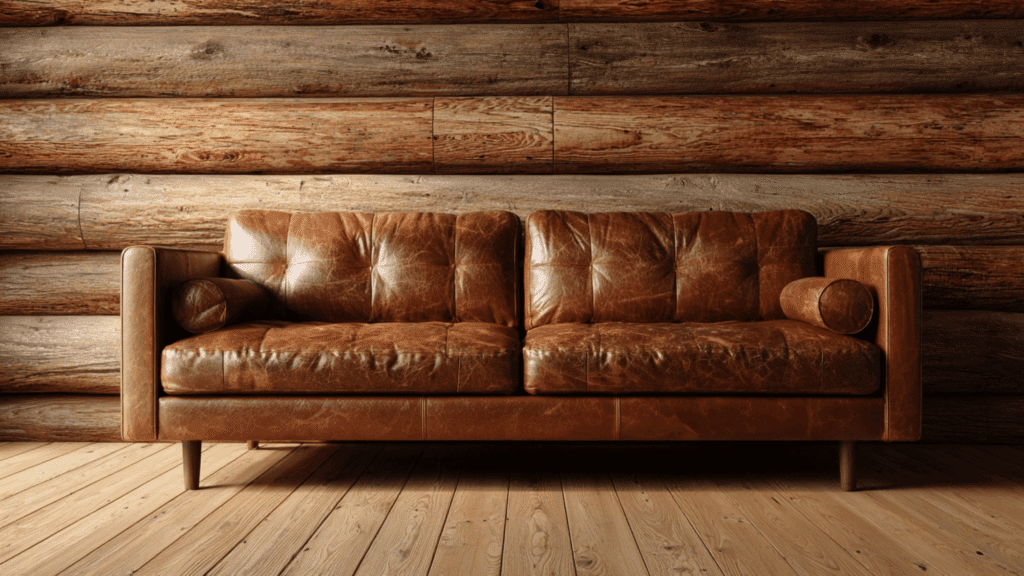
Warm brown leather sofas are durable and ideal for cabins. Leather ages beautifully, developing character over time while remaining easy to maintain.
The rich tones complement wood and stone elements, adding comfort and masculinity while grounding the space in earthy, natural hues.
6. Plaid or Buffalo-Check Upholstery Accents
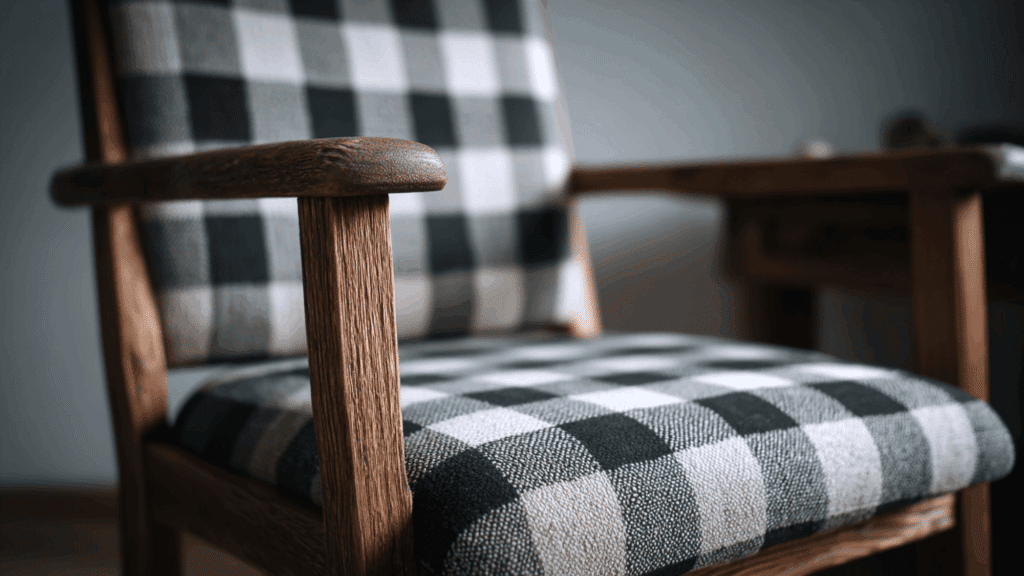
Plaid and buffalo-check patterns introduce classic lodge style to cabin interiors. Used on pillows, chairs, or ottomans, these patterns add visual interest and warmth.
They soften wood-heavy spaces and create a cozy, welcoming feel while reinforcing a traditional cabin aesthetic rooted in heritage design.
7. Floor-to-Ceiling Windows with Forest Views
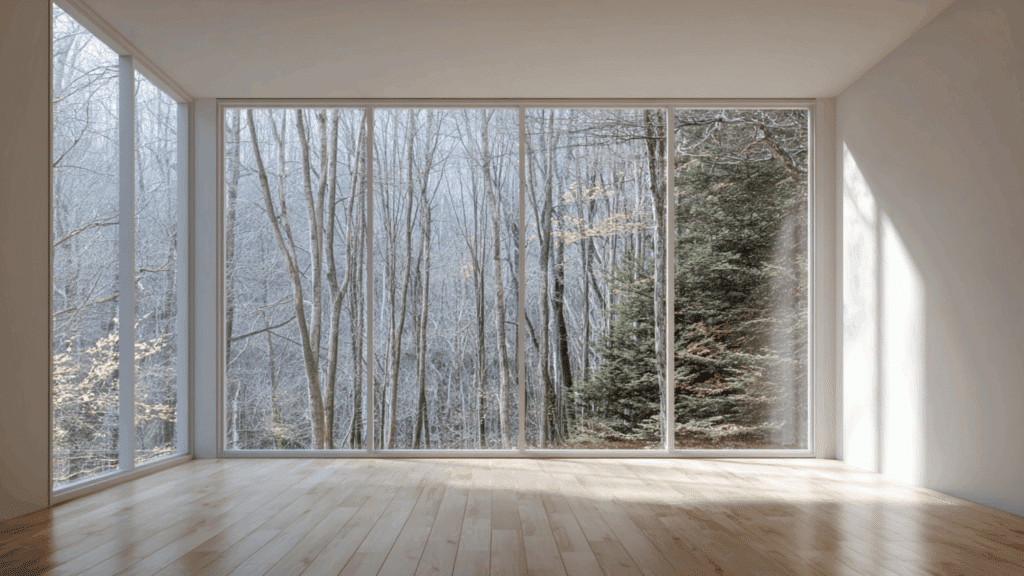
Floor-to-ceiling windows blur the boundary between indoors and outdoors. They flood the cabin with natural light and frame surrounding forest views like a living artwork.
These windows reduce the need for heavy décor, allowing nature to become the focal point while making interiors feel open and serene.
8. Built-In Window Benches with Wool Cushions
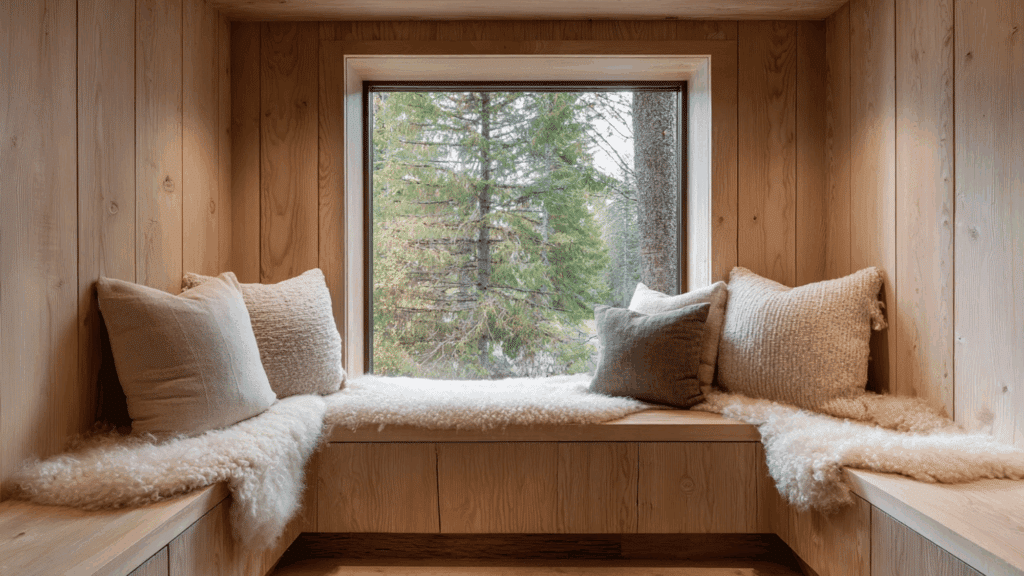
Window benches transform unused space into cozy seating areas.
Built-ins feel intentional and architectural, while wool cushions add warmth and texture.
Positioned near scenic views, these benches encourage relaxation, reading, or quiet reflection, enhancing the cabin’s restful and intimate atmosphere.
8. Open Shelving from Rough-Sawn Wood

Rough-sawn wood shelving offers both function and rustic appeal.
The raw texture adds depth and authenticity while showcasing everyday items like pottery or cookware.
Open shelves prevent spaces from feeling heavy, keeping the cabin interior airy while maintaining a handcrafted, practical design approach.
9. Wood-Burning Stove with Cast Iron Finish
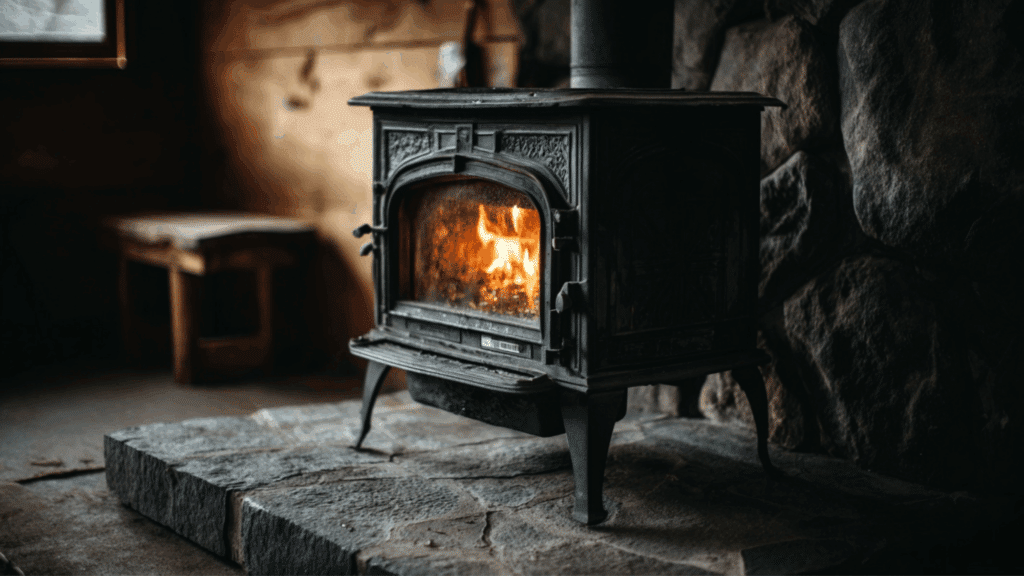
A cast-iron wood-burning stove delivers classic cabin charm and efficient heating. Its compact size suits smaller spaces while offering a strong visual appeal.
The dark metal contrasts beautifully with wood interiors, reinforcing a sense of tradition, self-sufficiency, and cozy winter living.
10. Neutral Earth-Tone Color Palette
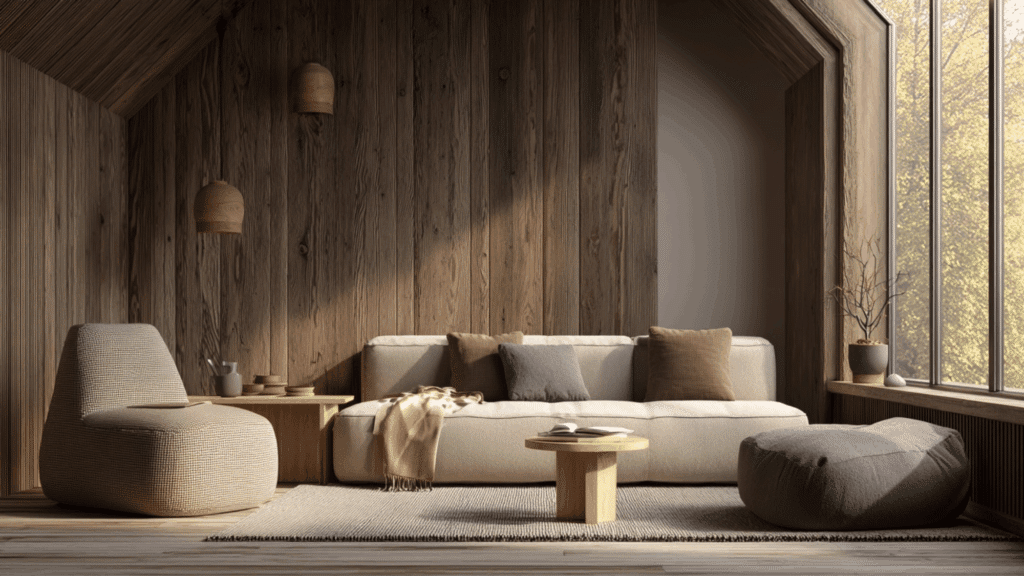
Earth-tone palettes create harmony within cabin interiors by reflecting natural surroundings.
Shades of brown, beige, taupe, and muted greens keep the space grounded and calm. These colors allow wood textures to stand out while providing flexibility to layer patterns, textiles, and rustic accents.
11. Handwoven Rugs with Tribal Patterns

Handwoven tribal rugs add warmth underfoot and visual storytelling to cabin spaces. Their patterns introduce color without overpowering natural materials.
Often made from wool or natural fibers, these rugs enhance comfort, define seating areas, and bring a collected, artisan-inspired look.
12. Vintage Lantern-Style Wall Sconces
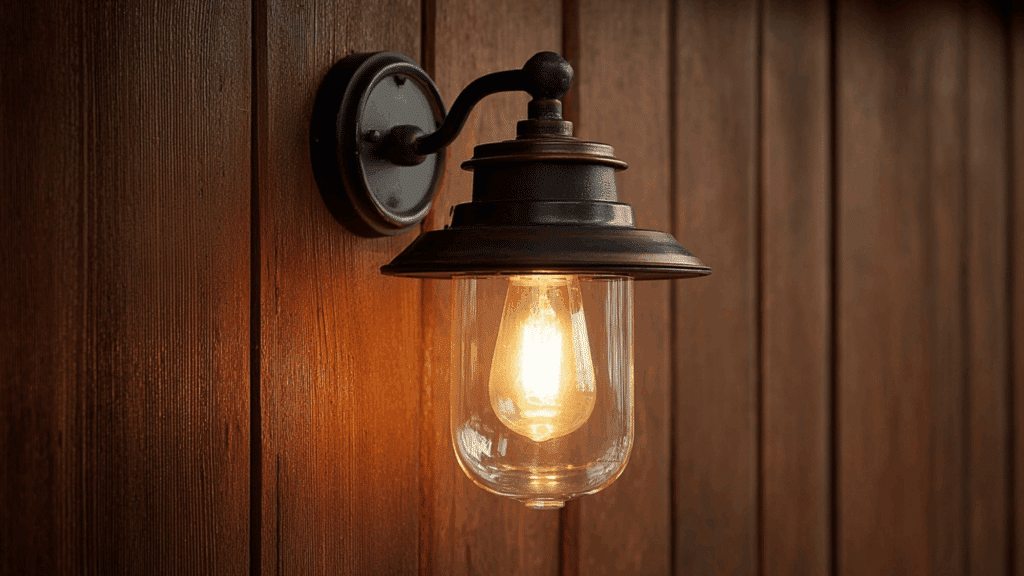
Lantern-style wall sconces offer soft, ambient lighting with rustic appeal. Their old-world design complements log walls and stone features while providing functional illumination.
Installed in hallways or near fireplaces, they boost the atmosphere and reinforce the cabin’s traditional, lodge-inspired character.
13. Live-Edge Wood Dining Table
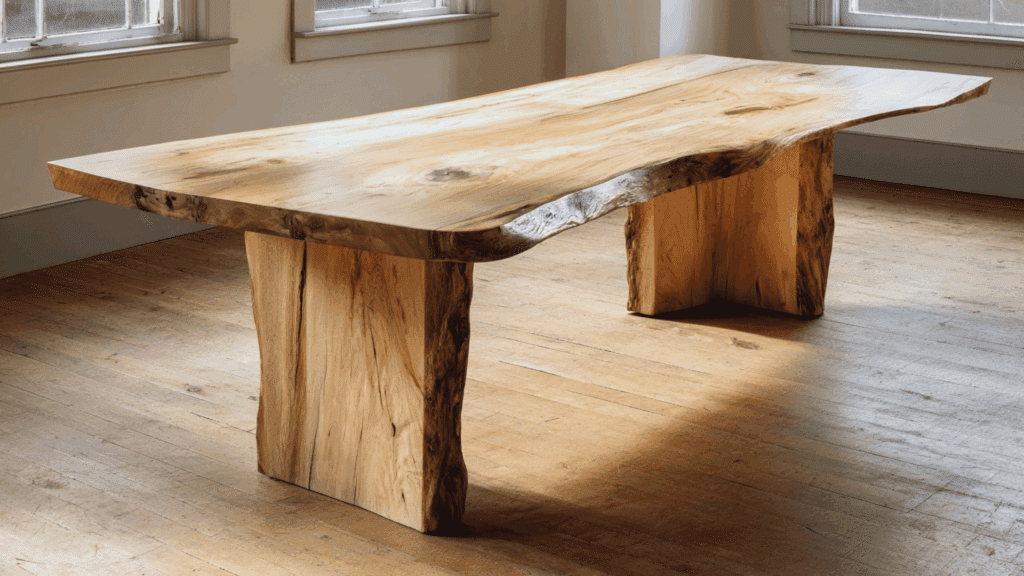
A live-edge dining table highlights the raw beauty of natural wood.
The irregular edges preserve the tree’s original form, making each piece unique. This table becomes a conversation centerpiece, pairing well with simple chairs and reinforcing the cabin’s appreciation for organic materials.
14. Cozy Loft Sleeping Area with Ladder Access

Loft sleeping areas maximize vertical space while adding charm. Accessed by a ladder, they feel intimate and tucked away.
Lofts work especially well in cabins with vaulted ceilings, creating a snug retreat that enhances the sense of escape and makes efficient use of limited square footage.
15. Stone or Slate Flooring in Entry Areas
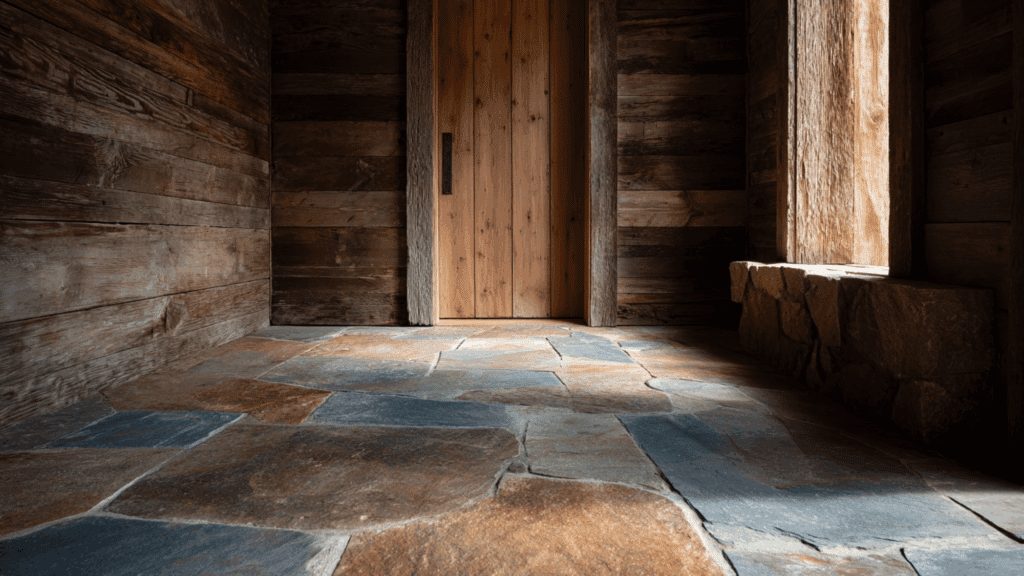
Stone or slate flooring in entryways offers durability and rustic appeal. These materials handle moisture and dirt well, making them ideal for cabins.
Their natural texture adds visual interest while providing a practical transition from outdoor environments to warm interior living spaces.
16. Iron Hardware on Doors and Cabinets
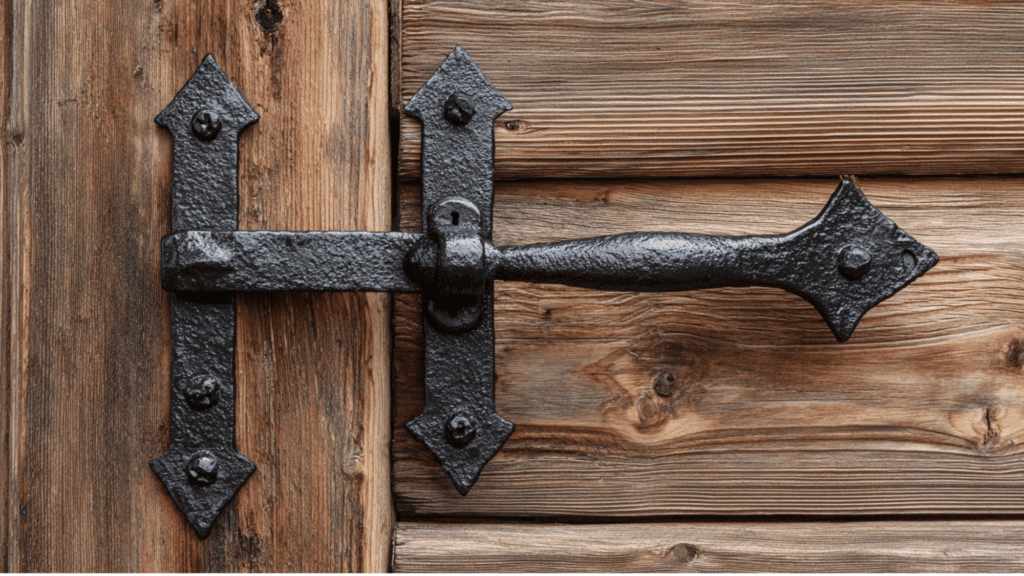
Iron hardware adds subtle strength and contrast to cabin interiors.
Black or aged finishes complement wood tones while reinforcing originality.
From door handles to cabinet pulls, iron details enhance craftsmanship and provide durability without distracting from the overall natural aesthetic.
17. Nature-Inspired Artwork and Photography
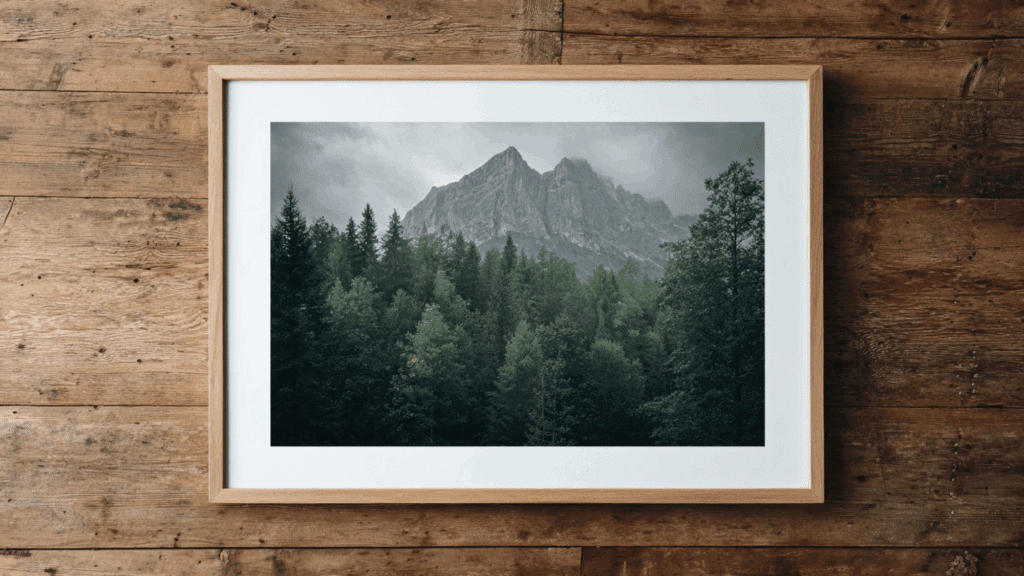
Artwork featuring landscapes, wildlife, or botanical themes amplifies the cabin’s connection to nature. Framed photography or hand-painted pieces add personality without clutter.
These visuals reinforce the surrounding environment and create continuity between interior design and outdoor scenery.
18. Shiplap Accent Walls in Natural Wood Tones
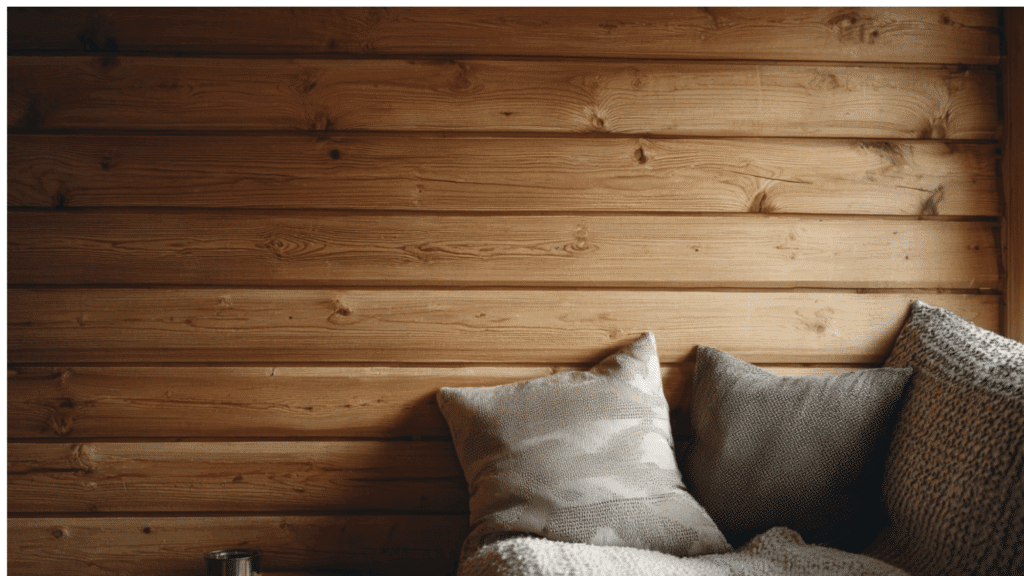
Natural wood shiplap adds texture and structure without overpowering the space.
Used as an accent wall, it provides visual rhythm and warmth. Shiplap works well behind beds or fireplaces, enhancing architectural interest while maintaining a clean, cohesive cabin look.
19. Chunky Knit Throws and Wool Blankets
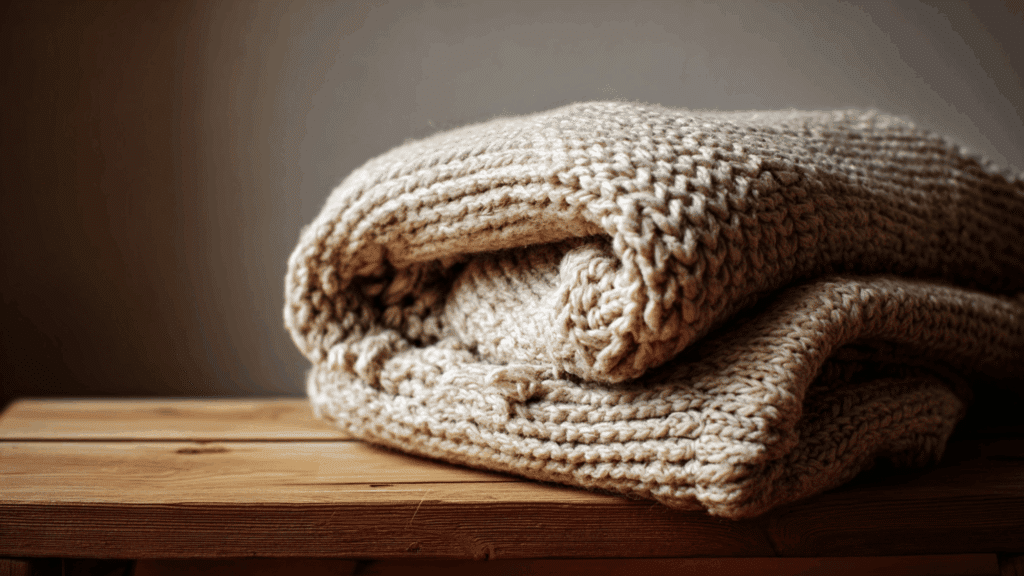
Chunky knit throws and wool blankets layer softness into rustic interiors. Draped over sofas or benches, they add warmth, texture, and visual comfort.
These textiles balance hard surfaces like stone and wood, reinforcing the cabin’s inviting, lived-in atmosphere.
20. Built-In Bunk Beds for Lodge Feel
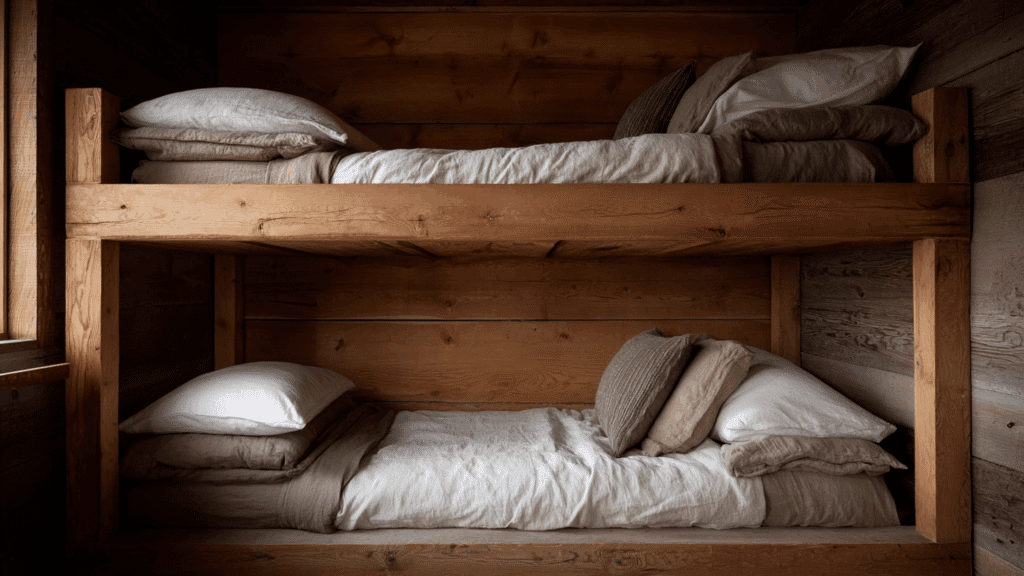
Built-in bunk beds are practical and charming, especially for family cabins. They save space while adding a lodge-like character.
Often framed in wood, bunks feel cozy and intentional, making them ideal for guest rooms or children’s sleeping areas.
21. Rustic Mudroom with Wooden Benches and Hooks

A rustic mudroom keeps the cabin organized while maintaining style.
Wooden benches provide seating for boots, while wall hooks store coats and gear. This functional space prevents clutter from spreading and reinforces the cabin’s practical, outdoors-focused lifestyle.
22. Barn-Style Sliding Doors
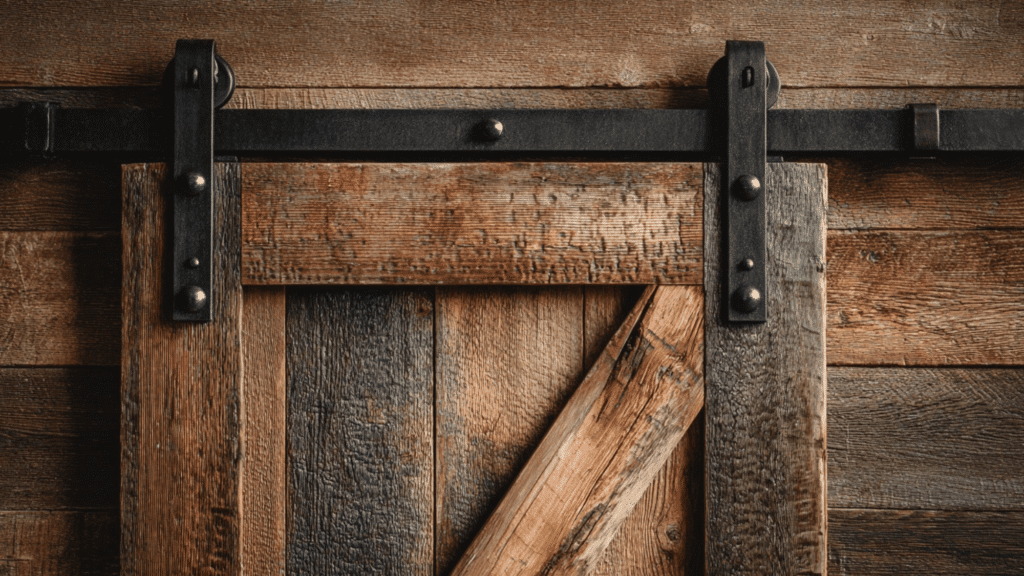
Barn-style sliding doors combine function and rustic appeal. They save space while adding visual interest through exposed hardware and wood panels.
These doors work well for bedrooms or bathrooms, enhancing privacy while contributing to the cabin’s handcrafted, traditional aesthetic.
23. Natural Linen or Canvas Window Treatments
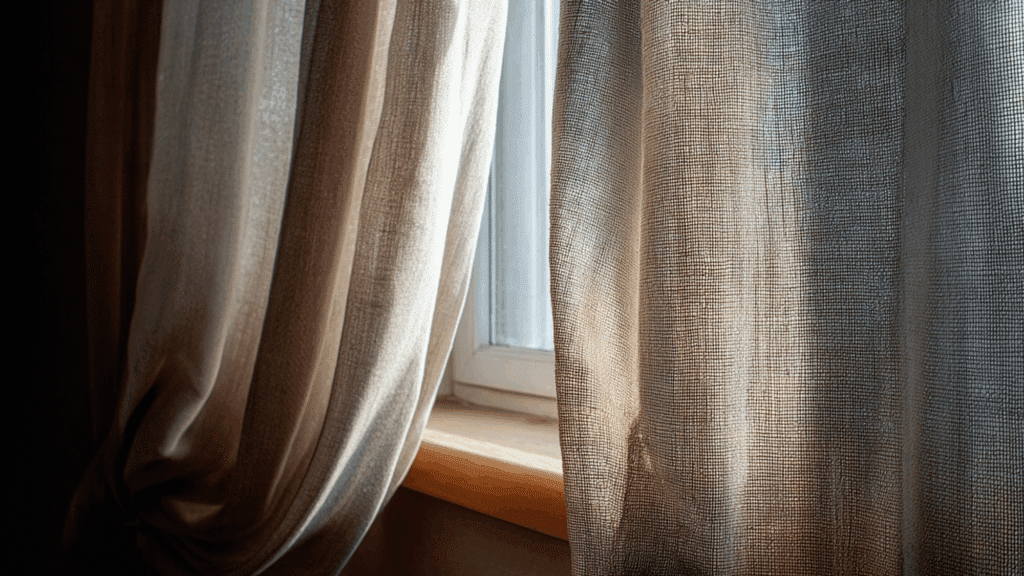
Linen or canvas window treatments offer softness without blocking natural light. Their neutral tones blend seamlessly with wood interiors, maintaining an airy feel.
These fabrics provide privacy when needed while keeping the cabin relaxed, understated, and connected to its surroundings.
Sustainable Tips for Eco-Friendly Cabin Interiors
Log cabins already have an eco-friendly foundation, but pushing that green approach further makes perfect sense. Small changes in materials, energy use, and daily habits can significantly reduce environmental impact without sacrificing comfort.
- Reclaimed wood furniture: Gives new life to old materials while adding character and history to the space.
- Energy-efficient appliances: Cut power consumption dramatically and lower utility bills over time.
- Natural insulation materials: Wool, cotton, or cork insulation keeps temperatures stable without harsh chemicals.
- Low-VOC paints and finishes: Protects indoor air quality while maintaining the cabin’s natural, healthy atmosphere.
Conclusion
Creating a log cabin retreat that feels just right takes more than throwing together some rustic furniture and calling it done.
It’s about understanding how light moves through wood-filled spaces, choosing pieces that serve both function and style, and respecting the natural beauty already there.
These design ideas offer starting points, not strict rules. Every cabin has its own personality, its own quirks that make it special. The best interiors honor that uniqueness while adding modern touches where they make sense.
Whether renovating an existing space or starting fresh, thoughtful choices turn any log cabin into a genuine retreat worth coming home to.