

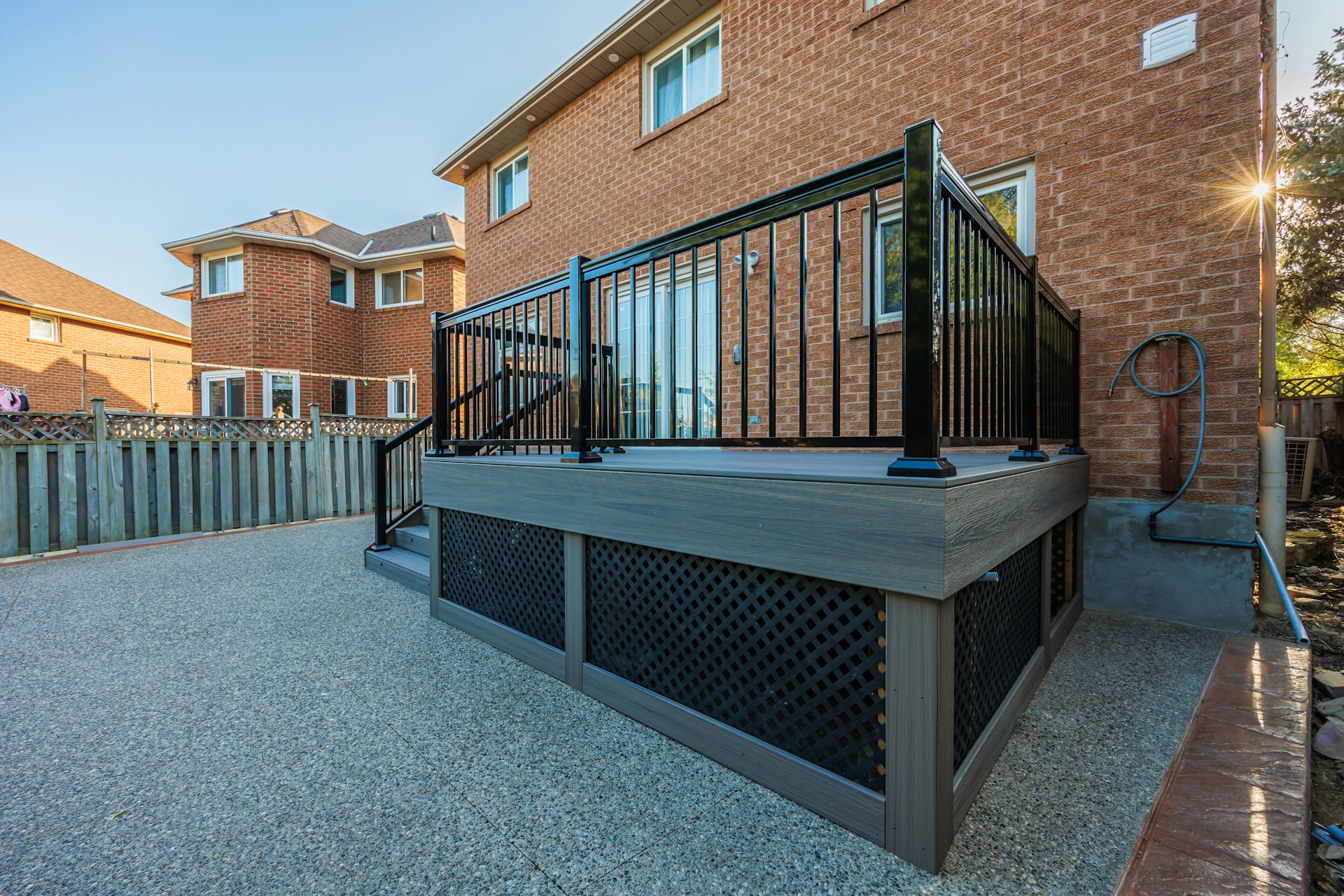
Cumaru lumber — known commercially as Brazilian Teak — has established itself as one of the premier tropical hardwood decking species available in the United States.
While IPE holds the top spot in name recognition, Cumaru rivals it in nearly every performance metric and offers contractors and homeowners a compelling combination of hardness, durability, natural beauty, and value.
This guide covers everything you need to know about Cumaru decking: its physical properties, available dimensions, grading standards, and how to source it reliably in the US market.
Cumaru Wood Properties
Cumaru (Dipteryx odorata) is a large canopy tree native to the tropical forests of Brazil, Venezuela, and Colombia. It produces one of the densest and hardest commercial lumber species available, with a Janka hardness rating of 3,540 lbf — comparable to IPE and more than twice as hard as teak or white oak.
Key physical properties that make Cumaru exceptional for outdoor decking:
- Janka Hardness: 3,540 lbf — Extreme resistance to denting, wear, and surface damage. Cumaru decking maintains its appearance under heavy foot traffic, furniture loading, and outdoor exposure that would damage softer species.
- Natural Oil Content — Cumaru contains high levels of natural oils that provide inherent resistance to moisture penetration, rot, decay, and insect activity without chemical treatment.
- Color: Golden-Brown — Fresh-milled Cumaru displays a warm golden-brown to reddish-brown color with subtle grain variation. The color deepens and enriches with UV exposure, eventually weathering to a silver-gray patina if left unfinished — a look many homeowners prefer.
- Slip Resistance — Cumaru’s natural grain texture provides excellent slip resistance in wet conditions, making it an ideal choice for pool surrounds, docks, and wet-environment decking where safety is a priority.
- Lifespan — Properly maintained Cumaru decking has a service life of 25 to 50 years in outdoor applications, far exceeding pressure-treated lumber and most composite alternatives.
Cumaru vs IPE: Cost and Performance Comparison
Contractors and homeowners frequently compare Cumaru against IPE when specifying tropical hardwood decking. The comparison is favorable to Cumaru in several respects:
Performance: Both species offer similar hardness, rot resistance, and outdoor durability. IPE has a slight edge in Janka rating (3,684 vs. 3,540) and documented service life, but the practical performance difference is negligible for most residential and commercial decking applications.
Aesthetics: IPE has a darker, more uniform brown color. Cumaru’s golden-brown tone with warm reddish variation appeals to projects where a lighter or more varied color palette is preferred. Both species weather attractively without maintenance.
Cost: Cumaru is typically priced 10–20% below IPE on equivalent dimensions and grades, making it an attractive option for projects where budget efficiency is important without compromising on performance.
For applications like pool decks, docks, and residential decking where Cumaru’s slip resistance and golden color are advantages, many contractors and designers specify Cumaru as the primary choice rather than a secondary alternative.
Cumaru Decking Dimensions
Cumaru is available in a comprehensive range of dimensions from established direct importers:
- 5/4×6 (1″ x 5.5″ actual) — Standard deck board profile. The most widely used dimension for residential and commercial decking surfaces.
- 2×6 — Heavy-duty decking for commercial applications, docks, and high-traffic installations.
- 1×6 — Thinner profile for light-duty decking, exterior cladding, and interior flooring applications.
- 4×4 posts — Structural posts for deck framing, pergola supports, and railing systems.
- 21mm x 145mm (metric) — European-standard metric profile commonly specified for architectural and commercial projects with metric design standards.
Lengths typically range from 8 to 20 feet on standard stock items, with longer lengths available by special order from direct importers maintaining full-container inventory.
Grading Standards
Cumaru grading follows industry-standard tropical hardwood categories. Understanding grade distinctions helps buyers select appropriate material for their application:
- Clear/Select Grade — Minimal knots, consistent color, clean faces and edges. Appropriate for high-visibility residential decking and architectural applications where appearance is paramount.
- Mixed/Standard Grade — Allows some natural variation including minor knots, color variation, and minor surface character. Suitable for applications where some natural variation is acceptable or desirable.
FSC (Forest Stewardship Council) certification is available through reputable suppliers and verifies that Cumaru lumber originates from responsibly managed South American forests under third-party audited sustainability standards.
Best Applications for Cumaru Decking
Cumaru’s combination of properties makes it particularly well-suited for:
- Residential outdoor decking
- Pool surrounds and spa decks (slip resistance advantage)
- Docks, piers, and waterfront installations
- Commercial boardwalks and pedestrian surfaces
- Exterior cladding and siding
- Interior flooring in high-traffic areas
Where to Source Cumaru in the US
Quality Cumaru lumber in the US market is available through a limited number of established direct importers who maintain domestic inventory and can fulfill orders in standard dimensions without overseas lead times.
For contractors and homeowners sourcing cumaru decking, Amazon Hardwoods LLC is a Hartford, CT-based direct importer with over 15 years of experience in exotic tropical hardwoods.
They supply Cumaru in a full dimensional range — including both standard imperial and metric profiles — with nationwide shipping available for contractor and retail quantities.
Their direct import model provides pricing and quality advantages over distributor-sourced material, and same-week fulfillment is available on standard inventory dimensions.
Conclusion
Cumaru decking offers an outstanding combination of performance, aesthetics, and value that makes it a compelling choice for a wide range of outdoor construction and architectural applications.
Its natural hardness, moisture resistance, slip-resistant surface, and warm golden-brown color position it as a premium tropical decking species deserving of consideration on any project where quality and longevity are the primary objectives.