

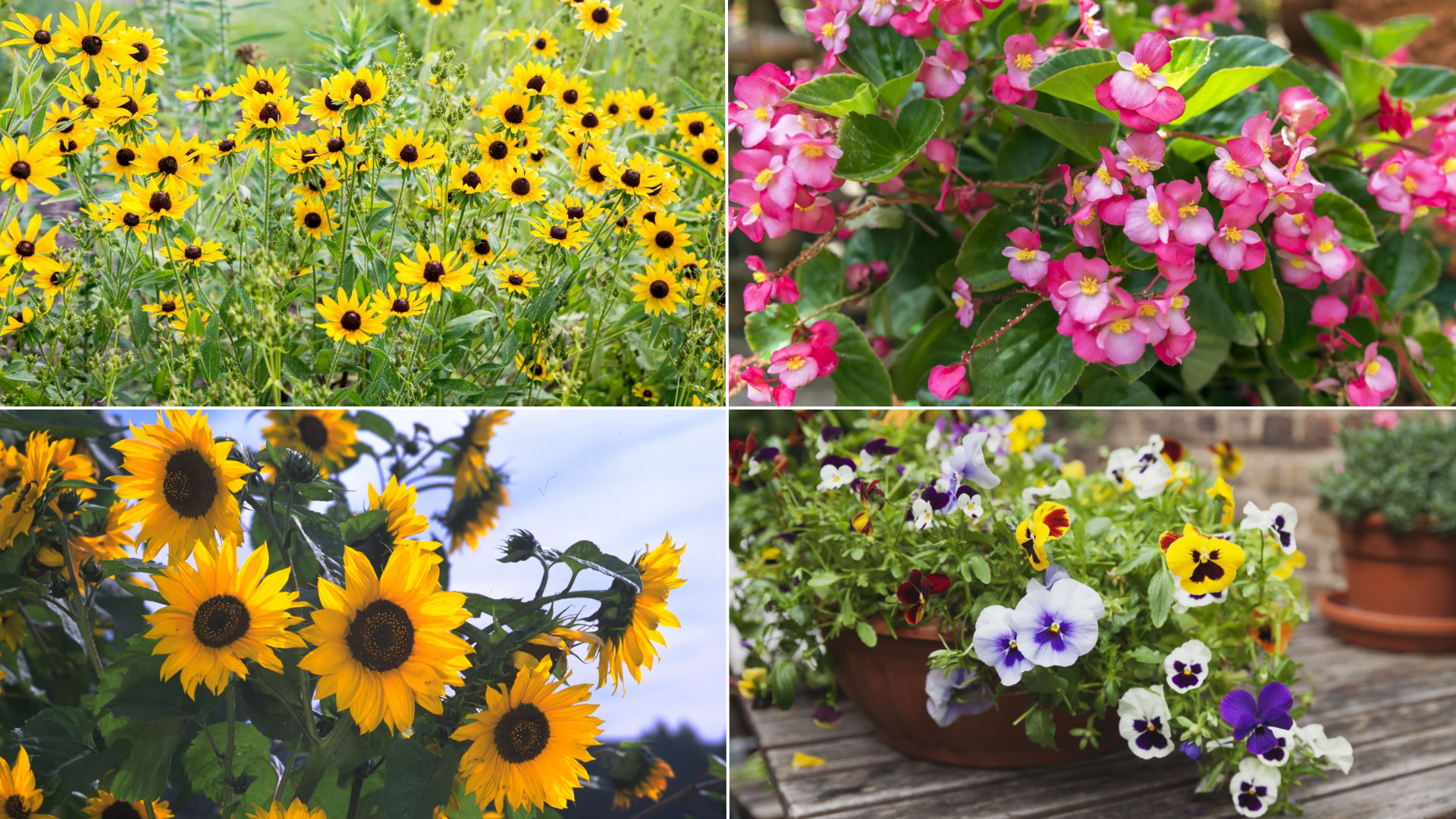
Growing flowers at home can feel simple when you start with the right plants. You don’t need a big yard, special tools, or years of experience to see results.
Many flowers grow well with basic care, making them a great choice for first-time gardeners.
They can brighten your space, improve your mood, and help you build confidence as you learn.
In this guide, I shared a list of some easy flowers to grow for beginners at home that need little effort and forgive small mistakes.
You’ll learn what makes a flower beginner-friendly, which flowers grow best indoors or outdoors, and how to keep them healthy after they bloom.
I also shared common mistakes to avoid and simple tips you can follow right away.
If you want quick results without stress, this list will help you get started and enjoy growing flowers from day one.
What Makes a Flower Easy to Grow?
The right flower choices make gardening feel calm and manageable. A few shared traits help beginners grow plants with less effort.
- Low water needs: These flowers survive missed watering days without wilting fast, helping beginners avoid stress while learning basic care routines easily, daily.
- Fast growth: Quick sprouting and early blooms let beginners see progress sooner, building confidence and motivation to keep growing plants happily longer.
- Tolerance to poor soil: These flowers grow well in basic soil, so beginners do not need special mixes or constant feeding at all times.
- Flexible light needs: They grow in full sun or partial shade, making placement easier for homes with limited light options indoors and outdoors.
- Strong resistance to pests: Strong natural resistance helps reduce pest issues, so beginners spend less time fixing damage or treating plants in home gardens.
- Ability to recover quickly: These flowers bounce back after pruning or weather changes, allowing beginners to correct mistakes without losing plants easily over time.
Best Easy-to-Grow Flowers for Beginners to Grow
These flowers were chosen for their strong growth, simple care needs, and ability to grow at home without special tools or gardening experience.
1. Marigold
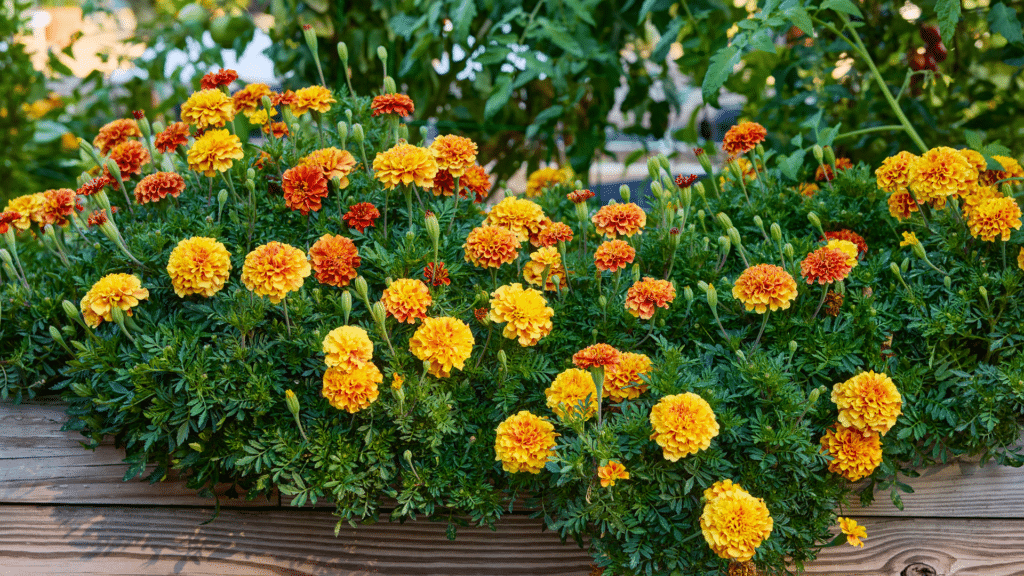
Marigolds grow best in full sun and handle heat well throughout the day. They need moderate watering and prefer soil that dries slightly between watering sessions.
These flowers grow easily from seeds and sprout quickly, making them ideal for beginners.
Maintenance stays low because they resist pests and common plant problems.
Most marigold plants stay short to medium in height, which makes them easy to manage in pots or garden beds without support.
- Best Season to Plant: Spring
- Soil Type: Well-draining, average garden soil
- Beginner Tip: Remove faded flowers often to help the plant keep blooming longer
2. Sunflower
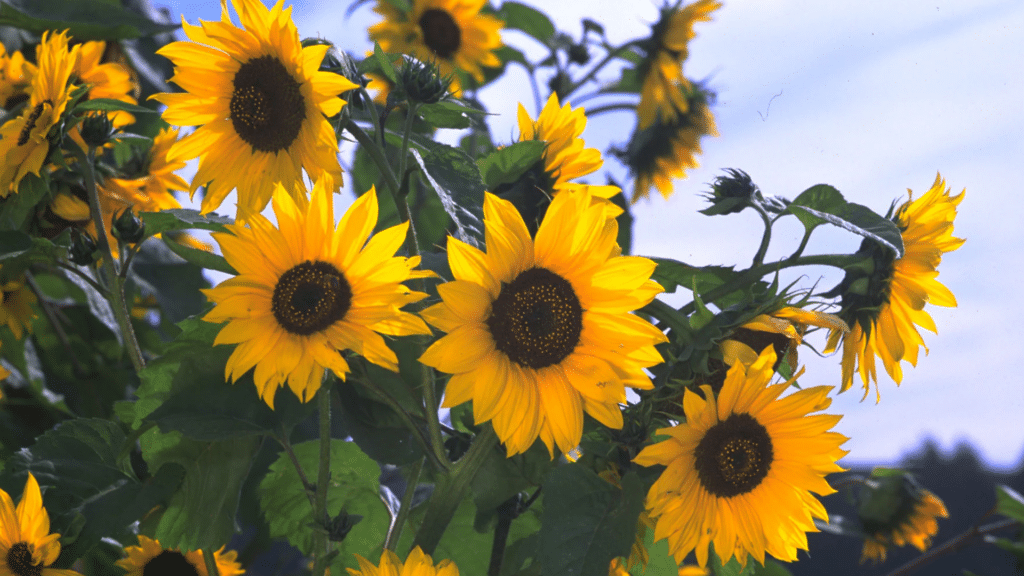
Sunflowers grow best in full sun and need several hours of direct light each day. They require regular watering, especially while growing, but do not like soggy soil.
These flowers are best grown from seeds and sprout easily, even for first-time gardeners.
Maintenance is low once established, as sunflowers are hardy and tough. Growth height varies by type, but many grow tall and need space to spread and stand upright.
- Best Season to Plant: Spring
- Soil Type: Loose, well-draining soil
- Beginner Tip: Plant seeds in a spot with plenty of space so tall stems do not crowd nearby plants
3. Zinnia
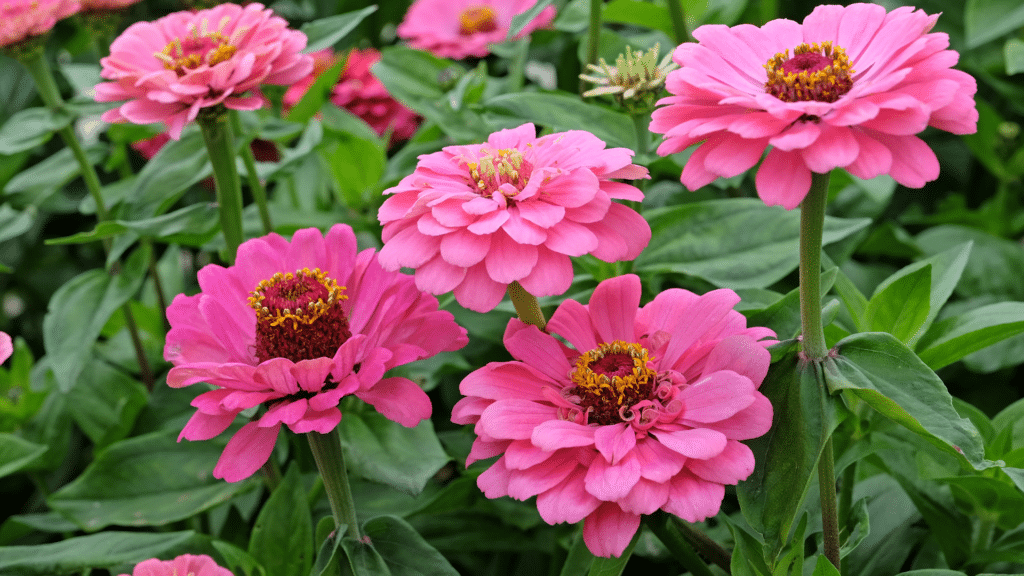
Zinnias prefer full sun and bloom best with plenty of daily sunlight. They need moderate watering and grow well when the soil dries slightly between waterings.
These flowers grow easily from seeds and show fast results, which keeps beginners motivated.
Maintenance stays low because zinnias handle heat and minor neglect well. Most varieties grow to a medium height, making them suitable for pots or garden beds.
- Best Season to Plant: Late spring to early summer
- Soil Type: Well-draining soil with basic nutrients
- Beginner Tip: Water at the base of the plant to keep leaves dry and reduce plant stress
4. Petunia
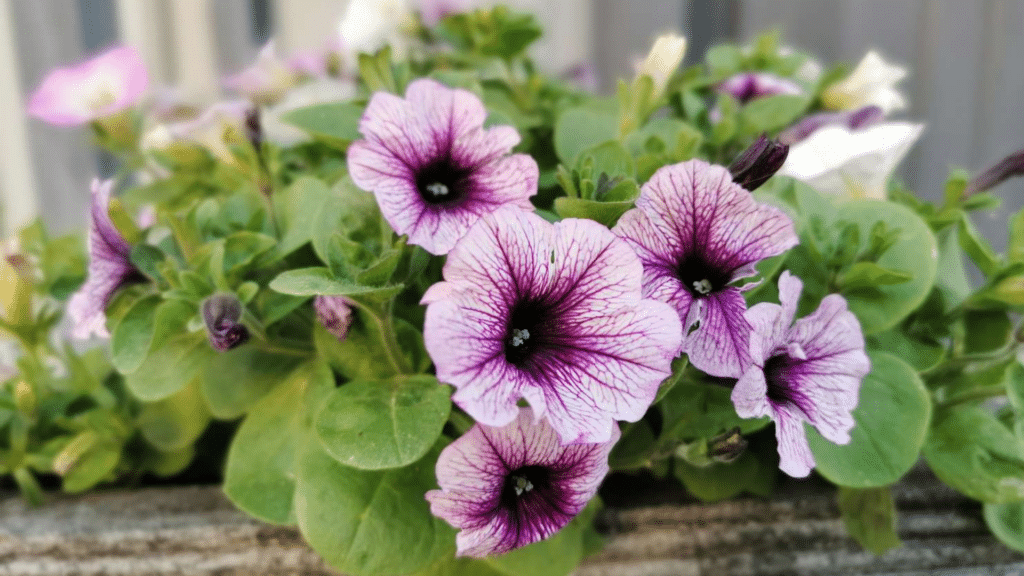
Petunias grow well in full sun but can handle light shade during hot afternoons.
They need regular watering, especially in containers, but dislike soggy soil.
These flowers are usually grown from starter plants for faster results, though seeds also work. Maintenance is low with basic care and occasional trimming.
Growth height stays short, making petunias ideal for pots, hanging baskets, and small garden spaces.
- Best Season to Plant: Spring
- Soil Type: Well-draining soil with light nutrients
- Beginner Tip: Trim leggy stems to encourage fuller growth and more blooms
5. Cosmos
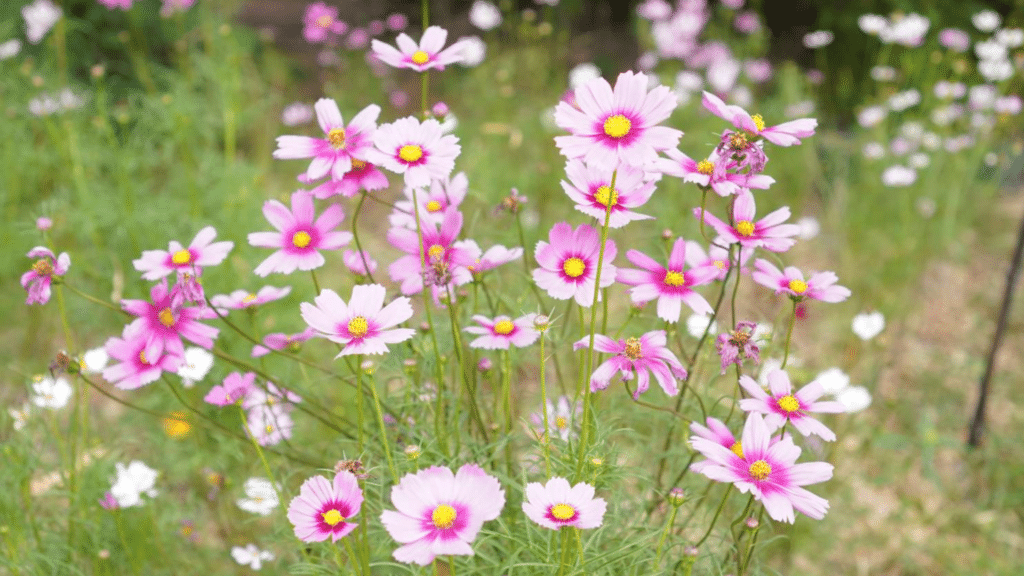
Cosmos grow in full sun and bloom better with long daylight hours. They need low to moderate watering and prefer soil that dries between waterings.
These flowers grow easily from seeds and sprout quickly without extra care.
Maintenance stays very low because cosmos tolerate poor soil well. Growth height is medium to tall, giving gardens a light and open look.
- Best Season to Plant: Late spring
- Soil Type: Light, well-draining soil
- Beginner Tip: Avoid rich soil, as it can cause more leaves and fewer flowers
6. Pansy
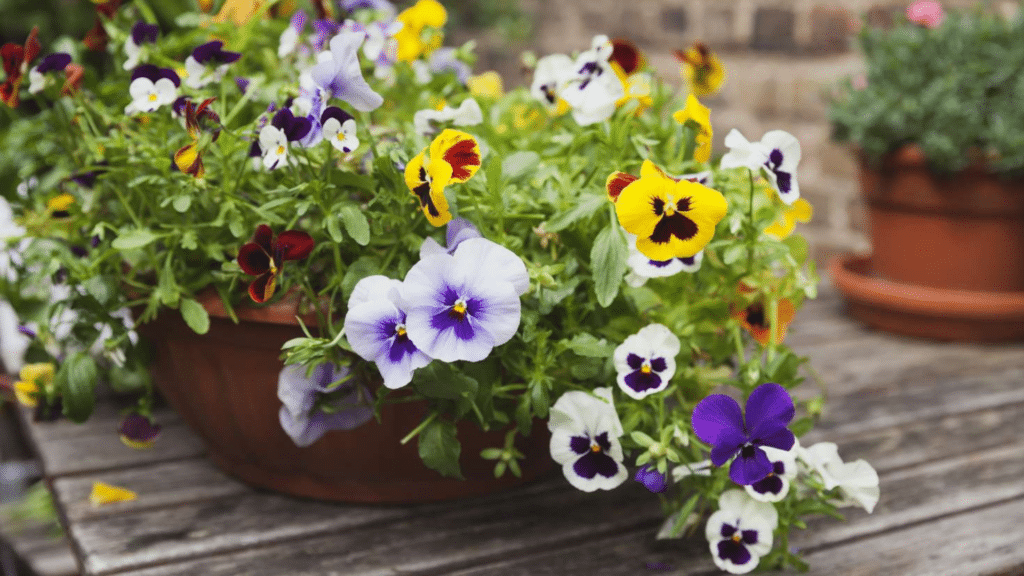
Pansies grow best in partial sun and prefer cooler temperatures throughout the day.
They need regular watering to keep the soil lightly moist, especially during dry periods. These flowers are commonly grown from starter plants, which helps them bloom sooner.
Maintenance remains low, but removing spent flowers helps encourage continued blooming.
Their short growth height makes pansies easy to manage in pots, window boxes, and along garden edges.
- Best Season to Plant: Early spring or fall
- Soil Type: Moist, well-draining soil
- Beginner Tip: Water in the morning to help plants stay healthy during cooler days
7. Nasturtium
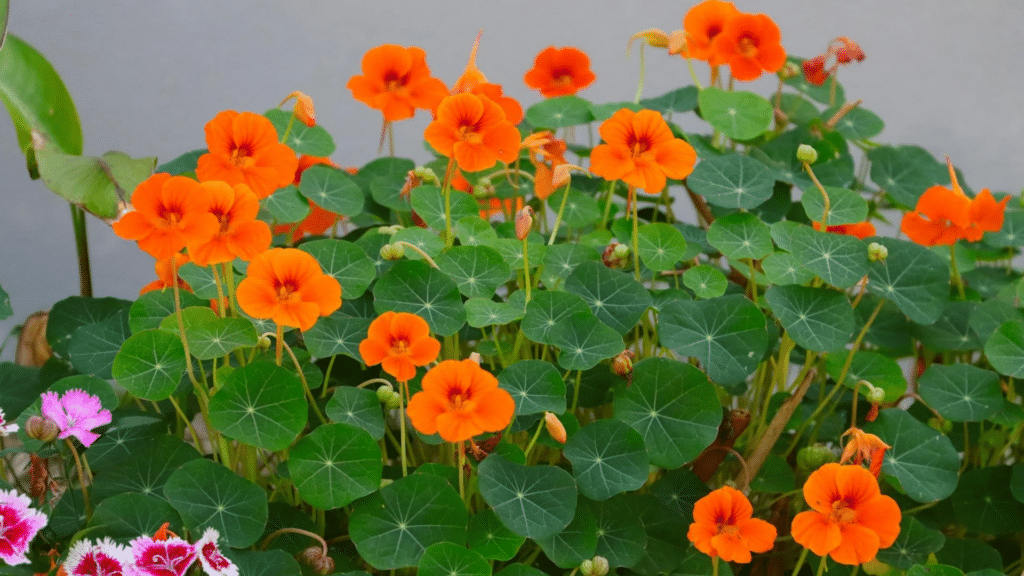
Nasturtiums grow best in full sun but can handle partial shade in warmer areas.
They need low watering once established and prefer soil that is not too rich. These flowers grow easily from seeds and sprout quickly, even with minimal care.
Maintenance stays very low because nasturtiums resist pests and spread naturally.
Growth height varies, with some types staying low and others trailing, making them useful for pots and garden edges.
- Best Season to Plant: Late spring
- Soil Type: Light, well-draining soil
- Beginner Tip: Avoid fertilizer, as rich soil causes more leaves and fewer flowers
8. Calendula
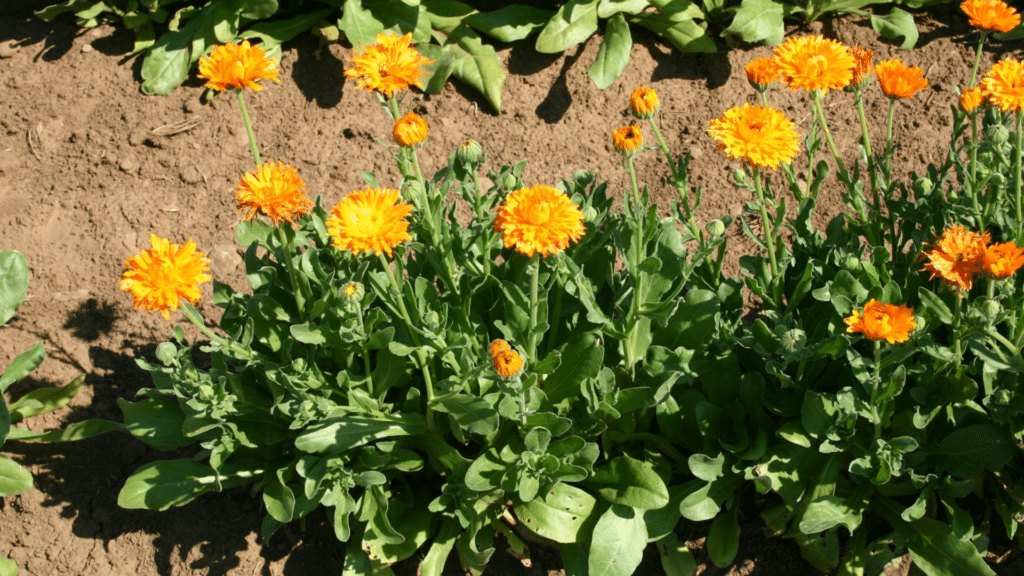
Calendula grows well in full sun but also handles partial shade without issues. It needs moderate watering and prefers soil that stays slightly moist but not soggy.
These flowers grow easily from seeds and show quick sprouts for beginners.
Maintenance is low because calendula tolerates cool weather and minor neglect. Growth height stays short to medium, making it suitable for pots, borders, and small garden spaces.
- Best Season to Plant: Early spring or fall
- Soil Type: Well-draining soil with basic nutrients
- Beginner Tip: Deadhead old blooms to encourage longer flowering periods
9. Sweet Pea
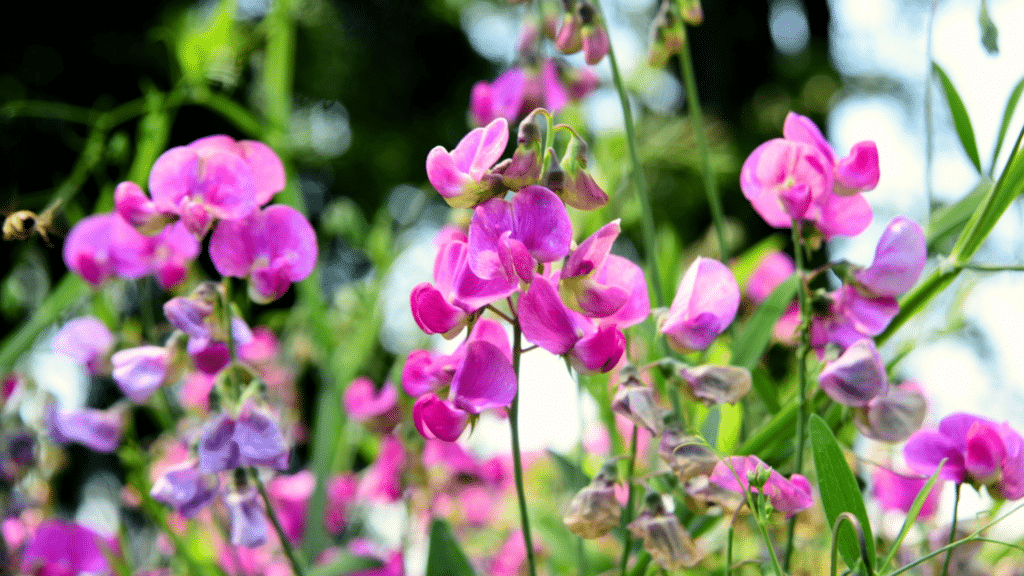
Sweet peas grow best in full sun but benefit from some protection during strong afternoon heat.
They need regular watering, especially in the early stages of growth, to stay healthy. These flowers grow well from seeds, and soaking them before planting helps improve sprouting.
Maintenance is moderate because the vines need support to climb properly.
Sweet peas grow tall and produce climbing stems that add height and visual interest to gardens, fences, and trellises.
- Best Season to Plant: Early spring
- Soil Type: Rich, well-draining soil
- Beginner Tip: Provide a simple trellis or support early to guide healthy growth
10. Morning Glory
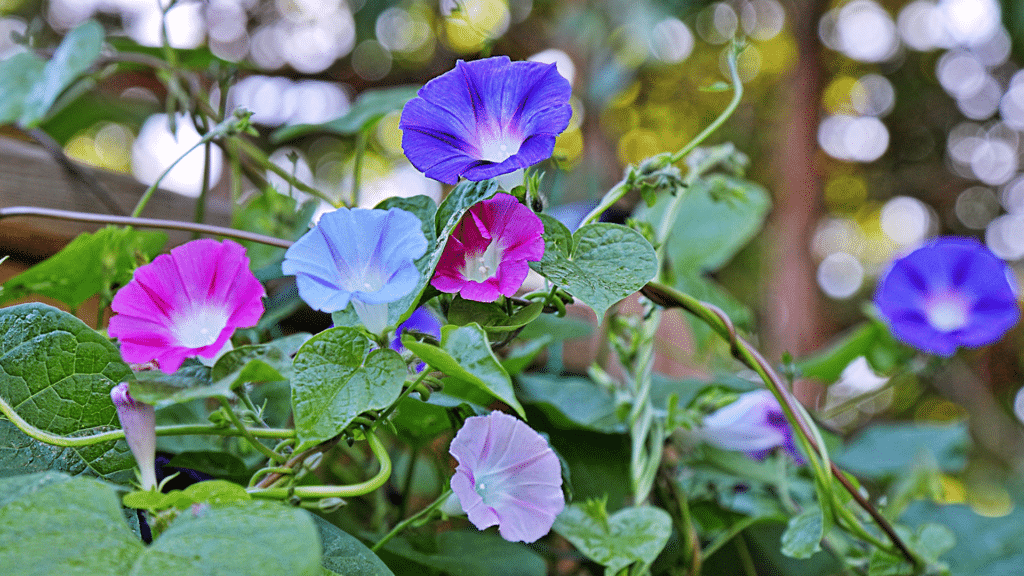
Morning glories grow best in full sun and open their flowers during bright morning light.
They need moderate watering and prefer soil that drains well between waterings. These flowers grow easily from seeds and sprout fast once planted.
Maintenance stays low, but vines grow quickly and need space.
Growth height is tall, with climbing stems that spread across fences or supports easily.
- Best Season to Plant: Late spring
- Soil Type: Well-draining, average soil
- Beginner Tip: Scarify seeds lightly before planting to improve sprouting
11. Alyssum
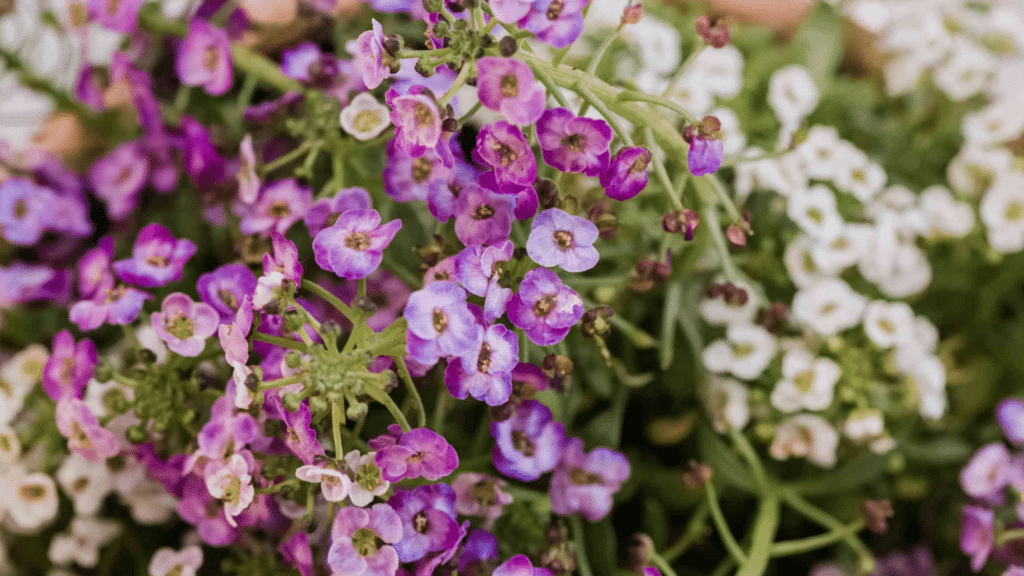
Alyssum grows well in full sun or light shade and handles cooler temperatures better than many flowers.
It needs regular but light watering and prefers soil that stays evenly moist. These flowers grow easily from seeds and spread quickly once established.
Maintenance is very low because Alyssum requires little attention.
Growth height stays low, making it perfect for borders, pots, and ground cover.
- Best Season to Plant: Early spring
- Soil Type: Well-draining soil
- Beginner Tip: Trim lightly after blooming to keep plants compact and neat
12. Bachelor’s Button
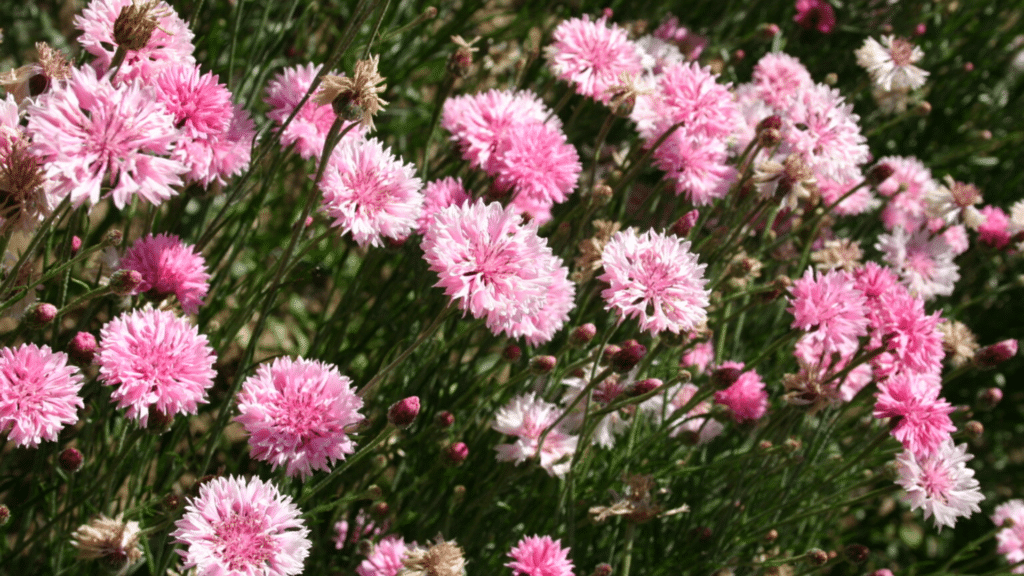
Bachelor’s buttons grow best in full sun and handle dry conditions well once established.
They need low to moderate watering and prefer soil that drains easily. These flowers grow quickly from seeds and sprout without much effort, making them a good choice for beginners.
Maintenance stays low because they tolerate poor soil and light neglect.
Their medium growth height works well in garden beds, borders, and cutting gardens.
- Best Season to Plant: Early spring
- Soil Type: Light, well-draining soil
- Beginner Tip: Plant seeds directly outdoors for better growth and stronger plants
13. Geranium
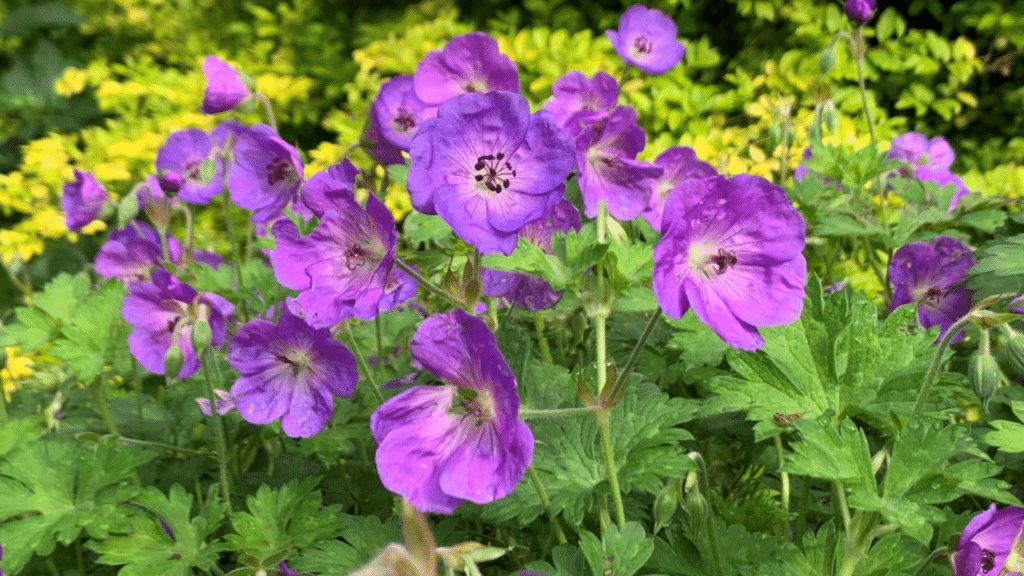
Geraniums grow best in full sun but can handle partial shade during hot days.
They need moderate watering and prefer soil that dries slightly between waterings. These flowers are usually grown from starter plants for quicker blooms.
Maintenance stays low with regular deadheading and basic care.
Growth height remains short to medium, making geraniums a good choice for pots, balconies, and garden borders.
- Best Season to Plant: Spring
- Soil Type: Well-draining soil with light nutrients
- Beginner Tip: Let the soil dry slightly between watering to prevent root problems
14. Begonia
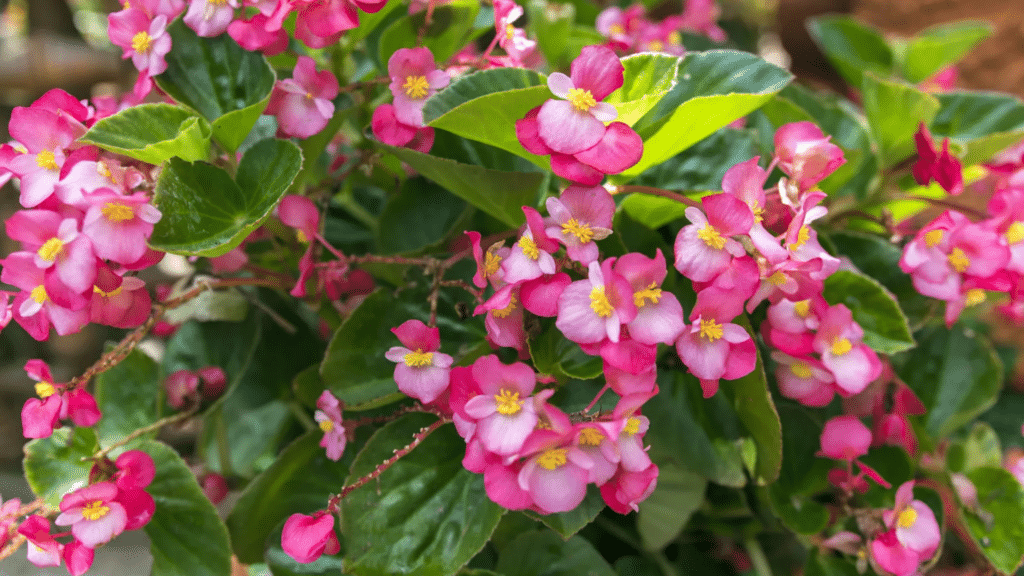
Begonias grow well in partial shade and prefer bright, indirect sunlight. They need regular watering, but the soil should drain well and never stay soggy.
These flowers are usually grown from starter plants, which helps ensure steady and reliable growth.
Begonias require low maintenance with simple care and occasional light pruning.
Their short growth height makes them ideal for indoor pots, patios, and shaded outdoor areas where direct sunlight is limited.
- Best Season to Plant: Spring
- Soil Type: Moist, well-draining soil
- Beginner Tip: Water at the base to keep leaves dry and reduce disease risk
15. Impatiens
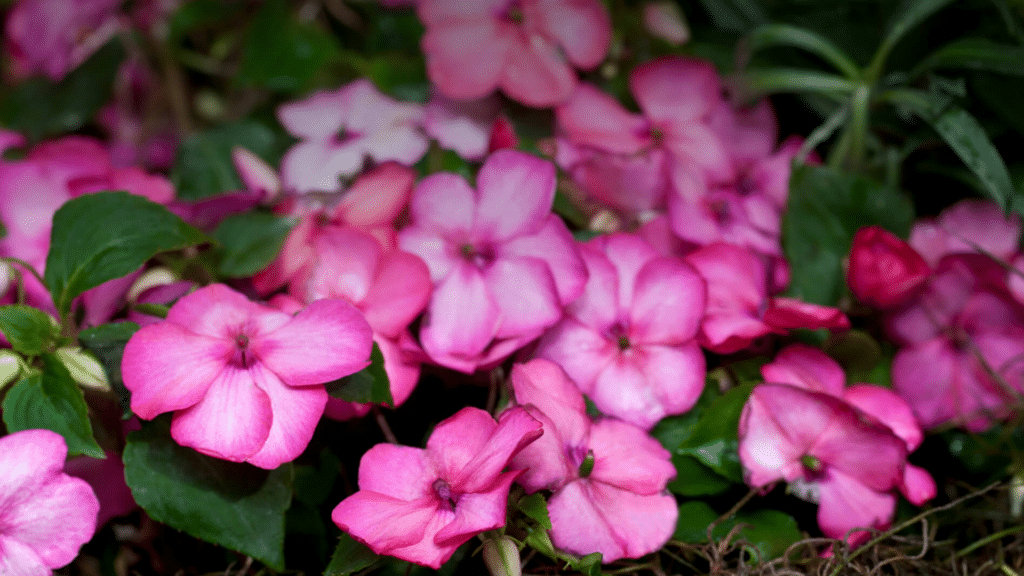
Impatiens grow best in partial shade and do not handle strong sunlight well. They prefer spots with gentle, indirect light throughout the day.
These flowers need regular watering, and the soil should stay lightly moist but not soggy. Impatiens are usually planted as starter plants, which helps them bloom faster and more reliably.
Maintenance is low and fits well into simple care routines.
Their short growth height makes impatiens a good choice for shaded garden beds, borders, hanging baskets, and containers around the home.
- Best Season to Plant: Late spring
- Soil Type: Rich, well-draining soil
- Beginner Tip: Keep soil evenly moist, especially during warm weather
16. Coneflower
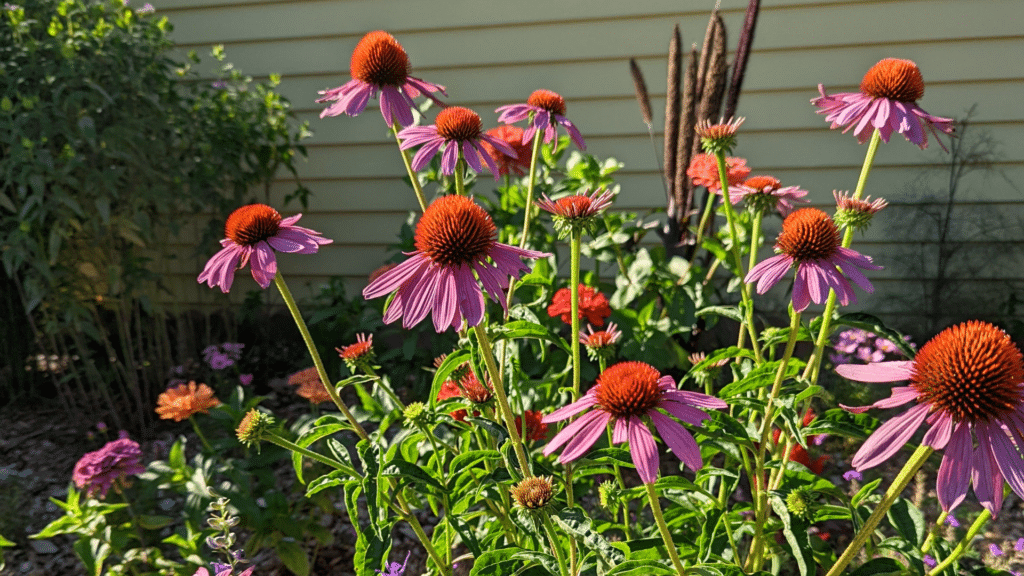
Coneflowers grow best in full sun and handle heat without trouble. They need low to moderate watering once established and prefer soil that dries between waterings.
These flowers can be grown from seeds or starter plants, making them flexible for beginners.
Maintenance stays low because coneflowers are hardy and resist pests well. Growth height is medium to tall, adding structure to garden beds while staying easy to manage with basic care.
- Best Season to Plant: Spring
- Soil Type: Well-draining soil
- Beginner Tip: Do not overwater once plants are established, as coneflowers prefer slightly dry conditions
17. Black-Eyed Susan
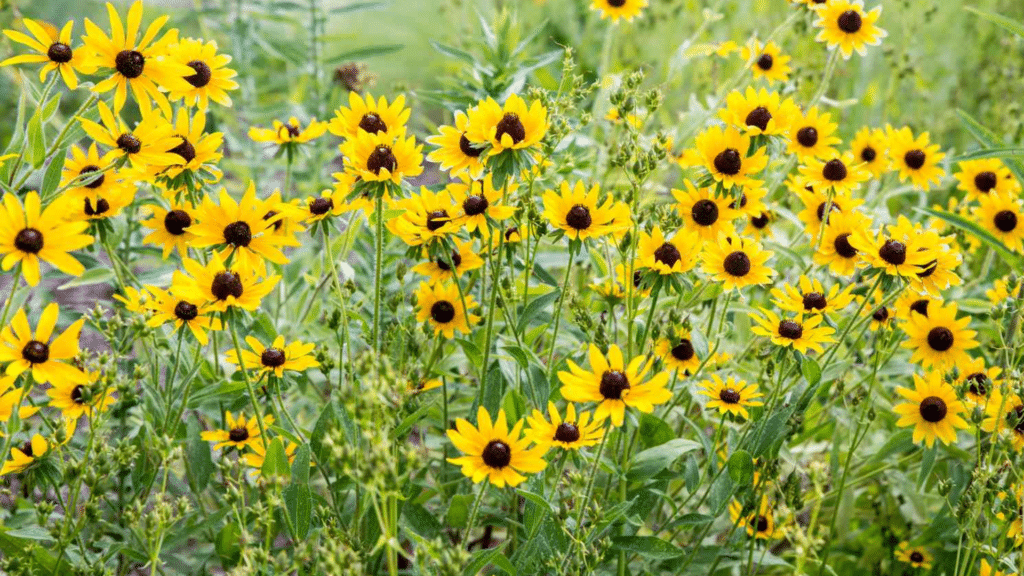
Black-eyed Susans grow best in full sun and bloom well with plenty of light.
They need moderate watering and tolerate short dry periods once settled.
These flowers grow easily from seeds and also do well as starter plants. Maintenance remains low because they handle heat, pests, and poor soil conditions.
Growth height is medium, making them suitable for garden beds and borders without extra support.
- Best Season to Plant: Spring
- Soil Type: Average, well-draining soil
- Beginner Tip: Space plants properly to allow good airflow and reduce plant stress
Common Mistakes Beginners Should Avoid
Small mistakes can affect plant growth and cause frustration. Learning what to avoid helps flowers stay healthy and makes daily care easier and more enjoyable overall.
- Overwatering plants: Too much water can rot roots and stop flowers from growing healthy.
- Poor sunlight choice: Placing flowers in the wrong light can lead to weak stems and fewer blooms.
- Using the wrong soil: Heavy or compact soil blocks roots and holds too much water.
- Planting too close together: Crowded plants compete for space, water, and nutrients.
- Ignoring drainage: Pots without drainage holes trap water and damage roots.
- Skipping basic care checks: Not checking leaves or soil often can delay fixing small problems.
How to Care for Flowers After They Bloom?
Once flowers open, a little extra care helps them stay healthy and last longer. Simple steps after blooming can also support future growth and more flowers.
1. Trim Spent Flowers and Dead Growth
After flowers bloom, trimming spent blooms helps the plant save energy. Cut off faded flowers using clean scissors or garden shears.
This stops the plant from putting effort into seed growth. It also keeps the plant looking neat and healthy. Remove yellow or dry leaves at the same time.
Do not cut healthy green stems unless needed. Regular trimming encourages new buds to form.
It also improves airflow around the plant, which lowers the chance of disease. This small habit makes a big difference over time.
2. Feed Lightly to Support New Growth
After blooming, plants need gentle feeding to stay strong. Use a light fertilizer made for flowers. Avoid heavy feeding, as it can harm roots or cause leaf growth instead of blooms.
Feeding once every few weeks is usually enough. Water the soil before adding fertilizer to prevent root stress.
Watch how the plant responds and adjust if needed.
Light feeding helps replace nutrients used during blooming. It supports steady growth without overwhelming the plant or causing long-term damage.
3. Keep Plants Healthy with Basic Care
Continue regular watering based on the plant’s needs. Check the soil before watering to avoid soggy roots.
Make sure plants still get the right amount of sunlight. Gently clean leaves to remove dust and pests. Watch for signs of stress, such as drooping or spots on leaves.
Move potted plants if the weather changes affect them.
Simple care habits help flowers recover after blooming. Healthy plants are more likely to bloom again and grow stronger over time.
Simple Tips to Grow Flowers at Home
Simple habits help flowers grow strong with less effort. These easy tips support healthy plants and make home gardening more enjoyable for beginners.
- Start with easy flowers: Pick flowers known for low care needs, fast growth, and strong resistance to small mistakes during early planting stages.
- Check the soil before watering: Touch the soil first and water only when the top layer feels dry to avoid root damage.
- Place plants in the right light: Observe sunlight during the day and move plants to spots that match their light needs.
- Use pots with drainage holes: Drainage holes allow extra water to escape and protect roots from sitting in wet soil.
- Avoid overfeeding plants: Use light fertilizer only when needed to prevent leaf burn and slow flower growth.
- Watch plants regularly: Check leaves and soil often so small problems can be fixed early without harming plant health.
Conclusion
Growing flowers at home does not have to feel hard or overwhelming. With the right choices and simple care, almost anyone can enjoy healthy plants and bright blooms.
You do not need a large garden, special tools, or years of experience to get started.
Beginning with just one or two easy flowers is enough to build confidence and learn as you go.
Small wins matter, and each plant teaches you something new. Over time, caring for flowers can become a calm and rewarding habit.
If you have been thinking about trying it, this is a good place to start.
Pick a flower you like, give it basic care, and enjoy the process. I would love to hear how it goes for you. Share your experience, tips, or questions in the comments below.