

Freezer organization tips can make a big difference when you’re juggling a busy household. I’ve seen how fast a freezer can turn into a mess when days are packed, and meals are rushed.
Food gets pushed to the back, items freeze together, and things you planned to use go missing.
You end up with freezer burn, wasted food, and wasted time. In this article, I explain why freezer clutter keeps happening in busy homes.
I also share practical freezer organization tips that fit into real life, not ideal schedules.
You’ll learn how people organize their freezers in ways they can actually keep up with. I focus on simple habits, not fancy setups.
These tips are meant to save you time, reduce waste, and make daily cooking easier.
If your freezer feels out of control, this guide gives you a clear place to start.
How an Organized Freezer Saves Time and Money
An organized freezer saves time and money in ways you notice every day. When food is easy to see, you find what you need faster on busy days instead of digging through piles.
That alone cuts stress. Seeing what you already have also helps you stop buying duplicate items at the store.
You know what’s there, so you shop with purpose. Less hidden food means fewer items forgotten in the back, which lowers freezer burn and food waste.
When food stays sealed, stacked, and grouped, it lasts longer.
Meal prep gets easier because you can plan meals around what’s already frozen instead of guessing. You spend less time searching, less money replacing wasted food, and fewer evenings feeling stuck at dinner time.
A simple system turns your freezer into a tool that works for you, not against you, even during the busiest weeks.
Freezer Organization Tips that Actually Help
These tips are based on simple habits people actually keep up with. They focus on saving time, reducing waste, and making daily use easier.
1. Group Similar Foods Together
Keeping similar foods in one place makes your freezer easier to use every day.
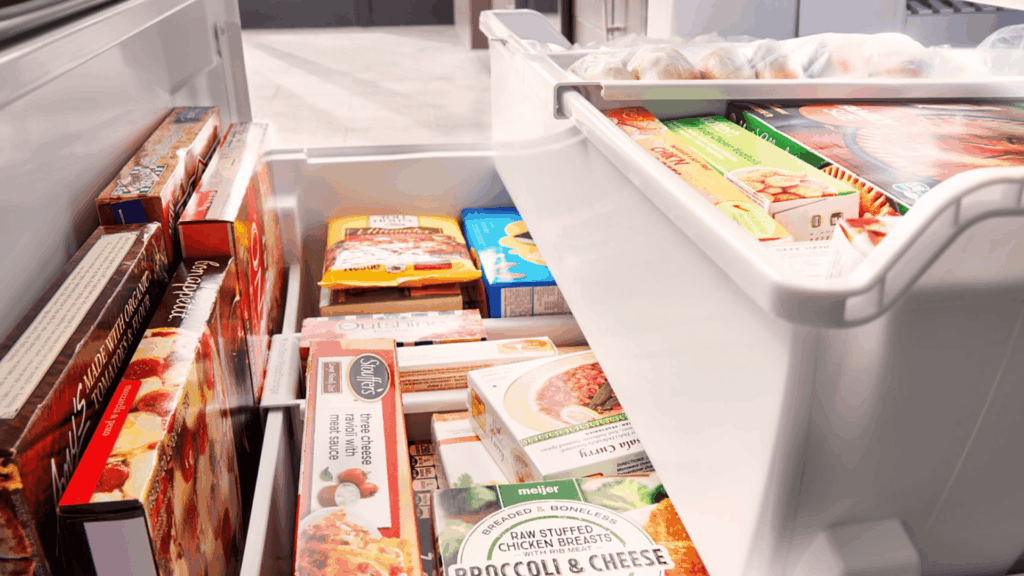
Store meats in one area, frozen veggies in another, and ready-to-eat items in their own spot. This saves time because you know exactly where to look. It also helps prevent food from getting buried and forgotten.
When everything has a basic place, you’re less likely to buy doubles or miss items hiding in the back.
Even a small freezer feels more manageable when food is grouped in a clear, simple way.
2. Use Clear Bags and Flat Storage
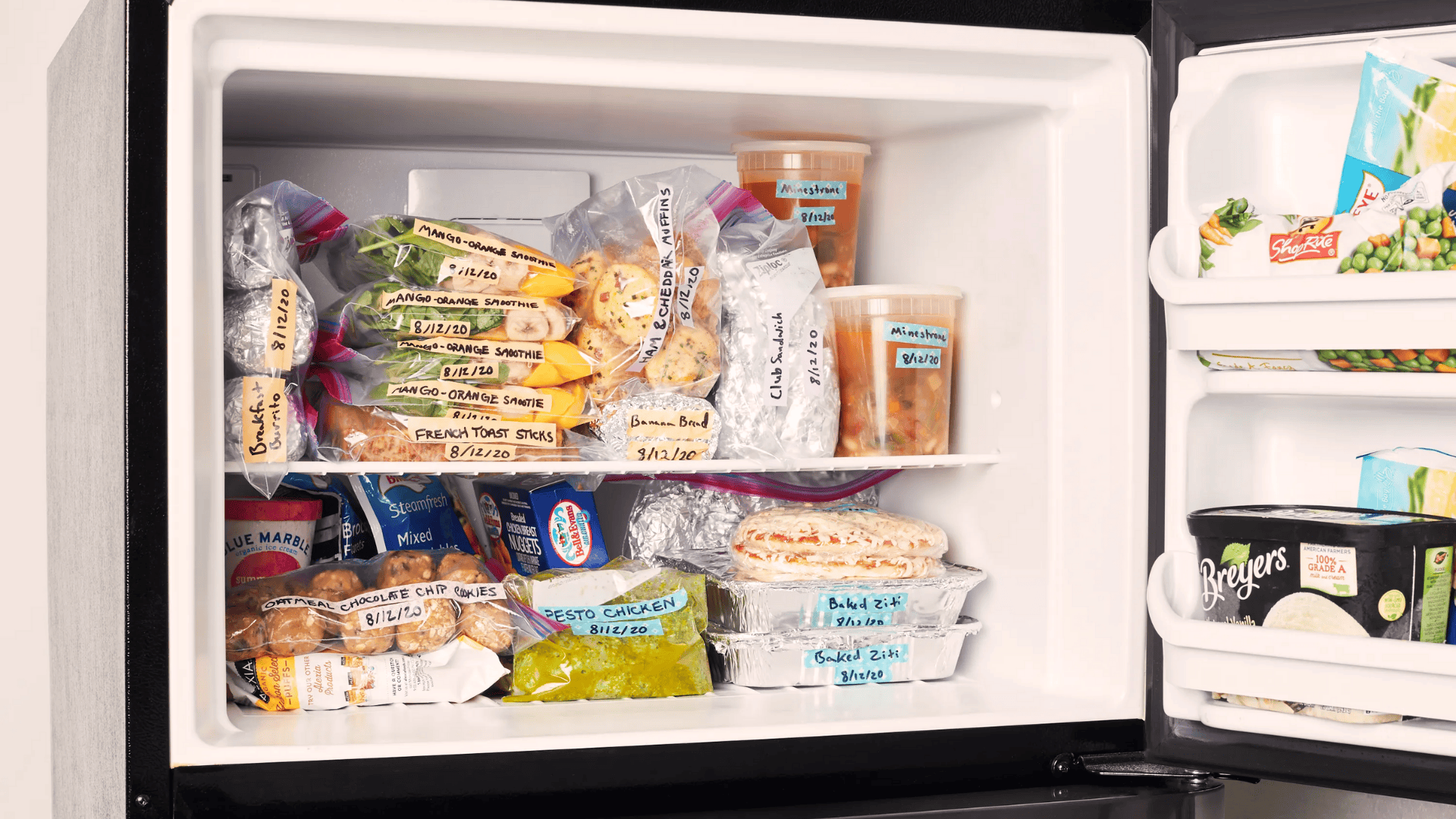
Clear freezer bags make it easier to see what you have without opening everything.
When food is visible, it gets used instead of being forgotten. Lying bags flat also saves space and helps stacks stay neat.
This works well for soups, sauces, and leftovers. Flat storage lets you line items up like files, so nothing gets lost underneath. It also speeds up thawing when you’re short on time.
This small change makes even crowded freezers feel more organized and easier to manage during busy weeks.
3. Label Everything with Dates
Labeling food helps you track what needs to be used first. Write the food name and date before freezing, even for quick leftovers.
This prevents guessing later and cuts down on freezer burn.
When you know how long something has been frozen, meal planning gets easier. Labels also stop you from keeping food longer than needed. You don’t need fancy tags.
A marker and tape work just fine. Clear labels help busy households stay organized without adding extra steps or stress.
4. Keep Most-Used Items up Front
Place the foods you grab often near the front of the freezer. This might include frozen veggies, breakfast items, or quick meals.
Easy access saves time on busy days and keeps you from digging through everything else.
When items stay visible, they get used more often instead of being forgotten. This habit also helps keep the rest of the freezer in place.
Less searching means less shifting, which keeps the freezer organized longer with very little effort.
5. Limit the Number of Food Categories
Too many sections can make a freezer harder to manage. Stick to a few clear categories that match how your household eats.
For example, group meals, snacks, meats, and vegetables. Simple categories are easier to remember and maintain. When the system is clear, everyone knows where food belongs.
This reduces clutter and saves time when putting groceries away.
A basic setup works better for busy households than a detailed system that’s hard to keep up with.
6. Do a Quick Weekly Check
A short weekly check helps keep freezer clutter from building up.
Take two minutes to look inside before grocery shopping. This reminds you what needs to be used soon and prevents buying duplicates.
You can also spot items that shifted out of place. Fixing small issues early is easier than doing a full clean later.
This habit keeps food visible, cuts waste, and helps your freezer stay organized without setting aside extra time.
7. Use Bins to Control Small Items
Small items are often the first reason a freezer starts to feel messy. Bags of fruit, snacks, or ice packs slide around and end up everywhere.
Using bins keeps these items together and makes them easy to grab.
You can pull out one bin instead of digging through the whole freezer. Bins also help stop food from falling into the back and getting forgotten.
You don’t need special containers. Any freezer-safe bin works as long as it fits your space and habits.
8. Freeze in Meal-Sized Portions
Freezing food in meal-sized portions makes busy days easier. Large frozen blocks take longer to thaw and often lead to leftovers going back into the freezer.
Smaller portions thaw faster and get used right away. This helps reduce waste and saves time during dinner prep.
Meal-sized portions also stack better, which keeps your freezer neat.
When food is ready in the amount you need, you’re more likely to use it instead of ordering takeout or letting it sit too long.
9. Leave Some Open Space
It may feel smart to fill every inch of your freezer, but leaving some open space actually helps.
A little room makes it easier to move food around without causing a mess. You can see what you have and reach items without knocking things over.
Open space also helps air flow better, which keeps food frozen evenly.
When your freezer has room to adjust, it stays organized longer and feels less stressful to use during busy weeks.
Real-Life Freezer Organization Wins from Busy Homes
On Reddit, people often share what actually works for freezer organization in real homes.
Many rely on organizing by shelf or zone, with meats grouped by type so nothing gets lost. Others store food upright in reused boxes, like jars or soup boxes, to keep labels visible without moving items around.
Labeling with dates is a common habit because it helps rotate food and cut down on freezer burn.
Freezing food flat, especially meat, also comes up often since it saves space and stacks well. Some users keep a simple list or board to track what’s inside.
The shared theme is flexibility. These systems are basic but effective because they fit daily routines.
With clear labels, simple zones, and easy storage, busy households keep their freezers organized without extra work.
Small Freezer vs Large Freezer: What Changes
The right setup depends on how much space you have and how you use it. Simple changes can make any freezer easier to manage.
| Area | Small Freezer | Large or Chest Freezer |
| Space use | Stack flat items and keep food in clear, slim bags | Use bins or baskets to group food by type |
| Organization style | Fewer categories work better to avoid clutter | More categories help prevent food from getting lost |
| Storage tools | Use small containers and freezer-safe bags | Use labeled bins and dividers for sections |
| Food access | Keep often-used items in the front | Keep a simple top-down system for quick access |
| Flexibility | Adjust often as needs change | Rearrange zones as food types rotate |
Conclusion
Getting your freezer under control doesn’t have to happen all at once. Start with one or two tips that feel doable this week. Even small changes can make daily meals less stressful.
The goal isn’t perfect rows or matching bins. It’s a freezer that helps you move faster and waste less food.
Busy households need systems that work on tired nights and rushed mornings. If a setup feels hard to keep up with, it’s okay to change it.
The organization should support your routine, not add pressure.
A simple system you stick with will always work better than a complicated one you avoid.
Take a few minutes today to improve one small part of your freezer. When you’re done, share what helped you most in the comments below.