

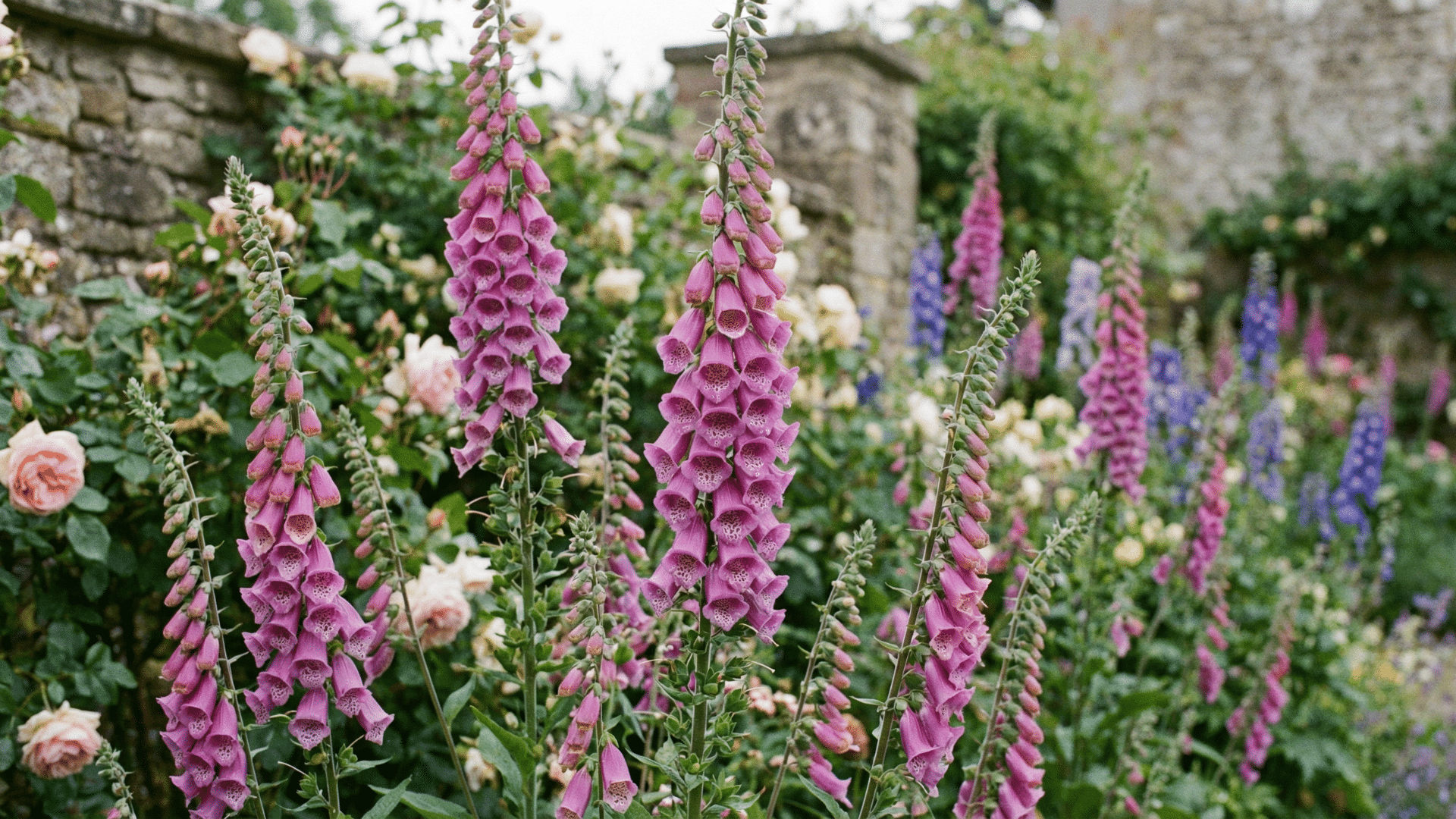
Foxglove plants have long drawn attention for their tall stems and bold clusters of flowers.
They bring strong vertical lines to gardens and often become a focal point during bloom. Beyond their visual appeal, they hold an important place in botanical study and plant history.
This guide presents clear, reliable information about the foxglove plant and its background. It explains how the plant is classified and what defines its main characteristics.
With a better understanding of its structure and identity, the foxglove becomes more than just a striking garden plant.
Understanding Foxglove Plant
The foxglove plant is a flowering plant best known for its tall spikes lined with tubular, bell-shaped blooms. It belongs to the genus Digitalis, a group of herbaceous plants valued both for ornamental beauty and scientific importance.
The name “foxglove” is believed to come from old English folklore, though its scientific name carries greater botanical weight.
In gardens, the foxglove plant often creates a dramatic vertical accent. In the wild, it grows along woodland edges, open fields, and hillsides.
While it is admired for its appearance, it is also recognized for its chemical compounds, which have been studied for medical use.
Botanical Classification of the Foxglove Plant
The foxglove plant belongs to the following botanical group:
- Kingdom: Plantae
- Clade: Angiosperms (flowering plants)
- Clade: Eudicots
- Order: Lamiales
- Family: Plantaginaceae
- Genus:Digitalis
In older classification systems, foxglove was placed in the Scrophulariaceae family. However, advances in plant genetics led botanists to reclassify it as a member of the Plantaginaceae.
The genus name Digitalis comes from the Latin word “digitus,” meaning finger. This refers to the flower’s tubular shape, which resembles the tip of a glove fitted over a finger.
Origin and Native Habitat
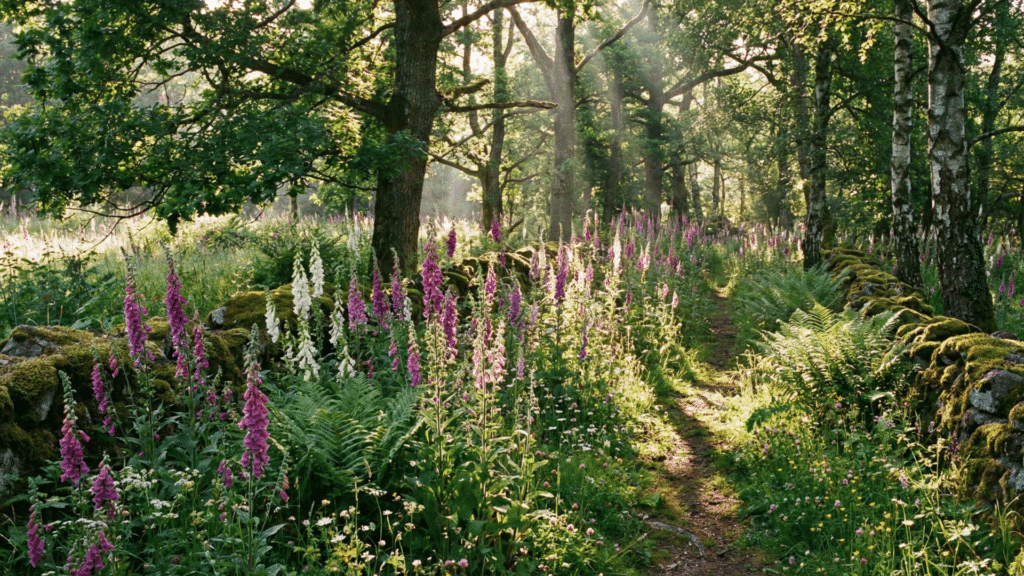
The foxglove plant is native to Europe, western Asia, and parts of North Africa. Over time, it has been introduced to North America and other regions, where it grows in both cultivated gardens and naturalized settings.
In its native habitat, foxglove prefers:
- Woodland clearings
- Hillsides
- Forest edges
- Open meadows
It thrives in areas with partial sunlight and well-drained soil. The plant often grows in slightly acidic soils and adapts well to temperate climates. In some regions outside its native range, it has become naturalized and spreads freely.
Physical Characteristics of the Foxglove Plant
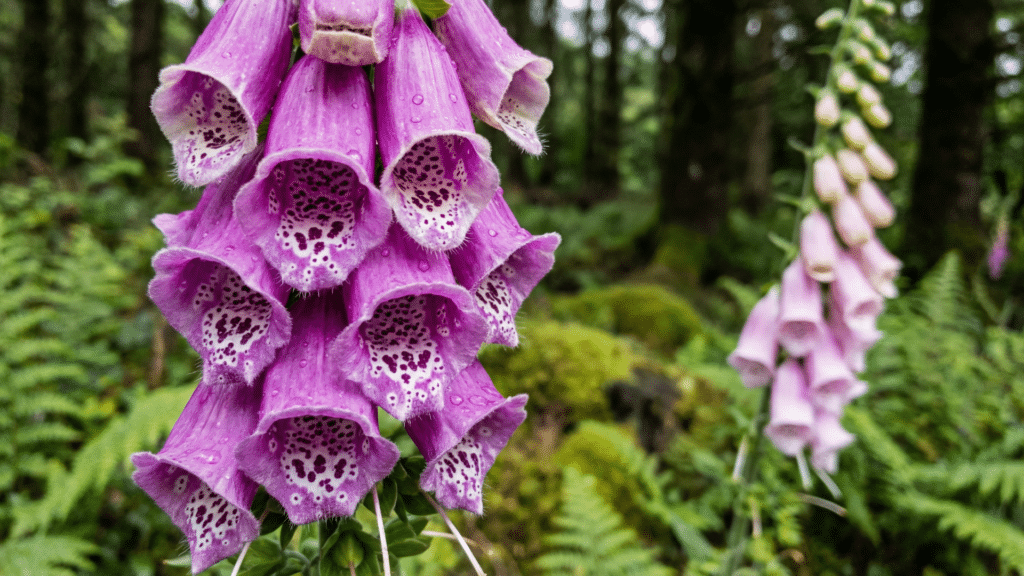
The foxglove plant stands out for its tall form and distinctive blooms, which give it a strong presence in gardens and natural landscapes.
Height and Growth Habit
The foxglove plant has a tall, upright growth pattern that makes it easy to recognize. Most species grow between 2 and 5 feet tall, though some may grow higher in rich soil and favorable conditions.
It develops in stages, beginning with a low rosette of leaves close to the ground. Later, a central flowering stalk rises from this base.
This tall spike becomes the plant’s most noticeable feature and adds strong vertical structure to garden beds and borders.
Leaves
Foxglove leaves are large, oval to lance-shaped, and arranged in a basal rosette at ground level during the first year of growth. The leaves are typically:
- Dark to medium green
- Slightly hairy
- Soft in texture
- Finely toothed along the edges
As the flowering stalk forms, smaller leaves grow alternately along the stem.
Flowers
The most defining feature of the foxglove plant is its flowers. The blooms are tubular and hang downward in a one-sided cluster along the tall spike. Each flower resembles a small bell or thimble.
Common flower colors include:
- Purple
- Pink
- White
- Cream
- Yellow
Many flowers display spotted patterns inside the tube. These spots guide pollinators such as bees toward the nectar source. The inside markings also help identify specific species within the Digitalis genus.
Life Cycle of the Foxglove Plant
The foxglove plant follows a clear growth pattern that usually spans two years, although some varieties may live longer. The table below outlines its typical life cycle stages.
| Stage | Time Frame | What Happens | Key Features |
|---|---|---|---|
| Seed Germination | Early growing season | Seeds sprout when exposed to light and moisture. | Tiny seedlings with small initial leaves appear close to the soil. |
| First Year Growth (Vegetative Stage) | Year 1 | The plant focuses on leaf and root development. | Forms a low basal rosette; no flowers are produced. |
| Winter Dormancy | End of Year 1 | Growth slows or pauses in colder months. | Rosette remains close to the ground while roots stay active underground. |
| Second Year Growth (Flowering Stage) | Year 2 | A tall central stalk rises from the rosette. | Rapid vertical growth begins in spring. |
| Blooming Period | Late spring to summer | Tubular flowers open gradually along the spike. | Flowers bloom from bottom to top, attracting pollinators. |
| Seed Production | Late summer | Pollinated flowers form seed capsules. | Capsules are dry and release hundreds of small seeds. |
| End of Life (Biennial Types) | After seed set | Many foxglove plants complete their life cycle. | The parent plant often dies after producing seeds, though self-seeding may continue the cycle. |
Common Species of Foxglove
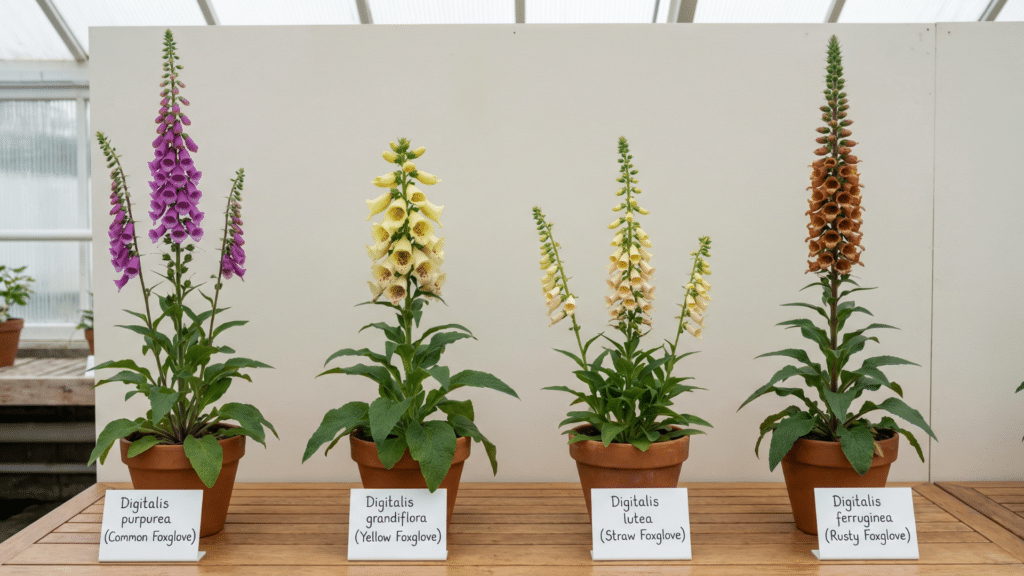
The genus Digitalis contains several distinct species, each with its own growth pattern, flower color, and botanical traits, though all share the classic foxglove form.
- Digitalis purpurea: This is the classic foxglove plant commonly seen in gardens. It features purple or pink flowers with distinctive interior spots. It is usually biennial and highly adaptable.
- Digitalis grandiflora: This species produces large, yellow flowers and tends to behave more like a perennial. It is shorter and slightly more compact than D. purpurea.
- Digitalis lutea: A smaller species with pale yellow flowers, often used in naturalistic plantings.
- Digitalis ferruginea: Known as rusty foxglove, this species has copper-toned flowers and a tall, slender form.
Each species shares the characteristic tubular bloom but differs in color, height, and growth habit.
Key Biological Traits of the Foxglove Plant
Beyond its appearance, the foxglove plant has important biological, chemical, and ecological characteristics that shape its role in both nature and human history.
Flower Structure and Reproduction
The foxglove plant produces tubular, downward-facing flowers arranged along one side of a tall spike. This structure is adapted for insect pollination, particularly by large bees such as bumblebees.
When a bee enters the flower to collect nectar, it brushes against the pollen-bearing parts. The pollen attaches to the bee’s body and is carried to the next bloom, allowing cross-pollination.
The spotted markings inside each flower act as visual guides, helping pollinators locate nectar efficiently. After blooming, the plant forms small seed capsules that contain hundreds of tiny seeds.
Once mature, the capsules dry and split open, releasing seeds into the soil. Because these seeds need light to germinate, the foxglove plant often self-seeds successfully in garden beds.
Toxicity and Medicinal Importance
All parts of the foxglove plant contain cardiac glycosides, including digitoxin and digoxin. These compounds affect heart function by influencing the strength and rhythm of heart contractions.
In carefully measured medical doses, purified digitalis compounds have been used to treat certain heart conditions.
Despite its medical value, the raw plant is toxic and unsafe to consume. Symptoms of poisoning may include nausea, vomiting, dizziness, and irregular heartbeat.
The plant’s medical significance became widely recognized in the late 18th century through the research of William Withering, whose work helped establish digitalis as a treatment in clinical medicine.
Ecological and Garden Role
The foxglove plant supports pollinators by providing nectar during its flowering season. Bumblebees are especially attracted to its deep, tubular blooms.
In natural habitats such as woodland edges and meadows, it contributes to biodiversity and seasonal visual interest.
In garden design, foxglove adds height and vertical emphasis. It pairs well with roses, ferns, and other perennials in mixed borders.
Because it readily self-seeds, it can naturalize over time, creating a layered and informal planting style. In non-native regions, its spread should be monitored to avoid competition with local plant species.
Common Myths About the Foxglove Plant
The foxglove plant is often misunderstood, and several common beliefs about it do not accurately reflect its true characteristics.
Myth 1: It is Safe Because It is Medicinal
Although foxglove has recognized medical uses in carefully processed pharmaceutical form, the raw plant itself is highly toxic. Consuming any part of it without proper medical refinement can lead to serious health complications.
Myth 2: It is Difficult to Grow
In suitable climates with well-drained soil, the foxglove plant is relatively easy to grow. It often self-seeds naturally, which allows new plants to appear each year with little effort.
Myth 3: It is Only Purple
While purple is the most commonly recognized color, foxglove flowers are not limited to one shade. Depending on the species or variety, blooms can also appear in white, pink, yellow, and soft pastel tones.
The Bottom Line
The foxglove plant has earned its place in both cultivated landscapes and natural habitats because of its distinct growth pattern and recognizable form.
Its presence often signals healthy pollinator activity and balanced soil conditions. At the same time, awareness of its toxic properties is essential for safe gardening.
When properly understood, foxglove can be appreciated for its structure, seasonal rhythm, and scientific relevance.
If this guide clarified your questions, consider sharing it or reading more plant profiles to strengthen your overall botanical knowledge.