

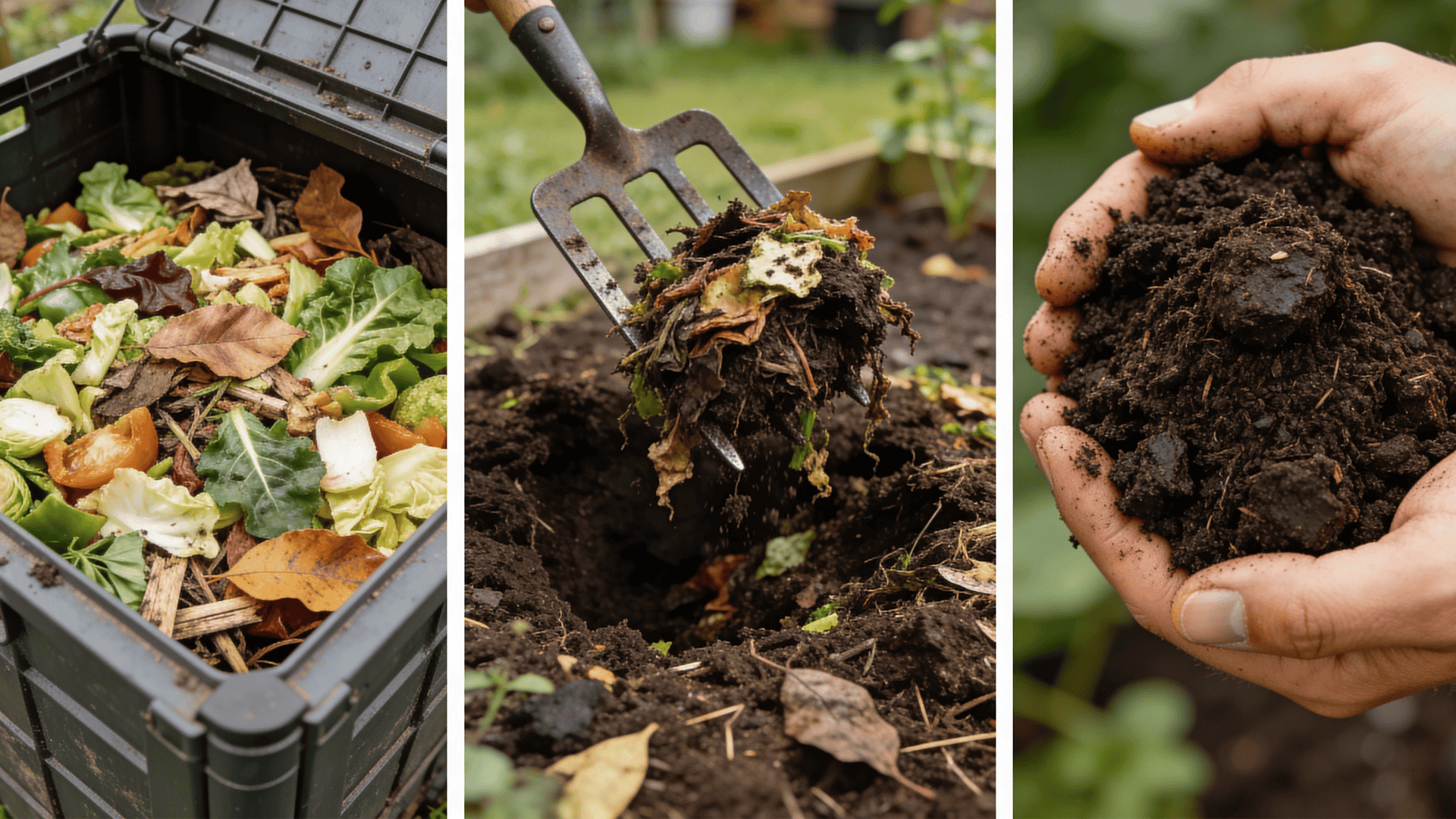
Composting is a simple, natural way to turn kitchen scraps and yard waste into rich, healthy soil amendments.
But one question I often had when I started was: how long does it actually take to make compost?
If you’re like me, you probably don’t want to wait too long and are hoping for faster results. The truth is, composting can take anywhere from a few weeks to several months, depending on how you manage it.
In this blog, I’ll give you the answer to how long compost takes and what you can expect with different methods.
I’ll also explain the stages of composting, the key factors that affect the speed, and simple ways you can make compost faster.
By the end, you’ll know exactly how to get better and quicker results.
How Long Does It Take to Make Compost?
Making compost can take2 weeks to 6 months, depending on how you manage it.
If you turn the pile often, keep it moist, and mix green and brown materials well, you can get compost fast, sometimes in 2 to 4 weeks.
This is called hot composting. If you just leave the pile with little effort, it may take 3 to 6 months or more, which is slower but still works.
Warm weather helps break down waste faster, while cold weather slows things down.
Smaller pieces also decompose more quickly than large chunks. Air is important, too, so turning the pile helps speed things up.
In the end, the time depends on care, weather, and materials. If you stay consistent, you will get rich compost sooner.
What Reddit Users Say About Composting in Different Conditions
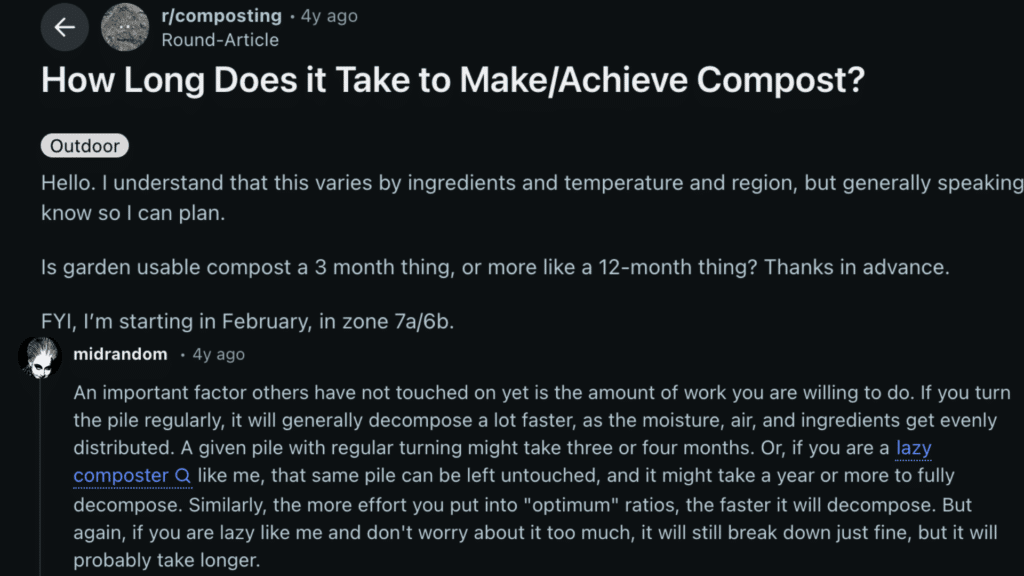
A Reddit discussion on composting shows that most compost piles take a few weeks to several months to become ready, depending on care and conditions.
This aligns with common timelines, where outdoor compost can take 1 month to 1 year.
Faster results happen when you turn the pile often, keep it slightly moist, and use a good mix of green and brown materials.
Warm weather also helps speed up the process. Slower compost usually lacks airflow or the right balance of materials. Cutting waste into smaller pieces can also help it break down faster.
You will know the compost is ready when it looks dark, crumbly, and soil-like. It should also have a clean, earthy smell, not a bad odor.
Composting Timeline Breakdown
Composting moves through clear stages, each with its own changes and pace.
| Stage | Time Range | What Happens |
|---|---|---|
| Active Stage (Days to Weeks) | A few days to a few weeks | Microorganisms begin breaking down soft materials, such as fruit and vegetable scraps. Heat starts to build as activity increases. This stage helps start fast decomposition. |
| Thermophilic Stage (Weeks) | Several weeks | High heat speeds up the breakdown of tougher materials. Heat-loving microbes stay active. Harmful bacteria and weed seeds are reduced during this stage. |
| Curing Stage (Weeks to Months) | Weeks to months | The pile cools down and becomes more stable. Slow breakdown continues. Nutrients settle, making the compost safe and ready for use in soil. |
Factors that Affect Compost Speed
Compost does not always finish at the same speed. Several key factors control how quickly organic material breaks down into rich, usable compost.
1. Type of Materials
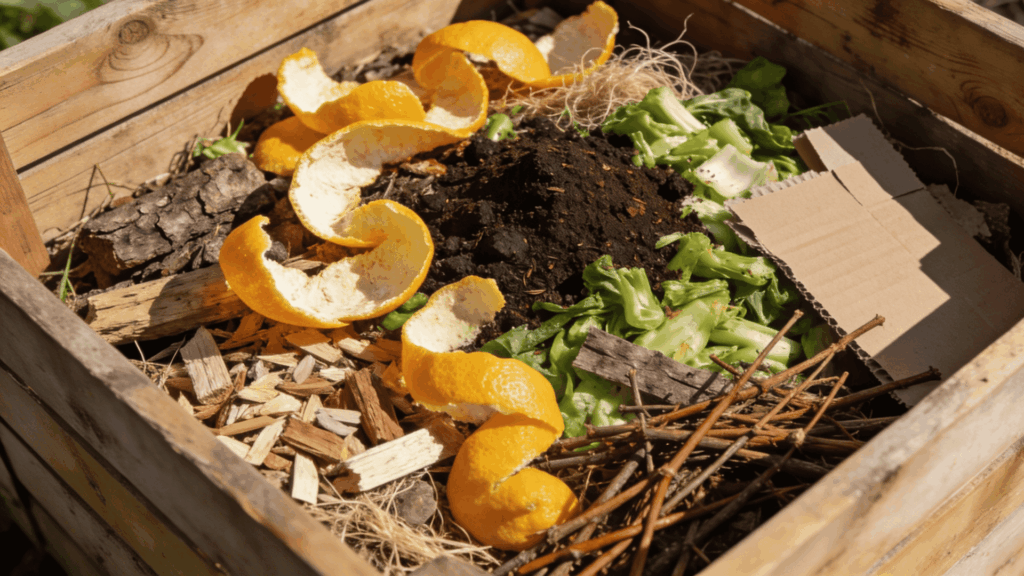
The materials added to a compost pile have a big impact on how fast it breaks down.
Soft materials like fruit peels, vegetable scraps, and coffee grounds are easily digestible by microbes. They break down within weeks.
Hard materials like wood chips, thick branches, and cardboard take much longer to break down.
The tougher the material, the more time microbes need to work through it. Mixing both types helps keep the process moving at a steady pace.
2. Balance of Greens and Browns
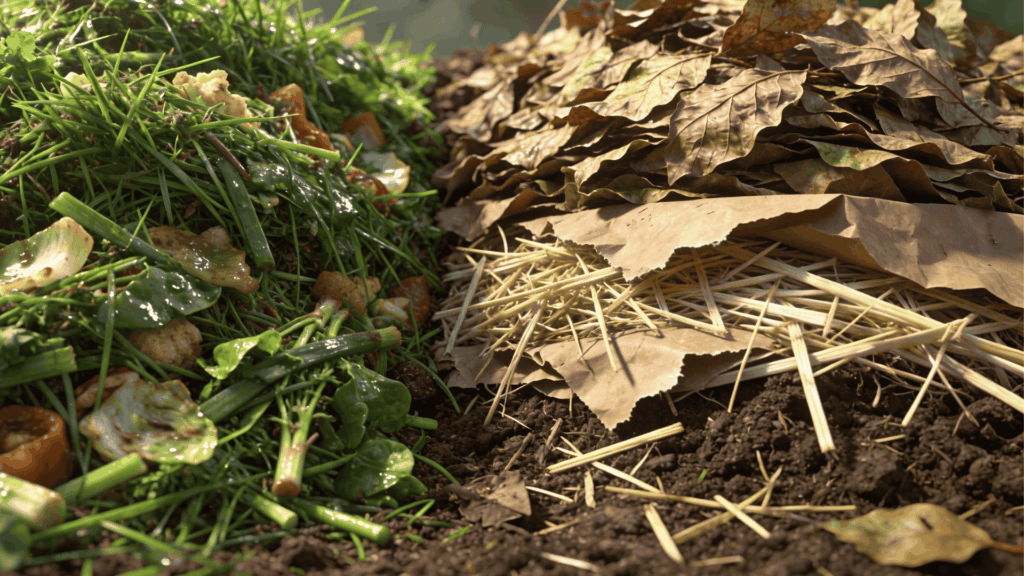
Microbes need both nitrogen-rich greens and carbon-rich browns to do their job well. Greens include grass clippings, food scraps, and fresh plant trimmings.
Browns include dry leaves, straw, and paper.
Without enough greens, the pile stays cold and slow. Without enough browns, it turns wet and smelly.
A good ratio is roughly 2 to 3 parts browns to 1 part greens. This balance gives microbes the right fuel to break down material efficiently.
3. Temperature, Moisture, and Oxygen
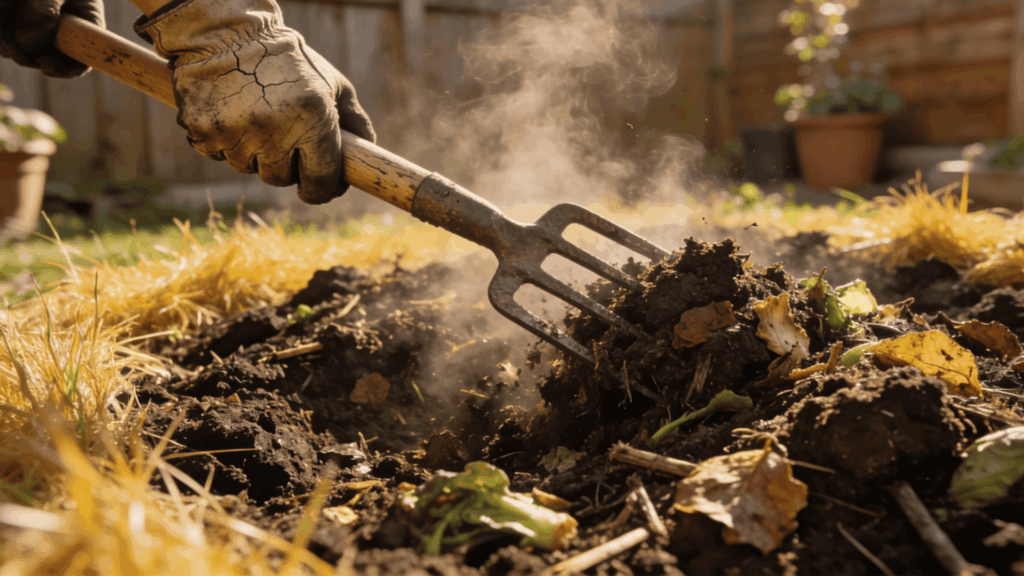
A warm, moist, and well-aerated pile breaks down far faster than one that is cold, dry, or packed tight.
Heat speeds up microbial activity, while moisture keeps those microbes alive and working.
Oxygen is just as important; turning the pile regularly brings in fresh air and prevents it from going stagnant. The ideal moisture level feels like a wrung-out sponge.
In hot weather, decomposition can move quickly when all three conditions remain favorable.
4. Size of Compost Pieces
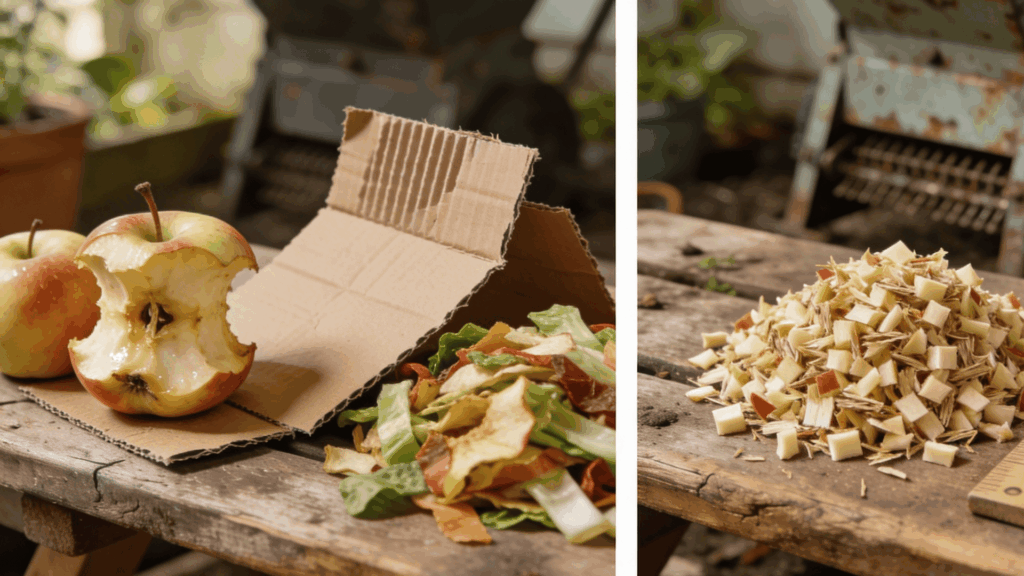
Smaller pieces give microbes more surface area to work on, which speeds up the breakdown process.
Whole apple cores or large chunks of cardboard take far longer to decompose than shredded or chopped versions of the same materials.
Running materials through a shredder or cutting them up before adding them to the pile makes a noticeable difference. Aim for pieces no larger than two inches.
This one step alone can cut composting time down by several weeks.
5. Quantity of Compost
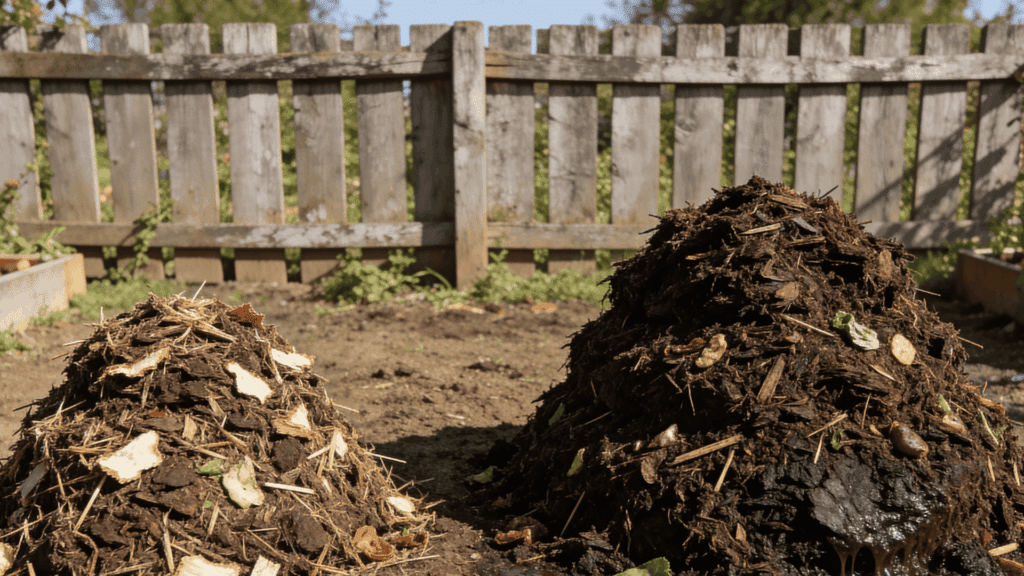
The amount of material in a pile affects how well it retains heat.
Small piles tend to heat up faster but lose warmth quickly, which can slow the process down during cooler periods.
Larger piles hold heat longer and remain active for longer, but they can take longer to fully finish. A pile that is at least three feet wide and three feet tall is generally considered a good working size.
Carefully managing volume helps maintain consistent composting conditions throughout the season.
Fast Compost vs Good Compost: What to Know
Fast compost can be useful, but speed is not everything. Faster compost isn’t always better if it has not fully broken down.
Immature compost can harm plants by pulling nutrients from the soil or causing root stress. It may also still contain heat or harmful microbes.
A common real-life case is adding half-finished compost to a garden bed. Plants may grow slowly or show yellow leaves because the compost is still active.
Curing time matters because it lets the compost cool and settle. Nutrients become stable and safe for plant roots.
Well-cured compost improves soil health, supports strong growth, and gives better long-term results.
Proven Ways to Speed up Composting
Small changes in setup and care can help the compost break down faster. Simple habits keep microbes active and conditions balanced.
1. Chop Materials into Small Pieces
Cutting kitchen waste and yard scraps into smaller pieces helps them break down faster. Large items take more time because microbes work on the surface first.
Smaller pieces give more space for bacteria to act quickly. Chopped materials also heat up faster, which supports faster composting.
This step can reduce the overall time by weeks.
It also helps create a more even mix inside the pile, which keeps the process moving at a steady and healthy pace.
2. Turn the Compost Regularly
Turning the compost pile adds oxygen, which is important for fast breakdown. Microbes need air to stay active and work well.
If the pile is not turned, it may slow down or develop a bad smell.
Mixing the pile every few days helps keep everything active. It also spreads heat evenly, which improves decomposition.
Regular turning keeps the compost clean and balanced. This simple step can speed up the process and help materials break down more evenly.
3. Keep the Right Moisture Level
Moisture helps microbes stay active and break down materials faster. The pile should feel like a damp sponge, not dry or soaking wet. If it becomes too dry, decomposition slows down.
If it is too wet, airflow gets blocked. Adding water when dry and mixing in dry materials when wet keeps the balance.
This helps maintain proper conditions for composting. Good moisture levels support faster results and prevent issues like bad odors or slow breakdown.
4. Balance Green and Brown Materials
A proper mix of green and brown materials helps compost form quickly. Greens include food scraps and grass, while browns include dry leaves and paper.
Greens provide nitrogen, and browns provide carbon. Both are needed for healthy compost.
Too many greens can make the pile wet and smelly, while too many browns can slow it down.
Keeping a balanced mix supports steady breakdown. This balance helps microbes work better and improves the speed of composting.
5. Build the Pile in Layers
Layering compost materials helps improve airflow and structure. Start with a layer of browns, then add greens, and repeat the pattern.
This setup helps keep the pile balanced and prevents clumping. Good airflow allows microbes to stay active and break down waste faster.
Layers also help control moisture and temperature inside the pile.
This method supports even decomposition and reduces slow spots. A well-layered pile can speed up composting without extra effort.
Signs Your Compost Is Ready
Finished compost shows clear changes in look, smell, and texture. These signs help confirm it is safe to use in soil.
- Dark Color: The compost turns deep brown or almost black, showing that materials have fully broken down and are no longer fresh or raw.
- Crumbly Texture: It feels loose and soil-like, not sticky or clumpy, which means the structure is stable and easy to mix into soil.
- Earthy Smell: A clean, natural smell like fresh soil shows healthy decomposition, while any bad odor means it is not fully ready yet.
- No Visible Scraps: Food waste and plant pieces are no longer easy to spot, except for a few small bits that may take longer to break down.
- Cool Temperature: The pile no longer feels warm, showing that microbial activity has slowed and the compost is stable.
- Dry but Slightly Moist Feel: It holds light moisture without being wet, making it easy to handle and spread in garden beds.
Conclusion
Composting does not need to feel complicated or slow once the basics are clear. A simple setup, the right mix of materials, and a bit of patience can lead to steady results over time.
Each compost pile works at its own pace, so small adjustments along the way can make a real difference.
Instead of rushing the process, focus on maintaining balance and letting nature do the work.
Over time, the effort turns into rich, healthy compost that supports better soil and stronger plants. If composting is already part of a routine or just getting started, every experience adds value.
Share what has worked, what has not, and any tips in the comments below. Real examples can help others improve their composting process, too.
Frequently Asked Questions
Can Compost be Used Before It Fully Finishes?
Partly finished compost may still be active and unstable. It can affect plant growth and soil balance. Fully cured compost is safer and supports better root health and steady nutrient release.
Does Composting Work in Cold Weather?
Cold temperatures slow microbial activity, which delays composting. The process does not stop completely. Insulation, larger piles, and proper material balance help keep decomposition moving during colder periods.
How Can Finished Compost Be Identified Easily?
Finished compost looks dark, crumbly, and soil-like. It has an earthy smell and no clear food pieces. A stable texture and cool temperature show that the compost is ready for use.
Is It Possible to Compost without Turning the Pile?
Composting can still happen without turning, but it takes longer. Lack of oxygen slows microbial activity. Turning adds air, speeds up breakdown, and helps maintain even conditions throughout the pile.
Can Too Much Water Slow Down Composting?
Excess moisture reduces airflow, creating soggy conditions. This slows decomposition and may cause odor issues. Balanced moisture, similar to a wrung-out sponge, helps maintain proper compost activity.