

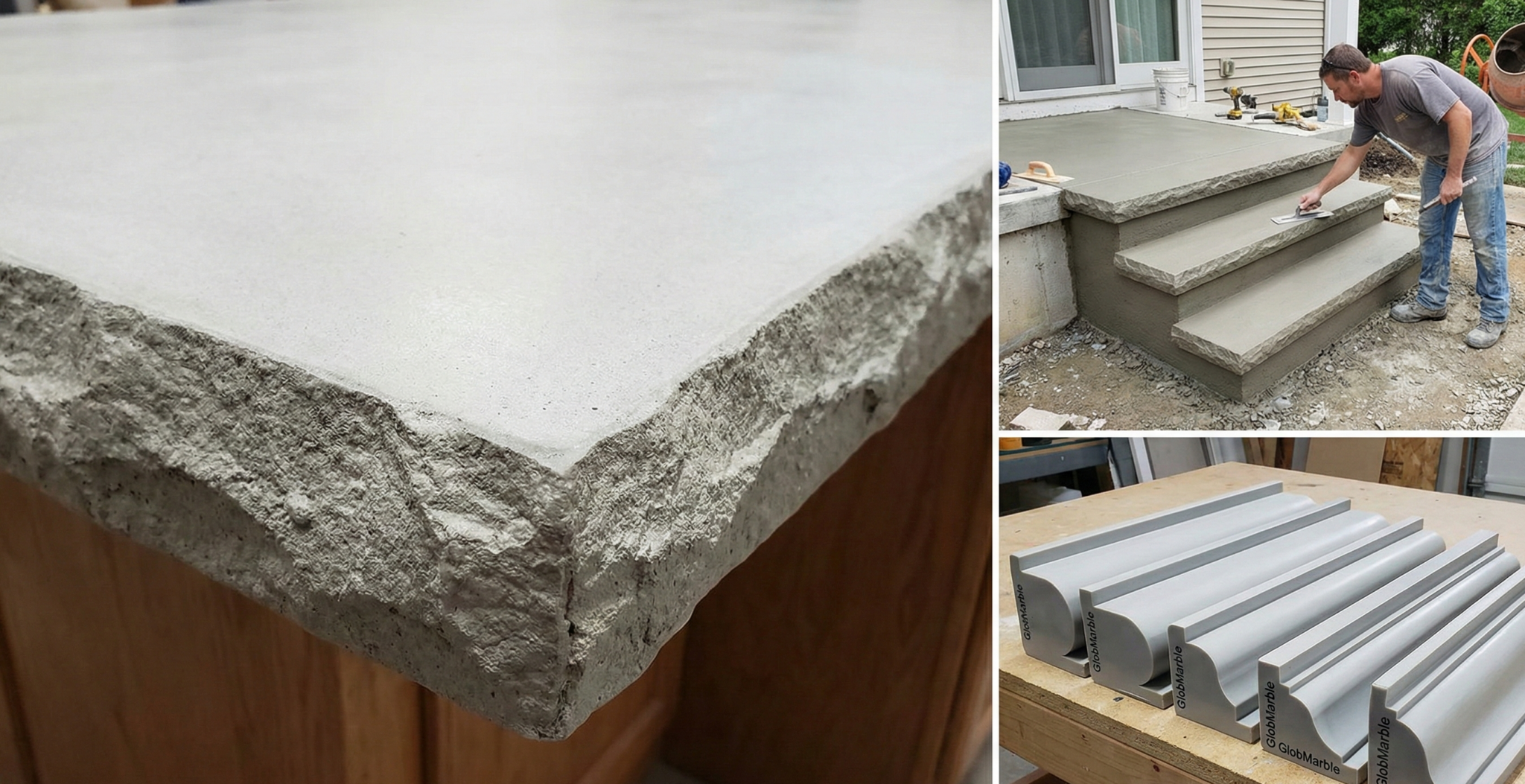
Homeowners and DIY makers are no longer limited to factory-made countertops and stairs. With professional concrete edge molds, you can pour custom pieces that look designer-made while staying budget-friendly.
In this guide, you’ll learn what concrete edge molds are, how they’re used in real projects, and what to consider when choosing high‑quality forms like those available at GlobMarble’s dedicated category for countertop edge molds and step liners at professional concrete edge molds.
What Are Professional Concrete Edge Molds?
Professional concrete edge molds are reusable forms that shape the outer edge of a concrete piece while it cures. They’re commonly used for:
- Kitchen and bathroom countertops
- Laundry and utility room worktops
- Outdoor kitchen and bar counters
- Fireplace hearths and mantels
- Concrete steps, porch edges, and stair treads
Instead of a plain, sharp concrete edge, these molds give you a clean, repeatable profile — from soft bullnose edges to bold chiseled stone textures.
Why Edge Detail Matters in Concrete Projects
Edge profiles are a small percentage of your project’s surface area, but they have a big impact on how finished it looks.
- Comfort and safety. Rounded or eased edges feel better against arms and are less likely to chip.
- Design consistency. Matching countertop edges and stair fronts ties a room or outdoor area together visually.
- Higher perceived value. A well-defined edge profile makes a DIY project look like a custom, professionally fabricated surface.
For concrete, where the material itself is often exposed, a professional edge treatment is one of the fastest ways to upgrade the overall look.
Types of Concrete Edge Profiles You Can Create
With the right set of edge molds, you can match almost any interior or exterior style.
1. Bullnose and Half-Bullnose
Bullnose edges feature a fully or partially rounded front.
- Great for modern kitchens and family homes
- Comfortable to lean on
- Soften the look of thick concrete tops
2. Ogee and Decorative Profiles
Ogee profiles use S‑shaped curves and stepped details.
- Ideal for more traditional or classic interiors
- Pair well with detailed cabinet doors and trim
- Add a furniture-like feel to kitchen islands and vanities
3. Chiseled and Rock Edges
These profiles mimic roughly broken or hand‑chiseled stone.
- Perfect for rustic, farmhouse, or outdoor kitchen designs
- Add depth and shadow lines along the front edge
- Pair nicely with textured or stamped concrete surfaces
4. Clean Eased and Chamfered Edges
Simple eased or chamfered edges offer a minimalist look.
- Great for contemporary spaces
- Easy to keep clean
- Emphasize the simple geometry of the slab
Professional concrete edge molds, like the profiles featured in GlobMarble’s Countertop Edge Molds & Step Liners category at professional concrete edge molds, cover all of these styles and more.
Where Concrete Edge Molds Fit in the Project Workflow
Whether you’re building a DIY countertop or forming exterior steps, edge molds are installed early in the process and influence both looks and function.
- Plan the slab dimensions. Decide the thickness, overhang, and overall size of your countertop or step.
- Build the mold box or step forms. Plywood or melamine is commonly used as the base form.
- Attach the concrete edge molds. Professional forms are fixed to the inside perimeter using screws, foam rails, or double‑sided tape, depending on the product.
- Apply a mold release. This helps the cured concrete separate cleanly and preserves texture.
- Place and consolidate the concrete. Use your chosen mix (traditional or GFRC) and make sure it fills the edge profiles fully.
- Cure and demold. Once cured, remove the edge molds to reveal a sharp, detailed profile that’s ready for finishing and sealing.
Because quality molds are made from flexible polyurethane, they can be reused across multiple projects without losing definition.
Key Advantages of Using Professional-Grade Edge Molds
Upgrading from improvised edges to dedicated, professional concrete edge molds offers several benefits:
Repeatable Results
Once you’ve dialed in a profile you like, you can reuse the same mold on multiple pieces:
- Matching counters in kitchen and bathrooms
- Coordinated indoor and outdoor bars
- Consistent stair edges on steps and landings
Cleaner Finishes With Less Hand Grinding
Well‑designed edge molds reduce the need for heavy grinding or hand‑shaping after the pour. That means:
- Faster turnaround per project
- Less dust and noise in your workspace
- Edges that stay true to the original design profile
Compatibility With DIY and Pro Setups
High‑quality edge forms work in both precast and cast‑in‑place projects. Whether you’re pouring in a garage shop or forming on top of existing cabinets, you can:
- Use them with standard concrete mixes or GFRC
- Integrate them with foam rails, step liners, and reinforcement
- Combine them with stains, pigments, and sealers for a complete finish
What to Look For When Choosing Professional Concrete Edge Molds
Not all molds are created equal. When shopping, pay attention to:
- Material quality. Professional molds are usually made from durable polyurethane rubber, not brittle plastic.
- Texture detail. Look for sharp, well‑defined profiles and realistic stone or wood textures.
- Length and flexibility. Longer forms (for example, 8‑ft sections) reduce seams and are flexible enough to follow gentle curves.
- Reusability. Properly stored and used with a good release agent, quality molds can be reused many times.
- Range of profiles. A well‑organized catalog, like the one at professional concrete edge molds, makes it easier to mix and match different shapes across projects.
Practical Project Ideas Using Concrete Edge Molds
If you’re planning content or DIY tutorials around concrete, these projects showcase the value of pro‑grade edge forms:
- DIY concrete kitchen island: A thick slab with a bullnose or eased edge profile for a soft, modern look.
- Outdoor bar or grill station: Chiseled stone edges that tie into exterior masonry and hardscaping.
- Bathroom vanity top: A compact countertop with an ogee or decorative profile for a boutique‑hotel feel.
- Front porch steps: Step liners and edge molds that give risers a clean, uniform finish and improve curb appeal.
Each of these projects benefits from molds designed specifically for concrete edges — they keep lines straight, profiles consistent, and the overall build more professional.
Tips for Better Results With Concrete Edge Molds
To get a crisp, reliable finish:
- Double‑check that molds are level and fully supported before pouring.
- Use a quality release agent compatible with both the mold material and your mix.
- Vibrate or tap the formwork to remove air pockets along the edges.
- Demold carefully to avoid chipping fresh corners.
- Seal finished pieces to protect against stains and highlight texture.
Professional concrete edge molds are a small investment that can dramatically upgrade DIY countertops, steps, and outdoor surfaces. By choosing high‑quality forms from a specialized source like GlobMarble’s Countertop Edge Molds & Step Liners selection at professional concrete edge molds, you get clean lines, consistent profiles, and a finished look that feels truly custom.