

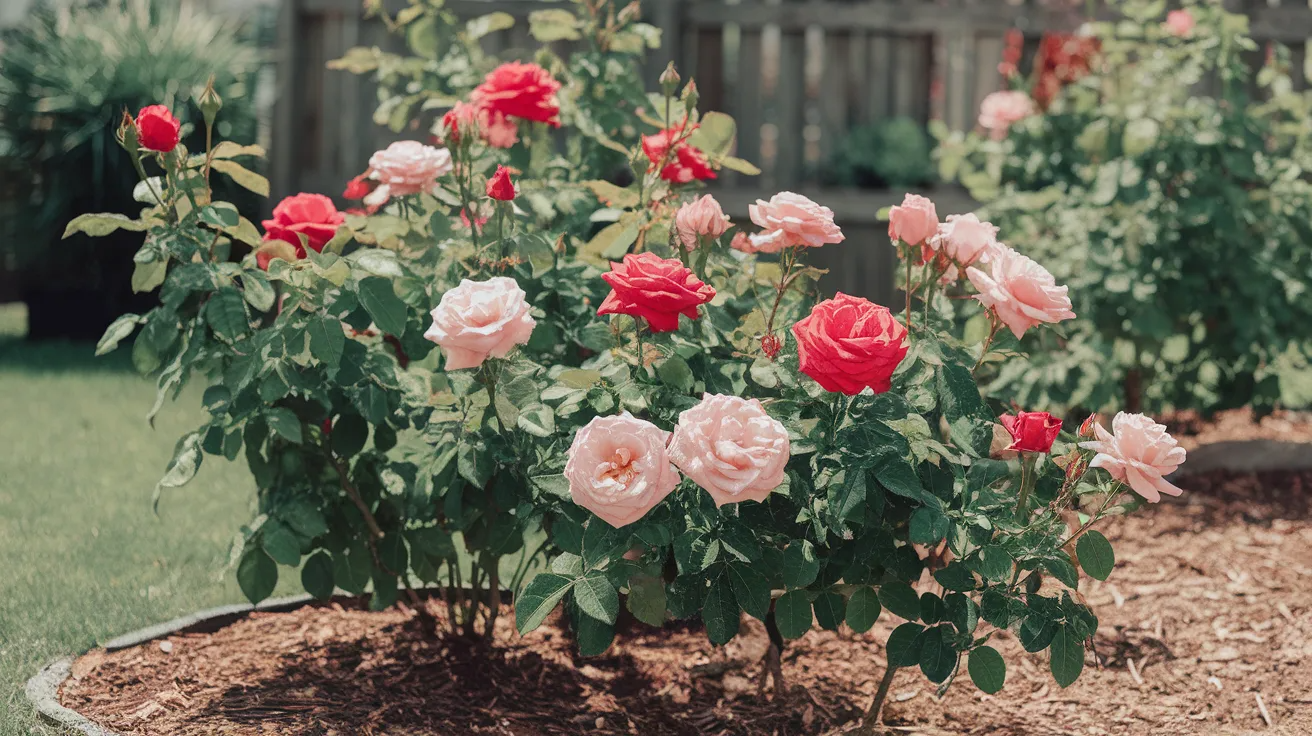
Rose bushes can bring beauty and color to any yard. They bloom with soft petals and lovely scents. But to keep them looking their best, they need the right care.
Without it, the leaves may turn yellow, and the flowers may stop growing. Many problems can be avoided with simple steps.
This guide shares clear, easy ways to care for a rose bush at home. It covers what to do each season and how to help roses grow strong.
With the right care, rose bushes can stay healthy and full of blooms. The process isn’t hard, and it gets easier with time. Start with the basics and build from there.
How to Start Growing a Rose Bush
Roses grow best when given the right care from the start. They need plenty of sunlight, good soil, and space to grow.
Most rose bushes like at least 6 hours of sun each day. The soil should drain well and be slightly acidic. Watering deeply once or twice a week helps roots grow strong.
Mulch around the base helps retain moisture and prevents weeds. Pruning, feeding, and checking for pests also play a big part.
With these simple steps, a rose bush can stay healthy and full of blooms. Learning the basics first makes caring for rose bushes easier in every season.
Types of Rose Bushes to Know
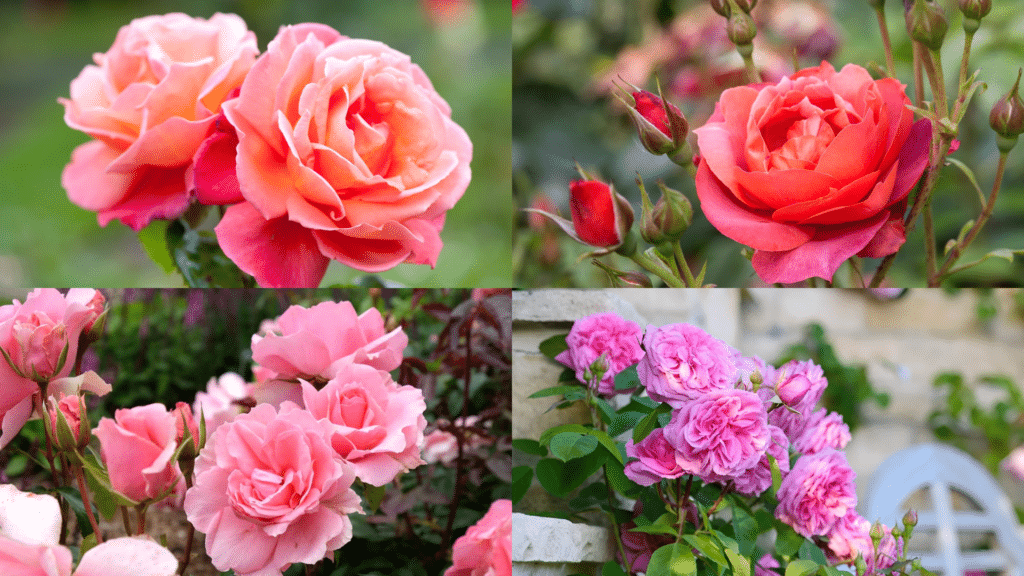
There are many kinds of rose bushes, and each one grows in a different way. Some are better for small spaces, while others can climb walls or cover large areas. Picking the right type helps make rose bush care easier and helps your roses thrive where they are planted.
Common Rose Types:
- Hybrid Tea Roses: These are tall roses with long stems and big blooms. Each stem usually has one large flower. They’re great for cutting and putting in vases.
- Floribunda Roses: These bloom in groups. The flowers are smaller than hybrid teas, but there are more of them. They grow bushy and full, and they bloom many times a year.
- Shrub Roses: These roses are tough and easy to care for. They grow wide and don’t need as much trimming. They’re great for larger spaces or low-maintenance gardens.
- Climbing Roses: These have long, bendy stems that need support. You can grow them on fences, trellises, or walls. They don’t climb by themselves; you have to tie and train them.
- Miniature Roses: These are small roses that remain compact. They’re perfect for pots, small beds, or garden borders. They grow just like regular roses but take up less space.
Easiest for Beginners:
If you’re new to rose gardening, look for disease-resistant varieties like:
- Knock Out Roses
- Drift Roses
- Flower Carpet Roses
These types require less spraying and are more forgiving if you miss a step in the care routine.
Where to Plant a Rose Bush
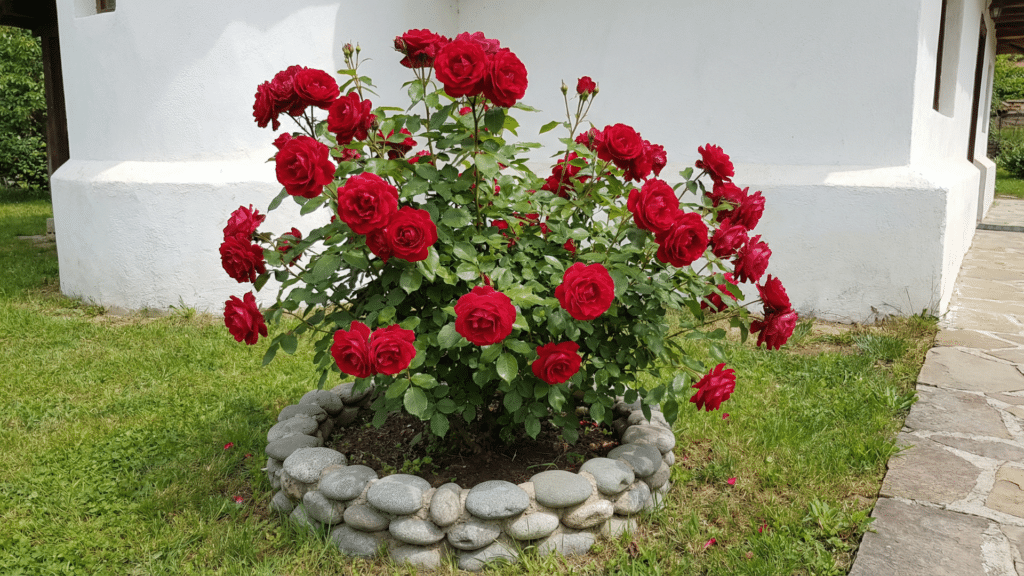
Picking the right spot is the first big step in rose bush care. Roses need sun, air, and good soil to grow strong and full of blooms. If planted in the wrong place, they may not flower much or could get sick easily.
Ideal Growing Conditions:
- Sunlight: Roses love the sun. They need 6–8 hours of full sun every day. Morning sunlight is best because it helps dry leaves quickly, which prevents disease.
- Air Flow: Plant roses where air moves freely. This helps keep the leaves dry and healthy. Avoid planting too close to fences or walls with no breeze.
- Soil Type:
- Soil should be loose, not packed down, and must drain well.
- Roses hate “wet feet,” so don’t plant them where water pools after rain.
- Add compost if your soil is hard clay or sandy.
-
Soil pH: Slightly acidic soil is best. Ideal pH is between 6.0 and 6.5. You can test your soil with a simple pH kit from the garden store.
When to Plant Rose Bushes
Planting at the right time helps roses grow strong roots and bloom better later. The best time depends on where you live and how cold or warm it gets each year.
| Climate Type | Best Time to Plant | Why It Works |
|---|---|---|
| Cold Climates | Early spring (after the last frost) | Soil warms up, and roots have time to grow before summer. |
| Mild Climates | Early spring or late fall | Both seasons give roots time to settle in mild weather. |
| Warm Climates | Late fall (before the first frost) | Roots grow during the cooler winter, and plants bloom in early spring. |
| Avoid Planting | During heavy rain or extreme heat | Wet soil can rot roots, and heat can dry them out too fast. |
How to Care for a Rose Bush: Step-by-Step Guide
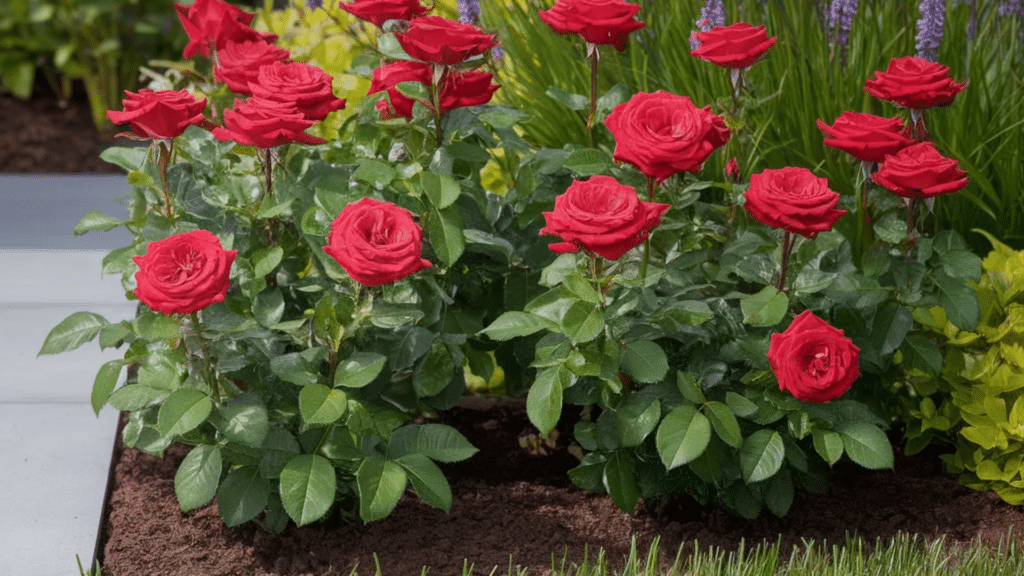
To keep your rose bush healthy and blooming, follow these simple steps. Each one helps your plant grow stronger, look better, and stay healthy.
1. Planting the Rose Bush
Dig a hole twice as wide and as deep as the root ball. Mix compost or aged manure into the bottom of the hole.
Place the rose bush so the bud union (where the roots meet the stem) is at ground level. In cold climates, place it just below the soil line.
Fill the hole with soil and press it down lightly. Water deeply after planting. Spread 2 to 3 inches of mulch around the base, but keep it 1 to 2 inches away from the stem.
2. Watering the Rose Bush
Roses need 1 to 2 inches of water each week. Water new bushes every 2 to 3 days for the first few weeks.
Water older bushes once or twice a week. Always water deeply so the roots grow strong. Use a soaker hose or drip system.
Avoid spraying the leaves. Water early in the morning to keep the plant dry before night.
3. Feeding and Fertilizing
Feed roses in early spring when new leaves appear. Use rose food every 4 to 6 weeks until late summer.
Stop feeding 6 to 8 weeks before the first frost. Use a balanced rose fertilizer, such as 10-10-10, or natural options like compost tea or banana peels. Don’t overfeed, or the roots may burn.
4. Pruning the Rose Bush
Prune in early spring when buds begin to swell. In the fall, only trim lightly to shape the bush. Use clean pruners.
Cut about ¼ inch above an outward-facing bud. Remove any dead, thin, or crossing branches. Leave 3 to 5 strong canes. Pruning improves air flow and keeps the bush healthy.
5. Deadheading Old Flowers
Cut off fading flowers just above the first stem with five leaves. This helps the plant grow new blooms faster.
Deadhead once a week during bloom season. Use clean scissors or pruners. Stop deadheading by late summer to let the plant rest for winter.
6. Mulching the Base
Mulch keeps soil moist and cool, and helps block weeds. Use bark, pine needles, compost, or shredded leaves.
Spread 2 to 3 inches of mulch around the base. Keep mulch at least 1 inch away from the main stem to prevent rot.
Common Rose Bush Problems
Even healthy rose bushes can run into trouble. Most problems are easy to spot and fix if caught early. Use this table to learn what signs to watch for and how to solve them.
| Problem | What It Looks Like | How to Fix It |
|---|---|---|
| Yellow Leaves | Leaves turn yellow, may fall off early | Check soil drainage and avoid overwatering |
| No Blooms | Few or no flowers during the growing season | Give more sunlight, use rose fertilizer, and prune lightly |
| Weak Growth | Thin stems, small leaves, slow plant growth | Feed with balanced fertilizer and water deeply once a week |
| Black Spot | Round black spots with yellow edges on leaves | Remove infected leaves and spray with fungicide |
| Powdery Mildew | White powder on leaves and buds | Improve air flow and spray with a mix of baking soda and water |
| Rust | Orange or rust-colored spots under leaves | Prune infected leaves and avoid overhead watering |
How to Keep Bugs Off Rose Bushes
Roses can attract many bugs, but most are easy to handle if you catch them early. Knowing what to look for and how to treat each pest helps keep your rose bush healthy.
- Aphids: Tiny green, black, or white bugs that gather on new growth. They suck plant sap and cause leaves to curl. Spray them off with water or use insecticidal soap.
- Spider Mites: Very small pests that leave fine webbing on leaves. Leaves may turn yellow or dry out. Hose off the webs and spray neem oil to control them.
- Japanese Beetles: Shiny beetles that eat leaves and flowers. They are easy to spot and should be picked off by hand early in the day. You can also use traps placed away from the rose bush.
- Thrips: Tiny insects that hide inside flower buds. They cause petals to look brown or deformed. Remove and throw away damaged buds. Avoid composting them.
Tips for Pest Control: Check the plant often, especially under leaves and near buds. Prune away any badly damaged areas. Use natural sprays like neem oil or insecticidal soap for regular care. Early control works best before pests spread.
Year-Round Rose Bush Care Checklist
| Season | Tasks |
|---|---|
| Spring | Prune, feed, mulch, watch for bugs and disease |
| Summer | Water weekly, deadhead, feed every 4–6 weeks |
| Fall | Stop feeding, remove fallen leaves, trim lightly |
| Winter | Protect roots, add mulch, don’t prune heavily |
To Conclude
Growing a healthy rose bush takes time, care, and patience. Each season brings new tasks, but small steps can lead to big results.
Roses may have their challenges, but with the right care, they can bloom strong and bright. Focus on what your plant needs, stay consistent, and don’t worry if it’s not perfect.
Even small improvements can make a big difference over time. Keep learning, stay observant, and enjoy the process.
Every rose bush tells its own story. Ready to care for yours? Use these tips as your guide and start growing with confidence today.