

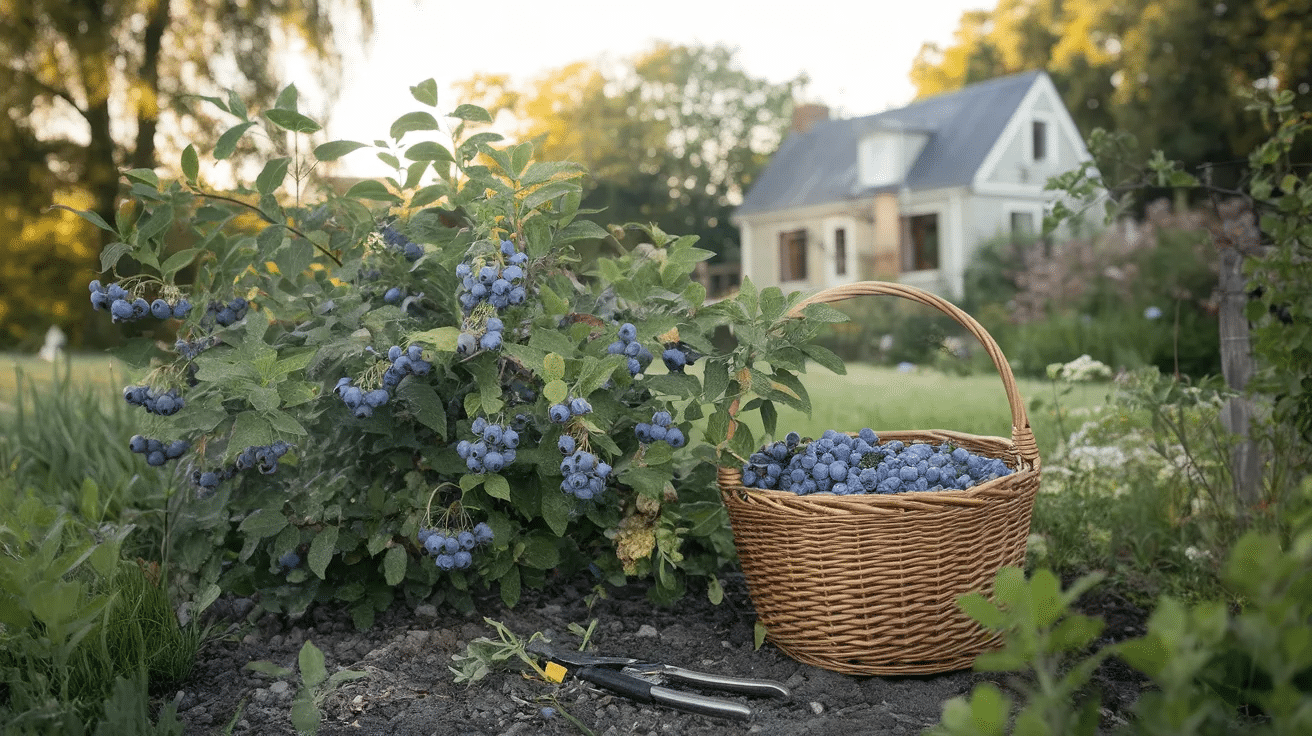
Blueberry bushes need more than just sun and soil. They grow best with the right kind of care, at the right time.
Without it, they may not produce many berries or could stop growing well. This blog is here to help with that. It covers how to care for blueberry bushes through each stage, from planting to pruning.
Many people plant them but don’t know how to water, feed, or trim them the right way. With a few simple steps, anyone can learn to keep their bushes healthy and strong.
If the goal is more berries and better growth, a good care routine makes all the difference.
Why Grow Blueberry Bushes and Which Type to Choose
Blueberries are sweet, healthy, and fun to grow at home. They don’t take up much space, and they can grow in the ground or in containers.
With good care, a blueberry bush can give fresh berries for many years. These bushes also look great in the yard with green leaves, small white flowers in spring, and red leaves in fall.
Before planting, it helps to choose the right type of blueberry bush for your area. The three main types are:
- Highbush: The most common type for home gardens. It grows about 5–7 feet tall.
- Lowbush: A smaller type that spreads more. It often grows best in cold areas.
- Rabbiteye: A good choice for warm climates. It usually needs another blueberry plant nearby to help make fruit.
Pick the type that fits your climate and space. A local garden center can help you choose the best one.
Where to Plant Blueberry Bushes
Picking the right spot is one of the most important steps when growing blueberry bushes. These plants need plenty of sunlight, well-drained soil, and the right pH level to grow strong and produce lots of berries.
Full Sun is Best
Blueberry bushes need at least 6 to 8 hours of full sun each day.
Sunlight helps the plants grow well and make more berries. If they don’t get enough sun, they may grow slowly and produce less fruit.
Choose Well-Drained Soil
Blueberries do not like wet roots. If the soil holds too much water, the roots can rot. To avoid this, plant them in well-drained soil.
Stay away from low spots where water collects after it rains. You can also plant them in raised beds or on a small slope to help water drain better.
Soil Should Be Acidic
Blueberries grow best in acidic soil with a pH between 4.5 and 5.5. Most garden soil isn’t this acidic, so it’s a good idea to test it with a kit from a garden store.
If the pH is too high, you can lower it by mixing in peat moss, pine bark, or a soil acidifier. Getting the soil right before planting will help your bushes stay healthy and grow more berries.
How to Plant Blueberry Bushes
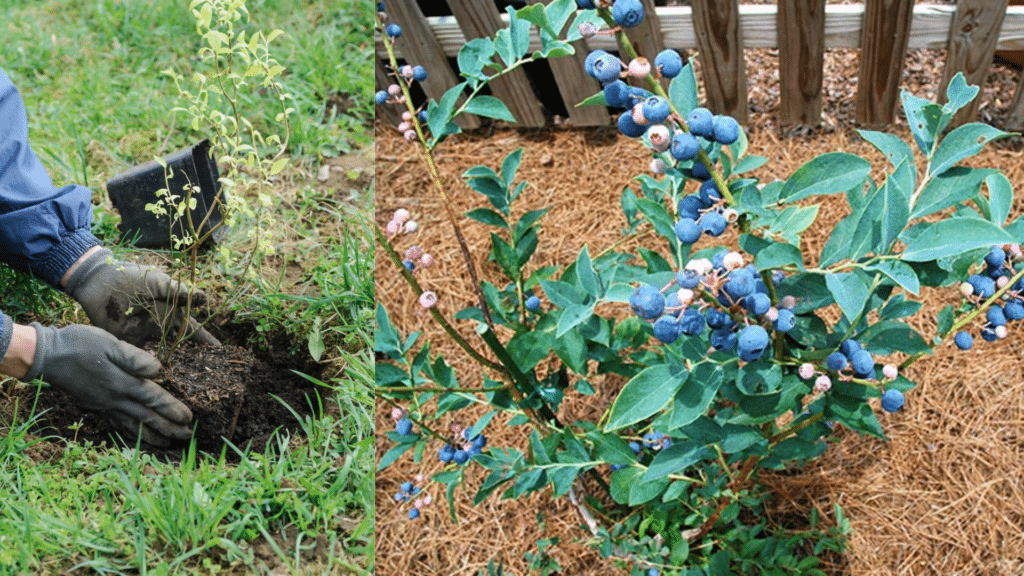
Planting blueberry bushes the right way helps them grow strong and healthy. Here’s what to know before you begin.
When to Plant
The best time to plant blueberry bushes depends on your local climate: early spring or fall.
- The soil should not be frozen.
- The weather should be cool, not hot or too cold.
Planting during these times gives the roots a chance to settle before the growing season starts.
How to Space Blueberry Bushes
Giving each bush enough space helps with growth and air flow.
- Plant each bush 4 to 5 feet apart.
- If planting in rows, leave 8 to 10 feet between rows.
This spacing makes it easier to walk between the bushes and pick berries later.
Step-by-Step Planting Guide
Follow these steps to plant blueberry bushes correctly:
- Dig a hole that is twice as wide and just as deep as the root ball.
- Place the bush in the hole. The top of the root ball should be level with the ground.
- Mix compost or peat moss into the soil, then fill the hole around the plant.
- Water the well right after planting to help the roots settle.
- Add mulch around the base of the plant to keep the soil moist and prevent weeds.
A little care at planting time can make a big difference later on.
How to Care for Blueberry Bushes Daily and Year-Round
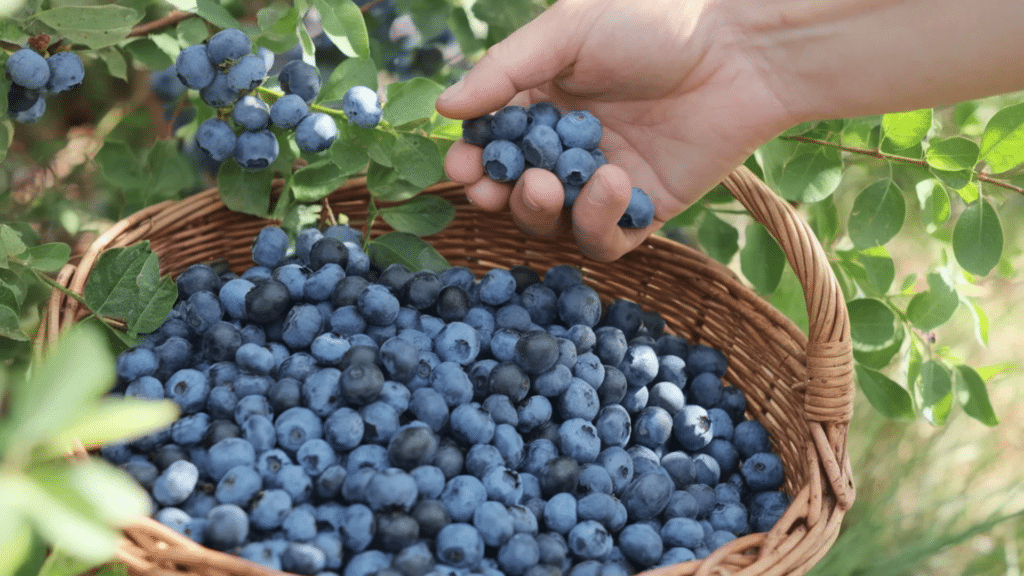
Once your blueberry bushes are planted, they need regular care to grow well and make fruit. The key parts of care include watering, feeding, mulching, and pruning. Each step helps the plant stay healthy and strong.
Watering Blueberry Bushes
Water is one of the most important things for blueberry bush care. These plants need enough water to grow, but not so much that the roots get soggy or rot.
How Often to Water
- In the first year, Water about 1 to 2 inches per week. Check the soil often. If the top 1–2 inches feel dry, it’s time to water.
- After the first year: Water during dry weeks or when the leaves look dry or curled.
It’s better to water deeply and less often than to water a little every day. Use a drip hose or water slowly with a watering can so the water reaches deep roots.
Morning Watering is Best
Water your blueberry bushes early in the day. This gives the leaves time to dry before night. Wet leaves at night can lead to diseases like mildew or rot.
Feeding and Fertilizing Blueberry Bushes
Blueberries need food just like people do. The right fertilizer helps the plant grow leaves, roots, and berries.
Use the Right Fertilizer
Use a fertilizer formulated for acid-loving plants, such as azaleas, camellias, or rhododendrons. These fertilizers are low in nitrogen and safe for blueberries.
Avoid all-purpose fertilizers or anything too strong. Too much nitrogen can cause lots of leafy growth and fewer berries.
When to Fertilize
- First feeding: In early spring, when the buds begin to swell
- Second feeding: Right after the plant flowers
Never fertilize late in the season. New growth at the wrong time can be damaged by cold weather.
How to Apply Fertilizer
- Sprinkle it around the base of the plant, never on the leaves or too close to the stem.
- Water the area after fertilizing to help the nutrients soak into the soil.
- Follow the directions on the label. Using too much can burn the roots and harm the plant.
Mulching Blueberry Bushes
Mulch is very helpful for blueberry bushes. It keeps the soil cool and moist, blocks weeds, and protects the roots.
Best Mulch Materials
Use organic mulch that also adds nutrients to the soil as it breaks down. Good choices include:
- Pine bark
- Wood chips
- Aged sawdust (never fresh)
- Pine needles
How to Mulch Properly
- Spread 2 to 4 inches of mulch around the base of each bush.
- Leave a small gap of 2–3 inches from the stem so it doesn’t stay too wet.
- Refresh the mulch each year, especially in spring and fall.
Mulch also helps support acidic soil, which blueberry bushes love.
Pruning Blueberry Bushes
Pruning keeps blueberry bushes healthy and helps them make more fruit. It also shapes the plant, allowing more sunlight and air to reach it.
When to Prune
The best time to prune is in late winter or very early spring, just before new growth starts. Pruning in this season prevents stress and disease.
How to Prune Step-by-Step
- Remove dead or broken branches. This keeps the plant clean and healthy.
- Cut out weak shoots near the base that don’t look strong.
- Thin the middle of the plant so air and sunlight can reach all parts.
- Trim older branches that are no longer producing many berries. These can be cut back to let new growth take over.
Tips for Pruning
- Use clean, sharp pruning shears to avoid damaging the plant.
- Don’t prune more than 25% of the bush in one year.
- After pruning, the bush should still have a strong, open shape.
Pruning each year helps the plant grow better and live longer.
Common Problems and How to Fix Them
Even healthy blueberry bushes can face problems. This table lists common issues and gives simple steps to solve them.
| Problem | Cause | How to Fix It |
|---|---|---|
| Yellow Leaves | Soil may not be acidic enough | Test pH; add peat moss or use a soil acidifier |
| Brown Leaf Edges | Not enough water or windburn | Water deeply and add mulch to keep roots moist |
| No Berries | Poor pruning, low sunlight, or no pollination | Prune properly, move to a sunnier spot, or add another plant |
| Pests | Aphids, caterpillars, or beetles feeding on leaves | Spray with soapy water or apply neem oil |
| Disease | Root rot or powdery mildew due to wet soil or poor air flow | Improve drainage, reduce watering, and use safe garden fungicide |
Caring for Blueberry Bushes by Season
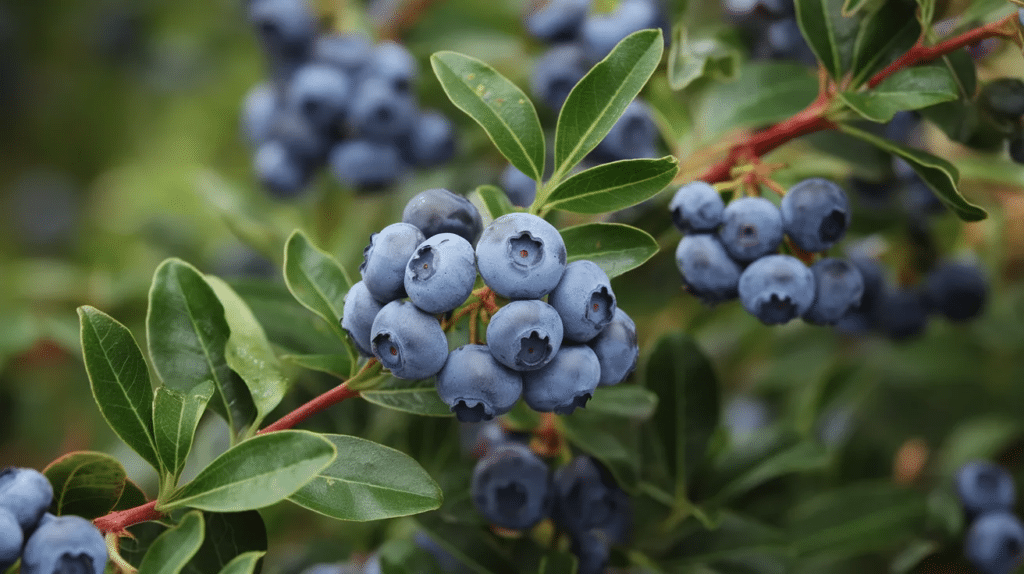
Blueberry bushes need different care as the seasons change. Use this guide to help your plants stay healthy all year long.
Spring
- Remove winter mulch
- Prune if not already done
- Fertilize when buds swell
- Watch for pests and diseases
Summer
- Water often, especially during dry weeks
- Protect berries from birds
- Harvest ripe berries every few days
Fall
- Pick the last berries
- Rake leaves
- Add a fresh layer of mulch
- Water once before the ground freezes
Winter
- Prune bushes (if not done in spring)
- Remove old mulch in late winter
- Don’t fertilize or water often; let the plant rest
How Long Do Blueberry Bushes Live?
Blueberry bushes can live for 20 years or even longer with the right care. In the first year or two, they may not produce many berries.
This is normal as the plant is still growing strong roots and stems. By the third or fourth year, most healthy bushes begin to give a full crop of sweet blueberries.
Regular watering, pruning, mulching, and feeding help them stay strong and live longer. Picking the right spot and keeping the soil acidic also makes a big difference.
With steady care, your blueberry bush can keep giving fruit season after season for many years.
To Conclude
Growing blueberries is more than just planting and waiting. It’s about building a routine that fits the plant’s needs as the seasons change.
When cared for with attention and patience, blueberry bushes can become a long-term part of any garden. They not only give fruit, but also bring beauty and life to your space.
Watching them grow each year can be just as rewarding as picking the berries. Blueberries may take time, but the results are worth it.
If you want fresh, homegrown berries, start now. Follow the steps in this guide and make your blueberry bushes part of your garden’s future.