

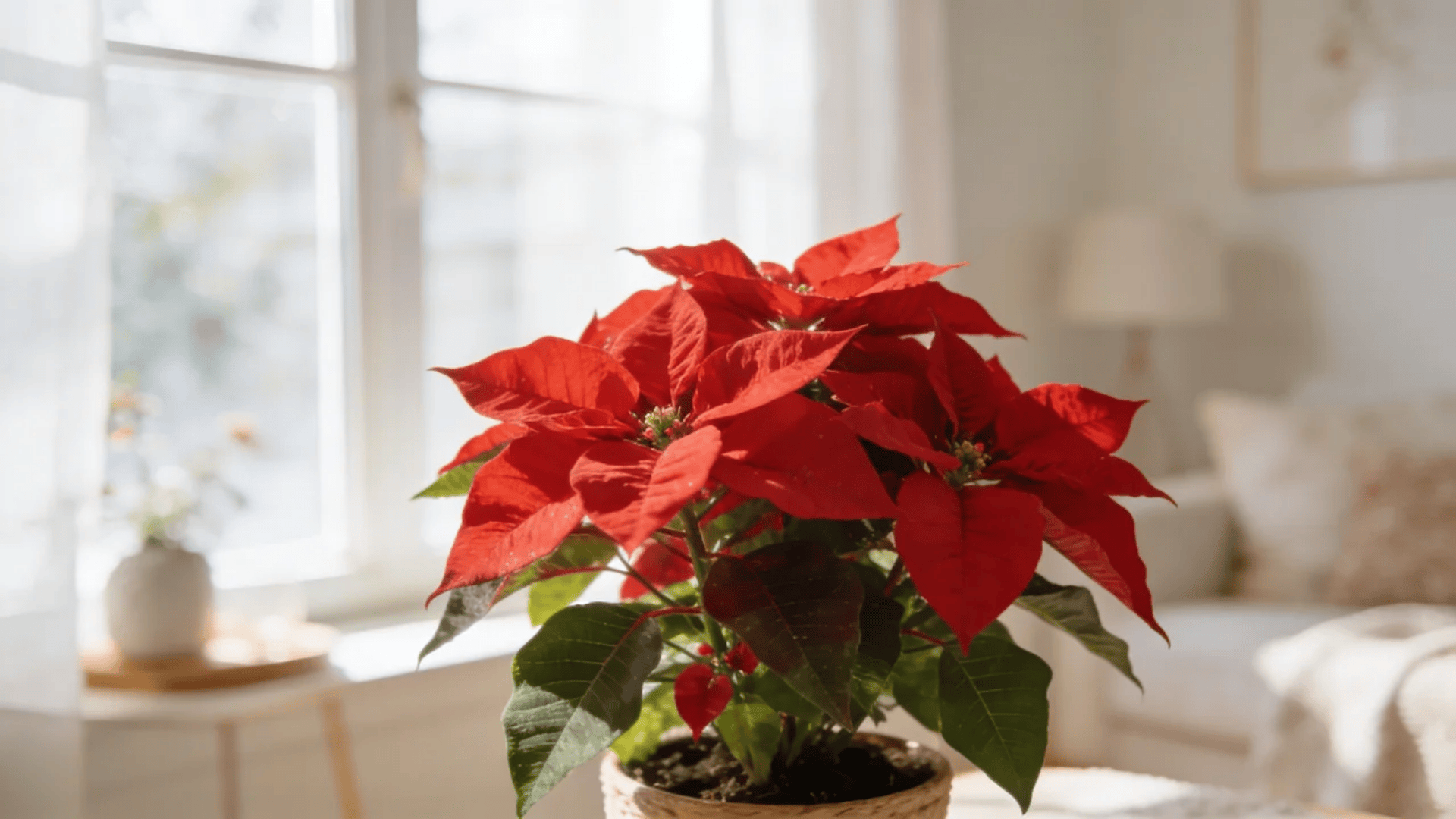
Poinsettias are one of those plants that instantly brighten up a room, especially during the holiday season.
But once you bring one home, it can be a bit confusing to figure out how to keep it looking fresh and healthy. The good news is that poinsettia care doesn’t have to be complicated.
With a few simple habits, you can keep your plant looking vibrant for weeks, or even longer.
I remember buying my first poinsettia and thinking it would last on its own, but it started dropping leaves within days.
That’s when I learned how much small care steps matter.
In this guide, you’ll learn everything you need to know about poinsettia care in a clear and easy way, so your plant stays healthy, colorful, and full of life.
How to Choose a Healthy Poinsettia Plant?
Picking a good plant at the start makes care much easier later. A healthy choice helps the poinsettia last longer at home.
- Leaves: Leaves should be thick, green, and not falling off. Yellow or dry leaves can mean the plant is weak.
- Center flowers: The small flowers in the center should be closed and firm. Open or falling buds mean the plant is older.
- Damage: Skip plants with broken stems, spots, or droopy parts. These signs show stress or poor care.
- Soil: The soil should feel slightly damp, not dry or too wet. This shows the plant is watered properly.
- Location: Plants kept near cold doors or drafts may not stay healthy for long.
How to Care for Your Poinsettia Plant?
Maintaining color depends on consistent care. Small adjustments help keep the plant looking fresh.
1. Proper Light Exposure
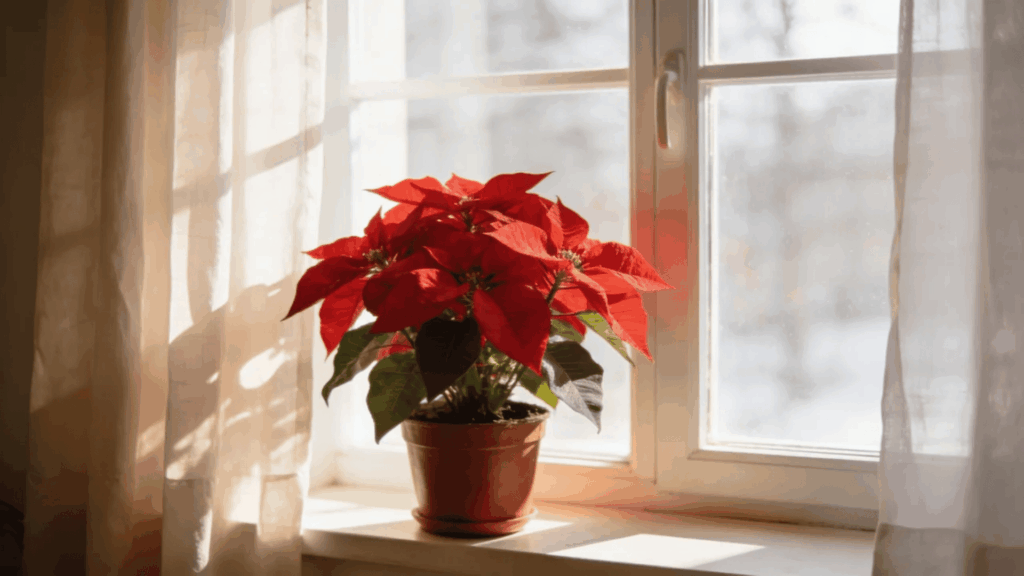
Proper light helps a poinsettia stay bright and healthy. Place the plant near a window where it gets plenty of indirect sunlight.
Soft, filtered light works best to keep the color strong and leaves it fresh.
Avoid direct sunlight, as it can burn the leaves and cause fading over time. Keep the plant in a spot with steady light each day. Do not place it in dark areas or near harsh sunlight.
Good lighting supports healthy growth and helps the plant look full and vibrant for longer.
2. Balanced Watering
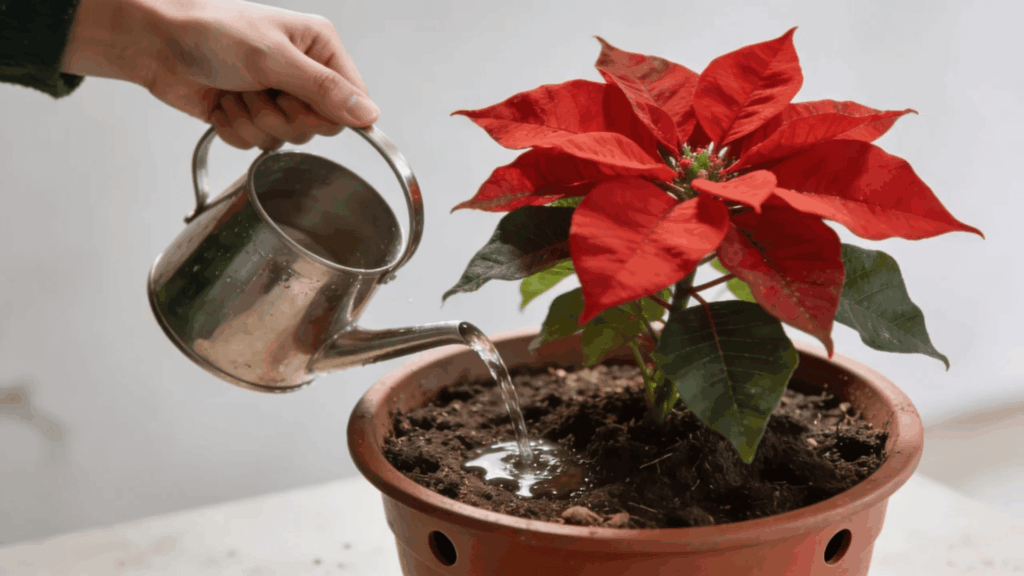
Balanced watering keeps a poinsettia healthy and full. Water the plant when the top layer of soil feels slightly dry to the touch.
The soil should stay lightly moist but not soggy. Avoid overwatering, as too much water can cause root problems and make leaves fall off.
Always check that excess water can drain out easily.
Do not let the plant sit in standing water. Good drainage helps keep the right moisture level and supports steady, healthy growth.
3. Stable Temperature
Stable temperature helps a poinsettia stay healthy and keep its color. Place the plant in a spot with a warm and steady temperature each day.
Avoid sudden changes, as they can stress the plant. Keep it away from cold drafts, open doors, heaters, and air vents.
Direct airflow can cause leaves to drop and colors to fade.
A calm and steady space supports strong growth. Good temperature control helps the plant stay full, bright, and healthy for a longer time.
4. Good Air Circulation
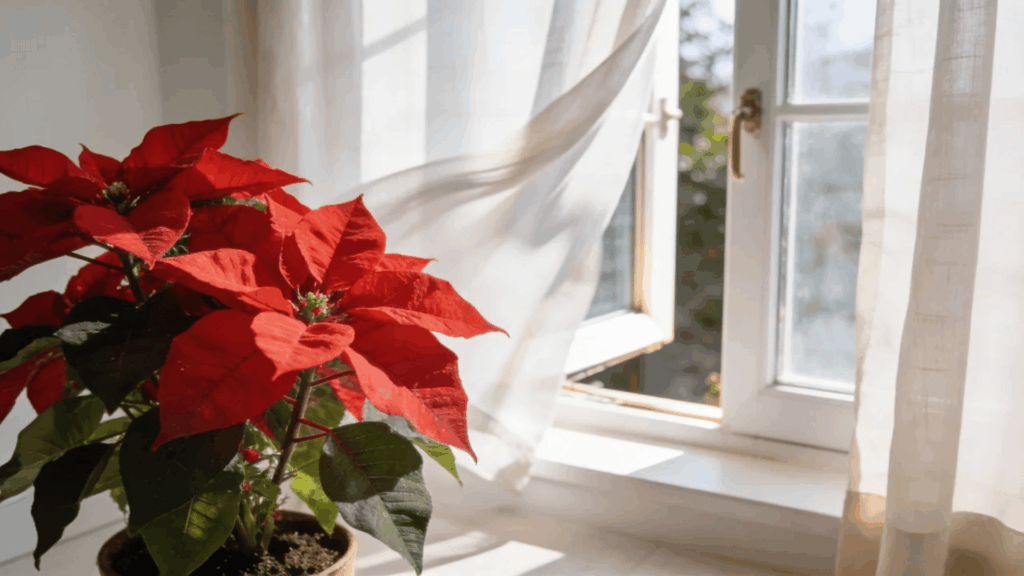
Good air circulation helps a poinsettia stay fresh and healthy for longer. Place the plant in a spot where air can move freely around it.
A well-ventilated area supports steady growth and keeps the leaves looking clean and firm. Avoid tight or closed spaces, as stale air can stress the plant and slow its growth.
Do not place it too close to walls or crowded shelves.
Proper airflow also helps reduce extra moisture and keeps the plant in better condition over time.
5. Regular Maintenance
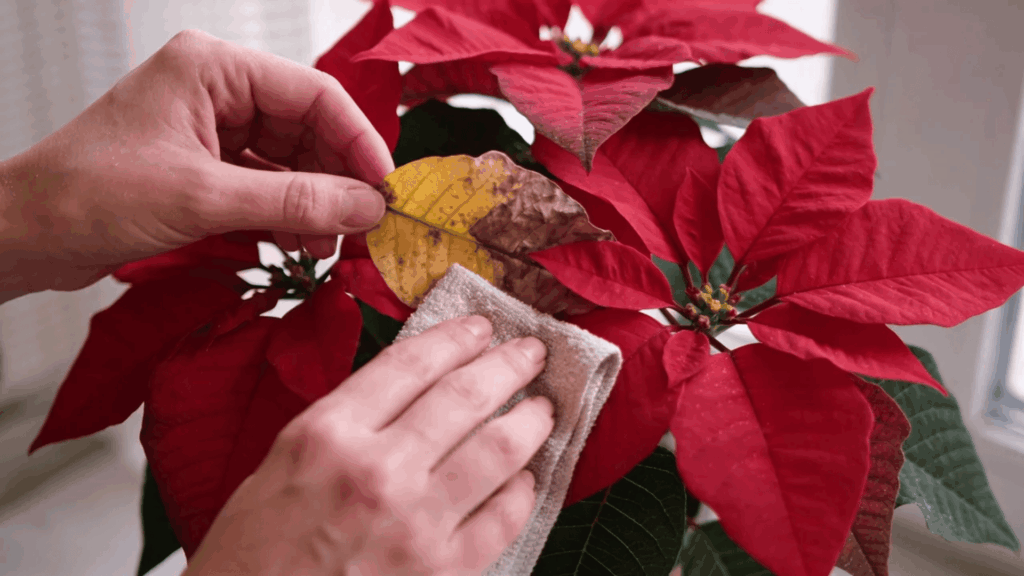
Regular maintenance helps a poinsettia stay neat and healthy over time. Remove any dry, yellow, or damaged leaves as soon as they appear.
This helps reduce stress on the plant and supports new growth.
Clean the leaves gently to remove dust so they can take in light better. Use a soft cloth and handle the plant with care. Do not let debris build up around the base.
Simple care like this keeps the plant fresh, clean, and looking bright for longer.
6. Right Pot and Soil
The right pot and soil help a poinsettia grow strong and stay healthy. Use a pot with drainage holes so extra water can flow out easily.
Choose light, well-draining soil that does not hold too much water. Heavy soil can lead to root problems over time.
Repot only if needed, and avoid using a pot that is too large.
Good soil and proper drainage support steady growth and keep the roots in good condition.
7. Safe Placement Indoors
Safe placement helps protect the plant from stress and damage. Keep the poinsettia away from pets and small children.
Place it in a calm spot where it will not be moved often.
Avoid areas with heavy foot traffic or sudden movement. Do not keep it near doors that open often or windows that are exposed to strong winds.
A stable and safe location helps the plant stay healthy, full, and bright for longer.
Quick Poinsettia Care Checklist
A quick checklist helps keep care simple and easy to follow. Use this as a daily guide to keep the plant healthy and fresh.
| Care Task | What to Do |
| Light | Place in bright, indirect sunlight |
| Watering | Water when top soil feels slightly dry |
| Temperature | Keep in a warm, stable spot |
| Air Circulation | Ensure good airflow around the plant |
| Soil | Use well-draining soil |
| Pot | Choose a pot with drainage holes |
| Cleaning | Wipe leaves to remove dust |
| Placement | Keep away from drafts and heaters |
| Check Leaves | Remove yellow or damaged leaves regularly |
Signs Your Poinsettia Needs Attention
Your plant gives clear signals when something is off. Paying attention early can help you fix issues before they get worse.
- Yellow leaves: Leaves turning yellow can mean too much or too little water. Check the soil and adjust watering as needed.
- Leaf drop: Falling leaves often happen due to drafts, heat, or sudden temperature shifts. Keep the plant in a stable spot.
- Wilting: Droopy leaves may show the plant is too dry, or the roots are not healthy. Check soil moisture right away.
- Faded color: Dull or pale leaves can mean the plant is not getting enough light. Move it to a brighter spot with indirect light.
- Soft stems: Weak or soft stems may point to too much water. Make sure excess water drains out properly.
When to Repot a Poinsettia?
Repotting a poinsettia should be done at the right time to support healthy growth. The best time is after the blooming season ends, usually in late spring or early summer.
At this stage, the plant begins new growth and can adjust better to a new pot.
Look for signs like roots coming out of drainage holes or soil drying too fast. These show the plant needs more space.
Choose a pot that is slightly larger, not too big. Always use fresh, well-draining soil to avoid root issues.
Water lightly after repotting and place the plant in indirect light.
Avoid repotting during the blooming period, as it can stress the plant and affect its color. Proper timing helps the plant stay strong and grow well.
Indoor Vs Outdoor Poinsettia Care Tips
The environment affects how well your plant grows. Placement plays a key role in keeping it healthy.
| Care Aspect | Indoor Care | Outdoor Care |
| Light | Bright, indirect sunlight near a window | Mild sunlight, avoid direct harsh sun |
| Temperature | Keep in a stable, warm indoor environment | Place outside only in mild, warm weather |
| Protection | Safe from drafts, heaters, and AC vents | Protect from strong wind and extreme heat/cold |
| Placement | Near windows with filtered light | Shaded or partially shaded outdoor spots |
| Seasonal Changes | Keep indoors during cold seasons | Move indoors when temperatures drop |
How to Prune a Poinsettia Plant?
Pruning helps keep the plant full and supports new growth. It also helps control shape and keeps the plant looking neat.
1. Choose the Right Time
The best time to prune a poinsettia is after the blooming season ends. This usually happens in late winter or early spring.
At this stage, the plant starts to lose its bright leaves and enters a resting phase. Pruning during this time helps prepare it for fresh growth.
Avoid cutting while the plant is still blooming, as it may reduce its life.
A proper time choice gives better results. It also helps the plant grow stronger and healthier in the next cycle.
2. Cut Back the Stems
Trim the stems to about 4 to 6 inches above the soil level. Use clean, sharp scissors or pruning shears to make smooth cuts.
This helps prevent damage and keeps the plant safe from disease. Cutting back the stems may look harsh at first, but it helps the plant grow back fuller.
New shoots will begin to form after pruning.
Make sure each cut is clean and not rough. Proper cutting supports healthy regrowth and keeps the plant balanced and strong.
3. Remove Weak or Damaged Parts
Check the plant for any weak, dry, or damaged stems before and during pruning. Remove these parts carefully to reduce stress on the plant.
This step helps the plant focus energy on healthy growth.
Cutting off poor sections also improves airflow and reduces the risk of problems later. Always remove any leaves or stems that look unhealthy. Keeping only the strong parts allows the plant to grow better.
Regular removal of weak growth keeps the poinsettia clean and in good shape.
4. Encourage New Growth
After pruning, place the plant in a bright spot with indirect light. Water it lightly and keep the soil slightly moist.
New growth will begin to appear from the cut stems after some time. This is a sign that the plant is recovering well. Do not overwater during this stage.
A steady routine helps the plant grow back thicker and fuller.
Good care after pruning is just as important as the cutting itself for healthy results.
Common Poinsettia Care Mistakes to Avoid
Avoiding small errors can improve plant health. Knowing what not to do is just as important.
- Overwatering: Leads to root problems and leaf drop
- Poor Lighting: Causes weak growth and dull color
- Ignoring Temperature: Extreme changes can damage the plant
- Using Poor Drainage Pots: Traps excess water and harms roots
- Placing Near Drafts: Sudden air changes can stress the plant
- Overcrowding: Placing poinsettias too close to other plants can block airflow and light.
Conclusion
Taking care of a poinsettia doesn’t have to feel confusing or time-consuming.
With the right light, watering, and a little attention, your plant can stay healthy and colorful for much longer than you might expect.
It’s really about building a simple routine and noticing small changes early.
I’ve found that once you understand what your poinsettia needs, caring for it becomes easy and even enjoyable.
It’s a small effort that brings a lot of warmth to your space.
If you’ve recently bought one or already have a plant at home, now is a great time to apply these tips.
Have you tried caring for a poinsettia before? Share your experience, tips, or questions in the comments below. I’d love to hear how it’s going for you!
Frequently Asked Questions
How to Get a Poinsettia to Rebloom?
To rebloom a poinsettia, give 14 hours of complete darkness daily for 6–8 weeks, along with bright daytime light and proper care. This helps the plant form new colored leaves.
Do Coffee Grounds Help Poinsettias?
Coffee grounds can help in small amounts, as they add nutrients to the soil. Use sparingly, since too much can hold excess moisture and harm the roots.
Is It Best to Water Poinsettias from the Bottom?
Bottom watering can be helpful, as it lets the roots absorb water evenly. However, top watering is also fine if excess water drains well and the soil is not overwatered.