

Choosing paint colors can be exciting. But there’s another decision that often gets overlooked: the finish.
Matte, eggshell, satin, semi-gloss, or high-gloss? Each one looks different and performs differently, too. Some finishes hide wall imperfections like a charm, while others show every little bump.
Certain rooms need paint that can handle moisture and scrubbing. Others can get away with something more delicate. The wrong finish in the wrong space can lead to peeling, staining, or just a look that feels off.
So how does someone figure out which finish belongs where? The answer lies in understanding what each room demands.
What is Paint Sheen?
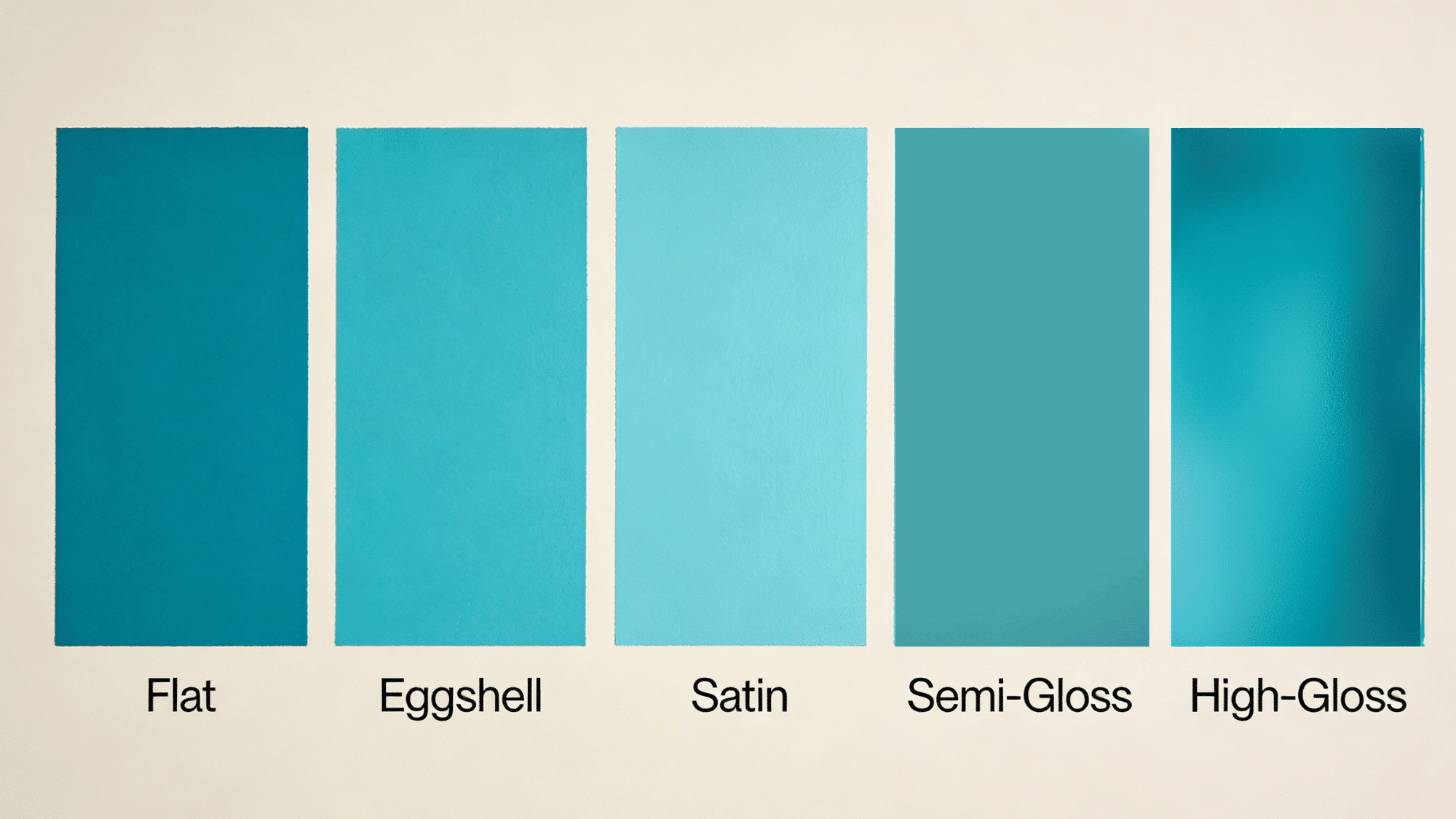
Paint sheen refers to how much light a painted surface reflects. Think of it as the finish’s level of shine.
It ranges from completely flat to super glossy. The sheen affects more than just appearance, though. It impacts durability, how easy the paint is to clean, and whether it hides or highlights wall flaws.
Flat finishes absorb light and create a soft look. Glossy finishes bounce light back and create a shiny, reflective surface. Everything in between offers a balance of these qualities.
Understanding sheen helps match the right paint to each room’s needs.
Paint Sheen Levels Explained
Paint sheens range from flat to high gloss, each offering different light reflection and durability for various room needs.
- Flat (0-4% reflectance): Lowest shine, excellent for hiding wall flaws and ceilings; non-reflective but harder to clean.
- Matte (3-10% reflectance): Slightly more durable than flat, ideal for low-traffic adult areas; good for humid spots like bathrooms.
- Eggshell (10-25% reflectance): Subtle sheen with moderate durability; suits living rooms or hallways with some wear.
- Satin (20-35% reflectance): Pearl-like finish, washable and versatile for high-traffic rooms like kids’ spaces.
- Semi-Gloss (40-65% reflectance): Shiny and moisture-resistant; best for trim, doors, or kitchens.
- High Gloss (over 85% reflectance): Mirror-like and toughest to clean but easiest to wipe; used for cabinets or accents.
Best Paint Sheen for Walls, Trim, Ceilings, and Doors
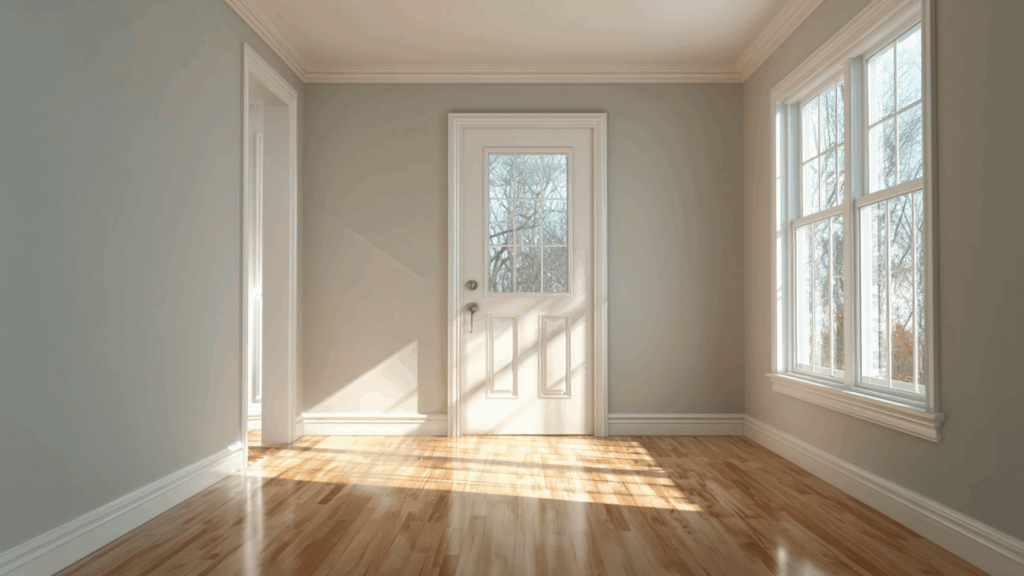
Different surfaces in a home need different sheens. Walls take up most of the visual space, so the finish choice dramatically affects how a room feels.
Trim and molding frame the space and usually need something more durable since hands, furniture, and daily life tend to bump against them.
Ceilings often get overlooked, but the wrong sheen up there can create distracting glare or highlight every imperfection. Doors are constantly touched, opened, and closed, so they need a finish that can withstand the abuse.
Matching the right sheen to each surface is about making sure the paint job lasts and performs well in real life. Each area has its own demands, and the sheen should meet them.
Paint Sheen Chart by Room
Choosing the right sheen depends on the room’s function, traffic level, moisture exposure, and cleaning needs.
Best Sheen for Living Rooms and Bedrooms

Living rooms and bedrooms benefit from eggshell or matte finishes. These sheens create a soft, inviting atmosphere without too much shine.
They hide minor wall imperfections well, which is helpful in older homes.
Since these spaces don’t experience heavy moisture or constant contact, durability isn’t the top concern. The low reflectance keeps the mood calm and cozy, perfect for relaxing or entertaining guests.
Best Sheen for Kitchens and Bathrooms
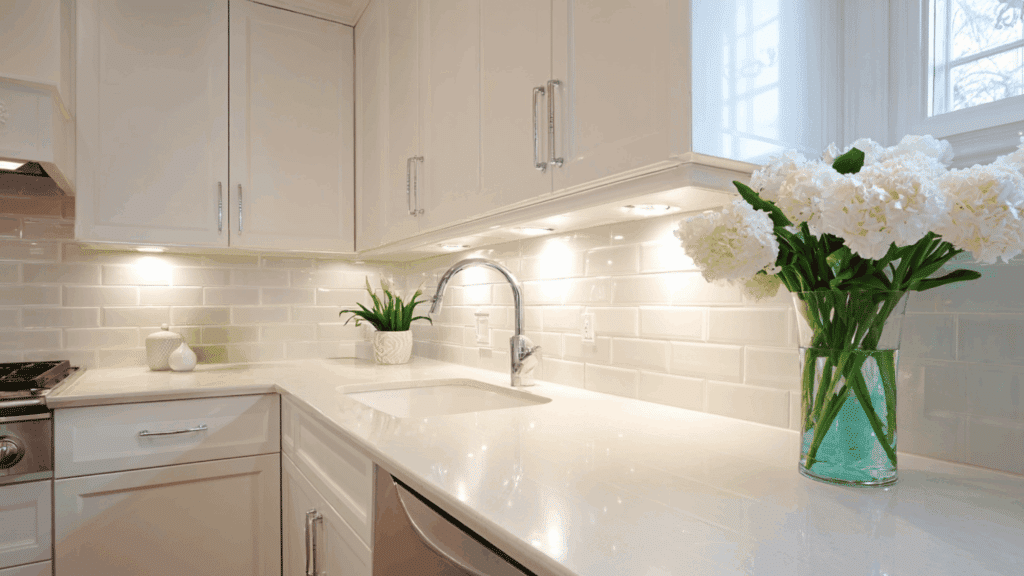
Kitchens and bathrooms need satin or semi-gloss finishes. These rooms deal with steam, splashes, and grease, so moisture resistance matters.
Satin offers a gentle sheen that’s easy to wipe down after cooking messes or bathroom humidity.
Semi-gloss takes it further with even more durability and shine, ideal for areas around sinks or stoves. Both options handle frequent cleaning without the paint wearing down or staining.
Best Sheen for Kids’ Rooms and High-Traffic Areas
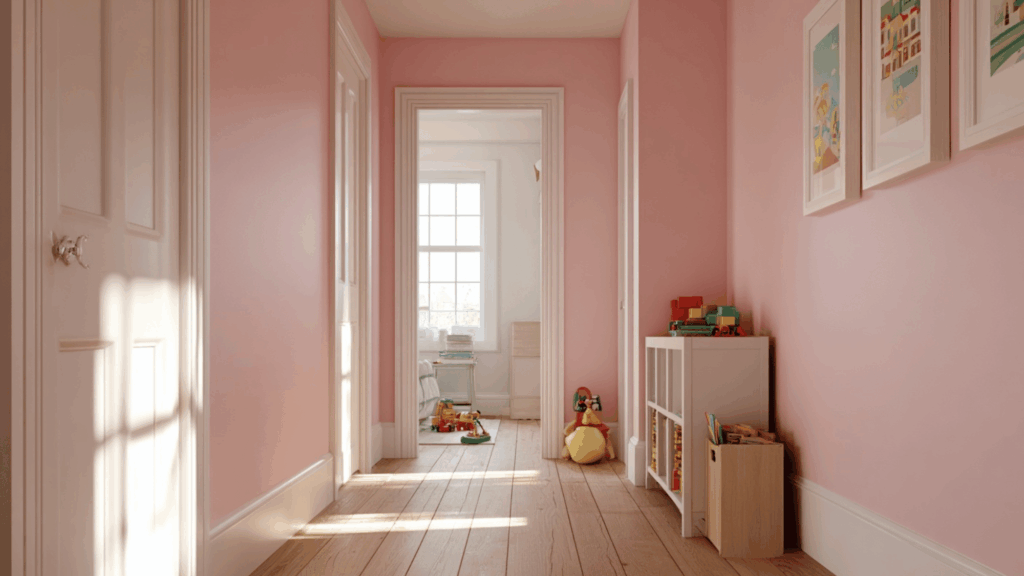
Kids’ rooms and high-traffic areas like hallways need satin finishes. Children leave fingerprints, scuff marks, and the occasional crayon masterpiece on walls.
Satin’s smooth, washable surface makes cleanup simple without damaging the paint. High-traffic zones face similar wear from constant movement and contact.
The slight sheen also adds a bit of visual interest while still feeling warm and approachable, not too shiny or sterile.
Paint Sheen Guide by Popular Brands
Sherwin-Williams and Benjamin Moore use slightly different naming systems, but their sheen levels align closely across most finishes.
| Sheen Level | Sherwin-Williams | Benjamin Moore | Key Difference |
|---|---|---|---|
| Lowest | Flat | Flat | SW slightly more matte |
| Low | Matte | Matte | BM more washable |
| Mid-Low | Eggshell (Eg-Shel) | Eggshell | Similarly, BM hides better |
| Mid | Satin | Pearl | BM softer, pearl-like glow |
| Mid-High | Semi-Gloss | Semi-Gloss | SW glossier long-term |
| Highest | Gloss | Gloss | Comparable durability |
How to Choose the Right Paint Sheen for Your Project
Picking the right paint sheen isn’t guesswork. It comes down to a few practical considerations that guide the decision.
First, think about the rooms purpose and how much activity it sees daily. A bedroom has different needs than a kitchen.
Next, consider the wall condition. Rough or imperfect walls need sheens that hide flaws, while smooth walls can handle more shine. Lighting also plays a role since glossy finishes reflect light differently than flat ones.
Maintenance matters too. Some rooms need frequent cleaning, which requires durable, washable finishes. Balancing these factors leads to the best choice for any project.
The Bottom Line
The right paint sheen transforms how a room looks and performs. Flat hides flaws but needs gentle care. Satin handles scrubbing in busy spaces.
Semi-gloss fights moisture in kitchens and baths. Each finish serves a purpose, and matching sheen to function saves headaches down the road. Don’t just pick based on appearance alone.
Think about who uses the room, how much wear it gets, and what kind of maintenance feels manageable.
A little planning now means walls that stay beautiful longer. The perfect sheen isn’t about trends; it’s about what works for real life.