

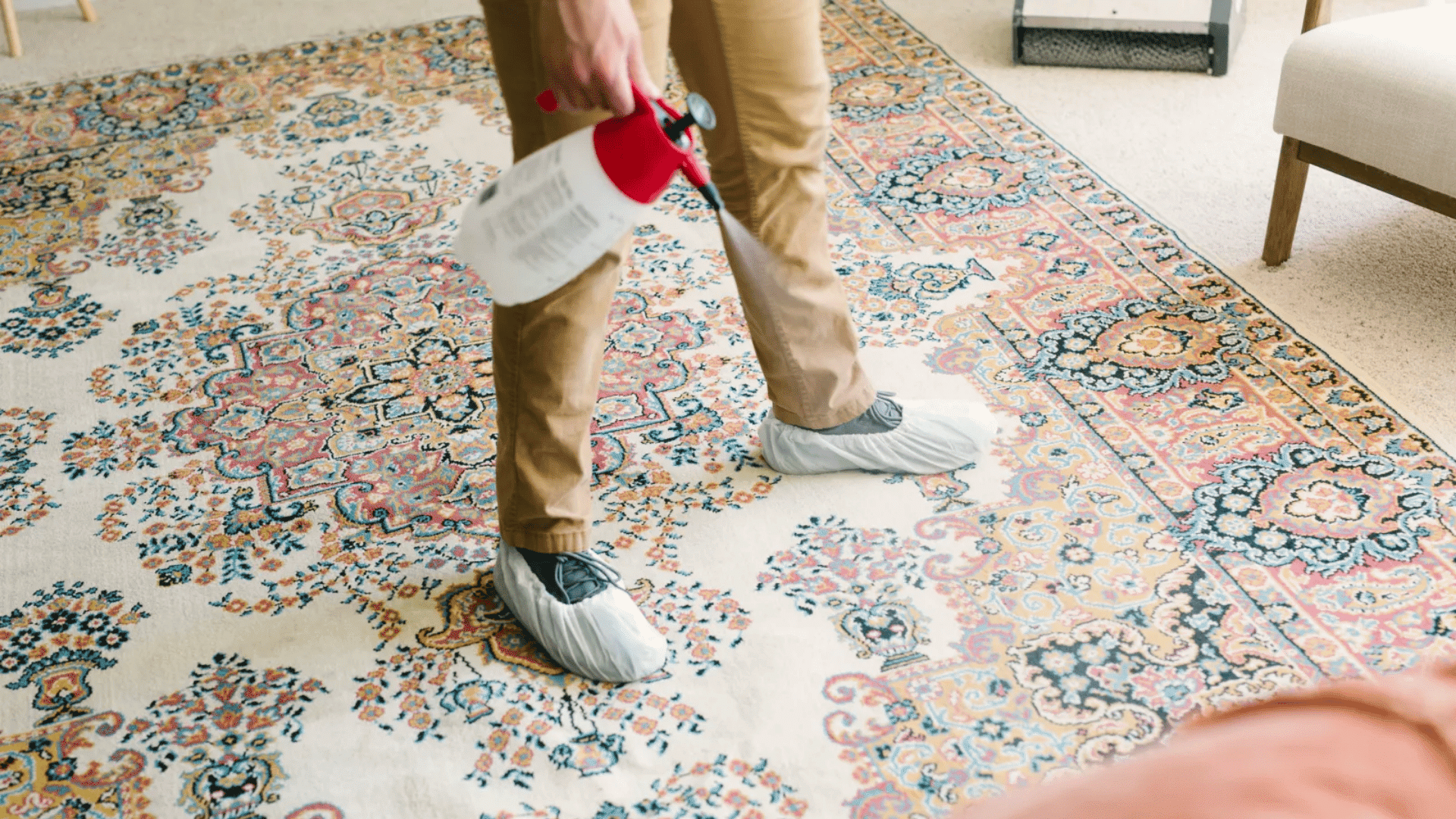
I’ve cleaned a few wool rugs at home over the years, and I’ll be honest, I didn’t always get it right.
The first time I tried deep-cleaning a hand-knotted wool rug in my living room, I used a standard carpet cleaner I had on hand.
Within one wash, the rug lost its shape, the colors looked washed out, and the fibers felt rough to the touch. That mistake cost me a rug I had paid good money for.
After that, I went back to basics. With my interior design background and home restoration work, I started treating wool rugs with care and the right tools.
In this guide, I’ll show you how to clean a wool rug without damage using safe, simple steps I’ve tested myself.
You’ll learn what tools to use, safe cleaners, and how to handle stains. By the end, you’ll feel confident cleaning your rug at home.
Materials and Tools Needed to Clean a Wool Rug
Having the right items ready makes the cleaning process easier and safer. It also helps you avoid using anything that may damage the wool.
- Vacuum Cleaner: Use a wool-safe vacuum without a beater bar to remove loose dirt gently without pulling the fibers.
- Soft Brush or Sponge: Helps scrub the rug lightly without causing damage or fraying.
- Wool-Safe Detergent: A mild cleaner made for wool keeps the fibers safe and prevents fading.
- Cold Water: Works best for wool and helps avoid shrinking or color bleeding.
- Bucket or Bowl: Useful for mixing your cleaning solution in small, controlled amounts.
- Clean Towels: Helps absorb extra water and speeds up the drying process.
- White Cloths: Good for blotting stains without transferring color onto the rug.
- Cedar Blocks (Optional): Helps keep pests away if you plan to store the rug later.
How to Clean a Wool Rug at Home?
Cleaning a wool rug at home takes time, but the right steps make it safe and effective. Start slow and use gentle methods to protect the fibers.
Step 1: Remove Loose Dirt
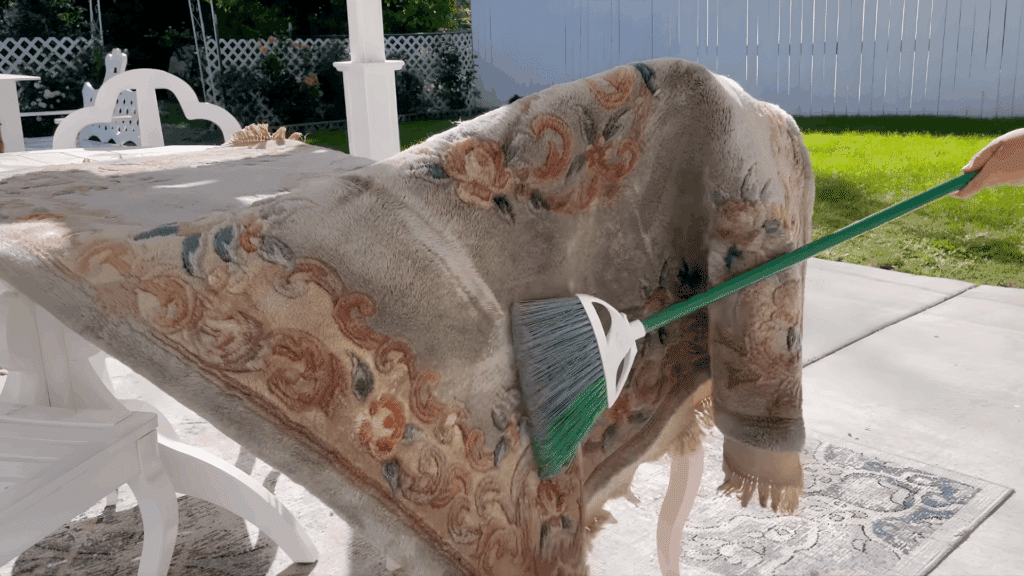
Take the rug outside and hang it over a railing or fence. Use a stick to beat it firmly and loosen trapped dirt from deep inside the fibers.
This step helps remove dust that regular vacuuming often misses.
Wool rugs can hold a lot of dirt, so doing this before washing is important. It also prevents dirt from turning into mud when water is added later.
This makes the cleaning process easier and helps you get better, cleaner results in less time.
Step 2: Vacuum Both Sides

Lay the rug flat and vacuum it slowly, always working in the direction of the pile, never against it.
Vacuuming against the pile can pull and stress the fibers over time, leading to premature wear. Also, make sure you’re using a suction-only vacuum or turning off the beater bar if your vacuum has one.
The rotating brush on a standard vacuum can catch wool fibers and cause fraying or thinning in the pile.
After that, flip the rug and vacuum the back as well. Wool rugs collect dust from both sides, so cleaning both is important before washing.
Step 3: Treat Stains and Test Color
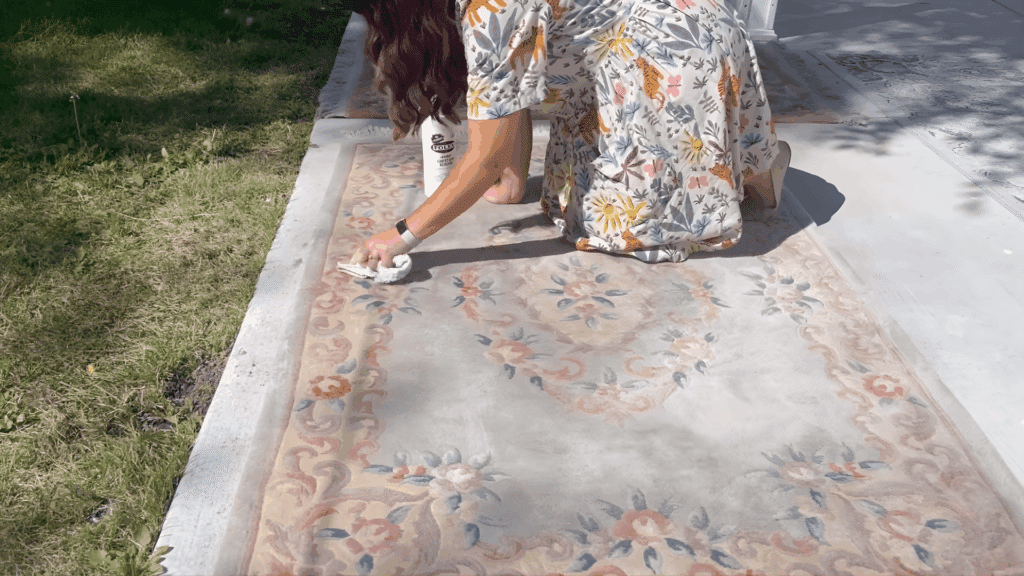
Look closely for stains and treat them before cleaning the whole rug. Apply a small amount of wool-safe cleaner with a pH of 5–7 to the stain.
Gently rub it using your fingers or a soft cloth. Blot the area with a dry towel to lift the stain.
Also, test for color bleeding using a white cloth on a small hidden spot.
Press it lightly and check for color transfer. If you see any color, avoid using water to prevent damage to the rug fibers.
Step 4: Mix and Apply Cleaning Solution
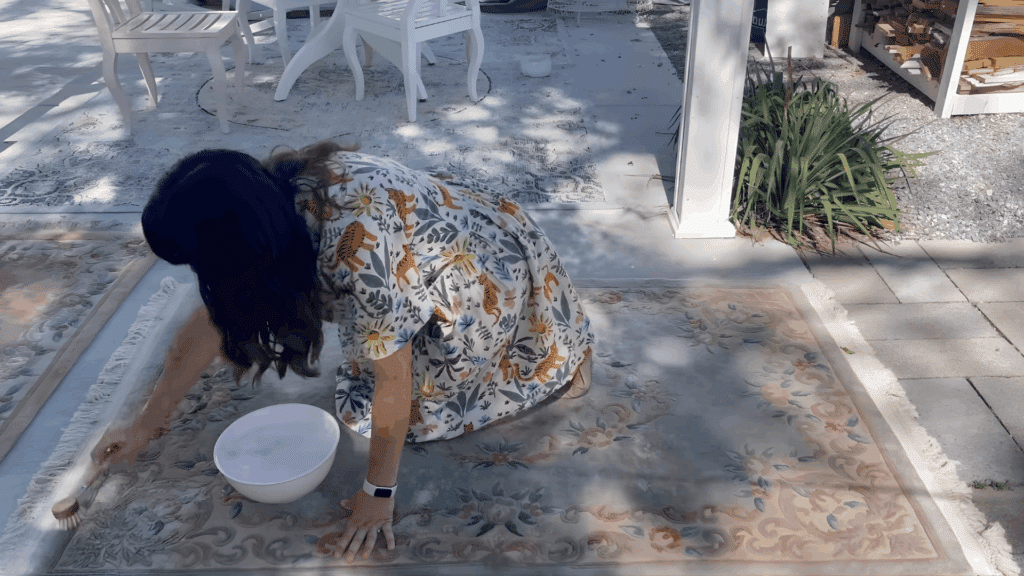
Prepare a mild cleaning solution using cold water and a small amount of wool-safe detergent or clear dish soap.
Avoid strong or colored cleaners, as they can damage the fibers. Dip a sponge or soft brush into the solution and gently scrub the rug in small sections.
Work from one side to the other and keep pressure light to protect the fibers.
This method helps remove dirt, oil, and odors while keeping the wool safe and in good condition over time.
Step 5: Rinse and Remove Water
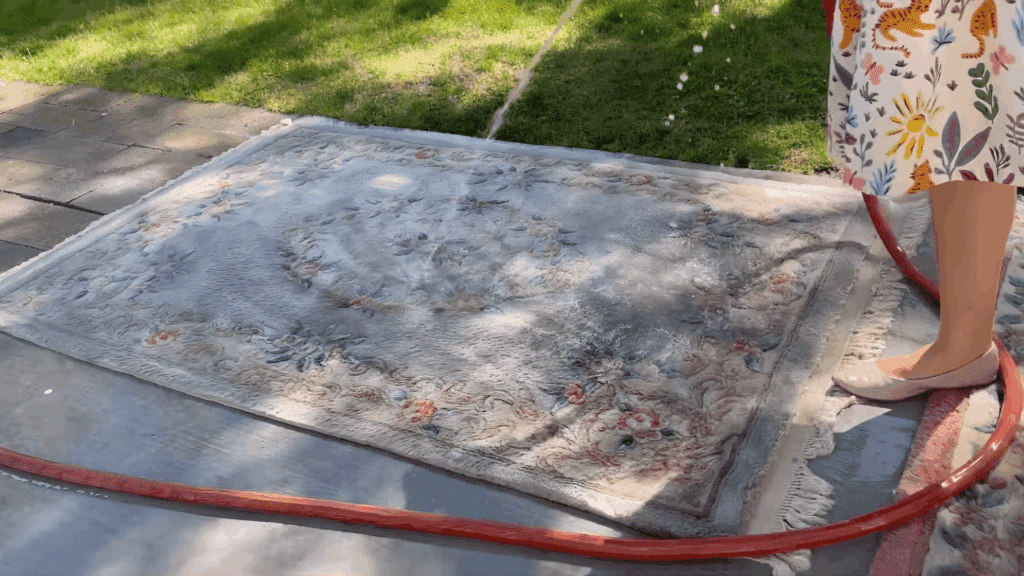
Rinse the rug using cold water from a hose to remove soap. Use only enough water to rinse away the cleaning solution.
Avoid using high pressure because it can damage the fibers.
After rinsing, remove excess water by pressing with towels, using a squeegee, or a wet vacuum.
This step is important because wool absorbs moisture easily, and removing moisture helps prevent bad smells and mold.
Step 6: Dry the Rug Properly
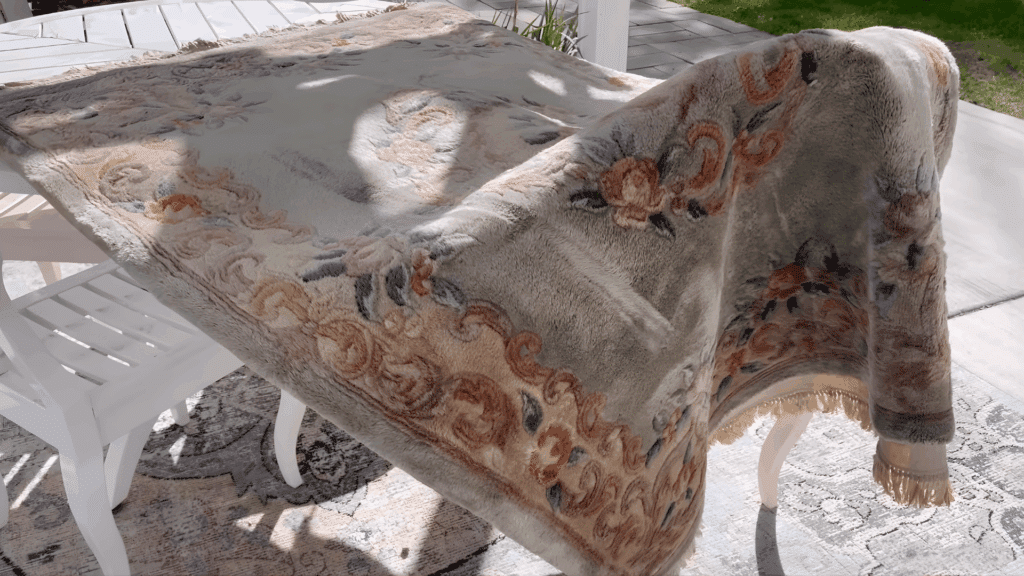
Place the rug in a well-ventilated area and hang it over a surface so air can pass through both sides. Let it dry for at least 24 hours or longer if needed.
Avoid direct heat sources, such as heaters, as they can damage the fibers.
Proper drying is very important for wool rugs. Make sure the rug is completely dry before placing it back inside to avoid odor or mildew problems.
This tutorial is based on a helpful video by At Home with Ashley. You can check out the original video on their YouTube channel here or watch it below.
Common Signs Your Wool Rug Needs Cleaning
Wool rugs can hold dirt and odors without showing clear signs at first. Paying attention to small changes helps you know when it is time to clean.
- Dull or faded look: The rug starts to lose its natural color and brightness
- Visible stains: Spots from spills or dirt become easy to notice
- Dust buildup: More dust appears when the rug is shaken or vacuumed
- Bad odor: The rug smells musty or unpleasant over time
- Rough texture: Fibers feel stiff instead of soft
- Increased allergy symptoms: Sneezing or irritation near the rug often signals trapped dust, pet dander, or debris deep in the fibers, a cue that surface vacuuming is no longer enough
- Uneven color patches: Some areas look darker due to dirt buildup
- Pet hair buildup: Fur gets trapped deep in the fibers
- Heavy foot traffic marks: Walkways look worn or dirty compared to other areas
Why Wool Rugs Need Special Cleaning?
Wool rugs are made from natural fibers, which makes them soft, strong, and long-lasting. However, these same fibers are also more delicate than synthetic ones.
Wool can absorb a lot of moisture, so using too much water can cause shrinkage, bad odors, or even mold if not dried properly.
Strong cleaning products can also damage the fibers and lead to fading or a rough texture over time.
Another reason wool rugs need special care is that they tend to hold dirt. Dust and debris settle deep into the fibers instead of staying on the surface.
If cleaned the wrong way, this dirt can be pushed further into the rug or damage it.
Gentle cleaning methods help remove dirt safely while preserving the fibers. Proper care keeps the rug looking clean, soft, and in good shape for years.
Other Methods to Remove Stains from Wool Rugs
Wool rugs can stain easily, but quick action helps prevent permanent marks. Using gentle methods is important to protect the fibers and keep the rug in good shape.
- Blot the stain quickly: Use a clean cloth or paper towel to absorb as much liquid as possible. Do not rub, as it can push the stain deeper.
- Use a mild soap solution: Mix a small amount of wool-safe detergent with cold water, then gently dab the stain.
- Try a white vinegar solution: Mix equal parts water and vinegar to safely remove odors and light stains.
- Use baking soda for odors: Sprinkle baking soda on the stain, let it sit, then vacuum it up.
- Apply wool-safe stain remover: Use products made for wool to avoid fiber damage.
- Avoid hot water: Hot water can set stains and damage wool fibers.
- Test before cleaning: Always test any solution on a small, hidden area first.
- Blot and dry properly: After cleaning, blot the area dry to prevent moisture buildup.
How Often Should You Clean a Wool Rug?
Light cleaning through vacuuming can be done once or twice a week in high-traffic areas to prevent dirt from settling deep into the fibers. Deep clean once or twice a year, depending on use.
If the rug sits in a busy area or your home has pets and children, lean toward twice a year.
One tip I always give is to rotate your rug 180 degrees every six months.
This distributes foot traffic evenly and prevents one section from wearing down faster than the rest, something I saw cause permanent thinning on several rugs during renovation projects.
Clean small stains right away to prevent marks from setting.
Keeping a simple routine protects the fibers and keeps the rug soft and comfortable for daily use.
How to Store a Wool Rug Properly?
Storing a wool rug the right way helps it stay in good shape for years. Start by cleaning the rug fully so no dirt or moisture stays trapped.
Always make sure the rug is completely dry before storage to avoid mold.
Roll the rug instead of folding it to prevent creases and fiber damage. Wrap it in breathable material like cotton or a sheet, not plastic.
Keep it in a cool, dry place away from sunlight and humidity.
You can also add cedar blocks to help keep pests away. Avoid placing heavy items on top of the rug. Check it every few months to keep it safe and clean.
When to Call a Professional?
Home cleaning works well for routine maintenance, but some situations are better left to professionals.
If your rug is a vintage or hand-knotted piece, has fringe, or uses sensitive natural dyes, the risk of DIY damage is high.
Professional cleaners use dry extraction methods and wool-specific solutions that reach deep into the fibers without oversaturating them.
I also recommend professional cleaning if you notice signs of moth damage, small bare patches, or visible larvae, since this requires treatment beyond a standard wash.
During restoration work in the UK, I often saw moth damage in wool rugs, and it got worse when people tried to fix it themselves.
Professional cleaning costs about $50–$150 and is worth it for long-term care.
Conclusion
Cleaning a wool rug at home is completely manageable when you treat the fibers with the care they deserve.
The difference between a rug that lasts a decade and one that lasts a lifetime usually comes down to a few consistent habits.
Like vacuuming gently, using pH-safe cleaners, rinsing lightly, and drying away from heat and sun.
I learned most of this the hard way, but you don’t have to. If you’re dealing with a fresh stain, planning a seasonal deep clean, or just trying to keep a good rug in great shape, these steps will get you there without the guesswork.
If you’ve tried any of these methods or have a tip of your own, share it in the comments. I’d love to hear what’s worked for you
Frequently Asked Questions
Can a Wool Rug Be Machine-Washed?
No, machine washing can damage wool fibers and cause shrinkage.
Can You Steam Clean a Wool Rug?
Steam cleaning can harm wool due to heat and moisture, so it is best avoided.
Why Does the Wool Rug Smell After Cleaning?
The smell usually occurs when the rug is not completely dry, allowing moisture to become trapped.
Can Pets Damage Wool Rugs Easily?
Pet hair and urine can affect wool rugs if not cleaned quickly.