

Tile floors are very practical and visually pleasing, and therefore are used in kitchens, bathrooms, and doorways. Yet, even resilient tiles eventually show wear. Lightly cleaning the surface can only offer a temporary appearance improvement, but it hardly cleanses the embedded debris that makes the tile look dull. Obtaining a truly fresh finish requires treating tile and grout as separate substances with unique requirements. This article guides you on effectively deep-cleaning tile for enduring outcomes.
Assess Your Tile and Grout Condition Before Beginning
An honest assessment is the first step to a properly deep-cleaned floor. Not all tiles are the same. Techniques safe for ceramic may damage natural stone. Glazed ceramic and porcelain feature a protective coating that repels moisture. This allows more thorough cleaning methods. Unsealed natural stone like slate needs additional attention since harsh cleaners may lead to irreversible etching. Understanding your flooring type influences all choices, from the suitable cleaner to the best tools.
Grout warrants equal attention. This porous substance is a sponge that absorbs spills, captures dirt, and creates an optimal microbial growth environment. Even grout that is well kept becomes dark after some time because of the soil that is embedded below the surface. Check grout lines for cracks or missing sections. Deep cleaning removes years of buildup but cannot fix physical damage.
Choose the Right Cleaner for the Job
Assessment being finished, the next important decision is to select suitable tile cleaning solutions. Many home cleaning products leave chemical residues that tend to accumulate more soil as the floor dries. Others contain harsh chemicals that may render the grout uneven or ruin the tile finishings.
Commercial formulations create a balance between strength and safety. They are often applied to handle specific problems like grease, mineral accumulation, or soap. Alkaline cleaners, in particular, are effective in greasy kitchen grout and organic substances. Neutral PH formulas can disinfect daily accumulation without risk of damage to sensitive stones. The aim is to match the cleaner with the type of soil and material.
Oxygenated cleaners provide specific benefits for grout. These items employ a chemistry similar to laundry oxygen bleach. It produces bubbles that remove trapped dirt from porous grout without the severity of chlorine bleach.
They brighten without lightening grout consistently and rinse more completely than many other options. Remember to scrutinize labels closely to guarantee the product matches your tile type and the particular stains you want to eliminate. To avoid unpleasant surprises in prominent areas, try testing any cleaner in a hidden spot when unsure.
Apply Mechanical Action and Proper Technique
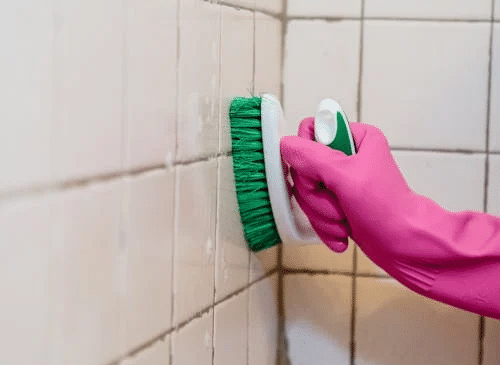
Chemistry by itself seldom provides a complete deep clean. Real transformation comes from combining a suitable solution with mechanical agitation that gives the tile a fresh appearance. This usually means using a stiff-bristle brush for grout lines and a gentler tool for tile.
Focused scrubbing works well over lines of grout as the porous surface contains embedded soil, which is only released when disturbed. A grout brush or stiff deck brush enables focused cleaning without damaging the nearby tile.
Method is as important as equipment. Divide the work into manageable parts, using the cleaner and letting it sit as directed by the product guidelines before scrubbing. This dwell time allows chemistry to have time to penetrate and dissolve soils before being picked up by mechanical action.
Rinsing thoroughly prevents dirt from settling back onto the floor as it dries. A wet-dry vacuum or floor squeegee is more effective than mopping in large areas since it can remove soil-laden water that would otherwise be dispersed on the floor through mopping. Several rinsing cycles might be required till water is clear. This diligence determines whether the final finish appears fresh or filmed.
Seal and Maintain for Lasting Results
The last step is to protect the tile and grout. Unsealed grout collects dirt instantly and undoes your cleaning work in weeks. A sealer creates a barrier against moisture and stains while still letting the ground breathe. Apply only when the grout is clean and fully dry. Two thin coats normally work better than thick ones. This ensures that all the areas are covered without the product remaining on the surface.
The quality of your results is dependent on how you take care of the floor between deep cleanings. Sweeping or vacuuming every day gets abrasive grit that wears tile and grout over time. Immediate spill clean-up helps to prevent the penetration of liquids in grout prior to the sealer repelling them.
Regular washing with neutral PH materials maintains a clean appearance and doesn’t harm the sealer or leave any residue. Having your home cleaned by a professional annually is enough when you clean it on a daily basis, but others with heavy traffic or light grout may require frequent cleaning. The right deep-cleaning technique lowers maintenance and reduces the need for intense sessions.
Endnote
Deep cleaning tile correctly restores the surface to its intended condition while extending the life of both the tile and grout. By choosing the right methods, homeowners can achieve results that surface cleaning cannot match. This process takes effort, but the outcome is a truly spotless floor. Proper care in spaces where tile bears daily wear honors both its durability and the investment it represents.