

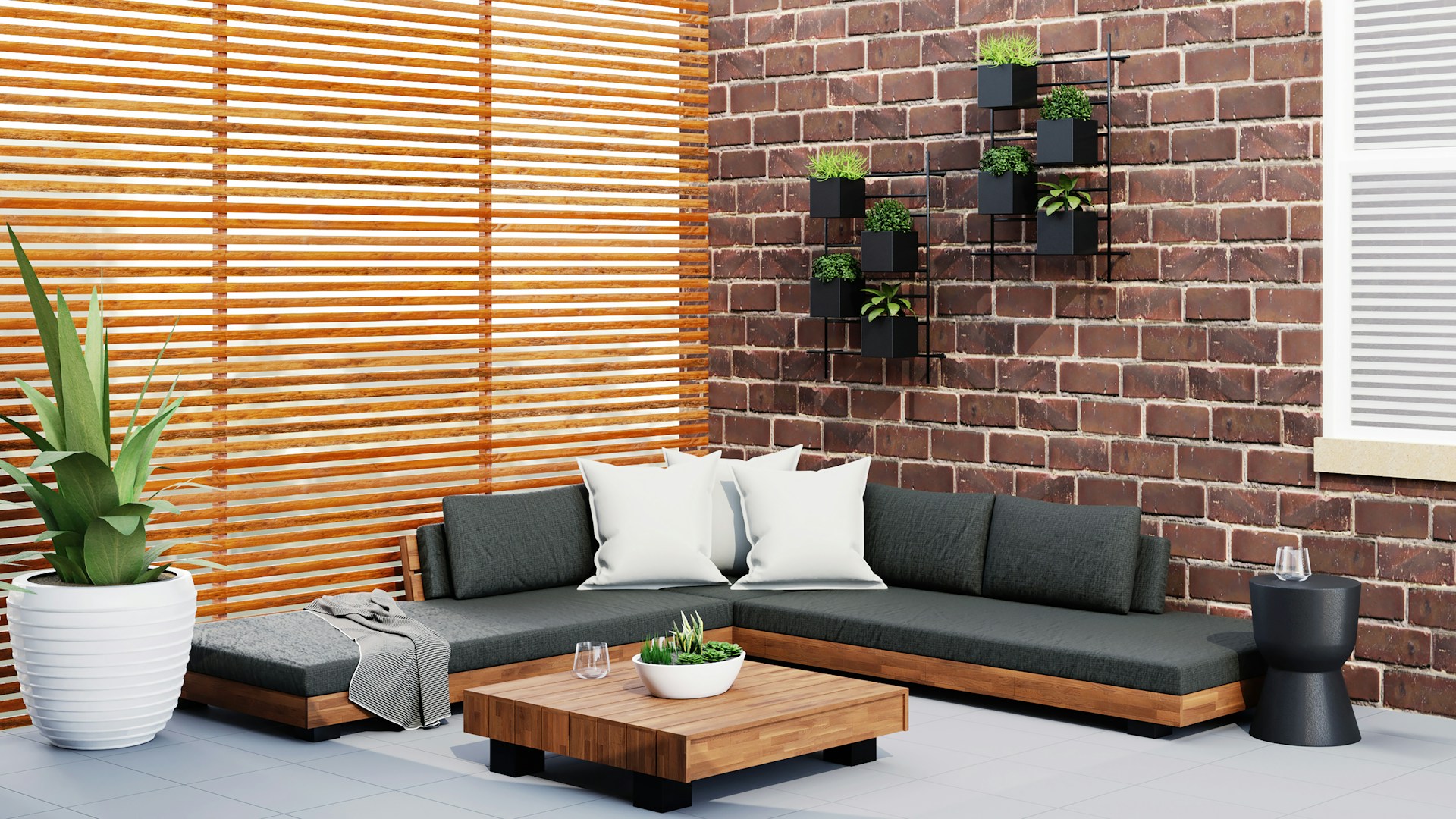
If you live in the American Southwest, you already know the patio is practically an extra room—used for morning coffee, sunset dinners, and all those small “we should do this more often” moments.
But the climate here (and in nearby mountain and desert regions) can be tough on outdoor furniture: intense UV exposure, big temperature swings, dry air, wind, and the occasional surprise storm.
From my base in Orange County, California, I help clients design and furnish outdoor spaces across Southern California, Nevada, Arizona, Utah, and Colorado. One question comes up constantly: Is teak really worth it out here?
In most cases, yes—teak is one of the best overall choices you can make for Southwestern patios, especially if you want something beautiful, long-lasting, and relatively low-fuss.
Why the Southwest Is Hard on Patio Furniture (Even When It’s “Dry Heat”)
Before getting into teak, it helps to understand what actually wears outdoor furniture down in this region:
- UV radiation: The sun is the biggest culprit. It fades finishes, weakens some plastics, and can dry out lower-quality woods.
- Thermal cycling: Hot days and cool nights cause expansion and contraction that can stress joints and finishes.
- Low humidity: Dry air pulls moisture from many materials and can accelerate cracking or splitting in woods that aren’t naturally stable.
- Wind + dust: Grit can act like sandpaper over time, and wind can topple lightweight pieces or umbrellas.
- Monsoon bursts / snow (depending on state and elevation): Even desert homes can see sudden downpours, and places like Utah or Colorado may require more true “four-season” durability.
A solid overview of weather resistance across materials (metals, woods, synthetics) is covered in this piece on weather-resistant patio furniture, and it aligns with what I’ve seen in real homes over many seasons.
What Makes Teak Different?
Teak has earned its reputation for a reason. It’s naturally rich in oils and dense, which makes it more resistant than many other woods to:
- moisture intrusion and swelling
- warping
- insect damage
- everyday wear
In practice, that density and oil content helps teak handle both coastal conditions (like salty air in parts of Southern California) and arid inland climates (like Nevada and Arizona). In other words, teak doesn’t rely entirely on a surface coating to survive; it has built-in resilience.
If you’re browsing options, here’s a good place to start for styles that fit contemporary Southwestern and coastal looks: teak furniture for modern patios.
Is Teak “Low Maintenance”? The Honest Answer
Teak can be very low maintenance—but only if you’re clear on what “maintenance” means.
Teak does not require sealing to survive outdoors. Left untreated, it will gradually weather to a soft silver-gray patina. That’s not damage; it’s a normal, attractive look many homeowners prefer (especially in modern, coastal, and desert-minimalist designs).
If you want teak to stay closer to its warm golden-brown tone, you will need periodic care—typically cleaning and applying a teak protector or oil (the exact product and schedule depends on exposure and preference). The good news is you’re maintaining color, not structural integrity.
A helpful comparison of teak’s characteristics and what owners should expect is discussed in this teak patio furniture explainer. While it’s written for a different region, the core points about teak’s weathering behavior and durability translate well.
Teak in Key Southwest Microclimates
Southwest living isn’t one climate—it’s many. Here’s how teak typically performs in the places my clients live:
Orange County + Coastal SoCal
Teak shines here. Coastal air can be corrosive to some metals and tough on cheaper finishes. Teak’s natural oils give it an edge, and its look fits right in with laid-back luxury styling—especially when paired with clean-lined upholstery and light textiles.
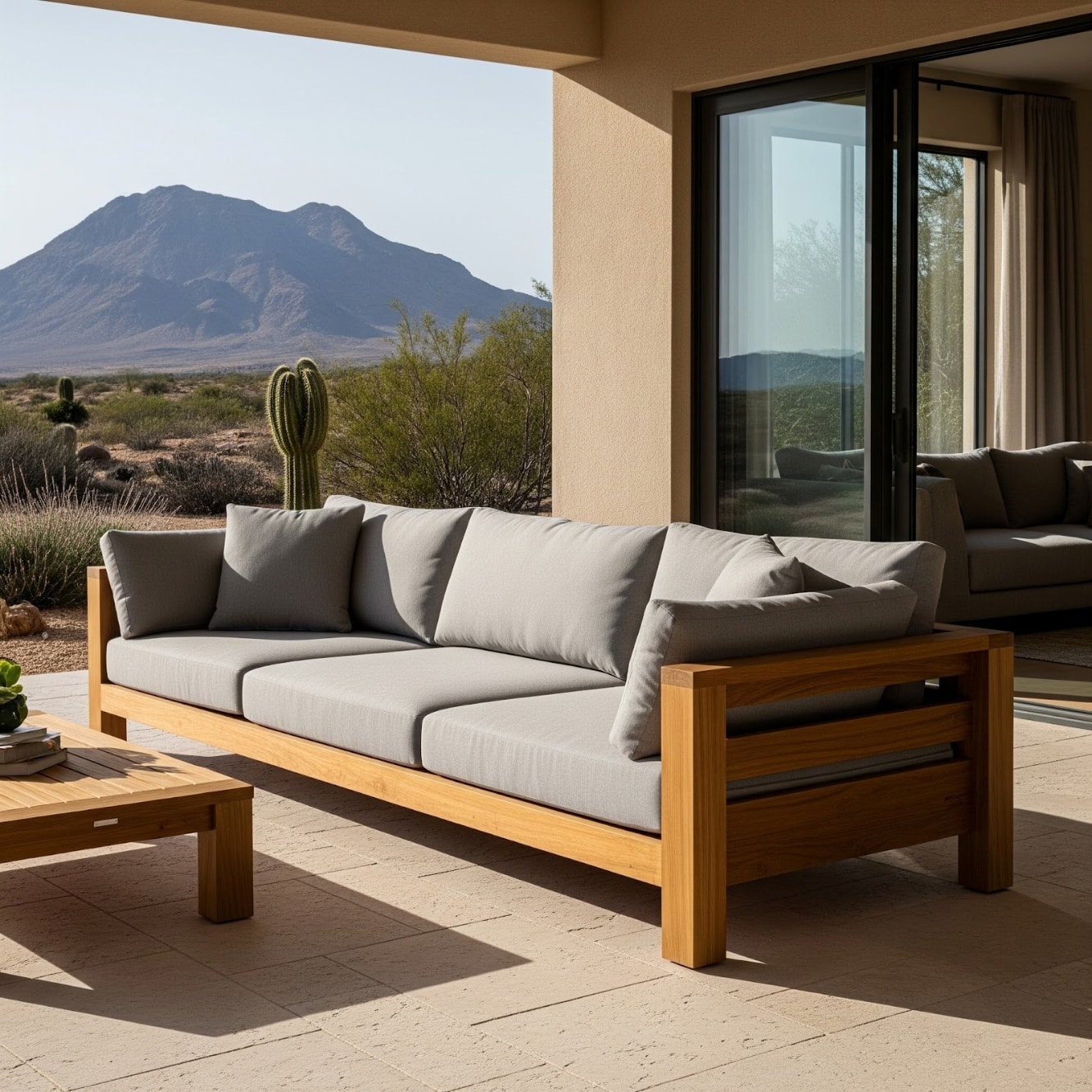
Arizona Desert Sun (Phoenix, Scottsdale, Tucson)
The big issue is relentless UV and heat. Teak handles it well structurally, but you should expect faster color change if pieces sit in full sun all day. If you want to minimize weathering and surface drying, use a cover when not in use and do occasional cleaning.
If you’re weighing materials for intense heat and sun, this overview of outdoor furniture for the Arizona sun is a useful reference point—especially for how different materials respond to exposure.
Nevada (Las Vegas + High Desert Areas)
Similar story to Arizona: UV and dust are the main concerns. Teak holds up well, but cushion fabrics matter too—use high-performance outdoor textiles and store cushions during dust storms.
Utah + Colorado (Four Seasons, Snow at Elevation)
Teak can absolutely work, but your routine matters more. Snow and freeze/thaw cycles aren’t teak’s enemy as much as trapped moisture is. If you can, store or cover furniture during heavy winter months and keep it clean so melting snow doesn’t sit in grime.
Common Teak Mistakes I See (and How to Avoid Them)
- Assuming “teak” always means high quality
Not all teak is equal. Look for well-constructed joinery, smooth finishing, and reputable sourcing. Weight is often a good sign—teak should feel substantial. - Putting teak on surfaces that trap moisture
Avoid leaving teak legs in constantly wet areas or directly on turf that stays damp underneath. Use furniture glides or place pieces on hardscape when possible. - Neglecting cleaning in dusty climates
Dust buildup can dull the surface. A gentle periodic wash keeps it looking refined and prevents grit from working into crevices. - Over-oiling
If you choose to oil teak, follow product directions. Too much oil can attract dirt and lead to blotchy darkening. - Skipping covers in extreme exposure
Covers aren’t mandatory, but in full-sun desert placements they’re one of the easiest ways to extend the “like new” look with minimal effort.
So, Is Teak a Good Choice for the American Southwest?
For most homeowners in Southern California, Nevada, Arizona, Utah, and Colorado, teak is a strong yes—especially if you want a premium outdoor material that ages gracefully and doesn’t demand constant upkeep to remain structurally sound. It’s particularly well-suited for coastal climates, but it performs impressively in desert environments too, as long as expectations about weathering are realistic.
If your goal is an outdoor space that feels welcoming, elevated, and built to last through harsh sun and shifting seasons, teak is one of the safest bets you can make—without turning your patio into a maintenance project.