

Flexibility as The New Priority in Home Design
The profile of the American home buyer is shifting in ways that have direct implications for how interior spaces — including closets — are designed and specified. According to a 2025 NAR analysis of home buyer preferences, buyers are increasingly prioritizing flexible, multi-use spaces that support wellness and lifestyle adaptability over raw square footage.
The majority of buyers surveyed are now one- or two-person households, and these smaller households don’t want less from their homes — they want spaces that work harder and more intelligently for the way they actually live.
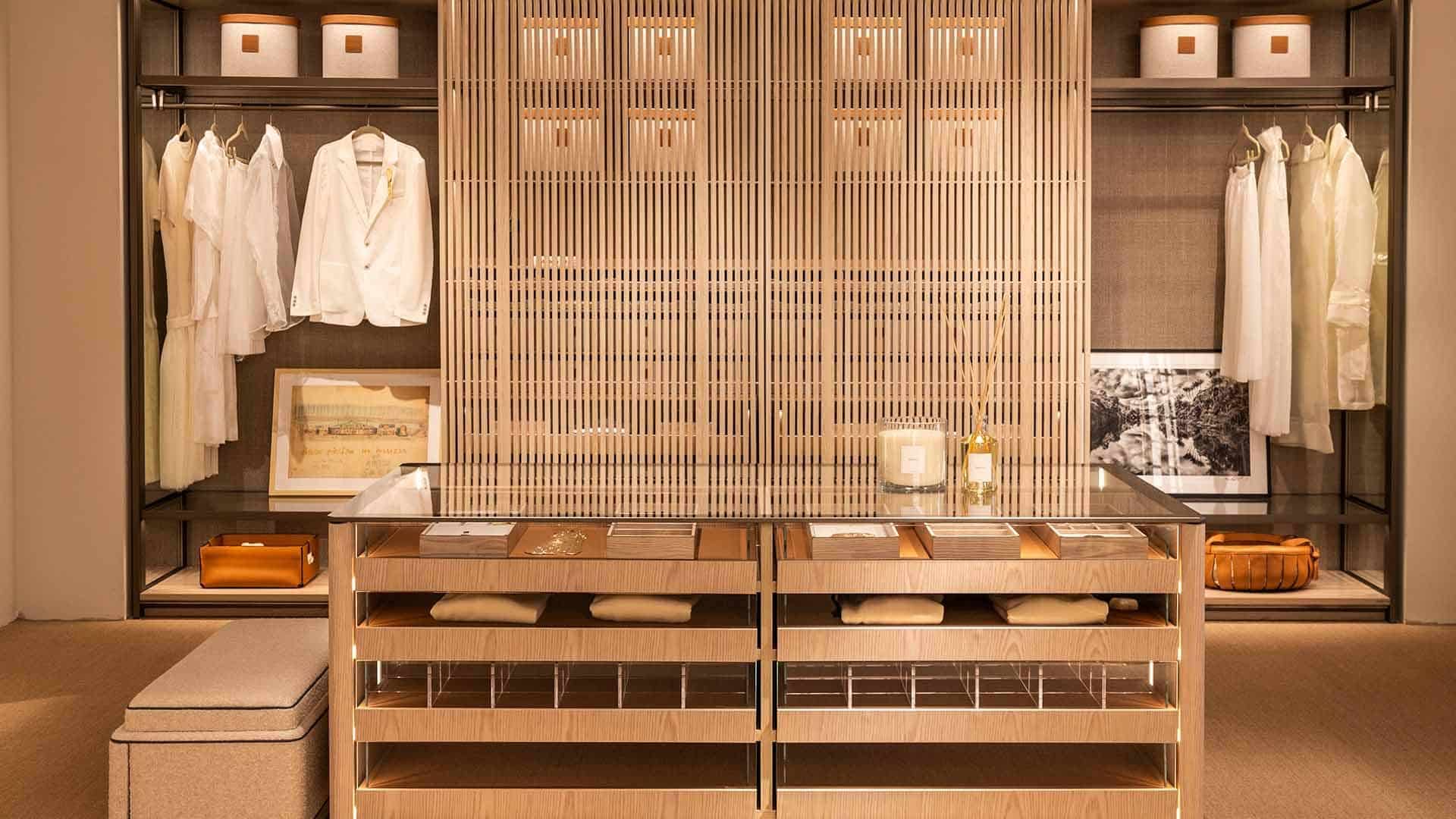
For the luxury wardrobe market, this shift translates directly into a demand for closet systems that are not just beautiful but genuinely intelligent — designed with the same intentionality that buyers expect from every other space in a high-end home. Ornare’s doors and panels range reflects this philosophy: every element is designed to contribute to a space that performs as well as it looks.
Design as Identity, Not Decoration
In the finest examples of luxury wardrobe design, the design is not applied on top of a functional structure — it is the structure. Every decision about proportion, material, door geometry, and hardware contributes to a coherent identity that makes a closet recognizable as the product of a specific design philosophy. This is what separates truly exceptional work from closets that are merely well-made: the presence of a sustained, intentional design vision that holds every detail in relationship to every other.
Stefan Schattan, CEO of Ornare, is clear about where this identity lives: “Design is the most important element of the entire project. Every brand has its own design language, its own details — and the handle is a fundamental part of that identity. It is not an accessory. It is a statement about everything the closet stands for.” It’s a position that elevates hardware specification from a finishing decision to a design principle — one that should be resolved early in the project process, not retrofit at the end.
The Handle: The Most Frequently Touched Object in The Closet
Of all the elements in a custom walk-in closet, the hardware is the most frequently engaged. A handle is touched every time a drawer or door is opened — in a well-used closet, dozens of times a day, thousands of times a year. The quality of that tactile experience — whether the handle feels solid, sits perfectly flush, responds precisely to the hand — is communicated directly and immediately, without any mediation of aesthetics or context. A handle that is slightly loose, slightly misaligned, or slightly hollow under pressure undercuts the quality message of everything around it.
In premium wardrobe design, the handle is also one of the most visible expressions of the project’s design language: its profile, its proportion relative to the door face, its metal finish, its relationship to the shadow gap or reveal at the door perimeter. Getting this right is not a detail — it’s the summary of the entire design, compressed into the object that every user touches first.
Finish Coherence: The Quality that Completes the Project
In a project of genuine luxury wardrobe design, finish coherence is as important as finish quality. The lacquer on the door panels must match the lacquer on the drawer faces. The wood veneer on the interior shelving must share its character with the veneer on the exterior.
The metal finish on the handles must correspond to the metal finish on the lighting profiles and the trim elements throughout the closet. Any discontinuity — a slightly different sheen, a marginally different color temperature — breaks the visual unity that makes a closet feel resolved rather than assembled.
This coherence requires a manufacturing culture that controls every stage of production: material selection, finishing, quality control, installation. Ornare’s approach to custom wardrobe design maintains this control across every element of the closet — from the structural carcass to the smallest hardware detail — which is why Ornare installations tend to hold their visual integrity years after installation in a way that assembled-from-multiple-sources projects rarely do.