

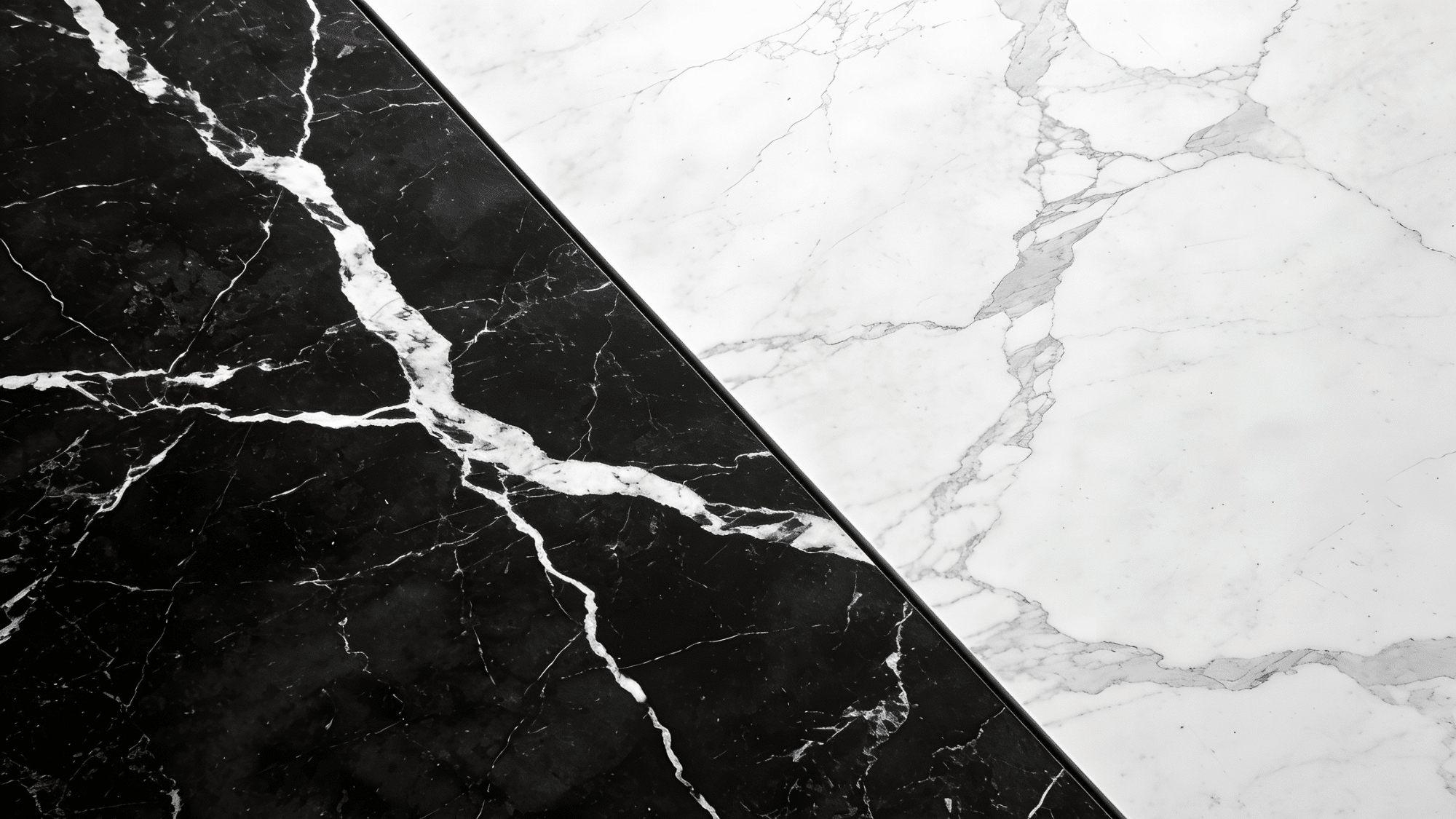
Choosing the right countertop can feel overwhelming. Marble and granite both look stunning, but which one actually fits your lifestyle?
Each material has its own charm. Marble brings elegance with its soft veining, while granite offers bold patterns and incredible durability. But looks aren’t everything.
There’s maintenance to think about, cost differences, and how each holds up to daily wear and tear. There is no universal “better” option; it depends on what matters most to you.
This guide breaks down the real differences between these two popular materials. By the end, you’ll know exactly which countertop deserves a spot in your kitchen.
What is Marble?
Marble is a natural stone formed from limestone under intense heat and pressure. It’s known for its luxurious appearance, featuring unique veining patterns.
For centuries, marble has been a symbol of elegance in homes and buildings worldwide.
| Pros | Cons |
|---|---|
| Ageless look | Prone to scratches and etching |
| Heat resistant | Requires regular sealing |
| Unique veining patterns | Stains easily from acids |
| Increases home value | More expensive than many alternatives |
| Cool surface for baking | Softer and less durable than granite |
What is Granite?
Granite is an igneous rock formed from cooled magma deep within the Earth. It’s incredibly hard and durable, making it ideal for high-traffic kitchens.
Granite countertops come in various colors and patterns, each slab being completely unique.
| Pros | Cons |
|---|---|
| Extremely durable and scratch-resistant | Seams may be visible on larger counters |
| Resistant to heat and stains | Requires periodic sealing |
| Wide variety of colors and patterns | Can be heavy, needs strong cabinet support |
| Low maintenance compared to marble | Higher upfront cost than laminate |
| Long-lasting investment | Less uniform appearance than engineered stones |
Marble vs Granite: Key Differences Explained
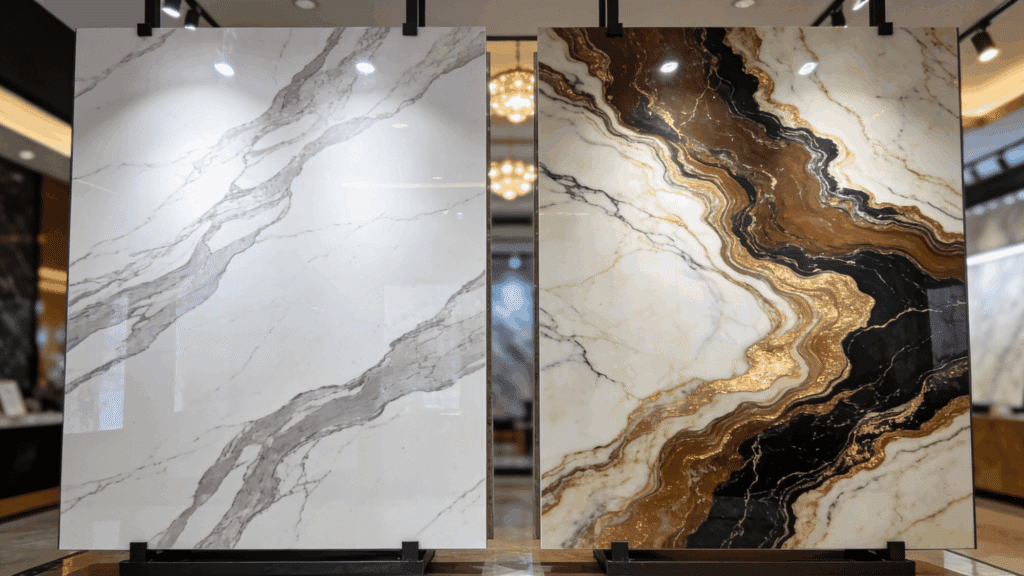
Understanding how marble and granite compare helps homeowners make smarter choices. Here are the main factors that set these two stones apart.
1. Durability
Granite wins the durability battle hands down. It’s one of the hardest natural stones available, resisting scratches, chips, and daily wear beautifully.
Marble is softer and more porous, making it vulnerable to etching from acidic foods like lemon juice or wine. For busy kitchens, granite handles the chaos better.
2. Maintenance
Both stones need sealing, but marble demands more attention. It stains easily and requires careful cleaning with pH-neutral products.
Granite is more forgiving. Once sealed properly, it resists most spills and needs less frequent resealing. Granite owners enjoy lower maintenance hassles overall.
3. Cost
Marble typically costs more than granite, ranging from $50 to $200 per square foot installed. Granite usually runs $40 to $150 per square foot. Rare marble varieties can push prices even higher.
However, exotic granite types can match marble’s premium pricing. Budget matters when choosing between them.
4. Appearance
Marble offers soft, flowing veins and a classic, refined look. It’s available in whites, grays, and creams mostly.
Granite showcases bolder patterns with speckled designs in countless colors, from deep blacks to vibrant blues. Marble suits traditional styles, while granite works with modern and rustic designs alike.
Marble vs Granite for Kitchen Countertops
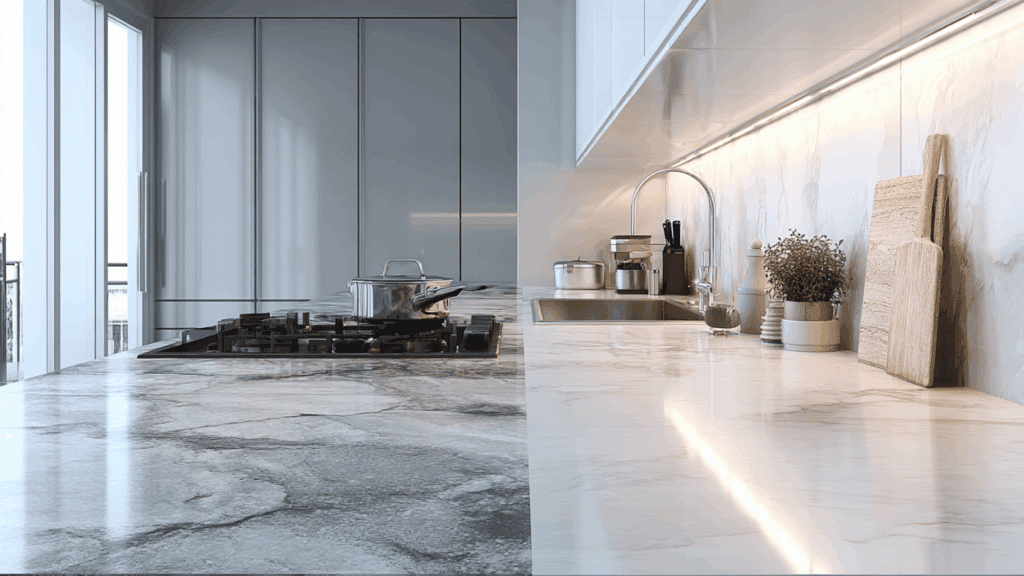
Kitchens take a beating. Between hot pans, knife marks, and spilled wine, countertops face constant challenges. So, which stone handles kitchen life better?
Granite is the practical choice for most homeowners. It shrugs off heat, resists stains, and keeps looking great with minimal effort.
You can chop vegetables directly on it without worry, though cutting boards are still recommended. Busy families and avid cooks appreciate how granite stands up to daily chaos.
Marble brings undeniable beauty but requires more careful treatment. Acidic foods leave marks, and spills need immediate cleanup.
It’s better suited for baking zones or kitchen islands where heavy cooking doesn’t happen. Some homeowners accept the patina that develops over time, viewing it as character rather than damage.
Your cooking habits matter here. If you’re constantly preparing meals, granite makes sense. If you want that magazine-worthy aesthetic and don’t mind extra care, marble could work.
Marble vs Granite for Bathroom Use
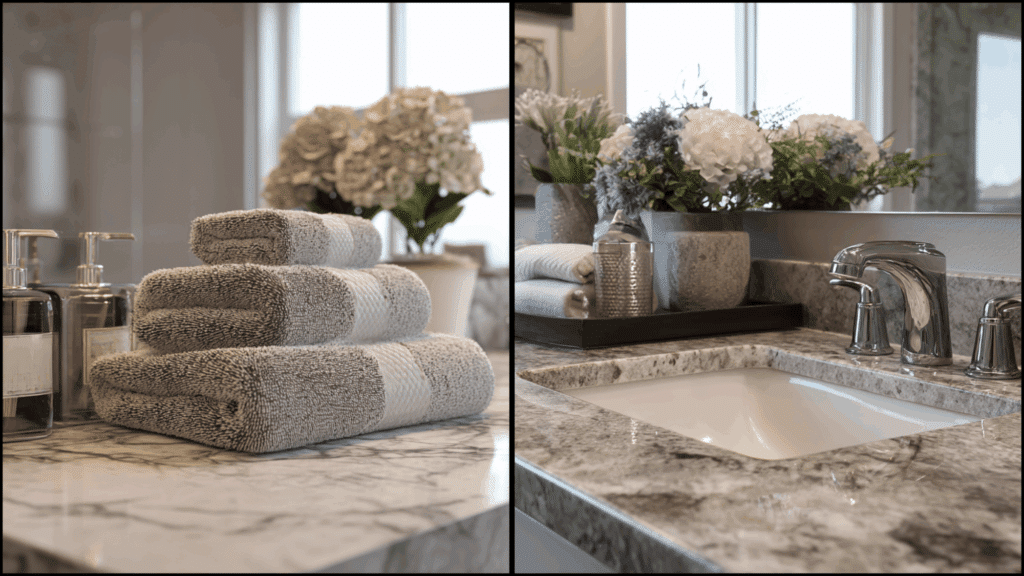
Bathrooms present different challenges than kitchens. Less cooking mess, but plenty of water, soap, and beauty products to contend with.
Marble shines in bathrooms. The luxurious look boosts any space, creating a spa-like atmosphere.
Since bathrooms don’t face acidic spills from food, marble’s main weakness matters less here. Toothpaste and soap are gentler threats that wipe away easily.
Granite works beautifully, too. It handles moisture without complaint and resists staining from makeup or hair products. The variety of colors lets you match any design scheme perfectly.
Both stones need proper sealing in bathrooms due to constant moisture exposure. However, either choice delivers durability and grace.
Your decision comes down to preferred aesthetics rather than performance concerns in bathroom settings.
How to Choose Between Marble and Granite
Making the right choice means considering your lifestyle, budget, and design preferences. Here’s how to decide which stone suits you best.
- Consider Your Lifestyle: Does your kitchen see heavy daily use with kids and cooking? Granite handles the chaos better. If you’re more careful and value aesthetics over practicality, marble might work.
- Evaluate Your Budget: Compare quotes for both materials in your area. Remember installation costs, sealing requirements, and long-term maintenance expenses. Sometimes the cheaper upfront option ends up costing more over time.
- Think About Maintenance Commitment: Be honest about how much effort you’ll put into upkeep. Marble needs regular sealing and immediate cleanup of spills. Granite is more forgiving but still requires occasional attention.
- Match Your Design Style: Traditional or classic homes look stunning with marble’s elegant veining. Modern, rustic, or eclectic spaces benefit from granite’s bold patterns and color variety.
- Test in Your Space: Request samples of both stones. Place them in your kitchen or bathroom lighting. Live with them for a few days and see which one feels right for your home.
The Final Thought
Both marble and granite deliver beauty and value, just in different ways. Granite handles daily life with tough durability and easy maintenance. Marble offers grace, transforming spaces into works of art.
There’s no wrong choice here, only the right fit for your home. Consider how you actually use your space. Think about what you’re willing to maintain. And remember, you’ll live with this decision for years.
Still undecided? Visit local stone yards. Touch the surfaces. See the colors in person. Sometimes the right countertop simply feels obvious once you experience it yourself.
Your perfect countertop is waiting. Now you’ve got the knowledge to choose confidently and create a space you’ll love coming home to every single day.