

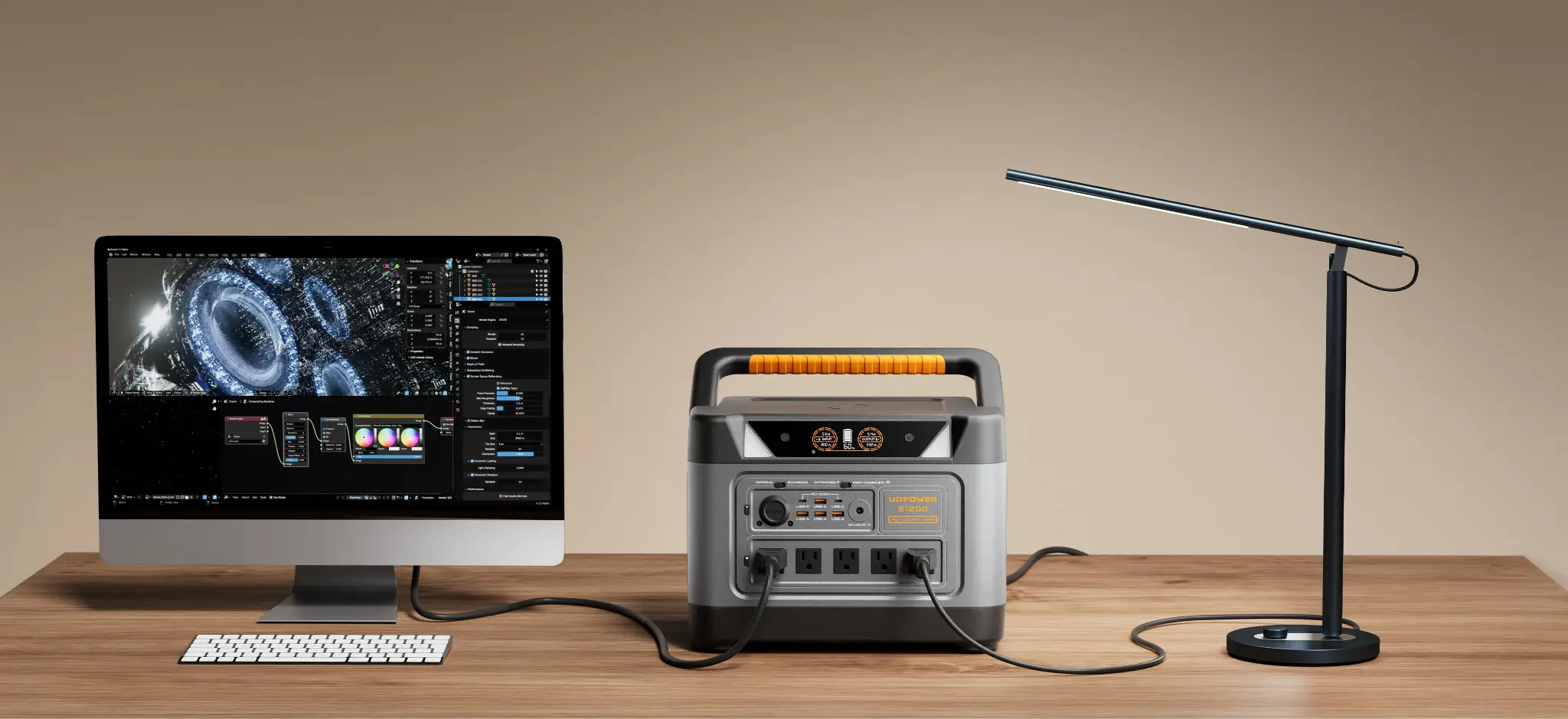
A frightening aptitude for bad timing is seen in electrical outages. A deafening tornado alarm turns a relaxing Sunday into a panicked hunt for D-cell batteries, the router flatlines mid-syllable during a crucial board meeting, or the stove falls cold halfway through baking your meal.
Outside your haven, the mayhem fluctuates but remains incredibly annoying: a distant tent requires unadulterated light, a motorhome need constant voltage to maintain basic sanity, and that magnificent off-grid cabin stands without a single outlet.
This is precisely why the portable power station has graduated from a “cute camping accessory” to an indispensable pillar of modern logistics.
It grants ordinary folks a silent, fume-free, and incredibly safe method to keep critical tech alive when the local grid surrenders. The ultimate payoff isn’t merely raw voltage. It is sheer peace of mind, unyielding control, and the stubborn ability to carry on uninterrupted.
Backup Power Is No Longer Just for Big Emergencies
Historically, residential backup power translated to a monstrous, gas-guzzling beast lurking in the shed, reserved exclusively for catastrophic hurricanes. Since our digital lives are now totally destroyed by little electrical errors, this dinosaur attitude is rapidly disappearing. Wireless signals will be cut off, home monitoring will be disabled, mobile batteries will be killed, telecommuters will be stalled, and houses that depend on life-saving devices or refrigerated medications would experience pure dread in the event of a brief outage. In a typical modern interruption, a household just wants to run their refrigerator, modem, two screens, and one lamp until the order is returned. That absolutely does not require a deafening combustion engine rattling the windows. A sleek battery box can be topped up proactively, tucked safely indoors, and deployed without toxic exhaust. The takeaway is glaring: contingency power shines brightest when woven into daily life. Waiting for the dark is the worst time to discover missing cords and power-hungry appliances.
Comfort Without Losing the Outdoor Feeling
Going off-grid should feel liberating, but roughing it shouldn’t equate to misery. Anybody who has wrestled a tent into submission by the dismal glow of a dying smartphone understands that trivial energy deficits quickly spawn headaches. In the brush, electricity isn’t a glamping luxury.
Trail mapping, sending SOS flares, chilling wild foods, inflating airbeds, taking selfies, and enduring really hot midnights all depend on juice. An excellent outdoor setup provides energy for your journey without being intrusive. To be honest, leaving battery logistics completely unmanaged is the largest amateur mistake people do.
They meticulously orchestrate the shelter, hydration, and provisions, blindly praying a flimsy power bank will conquer everything. A superior tactic involves auditing your gear pre-departure and identifying daily power non-negotiables. A rugged, compact unit handles the crux, while auxiliary solar panels stretch the wilderness stay indefinitely.
Freedom Depends on Knowing Your Loads

Vanlife offers limitless possibilities, but real freedom is inextricably linked to understanding just what your gadgets eat. For computers, modems, smartphones, ceiling lights, a small refrigerator, and other kitchen appliances, a distant working couple needs constant electricity.
In the meanwhile, a basic weekend warrior may live contentedly off of charging cords, ceiling lights, and roof fans. However, the unpleasant reality is that the instant heating devices enter the conversation, mobile electricity requirements soar. Standard lighting uses a lot less power than electric pots, microwaves, and induction burners.
Battery storage and inverter muscle behave quite differently, which is an unpleasant lesson for inexperienced beginners. Capacity dictates duration; output dictates capability.
Your backup arsenal must mirror your real-world appliances, not optimistic fantasies. For road warriors, this means auditing wattage, plotting recharge cycles, and baking in a healthy buffer instead of redlining your system.
Bigger Is Not Always Smarter
It is dangerously seductive to assume the heaviest battery is universally superior, but pragmatic reality differs. A behemoth station excels at keeping a fridge icy, running medical gear, or driving heavy tools, but it is comically impractical for a brief hike.
Conversely, a featherweight brick shines for reviving phones, illuminating a tent, and spinning a fan, yet completely implodes if asked to run a toaster. The smartest strategy begins with a blunt inquiry: what specifically cannot die when the grid collapses?
Tally the running watts, project the required runtime, and intentionally inflate the total for a safety net. Imagine capacity like a fuel tank. A massive reservoir drives you further, only if the engine aligns with the terrain. UDPOWER’s lineup illustrates this: agile C-Series rigs conquer travel, while the mammoth S-Series anchors household resilience. Confidence is born from calculated sizing, never blind guesswork.
Quiet Power Changes Where You Can Use It
The most striking divergence between modern lithium and a traditional gas generator lies in deployment logistics. A combustion engine absolutely has its merits particularly during multi-day blackouts requiring immense surges but it is permanently banished outside due to lethal exhaust.
It drags along a chaotic circus of deafening clatter, volatile fuel storage, messy oil swaps, and relentless upkeep. A premium battery bank obliterates that paradigm entirely. It invites itself into your living room, operates in stealthy silence, and eliminates the gasoline chore. For families, trekkers, and van-lifers, that sonic invisibility is priceless. Nobody ventures into the pristine wilderness to suffer engine drone, and nobody enjoys dragging machinery into a downpour merely to juice a MacBook.
Superior LiFePO4 chemistry introduces critical bonuses, universally praised for an immortal lifespan and bulletproof thermal stability. Seamless solar integration further amplifies grid independence. Ultimately, clean emergency power isn’t merely an eco-crusade; it is about making hardcore preparedness exceptionally comfortable.
Prepared Power for Home, Travel, and the Outdoors
When the utility fails, the primary adversary is not darkness. It is sheer disruption. Create spoils, digital hustles fail, vital lifelines disappear, and tranquil routines abruptly turn into terrifying nightmares. In the woods, where a dead cell jeopardizes safety, warmth, and the success of any trip, the same fragility lurks.
That vulnerability is removed by a contemporary power bank, which provides homes, covert basecamps, and wandering vans with an unwavering energy stronghold free from the toxic emissions and loud boom of outdated generators. A strategic strategy is needed to achieve independence: count your devices, compare power to storage, charge banks in advance, and build up an arrangement that fits your lifestyle.
The basic reality remains the same whether the task is to root a restless retreat, light a campground, or save a frozen stockpile. Anticipating Armageddon is not the goal of survival. It is about making sure that even in the event of a power system failure, progress would continue.