

Plumbing systems rely on small yet essential parts that often go unnoticed, and one of the most important is the drain trap found beneath sinks, tubs, and other fixtures.
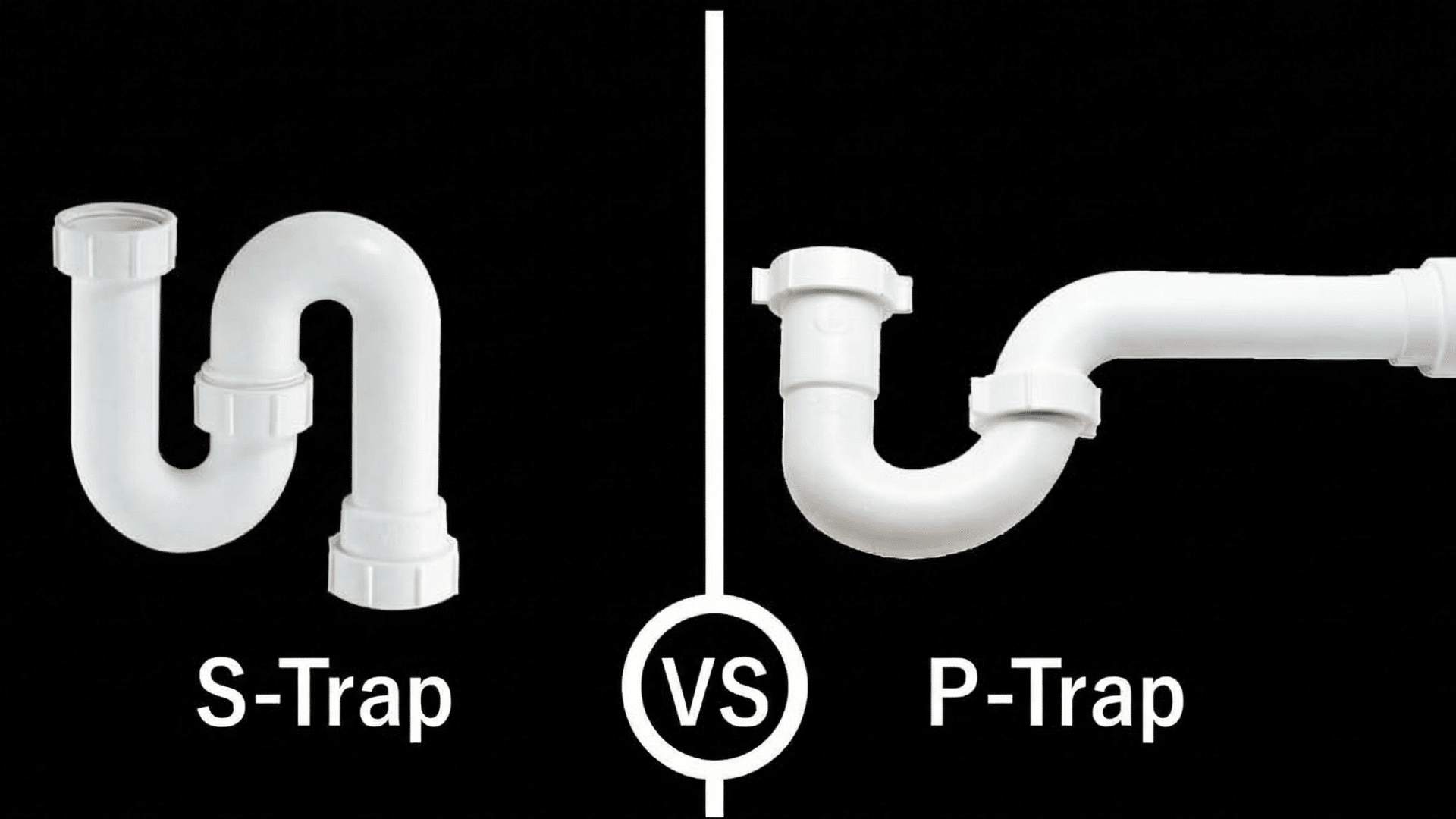
Among the common designs are the S trap and the P trap. While they may appear similar at first glance, their differences affect how wastewater flows and how sewer gases are prevented from entering a home.
The choice between them can influence both safety and overall drainage performance. Many homeowners and renters are unsure which trap they have or which one is appropriate.
This guide explains the S trap vs P trap in clear terms to help readers make informed decisions.
What is a Drain Trap in Plumbing?
Before comparing an S trap vs P trap, it is important to understand what a drain trap actually does.
A drain trap is a curved section of pipe installed beneath plumbing fixtures such as sinks, bathtubs, and floor drains.
Its main purpose is to hold a small amount of water after each use. This water creates a seal that blocks sewer gases from rising back into the home.
Without this water seal, unpleasant odors and harmful gases could enter living spaces. In addition to blocking gases, traps also catch small debris, such as jewelry or solid waste, preventing it from traveling deeper into the plumbing system.
Although traps are simple in design, their shape affects how well they perform. This is where the discussion of the S trap vs P trap becomes important.
What is an S Trap?
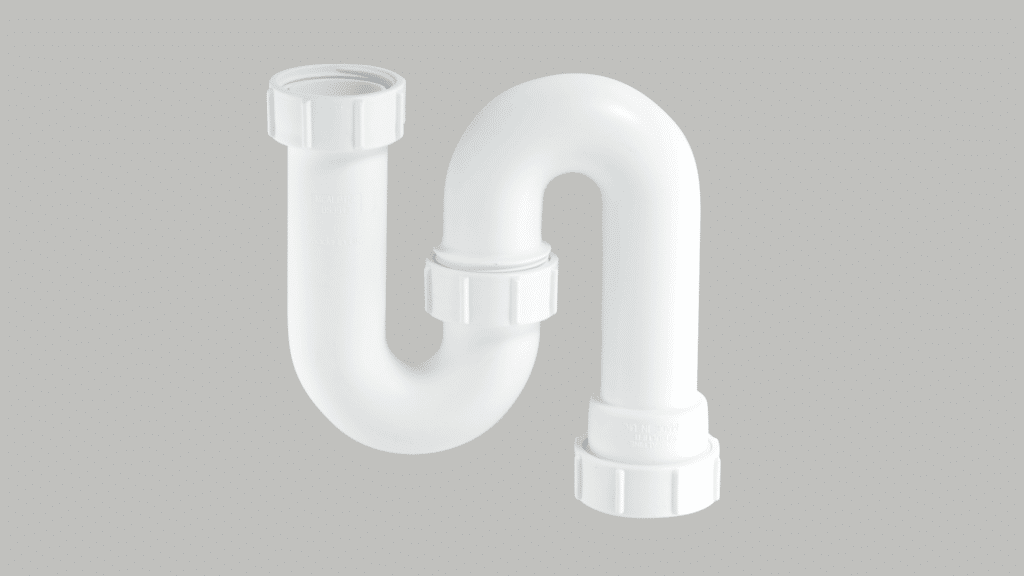
An S trap is a plumbing trap shaped like the letter “S” when viewed from the side. It connects the fixture drain to a vertical drain pipe that goes directly down through the floor.
How an S Trap Works:
When water flows down the drain, it moves through the curved section of the pipe. A small amount of water remains in the lower curve of the trap. This standing water creates the seal that blocks sewer gases.
However, the design of the S trap allows water to continue flowing downward after draining. Because the outlet pipe runs vertically, it can create a siphoning effect. This siphon can pull the water seal out of the trap.
When the water seal is lost, sewer gases can enter the room. This is the main reason S-traps are no longer allowed under most modern plumbing codes.
Where S Traps are Commonly Found:
S traps are often found in:
- Older homes built before modern plumbing codes
- Basement bathrooms
- Fixtures installed without proper venting
In many areas, replacing an S trap with a P trap is required during renovations.
What is a P Trap?
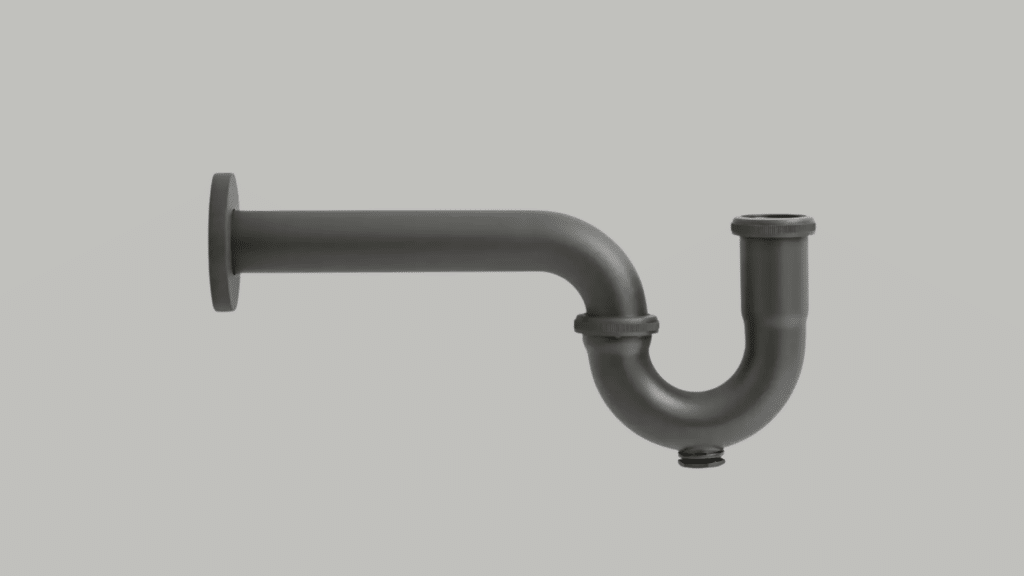
A P trap is shaped like the letter “P” when viewed from the side. It includes a horizontal pipe that connects to a vented drain line in the wall.
How a P Trap Works:
Like the S trap, the P trap holds a small amount of water in its curved section. This water forms a barrier that blocks sewer gases.
The key difference in the S trap vs P trap comparison is the horizontal outlet pipe. Instead of flowing straight down, wastewater exits horizontally into a drain pipe that connects to a vent system. The vent allows air to enter the system, preventing siphoning.
Because the water seal remains stable, P traps are considered safer and more reliable.
Where P Traps are Used:
P-traps are standard in:
- Kitchen sinks
- Bathroom sinks
- Bathtubs and showers
- Laundry drains
Modern plumbing codes in most regions require P-traps for residential installations.
S Trap vs P Trap: Key Differences
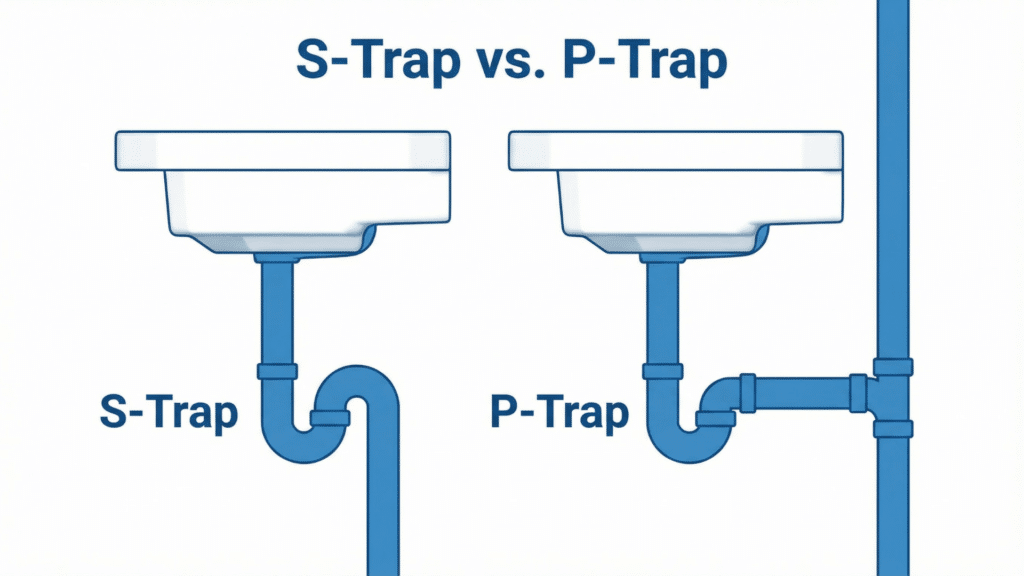
Understanding the differences in structure and venting is essential when comparing the S trap vs. the P trap.
Shape and Pipe Direction
The most visible difference between the two traps is their shape and the direction of the outlet pipe.
- S Trap: The pipe curves downward and connects directly to a vertical drain pipe that runs through the floor.
- P Trap: The pipe curves and then extends horizontally into a drain line located inside the wall.
This difference may seem minor, but the direction of the outlet pipe changes how water and air move through the system.
In an S trap, water continues flowing downward, which can create pressure changes. In a P-trap, the horizontal outlet provides better airflow control when connected to a vented system.
Vent Connection and Airflow
Venting is one of the most important factors in plumbing performance. Vent pipes allow air to enter the drainage system, balancing internal pressure as water flows through the pipes.
- S Trap: Typically does not connect properly to a vented drain line.
- P Trap: Connects directly to a vented system through the wall.
Without proper venting, negative pressure can build inside the pipes. When this happens, the trap may lose its water seal. This is why venting plays such a major role in the S trap vs P trap comparison.
How Venting Affects Trap Performance
In any plumbing system, vent pipes allow air to enter the drain lines. This prevents negative pressure from forming when water flows quickly through pipes.
S Trap and the Risk of Siphoning
In an S trap, wastewater flows straight down into a vertical drain. As the water moves quickly through the pipe, it can create suction. This suction may pull the remaining water out of the curved section of the trap.
When the water seal is removed, sewer gases can travel back up through the drain. This issue is known as self-siphoning. It is one of the main reasons S traps are considered unreliable in modern plumbing systems.
Over time, repeated siphoning can lead to persistent odors and indoor air quality problems.
P Trap and Balanced Pressure
A P trap avoids this issue because it connects to a vented horizontal drain line. The vent introduces air into the system, preventing strong suction from forming.
As a result, the water seal inside the trap remains stable after each use. This steady air balance is what makes the P trap more dependable over the long term. It reduces the chance of odor leaks and improves overall system efficiency.
In practical use, this difference in airflow control is one of the most important advantages of a P-trap.
Pros and Cons of S Traps and P Traps
| Feature | S Trap | P Trap |
|---|---|---|
| Design Simplicity | Simple curved design that connects directly to a vertical drain | Slightly more complex due to horizontal outlet and vent connection |
| Installation (Older Systems) | Easier to install in older floor-drain setups | Designed for modern wall-drain systems |
| Water Seal Stability | Prone to losing the water seal due to siphoning | Maintains a stable water seal with proper venting |
| Venting Compatibility | Typically lacks a proper vent connection | Connects directly to a vented drain line |
| Risk of Sewer Gas | Higher risk if the trap dries out | Low risk when properly installed |
| Code Compliance | Not approved under most modern plumbing codes | Approved and required by modern plumbing codes |
| Long-Term Reliability | Less reliable over time | Highly reliable and widely used |
| Maintenance | May require frequent checks for dry traps | Standard maintenance for clogs and leaks |
| Use in New Construction | Rarely allowed | Standard in new construction and renovations |
Plumbing Code Requirements
When comparing the S trap vs P trap, building codes play a major role.
Why S Traps are Often Banned
Most plumbing codes prohibit S-traps because they:
- Lose their water seal easily
- Allow sewer gases into living areas
- Fail modern venting standards
Even if an S trap appears to function properly, it may not meet code requirements.
Why P Traps are Code-Approved
P-traps are approved because they:
- Maintain a stable water seal
- Work with venting systems
- Reduce the risk of sewer gas entry
Home inspections often flag S-traps as violations, especially during property sales or remodeling projects.
Can an S Trap Be Converted to a P Trap?
In many cases, yes. Converting an S trap to a P trap often involves:
- Redirecting the drain line into the wall
- Adding proper venting
- Installing a P-shaped trap
This may require professional plumbing work, especially if walls must be opened. The cost of conversion depends on accessibility and local labor rates. However, upgrading improves safety and code compliance.
Installation Considerations
Installation requirements also separate S traps from P traps.
Installing an S Trap
S-traps are simpler in layout because they connect directly to a vertical drain pipe. In older homes with floor-based drainage systems, this design was common.
However, modern plumbing codes rarely allow new S-trap installations. Even if installation is physically simple, it may not meet legal requirements.
Installing a P Trap
Installing a P-trap requires proper alignment with a wall drain and vent system. The horizontal outlet must connect to a vented pipe to function correctly.
This makes installation slightly more complex than an S trap. However, it ensures long-term reliability and code compliance.
S Trap vs P Trap: Cost Comparison
| Cost Factor | S Trap | P Trap |
|---|---|---|
| Average Material Cost (PVC) | $5 – $15 | $8 – $20 |
| Average Material Cost (Metal/Chrome Finish) | $15 – $40 | $20 – $50 |
| Basic Replacement Labor Cost | $75 – $150 | $100 – $200 |
| Installation Complexity | Simple if already connected to the floor drain | Requires connection to the wall drain and vent |
| Conversion Cost (S Trap to P Trap) | Not applicable | $150 – $500+ depending on plumbing changes |
| Code Compliance Impact | May require future replacement | Meets modern plumbing standards |
| Long-Term Cost Risk | Higher risk of correction costs | Lower risk of additional upgrades |
Although the material cost difference is minimal, converting an S trap to a P trap can increase labor expenses. However, installing a P-trap often reduces long-term costs by preventing inspection issues and code violations.
Maintenance and Common Problems
Both trap types require maintenance, but they encounter different issues.
Common Problems with S Traps
S-traps are more likely to lose their water seal due to siphoning. This can lead to:
- Strong sewer odors
- Gurgling sounds during drainage
- Dry traps
In addition, S traps are often flagged during inspections as non-compliant.
Common Problems with P Traps
P-traps are generally reliable, but they can develop routine plumbing issues such as:
- Clogs from grease, soap, and hair buildup
- Leaks caused by loose slip nuts
- Worn washers or seals
These issues are typically easy to fix and part of normal plumbing maintenance.
The Bottom Line
Choosing between an S trap and a P trap is not just a design decision. It directly affects how well a plumbing system controls airflow, prevents odors, and meets building regulations.
The difference may seem small under a sink, but it has long-term consequences for performance and inspection approval.
Modern plumbing standards favor systems that maintain consistent pressure and protect the water seal. If you suspect your setup is outdated, have it evaluated and upgraded if needed.
Taking action now can prevent future issues and improve overall system reliability.