

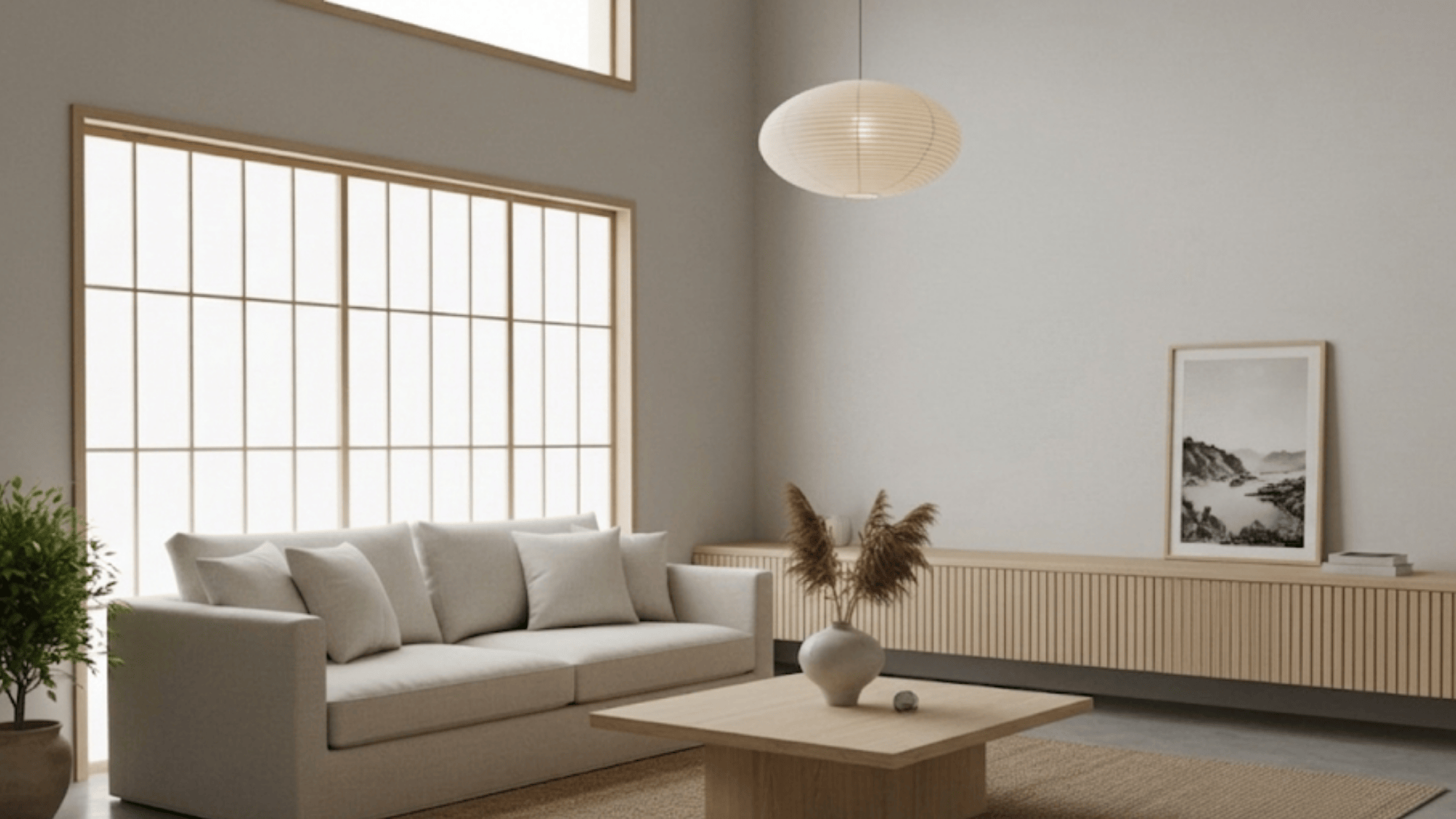
More homes are moving toward a calm, clutter-free look, and Japandi interior design is one of the main reasons why. It combines Japanese simplicity with Scandinavian warmth to create spaces that feel clean without feeling cold, and minimal without feeling empty.
You don’t need to overhaul your home to get there. A few well-chosen pieces, the right colors, and some open space can change how a room feels completely.
In this guide, I’ll share practical Japandi ideas you can try in any room, whether you want a small refresh or a full update.
What Is Japandi Interior Design & Key Features
Japandi brings together two design traditions that share more common ground than you’d expect. Understanding what each one contributes helps you make better decisions for your space.
The Scandinavian side draws from a concept called hygge, a Danish idea centered on warmth, coziness, and making a space feel genuinely comfortable to live in. Hygge is why Japandi never feels cold or empty despite its simplicity. It brings in soft textures, warm lighting, and a lived-in ease that strict minimalism often lacks.
The Japanese side is shaped by wabi-sabi, a philosophy that finds beauty in imperfection, simplicity, and things that show their age. A ceramic bowl with an uneven glaze, a wooden shelf with visible grain, a worn linen cushion; these are not flaws in a Japandi space. They are the point.
Together, hygge and wabi-sabi explain what makes Japandi different from plain minimalism. It is warm where minimalism is cold, and it welcomes imperfection where minimalism demands polish.
- The focus stays on simplicity, natural materials, and a calm atmosphere in every room. It avoids clutter and keeps only what is useful and needed.
- Neutral colors like white, beige, and soft gray are commonly used. These shades help make the space feel open, light, and relaxing.
- Clean lines and simple shapes are used in furniture and decor. This keeps the room neat and free from heavy or busy designs.
- Natural wood and soft textures add warmth. Materials like cotton, linen, and wood are often used.
- Decor is kept minimal with only a few meaningful items placed carefully. This helps maintain a clean and clutter-free look.
- Furniture is chosen for both comfort and everyday use. Each piece should serve a purpose and fit well in the space.
Japandi Interior Design Ideas
These ideas can help you build a calm, clean space one change at a time. You don’t need to do everything at once; even one or two shifts can noticeably change how a room feels.
1. Use Neutral Color Palettes
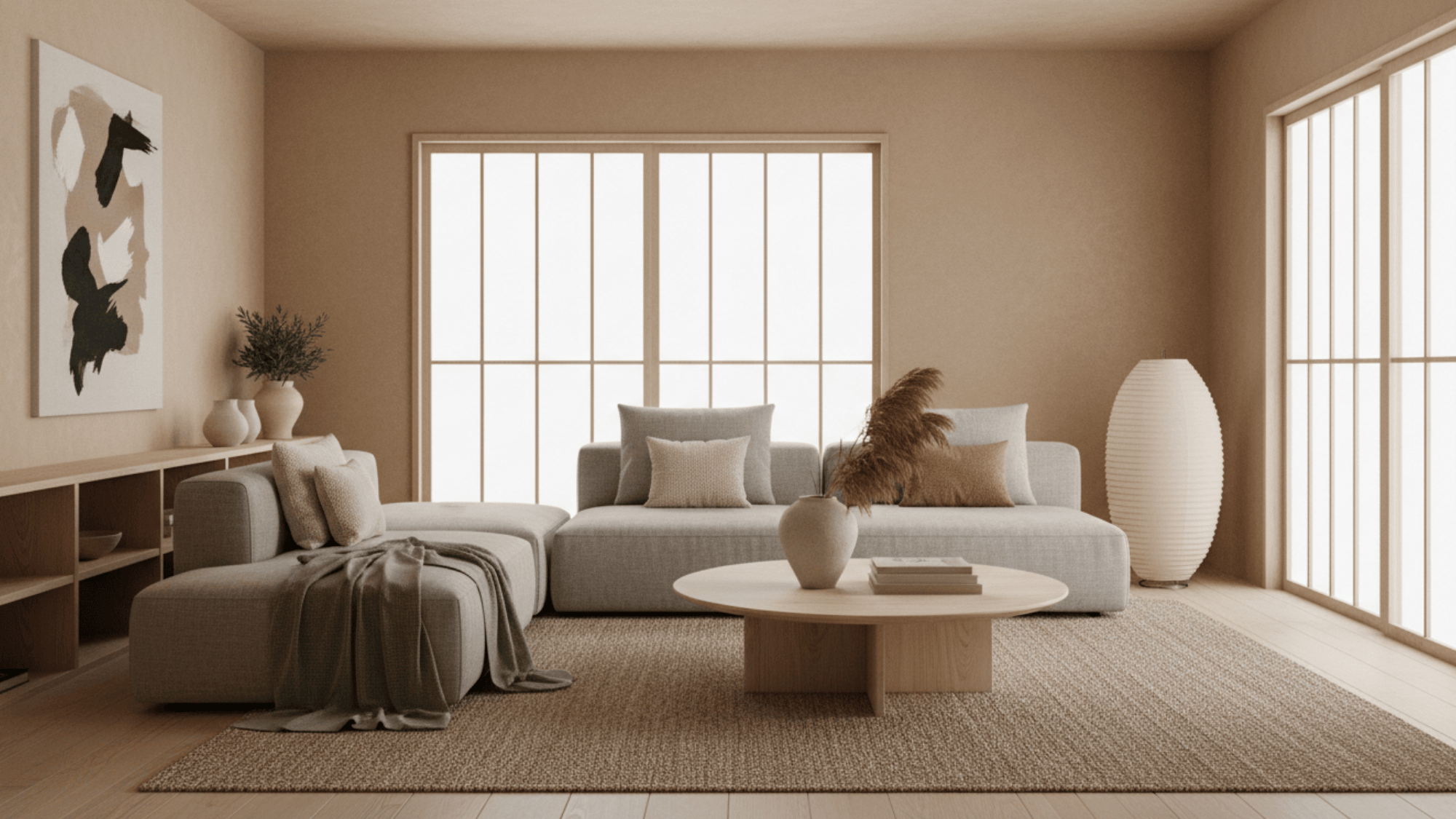
Soft colors like white, beige, and light gray keep the space calm and easy to be in. These shades make the room feel open without doing much work at all.
Walls stay plain, furniture matches the soft tones, and the whole room reads as one cohesive thing rather than a collection of separate choices.
Use three tones: a warm neutral for walls, a mid tone for furniture, and a deeper shade for grounding. This keeps the space balanced and not flat while still feeling calm.
When color stays this simple, light moves better across the room. The space feels more relaxed, not because you added anything, but because nothing is competing for attention.
2. Use Soft Lighting
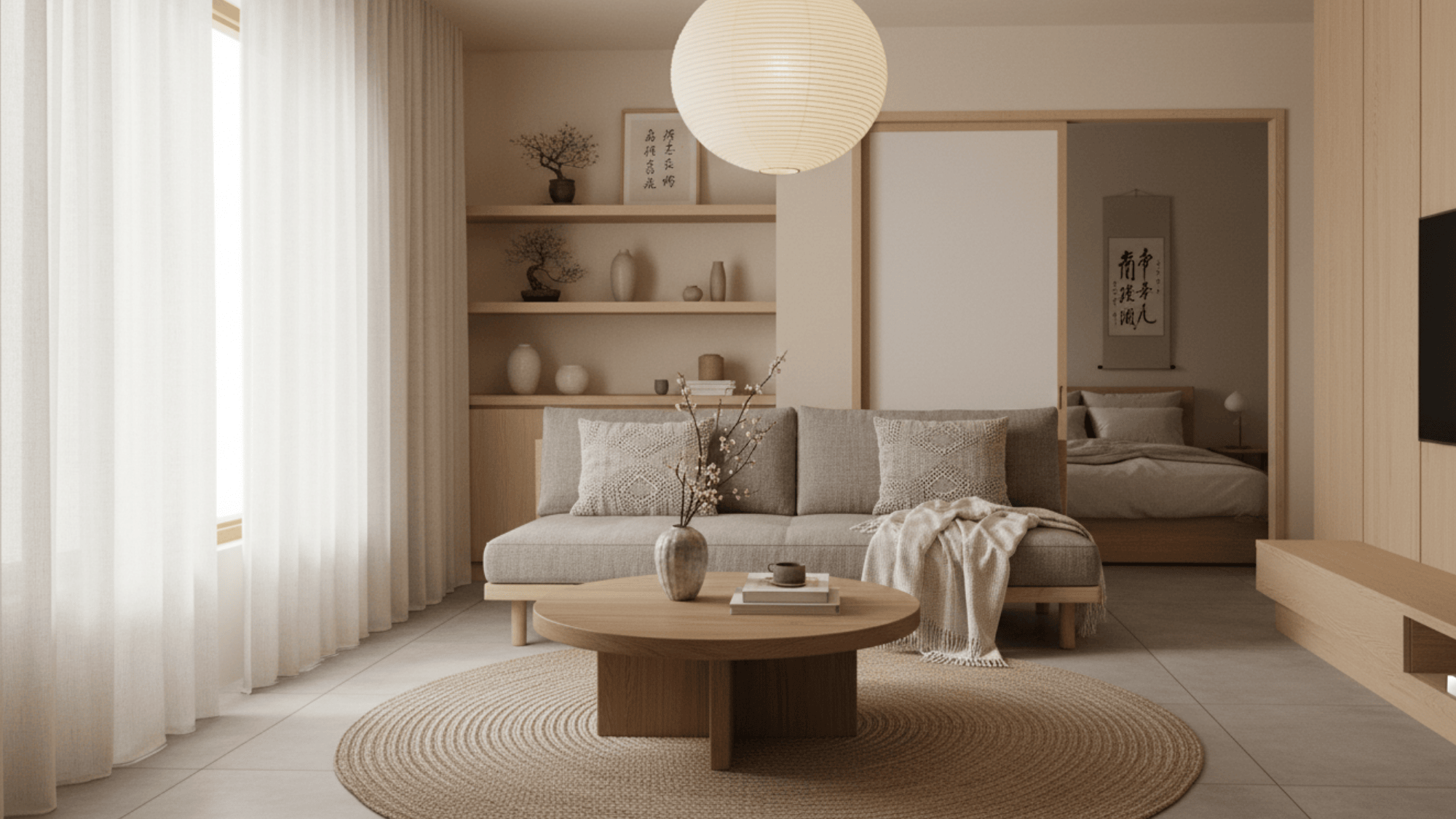
Bright overhead lights work against this style. They flatten the room and remove the sense of warmth that makes Japandi feel different from a showroom.
Simple lamps or paper pendants placed in corners, beside sofas, or near the bed create a softer, more layered glow that makes the space feel genuinely restful.
Maximize natural light first. Keep windows clear or use sheer curtains to soften it. For artificial light, warm bulbs in the 2700K to 3000K range match the natural glow this style needs.
The difference this makes after dark is noticeable. The room feels quieter and warmer, not because anything changed structurally, but because the light stopped working against the space.
3. Add Natural Wood Elements
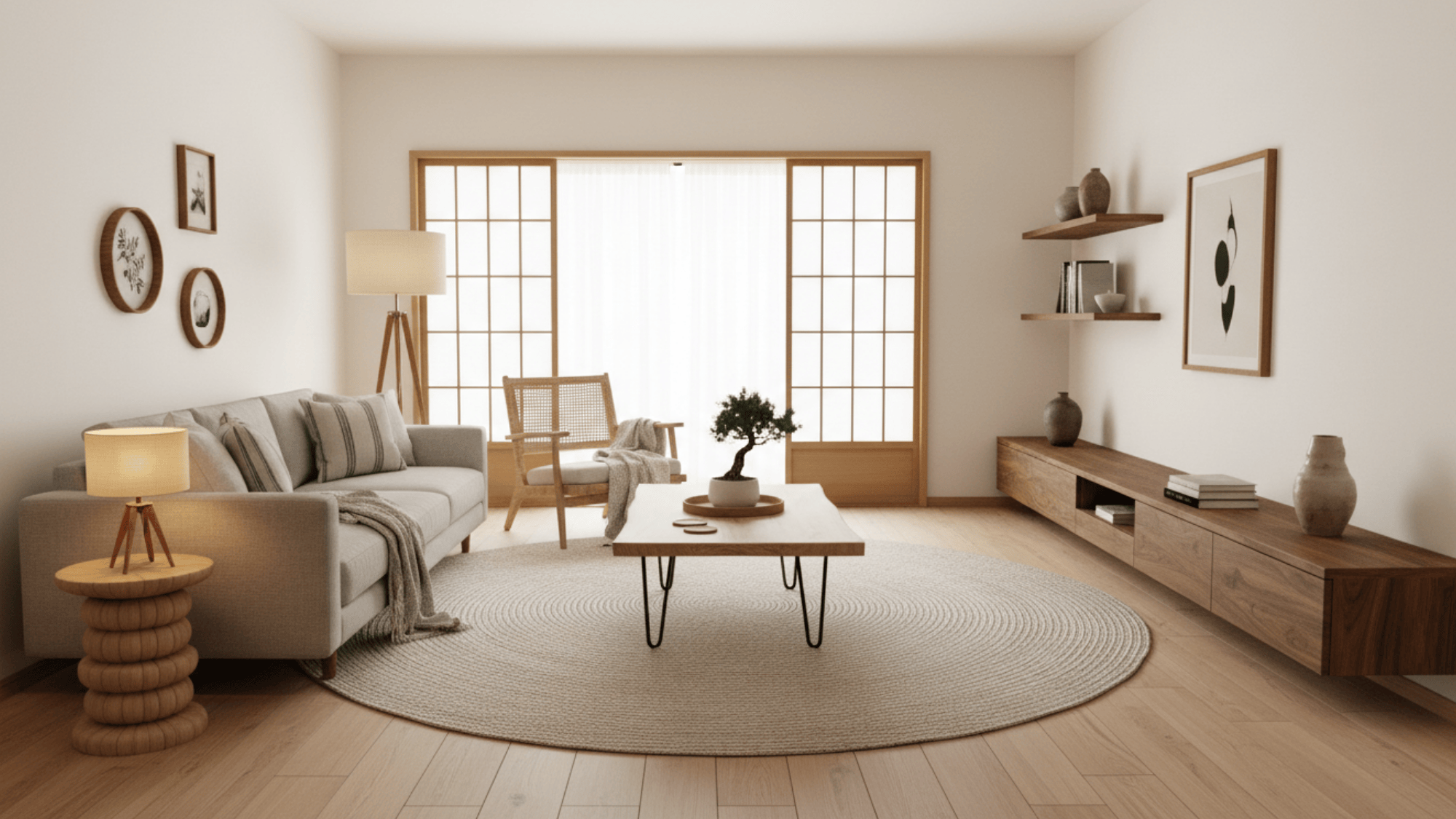
Wood is the material that does the most work in a Japandi space. It brings warmth without adding visual weight, and it connects the room to something natural without feeling forced.
You can use it in tables, chairs, shelves, or flooring. Even small items like wooden trays or frames contribute to the overall feel.
Avoid matching all wood tones exactly. A mix of light and slightly darker wood adds depth and makes the space feel considered rather than flat or staged.
Wood pairs well with the neutral palette because it adds warmth without introducing color. The room stays calm, but it no longer reads as cold or empty.
4. Keep Furniture Low and Simple
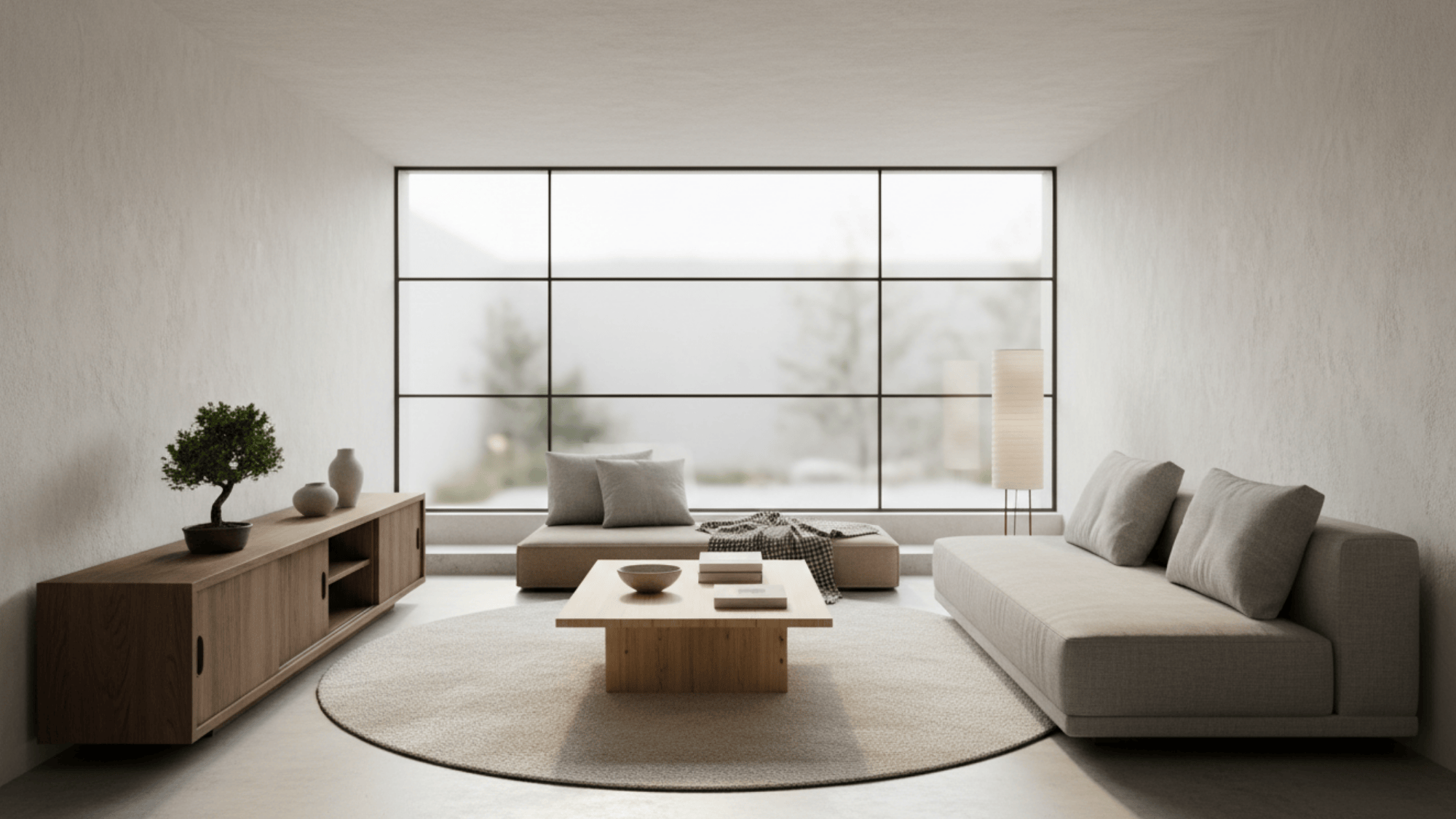
Low furniture does something specific to a room: it shifts the visual weight downward and opens up the space above. The ceiling feels higher. The room feels bigger.
Low sofas, beds, and chairs also create a grounded, relaxed quality that taller furniture rarely achieves. The room invites you to slow down rather than pass through it.
Avoid anything tall or bulky. Simple shapes with no extra detailing keep the room clean and easy to move around in.
The Ma Concept: In Japanese design, ma refers to meaningful negative space; the deliberate pause between objects. A single shelf with one ceramic piece and room around it communicates calm in a way a full shelf never can. The empty space is not unused. It is part of the design.
5. Bring in Indoor Plants
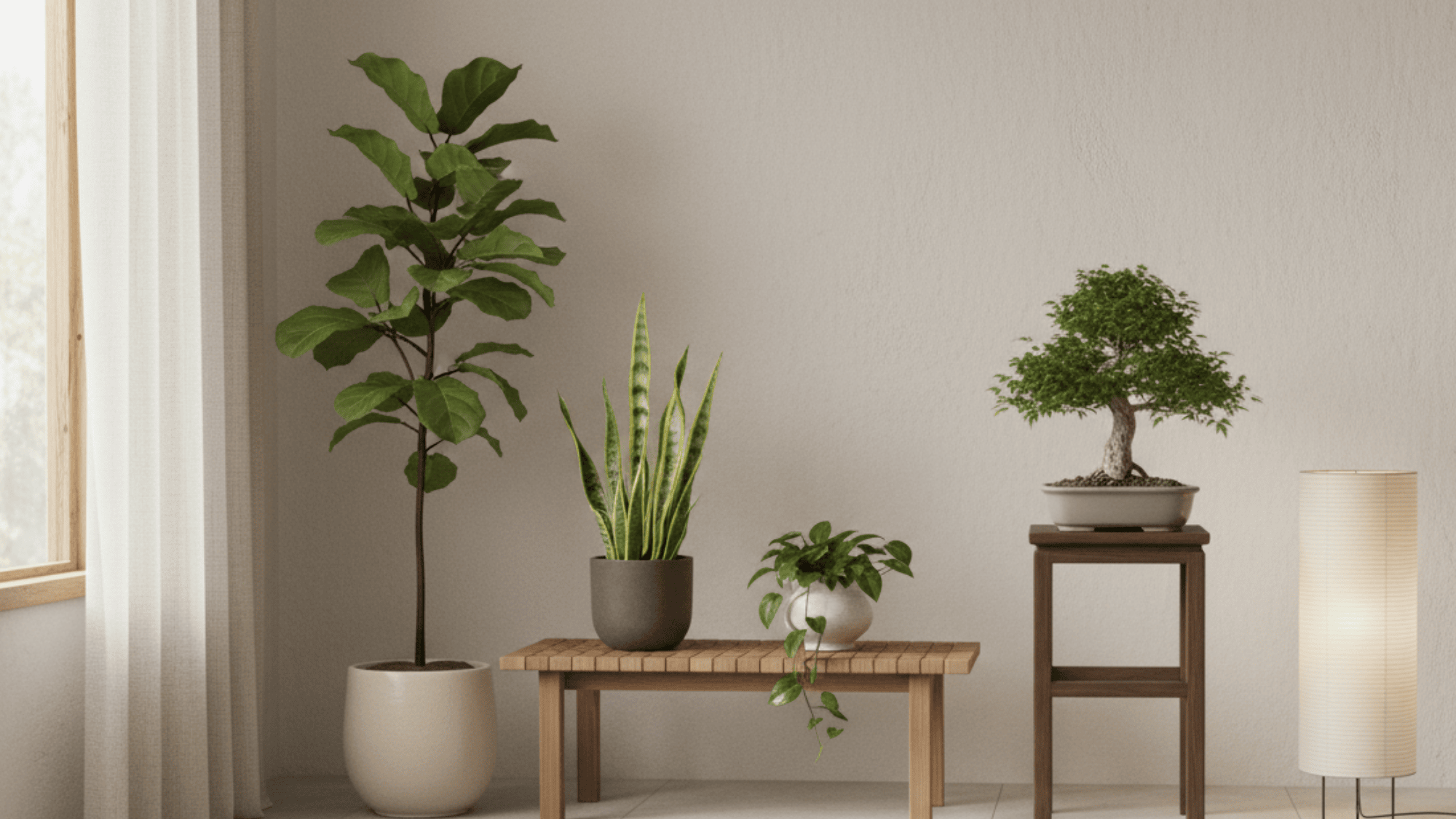
A few plants do something soft lighting and neutral walls cannot: they make the room feel alive. That quality is easy to underestimate until you experience a space that has it.
You don’t need many. Two or three placed well on a shelf, beside a window, or on a low table, is enough. Simple pots in soft, muted colors keep everything cohesive.
Low-maintenance options like a snake plant, pothos, or small-leaf ficus work well here. They stay looking good without demanding much attention, which fits the spirit of the style.
6. Choose Functional Furniture
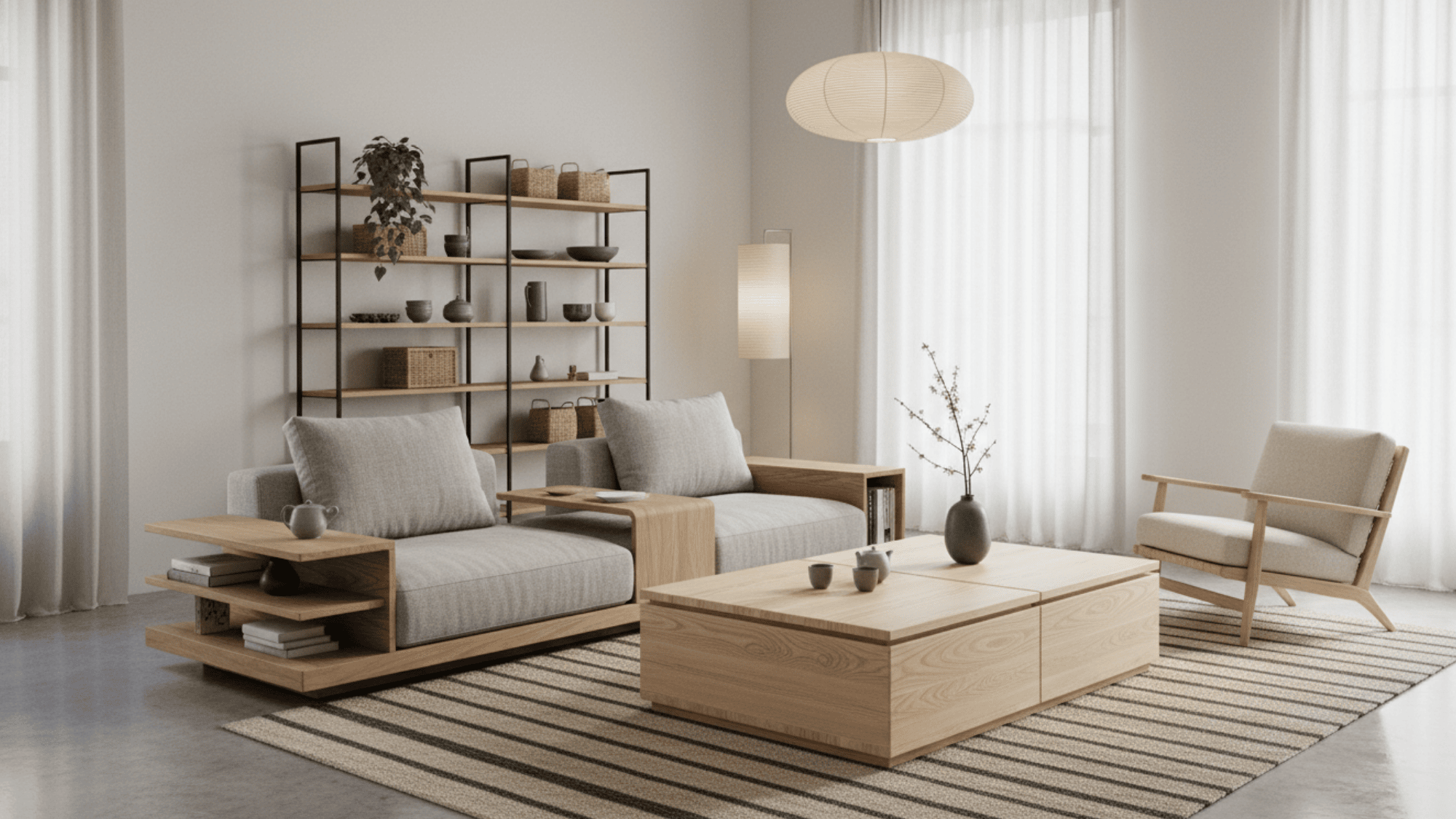
In Japandi design, a beautiful piece that serves no purpose is just clutter with better styling. Every item earns its place by doing something like storing, seating, displaying, or organizing.
Multi-use pieces are worth prioritizing. A storage bed, a bench with hidden storage, or a foldable table all reduce what you need in the room without reducing what the room can do.
When every item has a reason to be there, the space stops feeling assembled and starts feeling intentional. That distinction is something visitors notice even if they can’t name it.
7. Focus on Open Space
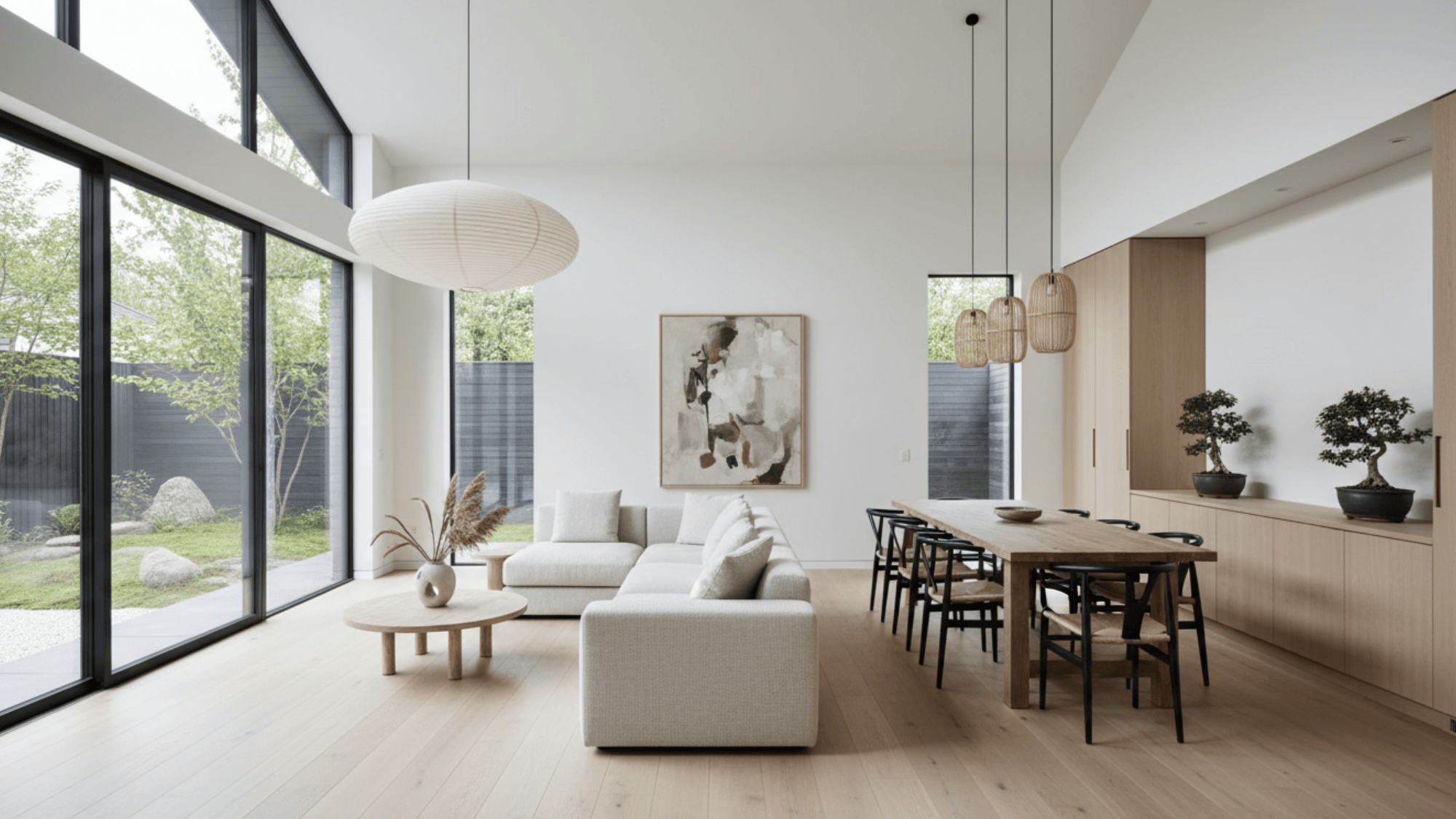
Try this.. clear one surface completely, a countertop, a shelf, a side table, and leave it empty. Notice how the rest of the room reads differently because of it.
That is what open space does in a Japandi home. It gives the eye somewhere to rest. It makes every other object feel more considered, not less.
Remove what isn’t needed and resist filling gaps. The room will feel lighter, easier to move through, and calmer without adding anything at all.
8. Add Natural Textures
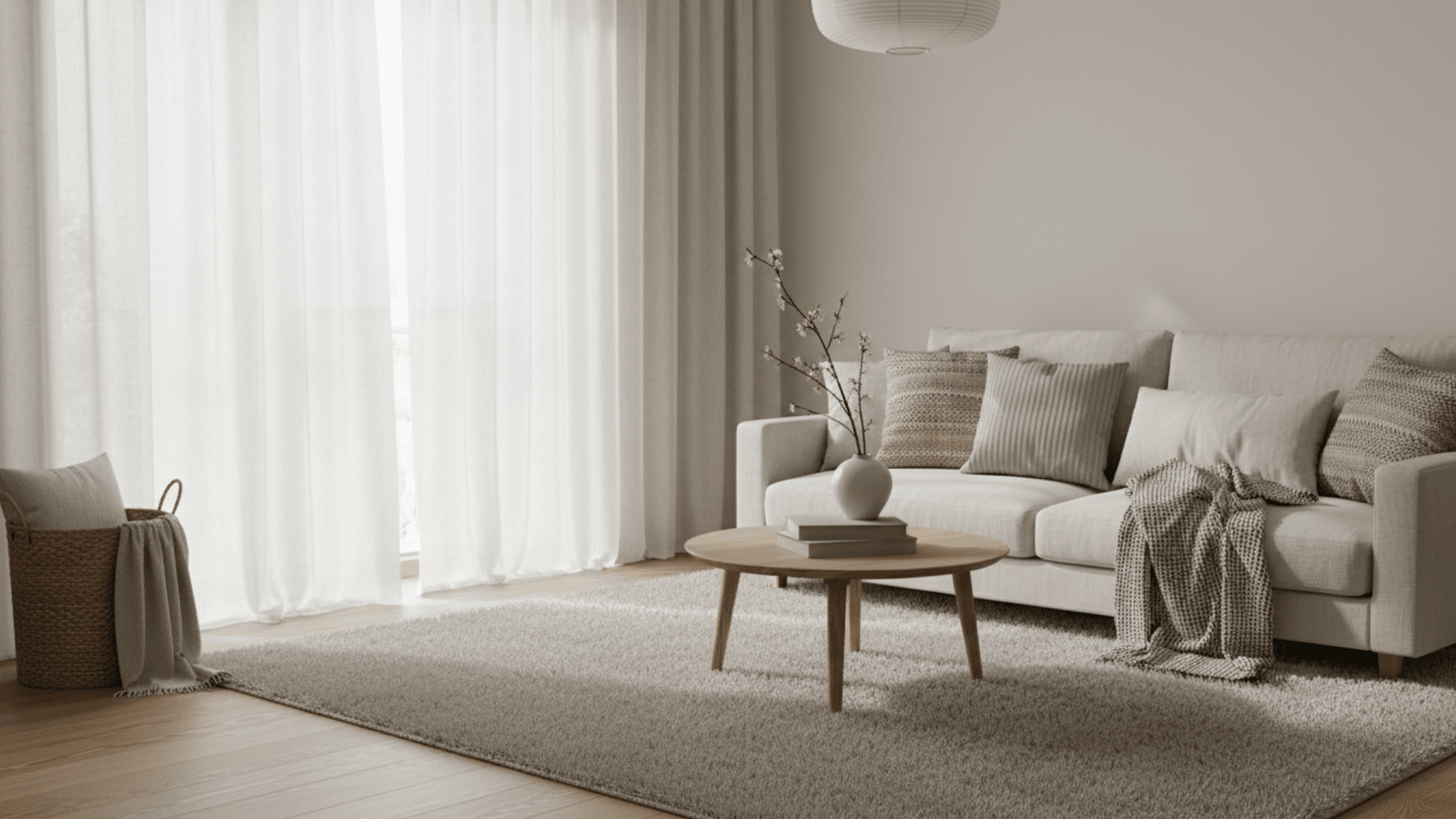
Texture is how a Japandi room avoids feeling flat. A linen cushion, a woven rug, a wool throw — none of these introduce color or pattern, but they change how the room feels to be in.
Cotton, linen, rattan, and wool work best. You can bring them in through cushions, throws, rugs, or curtains without disrupting the neutral palette.
Keep colors soft and stick to two or three materials in the same space. Mixing textures this way adds depth without the room looking busy.
9. Use Handmade Decor Pieces
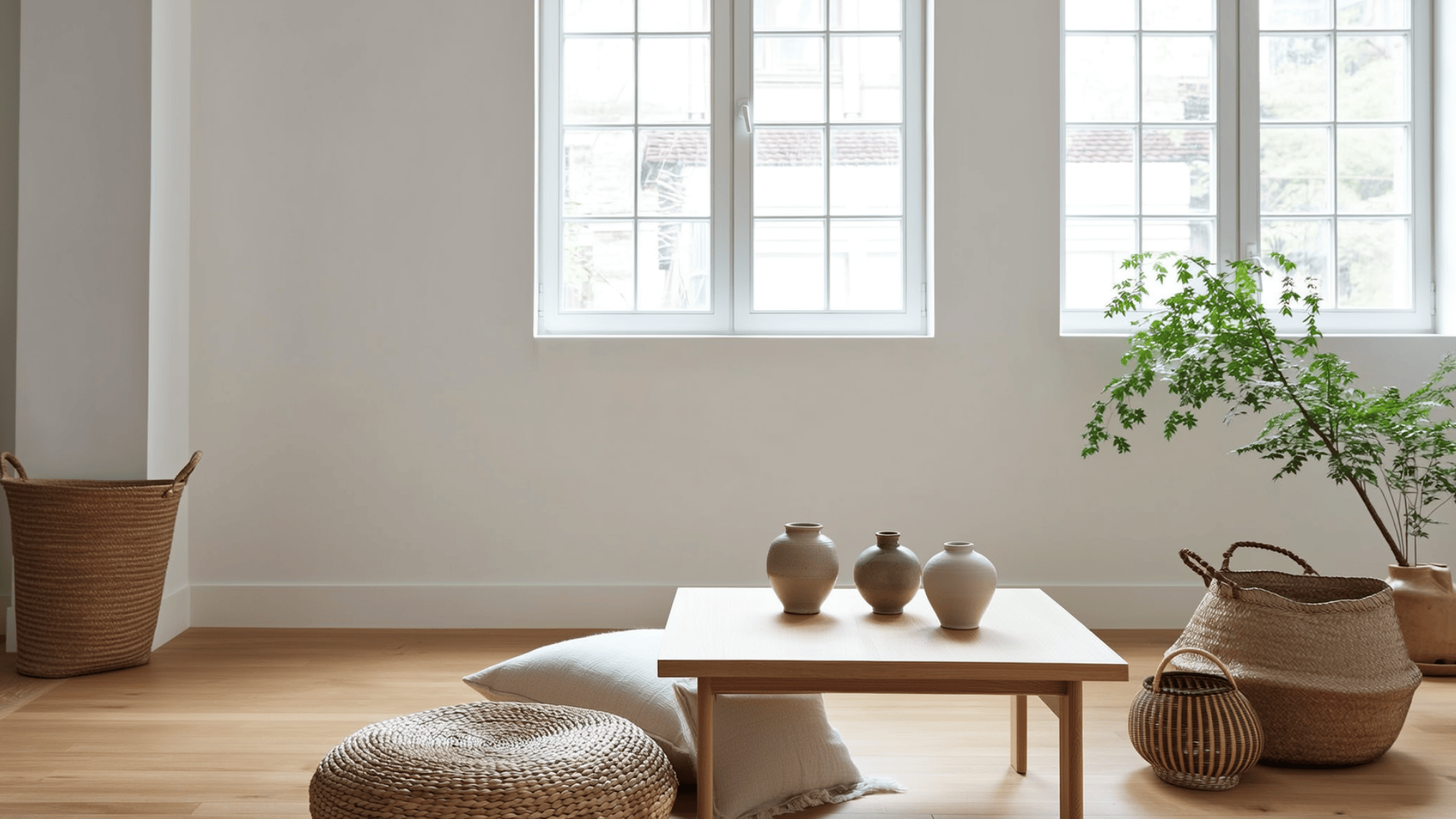
Handmade items bring something that mass-produced pieces cannot: a sense that a person made this, and it shows. Simple ceramic vases, wooden trays, or hand-thrown bowls work well in this style.
Small natural flaws an uneven glaze, a slightly rough edge are part of the appeal. In Japandi, that imperfection adds life, not mess. It connects directly to the wabi-sabi philosophy, the style is built on.
Keep the pieces few and place them with intention. One well-chosen handmade item on an otherwise clear shelf reads more powerfully than a crowded arrangement of perfect objects.
10. Keep Decor Minimal
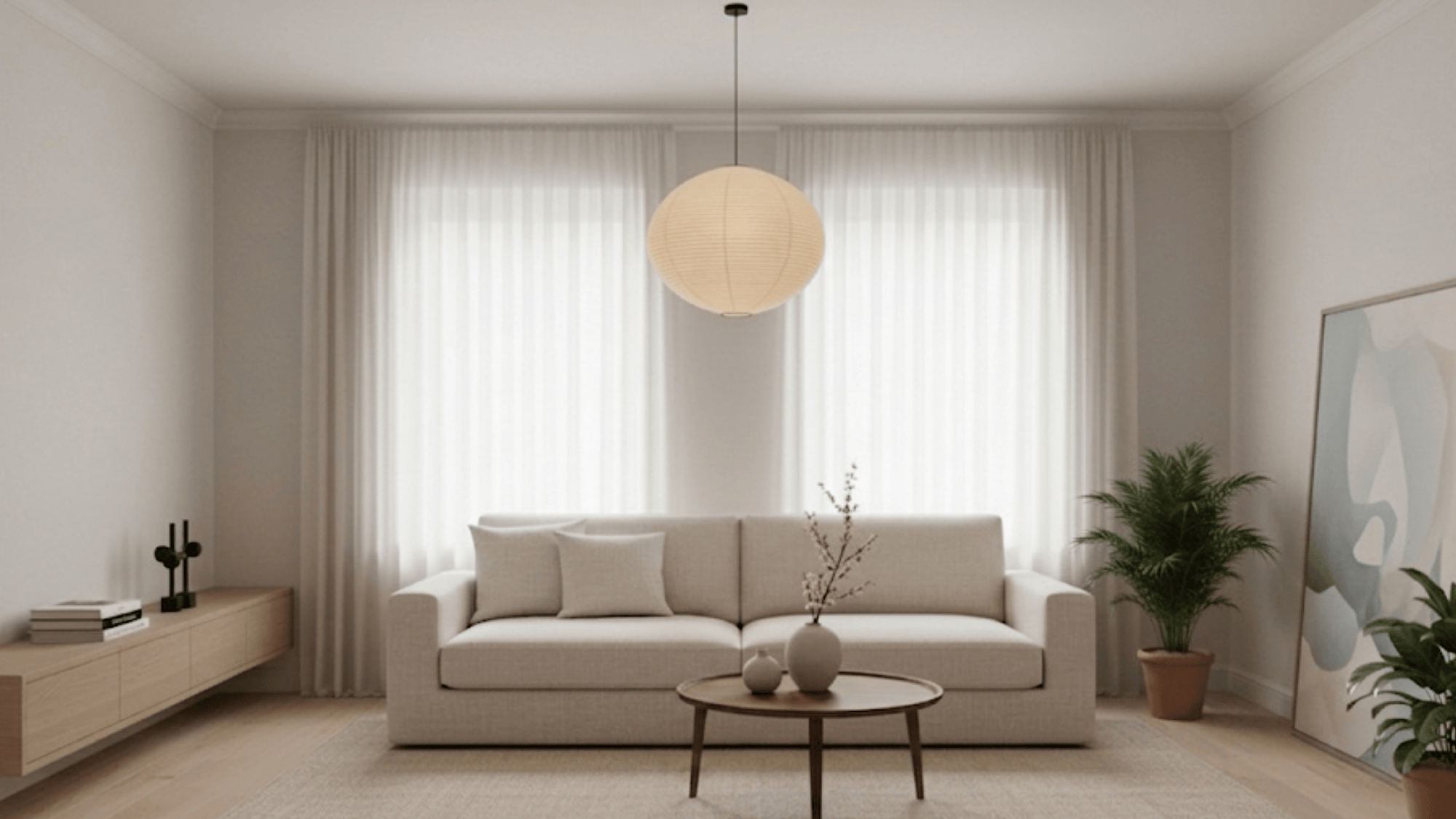
The instinct when decorating is to add. Japandi asks you to do the opposite. When you remove what isn’t necessary, every item that remains gets more attention, and the room reads better for it.
Clean surfaces, a few carefully chosen pieces, nothing competing for focus. That restraint is what makes a Japandi room feel calm rather than just empty.
If you’re unsure whether something belongs, try removing it for a week. If you don’t miss it, you have your answer.
Japandi Color Palette Guide
Choosing the right colors helps create a calm and simple space that feels easy to live in. Soft tones keep the room balanced, while strong colors disrupt the peaceful quality the style depends on.
| Category | Colors / Details | Why It Works |
|---|---|---|
| Best Colors to Use | Beige, white, soft gray, earthy tones. | Keeps the space calm, simple, and clean. |
| Accent Colors | Deep olive green, charcoal, muted terracotta. | Adds depth and balance while keeping the space calm and simple. |
| Colors to Avoid | Bright colors, loud shades, too many contrasting tones. | Makes the space feel busy and less peaceful. |
Japandi Furniture Ideas for a Calm Home
The furniture you choose shapes how the room feels more than almost anything else. These are the principles worth keeping in mind when you’re selecting or editing pieces.
- Keep shapes clean and simple. Straight lines and smooth edges are the default — no ornate carving, no heavy detail, nothing that competes for attention.
- Use natural materials: Wood, bamboo, and soft fabric work best for this style. These materials add warmth while keeping the room light and simple.
- Choose low-height furniture: Low sofas, beds, and tables help the room feel open and calm. This also makes the space look bigger and more relaxed.
- Avoid bulky furniture: Large and heavy items make the room feel tight and crowded. Choose light, simple pieces that don’t overpower the space.
- Skip extra design details: Furniture with too many patterns or surface details breaks the clean look. Plain designs hold the room together better.
- If it doesn’t do something, it doesn’t belong. Japandi furniture earns its place — every piece has a function, and the room is easier to manage because of it.
A Note on Quality Over Quantity: Focus on buying fewer but better pieces for your space. One strong, well-made item — like a solid wood dining table — works better than several cheaper ones. The room stays cleaner, and each piece gets the attention it deserves.
How to Create Japandi Style on a Budget?
You can create a calm and simple Japandi look without spending much. Most of the work happens through removing and rearranging, not buying.
Start by clearing everything out and only putting back what you truly need. This single step opens up the room and changes how it feels before you spend a cent.
Next, rearrange what you already have. Move furniture away from walls, group pieces with similar tones, and leave more floor space visible. A different arrangement can make a familiar room feel completely new.
Then add a few small touches to build warmth. A throw under $30, a plant, or a warm-toned bulb in a lamp you already own can shift the mood noticeably.
When you do buy, buy once and buy well. One solid wood tray or a set of simple linen cushions will do more for the space than ten cheaper items competing for attention.
Common Mistakes to Avoid
Small mistakes can make the space feel busy and less calm. These are the ones that come up most often, and the easiest to fix once you know what to look for.
- Overdecorating: Too many items make the room feel messy and heavy. Keep only a few useful and meaningful pieces for a clean look.
- Using too many colors: Too many colors make the space feel busy and hard to read. Stick to soft, neutral tones and let texture do the work instead.
- Ignoring function: Furniture that looks good but serves no purpose creates clutter. Choose items that make daily life easier, not harder.
- Choosing bulky furniture: Large and heavy items make the room feel tight and crowded. Use light, simple pieces to keep the space open.
- Filling every corner: Leaving no empty space makes a room hard to move through and difficult to settle in. Open areas are not gaps to fill — they are part of the design.
- Matching everything too perfectly: Japandi should not look staged or identical in every detail. Mix wood tones and fabric weights slightly to keep the space warm and natural.
Japandi vs. Scandinavian vs. Japanese Style
Each style has its own way of creating a calm and simple home. Knowing the differences helps you understand what Japandi borrows from each, and why the combination works.
| Style | Main Idea | Look & Feel | Colors & Materials | Best For |
|---|---|---|---|---|
| Japandi | A mix of Japanese and Scandinavian. | Clean, calm, and balanced. | Neutral tones, wood, soft fabrics. | Simple homes with a warm feel. |
| Scandinavian | Focus on comfort and light. | Bright, soft, and welcoming. | White tones, light wood, soft textiles. | Cozy spaces with more light. |
| Japanese | Focus on minimal living. | Very simple, quiet, and peaceful. | Natural wood, earthy tones, and less decor. | Calm spaces with very few items. |
| Wabi-Sabi (Japanese sub-style) | Beauty through imperfection and age. | Raw, organic, textured. | Unfinished wood, aged ceramics, natural patina. | People who prefer a real, natural look over a perfect finish. |
Conclusion
Japandi interior design works because it borrows the best from two traditions. Wabi-sabi keeps it honest and imperfect. Hygge keeps it warm and livable. The result is a home that feels calm without feeling cold.
You don’t need to change everything at once. Start with one surface, one room, one choice, remove what isn’t needed, add something natural, and let the space breathe.
The goal is not a perfect room. It is a room that feels genuinely good to be in, every day.
What’s one simple change you’ll try today? Share below.
Frequently Asked Questions
Is Japandi Style Expensive?
It doesn’t have to be. The style is built around fewer, better pieces, so you’re spending less overall, not more. Simple furniture, natural materials, and smart decluttering can get you most of the way there without a large budget.
Can Japandi Style be Used in Small Spaces?
Yes, and it works particularly well in them. Low furniture, open floor space, and minimal decor all make a small room feel larger and easier to move through than most other approaches would.
What Is the Difference Between Japandi and Minimalism?
Minimalism strips things back and can feel cold or clinical as a result. Japandi keeps the same restraint but adds warmth through natural wood, soft textures, and the hygge-influenced comfort that Scandinavian design brings. The rooms look similar on the surface, but they feel very different to be in.
What Is Wabi-Sabi and How Does It Apply to Japandi?
Wabi-sabi is a Japanese philosophy that finds beauty in imperfection, simplicity, and the way things age naturally. In a Japandi space, it shows up in handmade ceramics, mixed wood tones, uneven glazes, and surfaces that look lived in rather than pristine. It is the reason Japandi feels real rather than staged.