

Trends in bathroom design come and go quickly. A finish that feels current today can look dated within a few years, and chasing those trends means renovating more often than any homeowner wants to. The alternative is building around material quality rather than aesthetic moments.
A master suite designed around dense, well-constructed materials stays relevant not because it follows what is popular but because it is built too well to look anything other than considered.
Why Wood Species and Joint Construction Actually Matter
Not all solid wood is equal. The species used in a cabinet frame determines how it handles moisture, how well it holds fasteners over time, and how the piece feels when you open a drawer or push on a door.
Softer wood species respond to humidity changes more dramatically than denser hardwoods and dent more easily under daily contact.
Denser hardwood species hold their shape through the temperature and moisture cycles a master bathroom goes through daily. The frame stays rigid, doors stay aligned, and the cabinet continues functioning the way it did on installation day.
Dovetail-joint solid wood vanities take this further by using joinery that does not rely on glue alone to stay together under stress.
The interlocking dovetail cut creates a mechanical connection that holds tight even under heavy daily loading. It is specific enough to verify in a product specification rather than just taking a manufacturer’s word for it.
What Particleboard Does Under Moisture Exposure
Particleboard is manufactured from compressed wood fiber and adhesive. It can be finished to look exactly like solid wood from the outside, which is why it appears in bathroom vanities at every price point.
The problem is not how it looks. The problem is what happens inside it over time in a humid environment.
Moisture enters through exposed edges and seams, causing the compressed fibers to swell irreversibly. A door that stops closing properly, a drawer front that pulls away, a cabinet side bowing outward. By this point the material has already failed from the inside.
In a master bathroom used daily by two people, this process happens faster than the warranty period suggests it should.
How Integrated Linen Towers Use Vertical Space
Most master bathrooms have more usable wall height than usable floor space. A standard vanity uses the floor space efficiently but leaves the wall above largely empty.
An integrated linen tower fills that vertical space with organized storage without expanding the footprint onto the floor.
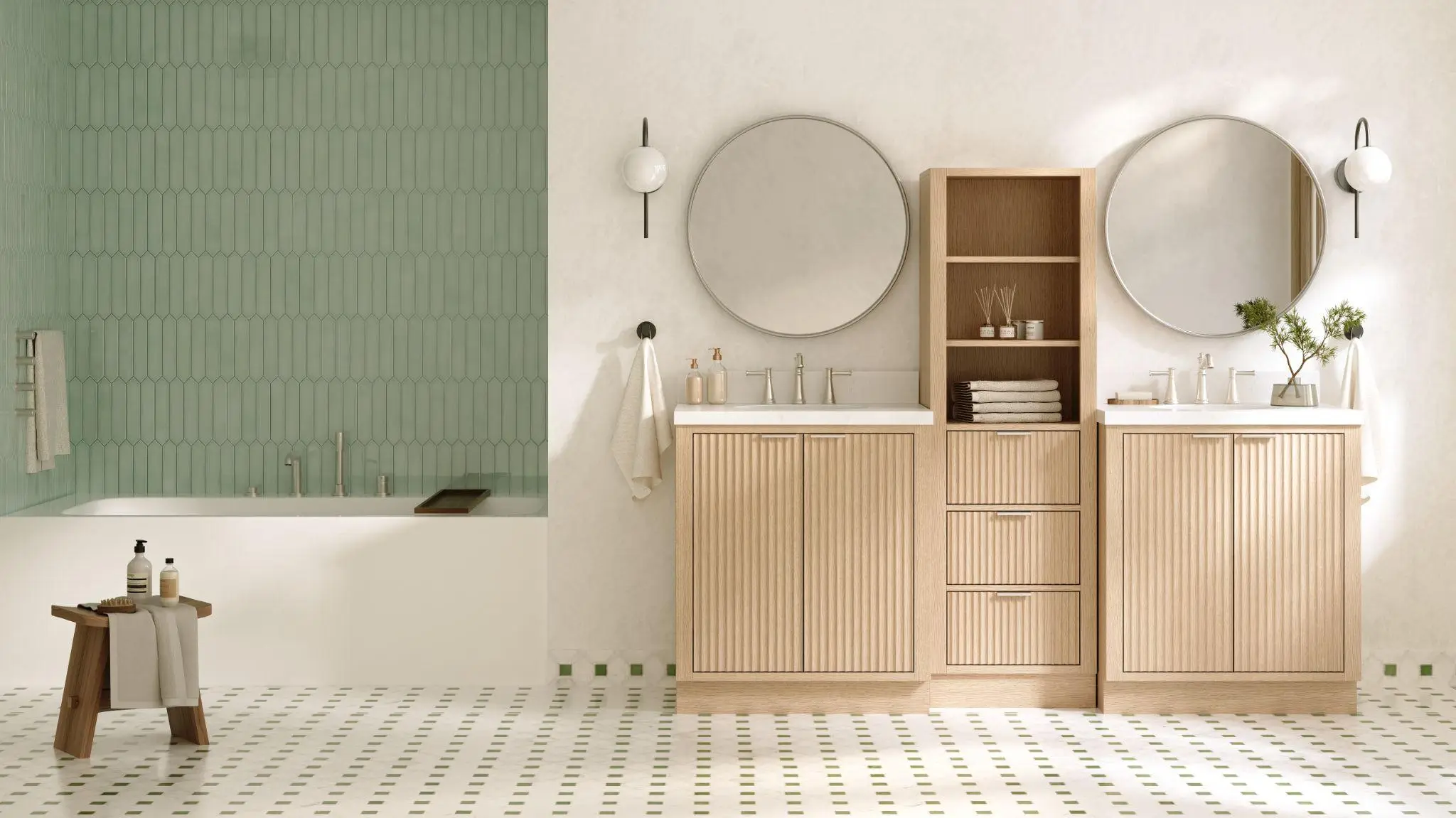
Master bathroom vanities with linen storage designed as matched sets use that vertical wall space in a way that feels intentional rather than added on. The tower sits beside the vanity at a height and depth that suits the vanity proportions.
The finish matches because both pieces came from the same production run, and the overall result looks like one designed unit rather than two separate purchases.
Why Countertop Density Signals Long-Term Quality
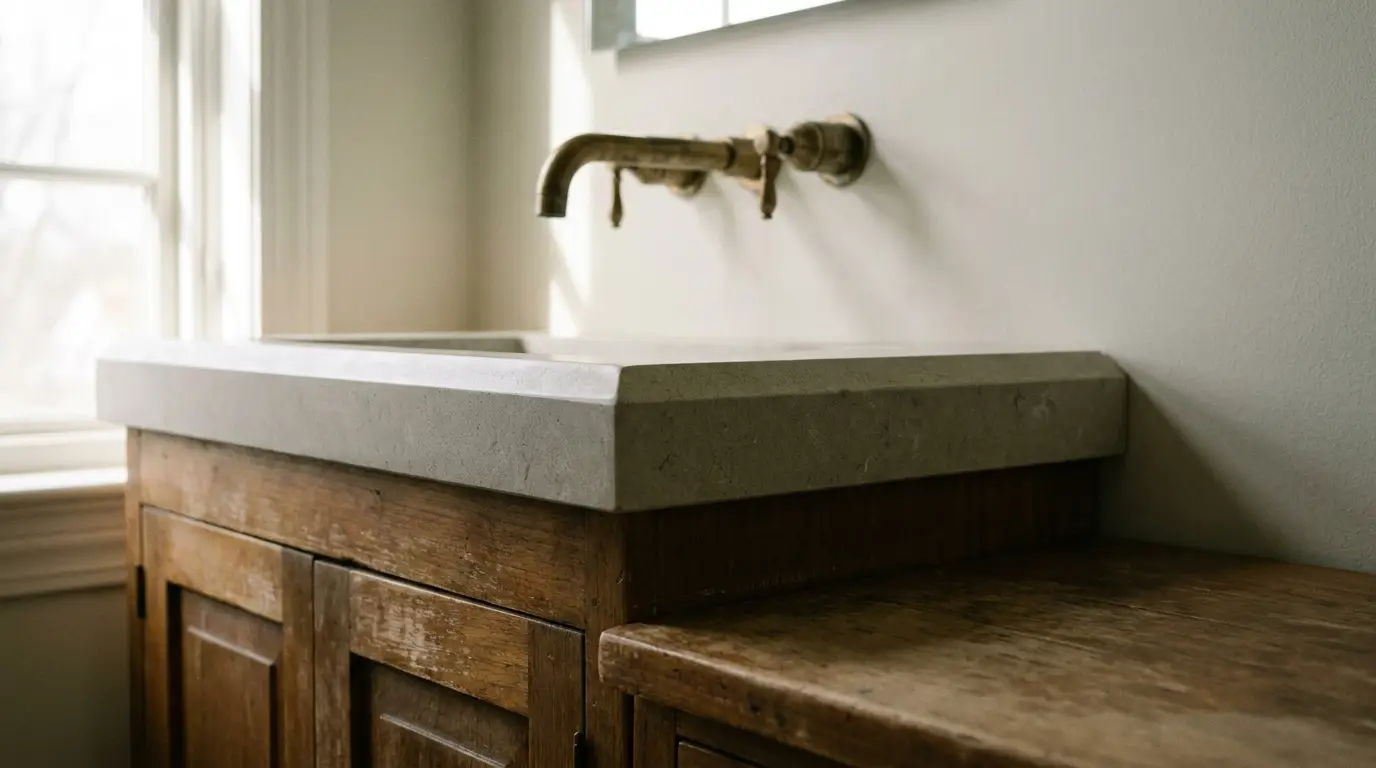
A thin countertop flexes slightly under pressure and chips more easily at the edges than a thick one. In a master bathroom where the counter takes daily contact from multiple people, this makes a real difference over time.
Premium quartz countertop slabs with proper thickness carry a visual weight that communicates permanence before anyone even touches the surface.
The edge profile on a properly thick slab reads as quality in a way that a thin countertop with a laminated edge buildup never quite replicates.
Quartz also handles moisture exposure without maintenance. It does not need sealing, does not stain under normal daily use, and stays structurally sound through years of humidity that would compromise softer surfaces.
Building Around Density Rather Than Decoration
The design approach that ages best in a master suite prioritizes what the furniture is made of over what it looks like in a trend cycle.
A vanity built from dense hardwood with dovetail drawer construction and a thick stone countertop does not need replacing when the finish trend moves on. It looks right because it is built right.
This is the difference between a master suite that requires revisiting every five years and one that simply keeps looking and working better as the rest of the house gets updated around it. Material density is the investment that holds its value longest in any residential property.
How ARIEL Bath Delivers on Material Standards
ARIEL Bath builds its vanity and linen storage setups around frame density and construction quality that holds up to long-term scrutiny.
The solid wood frames use proper hardwood construction with dovetail drawer boxes that give the cabinet structural rigidity without depending on adhesive alone.
Their master bathroom vanities with linen storage are designed as matched sets so the finish, proportion, and depth of the linen tower coordinate with the vanity from the factory rather than being approximated from separate sourcing.
The premium quartz countertop slabs included with the vanity options complete the material quality story without requiring a separate stone fabrication order.
Final Thoughts
A timeless master suite is not built around what looks good this year. It is built around materials that hold their structural integrity and visual quality long after the trend that influenced their selection has moved on.
Dense hardwood frames, dovetail joinery, matched linen storage, and thick stone countertops are the material decisions that define a bathroom worth keeping for decades rather than revisiting every few years.