

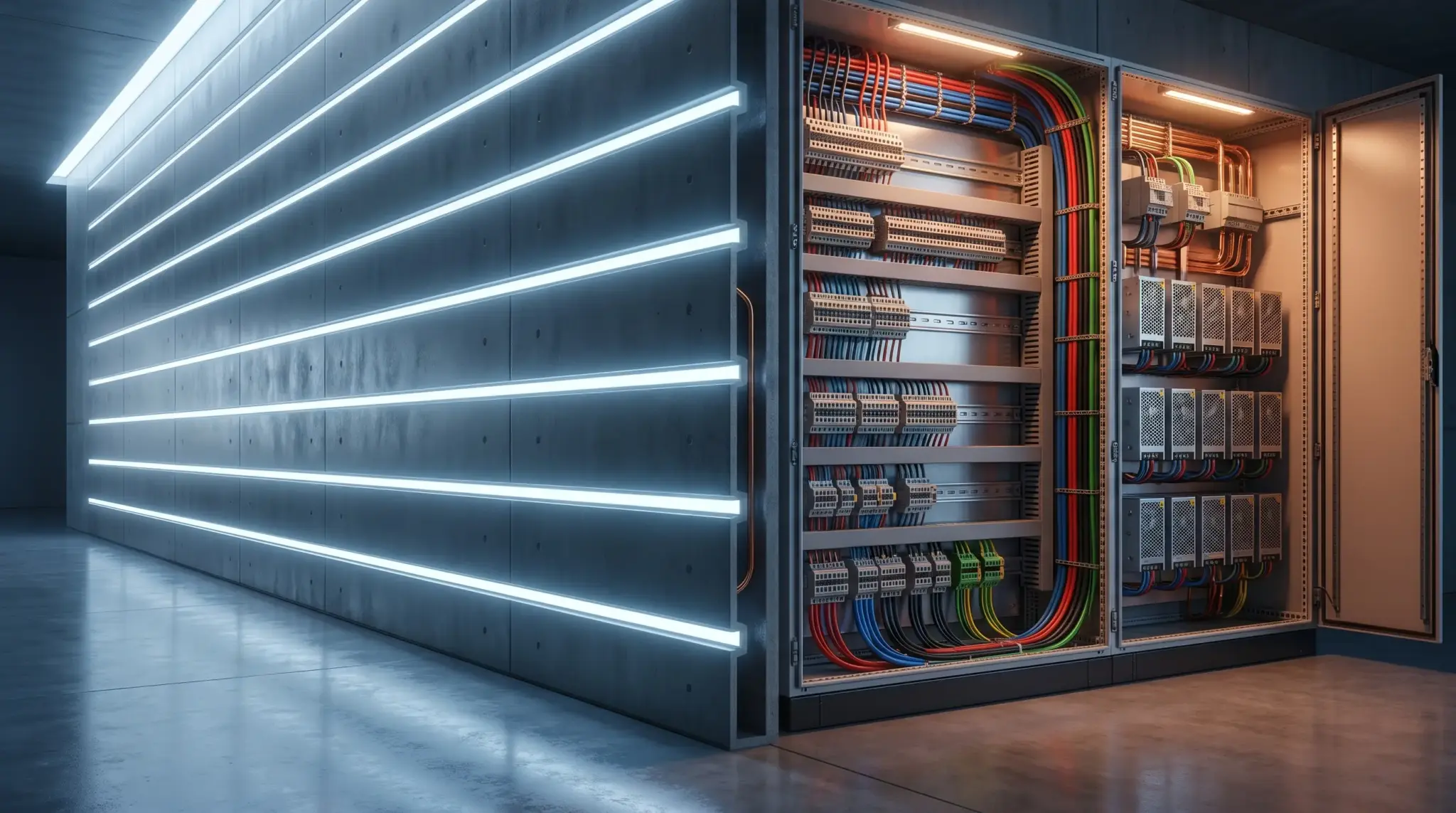
Technological advancements in the field of lighting have radically transformed the way we conceive of spaces, leading LED systems to dominate the scene in both residential settings and large industrial complexes. While light output is the designer’s focus, the complexity of structured cabling is the installer’s daily challenge, where dozens of power supplies must coexist in confined spaces.
Managing drivers in control panels is one of the most critical phases: disorganized cabling compromises not only the speed of commissioning but also the safety and thermal stability of the entire system.
In large-scale settings, where component density is high, it becomes essential to adopt solutions that allow for the intelligent streamlining of electrical connections. In this regard, the use of din rail terminal blocks proves to be the strategic choice par excellence, as these small components allow for the precise organization of power flow within electrical panels.
By leveraging the versatility of standard metal rail mounting, it is possible to create a clean interface between the power supply network and the individual branches of the lighting system, ensuring mechanical stability that prevents accidental disconnections and facilitates any future system testing or technological upgrades.
Centralizing Drivers for Total Control
In a professional lighting system, the current trend is moving toward centralizing drivers within dedicated equipment cabinets, rather than scattering them throughout drop ceilings or behind walls. This logistical choice allows power supply units to be grouped in a single accessible location, facilitating cooling and protecting the most sensitive electronic components.
When managing numerous circuits that power high-power LED strips, space in the control panel tends to run out quickly, making cable routing difficult. The coordinated use of distribution blocks and DIN-rail terminal blocks allows for the orderly division of electrical loads, isolating high-voltage lines from the very low-voltage lines that reach the lighting fixtures.
This separation is not merely a matter of visual order but addresses specific protection requirements against electromagnetic interference that could cause flickering lights.
A well-structured electrical panel also allows for more efficient heat dissipation, significantly extending the average lifespan of the drivers and reducing the risk of premature failures due to excessive temperatures inside the technical compartments.
Operational Safety and Simplified Maintenance
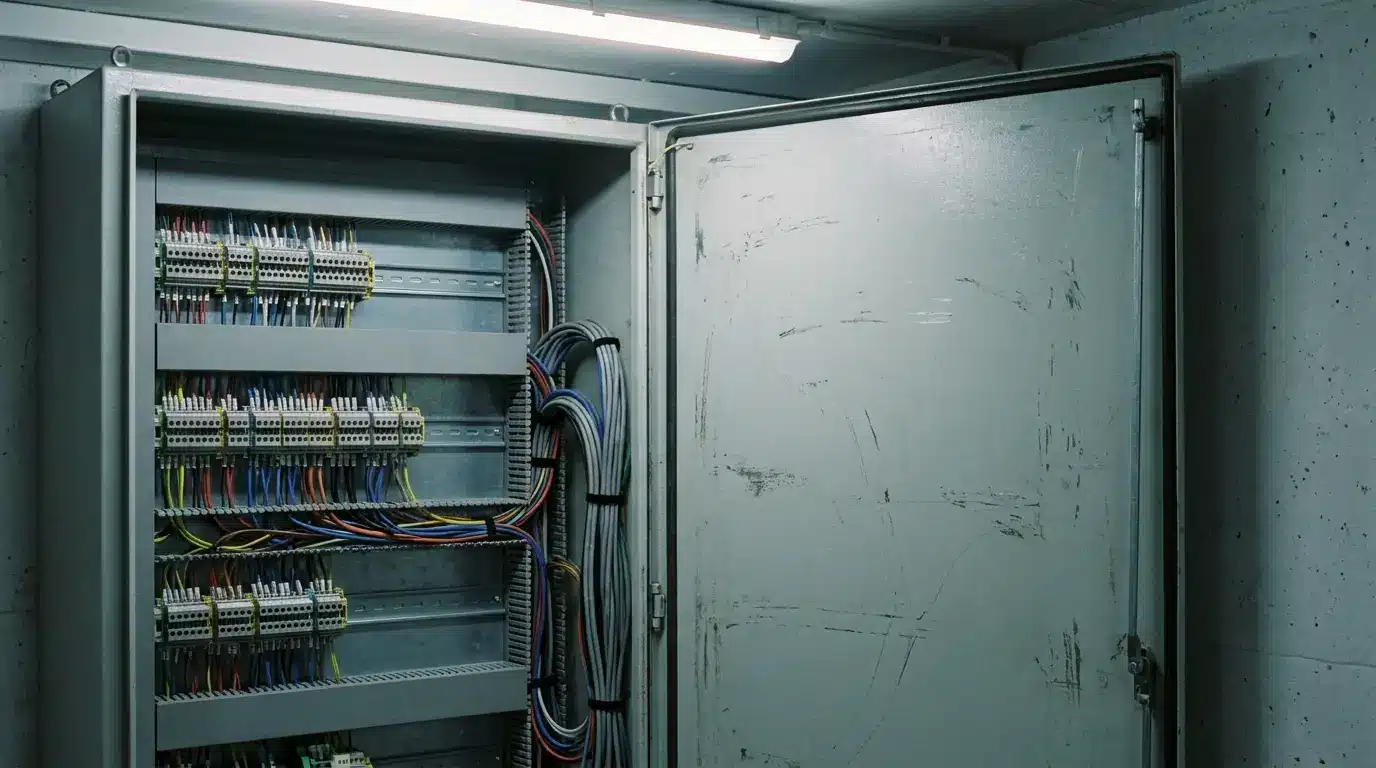
One of the most critical aspects of managing large LED installations is the speed of response in the event of a malfunction, a factor that directly impacts building operating costs. In a traditionally wired system, identifying a faulty driver or a broken cable can take hours of searching through tangles of unlabeled wires and loose connections. In contrast, adopting a system based on certified components radically transforms the maintenance experience, raising safety standards for anyone working on the system.
DIN-rail terminal blocks equipped with clear labeling systems allow for easy mapping of each lighting zone, making diagnostics an almost immediate and error-free process. Thanks to the robustness of the materials used, these terminal blocks offer constant protection against short circuits and withstand thermal stress resulting from prolonged use exceptionally well.
Furthermore, the ability to test voltage directly at the terminals without having to disconnect the conductors represents an additional operational advantage, as it allows for periodic checks to be performed in complete safety, ensuring that the lighting remains efficient at all times and that every component meets the optimal operating parameters established by the original manufacturer.
Longevity and Versatility in Modern Architecture
Designing a lighting system today also means anticipating the possible advancements that smart technology will bring to homes and offices in the near future. Rigid and poorly organized wiring makes any subsequent modifications—such as the integration of presence sensors or new communication protocols—extremely costly and complex.
Creating a solid infrastructure within the electrical panels using modular components, on the other hand, ensures the flexibility needed to update the system without having to make invasive changes to the building structure.
The ability to accommodate new connections simply by adding or moving modules on the metal rail is therefore the true secret to the longevity of a cutting-edge architectural project.