

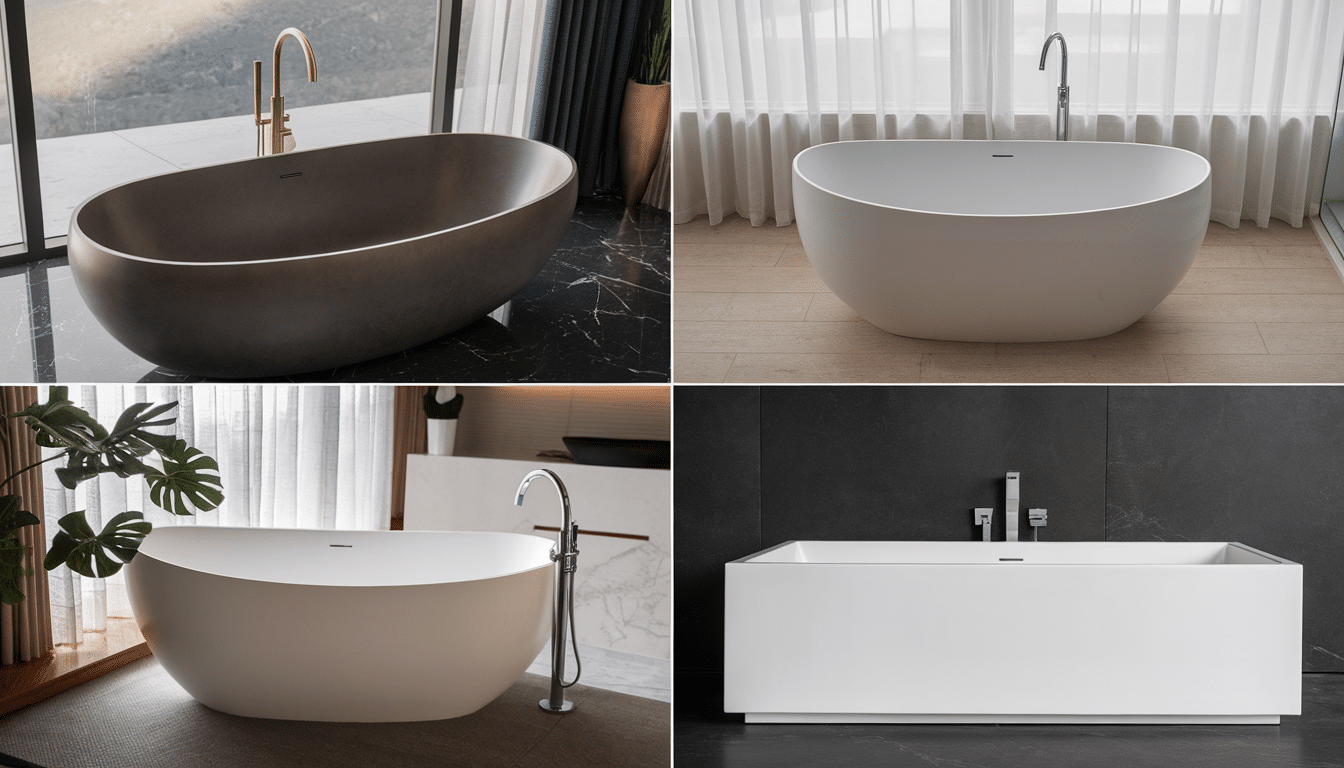
Choosing the best bathtub material can feel like a big task, especially with so many options on the market. People often look for a tub that is strong, easy to clean, and comfortable to use.
A quick overview of the main materials can make the decision easier.
This guide breaks down the most common choices in simple terms. It helps readers understand what to expect in cost, care, and long-term use.
With clear information, it becomes easier to decide which bathtub material fits a home, a budget, and personal needs.
How Tub Materials Shape Your Bathroom
The material of a bathtub affects how it feels, how long it lasts, how much it weighs, and how easy it is to clean.
Some tubs stay warm longer. Some cost less but may not last as long. Other tubs have strong surfaces that resist scratches and stains.
Because each type is different, picking the best bathtub material is an important step in setting up a bathroom that works for daily life.
A bathtub should be more than a place to wash. It should feel safe, smooth, and pleasant to use. Since it is a long-term part of the home, the material plays a big role in comfort and upkeep.
Common Bathtub Materials
These are the most used bathtub materials today. Each one has its own feel, cost, and level of care. The short guides below help explain what to expect from each type.
Acrylic Bathtubs
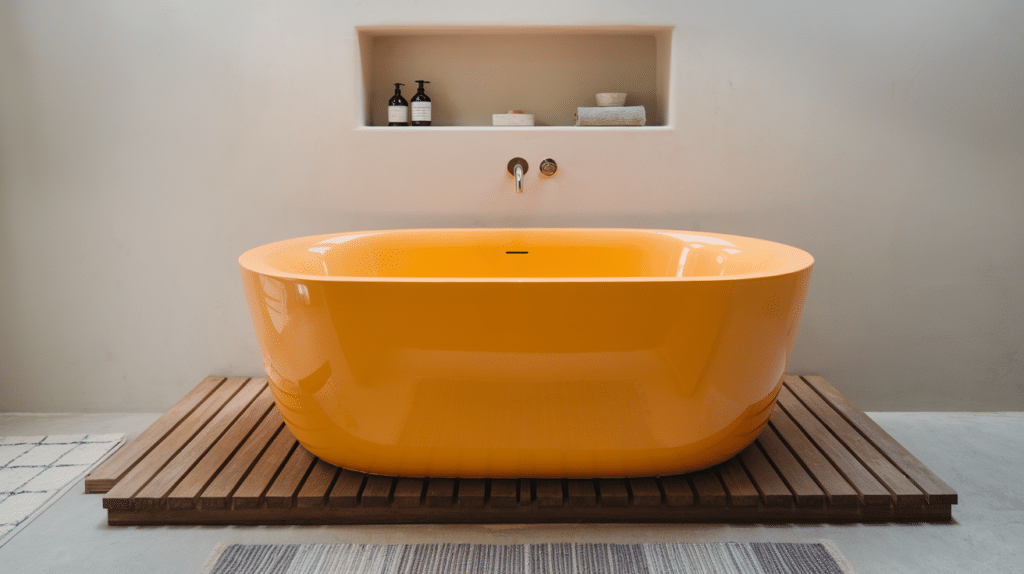
Acrylic tubs are made from lightweight plastic sheets that are shaped and reinforced. They feel warm, come in many shapes, and are easy to clean. Many homeowners like acrylic because it works well in most bathrooms and is simple to install.
| Pros | Cons |
|---|---|
| Light and easy to install | Can scratch if scrubbed hard |
| Holds heat better than fiberglass | May lose shine over time |
| Many shapes and sizes | Not as strong as steel or cast iron |
| Simple to clean | Low-quality versions may flex |
Fiberglass Bathtubs

Fiberglass tubs are made from layers of plastic with a thin gel coat on top. They are one of the most affordable tub options. They are very light and simple to install, but may not last as long as stronger materials.
| Pros | Cons |
|---|---|
| Very budget-friendly | Scratches and cracks easily |
| Lightweight | Can fade or discolor |
| Easy to install | The surface is more porous |
| Simple repairs | Less durable for daily use |
Porcelain-Enameled Steel Bathtubs
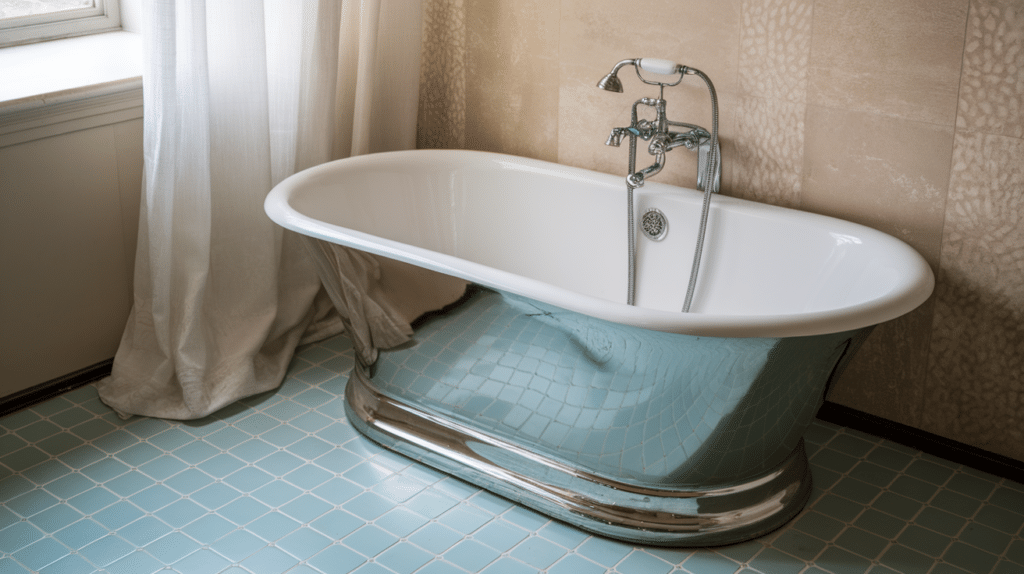
These tubs have a steel core covered in a smooth porcelain finish. The surface is hard, shiny, and easy to clean. They offer a classic look but can chip if something heavy falls on them.
| Pros | Cons |
|---|---|
| Hard, glossy surface | Can chip, leading to rust |
| Easy to clean | Feels cold to the touch |
| Affordable for the strength | Does not hold heat well |
| Long-lasting with good care | Heavier than acrylic or fiberglass |
Cast Iron Bathtubs
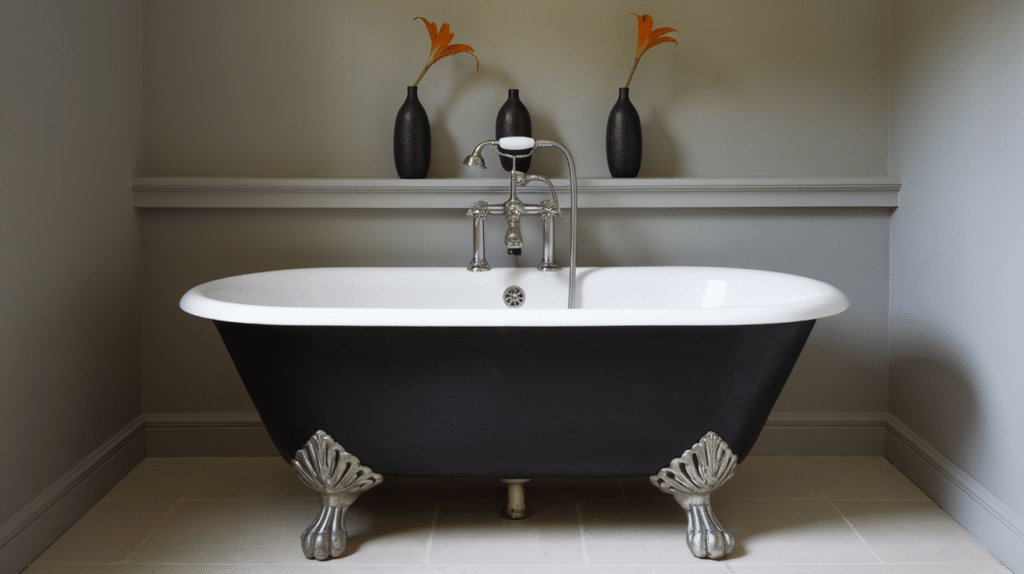
Cast iron tubs are made from molded iron covered with enamel. They are very strong and can last for decades. These tubs hold heat extremely well, but their weight makes installation harder.
| Pros | Cons |
|---|---|
| Very durable | Very heavy |
| Keeps water warm for a long time | May need floor support |
| Resists scratches and stains | Higher cost |
| Long lifespan | Harder to move and install |
Stone Resin Bathtubs
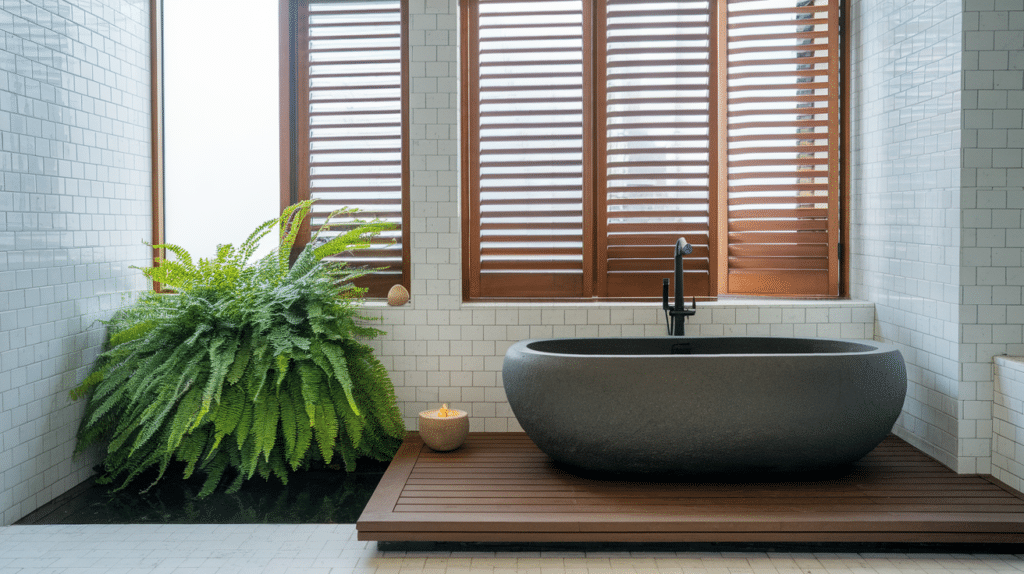
Stone resin tubs use crushed stone mixed with strong binding materials. They offer a smooth, modern look and feel like real stone without the extreme weight. They hold heat well and resist stains.
| Pros | Cons |
|---|---|
| Stylish, modern look | Costs more than acrylic |
| Holds heat well | Heavier than fiberglass |
| Strong and long-lasting | Large sizes may be hard to fit |
| Smooth, non-porous surface | Needs careful installation |
Copper Bathtubs
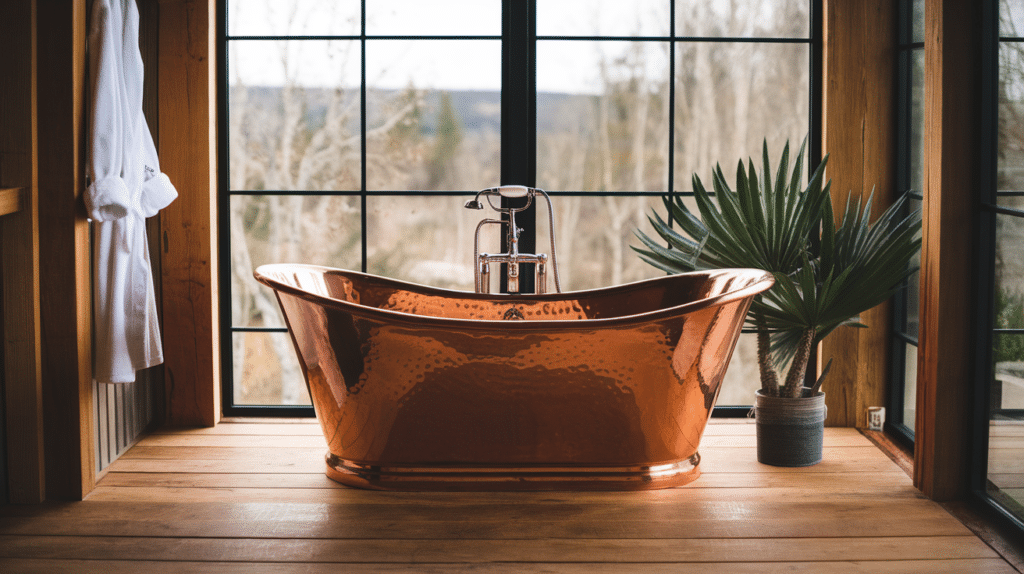
Copper tubs are made from shaped metal sheets and are known for their warm color and unique style. They naturally resist bacteria and hold heat well. These tubs are high-end and often used in luxury spaces.
| Pros | Cons |
|---|---|
| Natural anti-bacterial surface | Very expensive |
| Great heat retention | Needs gentle cleaning |
| Strong and long-lasting | Can darken over time |
| Unique, bold design | Heavy compared to acrylic |
Solid Surface Bathtubs
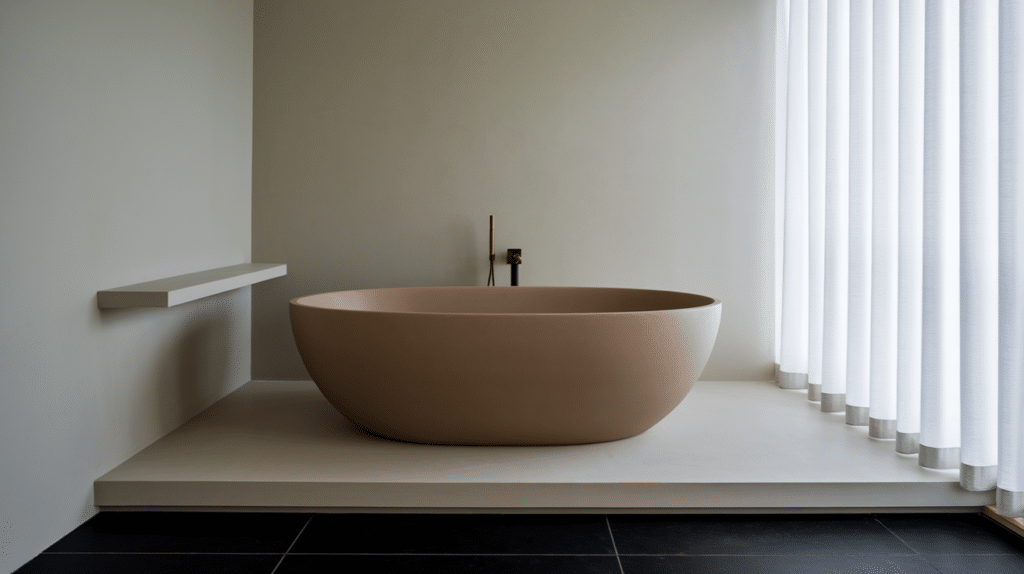
Solid surface tubs are made from minerals mixed with resin. They feel smooth and warm, and they resist stains. Small marks can often be sanded out, making them easy to maintain.
| Pros | Cons |
|---|---|
| Durable and smooth | Heavier than acrylic |
| Holds heat well | Higher cost than basic tubs |
| Easy to clean | May need planning for install |
| Can repair small scratches | Not the cheapest option |
How Different Bathtub Materials Compare
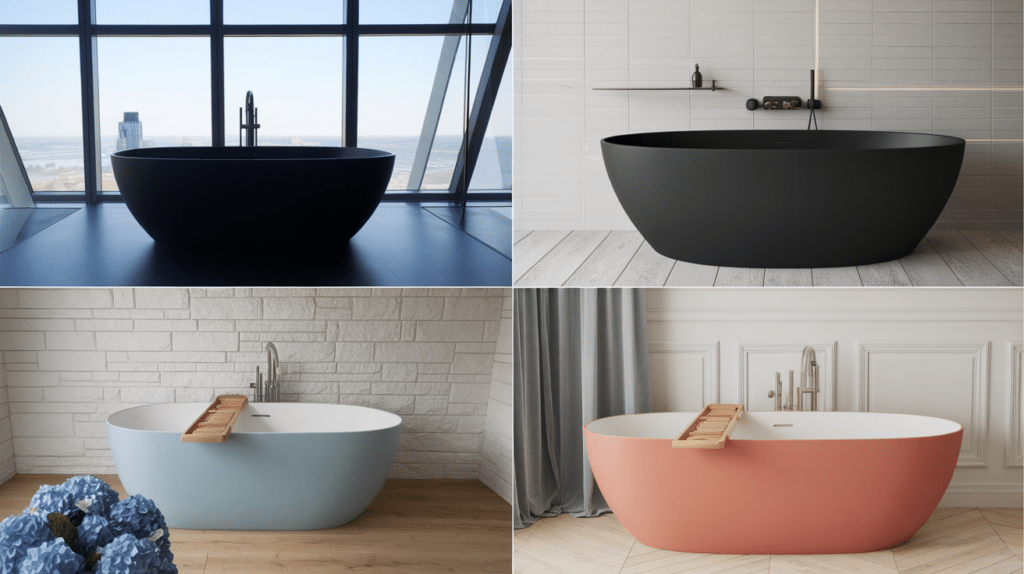
These key points help show how each bathtub material performs in daily use.
Heat Retention
Heat retention is how well a tub keeps bathwater warm. Cast iron, stone resin, solid surface, and copper stay warm the longest. Acrylic is decent, while fiberglass and porcelain steel cool down faster.
Durability
Durability tells how well a tub handles scratches, cracks, and wear. Cast iron, stone resin, solid surface, and copper are the strongest. Porcelain steel is durable but can chip. Acrylic is moderate, and fiberglass is the least durable.
Weight and Installation
Weight affects how easy the tub is to move and install. Acrylic and fiberglass are light. Porcelain steel, stone resin, and solid surface are medium-weight. Cast iron and copper are very heavy and may need extra floor support.
Care and Cleaning Needs
Care needs vary by surface. Acrylic, stone resin, solid surface, and copper clean easily with mild products. Fiberglass scratches quickly. Porcelain steel cleans well but should not chip. Cast iron needs proper care to protect its enamel.
Cost
Costs change by material. Fiberglass and basic acrylic are the most affordable. Porcelain steel and solid surface are mid-range. Stone resin, copper, and cast iron cost more but offer strong, long-lasting performance.
How to Choose the Best Bathtub Material for Your Home
Choosing the right bathtub material is easier when you focus on simple factors that guide comfort, cost, care, and long-term use.
- Daily use: Pick a stronger material if the tub will be used often.
- Budget: Set a clear budget before comparing tubs.
- Bathroom size: Make sure the tub fits the space with room to move.
- Weight limits: Check if the floor can support a heavy tub.
- Heat needs: Choose a material that keeps water warm if long baths matter.
- Cleaning style: Pick a surface that matches the level of care you want to give.
- Design goals: Choose a material that fits your bathroom style.
- Long-term plans: Think about how long you want the tub to last.
Conclusion
Choosing the best bathtub material becomes easier once the main details are compared. Heat retention, strength, weight, cleaning needs, and cost each affect how a tub works in daily life.
These factors help show which material will stay warm, last longer, or fit better in the space. A good match can improve comfort and reduce future repair needs.
By focusing on what matters most for the home, homeowners can make a choice that feels practical and long-lasting.
If you are planning a bathroom update, review your options and pick the bathtub material that fits your needs. Start your project today.