

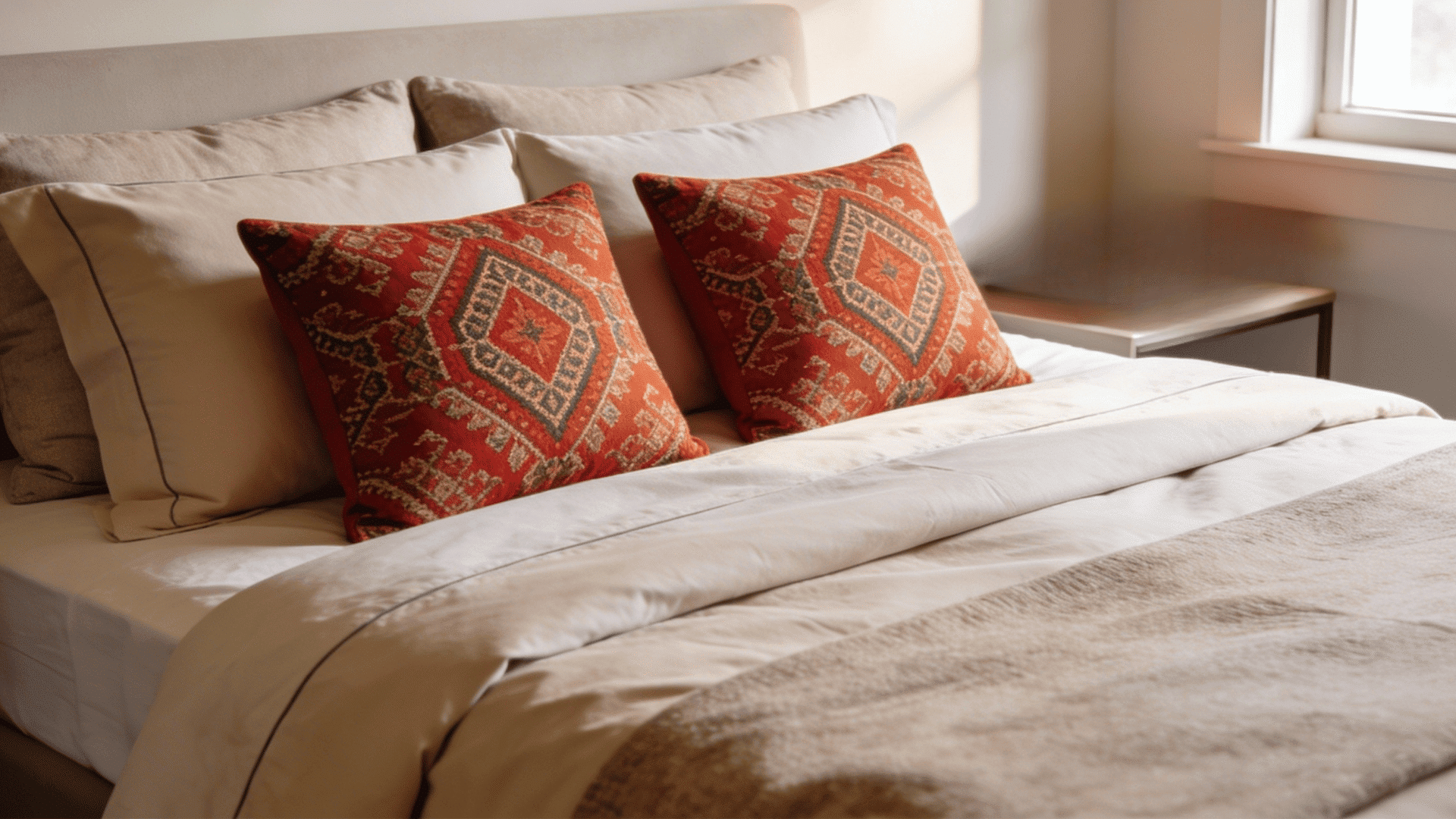
You’ve probably seen them on hotel beds or in home décor photos, those extra pillow covers that make a bed look neat, full, and pulled together.
Pillow shams confuse a lot of people. Are they just fancy pillowcases? Can you sleep on them? What do you even do with them at night?
Unlike a regular pillowcase, it has a structured border called a flange and closes from the back, and it’s meant for daytime display, not sleeping.
In this post, I will be breaking it all down in plain, simple terms.
You’ll learn what a pillow sham is, how it differs from a regular pillowcase, what real people think about using them, and a few easy ways to style them on your bed, no interior design experience needed.
What is a Pillow Sham?
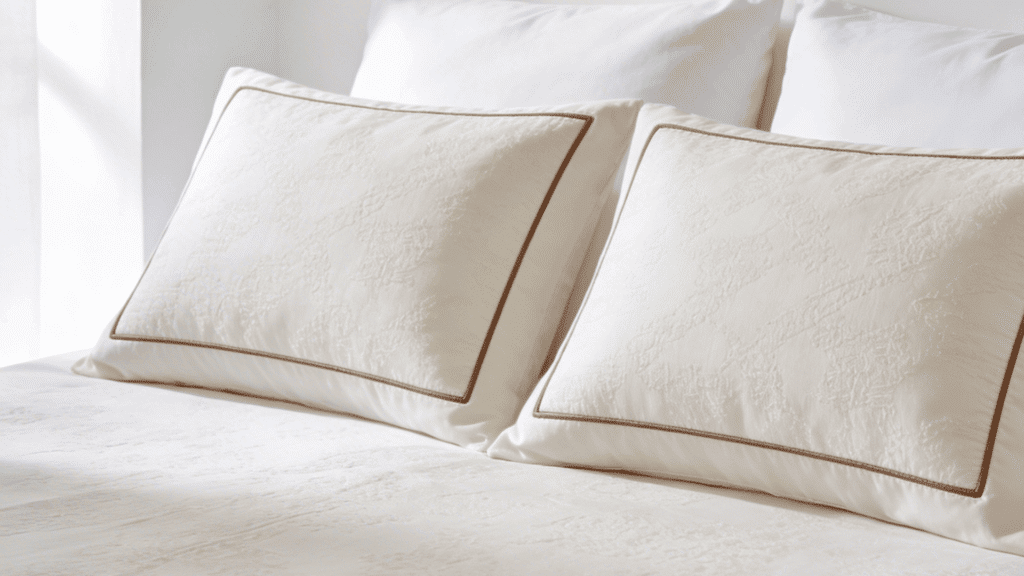
A pillow sham is a decorative cover for your pillow. It’s designed to make your bed look neat and put-together, not for sleeping on.
It looks a lot like a pillowcase, but there are a few key differences. Most shams close from the back, either with an overlapping flap or a hidden zipper.
They also have a flat fabric border around the edges called a flange, which gives them a more finished, structured look. Shams are usually made from cotton, linen, or silk.
They often feature textures, patterns, or stitching that a regular pillowcase doesn’t. During the day, shams sit at the front of your bed to complete the look.
At night, most people remove them or tuck them behind their sleeping pillows. Think of a pillow sham as the decorative layer your bed wears during the day.
Why Buy a Pillow Sham
Pillow shams do more than finish off a bed; they add character and practicality to your sleep space. Here’s what makes them worth adding to your bedding lineup:
- Instant Style Boost: Shams pull together the visual weight of a bed, whether you match them to your duvet or go bold with a contrasting print or color.
- Easy Refresh, Low Effort: Swapping out shams is one of the quickest ways to update a room’s feel, no new pillows, no major overhaul, just a fast, budget-friendly change.
- A More Finished Look: Shams help unify your bedding layers, from the comforter to the throw pillows, giving the whole bed a neat, coordinated appearance.
- Pillow Protection: Keeping pillows tucked in shams during the day shields them from dust and daily wear, helping them hold their shape and last longer.
What Do People Actually Think About Pillow Shams?
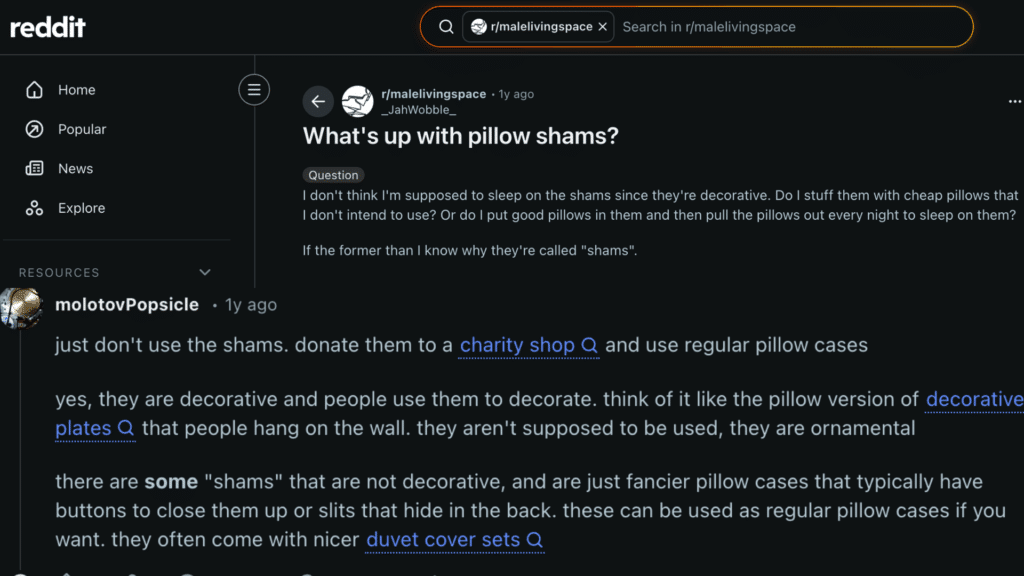
Opinions on pillow shams are split. A Reddit thread on r/malelivingspace asked a simple question: good pillows or cheap ones inside shams? And the answers were all over the place.
Some people are fans. Soft cotton and quilted shams are comfortable enough to sleep on every night. One commenter said it felt better than a regular pillowcase.
Others fill shams with old, flat pillows just to keep the bed looking full. A few pointed out a practical use too: sham pillows are great for propping yourself up while reading in bed.
But plenty of users skip them altogether. The top comment. Donate the shams and use regular pillowcases. Several people compared them to decorative wall plates, nice to look at, but not actually useful.
Most agreed: cheap pillows inside shams do the job just fine.
How a Pillow Sham Is Built
Pillow shams have a few features that set them apart from regular pillowcases. Here’s what makes up their structure:
- Back Closure: Shams close from the back, not the side. You’ll find either an overlapping envelope flap or a hidden zipper that keeps the pillow neatly tucked in.
- Flange Border: Most shams have a flat fabric border stitched around three or four edges. This border, called a flange, frames the pillow and gives it a clean, finished appearance.
- Decorative Fabric: Shams are made from fabrics like cotton, linen, or silk. The surface often features textures, patterns, or embroidery, adding visual interest to the bed.
- Front Face: The front of a sham is the decorative side. It faces outward when placed on the bed, making it the most visible part of your bedding setup.
Pillow Sham vs. Pillowcase.
They may look similar at first glance, but pillow shams and pillowcases serve very different purposes.
| Feature | Pillow Sham | Pillowcase |
|---|---|---|
| Purpose | Decorative | Functional |
| Closure | Back flap or hidden zipper | Open at one end |
| Border | Flange on 3 or 4 sides | No flange |
| Fabric | Textured, patterned, or embroidered | Soft, plain, sleep-friendly |
| Best For | Daytime bed styling | Sleeping every night |
| Placement | Front of the bed during the day | On your sleeping pillow at night |
| Comes With | Duvet covers or bedding sets | Sheet sets |
| Comfort | Not always sleep-friendly | Designed for comfort |
Can You Sleep on a Pillow Sham?
Technically, yes. But most people find better options for a good night’s sleep. Here’s why shams work better as daytime features than as nighttime ones.
1. The Fabric Isn’t Always Sleep-Friendly
Pillow shams are made to look good, not feel good against your skin. Many are made from textured fabrics like matelassé, embroidered cotton, or structured linen.
These materials can feel stiff or rough when you rest your head on them. A regular pillowcase made from soft, smooth fabric is simply more comfortable to sleep on.
If comfort matters to you at night, your regular pillowcase will always be the better choice.
2. The Flange Gets in the Way
The flange is what makes a sham look polished on the bed. But at night, that same border becomes a problem. It bunches up, folds awkwardly, and can press against your face while you sleep.
Most people don’t realize this until they actually try sleeping on one.
The flange is great for daytime use, but it adds bulk that makes shams uncomfortable for a full night’s sleep.
3. What Most People Actually Do at Bedtime
The most common approach is simple: remove the shams before getting into bed. Some people place them on a nearby chair or bench.
Others tuck them behind their sleeping pillows so they stay on the bed without getting in the way. Either option keeps the shams clean and in good shape.
It also means your sleeping pillows stay front and center where they belong at night.
At the End
At the end of the day, I see pillow shams as a simple way to make a bed look neat without much effort. They are not a must-have, but they can add that “finished” feel that you often see in well-styled rooms.
Personally, I like using them during the day and then setting them aside at night for comfort.
If you enjoy a clean, layered look, pillow shams can be a great addition. If not, sticking to regular pillowcases works just fine, too. It really comes down to what feels easy and comfortable for you.
Try them out and see how they fit into your routine. You might end up loving the look, or you might skip them altogether. Either way, your bed should feel right to you.
Have you used pillow shams before? Share your thoughts or tips in the comments below!
Frequently Asked Questions
Are Pillow Shams Machine Washable?
Most pillow shams are machine washable, but always check the care label first. Delicate fabrics like silk may require handwashing or dry cleaning to prevent shrinkage, fading, or damage to embroidered details.
Do Pillow Shams Come in Standard Sizes?
Yes. Pillow shams are available in standard, queen, and king sizes to match common pillow dimensions. Euro shams are larger and square-shaped, typically used as a back layer for decorative bed styling.
Can Pillow Shams Be Mixed With Different Bedding Sets?
Pillow shams do not have to match the bedding set exactly. Mixing solid-colored shams with a patterned duvet — or vice versa- is a common way to add visual contrast to a bed.
How Many Pillow Shams does a Bed Need?
Most beds use two standard or queen shams. King beds typically use two king-sized shams. Euro shams are optional and usually placed behind the standard shams for a fuller, more layered look.
What is a Euro Sham Used For?
A Euro sham holds a large, square pillow and sits at the back of the bed arrangement. It adds height and depth to the overall bedding display, making the bed appear fuller and more structured.