

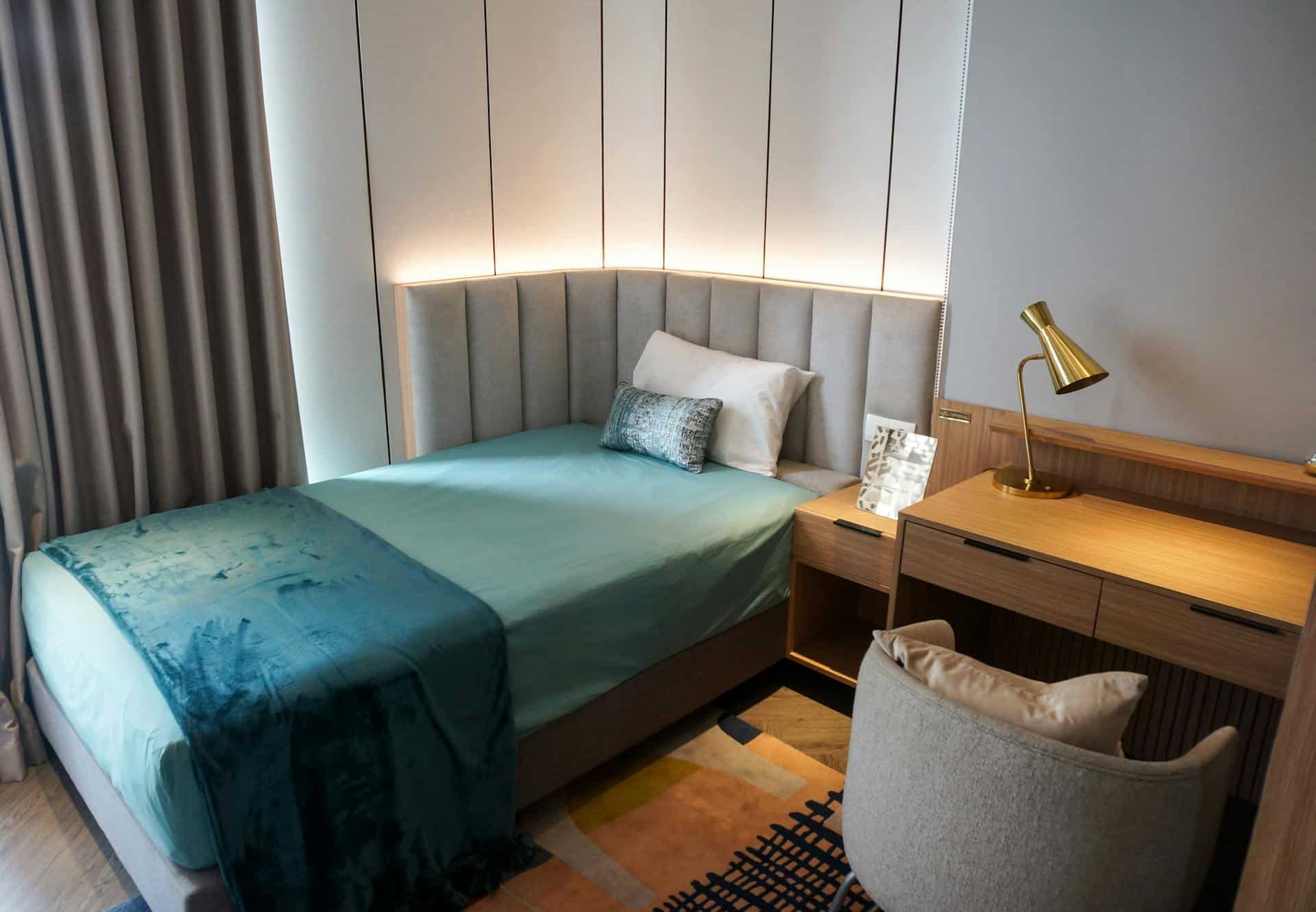
An unused spare bedroom is wasted square footage. It’s rarely occupied by guests, yet too valuable to become a dumping ground. The more innovative solution is a multi-purpose bedroom design, for example, a dual-purpose guest room and home office. Let’s see how to design one without paying a hefty fee.
Plan the Layout for Dual Functionality
A standard 10×12 ft bedroom (120 sq. ft.) can comfortably fit a desk, a convertible bed, and a storage unit with the right layout.
You can start with measurements and zoning. Reserve the window for the desk and a window-free wall for the bed.
Additionally, maintain clear walkways from the door to the desk and from the bed to the closet. Doing bedroom layout optimization will prevent the room from feeling cramped.
Choose Convertible Furniture That Works
Convertible furniture determines how functional this space will be. Prioritize durability and ease of use over trends.
| Furniture Type | Best For | Typical Cost |
|---|---|---|
| Murphy Bed | Maximum floor space, daily office use | $1,200-$2,500 |
| Daybed (with storage) | Small rooms, quick conversion | $400-$900 |
| Sleeper Sofa | Larger rooms (120+ sq ft) | $800-$1,800 |
| Standard Desk (console-style) | Professional look, guest-ready | $200-$600 |
Avoid cheap sleeper sofas. They sag quickly and create guest discomfort. A desk should be stable, wide enough for work, and visually neutral.
It sure involves a good amount of money. An affordable room redesign requires an investment between $3,000 and $5,000.
That’s the reason why many homeowners explore small home upgrade financing options when converting spare bedrooms into functional spaces. Short-term solutions help cover convertible furniture budgeting and essential purchases without depleting emergency savings.
Smart Storage for Work and Guests
Storage must support both roles without visual clutter. To make it cost-effective, you can use bins and baskets to hide clutter. Keep guest bedding stored high in space-saving solutions and work items accessible.
| Storage Solution | Purpose | Cost Range |
|---|---|---|
| Floor-to-ceiling shelving | Office + guest supplies | $150-$400 |
| Dresser | Dual-use drawers | $300-$700 |
| Closet organizer | Split work/guest storage | $100-$300 |
| Storage ottoman | Blankets + seating | $60-$200 |
| Folding luggage rack | Guest convenience | $30-$80 |
Lighting and Technology Setup
A guest room that also prevents your home office setup costs needs lights and technology that can change with the time of day. A few examples are:
- Bright lights help you focus when you’re working.
- Wi-Fi extender ensures uninterrupted internet.
- Softer lights make the room cozy when guests come to stay.
If you choose lights that can adjust and keep cords neat and out of the way, the room can easily switch from “work mode” to “guest mode”.
| Item | Typical Cost |
|---|---|
| Adjustable desk lamp | $30-$100 |
| Ceiling fixture with dimmer | $80-$200 |
| Wi-Fi extender | $30-$100 |
| Cable management solutions | $15-$40 |
| Bedside lamp | $25-$75 |
| 32″ wall-mounted smart TV (optional) | $150-$300 |
Color Schemes That Work On Camera and at Night
Painting a 120-square-foot room yourself usually needs just two gallons of paint. On the other hand, hiring a professional painter can add $200–$400 to the cost.
What to do? Go for a DIY room transformation.
Neutral colors will work perfectly for your new arrangement.
Go for warm whites, light gray, and beige to create a calm backdrop. They are relaxing and work great for your video calls as a calm background.
Thinking about the finish?
Satin or semi-gloss paint works best. It reflects light and makes the room look neat. Also, it is easy to clean.
Cost Breakdown: What to Expect
| Budget Level | Total Cost | What’s Included |
|---|---|---|
| Budget | $1,500-$2,500 | Daybed, desk, shelving, basic lighting |
| Mid-range | $3,000-$5,000 | Murphy bed, closet system, better lighting |
| High-end | $6,000-$10,000 | Custom Murphy bed, designer finishes |
DIY work can reduce costs by 30-50%.
Home Renovation Budgeting and Funding Tips
- Phase the project over 3-6 months.
- Buy secondhand desks, dressers, and shelving.
- Refinish furniture for ~$30 in supplies.
- Use rewards credit cards carefully and pay balances fast.
- Add the desk, bed solution, and lighting for longevity. Don’t compromise on these.
- Financing small home upgrades is a good idea, but only for essential furniture.
Common Mistakes to Avoid
#1 – Sacrificing ergonomics for aesthetics
Your room is an office first. So, comfort matters more than style.
Remember, guests visit only sometimes. So, buy timeless furniture instead of something to please them. A pretty but badly designed desk or chair can hurt your body.
#2 – Overfurnishing the room
Too much furniture makes the room feel tight. It becomes hard to move around. This hurts focus and comfort.
Aim to keep at least 30 to 40% of the floor area open.
#3 – Ignoring heating and cooling needs
Temperature affects how you work and sleep. A room that is too hot or too cold feels miserable.
Use simple fixes like a fan or heater if needed.
#4 – Always test furniture before buying
Always try furniture before you buy it.
- Sit in the chair.
- Work at the desk.
- Lie on the bed.
A few minutes of testing can prevent years of discomfort. What do you say?
Final Word
If you are planning to give your dusty spare bedroom a promotion, you’re smart. It can definitely serve as a productive workspace on weekdays, and guests stay on weekends. Smart furniture choices, fast home upgrade financing, and cost-effective storage units will ensure that you have your innovative space ready in a month or less.