

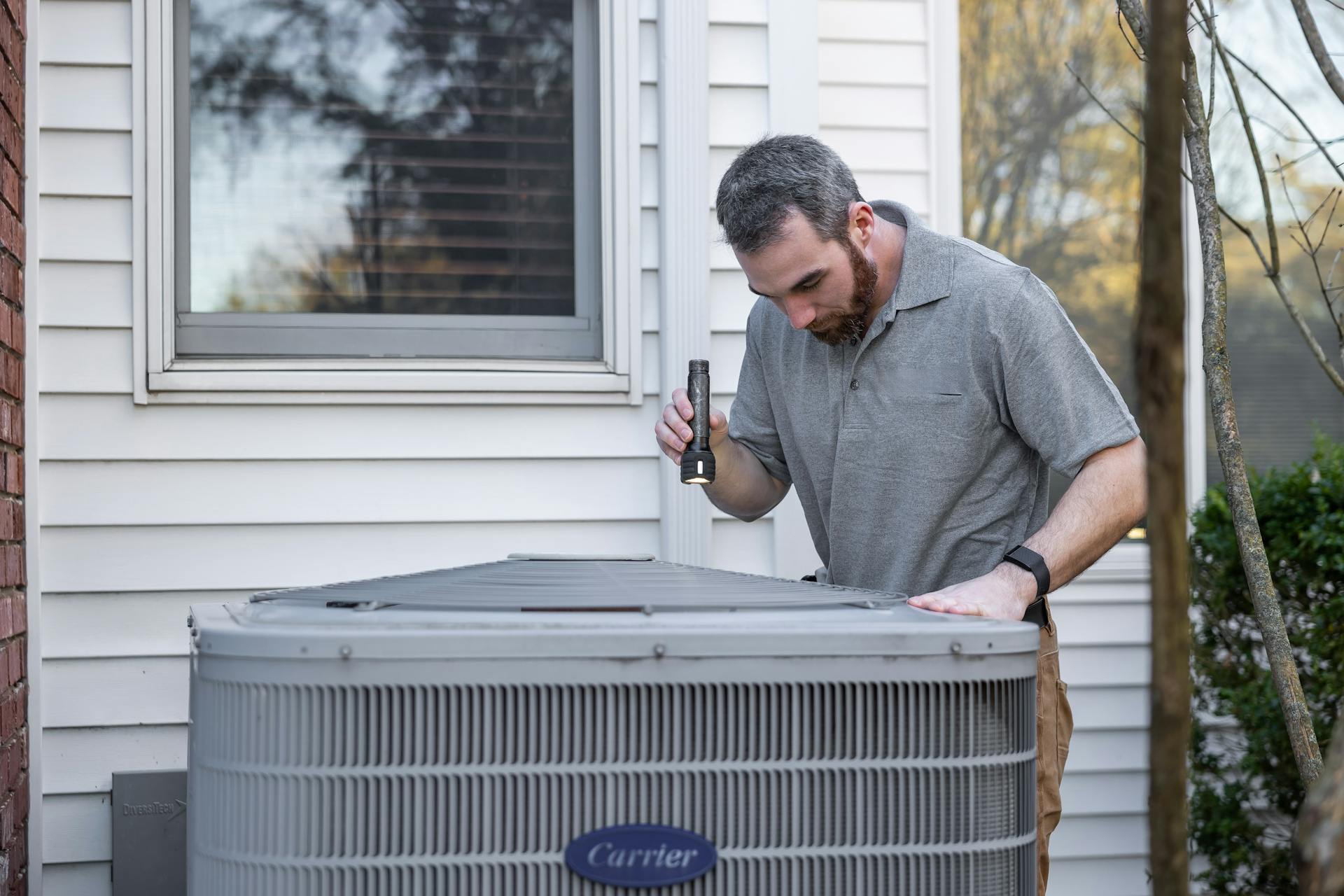
Air conditioning systems are divided into several categories: domestic, semi-industrial, and industrial. Each is a complex mechanism that requires timely maintenance.
After a long, chilly winter, we all long for the bright summer sun, but after the first week of heat, everyone rushes to find shade and a cool, air-conditioned home or office. After sheltering from the heat, you press the button on the air conditioner remote, but nothing happens. The air conditioner, which has served you faithfully, has broken down.
What to Do
If a problem has already been detected, do not attempt to repair or restore the air conditioner to its original condition. Such interventions will only cause harm and may result in a complete breakdown and permanent failure of your air conditioner. It’s best not to waste time; call HVAC and Appliance Repair Guys to determine the cause of the issue and make the repair. Of course, it’s better to address the problem before it occurs.
Can You Do It Yourself?
Some people wonder if they can save money by performing the necessary procedures themselves. However, this can lead to even higher costs. Air conditioner repair and maintenance should be performed by service company specialists or licensed technicians who have the following:
- Professionalism and experience.
- Ability to dismantle and install the unit using safety equipment or a boom lift.
- Measuring instruments.
- Professional chemicals.
- Upon completion of the maintenance work, the customer receives a certificate of completion, a receipt, and a warranty card.
Regular air conditioner inspections by experienced technicians will prevent breakdowns, extend the unit’s lifespan, and save the owner money.
Why Is Maintenance Necessary?
Both the indoor and outdoor units of an air conditioner circulate large volumes of air during operation. The outdoor unit “displaces” atmospheric air contaminated with dust, sulfur, soot from car exhaust pipes, insects, and other “charms” of the big city. The indoor unit, in turn, is exposed to odors, droplets of dissolved grease, cooking vapors, and bacteria released into the air by human activity. As a result, both central units of the air conditioner eventually become “accumulators” of all of the above contaminants.
Indoor Unit
A large amount of moisture from the air condenses on the unit’s heat exchanger during cooling. As a result, microparticles of dust, dirt, and biological contaminants adhere to the wet impeller blades and heat exchanger. After the air conditioner is turned off, the environment becomes an ideal breeding ground for mold spores, fungi, and pathogenic bacterial colonies.
Furthermore, the accumulation of debris on the heat exchanger tray, fan, and heat exchanger itself causes an unpleasant musty odor.
Some dust particles still pass through the air conditioner filters and end up in the drain pan. Gradually, some of the dust is washed into the drain, settles in sections of the pipe, adheres, and dries, causing blockages. This process will eventually lead to condensate leaks from the indoor unit or unpleasant odors from the drain pan.
Outdoor Unit
Requires special attention, as it bears the brunt of the load. The thin aluminum fins of the heat exchanger gradually become coated with a film of soot, dust, and grime, which impedes heat exchange between the unit and the surrounding environment. In large industrial areas, the outdoor unit’s condenser becomes dirty very quickly, as they say, “completely dirty.”
Poplar fluff is a real scourge for an air conditioner’s outdoor unit. The rear of the outdoor unit, where the air intake occurs, often becomes covered in a dense “fur coat” of fluff, reducing heat exchanger efficiency and, in turn, increasing the load on the compressor and other refrigeration system components. Naturally, you can’t expect full performance from an air conditioner that’s being worn out.
Solution
As practice shows, deterioration in air conditioner performance occurs slowly and is practically unnoticeable to the system owner. This hidden process can lead to complete system failure or costly repairs. However, regular monitoring by a specialist and timely intervention if a problem is detected can prevent major breakdowns and significantly extend the air conditioner’s lifespan.
Therefore, recklessly “saving” on air conditioner and split-system maintenance can lead to significant financial losses. However, timely maintenance is highly beneficial, as it will not only preserve the air conditioner’s performance but also give you peace of mind. The recommended frequency of air conditioner maintenance is twice a year:
- In mid-spring, before using the unit for cooling.
- In early fall, to assess the system’s condition after the operating season.
After air conditioner maintenance:
- Unpleasant odors will disappear, and the risk of pathogenic microflora spreading from the air conditioner into the room via the exhaust air stream will be eliminated.
- All filters and heat exchangers will be cleaned and restored to their original condition.
- All potential refrigerant leaks in the unit’s refrigeration section will be eliminated.
Timely service will ensure long-lasting, efficient operation, prevent unexpected problems, and give you confidence, comfort, and an optimal indoor climate at home or at work.
Conclusion
When operating, air conditioning equipment inevitably draws in dust and allergens. This creates condensation within the system, which creates a favorable environment for mold growth.
Over time, the mold grows (located in the heat exchanger) and gradually begins to interfere with effective cooling and heating of the room. Furthermore, energy consumption increases, and the air conditioner compressor may stop working.
Mold can also clog the drainage system, causing the air conditioning equipment to leak inside the room. The long, efficient operation of a split system depends not only on high-quality installation but also on subsequent maintenance and preventive care. Regularly servicing split systems can significantly extend their lifespan and avoid unexpected, costly repairs.