

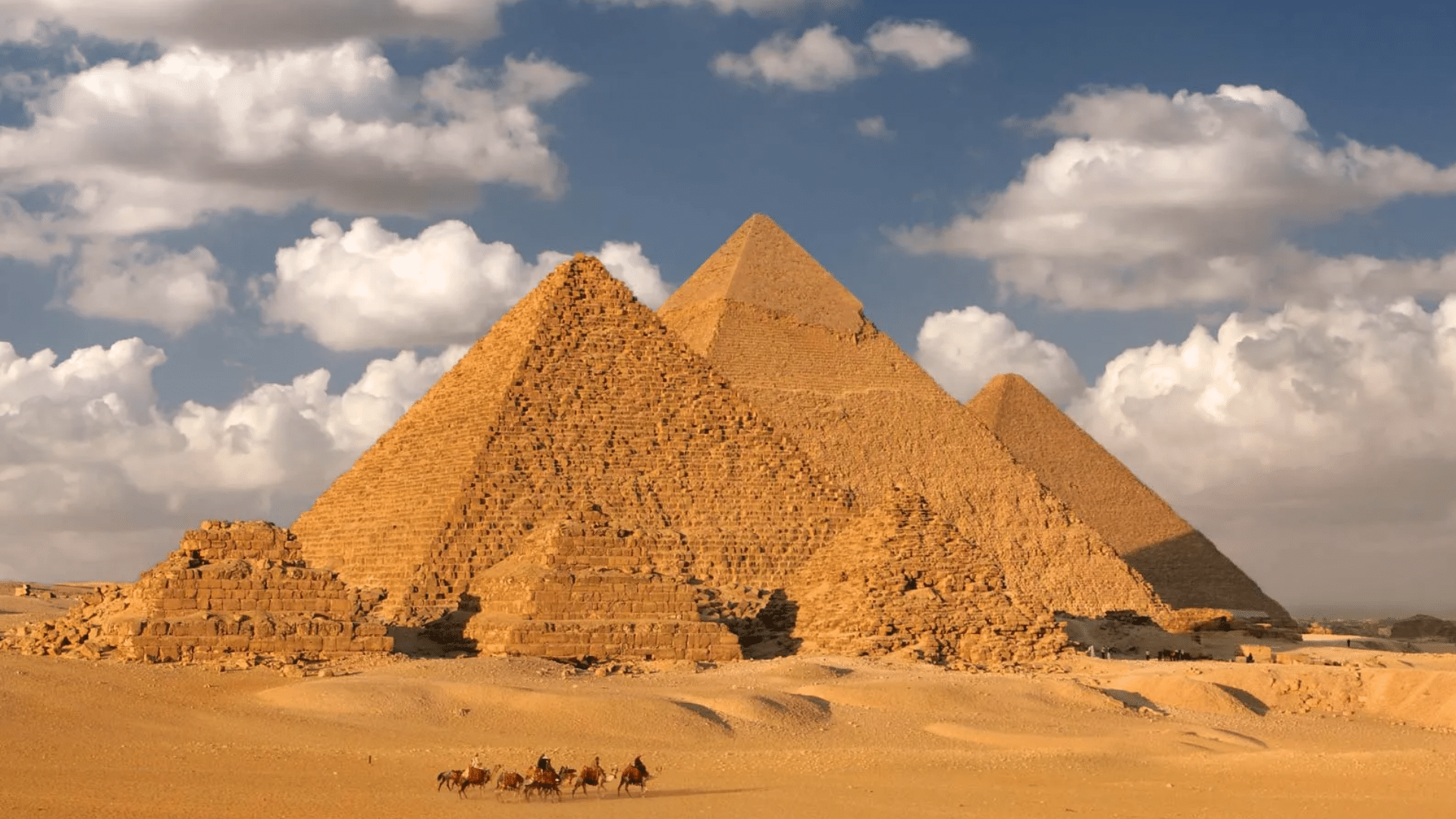
Ancient Egyptian architecture has shaped the world in ways many don’t realize. From the towering pyramids to the detailed temples, its influence is still visible today.
This style of architecture was more than just about building structures; it was about culture, religion, and power.
In this post, you’ll learn the history of ancient Egyptian architecture, its key features, cultural significance, and lasting influence on modern designs.
You’ll learn about the architects of Egypt’s famous monuments and how these buildings were built to endure.
If you’re curious about history, architecture, or their connection, my blog provides valuable insights into how ancient Egyptian architecture continues to influence us today.
Historical Overview of Ancient Egyptian Architecture
Ancient Egyptian architecture began during the Early Dynastic Period (around 3100 BCE), with simple structures like mud-brick houses and tombs.
Over time, the Egyptians developed more advanced techniques, using stone and wood.
The Old Kingdom (2686–2181 BCE) saw the rise of the first large-scale stone buildings, including the Great Pyramid of Giza, built during the Fourth Dynasty.
Temples dedicated to gods became key in Egyptian architecture, highlighting the link between religion and design.
In the Middle Kingdom (2055–1650 BCE), the Egyptians began using more complex designs, with larger columns and more elaborate tombs.
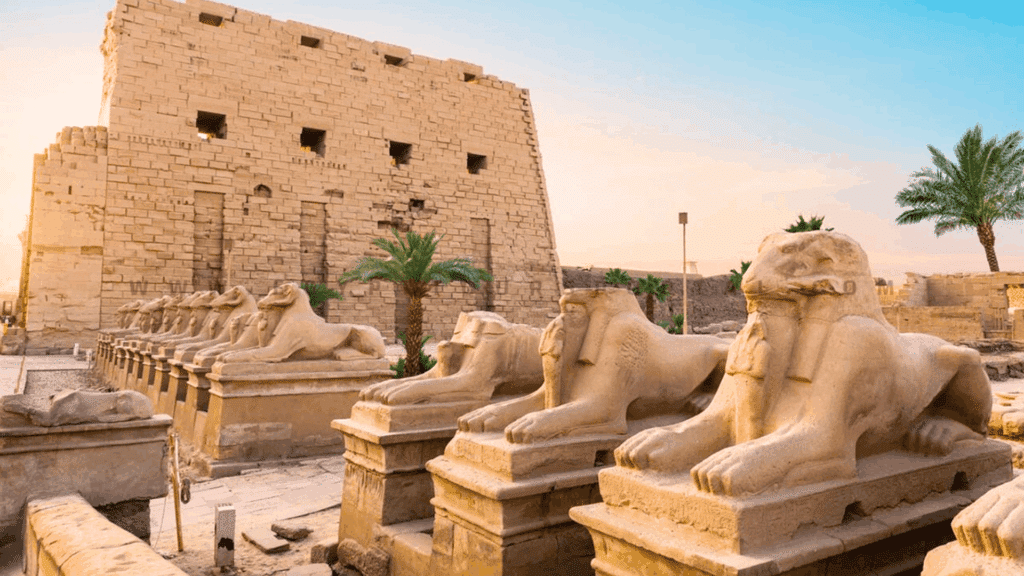
The New Kingdom (1550–1070 BCE) produced famous structures like the temples of Karnak and Luxor.
Throughout these periods, Egyptian architecture focused on creating durable, monumental structures meant to honor gods and pharaohs for eternity.
Key Features of Egyptian Architectural Style
Ancient Egyptian architecture features grand, durable designs with stone structures, symmetrical layouts, and iconic columns and obelisks, reflecting beliefs in eternity and the gods.
1. Use of Massive Stone
One of the most striking features of Egyptian architecture is the use of massive stone.
Egyptians used large stone blocks, particularly limestone, granite, and sandstone, to build their monumental structures.
The stones were carefully cut and transported, creating structures like the pyramids and temples.
This heavy stonework symbolized stability and permanence, which were essential in Egyptian culture, as these structures were built to honor the gods and ensure a lasting legacy for the pharaohs.
2. Symmetrical Designs
Symmetry was a crucial design principle in Egyptian architecture. Buildings and temples were often laid out in a perfectly balanced manner, with equal spacing and matching elements on each side.
This symmetry reflected the Egyptian belief in harmony and order.
The symmetrical design not only made the structures visually appealing but also emphasized the idea of balance between earthly and divine realms.
This design philosophy can be seen in the alignment of the pyramids and temple layouts, reinforcing the concept of cosmic balance.
3. Iconic Columns and Pillars
Columns are another key feature of Egyptian architecture, often used in temple entrances, halls, and gateways.
The Egyptians developed several styles of columns, ranging from simple to highly decorative. The most famous columns were often topped with papyrus or lotus-shaped capitals, symbolizing life and rebirth.
These columns were both functional, supporting roofs and ceilings, and symbolic, representing the power and stability of the pharaohs.
They are still admired today for their grandeur and intricate designs.
4. Obelisks and Monumental Structures
Obelisks are another iconic element of Egyptian architecture. These tall, four-sided pillars, usually topped with a pyramidion, were often erected in pairs at the entrances of temples.
Made of a single piece of stone, obelisks were inscribed with hieroglyphs, commemorating the achievements of pharaohs.
They symbolized the rays of the sun and were believed to honor the gods.
The precision and size of the obelisks displayed the Egyptians’ advanced engineering skills and their devotion to creating monuments that would endure for eternity.
Impact of Ancient Egyptian Architecture on Modern Buildings
Ancient Egyptian architecture influenced modern commercial buildings, especially in design and symbolism.
Many modern skyscrapers and office buildings feature elements inspired by Egyptian architecture, such as columns and obelisks.
The use of massive, imposing structures to convey strength and stability is a common influence.
For example, the Washington Monument in the U.S. is shaped like an obelisk, while the Luxor Hotel in Las Vegas has Egyptian-style columns and motifs.
These features symbolize power and durability, core values in ancient Egyptian design.
Today, commercial structures often use these elements to create a sense of grandeur and timelessness, similar to how the Egyptians aimed to build lasting legacies for their rulers.
The Significance of Egyptian Architecture in Culture
Egyptian architecture was deeply connected to religion, politics, and daily life. Temples were central to religious practices, dedicated to gods, and used for rituals and offerings.
These structures were often massive, symbolizing the divine and the power of the pharaohs, who were considered gods themselves.
Tombs, like the pyramids, ensured safe passage to the afterlife, reflecting the Egyptians’ belief in immortality.
The elaborate design of these tombs, with intricate carvings and paintings, showcased the importance of the deceased’s journey and legacy.
Public buildings like palaces and centers reflected political power, with their grand scale reinforcing the pharaoh’s authority.
Egyptian architecture reflected their beliefs, reinforcing hierarchies, honoring gods, and ensuring eternal life.
Major Egyptian Monuments and Their Designs
Ancient Egypt is home to some of the world’s most iconic and enduring monuments. These structures were designed not just for function but to honor gods and pharaohs, and they continue to influence architecture today.
1. The Great Pyramid of Giza
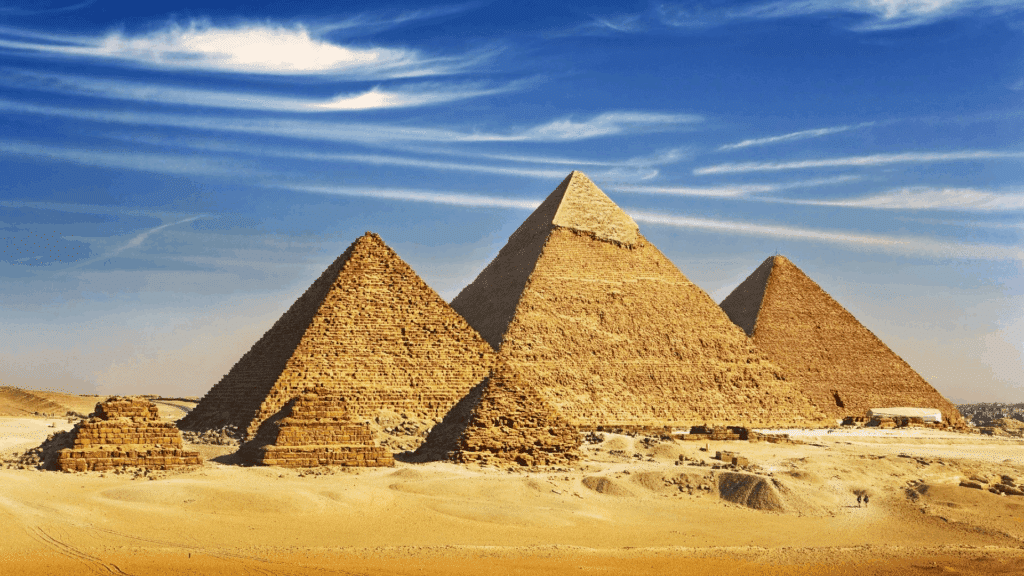
The Great Pyramid of Giza is the largest and most famous pyramid in Egypt.
Built for Pharaoh Khufu, it originally stood at 481 feet tall. It’s made of millions of limestone blocks, precisely cut to fit perfectly.
The pyramid was designed to serve as a tomb, ensuring the pharaoh’s safe passage to the afterlife.
Its design focuses on symmetry and precision, making it one of the most impressive architectural feats in history.
2. The Temple of Karnak
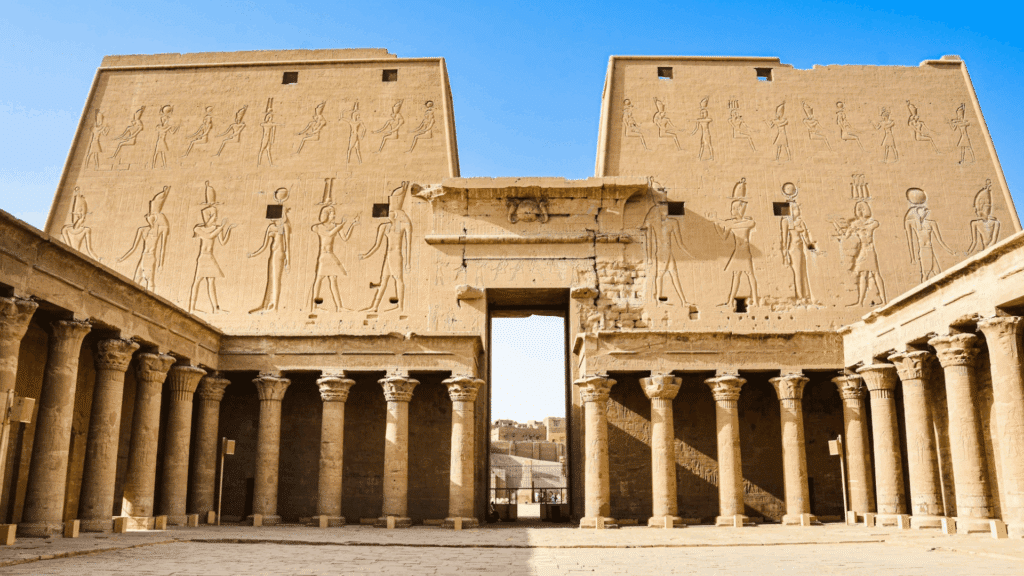
The Temple of Karnak is a massive complex dedicated to the god Amun. It consists of grand halls, pylons, and massive columns, each covered in intricate carvings.
The most famous feature of the temple is its Hypostyle Hall, with 134 giant columns.
The design represents Egyptian religious beliefs, with each structure carefully planned to reflect the power and presence of the gods.
The temple’s design also illustrates the growing complexity of Egyptian architecture during the New Kingdom.
3. The Sphinx
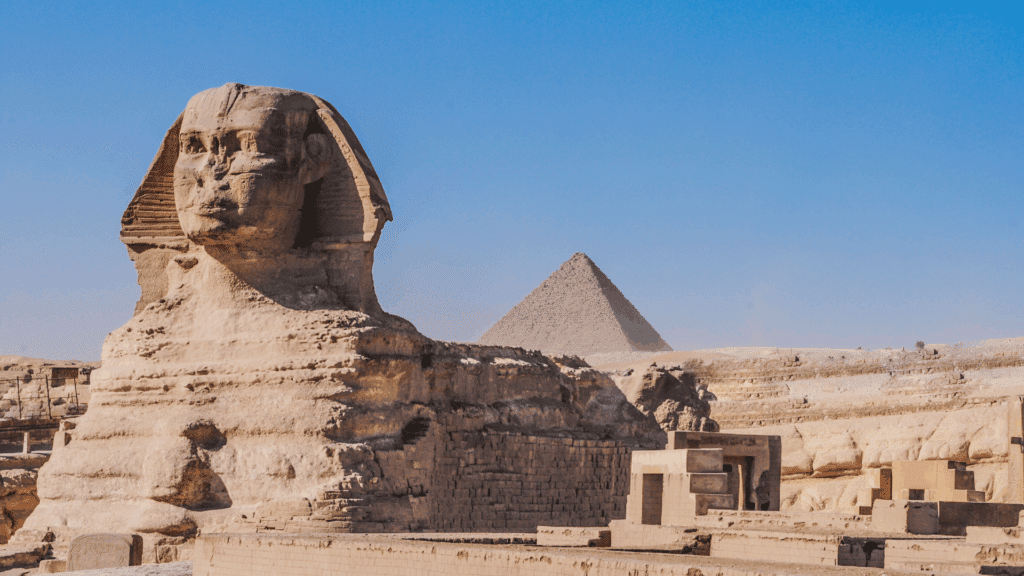
The Sphinx is a mythical creature with the body of a lion and the head of a pharaoh. Located near the Great Pyramid of Giza, it is carved from limestone and stands 66 feet tall.
The Sphinx was built to protect the pyramids and symbolize the strength and wisdom of the pharaoh.
Its simple yet powerful design reflects the Egyptians’ focus on creating enduring symbols of power, and it remains one of the most recognizable monuments in the world.
4. The Temple of Luxor
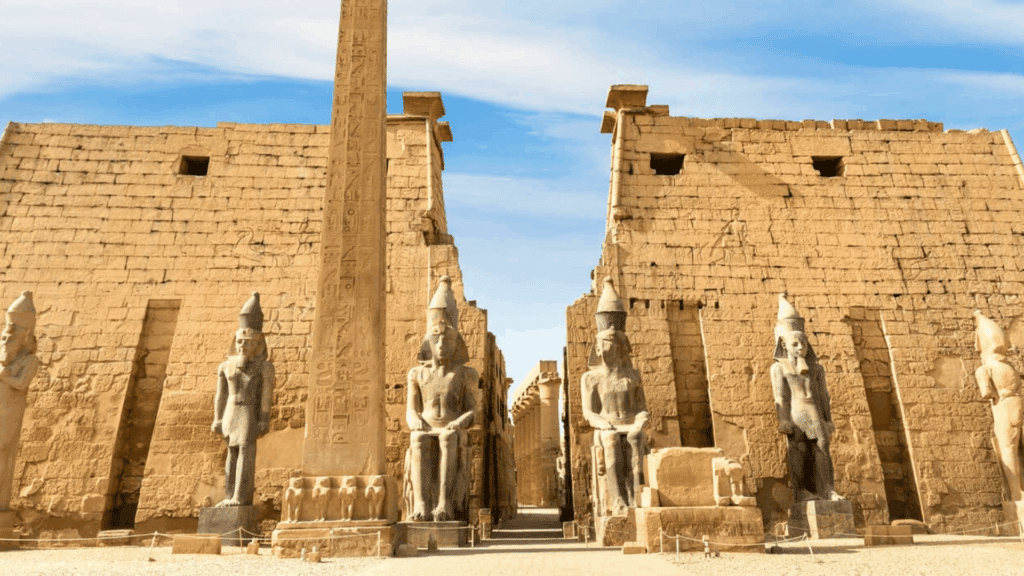
The Temple of Luxor was dedicated to the god Amun and built during the New Kingdom.
Its design includes massive statues, towering obelisks, and grand entrance pylons.
The courtyard and sphinx-lined avenues lead visitors toward the inner sanctum, emphasizing the connection between the pharaohs and the gods.
The temple’s layout and carvings highlight religious ceremonies, reflecting the Egyptian belief in the divine presence in daily life.
5. Abu Simbel Temples
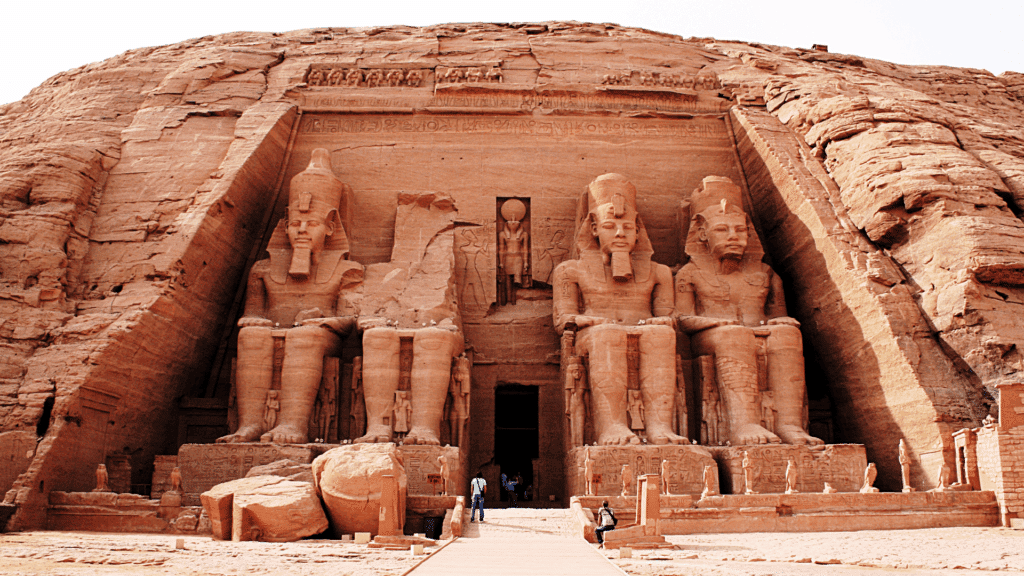
The Abu Simbel temples were built by Ramses II and carved into a mountainside in southern Egypt.
The two temples feature massive statues of Ramses II and his queen, Nefertari. The temples were designed to align with the sun, illuminating the inner sanctum twice a year.
The design of these temples highlights the Egyptians’ skill in creating monumental, sun-synchronized architecture.
It emphasized their rulers’ divine power and connection to the gods.
How Egyptian Architecture Influenced the World?
Egyptian architecture has greatly influenced later civilizations, particularly the Greeks and Romans.
The use of columns and symmetrical designs in Egyptian buildings inspired the development of similar architectural styles in Greece and Rome.
The Greeks adapted the Egyptian column style, creating the Doric, Ionic, and Corinthian orders still used today.
The Romans further built on these designs, incorporating larger public buildings and monumental structures like arches and domes.
Egyptian techniques for stone cutting and large-scale construction were also adopted, allowing later civilizations to build massive structures like temples, theaters, and government buildings.
The Egyptians’ focus on creating monumental, lasting buildings set a standard for future architecture.
Their influence can still be seen in modern structures, from government buildings to skyscrapers.
The Future of Preserving Ancient Egyptian Architecture
As Egypt continues to honor its architectural legacy, many challenges and efforts focus on ensuring these monumental structures stand the test of time.
- Ongoing Restoration Projects: Major restoration projects are underway at sites like the Valley of the Kings and the Pyramids of Giza to maintain their integrity and prevent further damage.
- Advanced Conservation Techniques: Modern conservation methods, such as using digital technology to map and monitor structures, help track wear and tear and make targeted repairs.
- Climate Control Efforts: Managing Egypt’s extreme climate is a key challenge. Solutions include controlling temperature and humidity in tombs to prevent erosion and damage.
- Protecting from Urbanization: Urban growth near ancient sites puts pressure on preservation. Efforts are being made to regulate construction around these areas to protect them from encroaching development.
- International Partnerships: Egypt works with global organizations like UNESCO to fund and support conservation efforts, preserving these treasures for future generations.
Conclusion
Ancient Egyptian architecture continues to influence how we design and build today, with its grand structures and classic designs shaping both modern buildings and our understanding of history.
From the impressive pyramids to the detailed temples, these architectural marvels show the Egyptians’ mastery of engineering, art, and culture.
Their impact is still felt in the way we approach monumental design and even in the symbols we use.
As we reflect on these ancient wonders, it’s clear how much they’ve shaped our world.
I recommend learning more about Egypt’s architectural history and sharing your thoughts. What fascinates you most about these structures? Let me know in the comments below!