

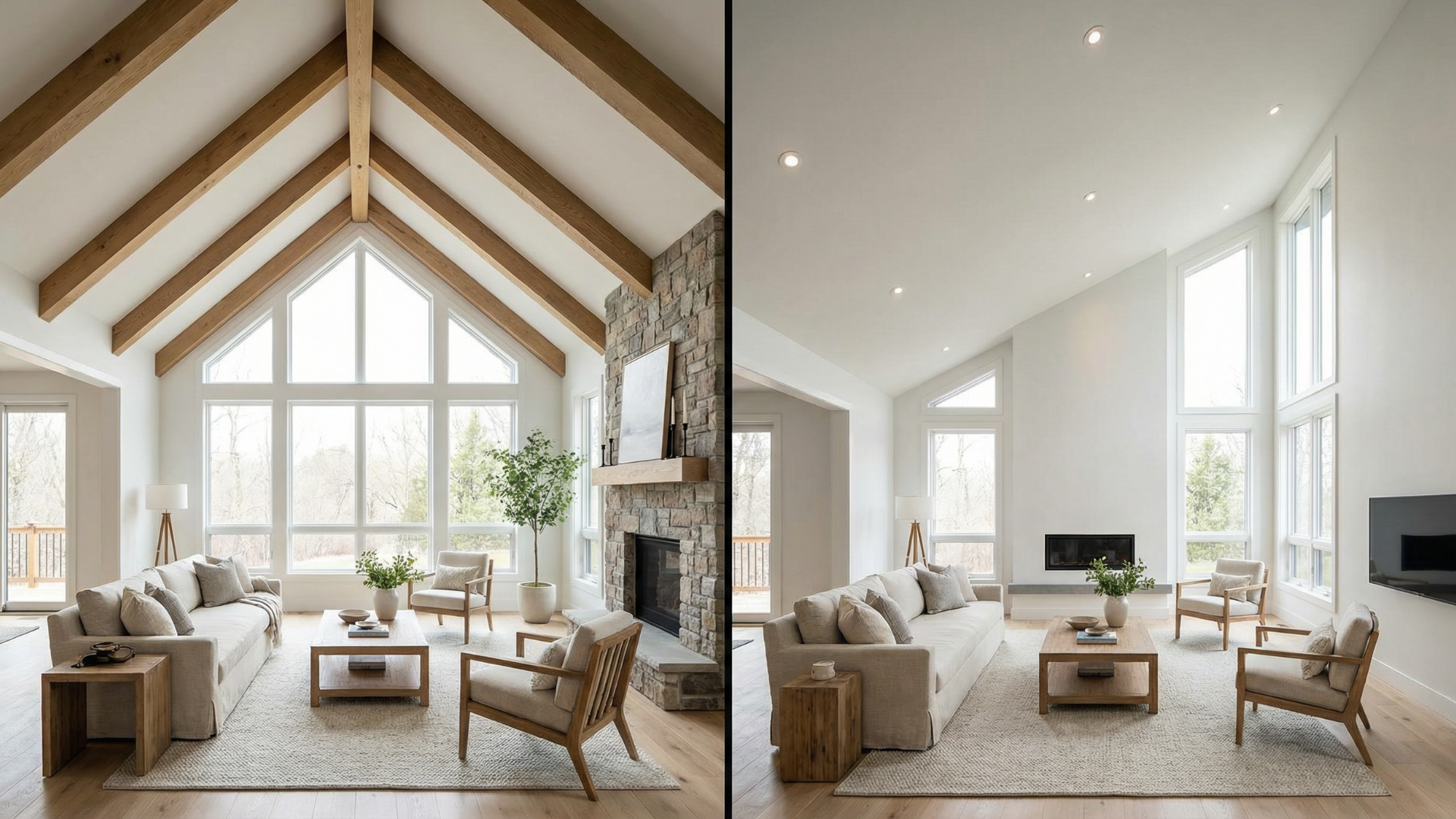
Ceiling design does more than cover a room. It shapes how space is perceived, how light travels, and how architecture feels from the moment someone walks inside.
Cathedral and vaulted ceilings are often mentioned together because they both create height and visual drama. Yet despite their similar appearance, they are not identical in structure or effect.
Understanding the distinction is important before committing to a design choice. Each style carries different framing requirements, aesthetic impact, and practical considerations.
A clear comparison allows homeowners to evaluate both options with confidence and choose a ceiling that aligns with their layout, budget, and long-term vision.
What is a Cathedral Ceiling?
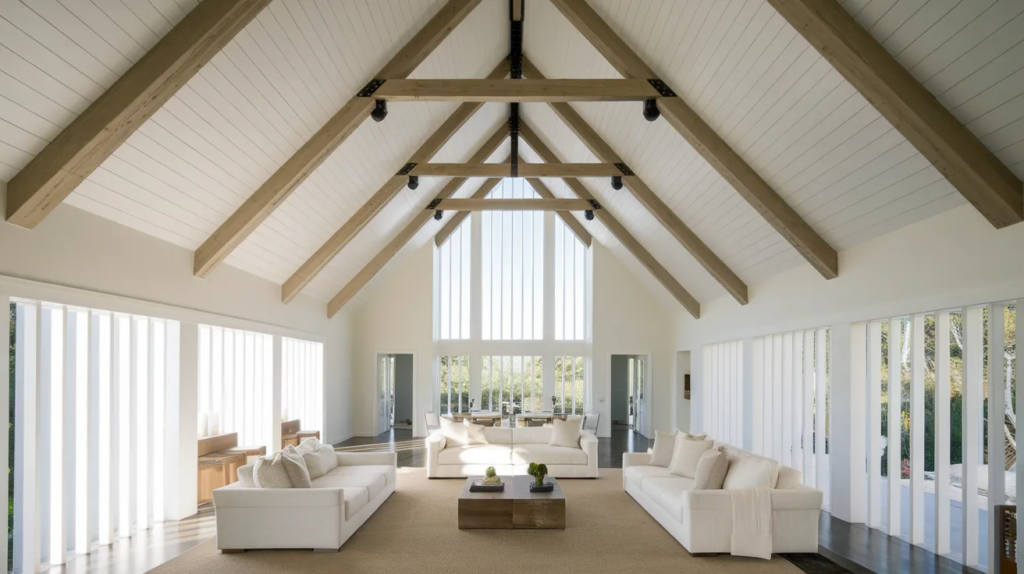
A cathedral ceiling follows the exact slope of the roof. The ceiling panels rise upward on both sides and meet at a central ridge, forming a symmetrical peak.
The angle of the ceiling matches the roofline directly above it. There is no attic space between the ceiling and the roof deck.
This design creates a tall, open interior that mirrors the shape of a traditional church nave, from which the term “cathedral” derives. The defining feature is symmetry. Both sides rise at the same pitch and meet at the center. The peak usually runs down the middle of the room.
Because the ceiling attaches directly to the roof structure, cathedral ceilings require careful framing and insulation.
The roof rafters or trusses are often visible or covered with finished panels such as drywall, wood planks, or tongue-and-groove boards.
What is a Vaulted Ceiling?
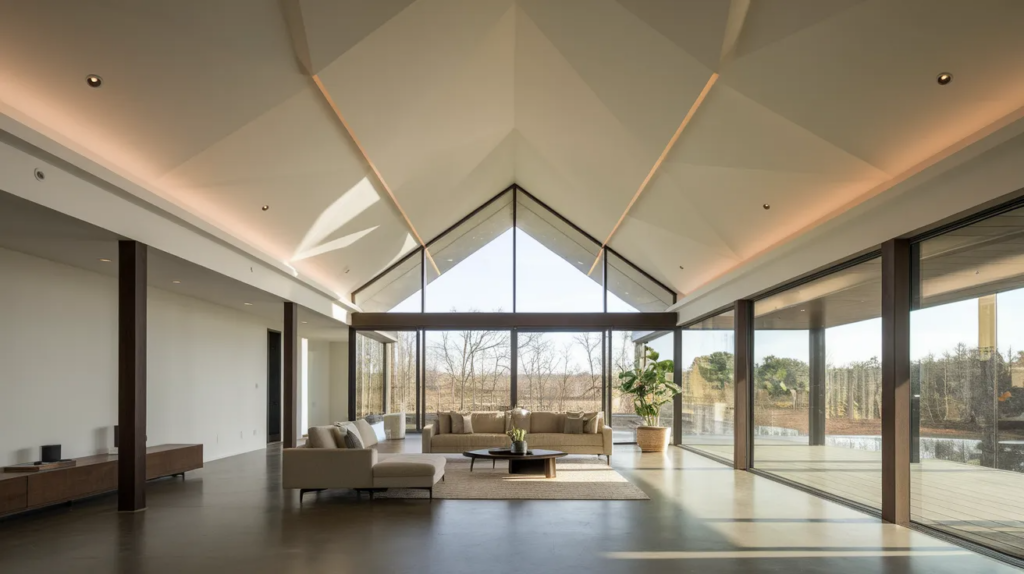
A vaulted ceiling is a broader category. It refers to any ceiling that rises above the standard flat height. Unlike cathedral ceilings, vaulted ceilings do not have to follow the roofline exactly. They may slope, curve, arch, or form uneven angles.
In simple terms, all cathedral ceilings are vaulted ceilings, but not all vaulted ceilings are cathedral ceilings.
Vaulted ceilings can be:
- Arched
- Domed
- Barrel-shaped
- Asymmetrical
- Single-slope (shed style)
Because the definition is more flexible, vaulted ceilings offer greater design freedom. They are often used to create dramatic architectural statements in living rooms, entryways, and great rooms.
Cathedral vs Vaulted Ceilings: Key Differences
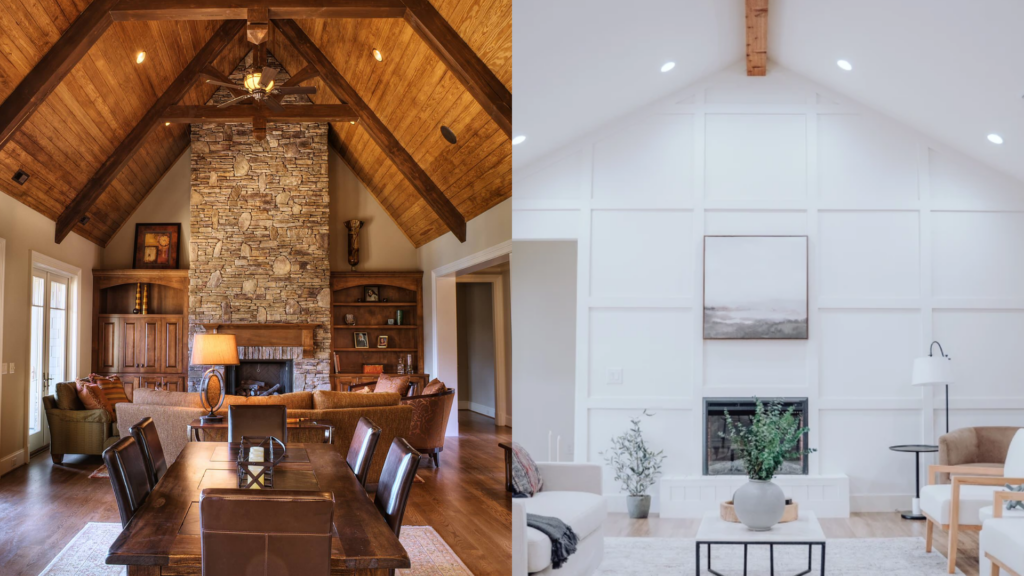
Cathedral and vaulted ceilings may look similar from below, but their structure, cost, and performance differ in important ways. A clear comparison helps homeowners evaluate more than just appearance.
1. Structural Differences
The structural relationship between the ceiling and the roof is the most important distinction.
Roof Alignment
- Cathedral ceiling: Follows the exact slope of the roofline. The ceiling panels attach directly to the rafters.
- Vaulted ceiling: May follow the roofline, but it does not have to. The interior shape can differ from the exterior roof pitch.
This alignment affects how the home is framed and insulated.
Symmetry
- Cathedral: Always symmetrical. Two equal slopes meet at a central ridge.
- Vaulted: Can be symmetrical or asymmetrical. Single-slope, curved, or multi-angle designs are common.
Symmetry influences both structural balance and visual impact.
Framing Complexity
- Cathedral ceilings are predictable because they mirror the roof.
- Vaulted ceilings often require additional engineering, especially when curves or unusual angles are involved.
In practical terms, cathedral ceilings are structurally straightforward but limited by roof design. Vaulted ceilings offer more design freedom but may increase framing complexity.
2. Visual Differences
While structure matters, the visual effect is what most homeowners notice first.
Overall Shape
- Cathedral ceilings create a sharp, peaked center line.
- Vaulted ceilings can form arches, slopes, or dramatic angles.
Design Mood
- Cathedral ceilings feel balanced, clean, and architectural.
- Vaulted ceilings can feel dramatic, modern, or even grand, depending on shape.
Best Fit by Style
- Cathedral ceilings pair well with farmhouse, cabin, and transitional homes.
- Vaulted ceilings suit contemporary, Mediterranean, and custom luxury builds.
When cathedral vs vaulted ceilings are compared visually, cathedral designs emphasize symmetry and height, while vaulted ceilings emphasize architectural expression.
3. Cost Comparison
While both increase construction costs compared to flat ceilings, the reasons for the costs differ.
Framing and Labor
- Cathedral ceilings: Because they follow the roofline, framing is generally predictable. However, builders must account for structural reinforcement and proper load distribution along the ridge.
- Vaulted ceilings: Costs vary widely. Simple single-slope vaults may be comparable to cathedral ceilings, but curved or intersecting vaults require advanced framing techniques and skilled labor.
More complex vault designs increase both labor hours and engineering fees.
Material Requirements
Higher ceilings require:
- Additional drywall or wood paneling
- Extended paint coverage
- Taller trim work
- Larger windows in some cases
Vaulted ceilings with curves may require specialty materials, further increasing costs.
Long-Term Operating Costs
Higher ceilings increase air volume. That affects:
- Heating demand in winter
- Cooling load in summer
Without proper insulation and air circulation, energy bills may rise.
Practical Takeaway: Cathedral ceilings offer more predictable pricing based on the roof structure. Vaulted ceilings offer flexibility, but costs rise quickly as design complexity increases.
4. Insulation and Ventilation Considerations
Performance matters as much as appearance. Both cathedral and vaulted ceilings require careful planning to prevent energy loss and moisture problems.
Insulation Approach
- Cathedral ceilings: Because there is no attic space, insulation must be installed directly between rafters. Spray foam insulation is commonly used because it seals gaps and provides higher R-values in limited spaces.
- Vaulted ceilings: Insulation methods depend on the design. If there is space above the ceiling plane, traditional insulation may be possible. Complex vault shapes often require customized insulation solutions.
Improper insulation can lead to:
- Heat loss
- Ice dams in cold climates
- Interior condensation
Ventilation Needs
Airflow beneath the roof deck is essential. Vent baffles or ridge vents help prevent the trapping of moisture. Cathedral ceilings demand precise airflow planning because there is no attic buffer.
Practical Takeaway: Cathedral ceilings require disciplined insulation design due to their direct roof connection. Vaulted ceilings vary in difficulty depending on structural shape.
5. Lighting Options
Lighting strategy changes significantly with increased ceiling height.
Natural Light Opportunities
Both ceiling types allow:
- Taller window installations
- Clerestory windows
- Skylights
Cathedral ceilings often feature vertical windows aligned beneath the ridge. Vaulted ceilings can incorporate skylights along slopes or curves.
Fixture Selection
High ceilings accommodate:
- Statement chandeliers
- Long-drop pendant lights
- Layered recessed lighting
- Track systems
However, installation must take maintenance accessibility into account.
Light Distribution
Because light rises, high ceilings may require:
- Additional recessed fixtures
- Wall sconces
- Accent lighting
Without layered lighting, tall ceilings can create shadowed areas below.
Practical Takeaway: Both designs improve lighting potential, but proper planning is essential to maintain warmth and balance in large vertical spaces.
6. Resale Value and Buyer Appeal
High ceilings often increase perceived home value.
Emotional Impact
Buyers tend to associate cathedral and vaulted ceilings with:
- Spaciousness
- Architectural quality
- Luxury finishes
Tall ceilings create an immediate visual impression during home tours.
Market Expectations
In certain neighborhoods, high ceilings are expected:
- New construction homes
- Custom builds
- Executive properties
In more modest markets, they may be viewed as an upgrade rather than a standard feature.
Long-Term Appeal
While visually attractive, buyers may also evaluate:
- Energy efficiency
- Heating costs
- Maintenance requirements
Homes that combine high ceilings with strong insulation and modern HVAC systems maintain a stronger appeal.
Practical Takeaway: Both cathedral and vaulted ceilings enhance visual appeal. Long-term resale value improves when energy performance aligns with the architectural design.
7. Ceiling Height and Room Proportions
Height changes how a room feels, but proportion determines whether it feels balanced or overwhelming.
Spatial Perception
Higher ceilings create:
- A sense of openness
- Strong vertical lines
- Increased air volume
Cathedral ceilings guide the eye upward in a centered, controlled way. Vaulted ceilings can shift visual weight depending on the direction of the slope.
Room Size Compatibility
- In smaller rooms, cathedral ceilings can make the space feel taller but may require careful furnishings to avoid feeling empty.
- In large open-plan spaces, vaulted ceilings add architectural drama and prevent the room from feeling flat.
Acoustic Considerations
High ceilings affect sound movement. Echo and sound reflection increase in large vertical spaces. Soft materials such as rugs, curtains, and upholstered furniture help absorb excess sound.
Practical Takeaway: Ceiling height must align with room dimensions. A balanced ratio between width, length, and height prevents the space from feeling disproportionate.
Pros and Cons of Cathedral and Vaulted Ceilings
Both cathedral and vaulted ceilings add height and visual impact, but each comes with trade-offs. While they can increase openness and resale appeal, they also affect cost, energy use, and maintenance.
| Ceiling Type | Pros | Cons |
|---|---|---|
| Cathedral Ceiling |
• Clean, symmetrical design |
• Limited to the roof slope • No attic space for storage • Higher heating and cooling costs • Insulation must be carefully installed |
| Vaulted Ceiling | • Greater design flexibility (arched, angled, asymmetrical) • Dramatic and custom appearance • Can suit many architectural styles |
• Complex designs increase cost • Harder to insulate in irregular shapes • Maintenance and lighting access can be difficult • May feel overwhelmed in small rooms |
Design Ideas for Cathedral Ceilings
Cathedral ceilings add height and symmetry, but thoughtful design keeps the space from feeling cold or oversized. The ideas below help enhance structure and maintain balance.
Exposed Wood Beams for Architectural Strength
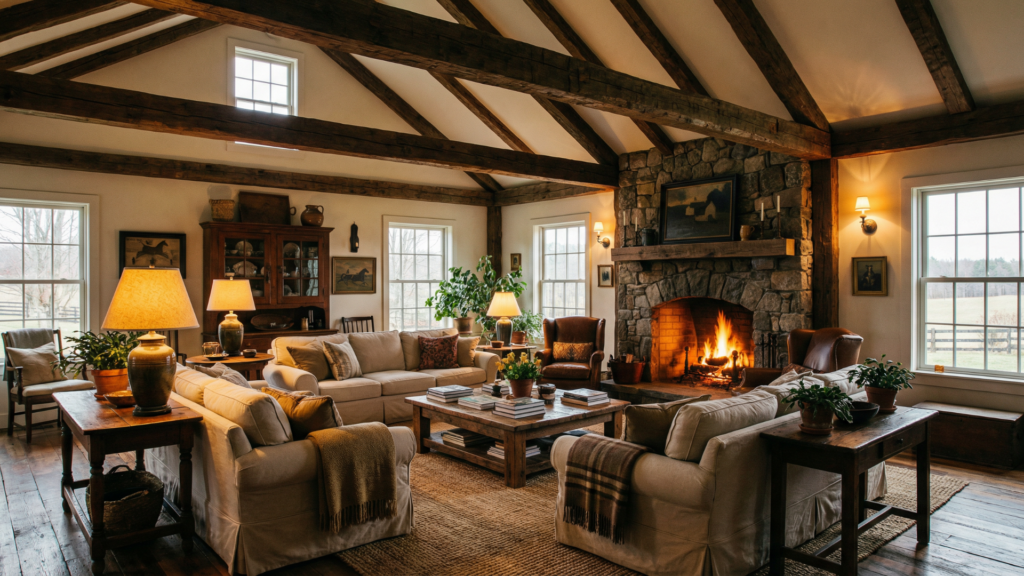
Exposed beams emphasize the natural slope of a cathedral ceiling. They highlight symmetry and draw attention to the central ridge.
Best for:
- Farmhouse interiors
- Rustic cabins
- Craftsman-style homes
- Transitional spaces
Wood beams add warmth and contrast, especially against white ceilings. Dark-stained beams create a bold statement, while light oak or pine keeps the look softer and more modern.
For a cleaner approach, faux beams can provide visual depth without structural modification.
Tongue-and-Groove Wood Panels
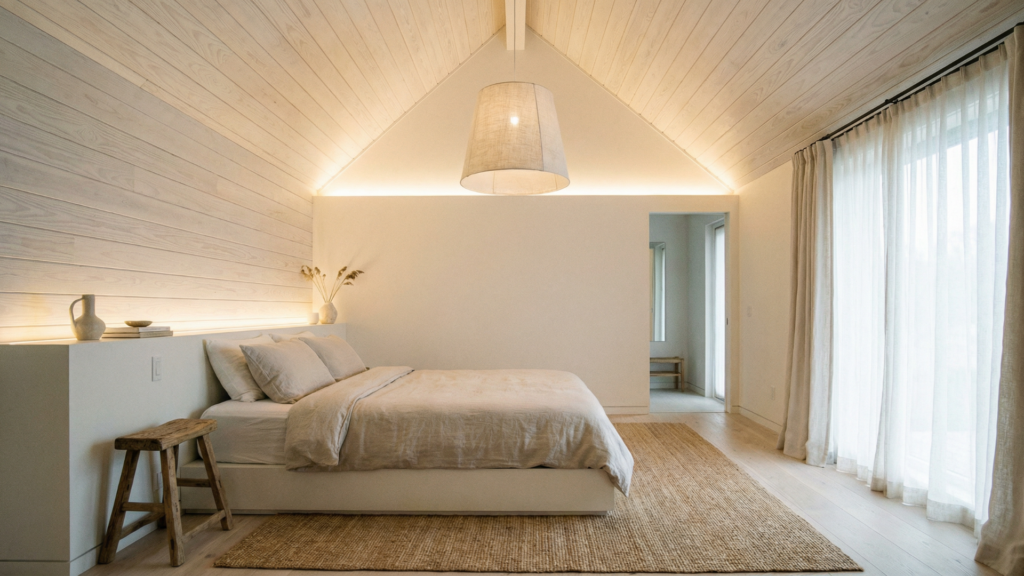
Wood paneling along the ceiling slope adds texture and visual interest. Unlike flat drywall, tongue-and-groove boards create subtle lines that guide the eye upward.
Design impact:
- Makes tall ceilings feel intentional rather than empty
- Adds warmth in large open spaces
- Enhances acoustic performance slightly
Whitewashed wood maintains brightness. Natural finishes create a cozy, lodge-inspired atmosphere. This approach works especially well in living rooms and bedrooms.
Painted Ceilings for Height Control
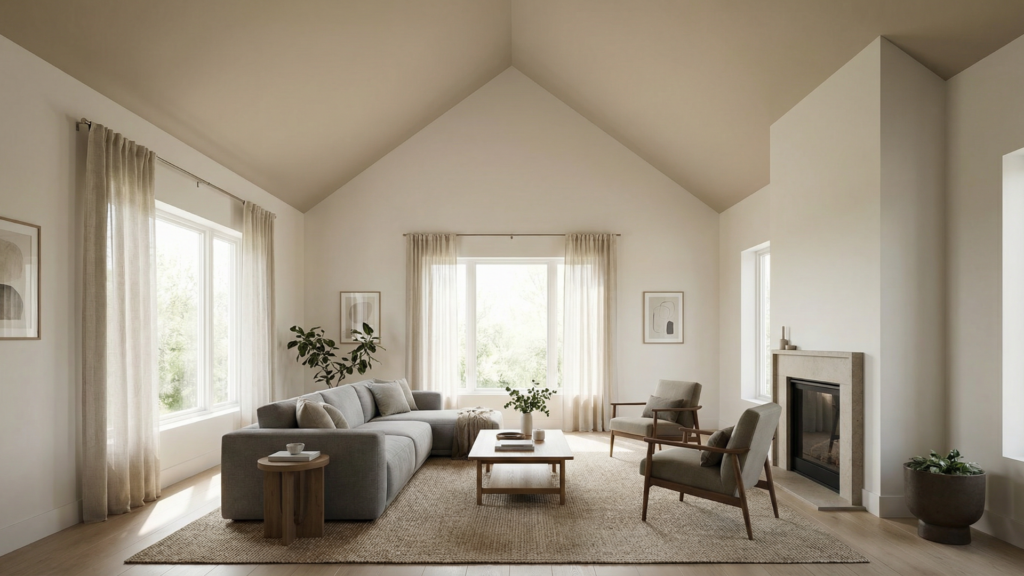
Color plays a major role in how a cathedral ceiling feels.
- Bright white: Reflects light, making the room feel larger.
- Soft neutral tones: Reduce glare and create warmth.
- Darker shades: Lower the visual height and add drama.
In very tall rooms, painting the ceiling a slightly darker tone than the walls can make the space feel more grounded. This technique helps prevent the room from feeling cavernous.
Statement Chandeliers at the Peak
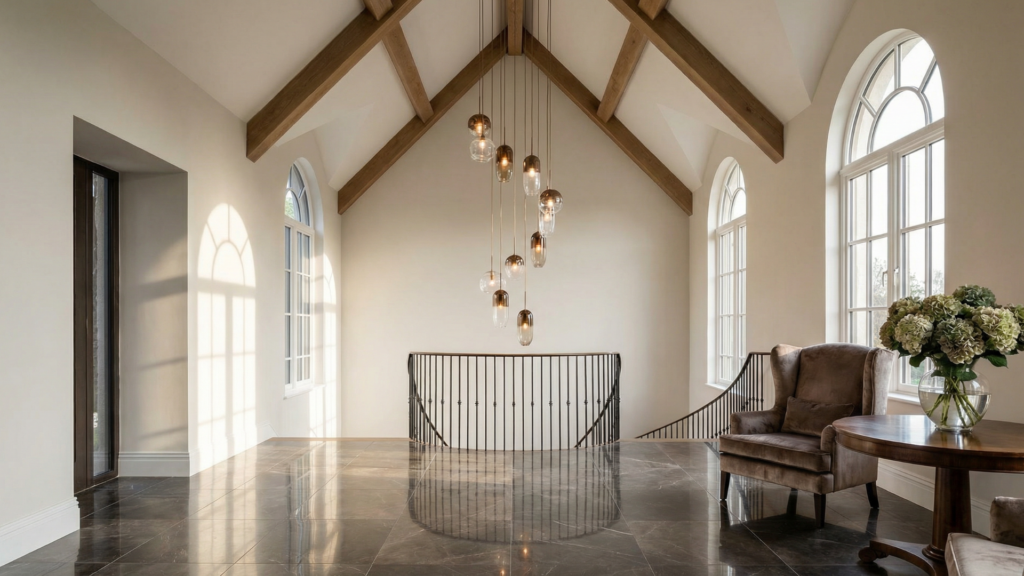
A cathedral ceiling creates a natural focal point at the ridge. Installing a large chandelier or pendant fixture emphasizes that vertical line.
Fixture considerations:
- Proper drop length
- Scale appropriate to ceiling height
- Easy maintenance access
Oversized lighting works well in entryways and great rooms. In bedrooms, a more subtle hanging fixture maintains elegance without overpowering the space.
Layered lighting is still important. Recessed lights along the slopes can prevent shadows from forming.
Floor-to-Ceiling Windows
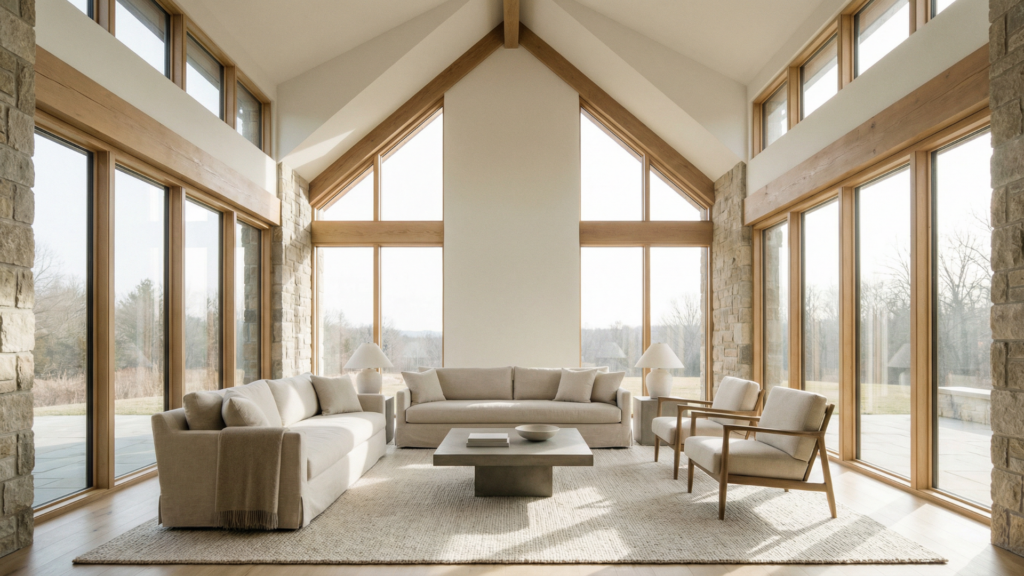
One of the strongest advantages of cathedral ceilings is the opportunity to place tall windows. Vertical windows that follow the roof pitch amplify natural light and highlight height.
Benefits:
- Increases daylight exposure
- Enhances outdoor views
- Strengthens architectural symmetry
Clerestory windows placed near the peak allow additional light without sacrificing wall space for furniture.
However, window placement must consider energy efficiency and sun orientation to prevent overheating.
Accent Walls That Balance Height
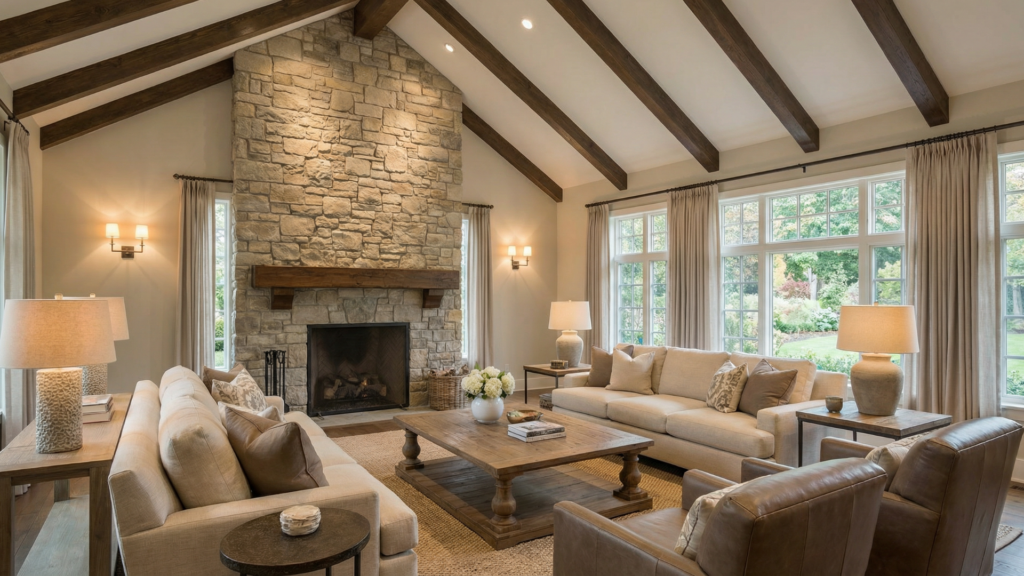
In rooms with cathedral ceilings, one tall wall often becomes the visual anchor. Designing this wall carefully prevents the space from feeling empty.
Popular accent options:
- Stone fireplace walls
- Vertical shiplap
- Textured plaster finishes
- Built-in shelving units
A floor-to-ceiling fireplace complements the peak of a cathedral ceiling and creates strong vertical alignment. Without a visual anchor, tall walls can feel unfinished.
Exposed Rafters for a Modern Edge
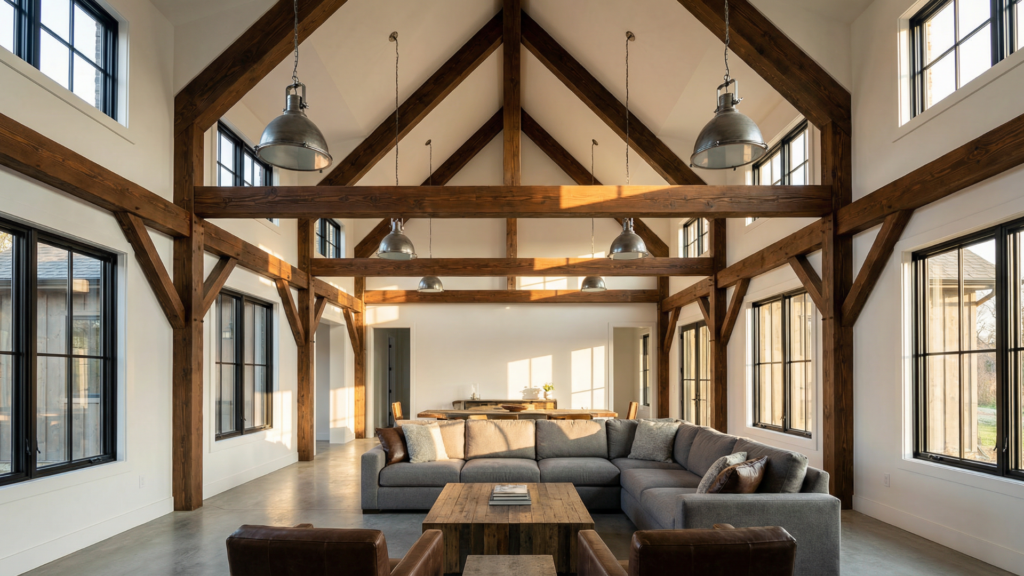
Leaving structural rafters visible adds depth and architectural honesty. This approach works particularly well in contemporary or industrial homes.
Exposed rafters:
- Break up large blank ceiling surfaces
- Add repeating patterns
- Provide subtle shadow lines
Painted rafters create contrast, while natural wood rafters emphasize craftsmanship.
Integrated Skylights
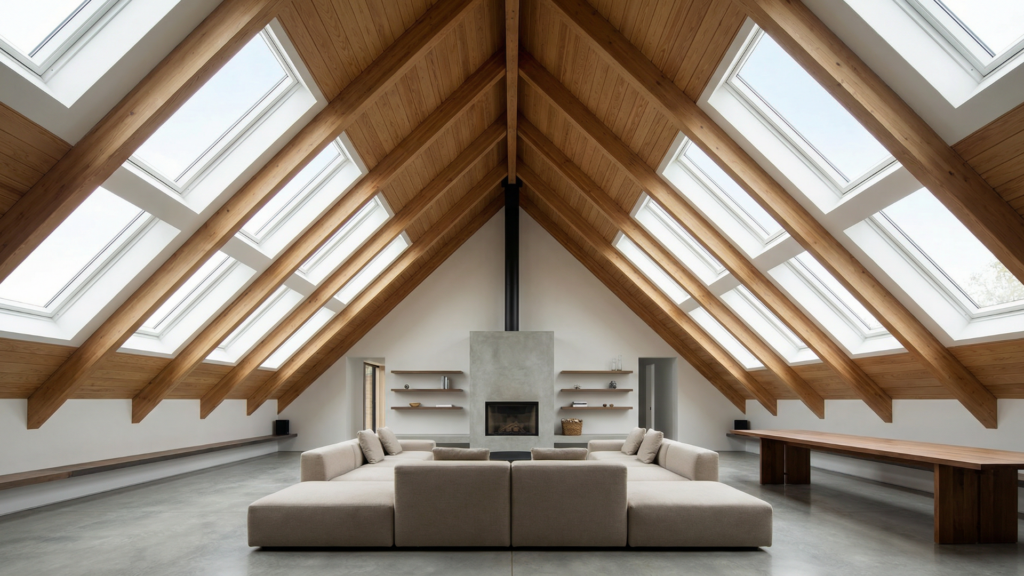
Skylights installed along the sloped sections of a cathedral ceiling enhance natural light without altering symmetry.
Advantages:
- Improves brightness in darker rooms
- Adds sky views
- Reduces daytime lighting needs
Proper flashing and insulation are essential to prevent leaks and heat loss. Placement should align evenly on both slopes to maintain symmetry.
Ceiling Fans for Function and Scale
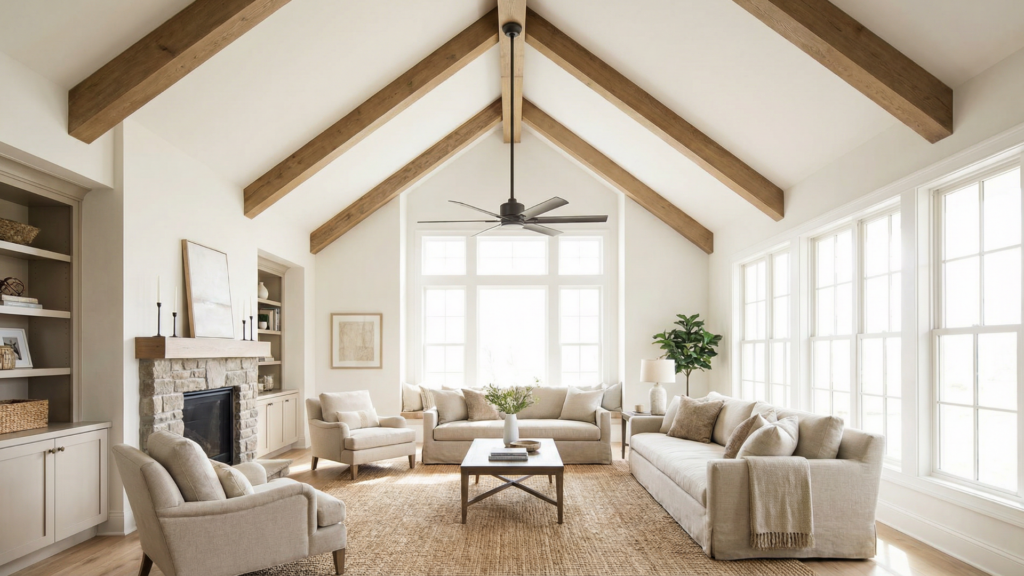
Because cathedral ceilings increase air volume, ceiling fans serve both design and performance purposes.
Design considerations:
- Longer downrods for proper airflow
- Blade span proportional to room width
- Center alignment along the ridge
A well-sized fan prevents hot air from collecting at the peak and improves comfort year-round.
Trim and Beam Contrast
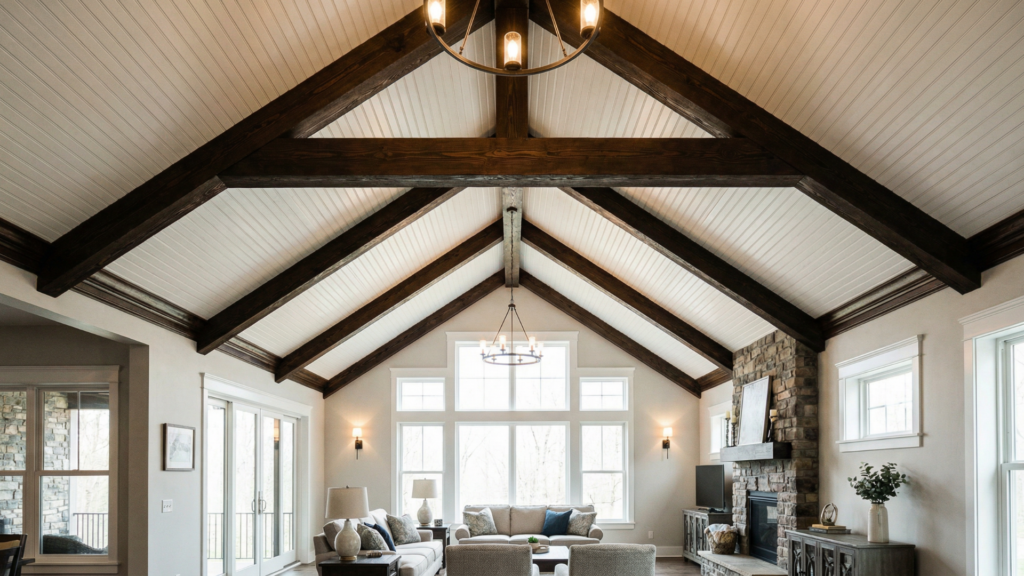
Adding trim along the ceiling edges or highlighting the ridge beam creates definition.
Contrast techniques include:
- Dark beams against white panels
- Painted trim outlining slopes
- Decorative ridge caps
These details give the cathedral ceiling a finished and intentional look.
Balanced Furniture Placement
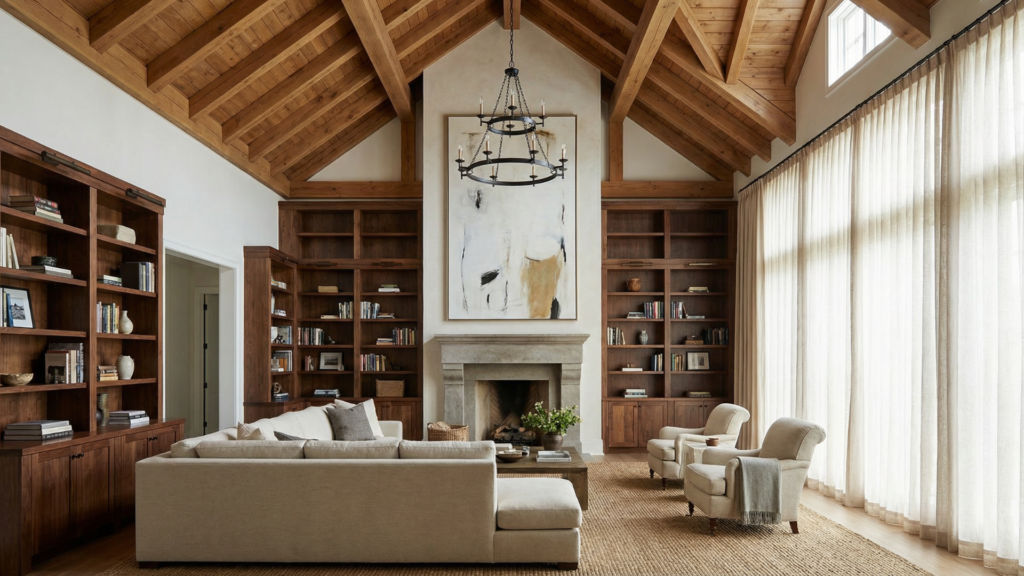
Designing under a cathedral ceiling requires attention to scale. Small furniture can feel lost in tall rooms.
Helpful strategies:
- Use taller bookcases
- Install a large artwork
- Incorporate substantial light fixtures
- Add vertical curtains that reach the ceiling peak
These choices visually connect the floor to the ridge line and maintain proportion.
Wrapping Up
High ceilings shape the character of a room long before furniture or décor is added. The choice between a cathedral and a vaulted ceiling should support the home’s structure, proportions, and long-term comfort.
Height alone does not guarantee impact; balance, insulation, and lighting determine how the space truly performs.
A well-planned ceiling enhances natural light, strengthens architectural lines, and improves overall flow.
Take time to evaluate your layout and goals, then work with a qualified professional to design a ceiling that adds lasting value to your home.