

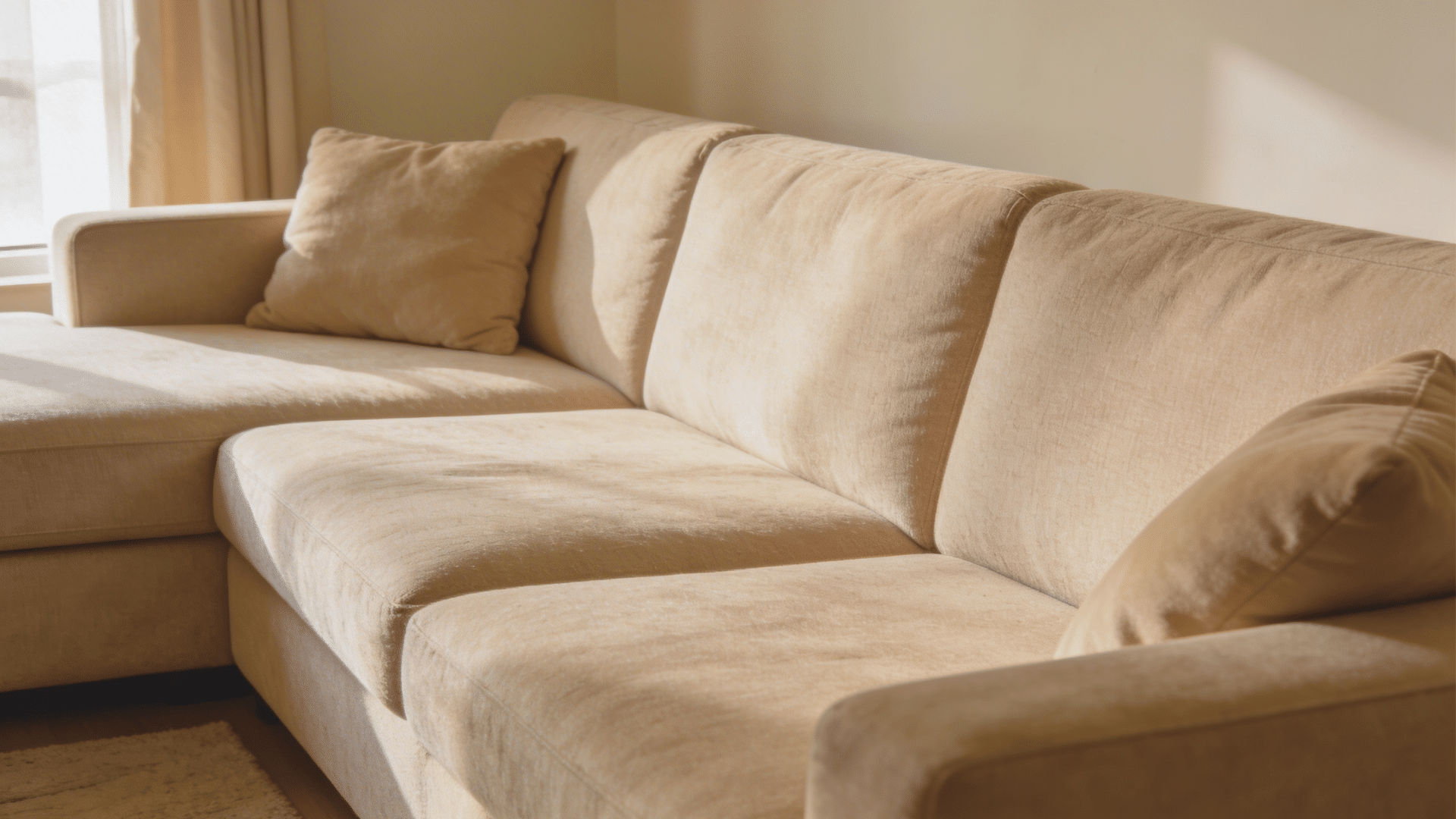
Picking the right couch size can feel confusing, especially when trying to make it fit well in your room.
Many people guess the size and later realize the sofa feels too big or too small for the space. If you’re wondering how long a couch is for standard room layouts, this guide will help clarify things.
In this article, you’ll learn the standard couch length, along with depth and height measurements that affect comfort and fit.
It also covers different couch types, room-based size ideas, and simple ways to measure your space.
By the end, you’ll have a clear understanding of what couch size works best for your room.
This will help you choose a sofa that looks balanced, feels comfortable, and fits your layout without any guesswork.
How Long Is a Standard Couch?
The standard length of a couch usually falls between 72 and 96 inches. This range works well for most living rooms and provides enough seating without taking up too much space.
A typical three-seater couch is often around 84 inches long, making it a common choice for standard room layouts.
However, couch length can vary based on design. Loveseats are shorter, while sectionals can extend much longer depending on their shape and setup.
Room size also plays an important role when choosing the right length. In smaller spaces, a compact couch helps keep the room open and easy to move around.
In larger rooms, a longer couch can create a more balanced and complete look.
Measuring your space before buying helps ensure the couch fits well and supports a comfortable layout.
Couch Dimensions by Type and Seating Capacity
Couch size can vary depending on its type and the number of people it seats. Understanding the differences helps you choose a sofa that fits your space and needs.
1. Loveseat (2-Seater)
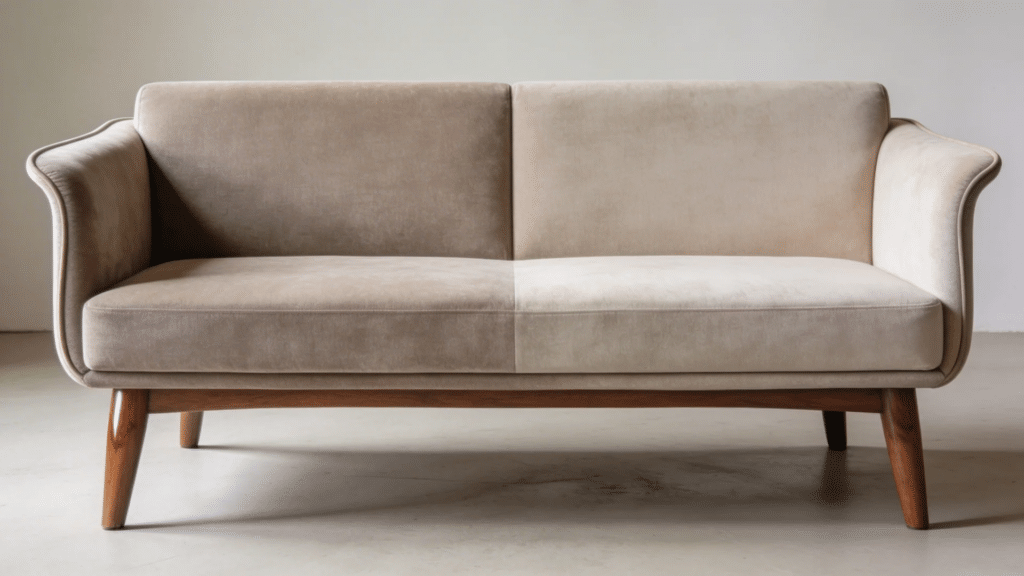
A loveseat is a compact couch designed for two people.
It usually ranges from 48 to 72 inches in length, making it a great option for small rooms or apartments.
This type works well in tight spaces where a full-size sofa may feel too large. It can also be paired with a larger couch in bigger rooms to create extra seating.
Loveseats are ideal for cozy setups and simple layouts where space needs to stay open and easy to move around.
2. Standard Sofa (3-Seater)
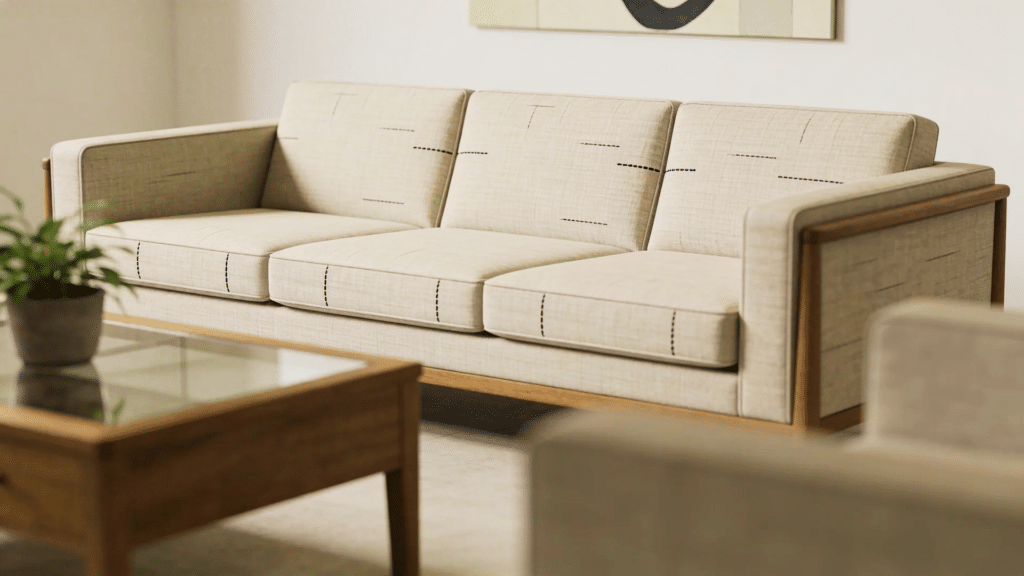
A standard sofa is one of the most common types of couches found in homes.
It typically measures 72 to 90 inches long and comfortably seats three people. This size works well in most living rooms and offers a good balance between space and seating.
It is a popular choice for families and everyday use.
A standard sofa fits well in medium-sized rooms and can be styled easily with other furniture pieces.
3. Large Sofa (4-Seater)
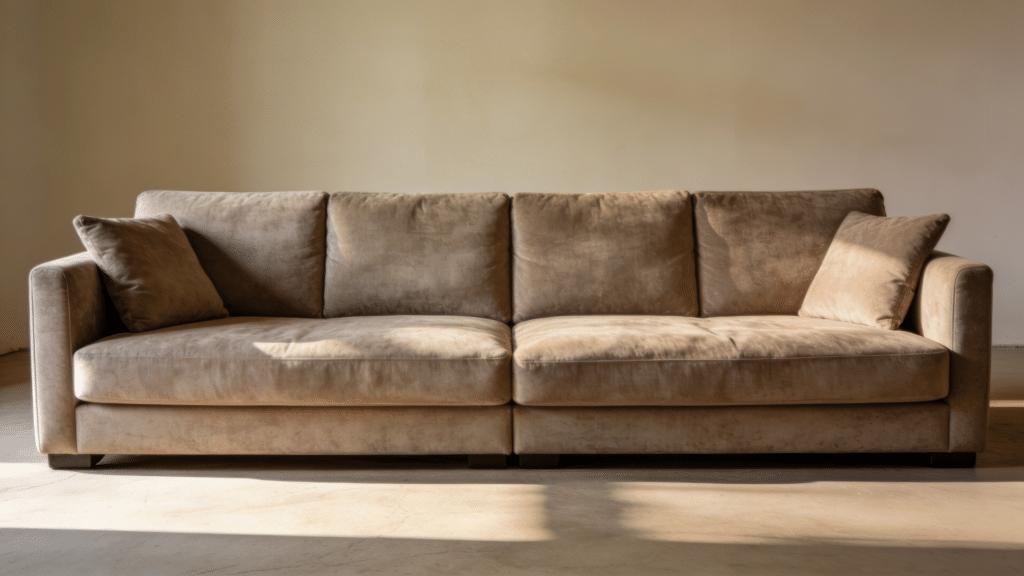
A large sofa provides more seating and usually measures 88 to 110 inches long.
It can seat four to five people, making it suitable for bigger families or larger living spaces.
This type of couch helps fill wide areas and creates a more complete look in spacious rooms. It works best when there is enough floor space to avoid crowding.
Large sofas are often used in family rooms where comfort and seating capacity are important.
4. Sectional Couch

A sectional couch is designed in multiple pieces and can vary widely in size, often ranging from 75 inches to 115 inches or more.
It usually seats four to six people and is ideal for open layouts or large living rooms. Sectionals are great for creating a defined seating area and can be arranged in different shapes, such as L or U.
This flexibility makes them a practical choice for homes that need both comfort and space efficiency.
5. Apartment Sofa

An apartment sofa is slightly smaller than a standard sofa, typically measuring 60 to 80 inches in length.
It seats two to three people and is designed for compact living spaces.
This type works well in apartments, studios, or smaller rooms where space is limited. It offers enough seating without making the room feel crowded.
Apartment sofas are a smart choice for keeping the layout simple, functional, and easy to manage.
How Deep and Tall Is a Standard Couch?
Couch depth and height matter as much as length. They affect comfort and how well the couch fits your space.
A typical couch depth ranges from 30 to 40 inches. This includes the seat and back, giving enough room to sit comfortably without taking up too much floor space.
Deeper couches feel more relaxed, while shallower ones are better for smaller rooms.
The height of a standard couch usually falls between 30 and 36 inches. This includes the backrest and can change based on design style.
Lower couches create a modern look, while taller ones offer more back support.
Choosing the right depth and height helps balance comfort, style, and space in your room layout.
How to Pick the Right Couch Size for Your Space?
Choosing the right couch size depends on your room layout and available space. Measuring your area first helps ensure the couch fits well and keeps the room comfortable and easy to move around.
- Measure your room first: Check wall length, floor space, and entryways before buying. This helps the couch fit well without blocking movement.
- Think about daily use: A smaller couch suits quiet spaces or fewer people. Larger couches work better for families or frequent guests.
- Match the couch to the room size: Shorter couches keep small rooms open and neat. Longer couches help fill larger rooms and create balance.
- Plan a walking space: Leave about 18–24 inches around the couch. This keeps the room easy to move through and comfortable.
- Check layout and placement: Place the couch where it fits naturally with other furniture. This improves both function and overall look.
Average Couch Sizes for Different Room Layouts
Couch sizes can vary based on room layout and available space. Choosing the right size helps create a balanced and comfortable living area.
| Room Type | Couch Length | Seating Capacity | Best Fit For |
| Small Room | 60–72 inches | 2–3 people | Apartments, tight spaces |
| Medium Room | 72–90 inches | 3–4 people | Standard living rooms |
| Large Room | 90–110 inches | 4–5 people | Spacious homes |
| Studio Apartment | 50–70 inches | 2 people | Compact layouts |
| Open Layout | 90+ inches | 4+ people | Sectionals, open floor plans |
| Family Room | 85–110 inches | 4–6 people | Daily use, larger households |
| Guest Room | 60–80 inches | 2–3 people | Occasional seating |
Measuring Your Space Before Buying a Couch
Before buying a couch, it’s important to understand how much space is available. Proper measurements help avoid sizing issues and ensure a better fit in the room.
- Measure the main wall: Check the length of the wall where the couch will go. This helps you choose a couch that fits well without making the space feel crowded.
- Check room size: Measure the width and depth of your room. This ensures the couch fits nicely and leaves enough space for movement and other furniture.
- Leave walking space: Keep about 18–24 inches around the couch. This allows people to move around easily without bumping into furniture.
- Measure doorways: Check doors and hallways before buying. This makes sure the couch can be moved inside without any problems.
- Plan with other furniture: Look at tables and chairs in the room. This helps create a balanced layout where everything fits comfortably together.
How Couch Shape Impacts Length and Space?
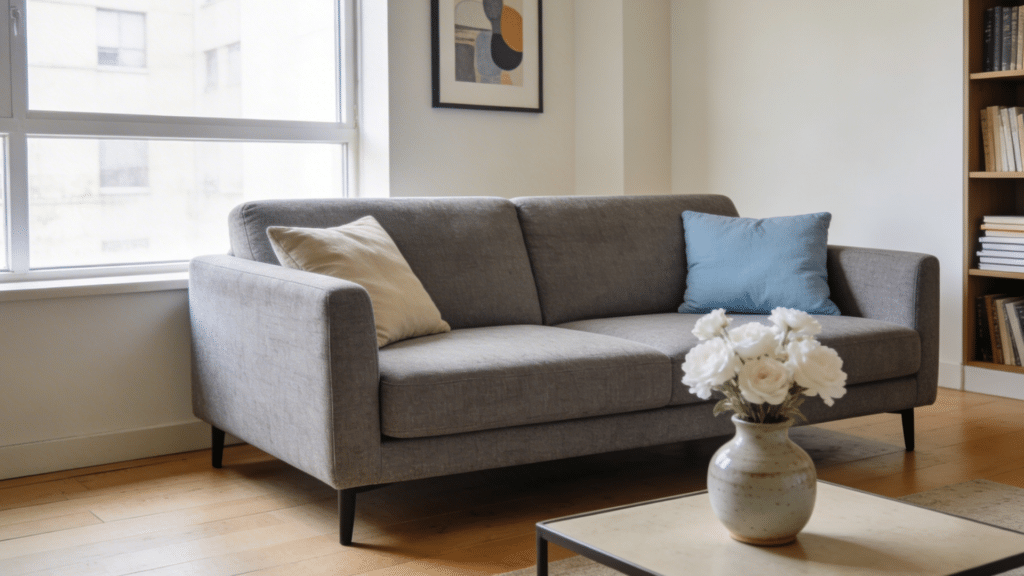
Couch shape plays a big role in how much space it takes up and how long it feels in a room. A straight sofa usually has a simple length, making it easy to measure and place against a wall.
In contrast, L-shaped or U-shaped sectionals spread across more space and can feel much larger even if each section is not very long.
Different shapes also change how a room flows. A sectional can define a seating area in open layouts, while a straight couch keeps things clean and simple.
Curved or modular couches add flexibility but may need more planning.
Choosing the right shape helps balance length and space, making sure the couch fits well without making the room feel crowded or awkward.
Common Couch Size Mistakes to Avoid While Choosing One
Choosing the wrong couch size can make a room feel cramped or empty. Avoiding common mistakes helps create a space that looks balanced and works well for daily use.
- Buying a couch that is too large: A big couch can take over the room and block movement. It can make even a decent space feel tight and uncomfortable.
- Choosing a couch that is too small: A small couch may look out of place in a larger room. It can make the space feel empty and less inviting.
- Ignoring walking space: Not leaving enough space around the couch can affect movement. This makes the room feel crowded and hard to use.
- Not measuring the room first: Skipping measurements often leads to a poor fit. This can cause layout issues and wasted space.
- Forgetting entryways and doors: A couch might fit the room, but not the entrance. This can create problems during delivery and setup.
Conclusion
Choosing the right couch size is not just about numbers; it’s about how your space feels every day.
The right length, depth, and shape can make your room feel open, comfortable, and easy to use.
When everything fits well, your couch becomes a place where you can relax, spend time with others, and enjoy your home more.
Before you decide, take a moment to measure your space and think about how you use your room. A little planning can help you avoid common mistakes and find a couch that truly works for you.
Now it’s your turn, tell what couch size worked best for your space?
Share your experience or questions in the comments below. Your input might help someone else make the right choice!