

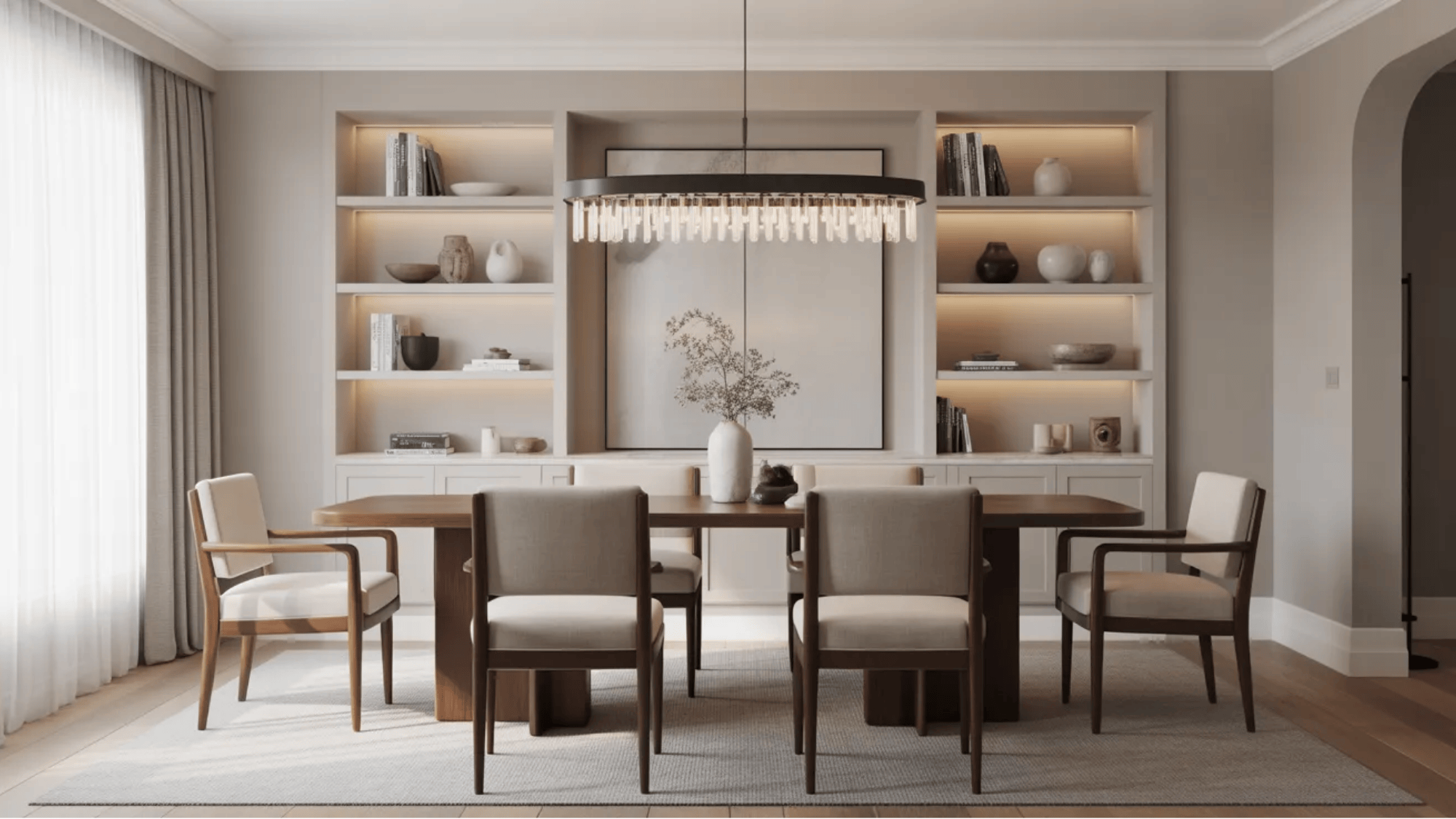
Some rooms feel off, too cold or too heavy. Getting the balance right isn’t easy. At RISD, we called it “design without dogma”, the ability to borrow intelligently from different periods without letting either one dominate.
In practice, the dining room is where this principle gets tested most often, because it has to serve both daily function and occasional formality.
You love the clean lines of modern furniture, but you also don’t want to give up the warmth of classic wood and soft textures.
That pull between two styles is exactly what transitional design solves. It blends traditional warmth with modern simplicity in a way that feels natural and balanced.
In this blog, I’ll share some practical transitional dining room ideas that bring the best of both styles together.
From furniture and color palettes to lighting and decor, you’ll find ideas you can actually use.
What Is a Transitional Dining Room?
A transitional dining room is a mix of modern and traditional styles. It keeps things balanced so the space does not feel too plain or too heavy.
Clean lines from modern design are paired with warm details from classic pieces.
You might see a simple table with soft fabric chairs, or a neutral color scheme with a few rich textures.
The goal is to make the room feel comfortable and easy to use every day. This style often uses calm colors like beige, gray, or soft brown, along with wood, metal, or glass.
Balanced design is the key idea here. Nothing stands out too much, and nothing feels out of place.
It works well for people who like both old and new looks but want a smooth mix. The result is a dining room that feels relaxed, neat, and inviting without trying too hard.
| Design Quality | Traditional | Modern | Transitional |
|---|---|---|---|
| Lines | Curved, ornate | Sharp, geometric | Clean with subtle curves |
| Materials | Rich wood, carved detail | Metal, glass, lacquer | Wood + metal, no heavy carving |
| Color palette | Deep, saturated tones | Monochrome, stark contrast | Warm neutrals with muted accents |
| Furniture silhouette | Heavy, substantial | Low-profile, minimal | Medium weight, tailored |
| Decor | Layered, ornamental | Sparse, functional | Purposeful, edited |
| Best for | Formal, classic homes | Urban lofts, contemporary builds | Most housing types and lifestyles |
Popular Transitional Room Ideas
Popular transitional room ideas blend classic comfort with clean, modern style. They focus on balanced colors, simple furniture, and a calm, clean look.
1. Mix Wood and Metal Furniture
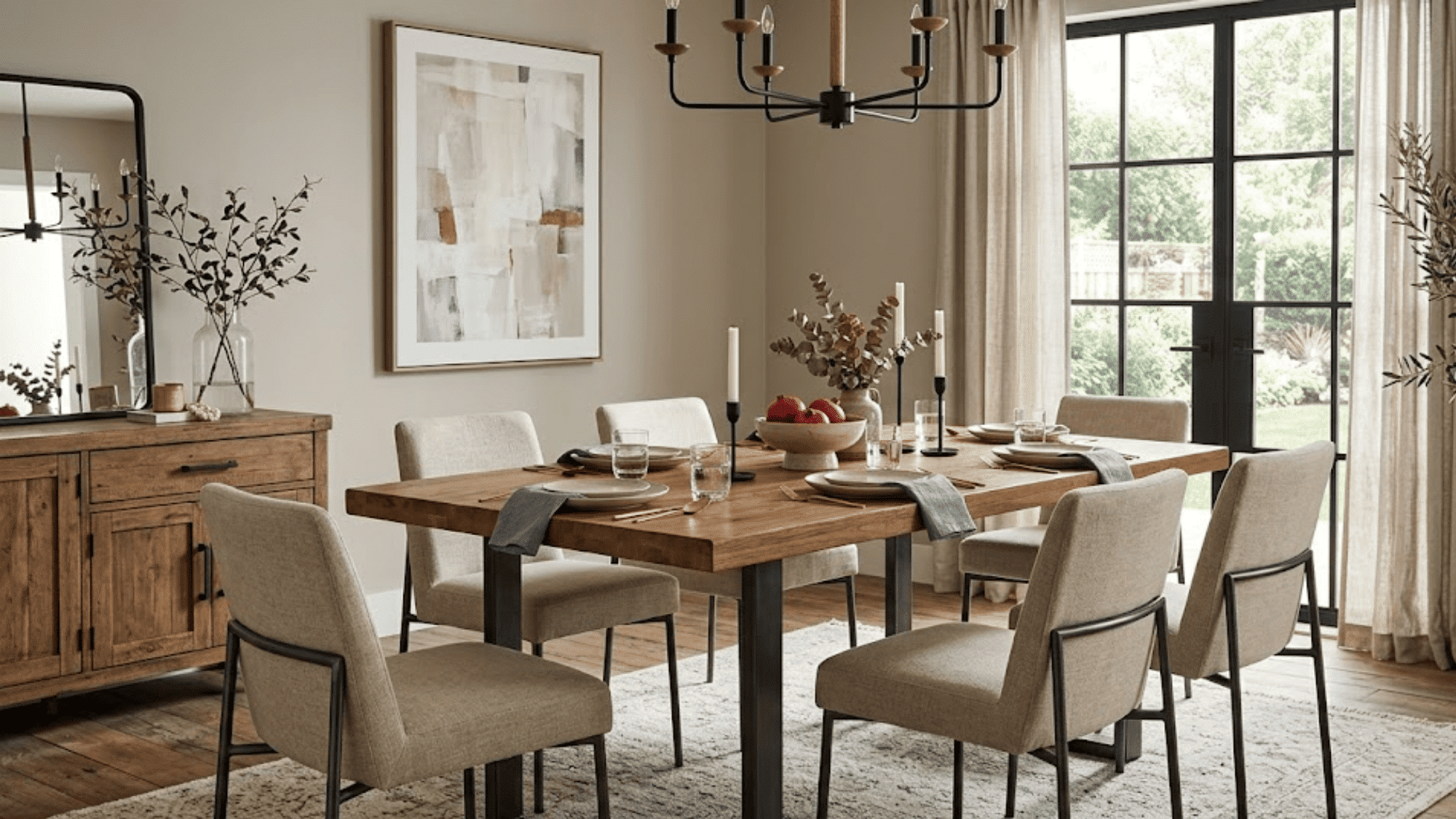
Wood and metal work well together in a transitional dining room. A solid-wood table with metal legs gives you a good mix of warm and cool.
It feels modern without being too minimal. Adding upholstered chairs in a neutral fabric softens the look further. This combination works in almost any dining space.
It’s an easy way to give a room a balanced feel without big changes or extra cost. Even small updates can help create a calm and stylish space.
From my experience, I’ve seen that wood tone matters just as much as how pieces are paired.
Medium-tone woods like oak and walnut work well with matte black metal. Lighter pine can feel too casual, while very dark woods like mahogany can feel too heavy once metal is added.
Benefits:
- Balances warmth and structure without a full room overhaul
- Works with most existing furniture and color schemes
- Gives a put-together, finished look at a low cost
2. Go Neutral with Your Color Palette
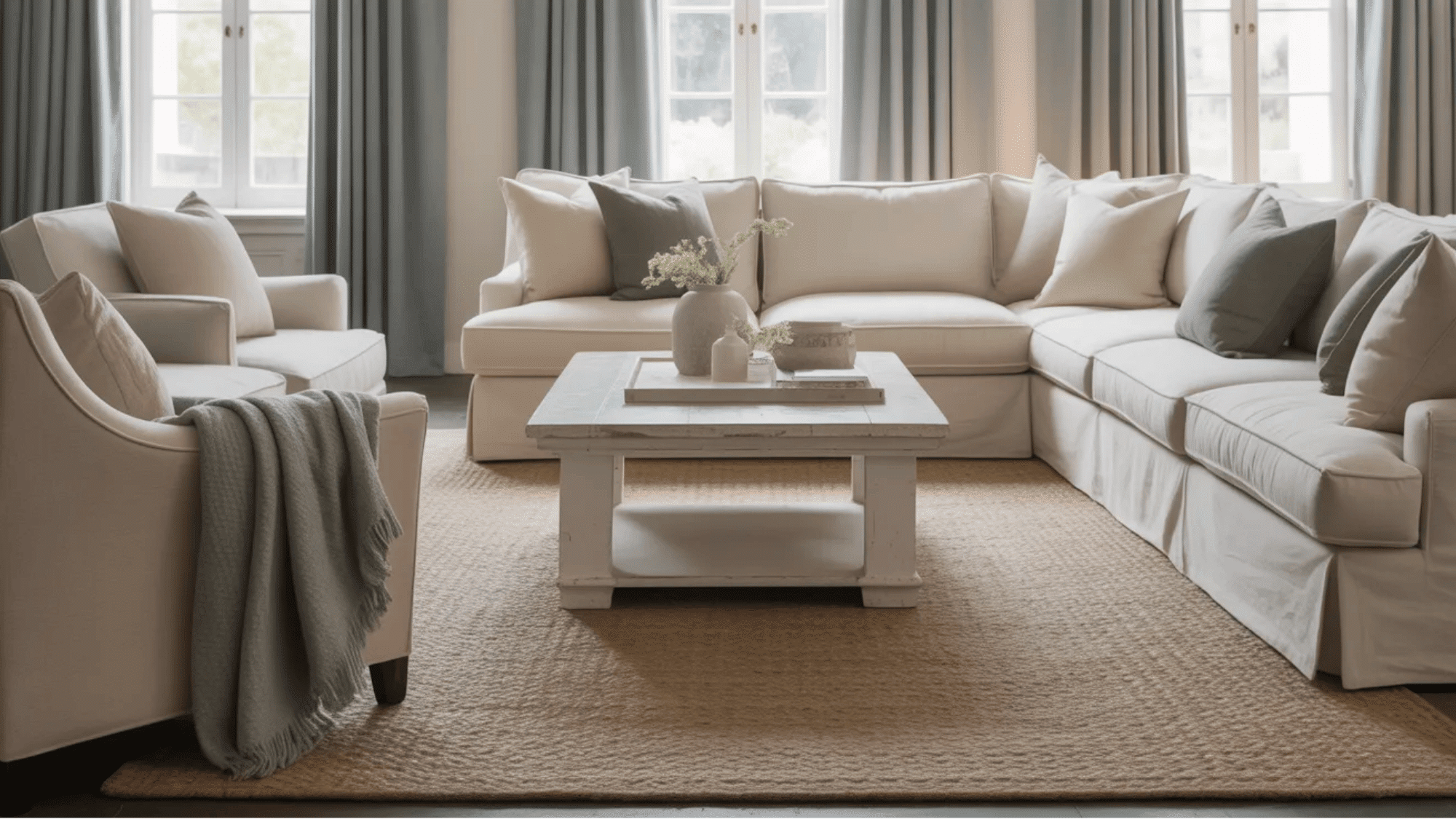
Neutral colors form the base of transitional design. Think warm whites, soft grays, and creamy beiges. These shades work well on walls, furniture, and rugs.
They make the room feel open and calm. You can layer different neutral tones to add depth without making the space feel busy.
For a little personality, add one or two accents in a muted tone like dusty blue or sage green.
Neutral doesn’t have to mean boring. For wall color specifically, I reach for Benjamin Moore’s “White Dove” (OC-17) or Sherwin-Williams “Accessible Beige” (SW 7036) when working on transitional dining rooms.
Both have enough warmth to avoid feeling sterile without competing with wood tones or fabric choices elsewhere in the space.
Benefits:
- Creates a calm, open feel that works across furniture styles
- Let’s you layer tones for depth without visual clutter
- Pairs well with muted accents like dusty blue or sage green for added personality
3. Add a Statement Light Fixture
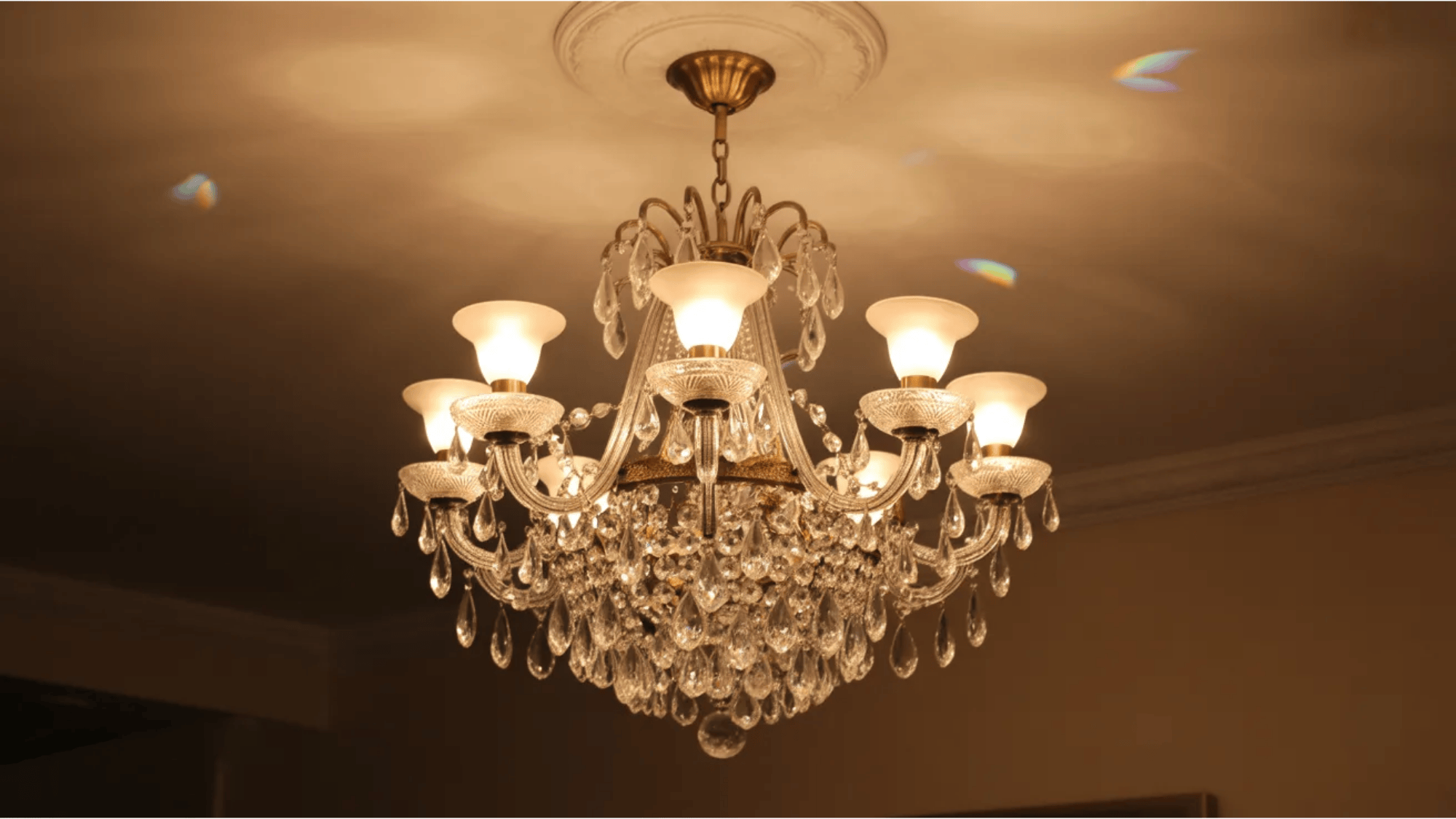
Lighting does more than brighten a room. The right fixture sets the mood. In a transitional dining room, a simple chandelier with mixed materials works well.
It gives you that classic centerpiece feel with a modern touch.
As a general rule I apply in client projects, hang the bottom of your fixture 30 to 34 inches above the tabletop for an 8-foot ceiling, and add 3 inches for every additional foot of ceiling height.
You don’t need to spend a lot to find something that looks good and fits the style of your dining room, with many affordable options available today.
Benefits:
- Sets the mood and acts as a natural focal point above the table
- Mixed-material chandeliers bridge classic and modern styles effortlessly
- Creates a warm, inviting feel without a high price tag
4. Choose Upholstered Dining Chairs
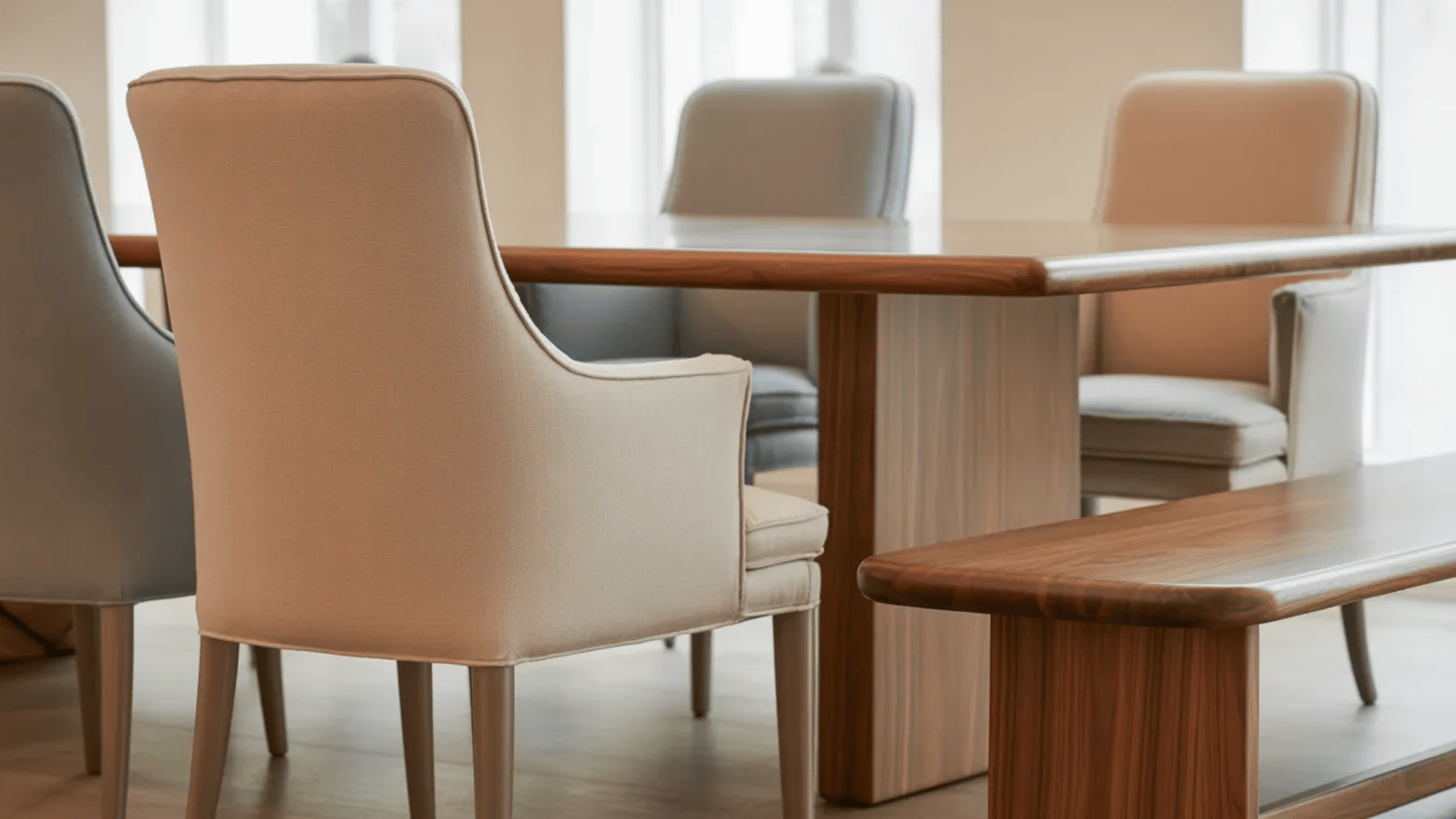
Comfort matters just as much as looks. Upholstered dining chairs bring softness into a space that might otherwise feel too hard or cold.
In a transitional room, fabric chairs with clean shapes strike the right balance. Go for neutral fabrics like linen or cotton in gray, beige, or white. They are easy to style and hold up well over time.
For a little contrast, mix upholstered chairs with a wood bench on one side of the table.
Performance fabrics, particularly those with a linen texture, are worth the investment in dining rooms.
I’ve seen many clients regret standard upholstery within the first year. Look for an abrasion rating of at least 30,000 double rubs for a dining chair that gets daily use.
Benefits:
- Adds softness and comfort to balance harder furniture materials
- Neutral fabrics like linen and cotton work with almost any color scheme
- Mixing upholstered chairs with a wood bench adds contrast without disrupting the look
5. Use a Large Area Rug
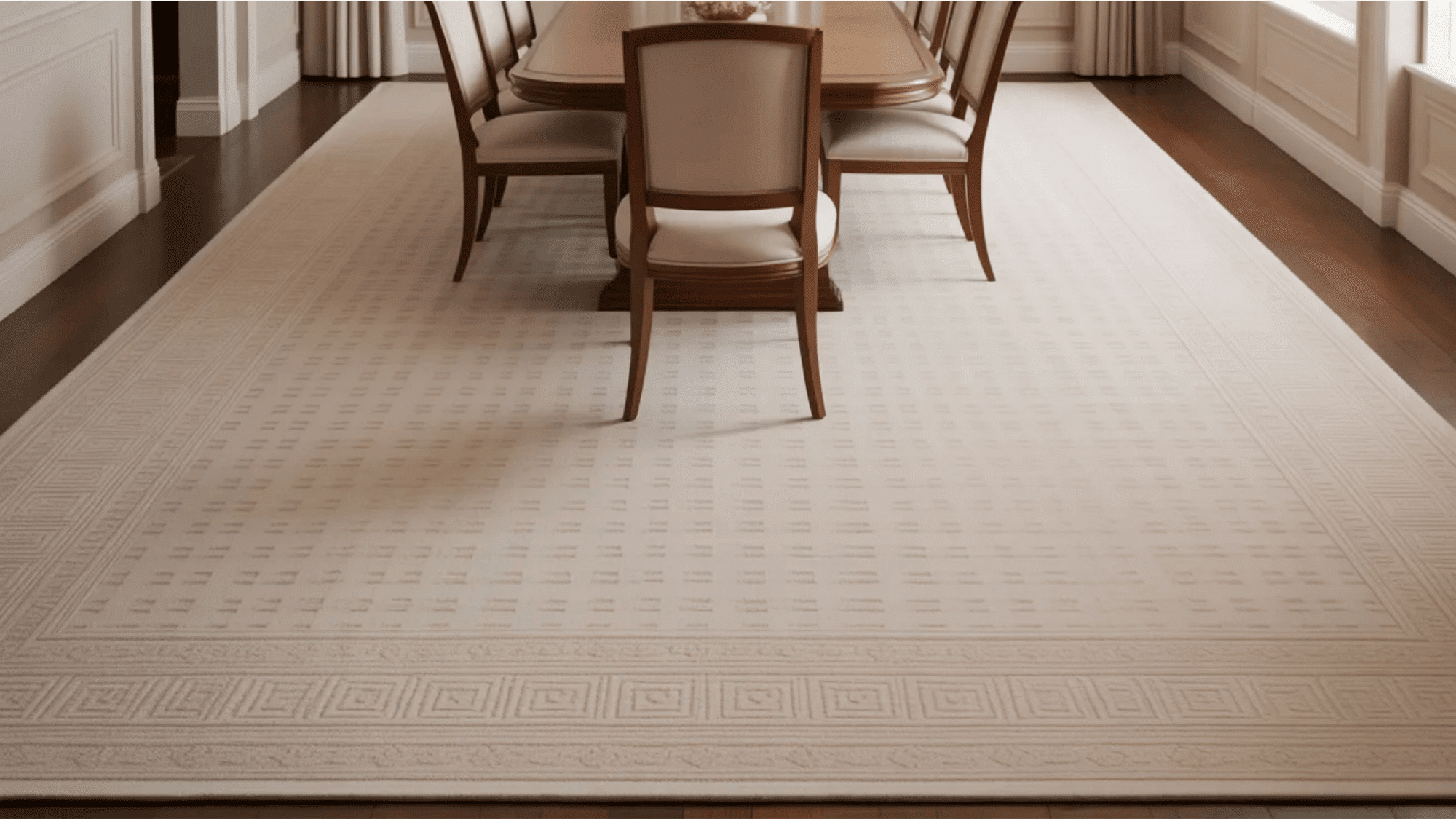
A rug can pull an entire room together. In a transitional dining room, choose a rug with a simple pattern or subtle texture. Avoid anything too ornate or too plain.
I usually suggest a low-pile rug in a neutral tone. It’s easier to clean and keep the dining room looking balanced without taking attention away from your furniture.
Make sure the rug is large enough to accommodate chairs, even when pulled out.
That detail makes the room feel more intentional and put together.
Benefits:
- Grounds the dining space and ties all furniture pieces together visually
- Low-pile neutral rugs are easy to clean and won’t clash with existing decor
- Sizing it large enough to hold pulled-out chairs makes the room feel more intentional
6. Layer Your Lighting
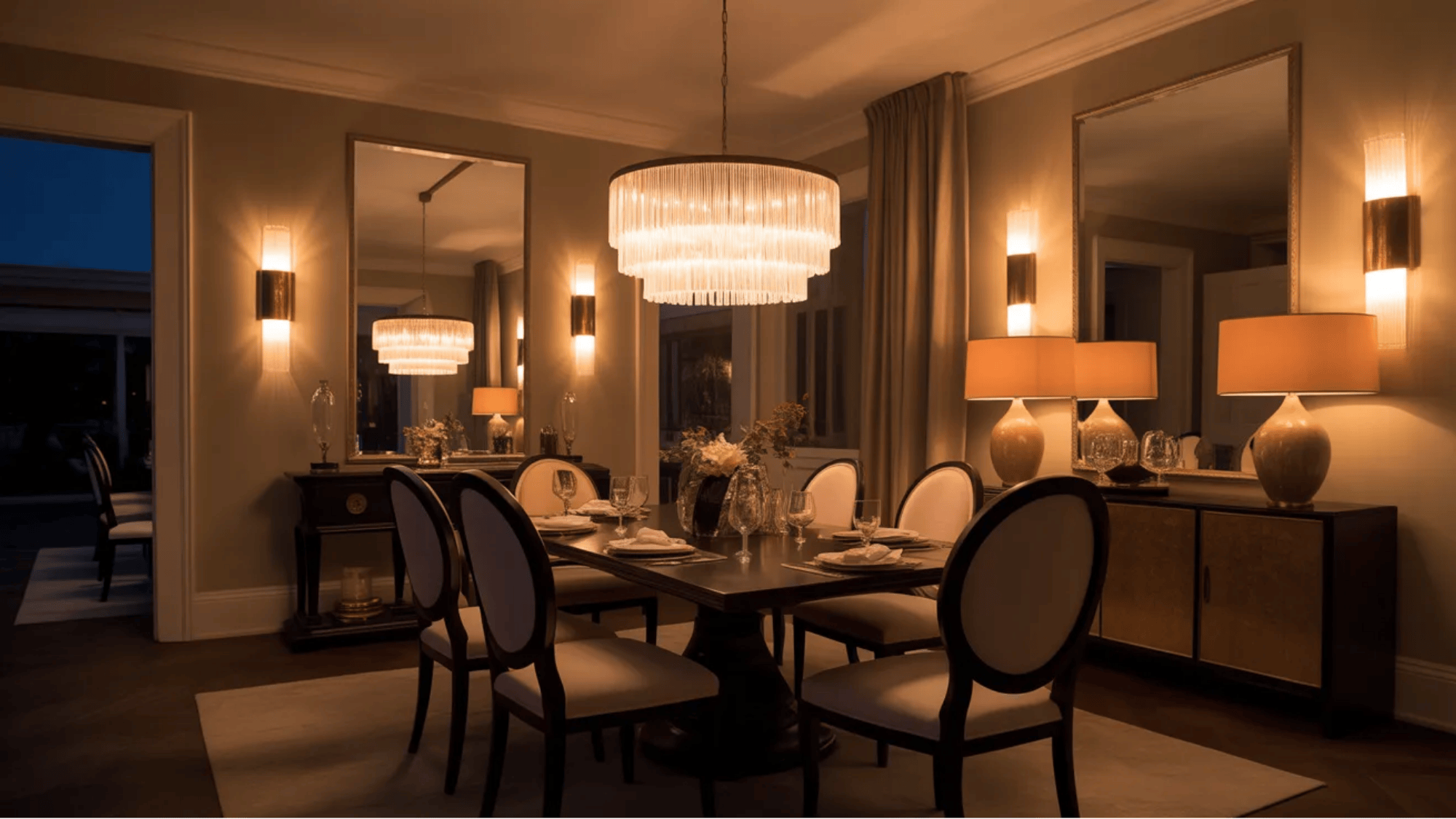
One light source is never enough. In a transitional dining room, layering your lighting makes a big difference. Start with an overhead fixture as your main light.
Then add wall sconces or a buffet lamp on a sideboard for softer, secondary light.
This creates a warm feel, especially during evening meals. Dimmers are a great addition.
They let you adjust the mood for any occasion. Good lighting doesn’t just help you see. It changes how the whole room feels.
Benefits:
- Multiple light sources add warmth and depth that a single fixture can’t achieve
- Softer secondary lighting from sconces or buffet lamps sets a relaxed evening mood
- Dimmers let you adjust the atmosphere to suit any occasion without changing a thing
7. Bring in a Wooden Sideboard
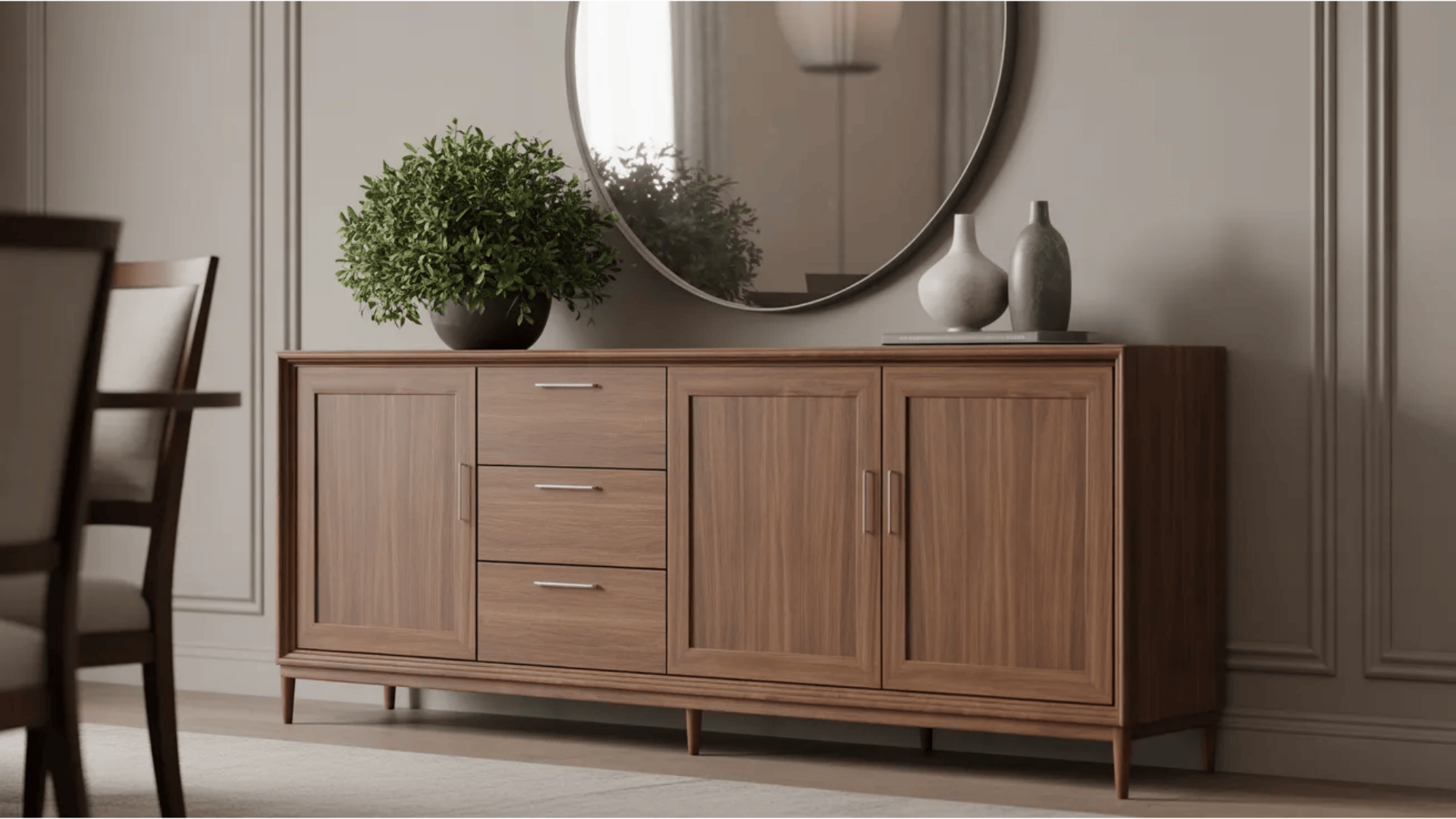
A sideboard is one of the most useful pieces you can add to a dining room. It gives you extra storage and a surface to style.
In a transitional space, go for a wooden sideboard with simple brushed-nickel or matte-black hardware. Avoid heavy carved details or anything too sleek and glossy.
Something in between works best. Top it with a mirror and a small plant to keep the space looking fresh and neat.
Benefits:
- Adds practical storage without taking up much floor space
- Simple hardware in brushed nickel or matte black bridges classic and modern styles
- A styled top with a mirror, plant, or decorative objects adds personality without clutter
8. Hang a Large Mirror
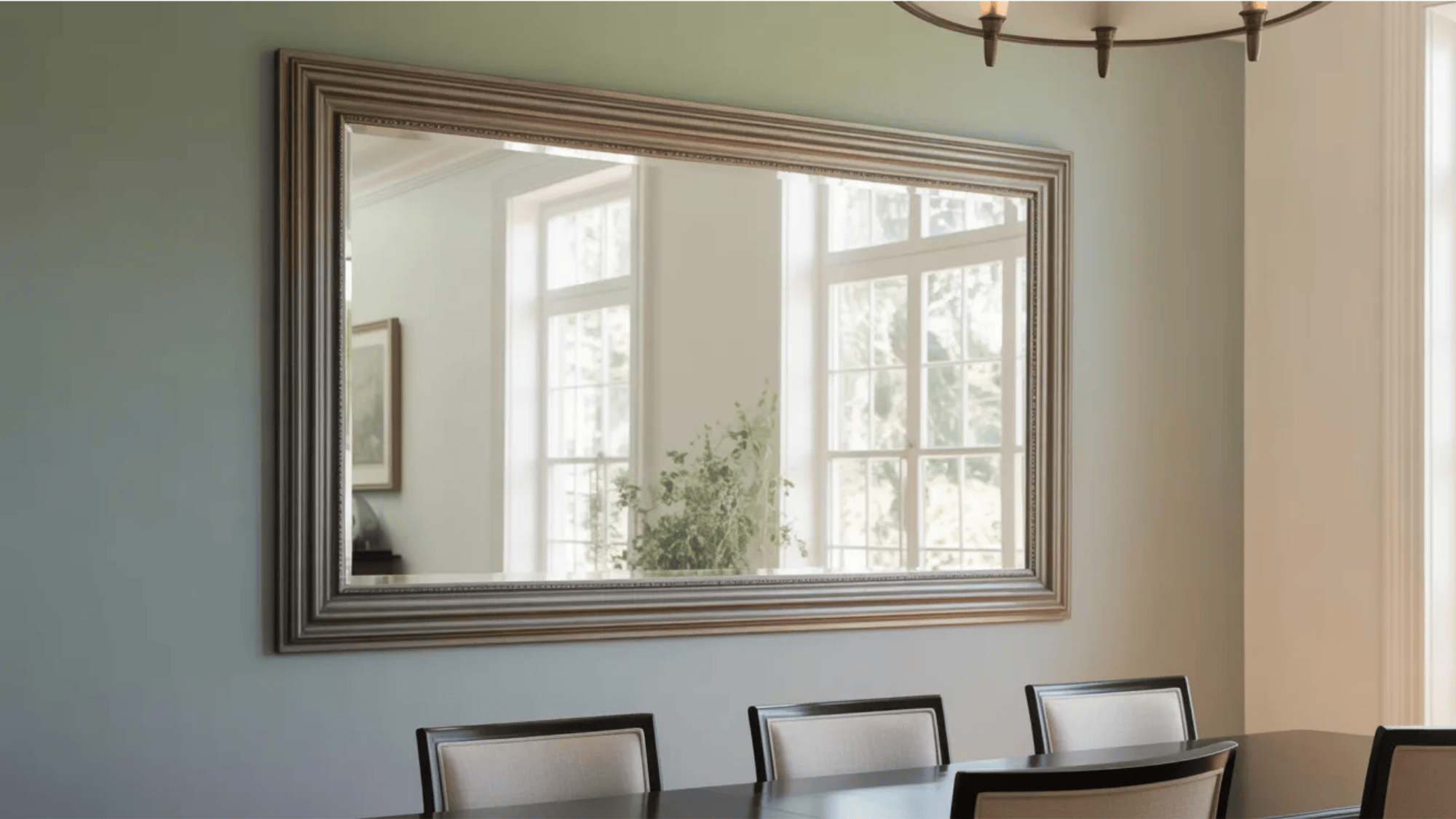
Mirrors are underrated in dining rooms. A large mirror on one wall can make the space feel bigger and brighter without any major changes.
In a transitional dining room, choose a mirror with a simple wood or metal frame.
Avoid ornate gold frames that feel too traditional or frameless designs that feel too modern.
A matte black or warm-wood finish strikes the right balance. Place it across from a window to reflect natural light into the room.
Benefits:
- Makes the room feel larger and brighter without structural changes
- A simple wood or metal frame fits the transitional style without leaning too classic or too modern
- Placing it across from a window reflects natural light and adds warmth to the space
9. Keep Window Treatments Simple
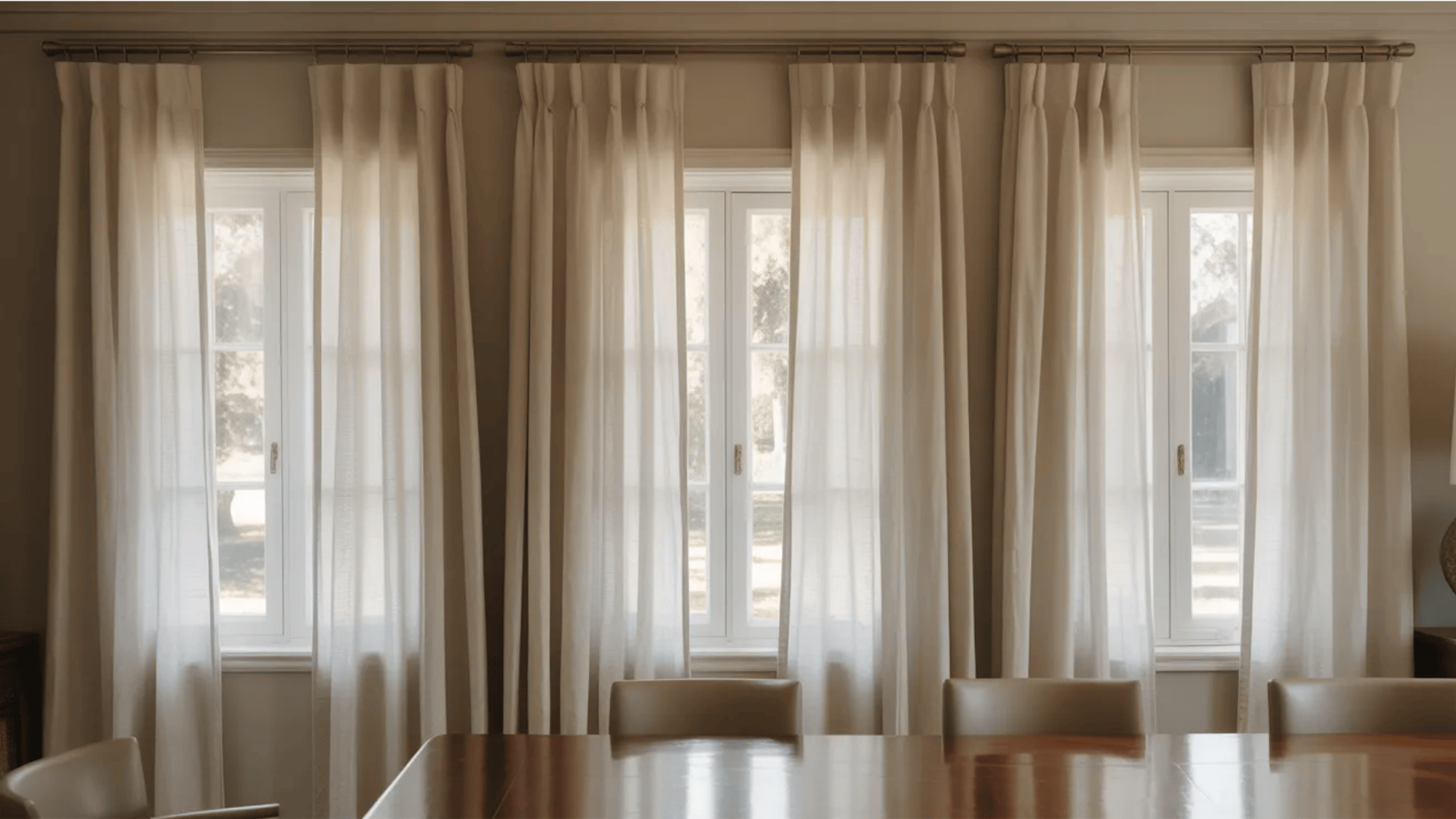
Heavy drapes can weigh a room down. In a transitional dining room, simple window treatments work best. Go for linen or cotton panels in white, ivory, or light gray.
Floor-length curtains can make the room feel instantly brighter and more put-together.
If you prefer a cleaner look, roman shades in a neutral fabric are a good option.
The goal is to frame the window without pulling attention away from the rest of the room. This helps keep the space calm, balanced, and visually comfortable.
Benefits:
- Makes the room feel larger and brighter without structural changes
- A simple wood or metal frame fits the transitional style without leaning too classic or too modern
- Placing it across from a window reflects natural light and adds warmth to the space
10. Add Greenery to the Table
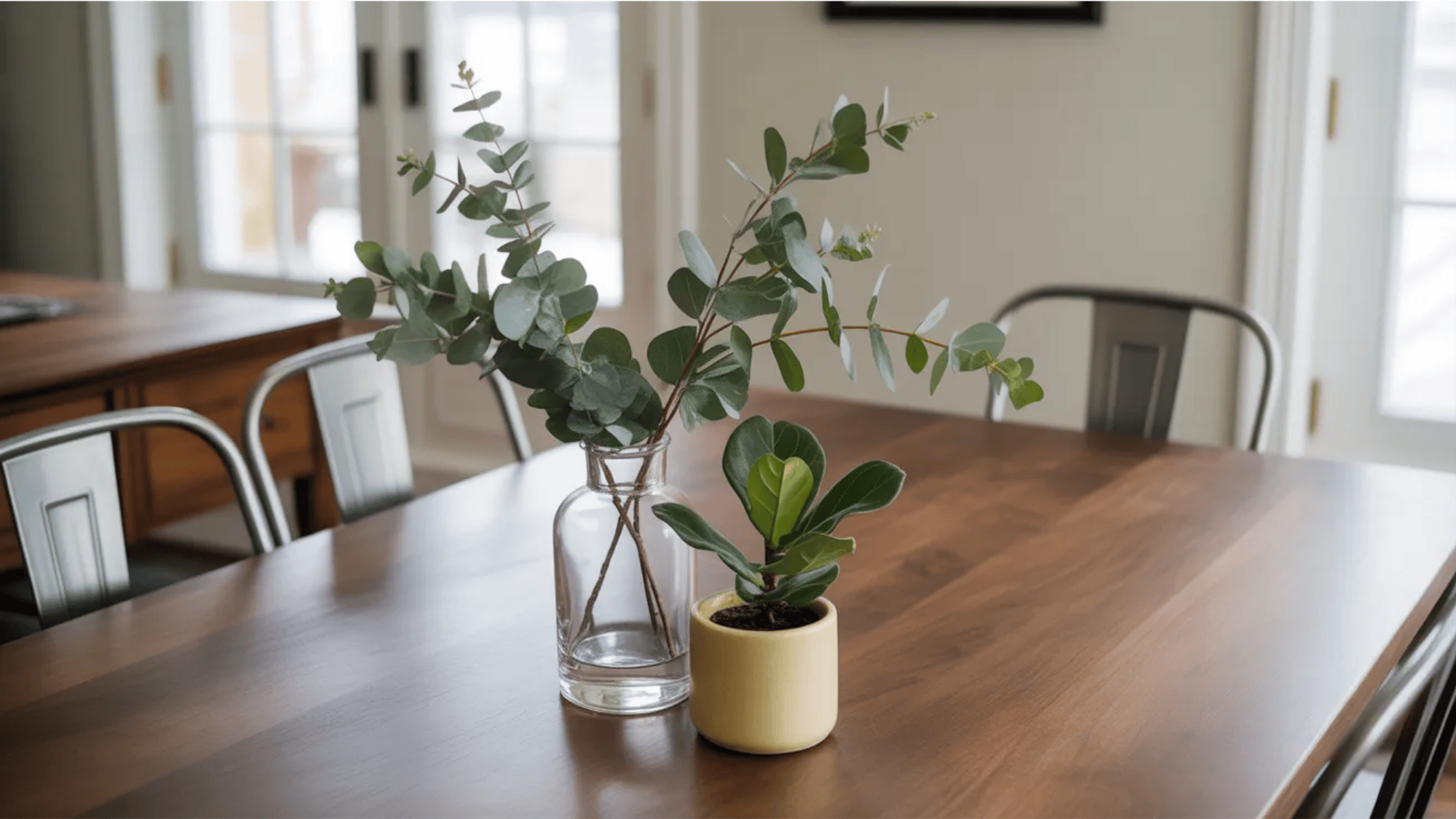
Plants make any room feel more alive. A simple centerpiece with fresh greenery or a potted plant on the dining table adds a natural touch to a transitional space. You don’t need a big floral arrangement.
A few stems in a simple vase or a small plant in a ceramic pot works just as well for everyday styling.
Greenery softens the look of harder surfaces, such as wood and metal. It also adds a little color without disrupting the neutral palette you’ve built.
Benefits:
- Light fabrics in neutral tones keep the room feeling open and airy
- Floor-length panels add a polished, finished look without overpowering the space
- Roman shades offer a clean, minimal alternative that frames the window without distraction
11. Mix Seating Styles
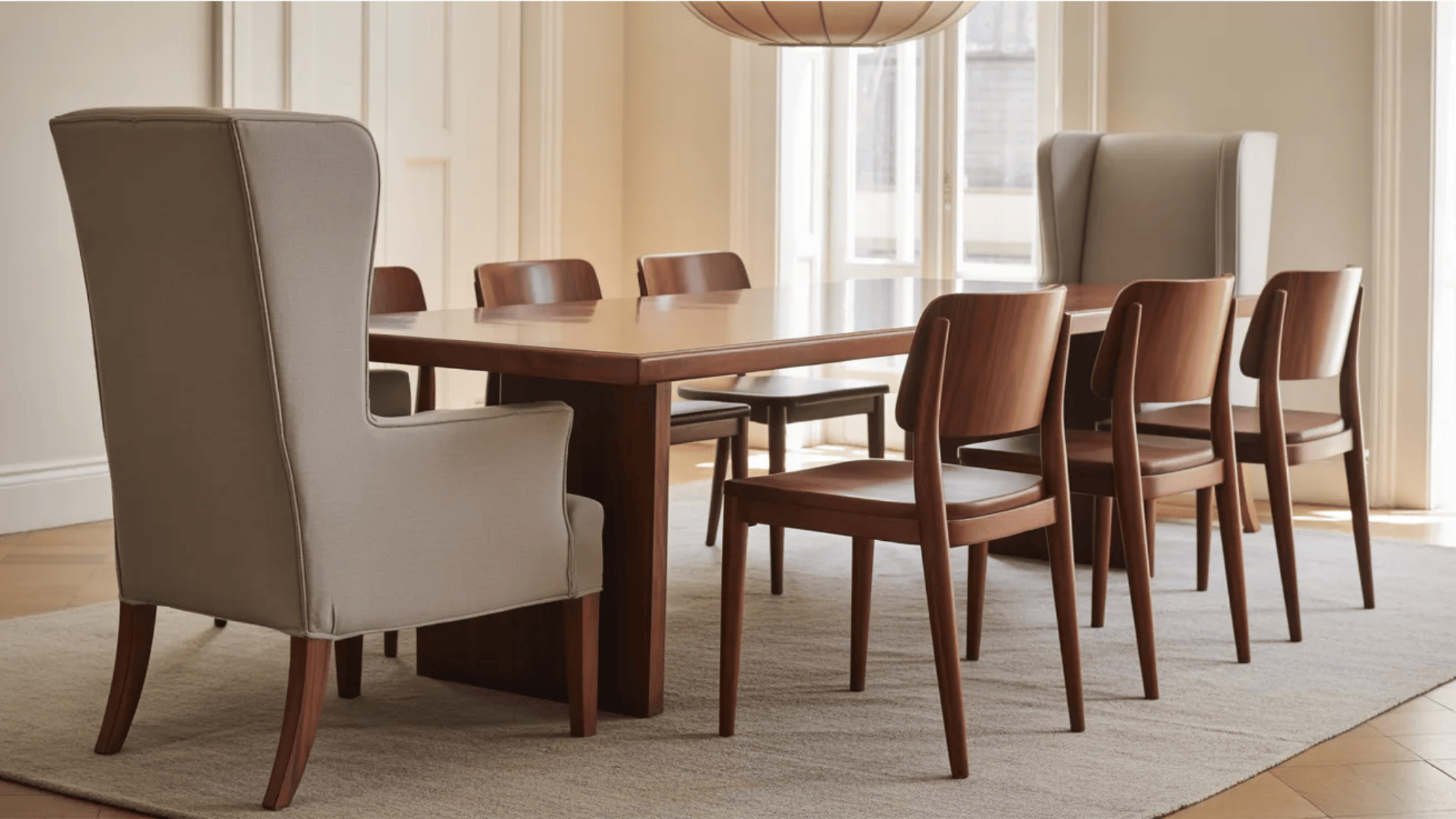
You don’t have to match every chair at the table. Mixing seating styles is a simple way to add visual interest to a transitional dining room.
Try pairing upholstered chairs at the ends of the table with simpler wooden chairs on the sides.
It adds variety without making the space feel mismatched.
Stick to a consistent color or material to tie everything together. When done right, mixed seating looks intentional rather than random.
| Seating Mix | Best For | Visual Effect | Trade-off |
|---|---|---|---|
| Upholstered ends + wood sides | Rectangular tables, 6–8 seats | Formal at the ends, casual flow | Requires consistent wood tones |
| Bench one side + chairs opposite | Casual family dining, small spaces | Relaxed, approachable | Less formal for dinner parties |
| All matching upholstered | Formal or frequent entertaining | Cohesive, polished | Less visual contrast |
| Mixed materials, same silhouette | Eclectic transitional rooms | Layered but controlled | Requires careful color coordination |
Benefits:
- Creates visual interest without making the space feel random or thrown together
- Pairing upholstered end chairs with simpler side chairs adds contrast in the right places
- Sticking to a consistent color or material ties mixed seating together for a deliberate look
12. Choose a Glass Top Dining Table
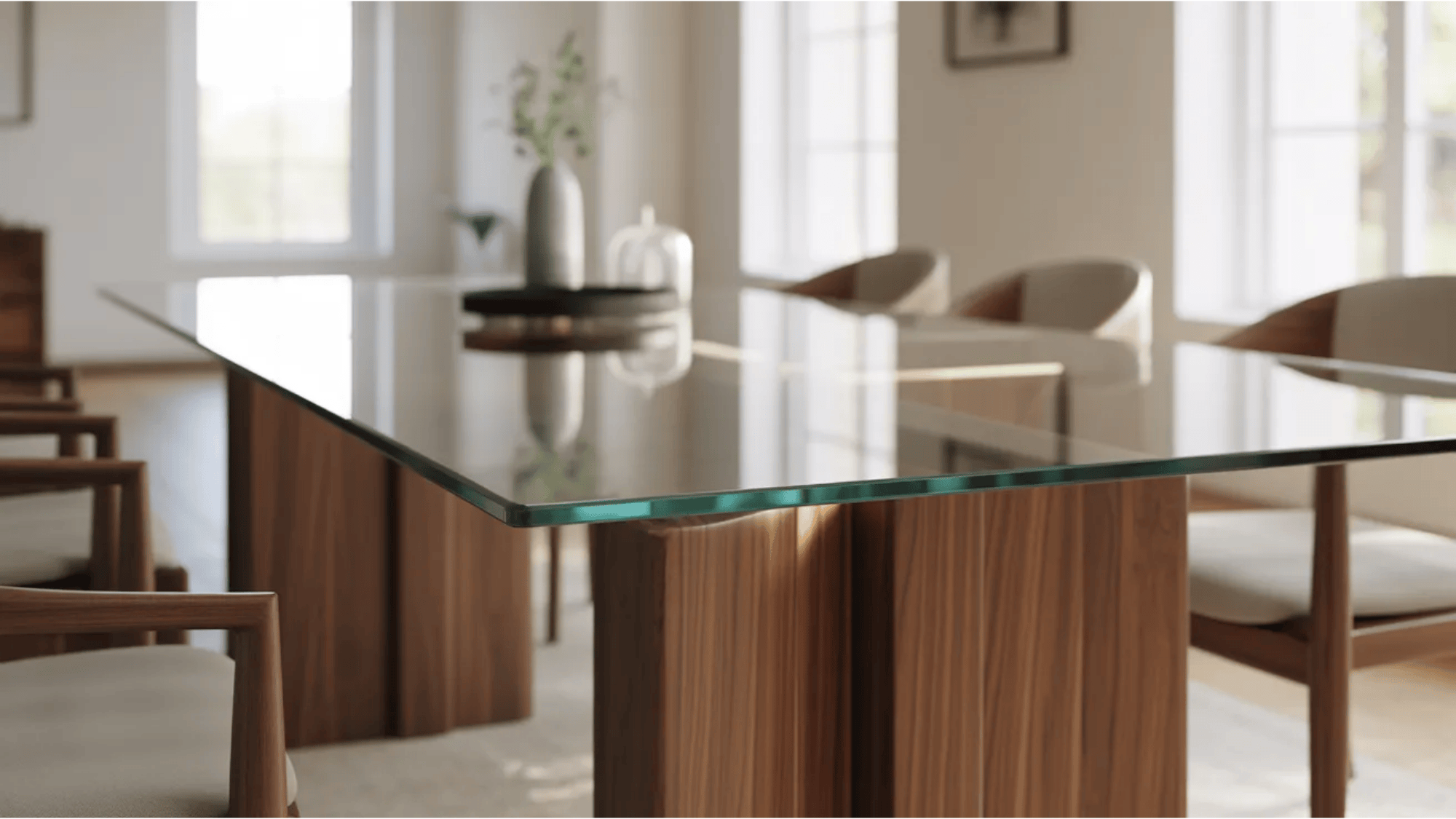
A glass top dining table is a good fit for a transitional space. It feels light and open, which keeps the room from looking too heavy. Pair it with a wooden or metal base to add warmth.
The mix of glass and a solid base creates a look that feels both modern and classic.
It also makes the room feel larger, which is especially helpful in smaller dining spaces. Just keep a good glass cleaner nearby for easy upkeep.
Benefits:
- Keeps the room feeling open and light, especially in smaller dining spaces
- A wood or metal base adds warmth and balances the cool, sleek glass top
- Easy to maintain with regular cleaning, making it a practical everyday choice
13. Use Wainscoting on the Walls
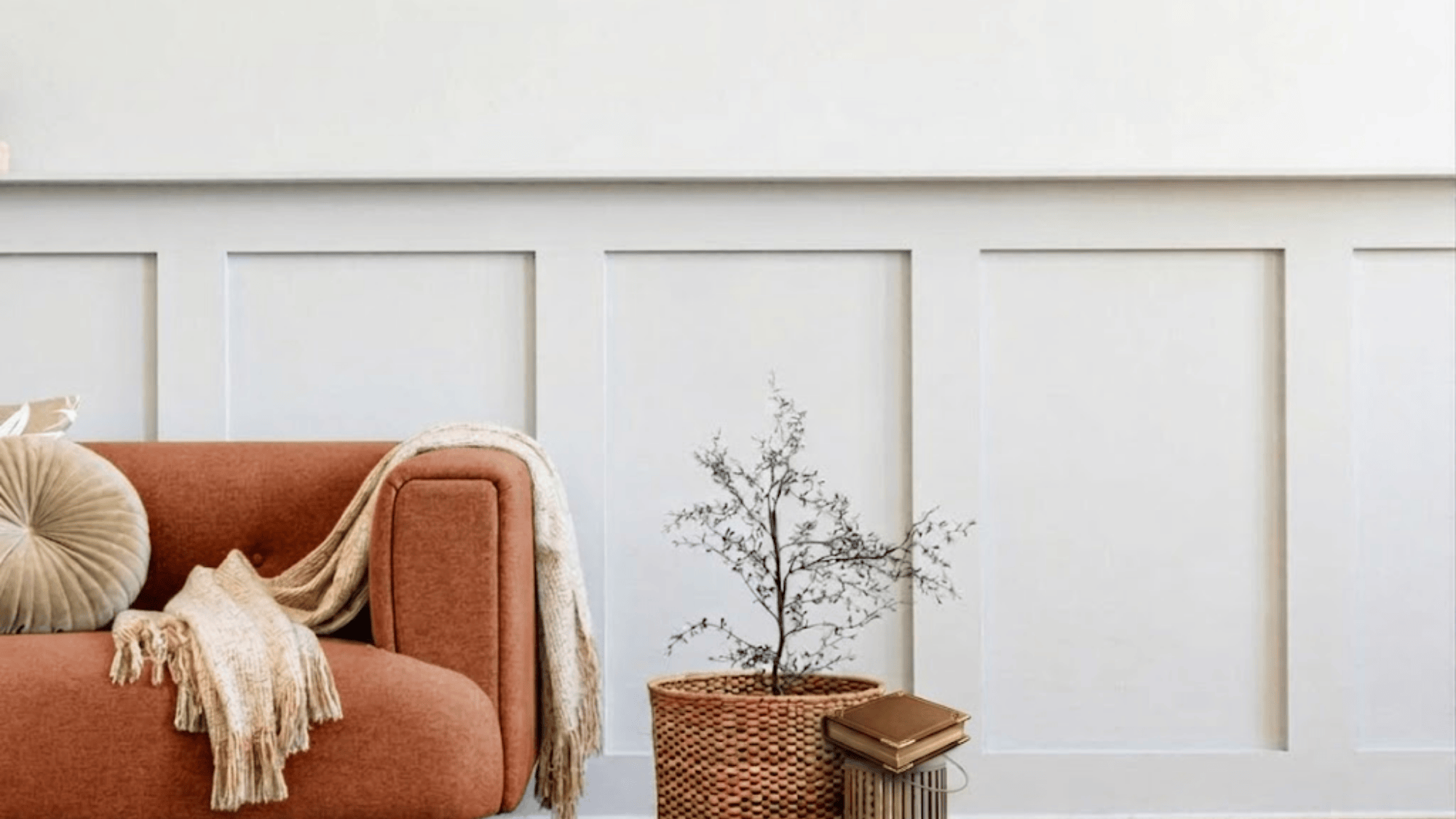
Wainscoting adds classic detail to a dining room without feeling too formal.
In a transitional space, paint it the same color as the walls or one shade lighter for subtle contrast.
This keeps the look clean and current rather than heavy or old-fashioned. It’s a detail that adds character to a plain room. You don’t need a full renovation to add it either.
There are peel-and-stick options that look good and install quickly.
Benefits:
- Adds structural details and character without a full room renovation
- Painting it the same tone as the walls keeps the look clean and up to date
- Peel-and-stick options make it a quick, low-effort update for any dining space
14. Style with Black Accents
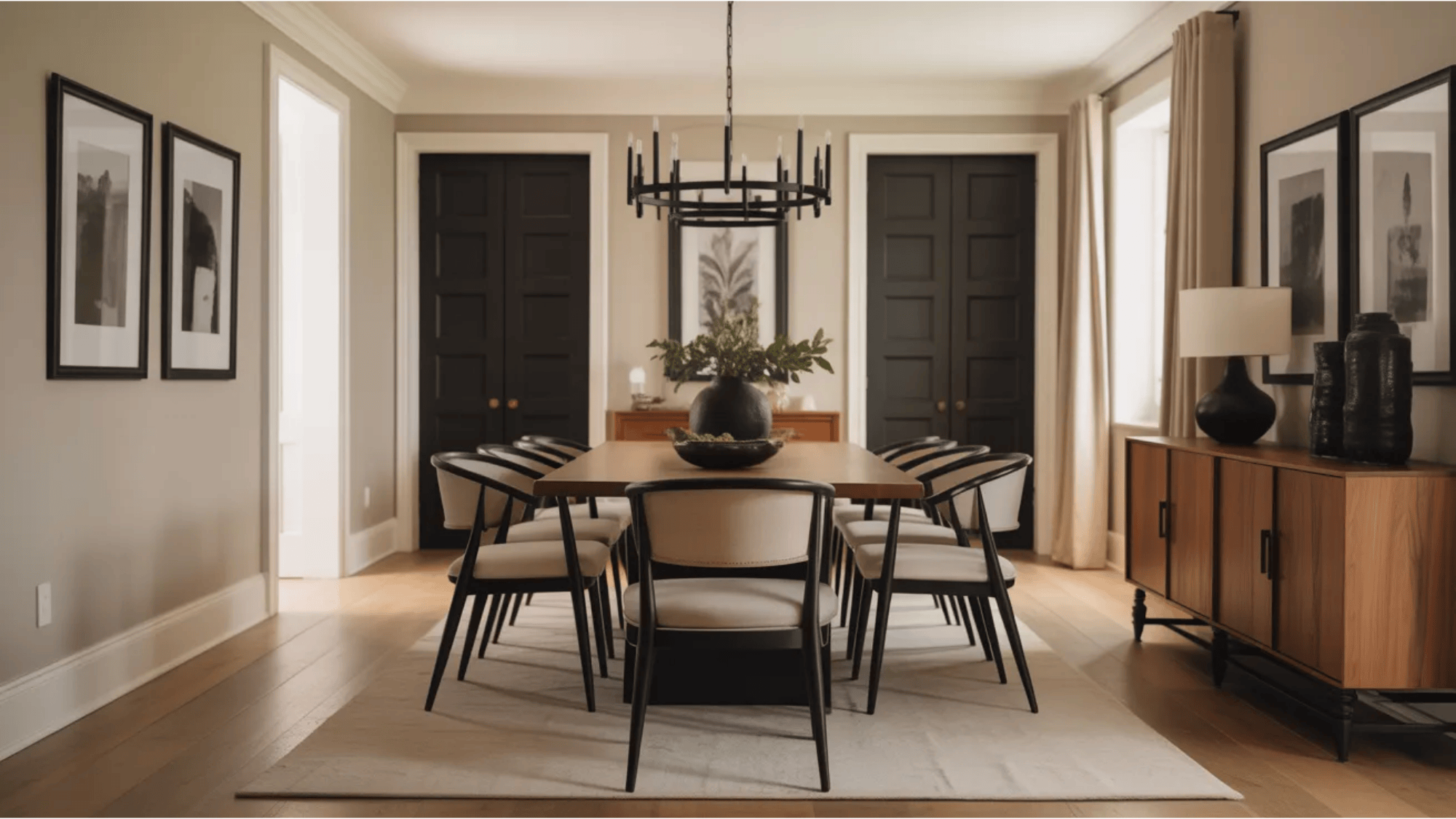
Black accents are an easy way to give a transitional dining room a sharp, defined look. Think black chair legs, light fixtures, picture frames, or cabinet hardware.
Small touches of black can pull everything together quickly. Even minor accents help the space look more balanced and put together.
It works well against neutral walls and warm wood tones.
Black adds definition without overpowering the space or veering too far into a modern direction.
Benefits:
- Small black accents add definition and pull the whole room together without overpowering it
- Works well against neutral walls and warm wood tones for a balanced, finished look
- Keeps the space feeling current without pushing it too far in a modern direction
15. Incorporate Open Shelving
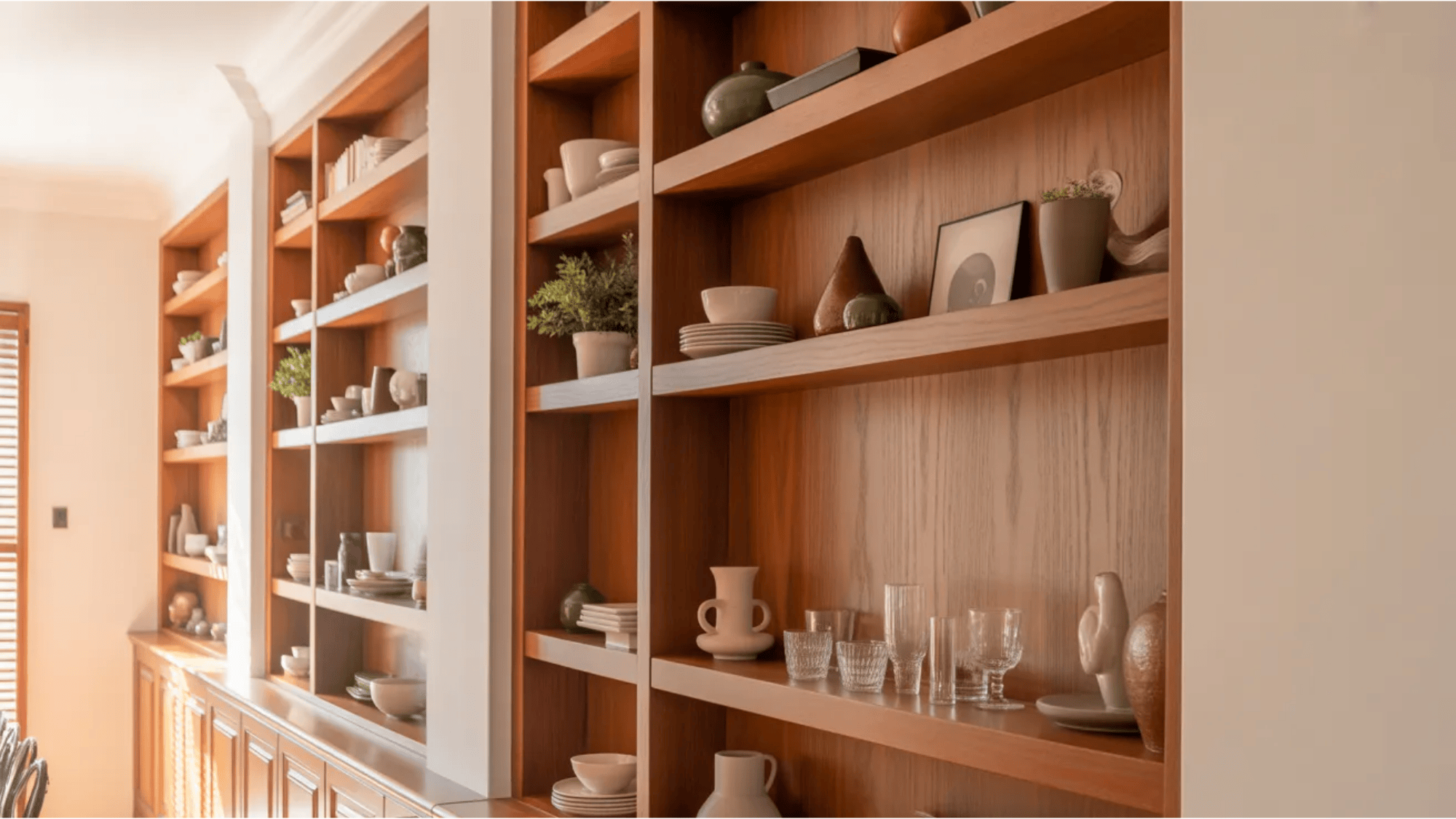
Open shelving in a dining room serves both style and function. You can display dishes, glassware, or decorative objects while keeping everyday items within easy reach.
In a transitional space, go for shelves in a warm wood tone or painted in a neutral shade.
Keep the styling simple and organized. A mix of practical and decorative items looks best.
Avoid overcrowding the shelves. Leaving a little empty space makes the display feel intentional rather than cluttered, which suits the transitional style well.
Benefits:
- Combines storage and display in one space without adding bulk to the room
- Warm wood or neutral-painted shelves fit naturally into a transitional color scheme
- Leaving a little empty space between items keeps the display looking intentional and clean
16. Add an Upholstered Bench
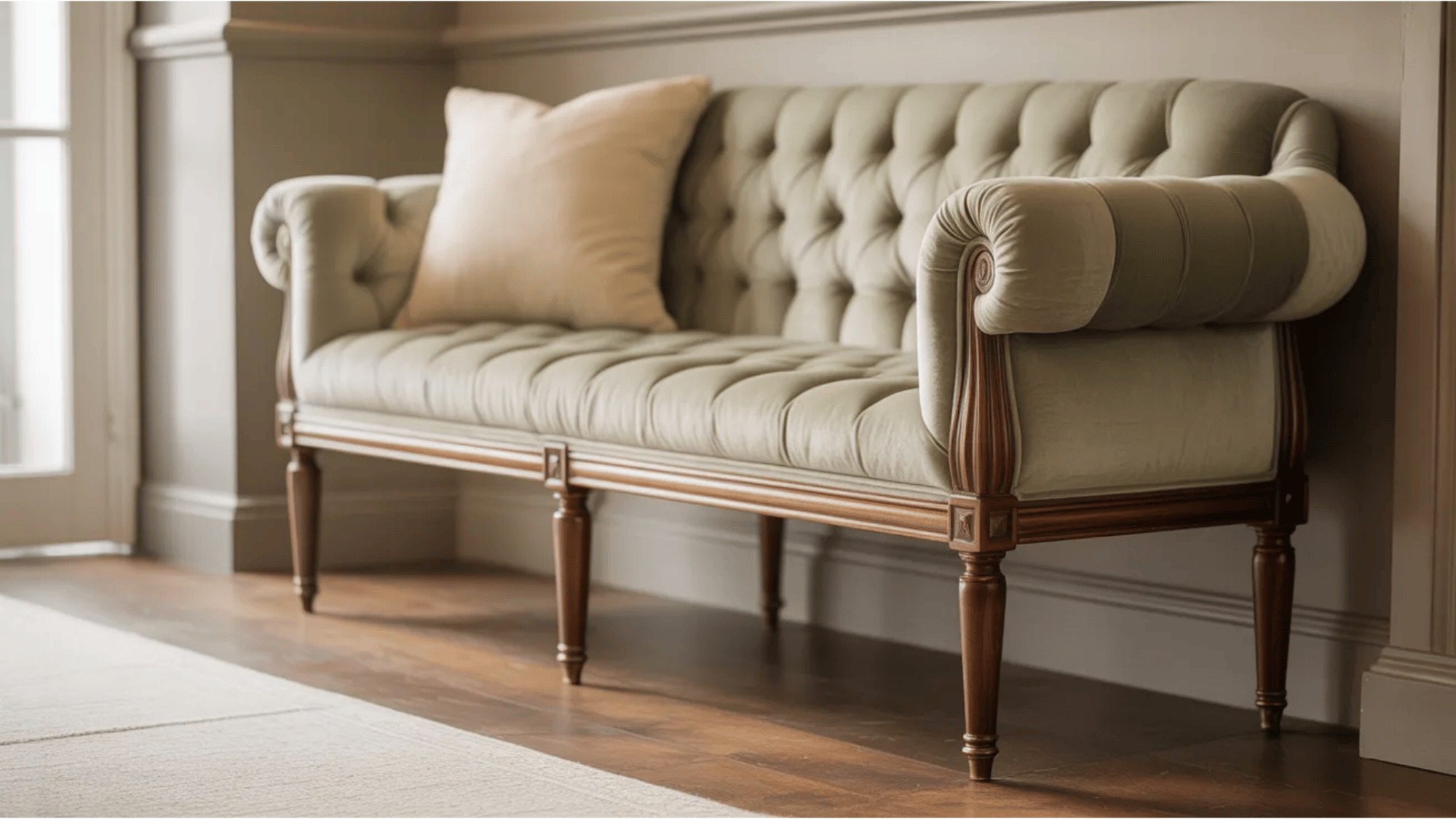
A bench along one side of the dining table is both practical and useful. It saves space, seats more people, and adds a relaxed feel to the room.
An upholstered bench in neutral linen fabric, with a simple shape, keeps the space looking soft and clean.
Pair it with more structured chairs on the opposite side for contrast.
This mix of casual and formal seating creates the balanced look that transitional design is known for in many modern dining spaces.
Benefits:
- Saves space and seats more people compared to individual chairs on every side
- A neutral upholstered bench in linen or velvet adds comfort without losing structure
- Pairing it with formal chairs on the opposite side creates the balanced look that transitional design is known for
17. Hang Artwork on the Walls
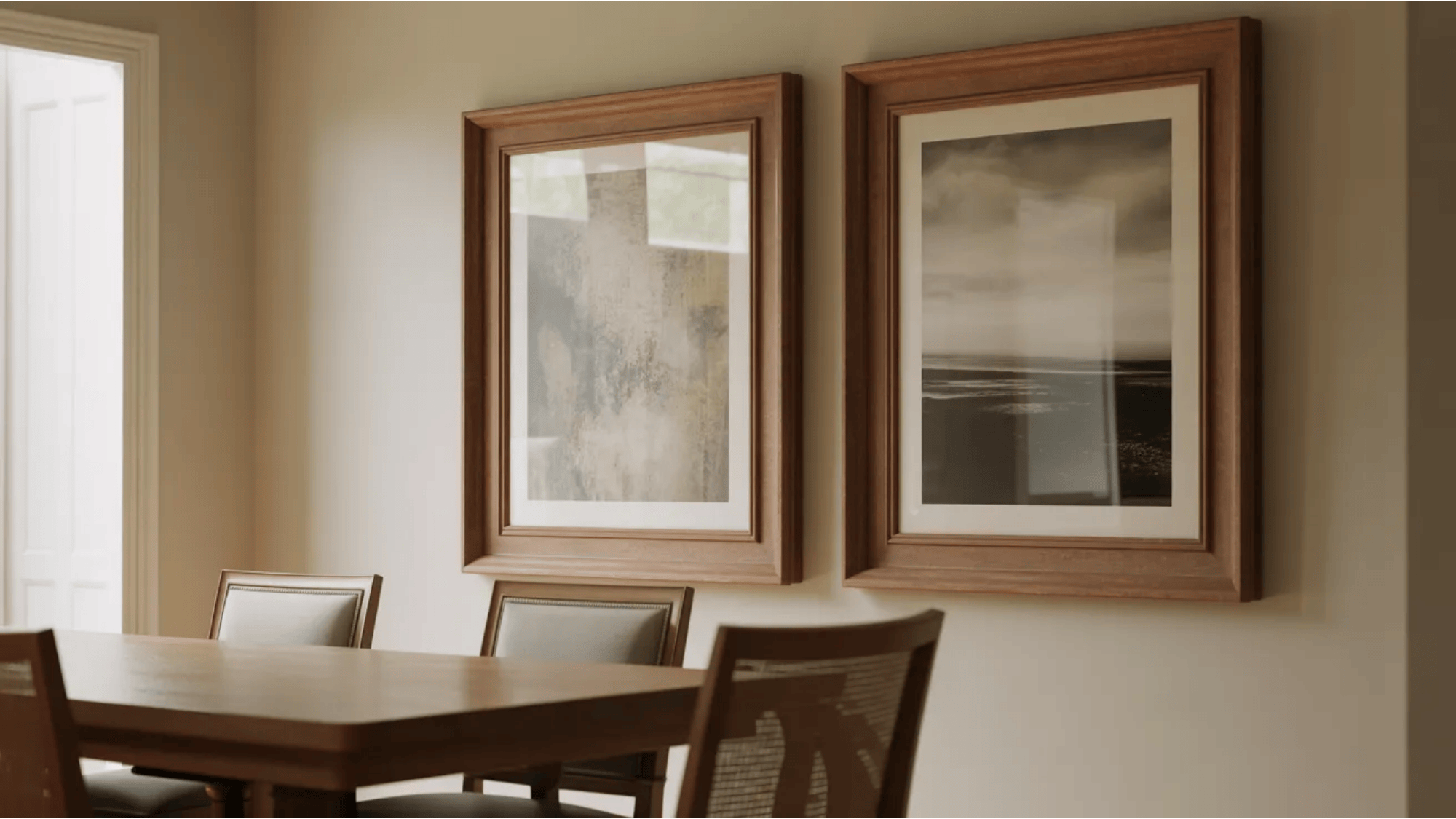
Wall art adds personality to a dining room without requiring major changes. In a transitional space, choose pieces that feel calm, simple, and visually balanced.
Abstract prints, landscape paintings, or black-and-white photography all work well.
Stick to a consistent frame style, whether in wood or metal, to keep things tied together.
You don’t need to fill every wall. One or two well-placed pieces make more impact than a crowded gallery. Art gives the room a finished, thoughtful look.
Benefits:
- One or two well-placed pieces make more impact than a crowded wall of art
- Consistent frame styles in wood or metal tie the display together without extra effort
- Calm, simple art choices complement the balanced look of transitional design without overpowering it
Choosing the Right Transitional Dining Room Idea
Not every idea will work for every home, and that’s fine. Start with what you already have and build from there.
Think about your room size, your current furniture, and your budget. These three things help narrow your choices and make planning easier.
If your space is small, focus on lighter colors, fewer furniture pieces, and simple decor to keep the room feeling open.
Larger dining rooms give you more flexibility. You can layer textures, add bold accents, and use bigger furniture without the space feeling overdone.
Think about how you use the space, too. Some homes host frequent dinner gatherings, while others are used for relaxed family meals. Let your daily routine guide your choices.
The best transitional dining room fits your lifestyle and feels comfortable and natural.
| Room Size | Where to Start | Avoid |
|---|---|---|
| Small (<120 sq ft) | Glass-top table, large neutral rug, layered lighting | Heavy sideboards, dark walls, oversized artwork |
| Medium (120–200 sq ft) | Mixed seating, statement fixture, wainscoting | Too many accent materials at once |
| Large (>200 sq ft) | Open shelving, bench seating, layered decor | Under-furnishing; the space will feel sparse |
Common Transitional Dining Room Mistakes to Avoid
Most mistakes in a transitional dining room happen when you lean too much toward one style or add too many ideas at once. I’ve seen these same issues often, and knowing them early makes the process easier.
1. Mixing Too Many Wood Tones
One wood tone reads as deliberate. Two can work if the contrast is significant, like a light oak table alongside a dark walnut sideboard.
Three or more almost always creates visual noise that undermines the calm that transitional design is built on.
Pick a dominant wood tone and let everything else support it.
2. Choosing a Rug that Is Too Small
An undersized rug is one of the most common mistakes I see in dining rooms across every style. If chair legs fall off the rug when pulled out, the rug is too small.
It breaks the visual anchor of the seating area and makes the space feel disconnected. When in doubt, size up.
3. Treating “Neutral” as an Afterthought
Neutral does not mean colorless. A room full of cool whites, gray upholstery, and silver metal reads as modern, not transitional.
Warm neutrals, including creamy whites, soft taupes, and natural linens, carry the warmth that keeps transitional rooms feeling livable rather than showroom-cold.
Conclusion
A transitional dining room works because it creates balance. It combines the warmth of traditional design with the clean simplicity of modern style.
You don’t need a full renovation. Small changes like mixed materials, neutral colors, and soft textures can make a big difference.
Choose furniture and decor that work together, not against each other. This creates a calm, comfortable space.
Start with one or two ideas that suit your space and build from there. Over time, the room will come together and feel more complete. Which transitional idea are you planning to try first?
Share your thoughts in the comments below and tell us your favorite.
Save your favorite ideas and begin shaping a transitional dining room that fits your style and everyday life.
Frequently Asked Questions
What’s the Difference Between Transitional and Contemporary?
Transitional style mixes modern and traditional elements for balance. Contemporary style follows current trends, often with cleaner lines, bold contrasts, and a more minimal, up-to-date look.
What Rug Size Works Best for a Transitional Dining Room?
Pick a rug large enough so all chair legs rest on it, even when pulled out. An 8×10 ft rug works for most standard dining tables.
What Flooring Works Best with a Transitional Dining Room?
Hardwood or wood-look luxury vinyl plank flooring works well. Both complement the warm and modern mix that transitional design relies on.
What Are the Colors for Transitional Interior Design?
Transitional design uses neutral colors like beige, gray, white, and soft brown, with muted accents such as blue, green, or black to keep the space calm and balanced.