

Close Menu
    What's Hot

    Ever Walk Into a Store and Instantly Want to Stay? Here’s Why

    April 1, 2026

    Top Benefits of Using Agricultural Drones for Smart Farming

    April 1, 2026

    Everyday Dog Care: Small Habits That Make a Big Difference

    April 1, 2026

    Fusing Positioning and Motion: Why Inertial Data Matters for Reliable Field Measurements

    April 1, 2026

    Standard Bathtub Length Guide, Sizes and Chart

    March 31, 2026

    Art Deco vs Art Nouveau: Design, Style & Key Differences

    March 31, 2026
    Facebook Instagram
    Facebook Instagram
    Opple House
    • Home Decor
    • Interior Design
    • Home Improvement
    • DIY & Crafts
    • Gardening
    • Real Estate
    Opple House
    Home » Blog » Fusing Positioning and Motion: Why Inertial Data Matters for Reliable Field Measurements
    Tech

    Fusing Positioning and Motion: Why Inertial Data Matters for Reliable Field Measurements

    Mark PhillipBy Mark PhillipApril 1, 20265 Mins Read
    Facebook Twitter Pinterest LinkedIn WhatsApp Reddit Tumblr Email
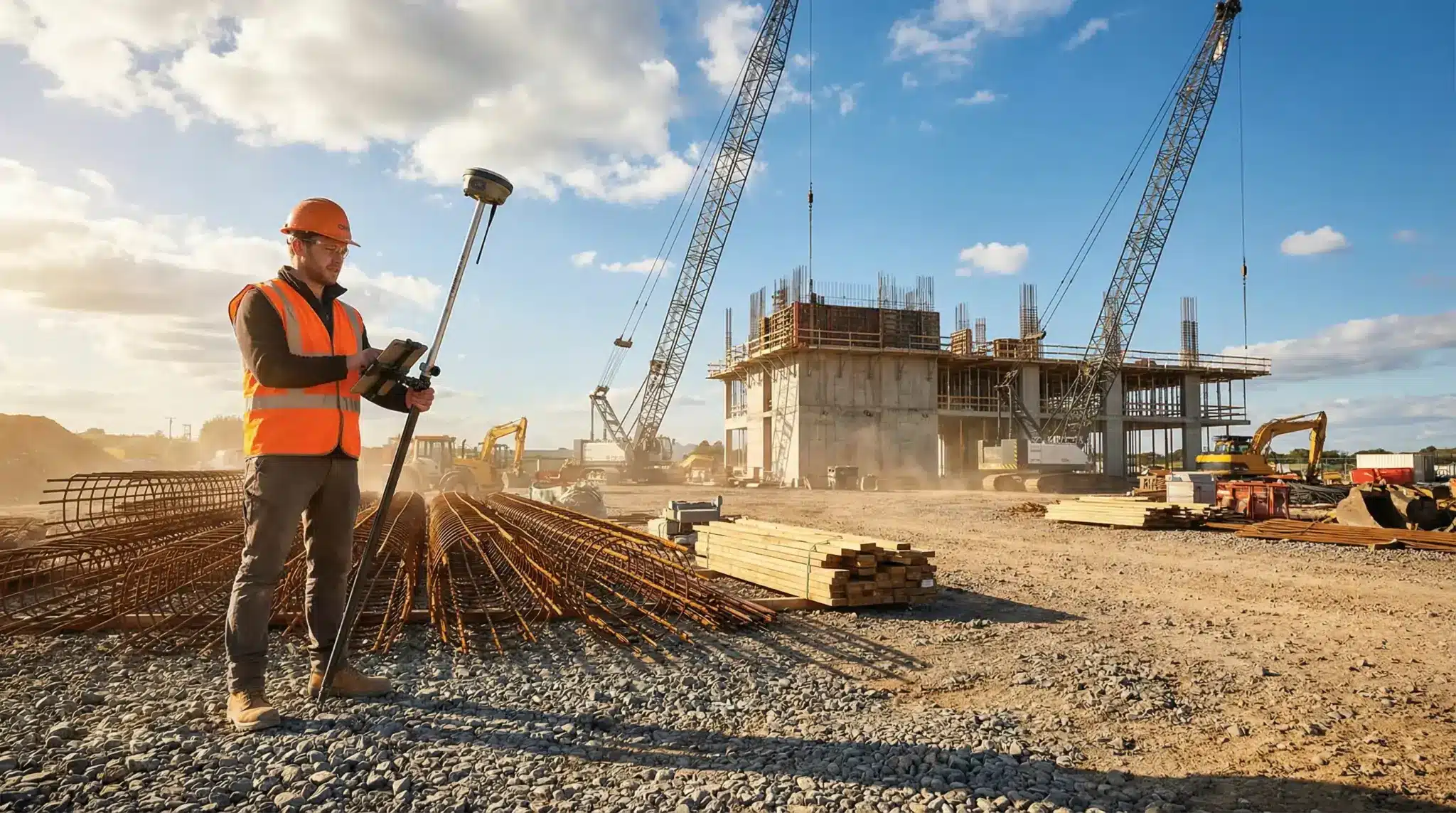
    Surveyor in orange vest using equipment on construction site with cranes and building structure
    Share
    Facebook Twitter LinkedIn Pinterest Email

    A survey point looks calm on a screen. On site, it rarely is. One moment you’re standing on crushed stone beside rebar cages, the next you’re squeezed between a concrete pump and a delivery truck, trying to keep your antenna steady while someone asks if the sleeve can be shifted «just a bit». The point is still the point. The environment has other plans.

    That’s where the pairing often summarized as gnss imu earns attention. It’s not a buzzword for «more accurate». It’s a practical way to keep measurements coherent when satellite signals behave like a polite guest in open sky and a chaotic roommate near steel, glass, cranes, and tree cover.

    In practice, that “motion context” often shows up as reliable tilt compensation: you can keep working when perfectly vertical pole handling is unrealistic—tight corridors, curb edges, rebar clutter—and still collect repeatable points instead of gambling on a single “good-looking” fix.

    GNSS Isn’t Fragile, the Worksite Is

    >Satellite positioning is exceptionally capable, but it depends on radio signals arriving cleanly and predictably. Construction and urban sites specialize in the opposite. The most common troublemakers are unglamorous:

    • reflections off metal and façades that bend reality without announcing themselves,
    • blocked sky view that turns a good constellation into a bad one,
    • fast-paced capture where there’s little time to «wait it out»,
    • and constant changes: yesterday’s open area becomes today’s canyon.

    The result isn’t always dramatic. Often it’s worse: the solution looks plausible. Plausible is how rework is born.

    What an IMU Measures, and What It Doesn’t

    >An inertial unit measures rotation and acceleration. That sounds like it should give you position on its own. It doesn’t—at least not for long. Left alone, inertial navigation drifts. It will confidently walk away from the truth if you let it.

    See also  Seeing Is Selling: How 3D Rendering Transforms Property Marketing

    So why use it? Because in field measurement you’re not trying to replace satellites with inertia. You’re trying to add missing context:

    • «Did the pole tilt while the fix claimed it didn’t?»
    • «Did the receiver jump, or did the operator move?»
    • «Is the motion physically plausible for the last three seconds?»

    Inertia is good at short-term motion truth. GNSS is good at long-term position truth. Combining them is less about wizardry and more about keeping the story consistent between chapters.

    Fusion, in Plain Field Language

    “Sensor fusion” can sound abstract. Here’s the field translation: the system is constantly deciding how much to trust each stream of information.

    When signals are clean, GNSS anchors the position. When signals get noisy, inertial data helps prevent the position from doing things a real object couldn’t do—like sliding sideways while the pole stayed still, or “teleporting” across a curb because reflections briefly tricked the receiver.

    The goal is not perfection. The goal is fewer moments where you have to stop and ask: «Is this real, or is this one of those days?»

    Reliability Is Not the Same as Accuracy

    In projects that move fast, reliability is often the real bottleneck. You can tolerate a small, known uncertainty better than a large, hidden one.

    Reliability shows up as:

    • fewer «let’s shoot it again» cycles on the same point,
    • smoother continuity when mapping features while walking,
    • less sensitivity to small operator movements,
    • and clearer signals when something is genuinely wrong.

    The quiet benefit is psychological: when the instrument behaves consistently, crews are more willing to do the boring checks that protect them later.

    Where Motion Support Helps Most

    1) Steel, Glass, and the “Mirror Site” Problem

    ear reflective surfaces, GNSS can be tricked into stable-looking errors. Inertial constraints can reduce sudden leaps and keep movement realistic. That doesn’t mean «problem solved». It means the system is less eager to accept a lie that arrives with confidence.

    2) Under Trees and Along Edges

    Canopy doesn’t always kill positioning, but it often makes it intermittent. In those moments, inertial bridging can keep your trajectory coherent while the satellite solution recovers. That matters when you’re collecting lots of points and can’t afford long occupations at each one.

    3) Walking As-Built and Asset Mapping

    Many modern workflows are “walk and capture”: curb lines, signs, utility features, site objects that don’t justify a full setup each time. Motion-aware positioning can make those collections look like a human path rather than a series of nervous corrections. It also helps when you pause briefly at a feature: the system understands whether you actually stopped.

    4) Vehicle- or Pole-Mounted Work in Dynamic Conditions

    If you’re moving on a platform—cart, vehicle, boat, or simply navigating tight spaces—knowing attitude and short-term motion can improve stability. The measurement stream becomes less sensitive to tiny bumps that would otherwise show up as positional “fidgets.”

    What It Will Not Save You From

    Inertial support is not a license to stop thinking. Common failure modes still exist, just with different clothes:

    • if the system’s alignment or calibration is off, it can be consistently wrong,
    • vibration and abrupt jolts can confuse motion models,
    • a “nice-looking” path can be a smooth error, not a correct one.

    The biggest trap is emotional: because the output looks calmer, people trust it more. Calm is not proof.

    Field QA That Fits in a Busy Day

    You don’t need a research lab to sanity-check motion-assisted positioning. You need habits that take minutes, not hours:

    • Known-point reality check: start and end a session on control you trust. If the system can’t tell the truth there, it won’t tell it elsewhere.
    • Pause test: stop at a feature, hold steady, and watch whether the solution settles or wanders.
    • Short re-occupation: return to a critical point later from a different approach. Consistency beats confidence.
    • Documentation for “expensive points”: for anchors, penetrations, edges—record the setup and any anomalies. It’s not bureaucracy; it’s future-proofing.

    These checks aren’t glamorous. They’re the difference between «we measured it» and «we can defend it».

    When Is It Worth It?

    If your work is mostly open sky, static points, generous tolerances, and time for careful occupations, motion support may feel like a convenience.

    If your work is dense sites, frequent obstructions, lots of points collected quickly, or high-consequence layout where one wrong sleeve becomes a scheduled argument, inertial context shifts from convenience to risk control. It won’t make the site simple. It can make your measurements less fragile under pressure.

    Closing Thought

    Field measurement is not performed in a vacuum; it’s performed in a living environment that resists clean signals and clean schedules. Pairing positioning with motion sensing doesn’t promise miracles. It offers something more useful: a steadier, more auditable way to keep the story of your data consistent when the site tries to rewrite it.

    Related posts:

    1. Maximising Cooling Performance Without Compromising Interior Appearance
    2. Behind the Creality K2 Series: How User Feedback Shaped the Next Generation Printer
    3. The Great TV Resolution Face-Off: Is 8K Really Worth Your Hard-Earned Cash?
    4. The Essential Home Maintenance Checklist Every Homeowner Should Follow
    pp
    Share. Facebook Twitter Pinterest LinkedIn WhatsApp Reddit Tumblr Email
    Mark Phillip
    Mark Phillip
    • Website

    Mark Phillip, who became part of our team in 2017, boasts an impressive career spanning over 15 years in technology journalism. He holds a Bachelor’s degree in Computer Science from MIT and a Master’s in Digital Media from Georgia Tech. Before his tenure with us, Mark gained specialisations in emerging technologies and digital trends. His passion for innovation is not just limited to his writing; He is also an amateur programmer who enjoys creating apps in his spare time. A true tech enthusiast, he believes in the power of technology to transform lives and is always on the lookout for the next big thing.

    Related Posts

    Interior Design April 1, 2026

    Ever Walk Into a Store and Instantly Want to Stay? Here’s Why

    General Automotive Knowledge April 1, 2026

    Top Benefits of Using Agricultural Drones for Smart Farming

    Pet Care April 1, 2026

    Everyday Dog Care: Small Habits That Make a Big Difference

    Home Improvement March 30, 2026

    How to Maintain a Door Lock Mechanism in High-Traffic Areas

    Home Improvement March 28, 2026

    How Hiring a Local Plumber Transforms Your Home Maintenance

    Home Improvement March 28, 2026

    How Hiring a Local Plumber Transforms Your Home Repair Experience

    Leave A Reply Cancel Reply

    Don't Miss
    Interior Design April 1, 2026

    Ever Walk Into a Store and Instantly Want to Stay? Here’s Why

    You step into a store. Something about it just feels right. The air smells good,…

    Top Benefits of Using Agricultural Drones for Smart Farming

    April 1, 2026

    Everyday Dog Care: Small Habits That Make a Big Difference

    April 1, 2026

    Fusing Positioning and Motion: Why Inertial Data Matters for Reliable Field Measurements

    April 1, 2026
    Stay In Touch
    • Facebook
    • Instagram
    About Us
    About Us

    We strive to provide high-quality, stylish home decor pieces to help you create the perfect look for your unique space. Our blog offers helpful tips and tricks to bring your dream home to life!

    Email Us: sophia@opplehouse.com

    Our Picks

    Ever Walk Into a Store and Instantly Want to Stay? Here’s Why

    April 1, 2026

    Top Benefits of Using Agricultural Drones for Smart Farming

    April 1, 2026

    Everyday Dog Care: Small Habits That Make a Big Difference

    April 1, 2026

    Design Secrets Delivered to Your Inbox!

    Join 10,000+ home enthusiasts who receive weekly inspiration, DIY guides, and exclusive decor tips. Plus, get a free e-book

    Facebook Instagram
    • About Us
    • Contact Us
    • Privacy Policy
    © 2026 OppleHouse.

    Type above and press Enter to search. Press Esc to cancel.