

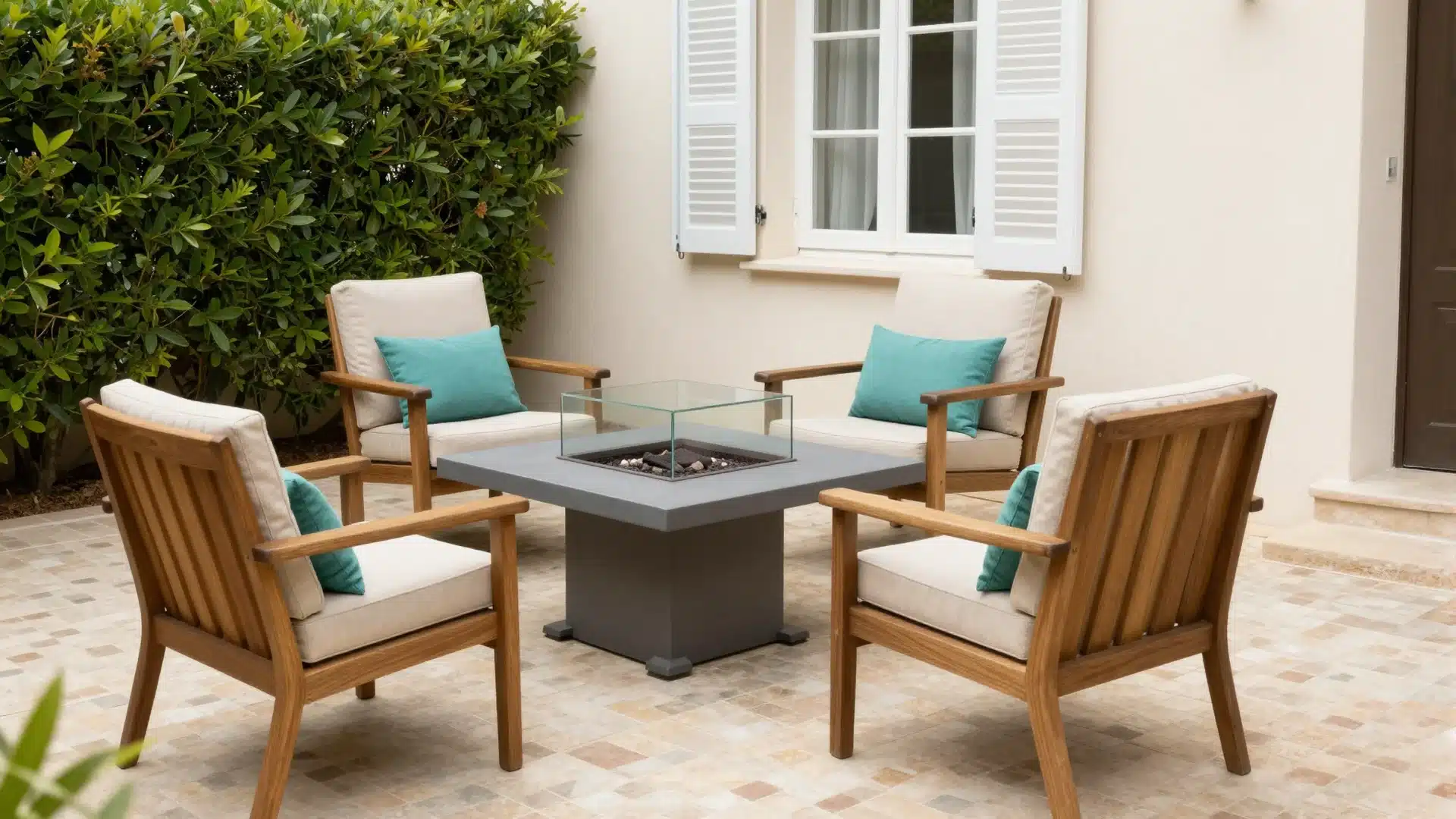
Most people shopping for outdoor furniture never stop to ask what it is actually made from. That question matters more than you think.
The material in your patio chair decides how long it lasts, how much work it needs, and what happens to it after years in the sun and rain.
Polywood has become one of the most talked-about options in the outdoor furniture space, but what is polywood made of, exactly?
This guide covers the material, the manufacturing process, the furniture types, and the alternatives, so you can make a smart, informed choice.
What Is Polywood?
Polywood is outdoor furniture made from recycled plastic lumber. Despite the name, it contains no wood at all.
The brand POLYWOOD was founded in 1990 in Syracuse, Indiana, and was the first company to build outdoor furniture from recycled high-density polyethylene (HDPE).
Today, the term “polywood” is also used loosely to refer to any recycled HDPE plastic lumber used in outdoor furniture, not just the POLYWOOD brand.
What Is Polywood Made Of?
Polywood is made from 100% recycled high-density polyethylene (HDPE), a durable plastic found in everyday household containers. The lumber also contains UV inhibitors, color pigments, and protective stabilizers, all blended into the HDPE before it is shaped into planks.
Where Does the Raw Material Come From?
| Source | Examples |
|---|---|
| Post-consumer waste | Milk jugs, detergent bottles, shampoo bottles, bleach containers, bottle caps |
| Post-industrial waste | Scrap material left over from the furniture manufacturing process itself |
POLYWOOD recycles an average of 400,000 milk jugs per day and reuses 99% of all production scrap back into new lumber.
What Else Goes Into Polywood Lumber?
| Ingredient | Purpose |
|---|---|
| HDPE plastic | Core structural material |
| UV inhibitors | Prevent fading from sun exposure |
| Color pigments | Blended throughout the plank, not just on the surface |
| Stabilizers | Protect against weather and temperature changes |
| Marine-grade stainless steel fasteners | Used in assembly, coated to resist corrosion |
No wood fibers. No formaldehyde. No harmful sealants.
Types of Polywood Furniture
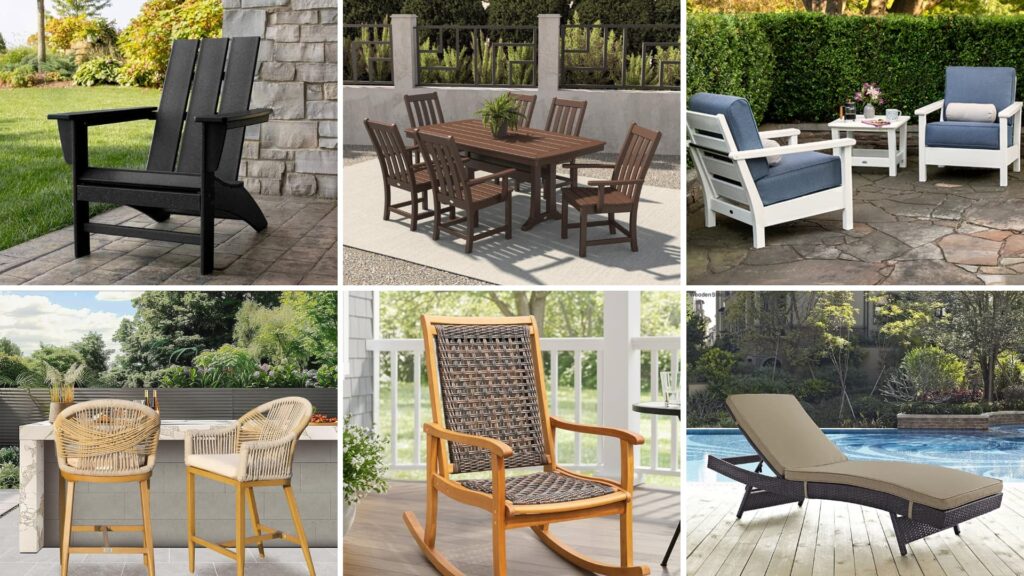
Polywood is not just Adirondack chairs. The range covers nearly every outdoor furniture category, from poolside loungers to bar-height dining sets. Here is a quick look at what is available.
Adirondack Chairs The most recognized polywood design. Available in classic (curved top rails, traditional shape) and modern (straight lines, minimalist) styles. Many classic models fold flat for easy storage.
Deep Seating and Lounge Sets Furniture built with deeper seats and lower frames to hold thick cushions. Designed for long afternoons outside rather than quick meals. Quick-dry performance fabric cushions resist rain, salt, and mildew.
Outdoor Dining Furniture Full dining sets in 3-piece, 5-piece, 7-piece, and 9-piece configurations. Available in shapes from compact bistro to large rectangular tables that seat eight.
Bar and Counter Height Furniture Taller seating and tables for outdoor kitchen areas, rooftop decks, and smaller balconies. Bar stools stand 28 to 32 inches high. Swivel options rotate 360 degrees.
Conversation Sets Multi-seat configurations with a central coffee or accent table. Set up like outdoor living rooms, these are built for groups who want to sit, talk, and stay a while.
Rocking Chairs Classic porch rockers built from the same HDPE lumber. Available in sets with coordinating side tables. A popular choice for front porches and lakefront properties.
Chaise Lounges and In-Pool Chairs Reclining lounge furniture for poolside use. POLYWOOD’s in-pool chairs are made from marine-grade resin, built specifically for use on shallow swimming pool ledges.
Benches, Swings, and Gliders Garden benches, porch swings, and smooth-motion gliders, all built from HDPE lumber. Some bench styles pair with planter boxes for a garden-ready look.
Kids’ Furniture and Planters Child-sized seating in the same HDPE material. Planter box and bench combos for garden-style outdoor spaces.
How Is Polywood Made: Step by Step Process
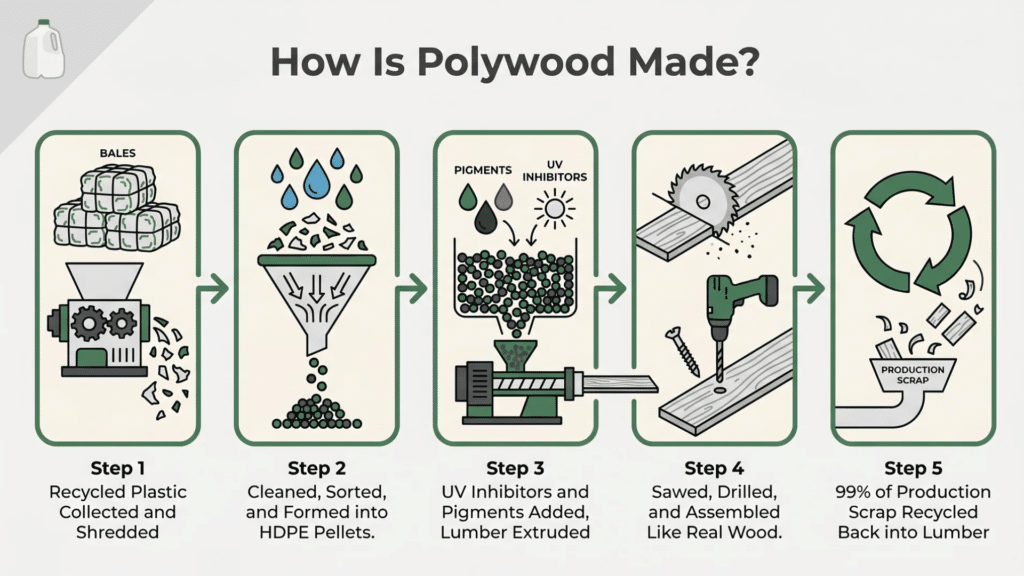
The manufacturing process is more involved than most people expect. Here is how recycled plastic becomes a finished piece of outdoor furniture.
Step 1: Collection and Shredding
Large bales of landfill-bound and ocean-bound plastics arrive at the recycling plant, flattened and bundled, alongside scrap lumber from previous production runs. The compacted material goes into a massive shredder and breaks down into small flakes ready for the next stage.
Step 2: Washing, Sorting, and Pelletizing
The shredded flakes are pre-washed to remove heavy debris like glass or rocks. A color sorter removes any unwanted pigmented plastics from the batch. The cleaned material is then pelletized into small, clear HDPE pellets, which are the core input for everything that follows.
Step 3: Mixing Additives and Extrusion
UV inhibitors, color pigments, and stabilizers are blended into the pellets before extrusion. This step is what gives polywood its color all the way through the plank, not just on the surface. The mixture is then melted at high heat and pushed through molds to form solid HDPE lumber in standard sizes.
Step 4: Cutting and Building
Unlike molded plastic furniture, polywood is sawed, milled, drilled, and fastened with stainless steel screws. It is built the same way wood furniture is built.
Step 5: Scrap Reuse
After each piece is assembled, 99% of all production scrap goes back to the recycling plant to be reground and remade into new lumber. Almost nothing goes to waste, and the cycle starts again.
Polywood vs. Wood vs. Composite: What’s the Difference?
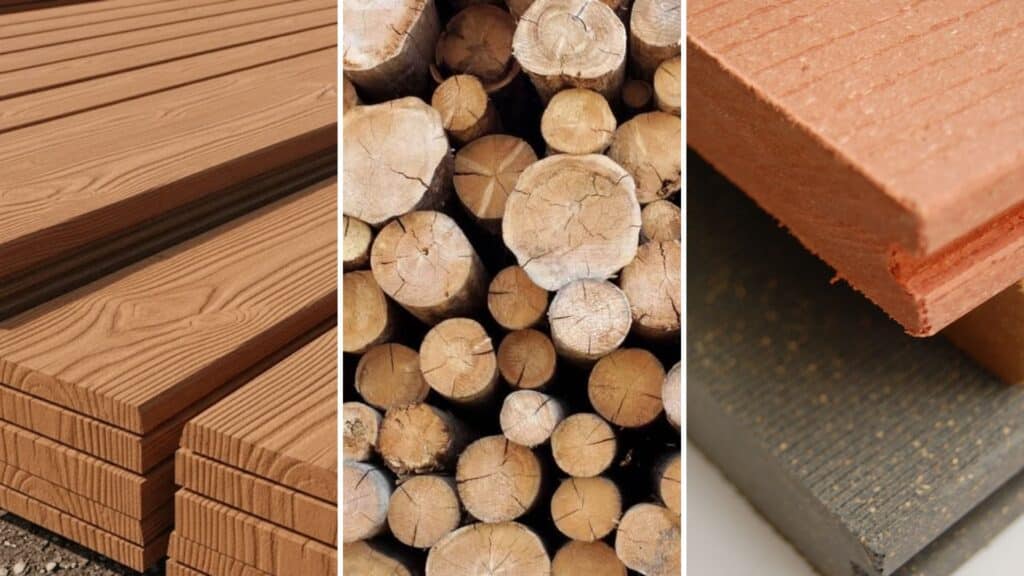
Two lines to set the scene: all three materials look similar at a glance. The differences show up over time, in how much work they demand and how well they hold up outside.
| Feature | Polywood (HDPE) | Real Wood | Composite Lumber |
|---|---|---|---|
| Contains wood | No | Yes | Yes (wood fibers mixed with plastic) |
| Maintenance needed | None | Annual oiling or sealing | Minimal |
| Weather resistance | Excellent | Good (with upkeep) | Very Good |
| UV/fade resistance | Built in throughout the plank | Fades without treatment | Good |
| Splinter or rot risk | None | Yes, without treatment | Low |
| Eco-friendly | High (recycled HDPE) | Moderate | Moderate |
| Warranty (typical) | 20 years (POLYWOOD brand) | Varies | Varies |
| Approximate lifespan | 20+ years | 15-25 years with care | 15-20 years |
Pros and Cons of Polywood Material
Two things worth knowing before you read this: polywood performs well in almost every outdoor condition. But it is not perfect, and the downsides are real enough to factor into your decision.
Pros
- Does not rot, rust, splinter, or crack under normal outdoor conditions
- Color runs all the way through the plank, not just on the surface, so scratches do not show a different color underneath
- No painting, staining, sealing, or waterproofing required, ever
- Cleans with soap and water or a soft bristle brush
- Power washer safe under 1,500 psi
- Built to handle all four seasons including snow, salt air, heavy rain, and intense UV exposure
- Backed by a 20-year lumber warranty from the POLYWOOD brand
- Made from recycled plastics, keeping HDPE out of landfills and oceans
- 99% of production scrap is recycled back into new lumber
- Weight-tested to ASTM standards: single seats up to 350 lbs
Cons
- Higher upfront cost than most wood or basic plastic options. A single HDPE sheet costs significantly more than comparable plywood, and that difference shows in the final furniture price.
- Heavy. A chaise lounge or large dining set may require two people to move. This is by design since the weight helps it stay put in wind, but it is worth knowing before you buy.
- Rigid material. HDPE does not soften or conform to your body shape over time the way some cushioned alternatives do.
- Dark colors absorb heat in direct sunlight. In very hot climates, a lighter color or a towel over the seat before sitting is a good habit.
- Cannot be sanded. Sanding scratches the surface and voids the warranty.
- Not all “poly lumber” brands are equal. Generic brands on mass retail sites may use lower-grade plastic without proper UV inhibitors, which leads to cracking and fading within a few years.
Alternatives to Polywood Furniture
Polywood is not the right fit for everyone. Budget, style preference, and how much upkeep you are willing to do all play a role. Here are the main alternatives worth considering.
1. Teak Wood
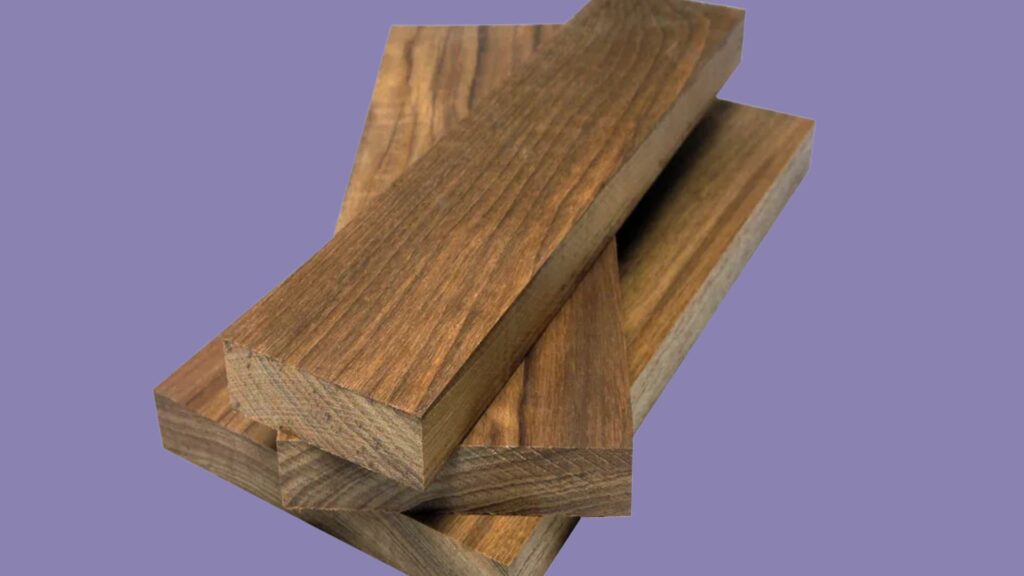
Teak is a dense hardwood with natural oils that resist moisture and UV rays better than most other woods. It needs annual oiling to hold its color, and skipping it turns the wood a silver-gray over time. Good choice if you want real wood and do not mind a few hours of upkeep each year.
2. Powder-Coated Aluminum
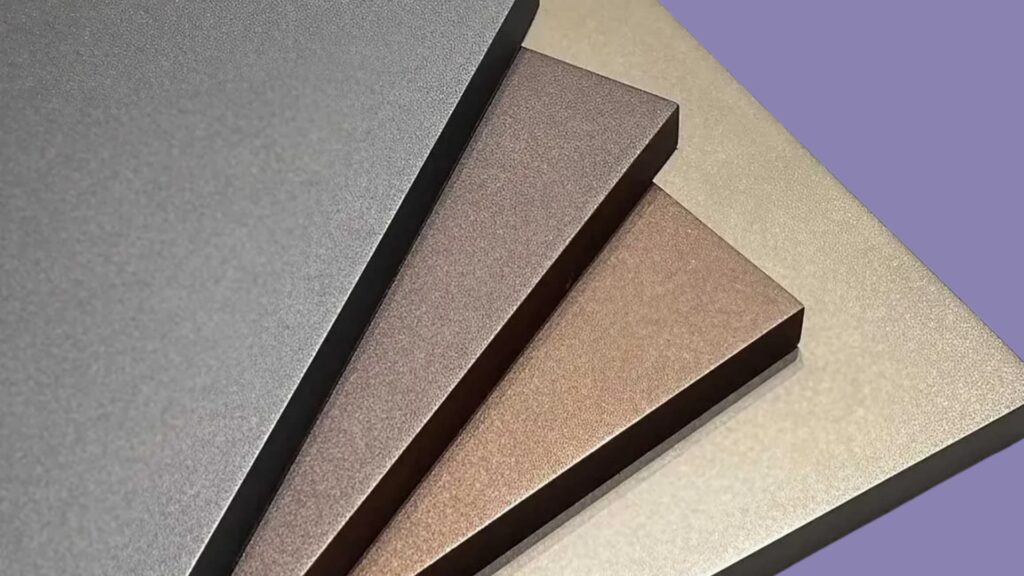
Lightweight, rust-resistant, and available in a wide range of styles and prices. Easy to move around and does not retain heat like dark-colored HDPE. The powder-coat finish can chip with heavy use or in salt air, exposing the metal underneath to rust. Holds up well in dry climates and covered spaces for a decade or more.
3. Wrought Iron and Cast Iron
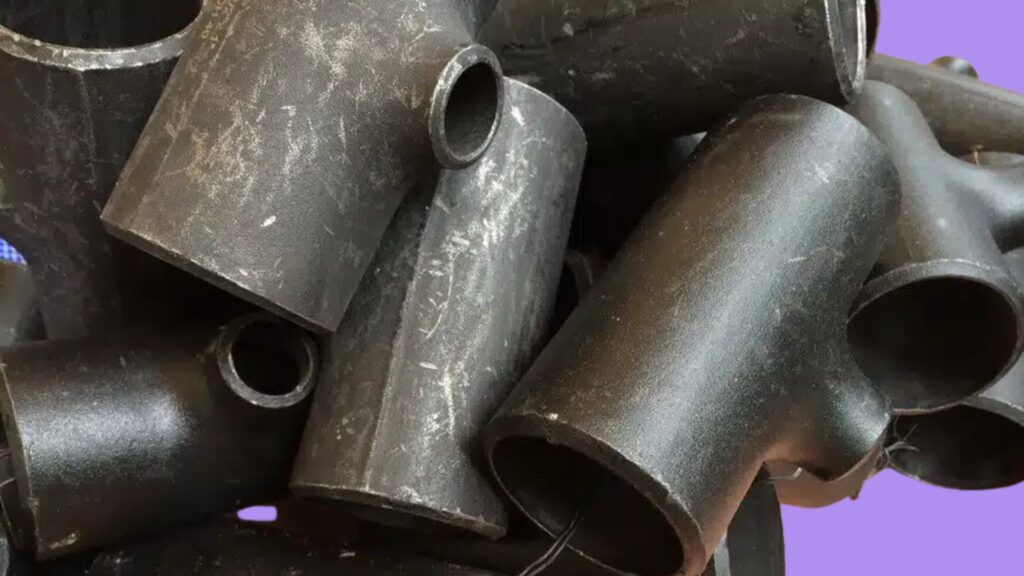
Heavy and formal, with a classic garden look. Iron does not blow over in wind, but it needs regular painting or coating to prevent rust. It is also hard to move once placed. Best suited for a fixed outdoor space where you want a traditional, permanent feel.
4. Composite Lumber (HDPE Mixed with Wood Fibers)
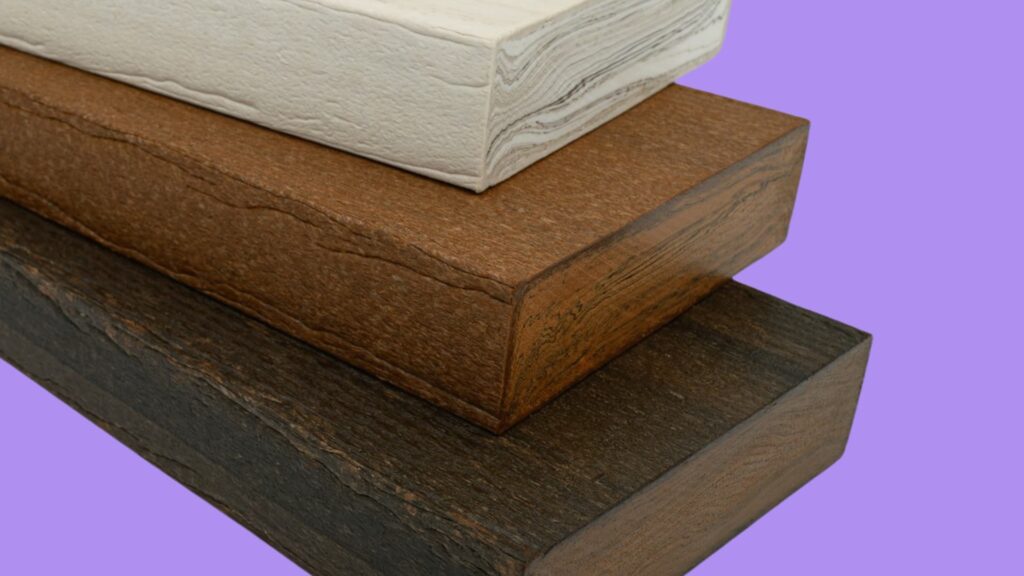
Blends recycled HDPE with wood fibers for a look closer to real wood than pure polywood. Low-maintenance and weather-resistant, though it can absorb slightly more moisture than pure HDPE over time. Trex, Berlin Gardens, and Seaside Casual are the most well-regarded brands in this category.
Quick Comparison: Polywood vs. Alternatives
| Material | Maintenance | Weather Resistance | Eco Score | Lifespan |
|---|---|---|---|---|
| Polywood (HDPE) | Very Low | Excellent | High | 20+ years |
| Teak Wood | High | Good (with care) | Moderate | 15-25 years |
| Powder-Coated Aluminum | Low | Good | Moderate | 10-20 years |
| Composite Lumber | Low | Very Good | Moderate-High | 15-20 years |
| Resin Wicker | Low-Moderate | Good | Moderate | 5-15 years |
| Budget Poly/Plastic | Low | Poor-Fair | Low | 3-7 years |
How to Care for Polywood Furniture?
Caring for polywood is about as simple as it gets. Wipe it down with mild soap and warm water for everyday cleaning.
For tougher grime, use a soft bristle brush to scrub into the seams and textured surface, then rinse with clean water.
A power washer under 1,500 psi works well for seasonal deep cleaning. Do not sand the surface, as it will scratch the material and void any warranty. No paint, stain, sealant, or cover is required.
Polywood furniture can stay outside through all four seasons without treatment. Covering it during heavy winters just makes the next cleaning easier, but it is not needed for the material to hold up.
Final Notes
So, what is polywood made of? In short: recycled HDPE plastic, UV inhibitors, and color pigments, built into lumber that holds up outdoors without any maintenance. That is the core of it.
The material choice affects everything from how often you clean your furniture to how long it lasts and what happens to it at the end of its life.
Polywood sits at a specific point in that spectrum: low upkeep, long lifespan, and a genuine recycling story behind the material. If those things matter to you, it is worth the price.
Have questions about which set or type fits your space? Leave a comment below.