

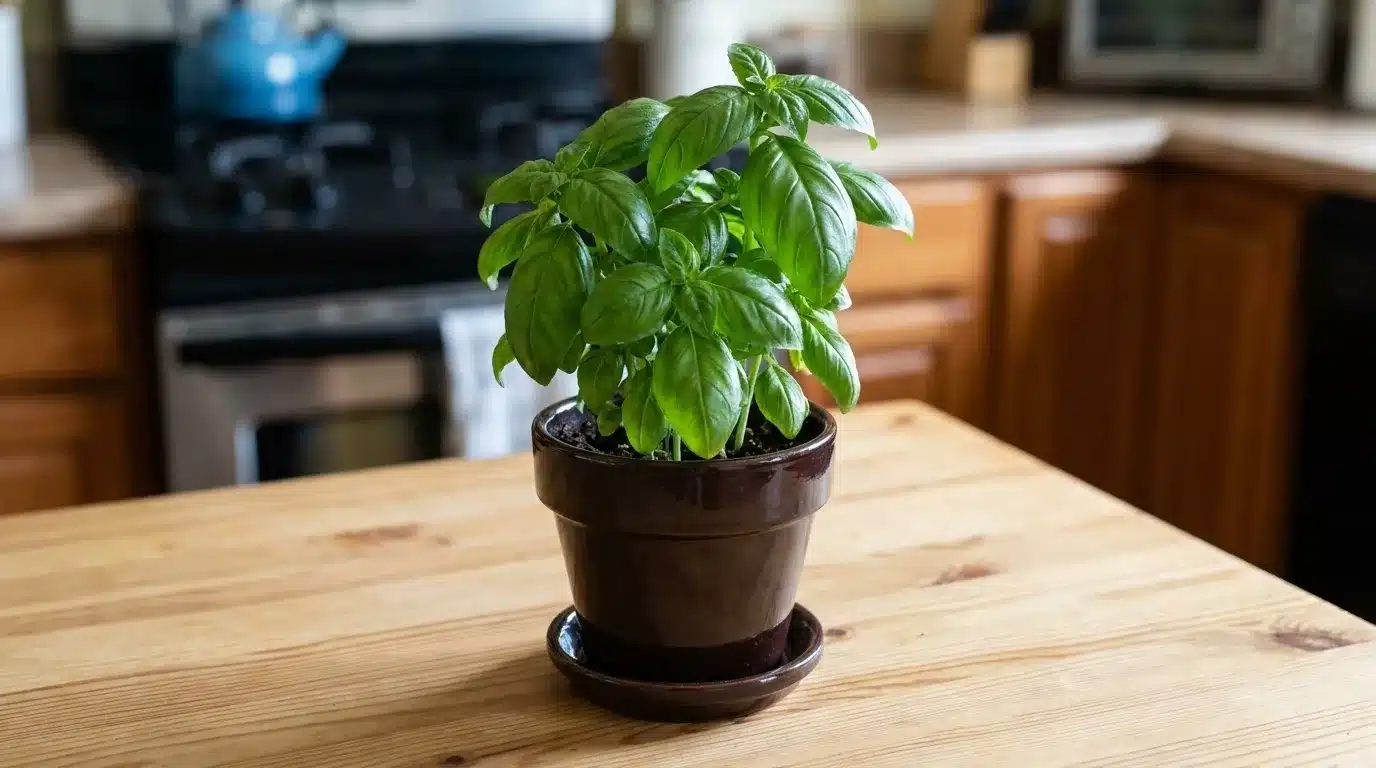
There is something about a fresh basil leaf that store-bought dried herbs simply cannot match. The smell alone stops you mid-cook.
If you have ever spent three dollars on a bunch of basil, used two leaves, and watched the rest go black by Thursday, you already know the frustration.
Growing basil at home fixes that. It costs almost nothing, takes up very little space, and gives you fresh leaves all summer long.
This guide walks you through everything, from picking the right variety to harvesting without killing your plant.
What Is Basil and Why Should You Grow It at Home?
Basil (Ocimum basilicum) is a warm-weather herb in the mint family, native to India and tropical Asia.
It grows as an annual in most of the US, reaches 12 to 24 inches tall depending on the variety, and produces leaves used fresh or dried in everything from pasta sauces to Thai curries.
Twelve plants can yield 4 to 6 cups of leaves per week, which is far cheaper and fresher than anything from a grocery store shelf.
Types of Basil
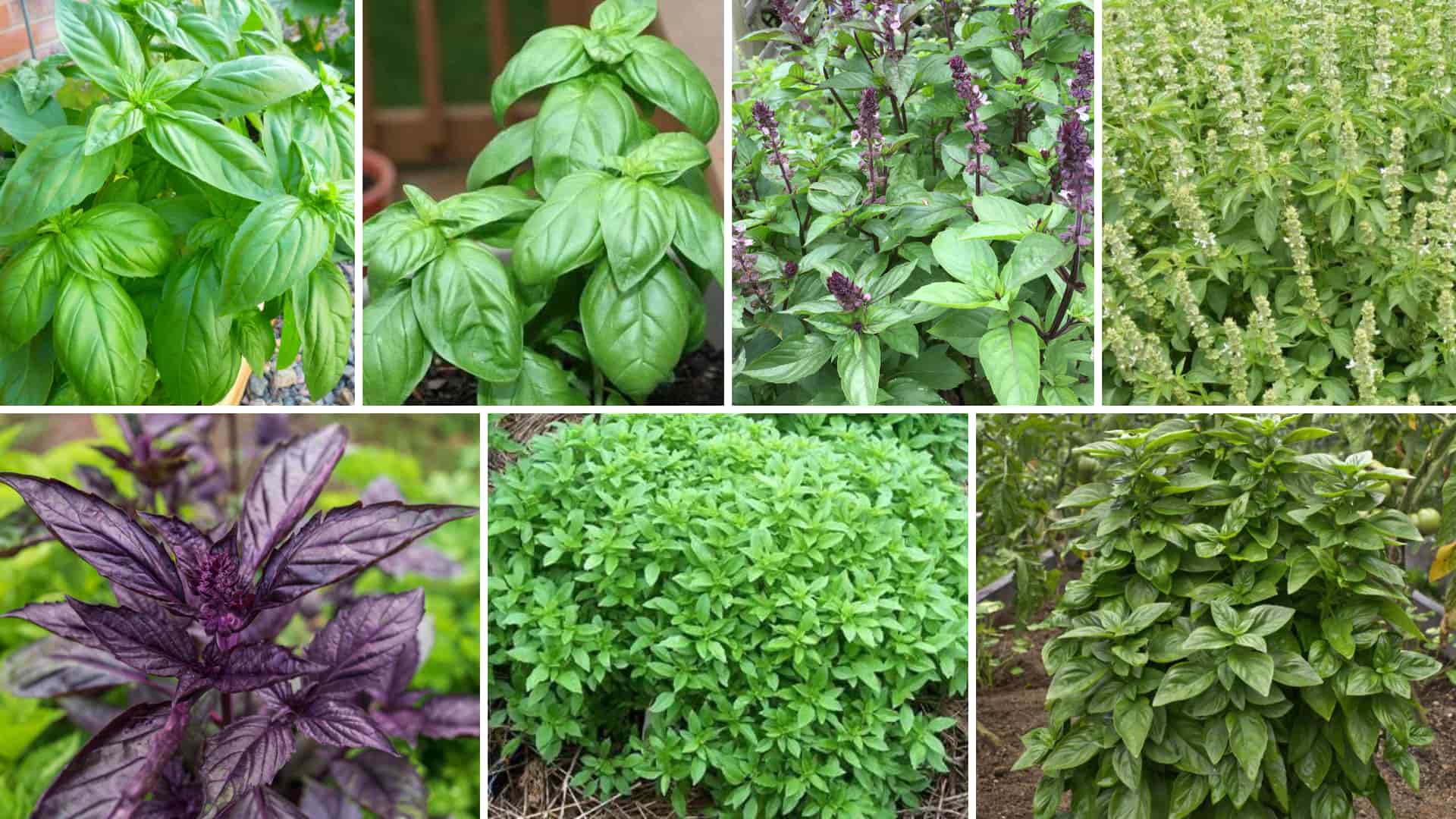
Alt Text: Close-up of a variety of basil types, including purple opal and classic green Genovese, highlighting different leaf textures.
Not all basil tastes the same. Before you buy seeds or a starter plant, it helps to know which variety fits what you cook and where you plan to grow it.
- Sweet Basil: Mild, slightly sweet flavor. Best for Italian cooking, pasta sauces, and salads. Grows in USDA zones 3 to 11.
- Genovese Basil: A cultivar of sweet basil with larger leaves and a more intense flavor. The standard choice for homemade pesto.
- Thai Basil: Spicy and licorice-like. Used in curries, stir-fries, and noodle dishes. Holds up better when cooked than sweet basil.
- Lemon Basil: Light citrus scent and flavor. Pairs well with fish, poultry, and desserts.
- Purple Basil: Deep purple leaves with a slightly spicy taste. Less sweet than sweet basil. Great for visual interest in salads and as a garnish.
- Bush Basil: Stays compact at around 8 inches tall. More intense flavor than sweet basil and a good fit for small containers.
- Emerald Towers Basil: Columnar, grows 24 to 36 inches tall. Slow to flower, so you get more weeks of leaf production before needing to pinch buds.
What Does Basil Need to Grow Well?
Basil is easy to grow, but it does have specific needs. Get these conditions right from the start and you will rarely run into trouble.
The table below covers the core requirements. Think of it as your quick reference before you put a single seed in soil.
| Requirement | What Basil Needs | Why It Matters |
|---|---|---|
| Sunlight | 6 to 8 hours of direct sun daily | Without enough light, leaves thin out and growth slows significantly |
| Soil Type | Well-draining, moderately fertile soil | Soggy soil causes root rot, which kills the plant fast |
| Soil pH | 6.0 to 7.5 (slightly acidic to neutral) | Outside this range, the plant cannot take up nutrients properly |
| Temperature | Above 50°F at night, ideally above 70°F during the day | Basil is cold-sensitive and can die from even a light frost |
| Water | About 1 inch per week outdoors; more often in containers | Consistent moisture keeps leaves healthy without causing root problems |
| Fertilizer | Light feeding, twice per season outdoors | Too much fertilizer reduces the flavor of the leaves |
How to Grow Basil from Seeds
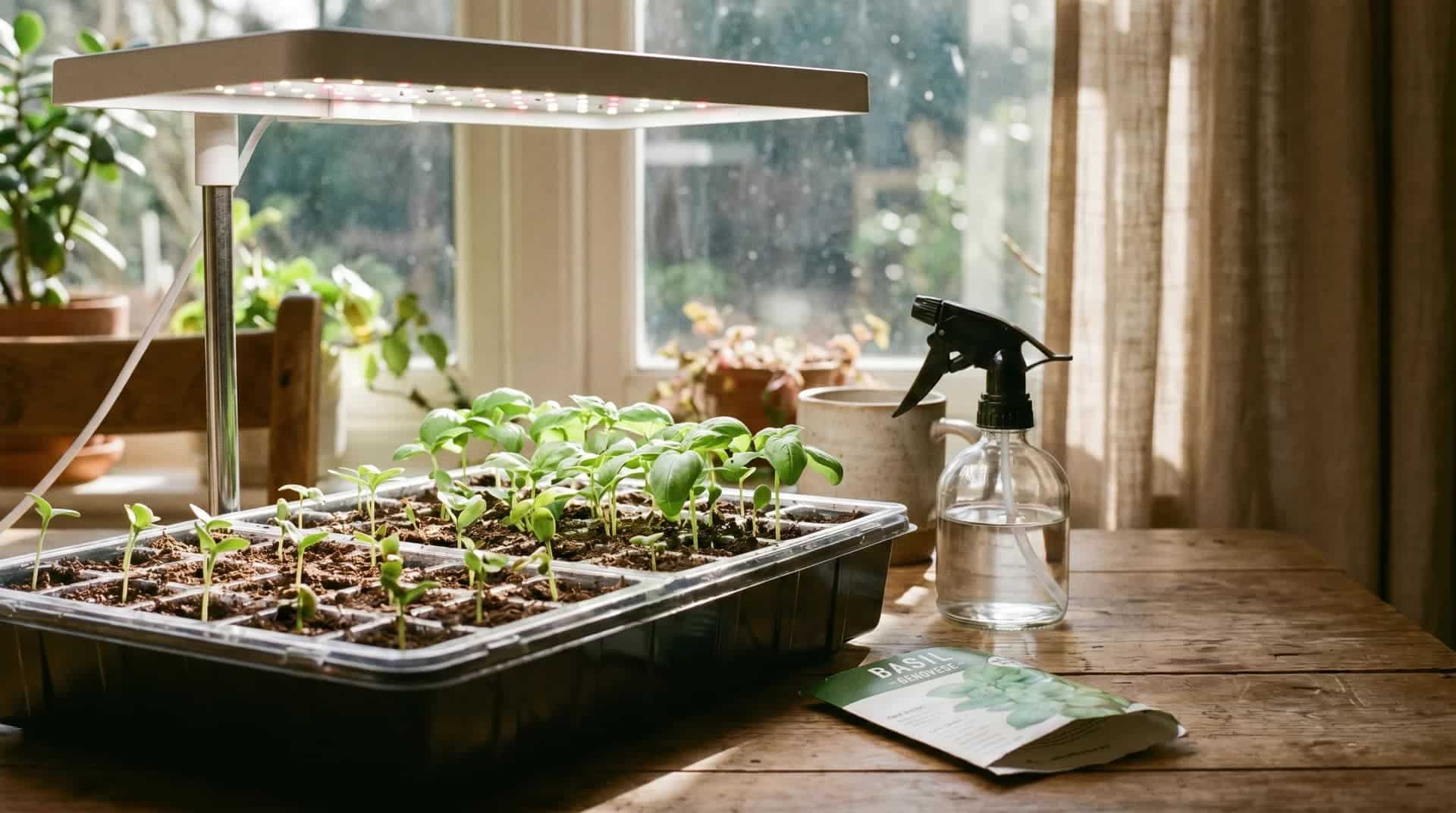
Alt Text: A seed starting tray with young basil seedlings growing under a bright LED grow light on a wooden table.
Starting basil from seed gives you the widest choice of varieties and costs far less than buying starter plants every season. It takes a bit more patience, but the process is straightforward.
Before you get started, gather everything listed below so you are not scrambling mid-process.
| Tool / Material | Purpose |
|---|---|
| Seed starting mix (sterile) | Provides a clean, light medium that drains well and does not compact |
| Small seed cells or pots | Keeps seedlings contained before transplanting |
| Grow lights or sunny windowsill | Seeds need warmth and light to germinate properly |
| Heat mat (optional) | Keeps soil temperature between 70°F and 85°F for faster, more consistent germination |
| Spray bottle or turkey baster | Allows gentle watering without dislodging tiny seeds |
| Plastic dome or cling wrap | Traps humidity around the seeds during germination |
Step 1: Prepare Your Seed Cells Fill seed cells with moistened seed starting mix, stopping about half an inch from the top. Press lightly so there are no air pockets. Do not use garden soil; it compacts and drains poorly in small containers.
Step 2: Sow the Seeds Plant 2 to 3 seeds per cell, about one-quarter inch deep. Cover lightly with a thin layer of mix. Place a plastic dome or cling wrap over the top to hold in humidity.
Step 3: Provide Warmth and Light Move the tray under a grow light or to a warm spot that stays at least 70°F. Seeds germinate in 5 to 14 days. If nothing appears by day 14, check that the soil is moist and the temperature is adequate before starting a fresh batch.
Step 4: Thin and Transplant to Larger Pots Once seedlings have 2 to 3 sets of true leaves, snip off all but the strongest one per cell at soil level. When seedlings are about 3 inches tall, move them into 4-inch pots with standard potting mix.
Step 5: Harden Off and Move Outdoors Two weeks before your last frost date, start setting seedlings outside for 30 minutes on day one. Add 30 more minutes each day for 7 to 10 days. Then plant outdoors, spacing plants 10 to 16 inches apart.
How to Grow Basil from Store-Bought Plants
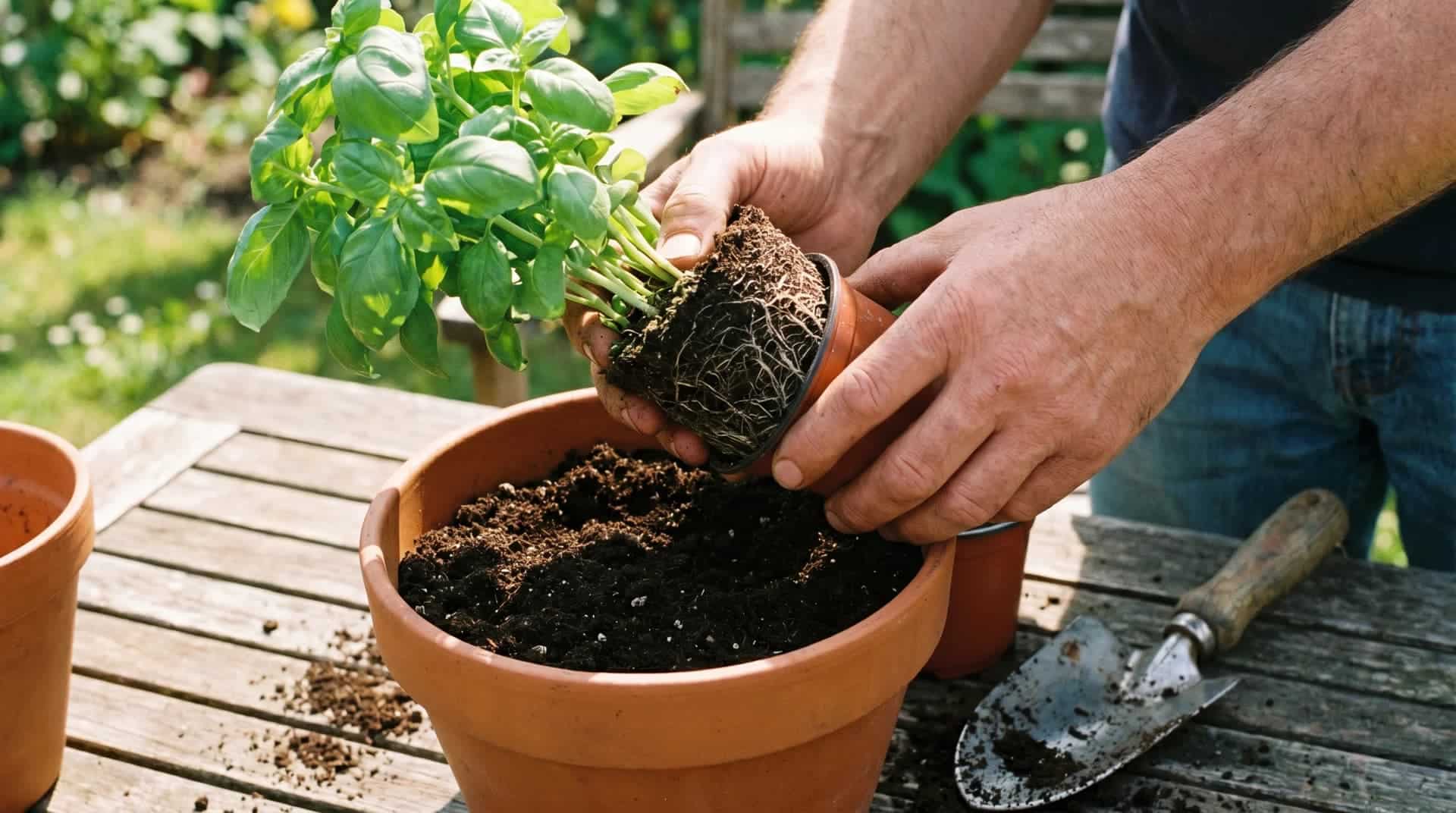
Alt Text: A healthy, young basil plant being carefully removed from a plastic nursery container to be transplanted into a garden.
Buying a starter plant is the fastest way to get growing, especially if you want results within a few weeks rather than a few months. The key is choosing the right plant and getting it into proper conditions quickly.
Supermarket basil pots are usually overcrowded and built for short-term use. Nursery transplants are a better starting point. Here is what you need and how to do it.
| Tool / Material | Purpose |
|---|---|
| Compact, healthy starter plant | Look for dark green leaves, no yellowing, and no flowers already open |
| 12-inch wide container or garden bed space | Gives roots room to spread and the plant room to grow |
| Quality potting mix or amended garden soil | Provides nutrients and proper drainage from day one |
| Mulch (compost or shredded leaves) | Holds moisture around the roots and keeps weeds down |
| Watering can | For a thorough soak right after transplanting |
Step 1: Choose the Right Plant Pick a plant with compact, dark green growth. Skip any that are already heavily flowering; once a plant flowers, it focuses energy on seed production rather than new leaves. Avoid plants with yellow leaves or leggy stems.
Step 2: Check the Roots Gently tip the plant out of its pot. If roots are densely tangled in a circle (root-bound), loosen them slightly with your fingers before planting. This helps them spread into new soil instead of continuing to grow in a tight ball.
Step 3: Plant at the Right Depth Dig a hole in your garden bed or container, then set the plant so the top of its root ball sits level with the surrounding soil. Do not bury the stem.
Step 4: Water Thoroughly Give the plant a deep watering right after transplanting. You want moisture to reach all the roots, not just the surface. Let the water drain completely before watering again.
Step 5: Add Mulch and Watch the Weather Apply a 2-inch layer of compost or shredded leaves around the base. If nighttime temperatures are still dipping below 50°F, cover the plant or bring the container inside until it warms up.
How to Grow Basil Indoors
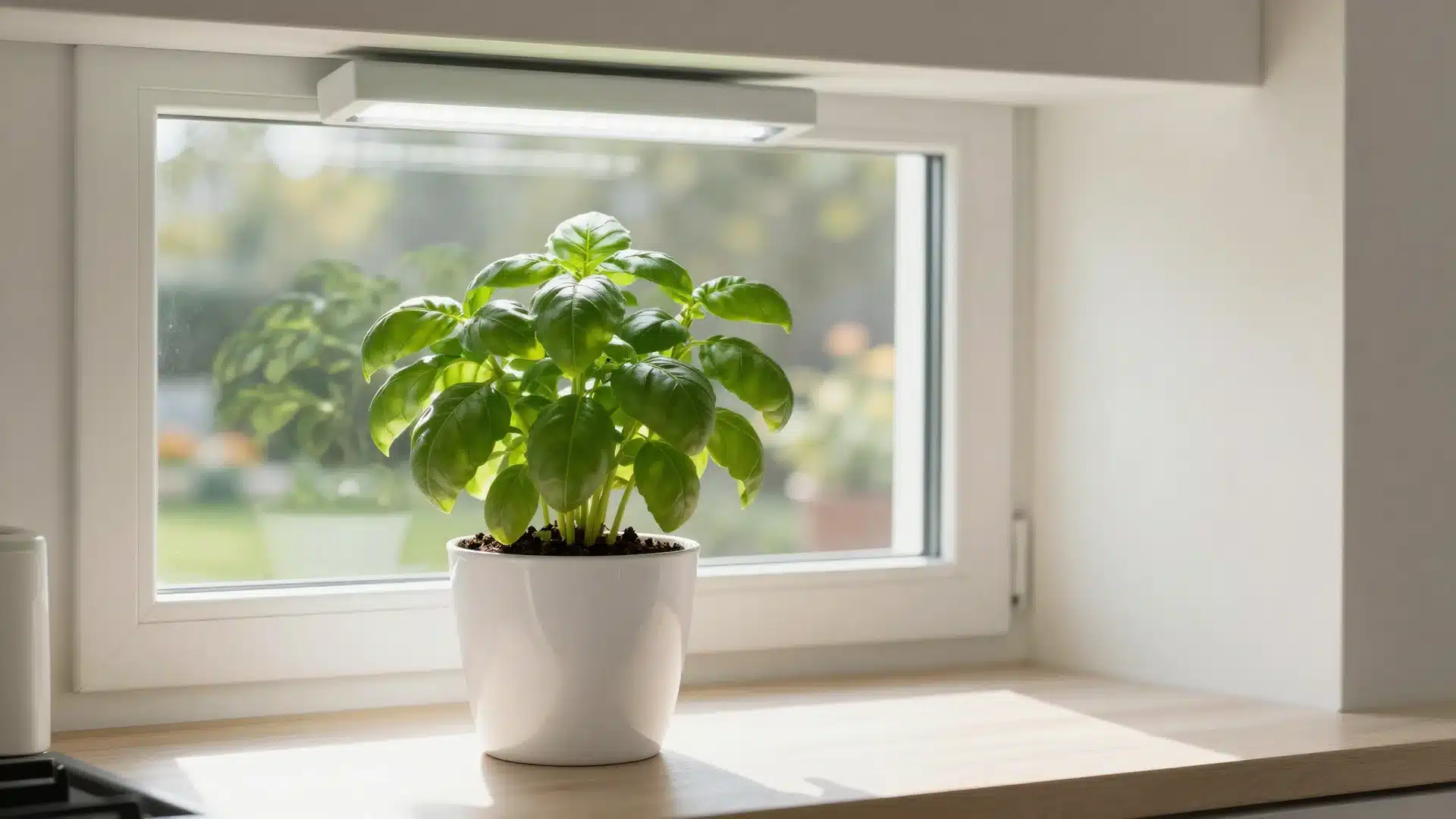
Alt Text: An indoor herb garden setup featuring a basil plant thriving under a bright LED grow light inside a modern kitchen.
Basil does well indoors as long as it gets enough light and stays warm. It will not survive near a drafty window in winter, but give it a bright spot and it will produce leaves year-round.
The setup matters more indoors than outdoors because you are controlling everything. Here is what you need.
| Tool / Material | Purpose |
|---|---|
| South-facing window or grow lights | Basil needs at least 6 hours of light; grow lights work well when natural light is limited |
| Pot with drainage holes (6 inches deep minimum) | Prevents waterlogged soil and root rot |
| Quality indoor potting mix | Designed for container growing; drains better than garden soil |
| Saucer or tray | Catches drainage water; empty after watering so roots do not sit wet |
| Small watering can | Allows controlled watering at the base of the plant |
Step 1: Pick the Right Spot A south-facing windowsill is your first option. Basil needs at least 6 hours of bright light per day indoors. Keep it away from cold drafts and air conditioning vents, which dry it out and stress the plant.
Step 2: Set Up Grow Lights If Needed If natural light is limited, use LED or fluorescent grow lights positioned 2 to 4 inches above the plant tops. Set them on a timer for 14 to 16 hours per day. Do not leave them on all night; basil needs a dark period too.
Step 3: Plant in the Right Container Use a pot at least 6 inches deep with drainage holes at the bottom. Fill with a quality indoor potting mix and set the plant in at the same depth it was in its nursery pot.
Step 4: Water Carefully Check the soil every 1 to 2 days. Water when the top inch feels dry. Pour water at the base of the plant, not on the leaves, to reduce the risk of mold. Empty the saucer after watering so the roots are not sitting in standing water.
Step 5: Monitor Temperature Keep indoor temperatures above 60°F at all times. Basil near a window in winter can be exposed to cold air even when the room feels warm. If the leaves look droopy after a cold night, move the plant further from the glass.
How to Grow Basil in Pots or Containers
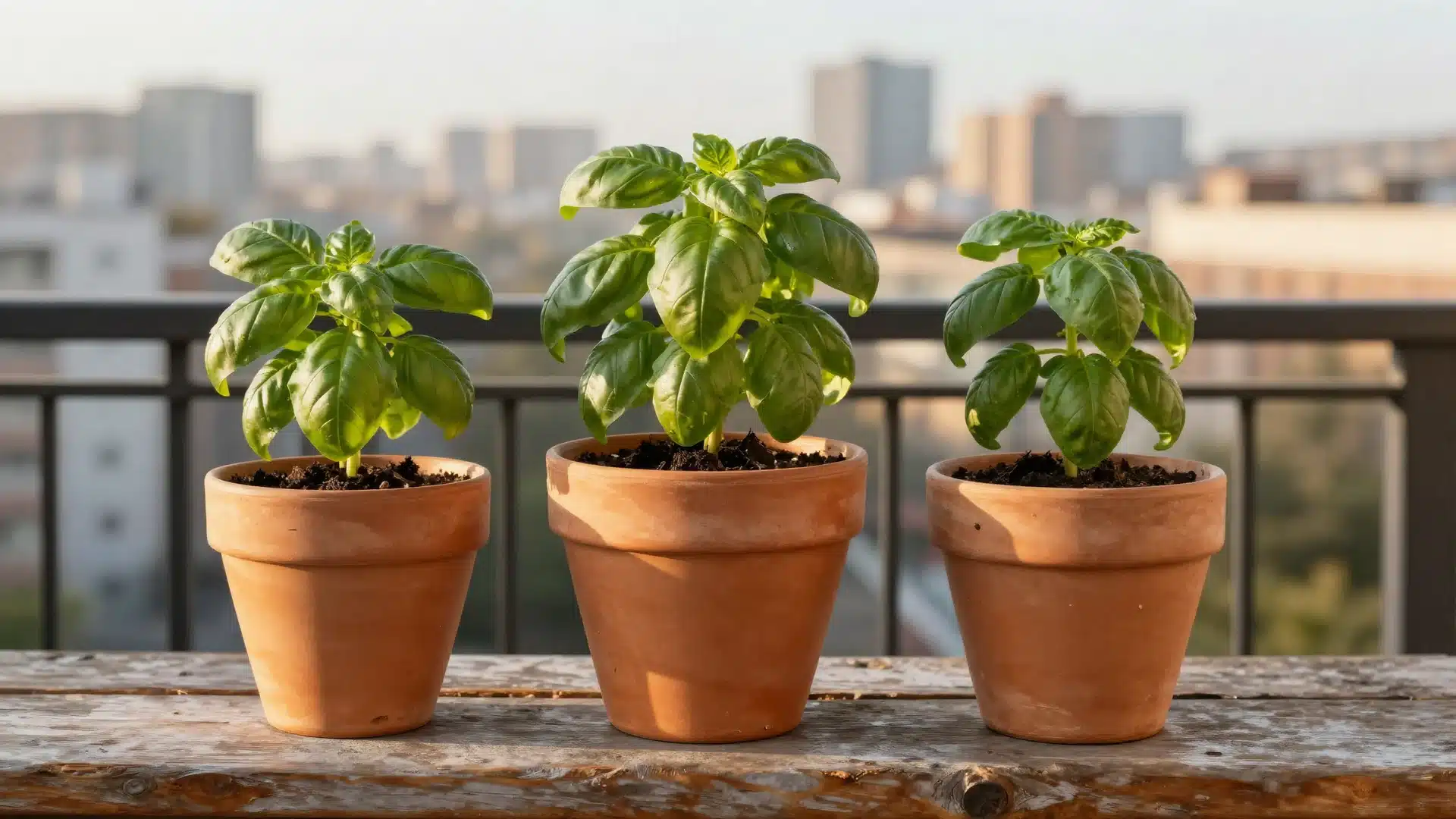
Alt Text: Multiple clay pots containing bushy basil plants arranged on an outdoor wooden deck to receive maximum sunlight.
Container growing is one of the most practical ways to grow basil, whether you have a backyard, a balcony, or just a sunny patch of pavement. Pots also give you flexibility; you can move them inside when temperatures drop.
Choosing the right container and mix makes a real difference. Here is your setup guide.
| Tool / Material | Purpose |
|---|---|
| Container at least 12 inches wide and 8 inches deep | Wide enough for roots to spread; deep enough to support healthy growth |
| Drainage holes | Prevents waterlogged soil, which is the number one cause of container basil dying |
| Quality outdoor potting mix | Garden soil compacts in pots; potting mix stays light and drains well |
| Compost | Adds nutrients without overdoing fertilizer, which reduces leaf flavor |
| Mulch (optional) | Slows moisture loss from the surface of the pot in hot weather |
Step 1: Choose the Right Container A 12-inch wide container works well for one plant. A larger pot, 16 to 18 inches, lets you grow two or three plants together. Clay pots breathe well but dry out faster. Plastic holds moisture longer. Always check for drainage holes before buying.
Step 2: Fill with the Right Mix Use a quality outdoor potting mix designed for containers. Do not use garden soil; it drains too slowly and compacts around roots. Mix in a small amount of compost for extra nutrition.
Step 3: Plant at the Correct Depth Set your basil plant so its root ball sits level with the soil surface. Press gently around the stem to secure it. Avoid burying the stem itself, as this can cause rot.
Step 4: Water More Often Than You Think Container basil dries out faster than in-ground basil, especially in summer heat. Check the soil daily. Water when the top inch is dry. On very hot days, containers may need water twice.
Step 5: Move the Container Seasonally When nighttime temperatures drop below 50°F, bring pots inside. Set them near a bright window or under grow lights until warm weather returns.
How to Care for Your Basil Plant
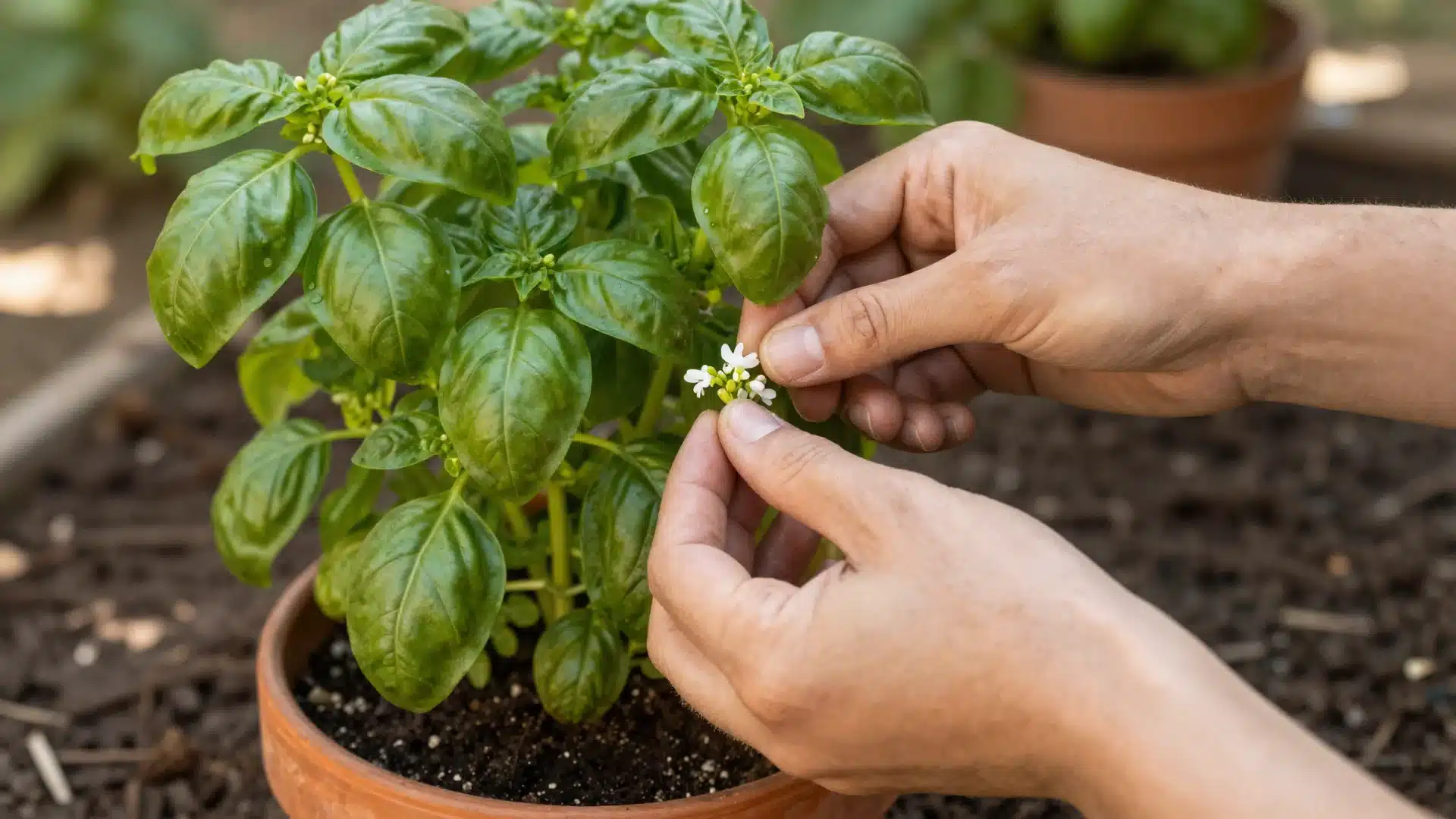
Alt Text: A person using garden shears to prune the top of a basil stem just above a leaf node to encourage bushy growth.
Basil care is not complicated once it is in the ground or a pot. A few consistent habits keep it producing leaves all season without much fuss.
Each care task below comes with a clear explanation of what to actually do and why it matters.
1. Mulching
Apply a 2 to 3-inch layer of compost or shredded leaves around the base of outdoor plants. This holds moisture in the soil between waterings and keeps competing weeds from taking over. In containers, a thin layer on top of the potting mix helps slow evaporation on hot days.
2. Pinching Off Flowers
The moment you see flower buds forming at the tips of your basil stems, pinch them off. When basil flowers, leaf production slows and the leaves that remain become smaller and less flavorful. Do this every few days throughout the growing season. If you want seeds for next year, let one or two plants flower at the very end of the season.
3. Repotting Container Basil
If roots start appearing from the drainage holes or the plant stops growing despite regular watering, it has run out of room. Move it to the next size up, about 2 inches wider and deeper. Water well after repotting and keep it in a shaded spot for a day or two while it settles.
How to Prune Basil So It Keeps Growing
Pruning is the single most important habit for keeping a basil plant productive. Skip it and the plant goes straight to flower, leaving you with a tall, sparse plant and very few usable leaves.
Here is what to do at each stage.
- When to start: Begin pruning when the plant is 6 inches tall and has at least 2 to 3 sets of true leaves.
- Where to cut: Cut the center stem just above the second set of leaves from the top. Two new stems will grow from that point.
- How often: Prune every 7 to 10 days as the plant grows. Each cut creates two new shoots, keeping the plant full and bushy.
- What not to do: Never cut into the bare, woody part of the stem. New growth will not come back from that point.
- Flowers: Cut off any flower stalks as soon as they appear. Even a few days of flowering shifts energy away from leaf production.
- Bottom leaves: Do not pull off individual leaves from the bottom of the plant. This does not encourage branching. Always cut stem tips instead.
Common Basil Problems and How to Fix Them
Even with good care, basil plants run into issues. The good news is that most problems have a clear cause and a clear fix. Check symptoms early so small issues do not turn into bigger ones.
| Symptom | Likely Cause | What to Do |
|---|---|---|
| Leaves turning yellow | Overwatering, poor drainage, or downy mildew | Let soil dry between waterings; improve drainage; check undersides of leaves for gray fuzz |
| Brown spots on leaves | Too much nitrogen, cold damage, sunburn, or fungal infection | Flush soil with water if overfertilized; move to a warmer or shadier spot; remove affected leaves |
| Plant wilting | Underwatering or overwatering | Check soil: dry means water now; wet means hold off and check drainage |
| Leggy growth | Not enough sunlight | Move to a brighter spot or add grow lights; prune back to encourage bushier growth |
| Plant not growing | Cold temperatures, too little light, or root-bound pot | Check temperature, light levels, and whether roots are circling the bottom of the pot |
| Leaves curling | Pest activity or heat stress | Check undersides of leaves for insects; move container to partial shade during afternoon heat |
| Stem turning brown at base | Fusarium wilt (fungal disease) | Remove and discard the plant; avoid planting basil in that spot for 2 to 3 years |
Pests and Diseases That Attack Basil
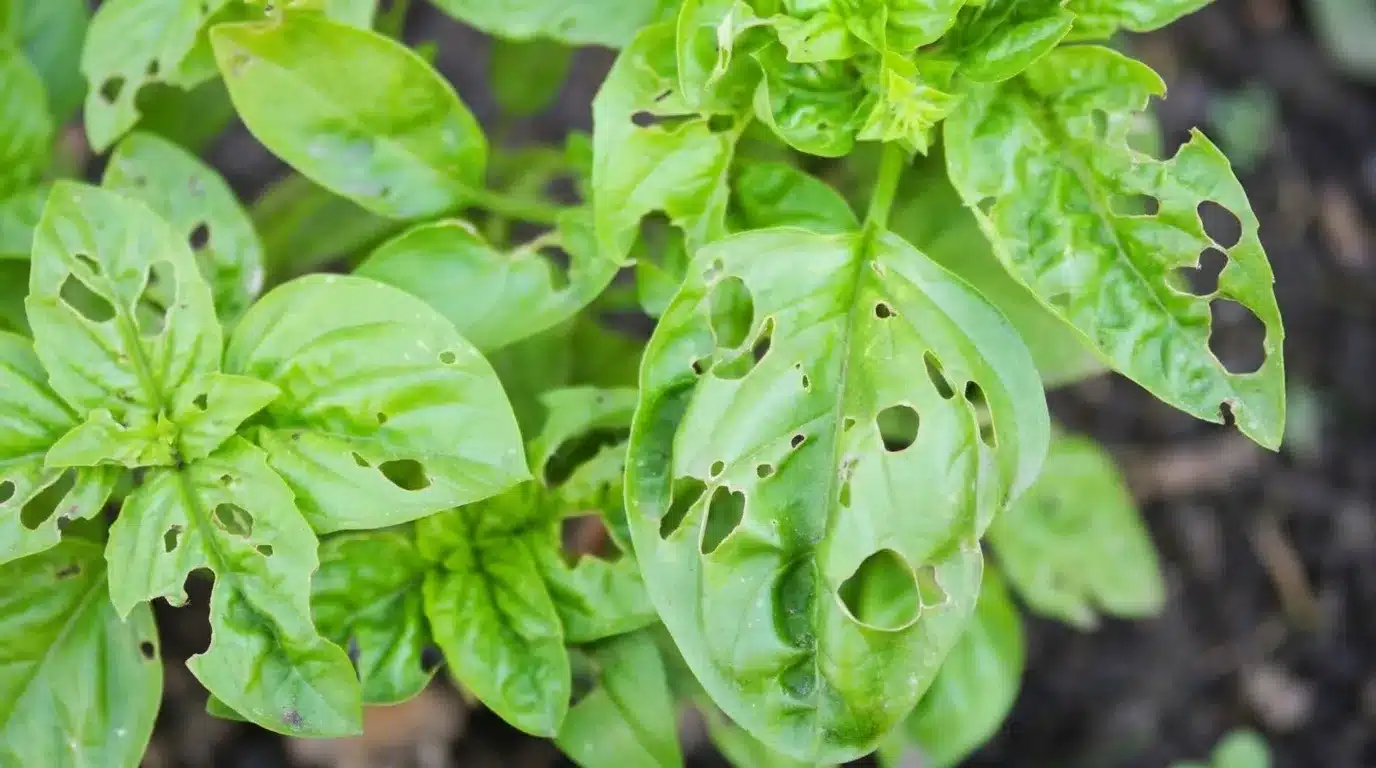
Alt Text: A close-up of a basil leaf with yellowing edges and small dark spots, indicating a common fungal disease or pest issue.
Basil is not the most pest-prone herb, but it does have known weak points. Catching problems early is far easier than treating a plant that is already badly affected.
Here is a quick guide to the most common offenders and what to do about each one.
Common Pests
- Aphids: Tiny insects that cluster under leaves and drain sap, causing curling or yellowing. Spray undersides with a strong stream of water or apply neem oil.
- Whiteflies: Small white flies that cause yellowing and weak growth. Treat with neem oil or insecticidal soap labeled safe for edible herbs.
- Japanese Beetles: Feed in daylight and eat large sections of leaves, leaving only the veins. Hand-pick into soapy water or use an organic insecticide labeled for herbs.
- Slugs: Feed at night and leave ragged holes in leaves. Set a shallow container of beer near the plant at dusk; slugs are drawn to it and do not survive.
- Spider Mites: Cause tiny speckled spots and fine webbing. Spray undersides with water regularly and use a safe miticide if needed.
Common Diseases
- Downy Mildew: Yellow patches on upper leaves with gray fuzz underneath. Remove affected leaves, improve airflow, and water only at the base. Choose resistant varieties like Eleonora.
- Fusarium Wilt: Brown streaks on stems with wilting that does not recover after watering. No cure; remove the plant and avoid that spot for basil or mint for 2 to 3 years.
- Bacterial Leaf Spot: Black or brown spots caused by soil splashing onto leaves. Water at the base only, remove infected leaves, and space plants further apart.
- Root Rot: Brown, slimy roots from consistently wet soil. Remove the plant if fully rotted and start fresh in clean, well-draining soil.
How to Harvest Basil?
Start harvesting when the plant is 6 to 8 inches tall. Cut stem tips just above a lower pair of leaves rather than pulling individual leaves from the bottom.
For every stem you cut, two new stems grow back, which keeps the plant full and productive all season. Never remove more than one-third of the plant at one time.
The best time to harvest is in the morning, after dew dries but before the afternoon heat, when the flavor in the leaves is at its strongest.
Final Thoughts
Growing basil at home is one of the most rewarding things you can do with a sunny windowsill or a small patch of garden.
Get the basics right: enough sun, warm soil, good drainage, regular pruning, and harvesting from the top down. Do those things consistently and your basil will keep producing all season.
Which variety are you planning to start with? Let us know in the comments below.
Frequently Asked Questions
What Is the Trick to Growing Basil?
The real trick is pruning regularly. Cut stem tips just above a leaf node every 7 to 10 days and the plant keeps branching instead of going to flower.
Does Basil Come Back Every Year?
No. Basil is an annual in most of the US, meaning it completes its life cycle in one season and dies after flowering or the first frost.
Can Basil Lower Cortisol?
Holy basil (Tulsi), a related variety, has shown adaptogenic properties in some studies, but common sweet basil used in cooking has no proven effect on cortisol levels.
What Is the Most Powerful Herb to Fight Anxiety?
Ashwagandha and holy basil (Tulsi) are among the most studied herbs for stress and anxiety support, based on current research. Always speak with a doctor before using any herb medicinally.
Does Basil Affect Testosterone?
There is no reliable scientific evidence that culinary basil has any measurable effect on testosterone levels.