

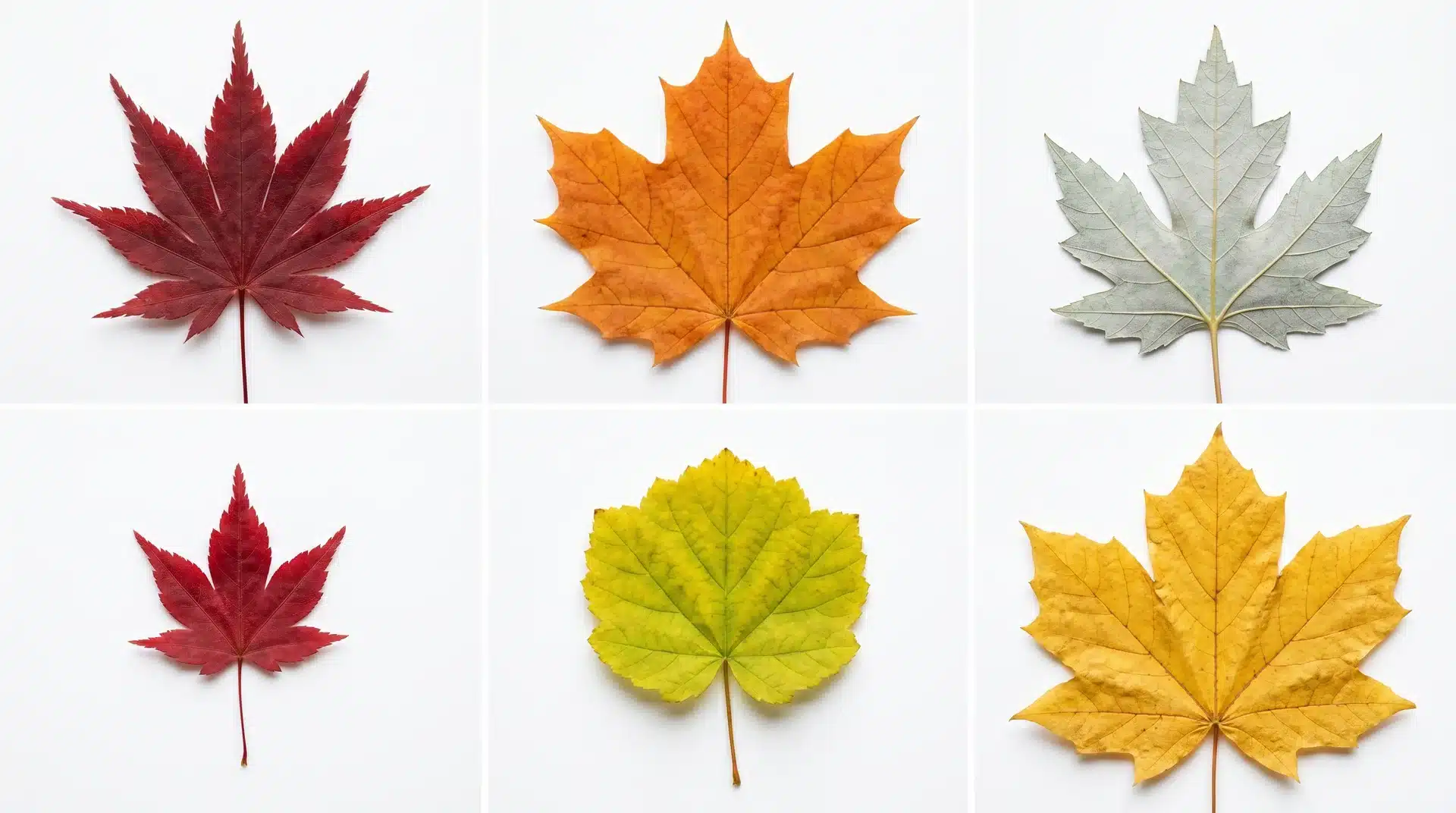
Maple trees do something most yard trees do not.They look good in every season, red flower clusters in early spring, full green shade through summer, then that fall color show that stops people mid-walk.
Come winter, the bark and branch shape carry the look on their own. But with so many maple species out there, picking the right one for your yard is not always straightforward.
This guide covers common types of maple trees, how to tell them apart, and which one actually fits your space.
What Are Maple Trees?
Maple trees belong to the genus Acer and include around 132 species found across North America, Europe, Asia, and Africa.
They are deciduous trees, meaning they drop their leaves each fall, and are widely known for their lobed leaves, winged seeds called samaras, and strong fall color.
Most species live around 200 years, with some reaching 300 years under good conditions. Their wood is used for furniture and musical instruments, and the sap from certain species is boiled down to make maple syrup.
How to Identify a Maple Tree?
Once you know what to look for, spotting a maple is straightforward. Here are the four features that set them apart from other trees.
| Feature | What to Look For |
|---|---|
| Leaves | Palmate (hand-shaped) with 3 to 9 pointed lobes; grow in opposite pairs on branches |
| Bark | Young trees: smooth, light gray. Older trees: furrowed, shaggy, or peeling depending on species |
| Seeds (Samaras) | Winged, grow in pairs, spin like helicopters when they fall |
| Branching | Branches grow in opposite pairs, one on each side of the trunk |
The opposite branching pattern is one of the most reliable winter identifiers. When leaves are gone, look for branches that grow in matched pairs. Most other common trees have alternating branches, not opposite ones.
12 Types of Maple Trees
Here is a closer look at 12 types, including what makes each one different and how to identify it.
1. Sugar Maple (Acer saccharum)
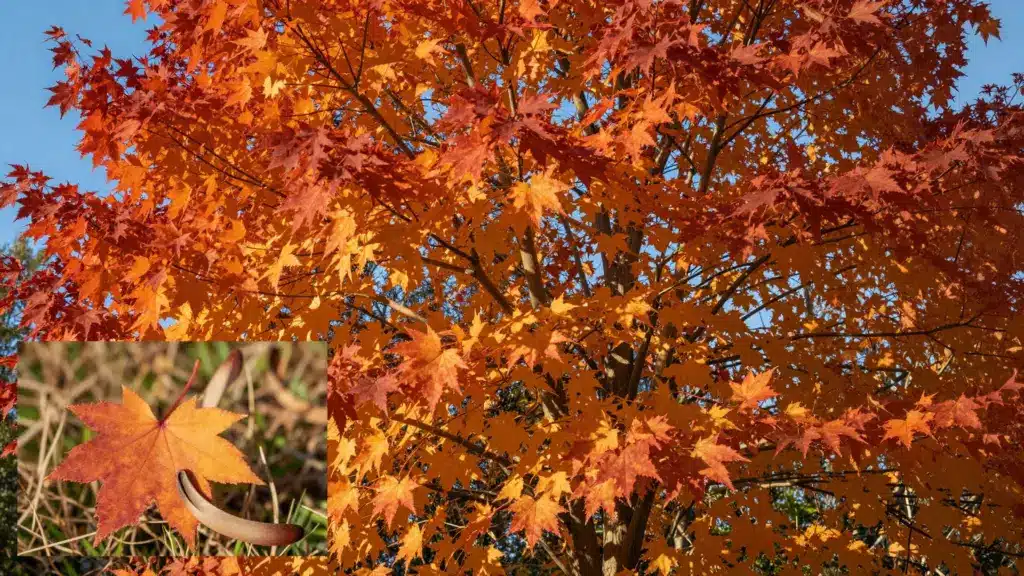
USDA Zones: 3 to 8 | Height: 60 to 75 feet
- Leaves: Five lobes with smooth, toothless edges. Deep green in summer.
- Bark: Young bark is smooth and gray. Older bark grows long plates attached on one side, giving the trunk a layered look.
- Seeds: Horseshoe-shaped samaras that ripen in fall.
- Fall Color: Deep orange, red, and crimson, the strongest fall display of any maple.
Sugar Maple is the go-to tree for maple syrup. The sap runs at about 2% sugar, and it takes 40 gallons to produce one gallon of syrup. It grows well in large yards with enough room for its full canopy spread.
Quick ID: Smooth leaf margins plus horseshoe-shaped seeds equals Sugar Maple.
2. Red Maple (Acer rubrum)
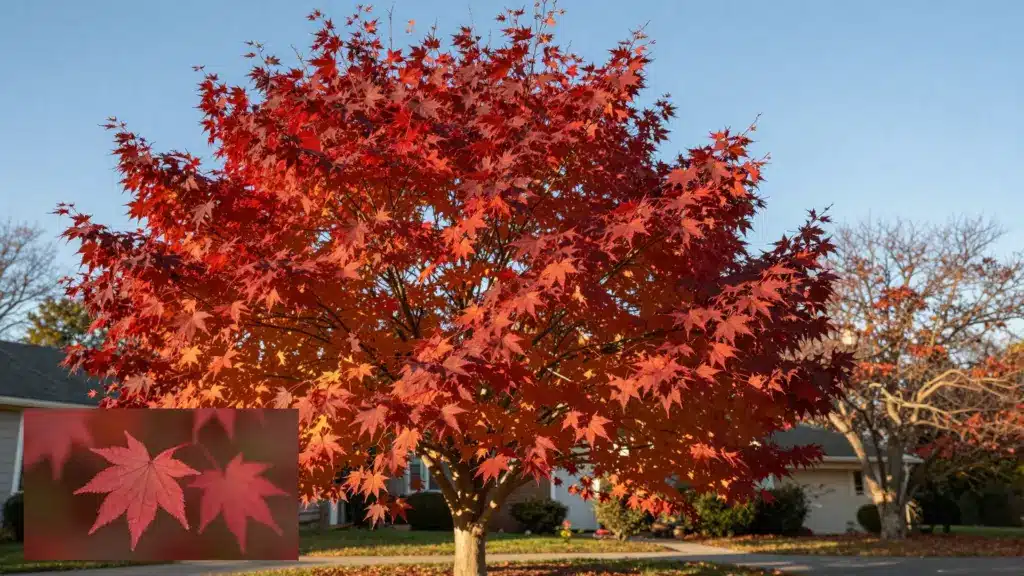
USDA Zones: 3 to 9 | Height: 40 to 60 feet
- Leaves: 3 to 5 shallow lobes with small teeth along the edges. Pale, whitish underside.
- Bark: Smooth and light gray when young. Darkens and develops rough, peeling plates with age.
- Twigs: Slender, glossy, and reddish, a reliable winter identifier.
- Seeds: Narrow V-shaped samaras that ripen in May or June, earlier than most maples.
Red Maple is the most widely distributed maple in North America. It grows in yards, along streets, and in forests alike. One detail many guides skip: it does not do well in alkaline soil, manganese deficiencies show up quickly when the conditions are wrong.
Quick ID: Reddish twigs plus tight V-shaped seeds equals Red Maple.
3. Silver Maple (Acer saccharinum)
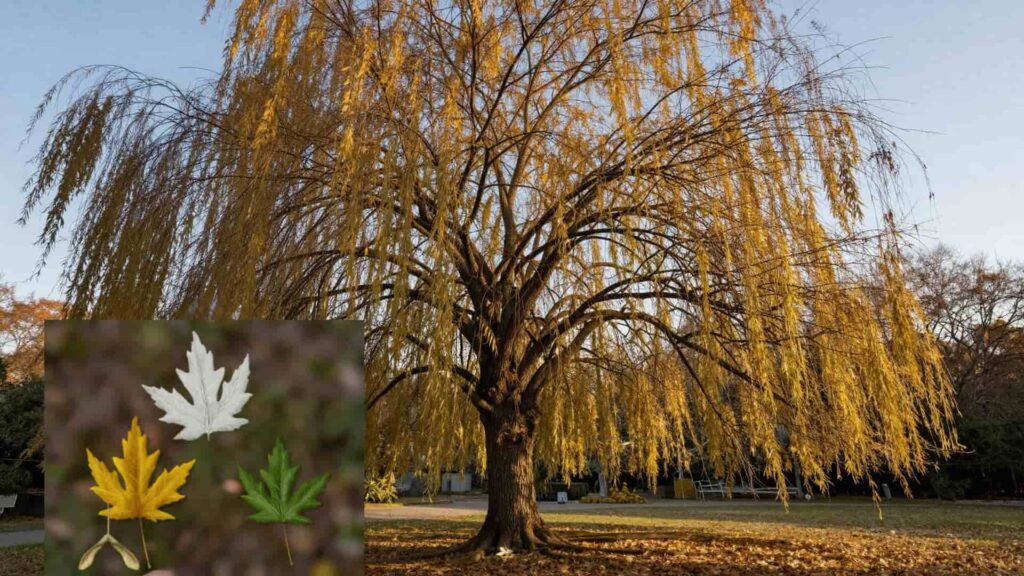
USDA Zones: 3 to 9 | Height: 50 to 80 feet
- Leaves: Five deeply cut lobes. Bright green on top, silvery white underneath. They flutter in even light wind.
- Bark: Smooth and gray when young. Irregular, shaggy, and flaky on older trees.
- Seeds: Largest samaras of any common maple, with wide, curved wings.
- Fall Color: Pale yellow, sometimes shifting to faint gold or salmon tones.
Silver Maple grows fast and provides shade quickly, but the roots are a problem. They heave sidewalks, crack driveways, and get into water lines. Keep it at least 20 feet from structures, driveways, and septic systems. Branches drop easily in wind.
Quick ID: Silvery leaf undersides plus a foul smell when the twig is scratched equals Silver Maple.
4. Japanese Maple (Acer palmatum)
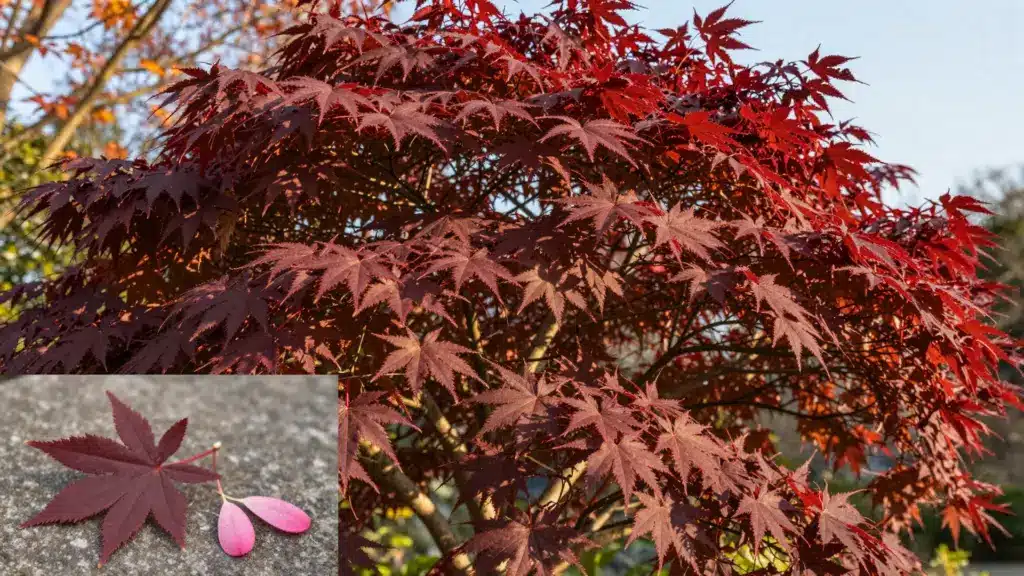
USDA Zones: 5 to 9 | Height: 15 to 25 feet (varies by variety)
- Leaves: Deeply cut, lacy lobes in shades from bright green to deep red, purple, and bronze.
- Bark: Stays smooth even on older trees, unusual for maples.
- Seeds: Small pink or red samaras.
- Fall Color: Red, orange, and gold depending on the variety.
Japanese Maple is the most popular ornamental maple in North American yards. It works in containers, on patios, and in small spaces where a larger tree would crowd things out. It prefers partial shade and well-draining soil.
Quick ID: Finely cut lacy leaves plus compact ornamental form equals Japanese Maple.
5. Norway Maple (Acer platanoides)
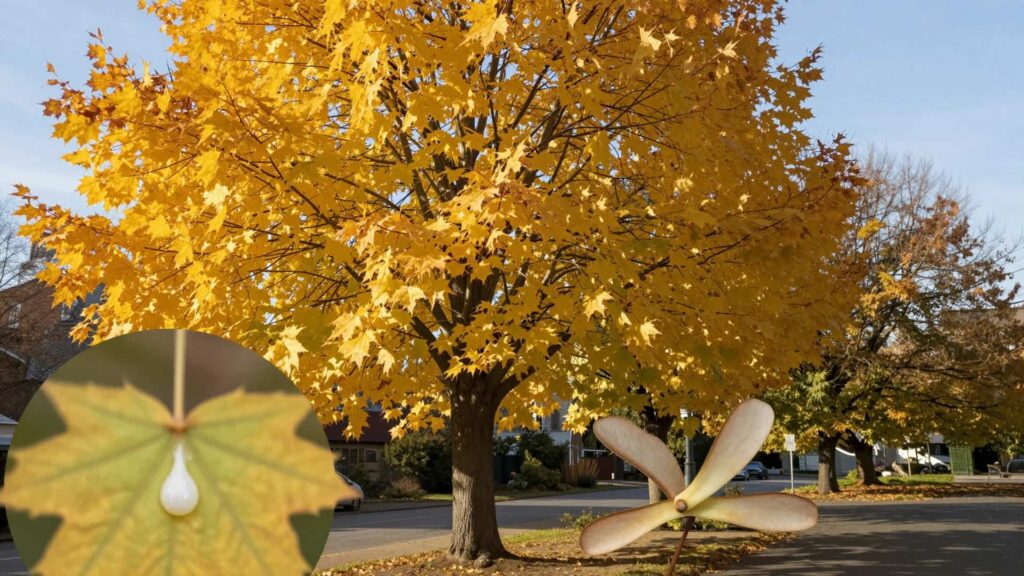
USDA Zones: 3 to 7 | Height: Up to 50 feet
- Leaves: Large, broad, five-lobed. Breaks off a milky white sap at the stem, unique to this species.
- Bark: Gray-black with shallow, narrow ridges in a regular diamond pattern.
- Seeds: Horizontally spreading wings that lie almost flat, unlike the V-shape of other maples.
- Fall Color: Yellow, turning later in the season than Red Maple.
Norway Maple came from Europe in the mid-1700s and became a common street tree through the 1960s. It is now considered invasive in parts of the northeastern US. Always check local rules before planting.
Quick ID: Milky white sap from a broken leaf stem equals Norway Maple, every time.
6. Amur Maple (Acer ginnala)
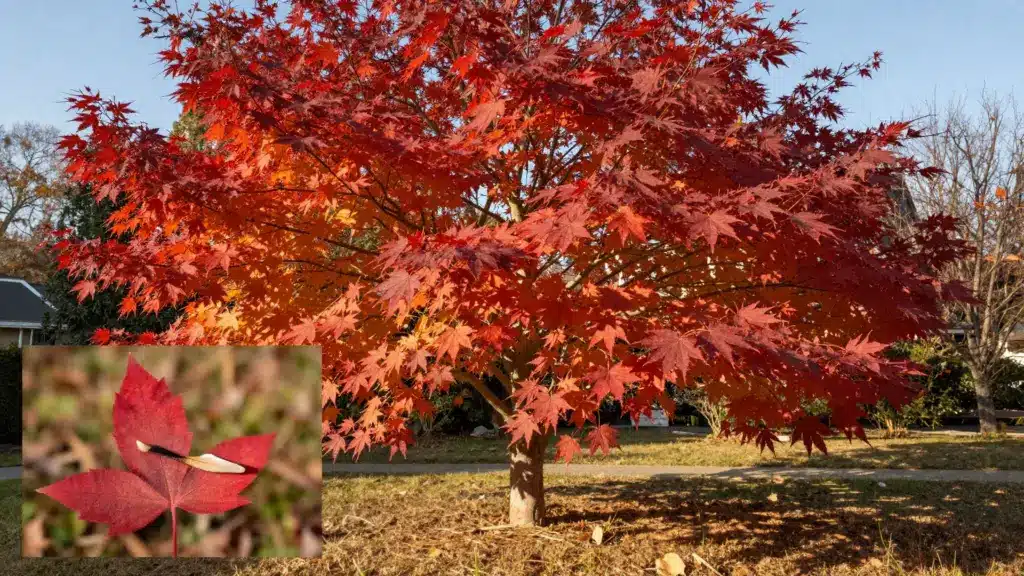
USDA Zones: 3 to 8 | Height: 15 to 20 feet
- Leaves: Triangular with three lobes. The center lobe is noticeably longer than the two side lobes.
- Bark: Dark gray with visible orange fissures running through it.
- Seeds: Small winged samaras, up to one inch long.
- Fall Color: Fiery red, one of the best small trees for fall color.
Amur Maple was introduced to North America in 1860 from Japan and China. It handles pruning better than most maples, which makes it useful for hedges and screens. It works in full sun to partial shade.
Quick ID: Three lobes with a longer center lobe plus small stature equals Amur Maple.
7. Box Elder Maple (Acer negundo)
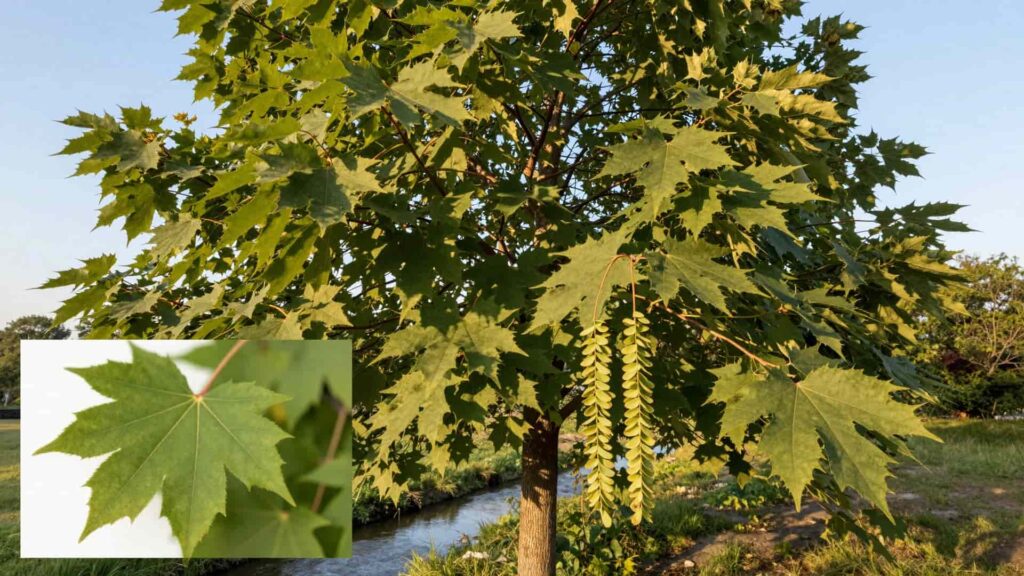
USDA Zones: 2 to 10 | Height: 30 to 50 feet
- Leaves: Compound with 3 to 7 leaflets, looks like ash, not a typical maple leaf.
- Bark: Soft brown with deep ridges running along the trunk.
- Seeds: Samaras grow in long, hanging clusters rather than pairs.
- Fall Color: Yellow-green to brown, with no standout fall show.
Box Elder is the only maple with compound leaves, which throws a lot of people off. It grows in wet soil, dry soil, and cold climates where most maples would struggle. It stabilizes stream banks and provides shelter for wildlife.
Quick ID: Compound leaflets on a maple-family tree equals Box Elder, the only one that looks like this.
8. Black Maple (Acer nigrum)
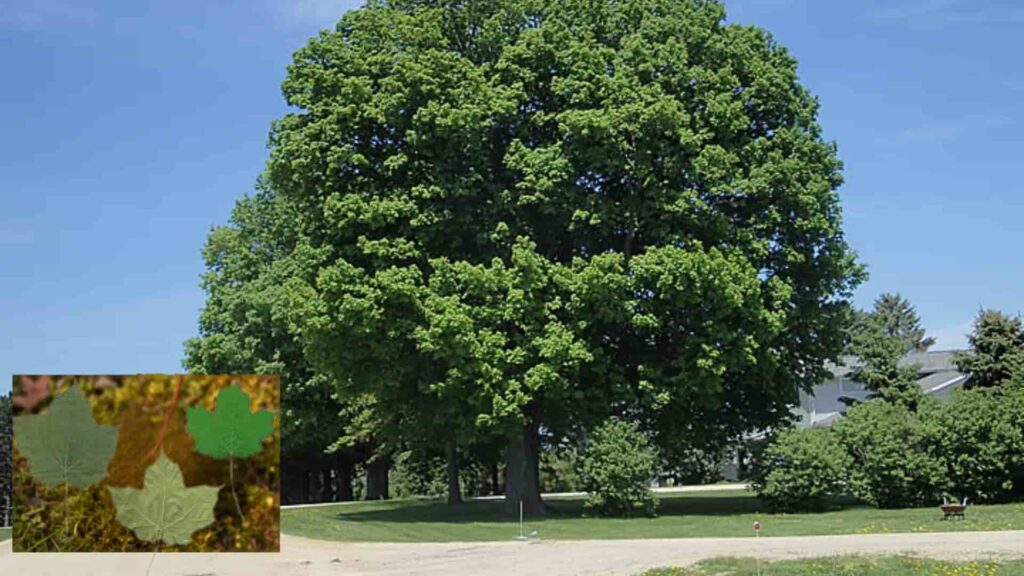
USDA Zones: 4 to 8 | Height: Up to 80 feet
- Leaves: Three to five lobes with a noticeable droop, giving them a wavy look. Fuzzy on the underside.
- Bark: Dark gray with deep furrows and irregular ridges.
- Seeds: Paired winged samaras that ripen in fall.
- Fall Color: Mostly yellow, sometimes shifting to orange or red.
Black Maple looks similar to Sugar Maple but the drooping, fuzzy-bottomed leaves give it away. The sap is good for syrup production, close in quality to Sugar Maple. It is especially common in Ohio and across the Midwest.
Quick ID: Droopy wavy lobes plus fuzzy leaf undersides equals Black Maple, not Sugar Maple.
9. Bigleaf Maple (Acer macrophyllum)
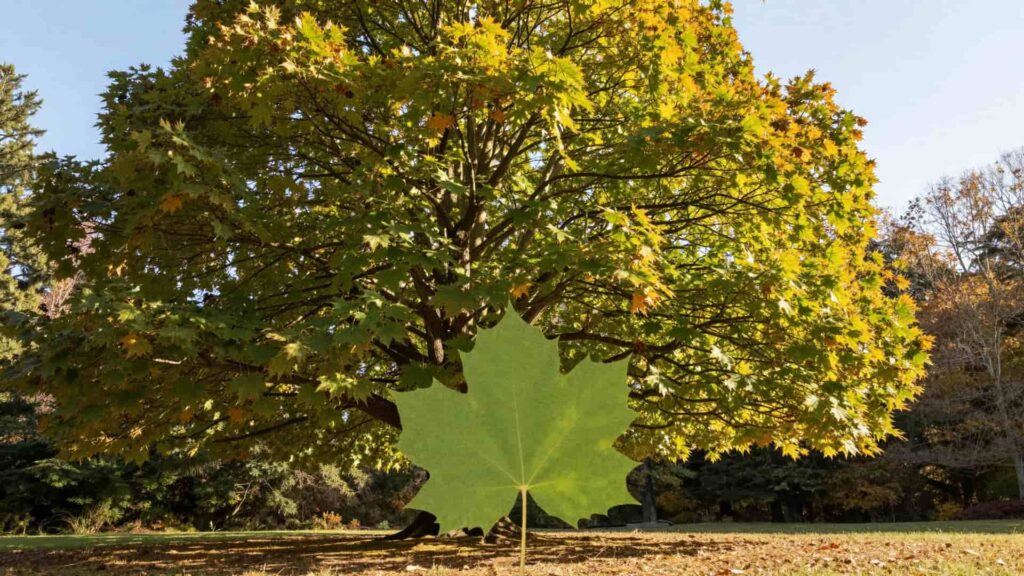
USDA Zones: 5 to 9 | Height: Up to 100 feet
- Leaves: Five lobes, up to 12 inches wide, the largest maple leaves of any species.
- Bark: Shallow-grooved, gray-brown texture.
- Seeds: Small and winged, with tiny hairs on the surface.
- Fall Color: Golden yellow.
Bigleaf Maple is the largest maple species in North America, and the leaf size alone confirms it. No other maple comes close to 12 inches across. It is a native of the Pacific Northwest and grows best in moist, mild climates.
Quick ID: Leaf width up to 12 inches with five lobes equals Bigleaf Maple, the size settles it.
10. Paperbark Maple (Acer griseum)
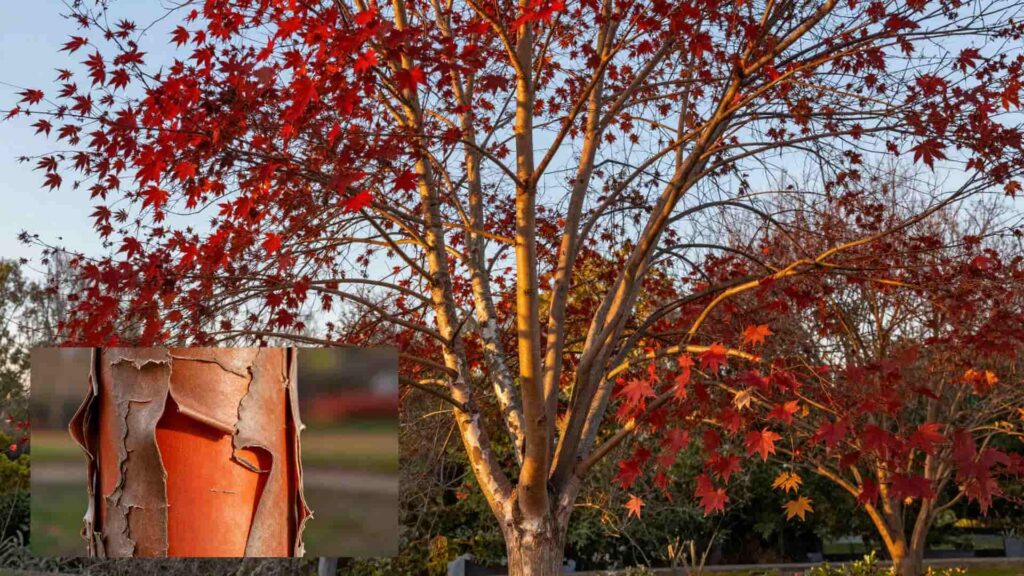
USDA Zones: 4 to 8 | Height: 20 to 30 feet
- Leaves: Compound with three leaflets. Matte green in summer, red in fall.
- Bark: Cinnamon to burgundy-brown, peeling in thin papery strips year-round.
- Seeds: Winged samaras, standard size.
- Fall Color: Rich red.
Paperbark Maple is worth planting for the bark alone. The peeling, reddish-brown outer layer reveals warm tones underneath, and it looks good even in the middle of winter when the tree is bare. It is a slow grower but holds visual interest across all four seasons.
Quick ID: Peeling, reddish-brown papery bark plus compound leaves equals Paperbark Maple.
11. Vine Maple (Acer circinatum)
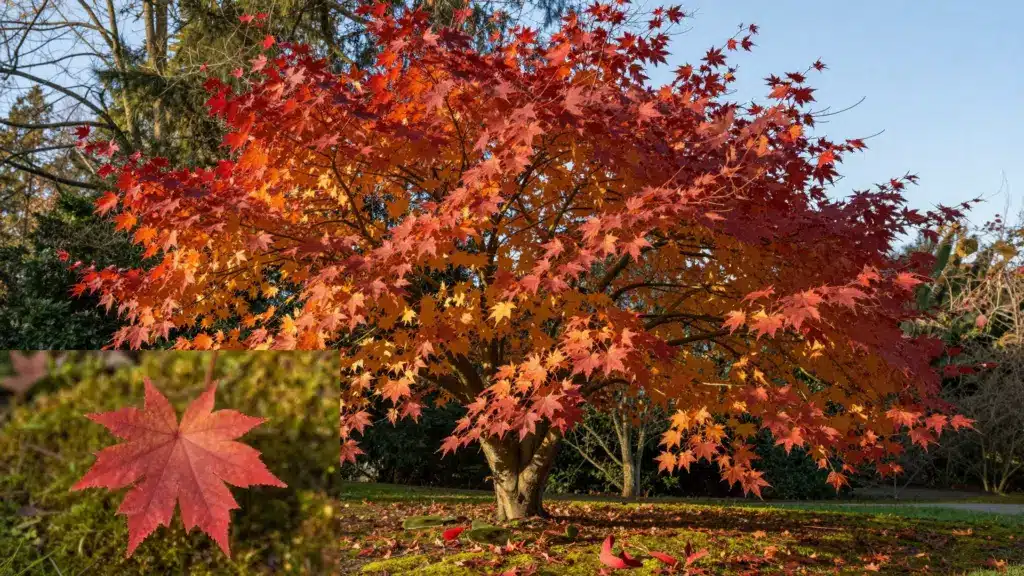
USDA Zones: 6 to 9 | Height: 15 to 25 feet
- Leaves: Round shape with 7 to 9 palmate lobes, more lobes than most maples.
- Bark: Shifts from green and smooth on young stems to grayish-purple as the tree matures.
- Seeds: Red-winged samaras.
- Fall Color: Red and orange.
Vine Maple grows in a loose, multi-stemmed form that looks more like a large shrub than a traditional tree. It is native to the Pacific Northwest and works well as a screen, understory planting, or specimen in a naturalized setting. The layered branching creates a light, open effect.
Quick ID: Round leaf with 7 to 9 lobes plus multi-stem shrubby growth equals Vine Maple.
12. Coral Bark Maple (Acer palmatum ‘Sango Kaku’)
USDA Zones: 6 to 8 | Height: Up to 20 feet
- Leaves: Seven lobes, lime green in spring and summer.
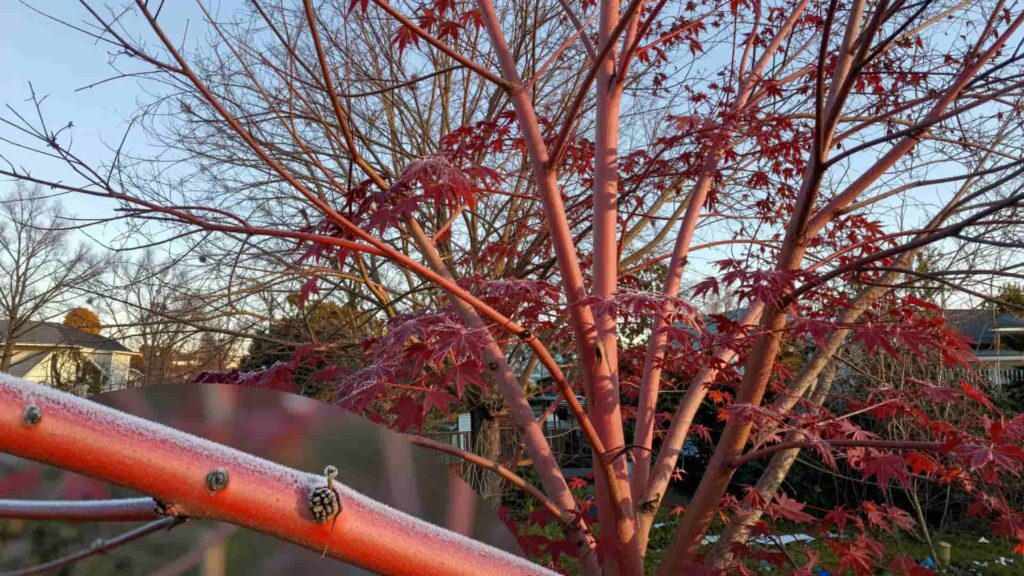
- Bark: Bright coral-red or pink, most vivid in winter on bare branches.
- Seeds: Small samaras, standard for the Japanese Maple group.
- Fall Color: Bright yellow with hints of red and bronze.
Coral Bark Maple is a Japanese Maple variety selected for its striking winter bark. When the leaves drop in November, the coral-colored branches become the main attraction. It is one of the few garden trees that looks better in January than in August.
Quick ID: Coral-pink glowing bark in winter sunlight equals Coral Bark Maple.
Red Maple vs. Sugar Maple vs. Silver Maple
These three are the ones that get mixed up most often. A side-by-side look at the key differences clears that up fast.
| Feature | Red Maple | Sugar Maple | Silver Maple |
|---|---|---|---|
| Leaf lobes | 3 to 5, with teeth | 5, smooth edges | 5, deeply cut |
| Leaf underside | Whitish | Pale green | Silvery white |
| Bark (mature) | Dark, scaly plates | Long, attached plates | Shaggy, loose plates |
| Samara shape | Tight V | Horseshoe | Wide, curved wings |
| Fall color | Bright red | Deep orange to crimson | Pale yellow |
| USDA zones | 3 to 9 | 3 to 8 | 3 to 9 |
| Growth rate | Moderate to fast | Moderate | Fast |
| Best use | Yards, streets | Large yards, syrup | Fast shade only |
The twig test works well when leaves are not available: Red maple twigs are reddish and have no odor. Silver Maple twigs smell foul when scratched. Sugar maple twigs are reddish-brown with a long, pointed terminal bud.
Which Maple Tree Is Right for Your Yard?
The right maple comes down to your space, your climate, and what you want from the tree. Small yards do best with Japanese maple, Amur maple, or coral bark maple, all of which stay under 25 feet.
For fast shade, red maple works well, though silver maple grows faster but brings root problems. Cold climates as low as USDA zone 2 can still support box elder, and zone 3 works fine for amur, sugar, and red maple.
If fall color is the priority, Sugar Maple and Red Maple lead the group, with Amur Maple offering the same show in a much smaller package.
Key Takeaways
Maple trees are one of the most varied and widely planted tree groups in North America.
Whether you are after a 75-foot shade tree, a compact ornamental for a tight space, or a year-round focal point with standout bark, there is a type of maple that fits the need.
The types of maple trees covered here range from the syrup-producing Sugar Maple to the peeling Paperbark Maple and the winter-bright Coral Bark.
Knowing the leaves, bark, and seed shape of each one makes identification simple. Pick the right species for your zone, give it the right soil, and a maple tree will reward you for decades.
Frequently Asked Questions
What Is the Most Popular Maple Tree?
The Red Maple (Acer rubrum) is the most common and widely planted maple in North America.
What Are the Seeds That Spin When They Fall?
Those spinning seeds are called samaras, and all maple species produce them in pairs.
Does Maple Reduce Wrinkles?
Some skin care products use maple extract, though scientific evidence for wrinkle reduction from maple alone is limited.
What Are the Types of Maple Tree Leaves?
Maple tree leaves are palmate (hand-shaped) with 3 to 9 pointed lobes, growing in opposite pairs on the branch.