

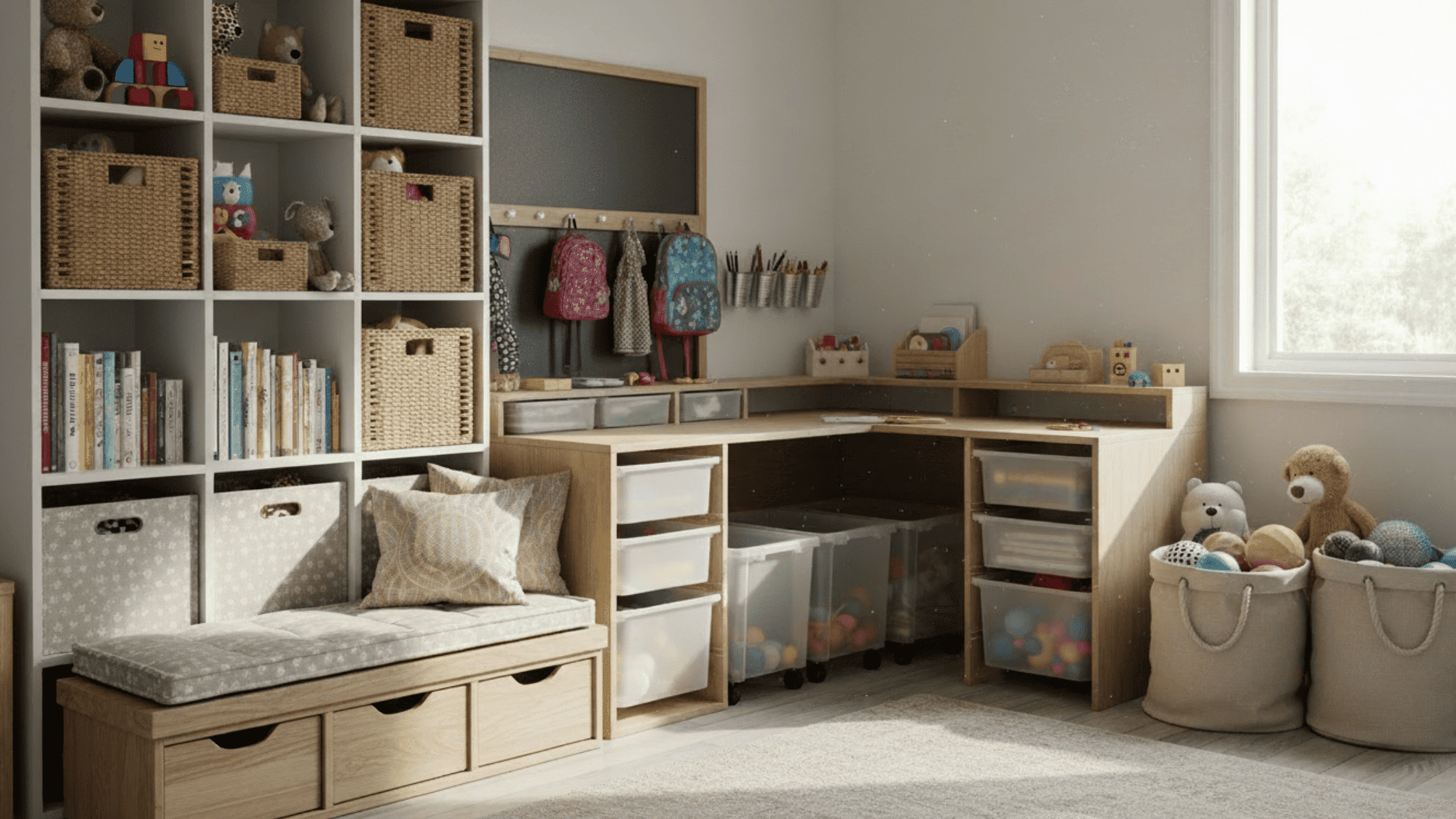
I have handled messy playrooms many times, and I know how quickly toys can fill up the whole room. One day it looks clean, and the next day it feels full and hard to manage.
That is why smart storage is so helpful. When every toy has a fixed place, cleaning becomes faster and less stressful. Kids can also learn to put things back on their own.
In this guide toplayroom storage ideas, I will share simple, easy ideas that work in real homes. You do not need to spend a lot of money or buy big furniture.
Many of these ideas are easy to try and even fun to set up. By the end, you will have clear and simple ways to keep your playroom neat and easy to use every day.
What Makes a Good Playroom Storage System?
Not all storage works the same way. A good system makes it easy for you and your kids to keep the playroom clean every day.
- What to Look for Before Picking a Storage Idea: Check your space, budget, and your child’s age before buying anything. These three things help you pick the right storage for your home.
- Why Easy-to-Use Storage Works Better for Kids: Simple open bins and clear labels are better than fancy boxes. Kids clean up faster when they can do it themselves.
- Age Tip: Toddlers need low bins to reach toys. Kids 6 to 10 can use labeled drawers and cubbies. Tweens like simple storage, like pegboards, carts, and cube shelves.
- The Difference Between Good Storage and Just Hiding the Mess: Good storage gives every toy a fixed spot. Hiding the mess just means tossing everything into one big box.
- How the Right Storage Saves You Time Every Day: When toys have a home, cleanup takes only a few minutes. You spend less time tidying and more time on other things.
- The Difference Between Good Storage and Just Hiding the Mess: Good storage gives every toy a fixed spot. Hiding the mess just means tossing everything into one big box.
- How the Right Storage Saves You Time Every Day: When toys have a home, cleanup takes only a few minutes. You spend less time tidying and more time on other things.
A Note on Aesthetics: Storage should look neat to work well. When bins and shelves match in color, the room feels calm and easier to use. Try using one or two simple colors like white or wicker.
Quick List of Playroom Storage Ideas
There are so many ways to store toys and keep a playroom clean. Here are some simple, smart storage ideas that work well in real homes.
1. Built-in Wall Shelves
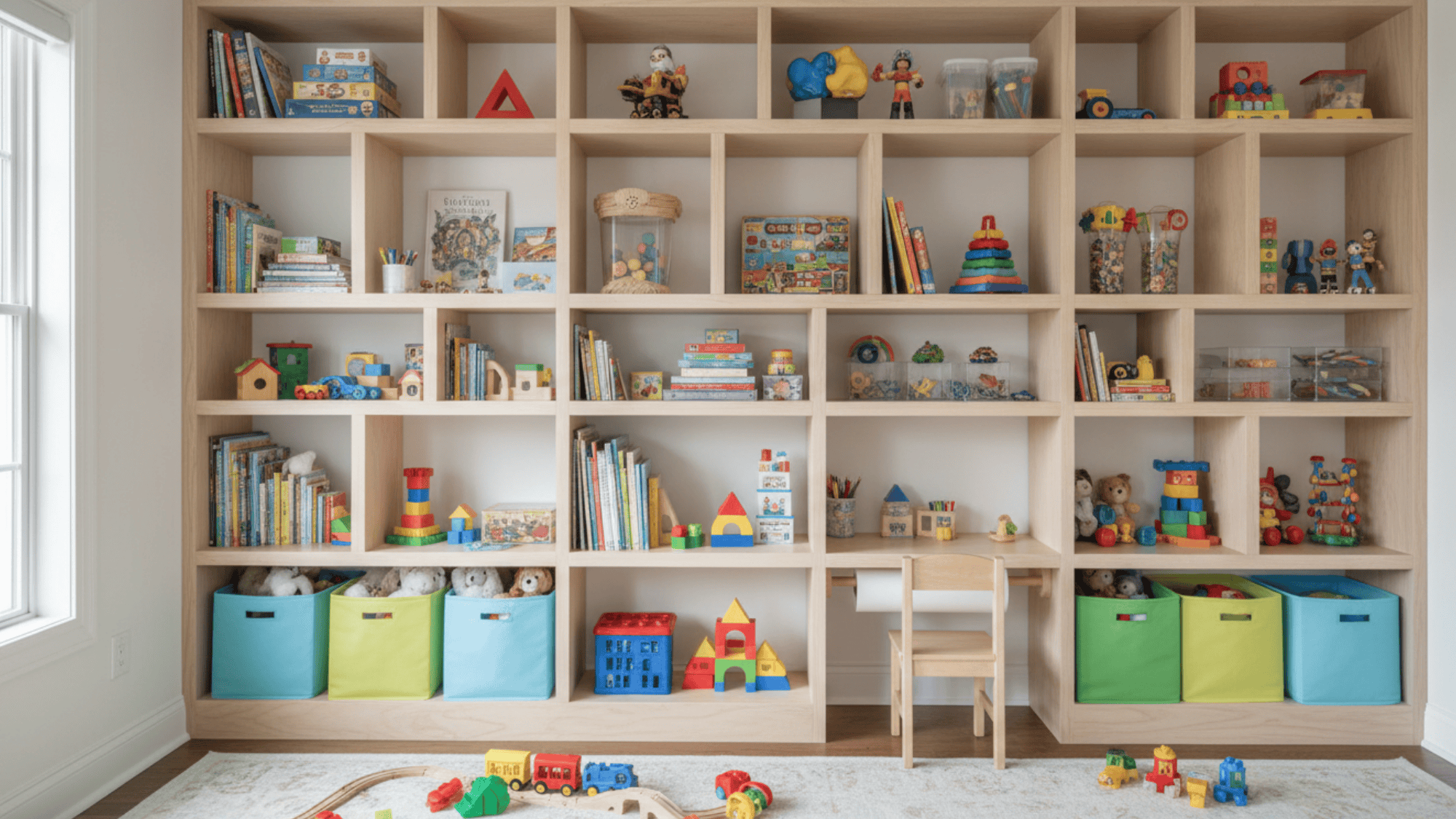
Built-in wall shelves are shelves that are fixed right into the wall. They don’t take up floor space, so kids have more room to play.
You can put books, toys, and small bins on them. They look neat and clean.
Built in shelves use every bit of space and give a clean custom look to the playroom. Keep lower shelves for toys that kids can reach easily and higher ones for items that need adult help.
Safety note: Always anchor built-in shelves to wall studs, especially in kids’ spaces. Anti-tip hardware is a non-negotiable.
2. Cube Storage Units
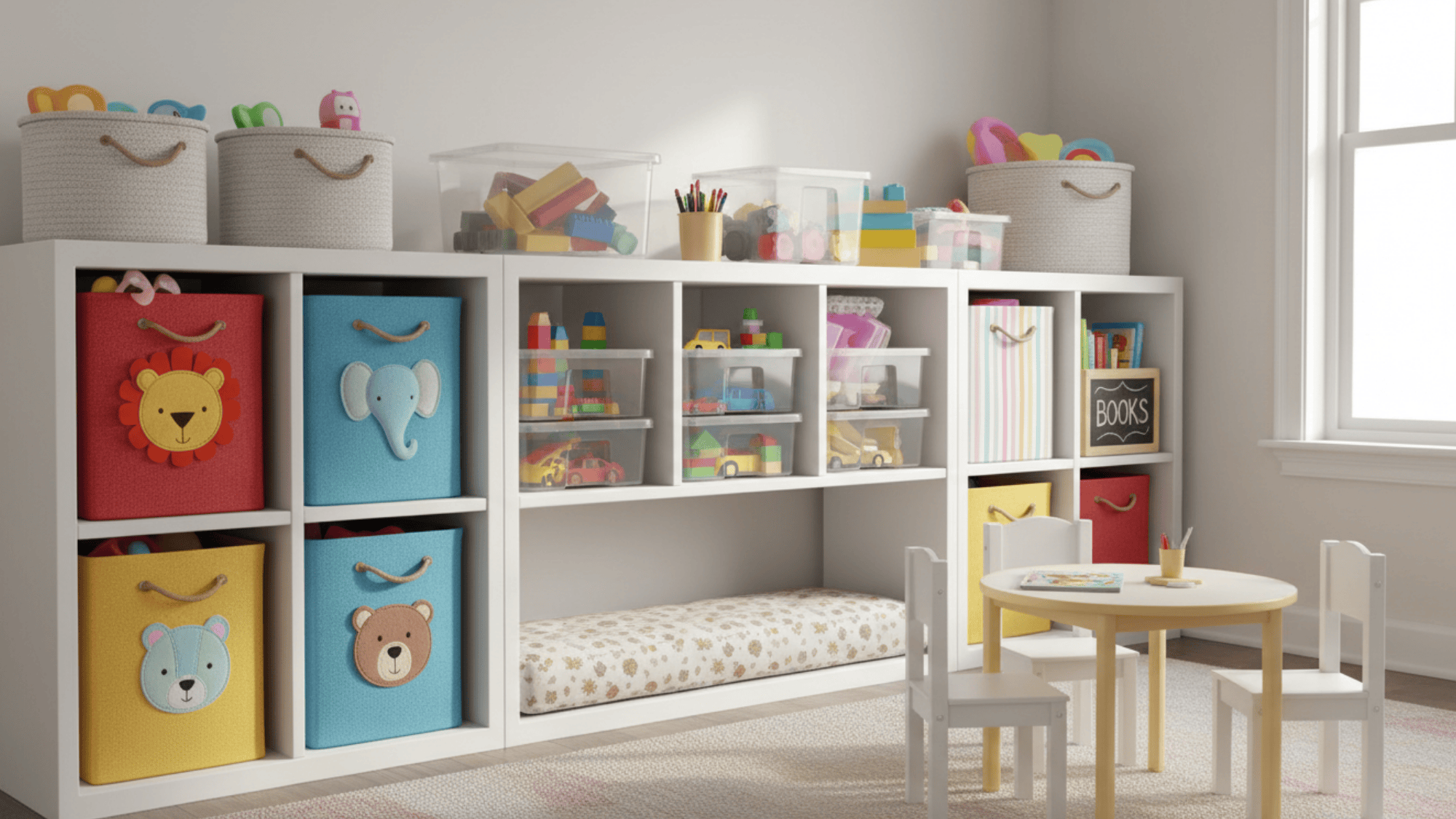
Cube storage units are furniture pieces with small square spaces inside. Each cube can hold a basket, box, or group of toys.
They are easy to find in stores and come in many colors. Kids can learn to put one type of toy in each cube.
I often suggest cube organizers or TROFAST units because they hold a lot and are easy for kids to use.
Mix closed bins with a few open spaces and use labels or clear fronts so kids can see toys without pulling everything out.
This makes cleaning up fast and simple. You can stack them or place them side by side to fit any wall size in the playroom.
3. Rolling Toy Carts
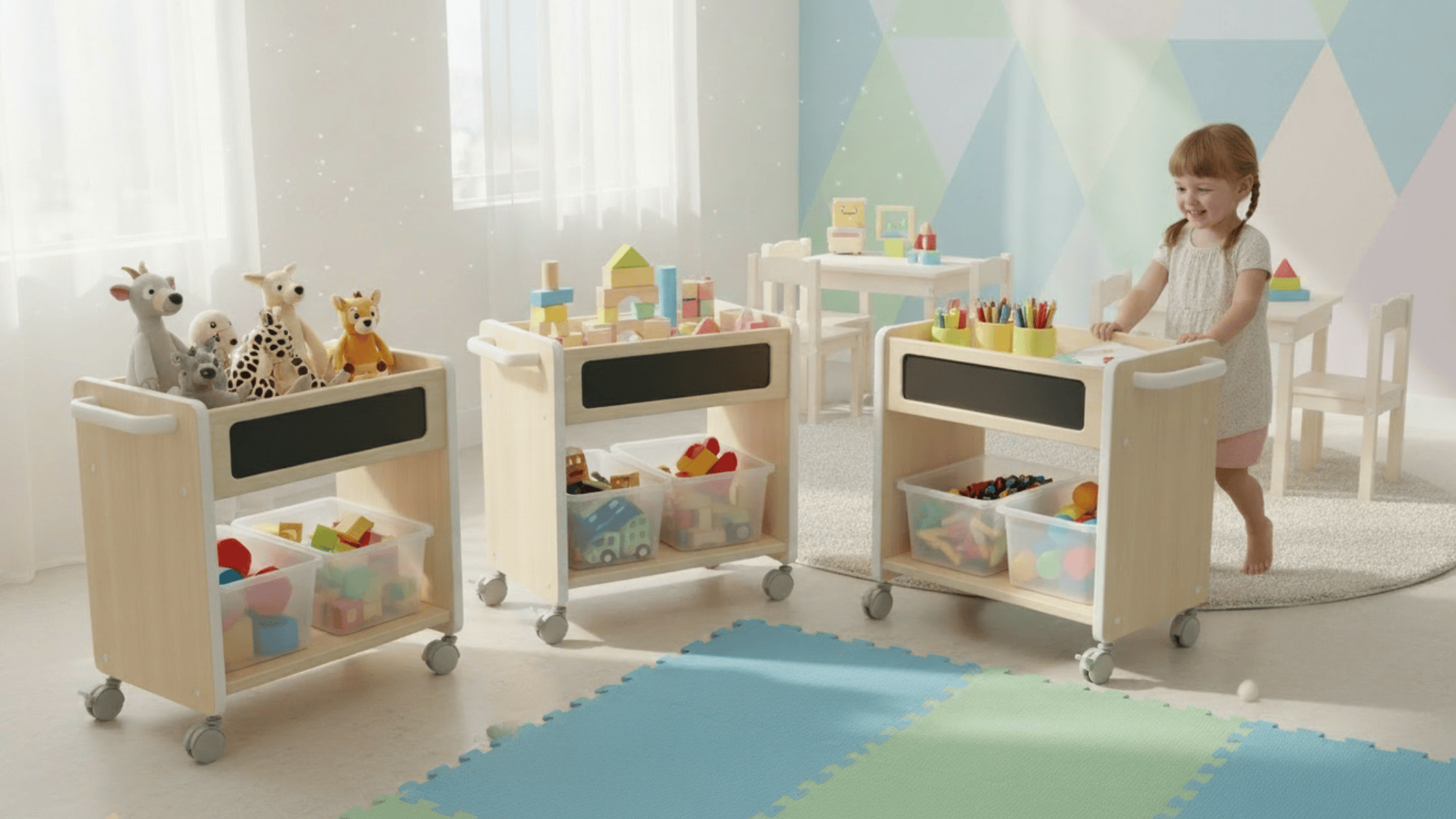
Rolling toy carts have small wheels at the bottom, so you can move them from room to room. They are great for art supplies, small toys, or building blocks.
When playtime is over, you can roll the cart into a corner or closet. Kids love using them because they are easy to pull around.
In one setup I did, a three-tier rolling cart worked really well in a shared space. It held art supplies, moved easily, and could be tucked away when not in use, making it very useful without a playroom.
They usually have two or three shelves, giving you lots of space to store different things.
4. Under-Bed Storage Bins
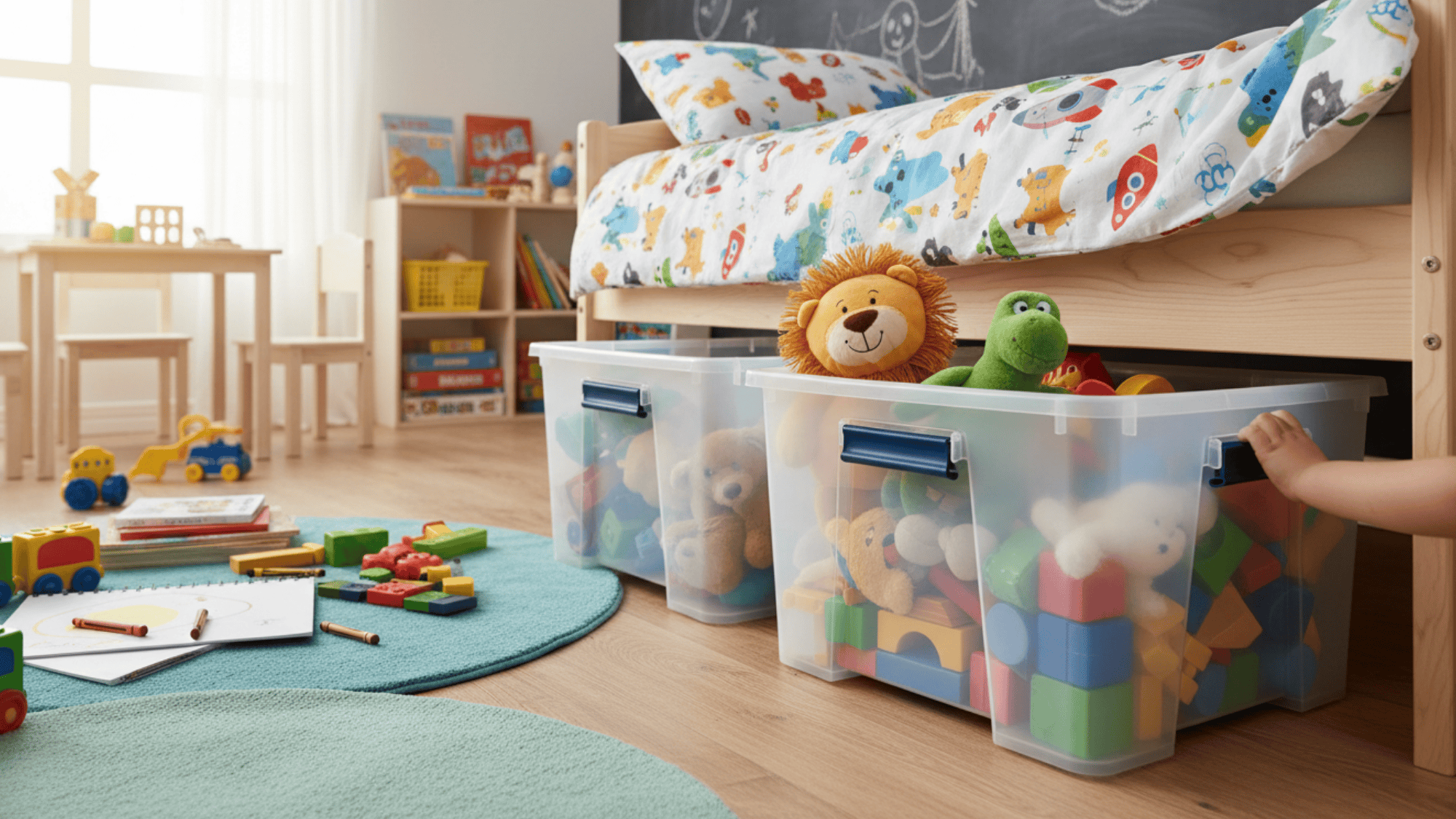
Under-bed storage bins slide right under the bed and stay out of sight. They are flat and wide, perfect for storing board games, puzzles, or stuffed animals.
Since they are hidden, the playroom looks tidy even when it is full of toys. Most bins have lids to keep dust out.
Some have wheels, making them easy to pull out. They are a smart way to use space that is usually empty.
Under-bed storage works well in kids’ rooms to store board games and toys. Keep the most used items near the edge so they are easy to grab and use.
5. Hanging Wall Baskets
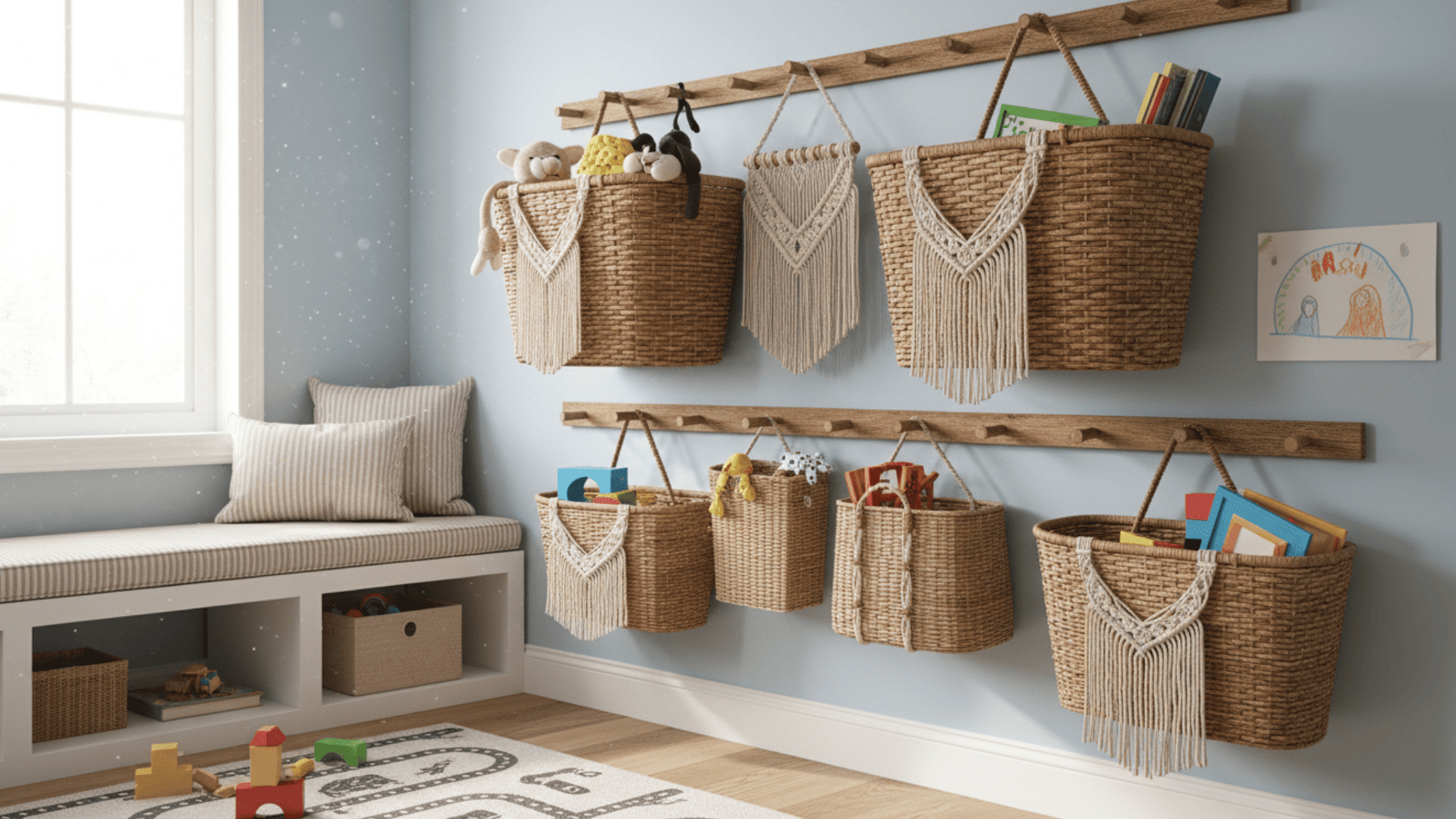
Hanging wall baskets are fixed to the wall and hold toys or small items inside them. They are great for things like small dolls, toy cars, or craft supplies.
Since they hang on the wall, they keep the floor clear. Kids can easily see what is inside each basket.
You can hang several baskets in a row to sort different types of toys. They look fun and colorful in any playroom.
6. Toy Rotation Bins
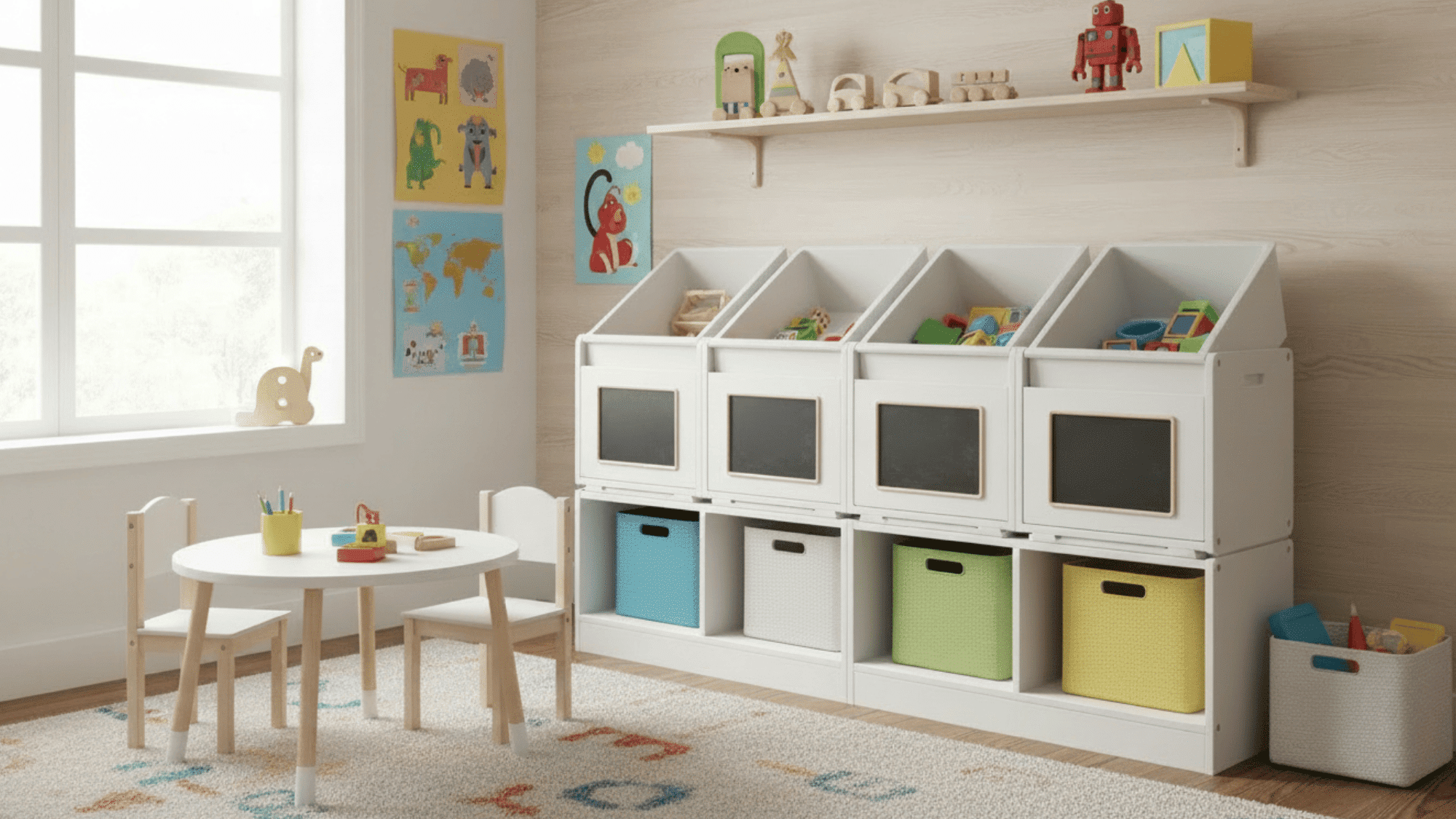
Toy rotation bins are containers where you store toys that are not being used right now. Instead of having all toys out at once, you keep some in bins and swap them every few weeks.
This makes kids feel excited about their toys again, as if they were getting something new.
Toy rotation is a simple and effective idea that helps kids play better with fewer toys and keeps the room less messy.
Label bins with what is inside and the date, so you can rotate toys on time and stay organized
It also keeps the playroom less messy. Label each bin clearly so you know what is inside without opening every single one.
7. Toy Storage Ladder Shelves
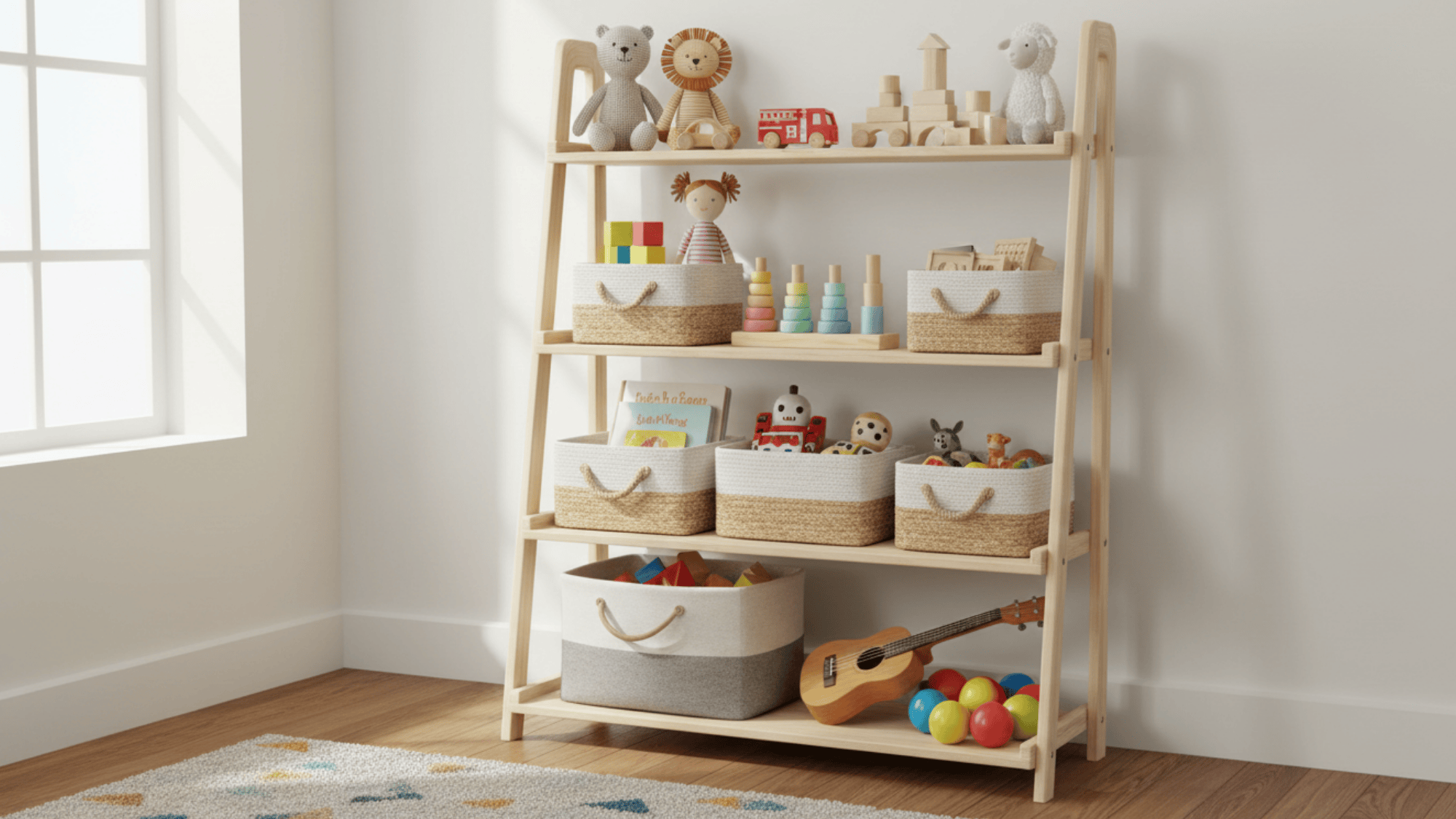
Toy storage ladder shelves are a simple way to keep a playroom neat while making toys easy to reach.
The open shelves help kids see and pick what they want without digging through bins. I like using baskets on each level to group similar toys like books, blocks, or soft toys.
The ladder design saves space and works well against a wall. It also adds a clean and tidy look to the playroom setup
8. Bench Storage Seating
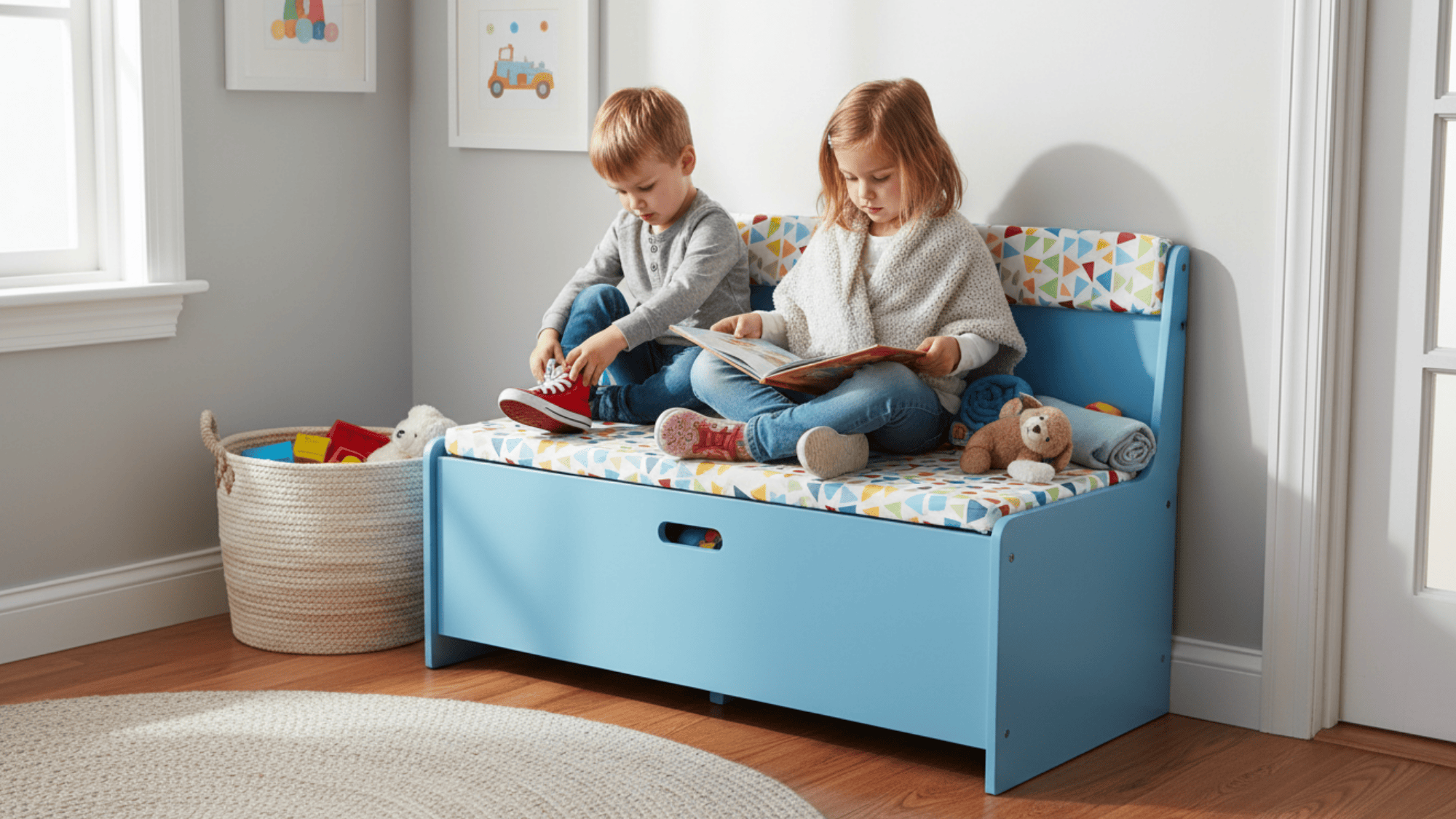
A bench with storage inside is two things in one. Kids can sit on it to put on shoes or read a book, and the inside holds toys or blankets.
It has a lid that opens up to show the space inside. Place it near the playroom door or along a wall.
It keeps things hidden and the room looking clean. It is also strong enough for kids and adults to sit on comfortably.
Safety reminder: Use a storage bench with a slow-close lid to keep kids safe from finger injury. Look for options that come with this safety feature.
9. Over-the-Door Organizers
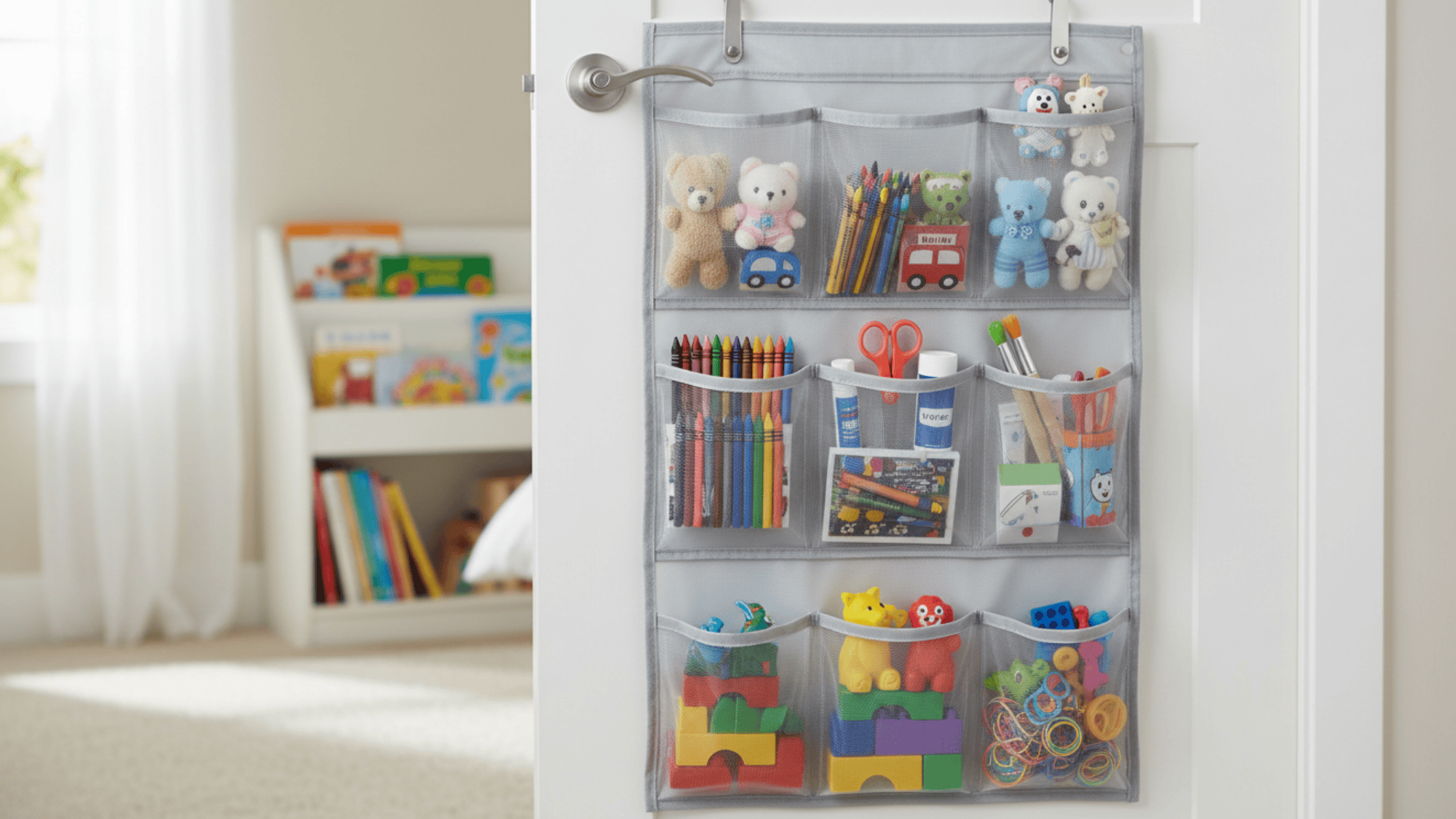
Over-the-door organizers hang on the back of a door and have many small pockets. Each pocket can hold small toys, crayons, scissors, or other supplies.
They use space that would otherwise be wasted. Since they hang on the door, they don’t take up shelf or floor space.
They are easy to put up and take down. Kids can quickly find what they need by looking at the pockets right on the door.
10. Stackable Drawers
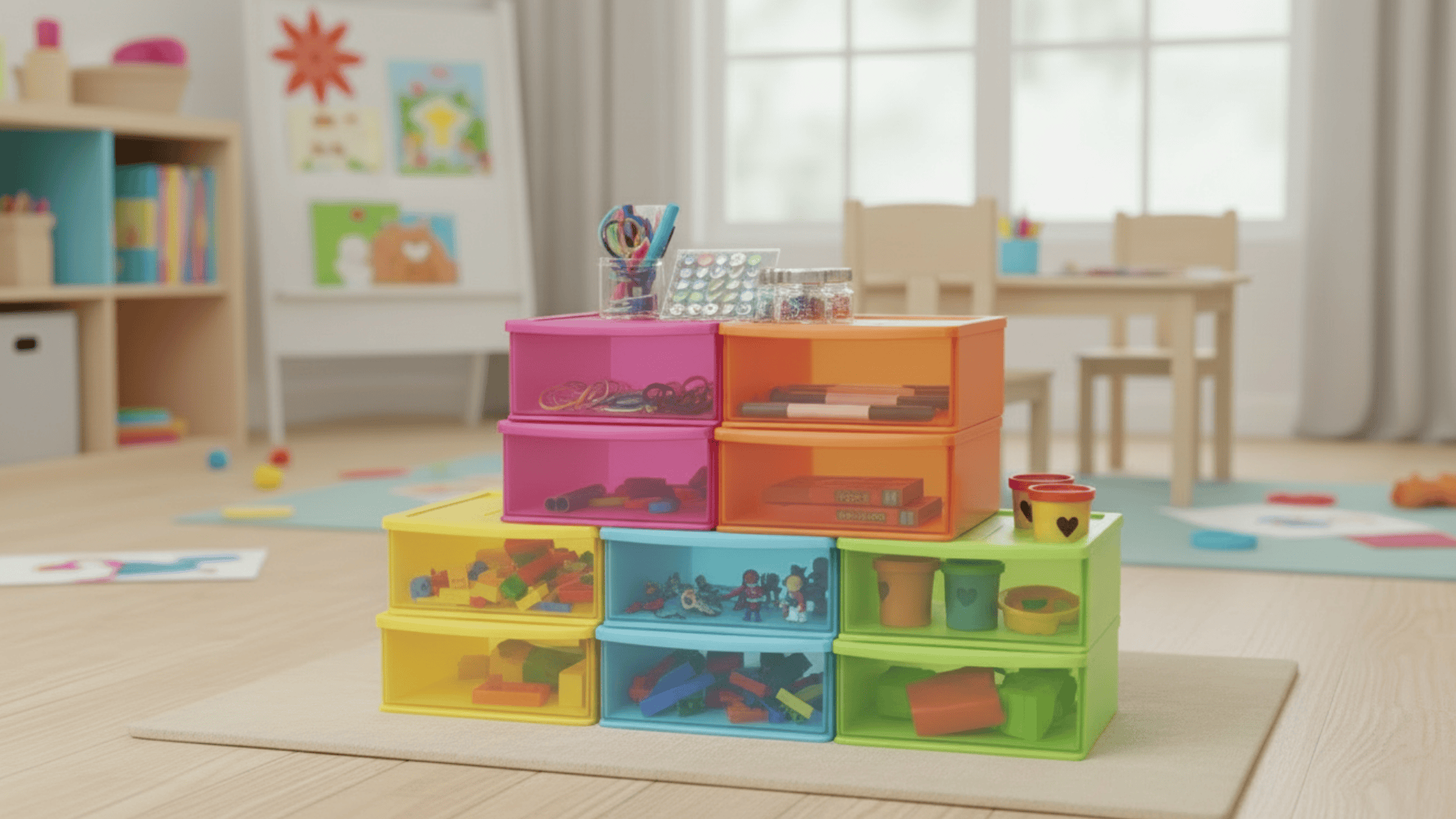
Stackable drawers are small drawer units that you can pile on top of each other. Each drawer can hold a different type of toy or craft supply.
They are easy to move around and come in many colors. You can add more drawers as your child gets more toys. Label each drawer so kids know where everything goes.
They are great for keeping small items like stickers, markers, and hair clips sorted and easy to find.
11. Pegboard Storage Wall
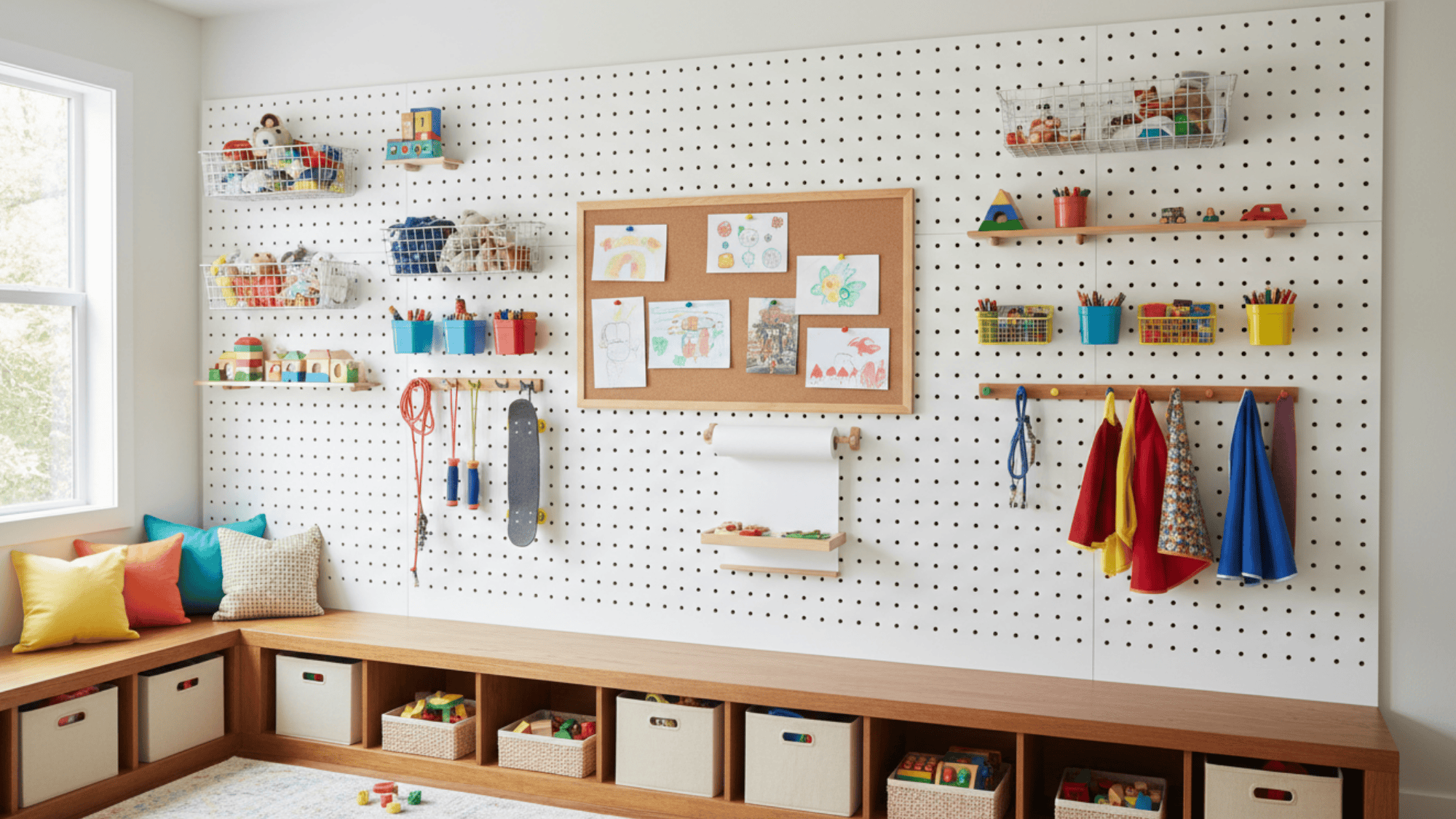
A pegboard is a flat board with many small holes. You put hooks and small shelves into the holes to hold toys, tools, or art supplies.
You can change where the hooks go whenever you need to. It is great for keeping things off the floor and up on the wall.
Kids can hang bags, headphones, or even small baskets on it. It is a fun and useful wall for any playroom.
12. Floating Book Ledges
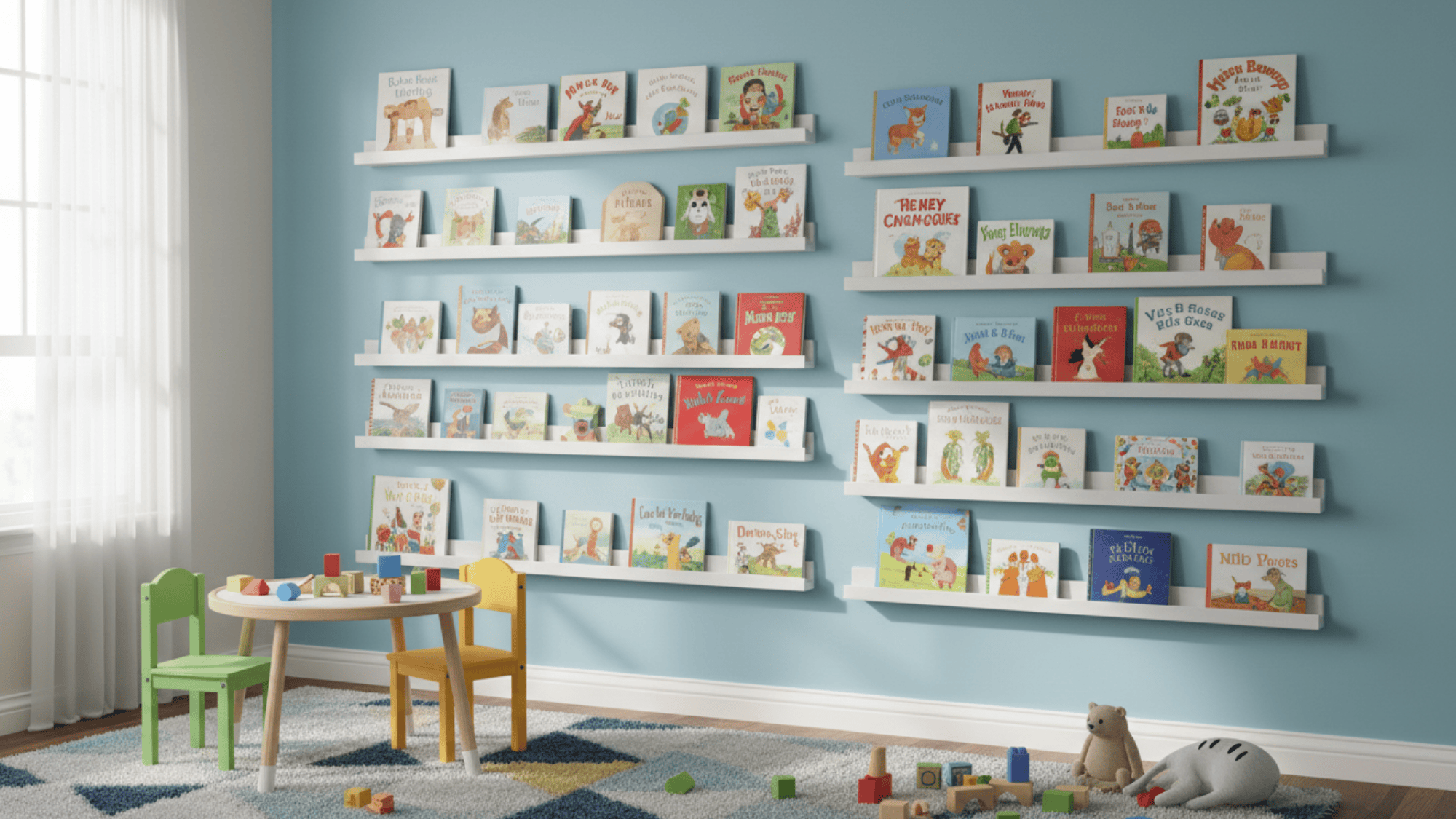
Floating book ledges are thin shelves that stick out from the wall just enough to hold books facing forward.
Kids can see the front cover of each book, which makes them want to read more. They take up very little space and look great on any wall.
You can put them at a low height so small kids can pick books on their own. They are simple to put up and hold several books at once.
Front-facing bookshelves in Montessori setups help kids choose books on their own and build reading habits. Place them at child height so they can see covers and reach books easily without help.
13. Toy Hammocks
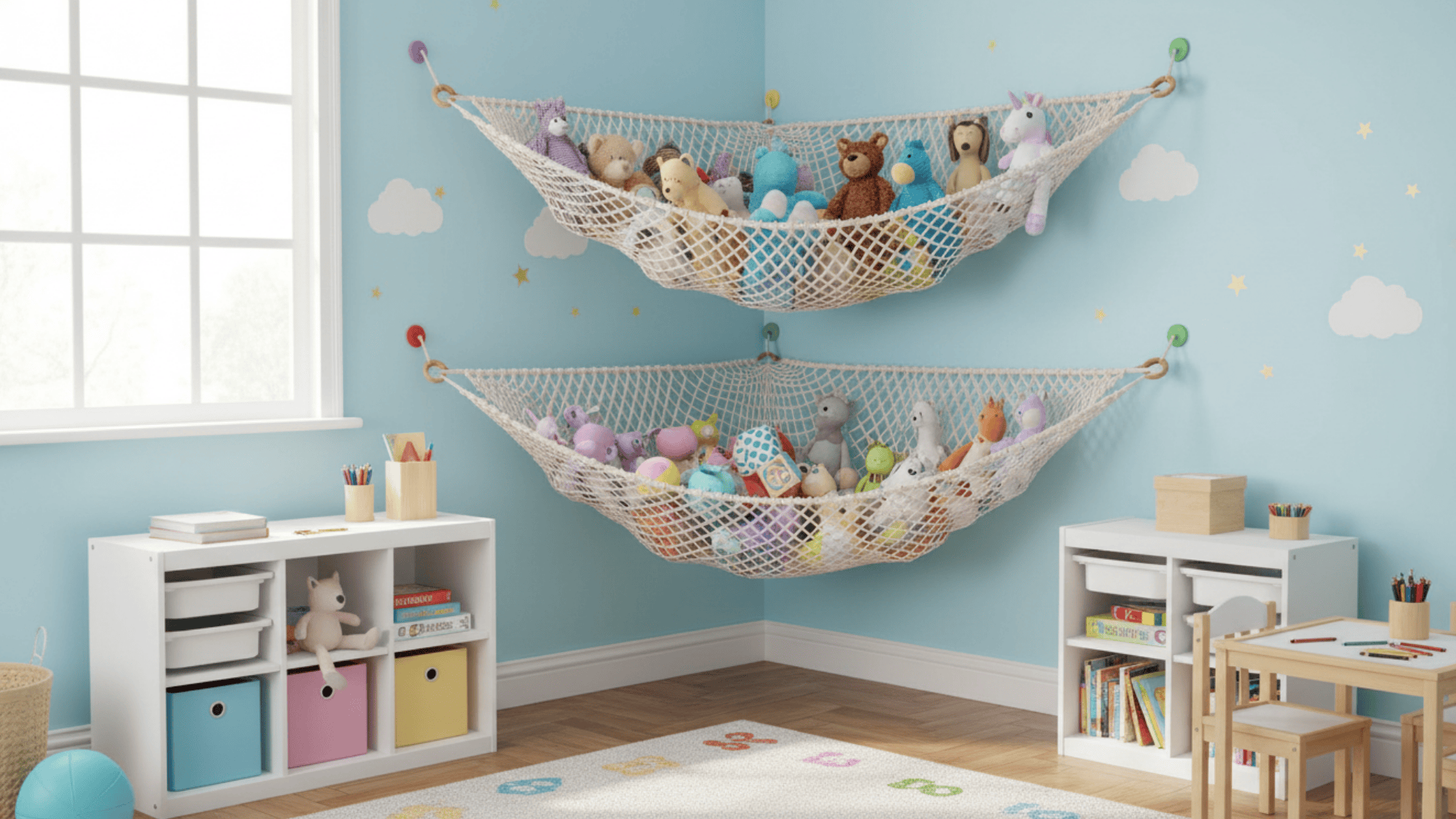
A toy hammock is a net made of fabric or rope that hangs in the corner of a room. It is perfect for storing stuffed animals.
You just toss the stuffed animals in, and the hammock holds them up high, off the floor. It keeps the floor clean and gives the room more space.
Toy hammocks are cheap and easy to set up. Kids think they look fun, like a cozy little spot for their stuffed toys.
14. Closet Makeover System
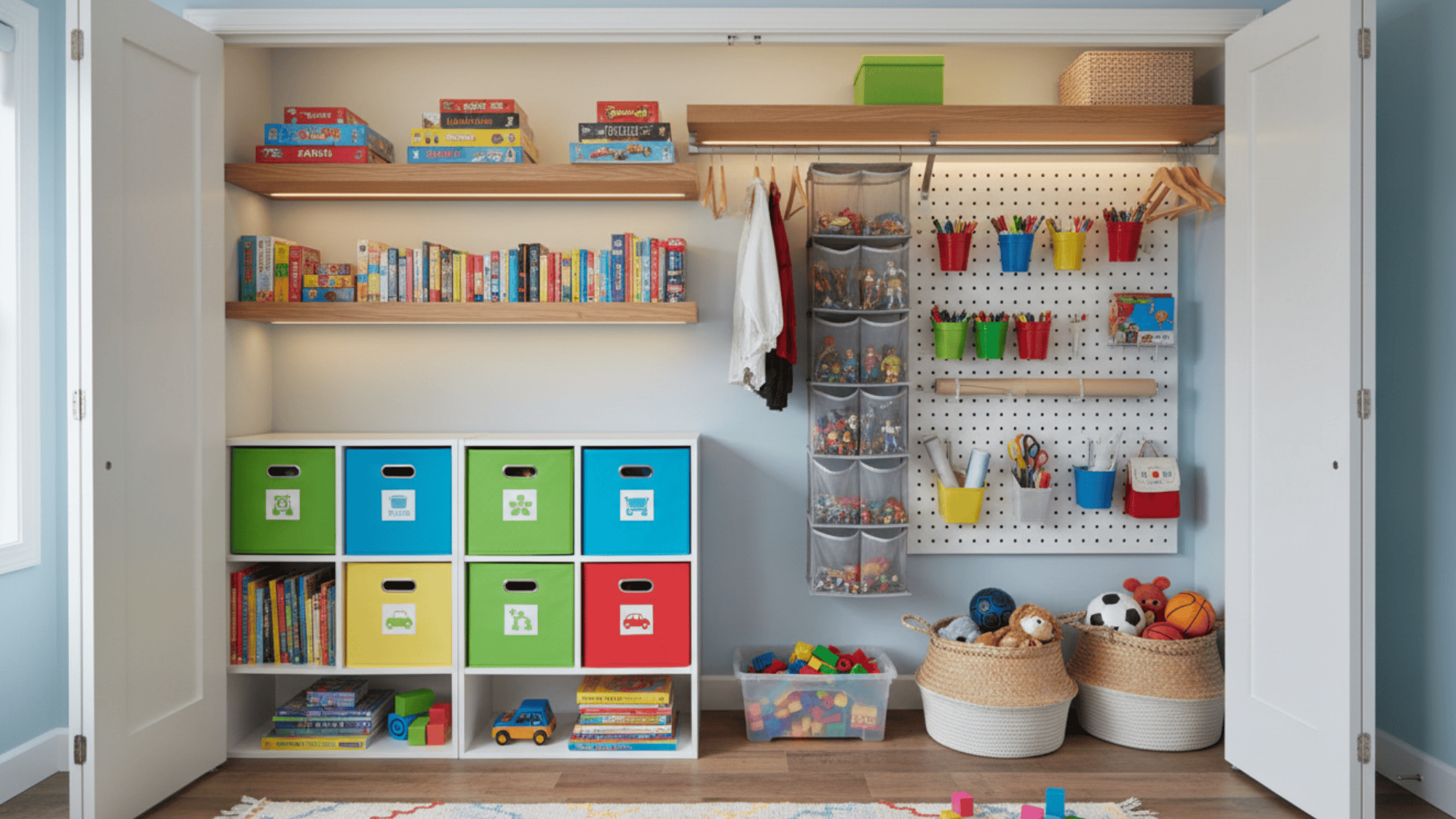
A closet makeover means adding extra shelves, bins, and hooks inside a closet to use all the space.
Instead of just one bar and a shelf, you can add small cubbies, hanging organizers, and floor baskets. This turns a simple closet into a big storage space for toys, games, and art supplies.
Kids can still find things easily because everything has its own spot. A well-organized closet makes the playroom look much cleaner.
15. Storage Ottomans
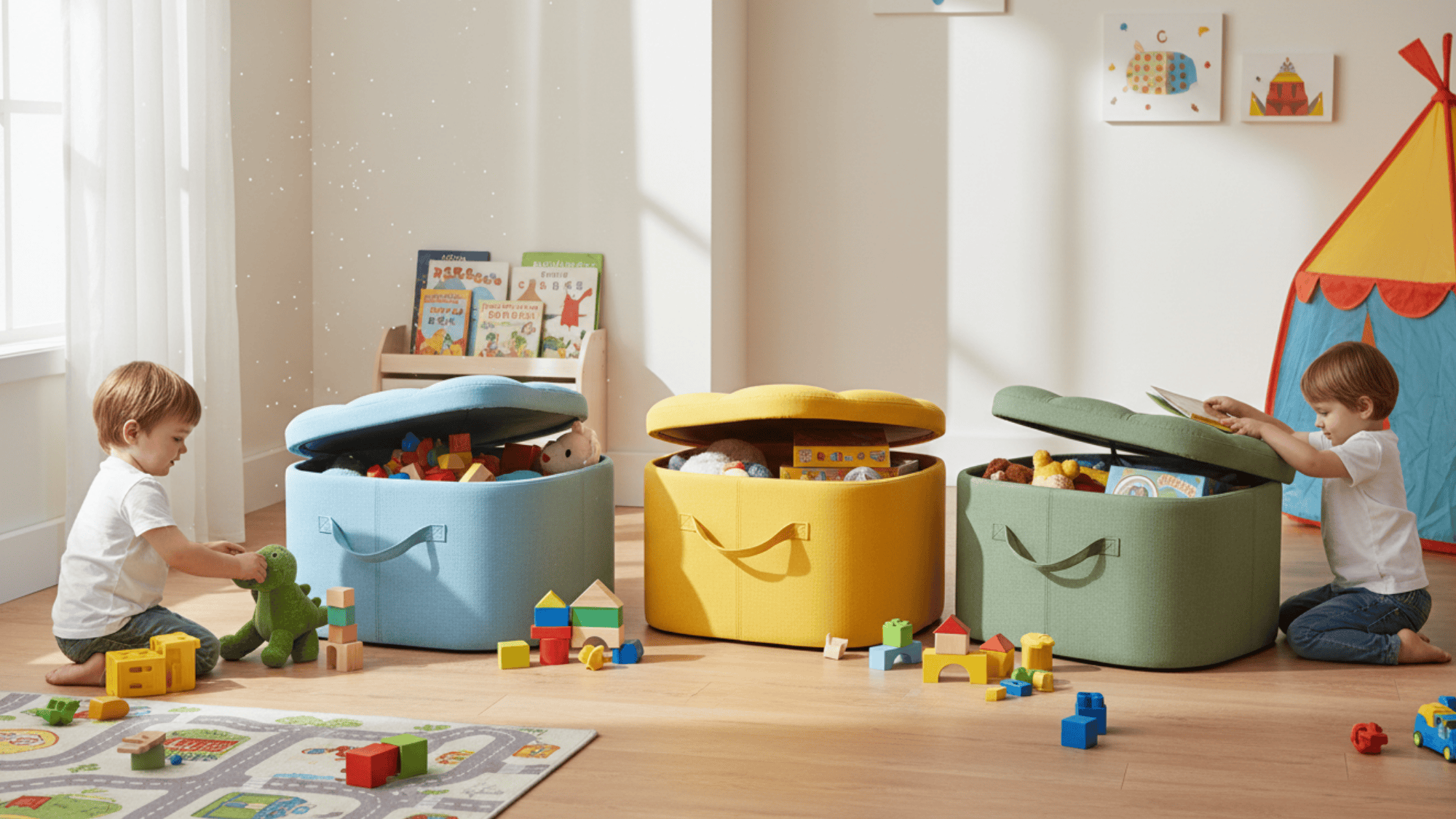
A storage ottoman is a soft, padded seat that opens up to store things inside. It looks like a cushion or footstool, but it has a hollow space inside perfect for toys, blankets, or books.
Kids can sit or put their feet on it while playing. When the room gets messy, just lift the lid and toss things inside. It is a great way to hide clutter fast and still keep the room looking nice.
16. Drawer Dividers
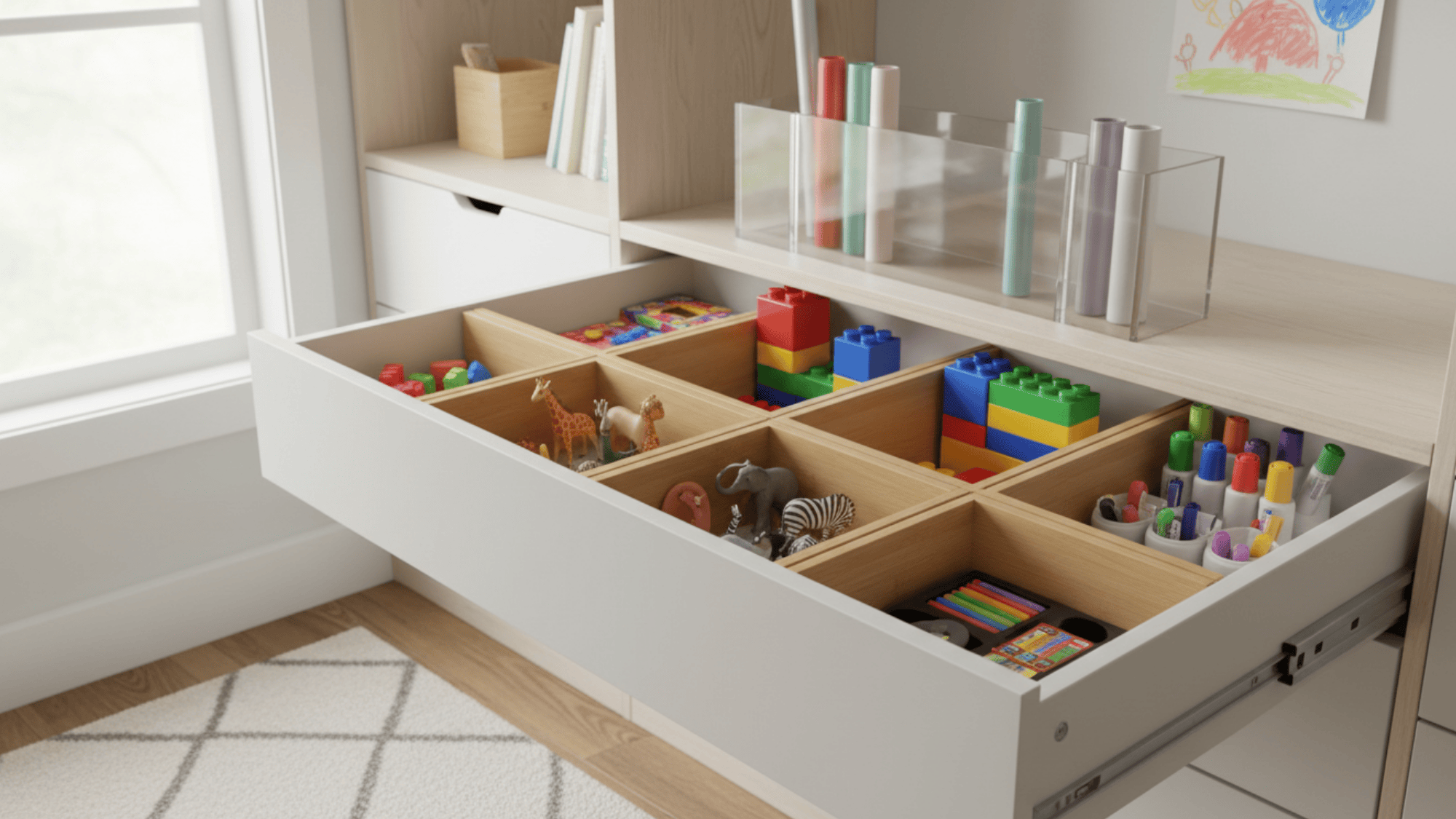
Drawer dividers are small pieces that go inside a drawer and split it into sections. Each section holds a different type of item, such as crayons, scissors, and tape.
Without dividers, everything gets mixed up and hard to find. With them, the drawer stays neat.
They come in many sizes and are easy to put in any drawer. They are a simple, low-cost way to keep small things organized.
17. Wall Hooks for Bags
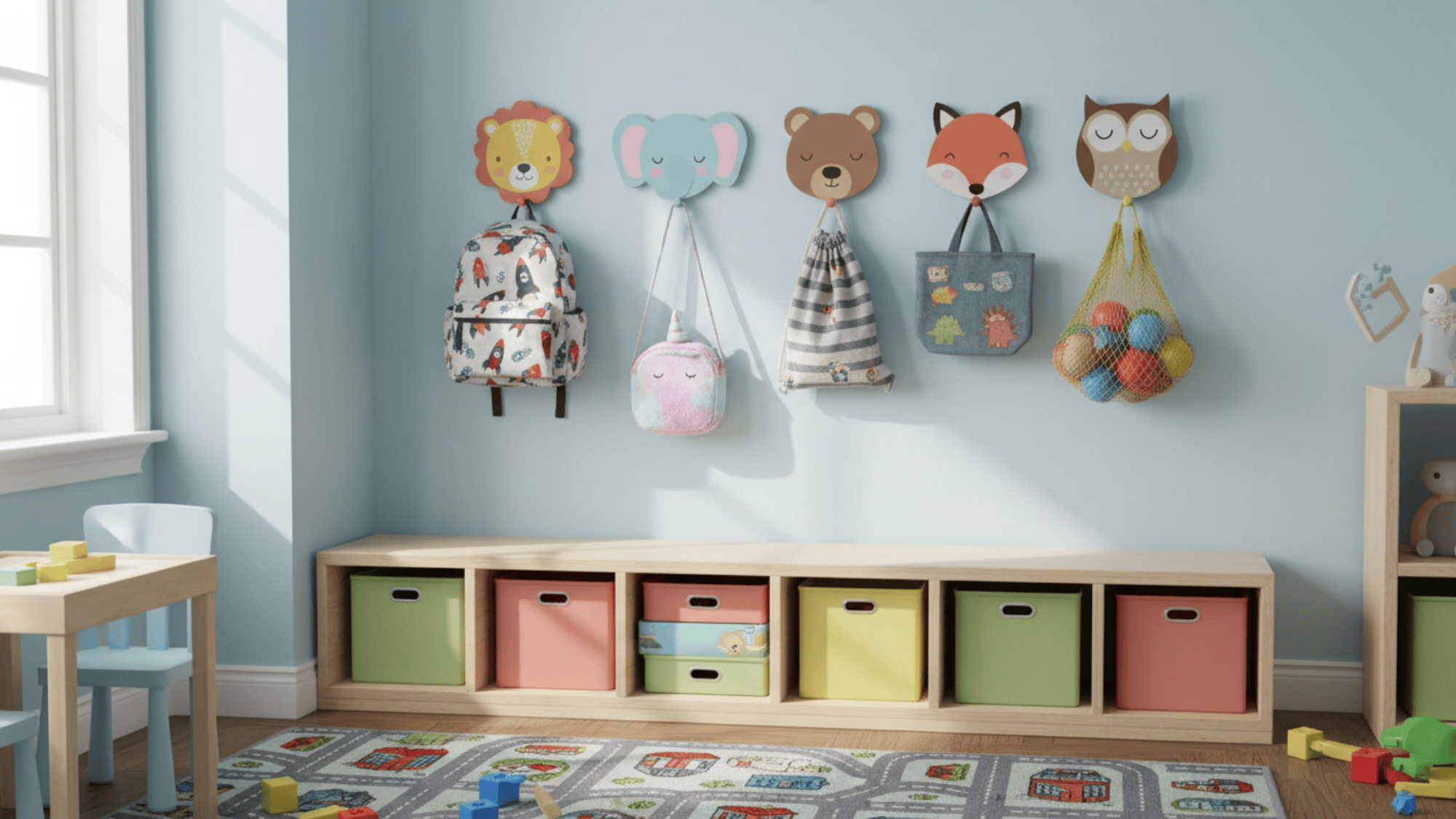
Wall hooks are small hooks you screw or stick onto the wall. Kids can hang backpacks, tote bags, or dress-up costumes on them. This keeps bags off the floor and makes them easy to grab.
Put hooks at a height kids can reach on their own so they don’t need help. You can use different colored hooks for different kids.
They are cheap, easy to put up, and make a big difference in keeping the playroom tidy.
18. Magnetic Strips for Toys
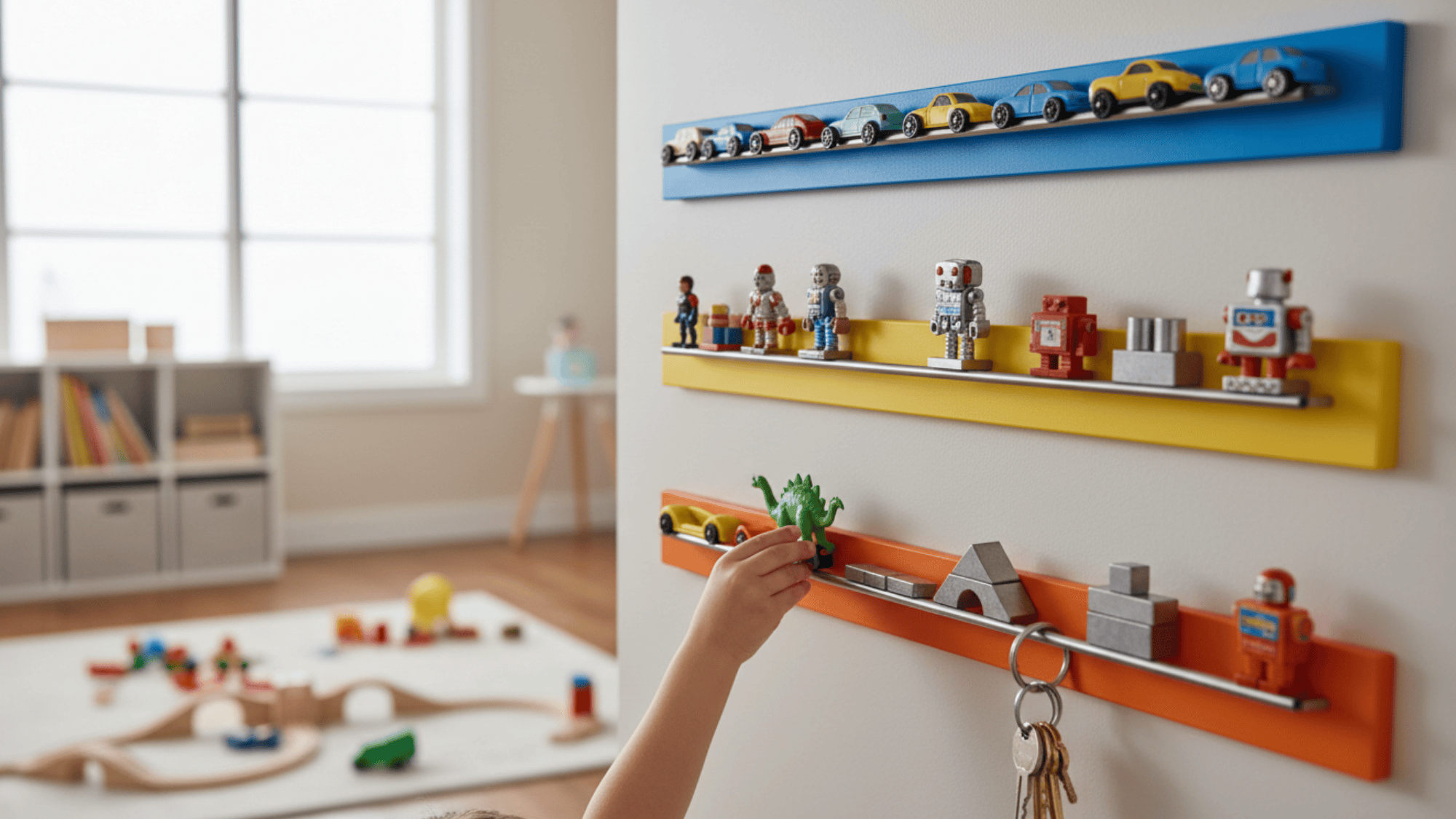
A magnetic strip is a long piece of metal you stick or screw onto the wall. Metal toys like toy cars, magnetic tiles, or small figurines can stick right to it.
This keeps small toys off the floor where they can get lost. It also looks cool on the wall, like a display.
Magnetic strips are easy to find online or in stores. They are a smart storage idea for kids who have lots of small metal toys.
19. Art Supply Caddies
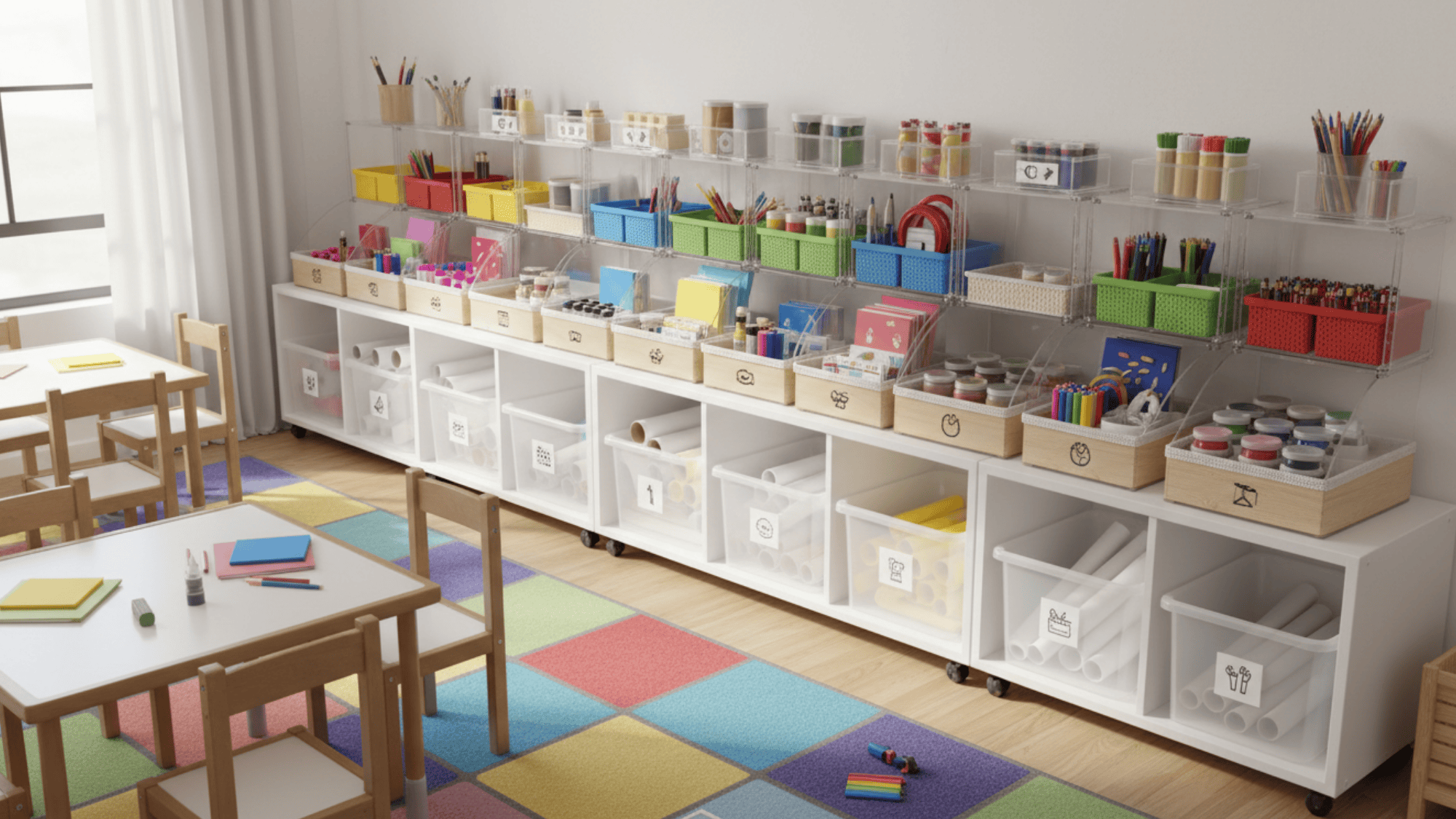
An art supply caddy is a small container with sections inside for holding crayons, markers, brushes, and scissors. You can place it right on the art table so kids can reach everything easily.
Some caddies spin around so you can see all the supplies. They keep art tools together in one spot, making it easy to find what you need.
When art time is done, you just pick up the caddy and put it away on a shelf.
20. Rolling Book Racks
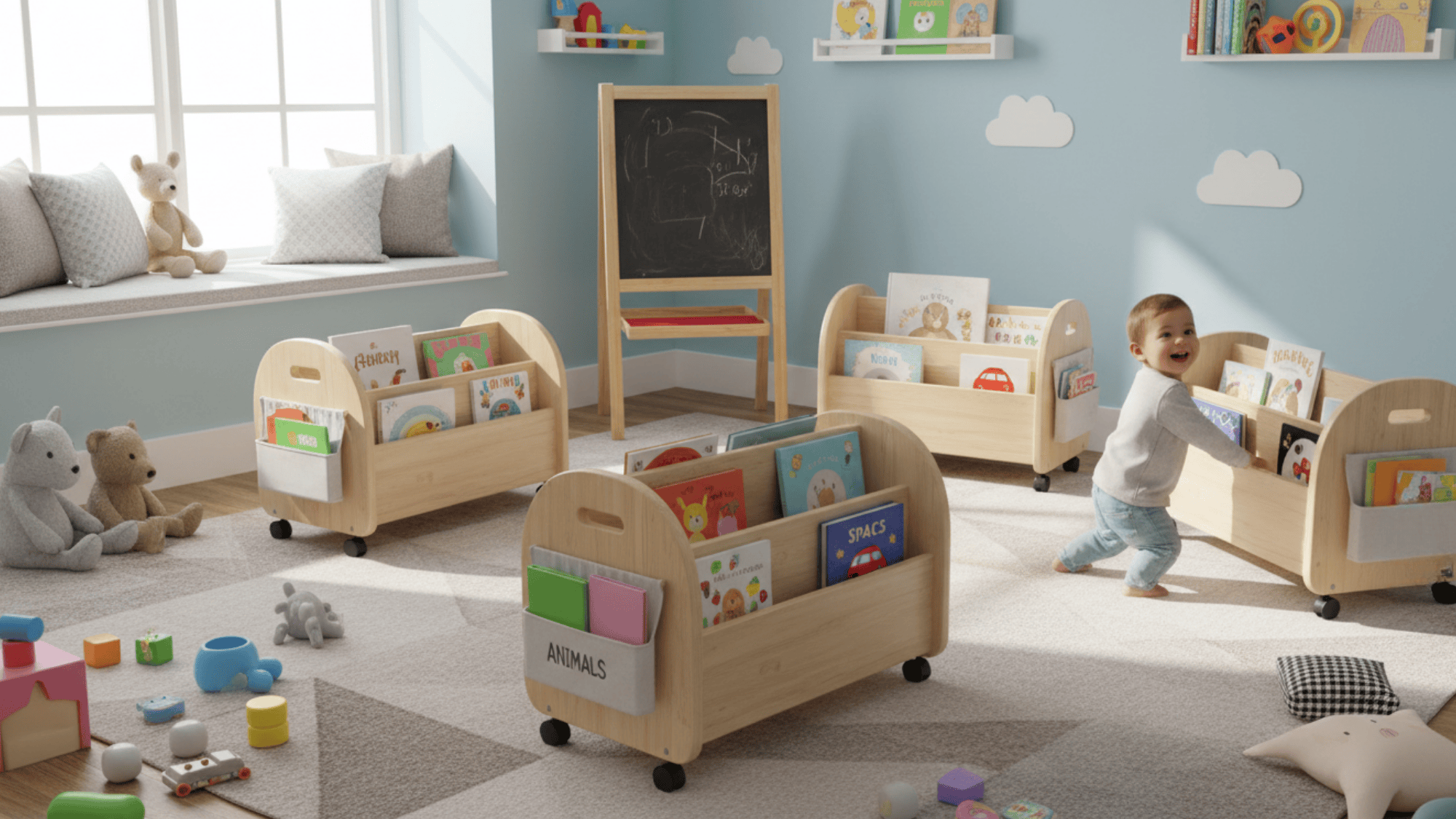
Rolling book racks are small shelves on wheels that hold books. You can move them anywhere in the room, like near the reading corner or by the window.
Kids can spin the rack to look at books from all sides. They are great for kids who have many books but not much shelf space.
When you need more floor space, just roll the rack to a corner or into a closet easily.
21. Corner Shelves
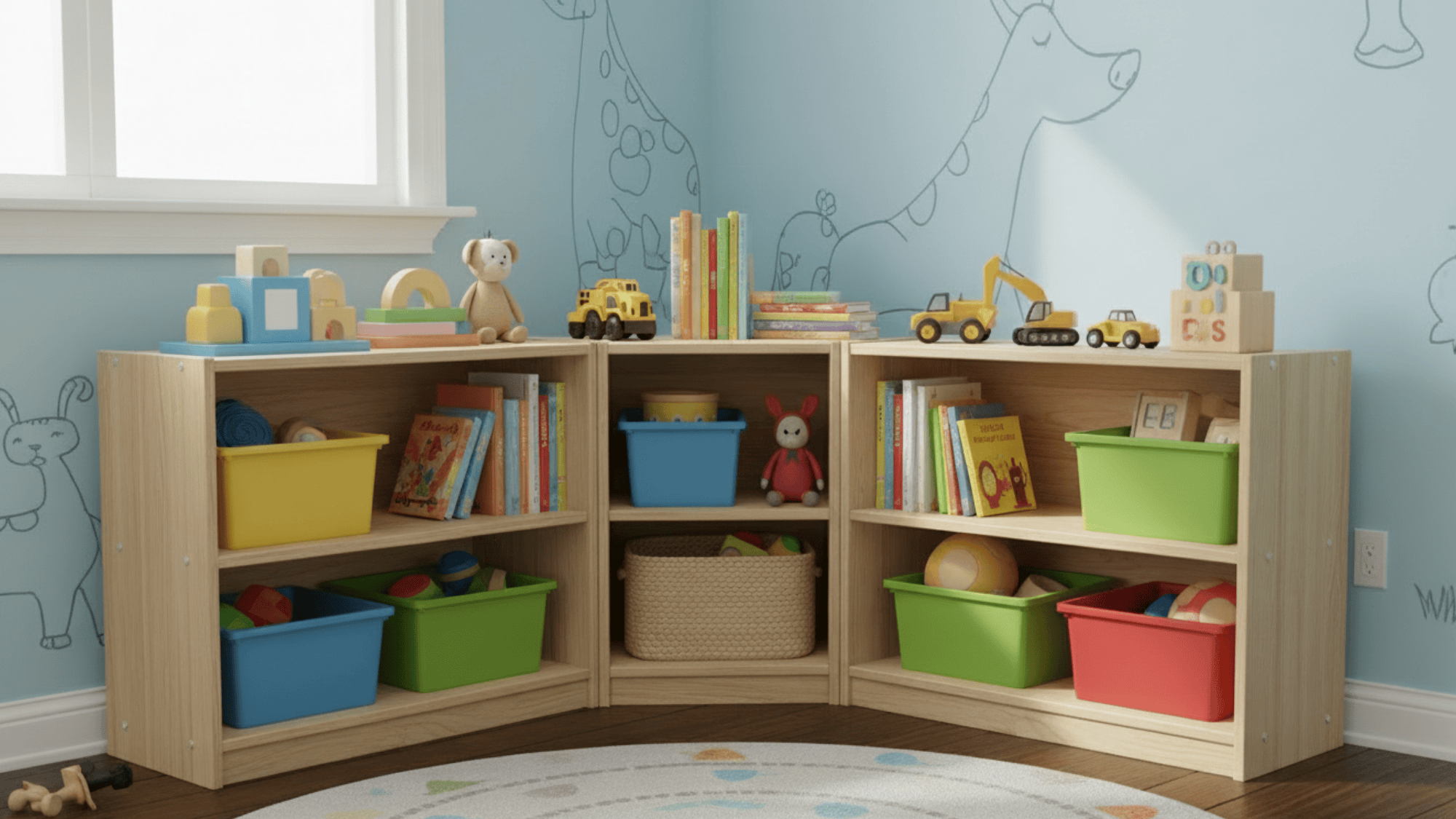
Corner shelves fit right into the corner of a room, using space that is usually empty. They are triangle-shaped and sit flat against both walls.
You can stack several corner shelves on top of each other to store a lot of things. They are great for books, small toys, or plants.
Since they go in the corner, they don’t block walkways or take up much space. They are a smart, simple way to add more storage to any playroom.
22. DIY Crate Storage
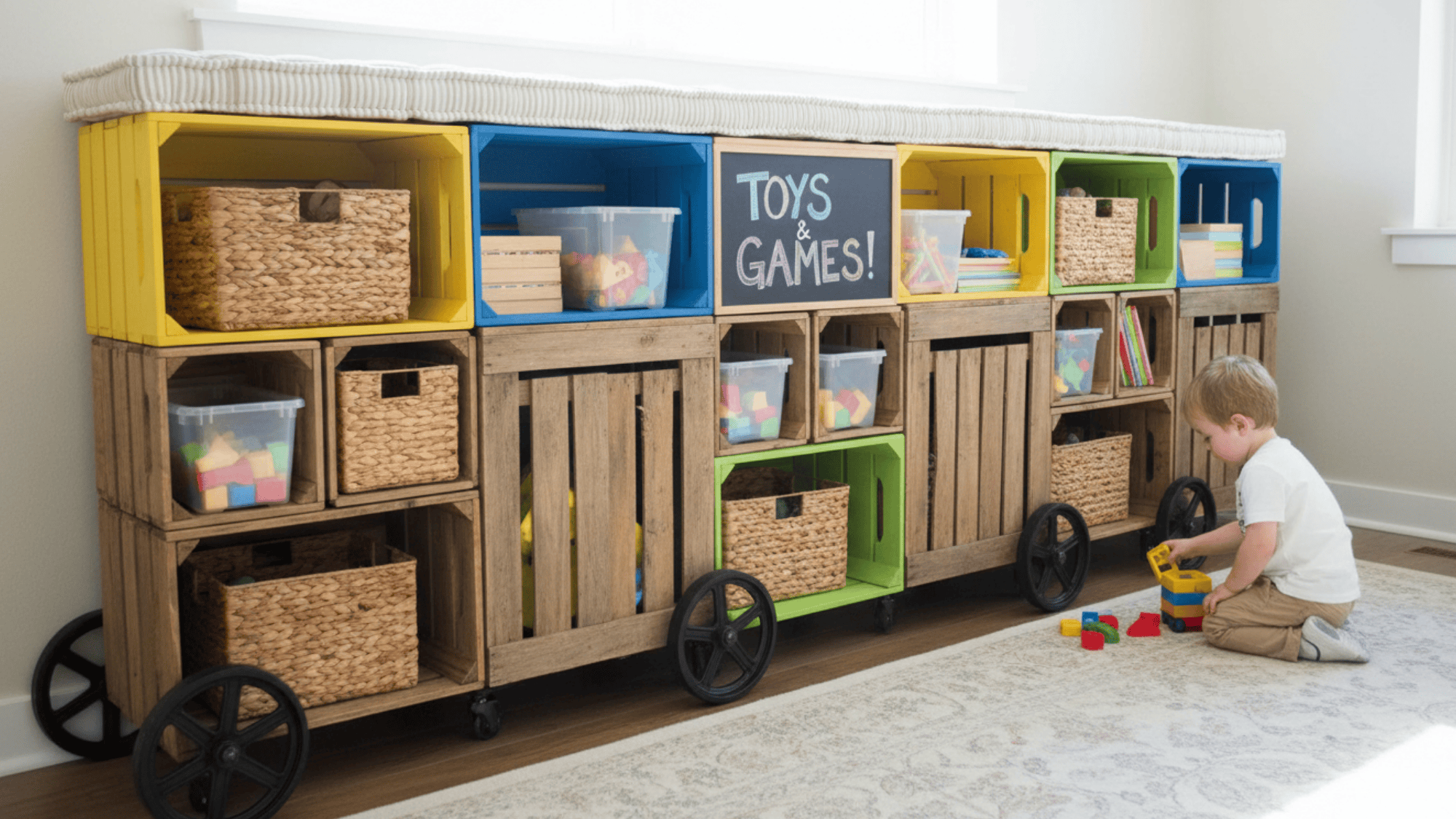
DIY crate storage means using wooden or plastic crates to store toys. You can stack them, paint them fun colors, or add wheels to the bottom.
Each crate holds a different type of toy, like one for stuffed animals and one for blocks. They are cheap and easy to find.
You can make them look nice by decorating them with stickers or paint. Kids can help build the storage, making it a fun family project too.
This is one of my favorite budget-tier solutions for clients who want a low-cost option.
Paint wooden crates in a few colors and place them on the wall for a neat look that kids can help make and use.
23. Label-Based Sorting Bins
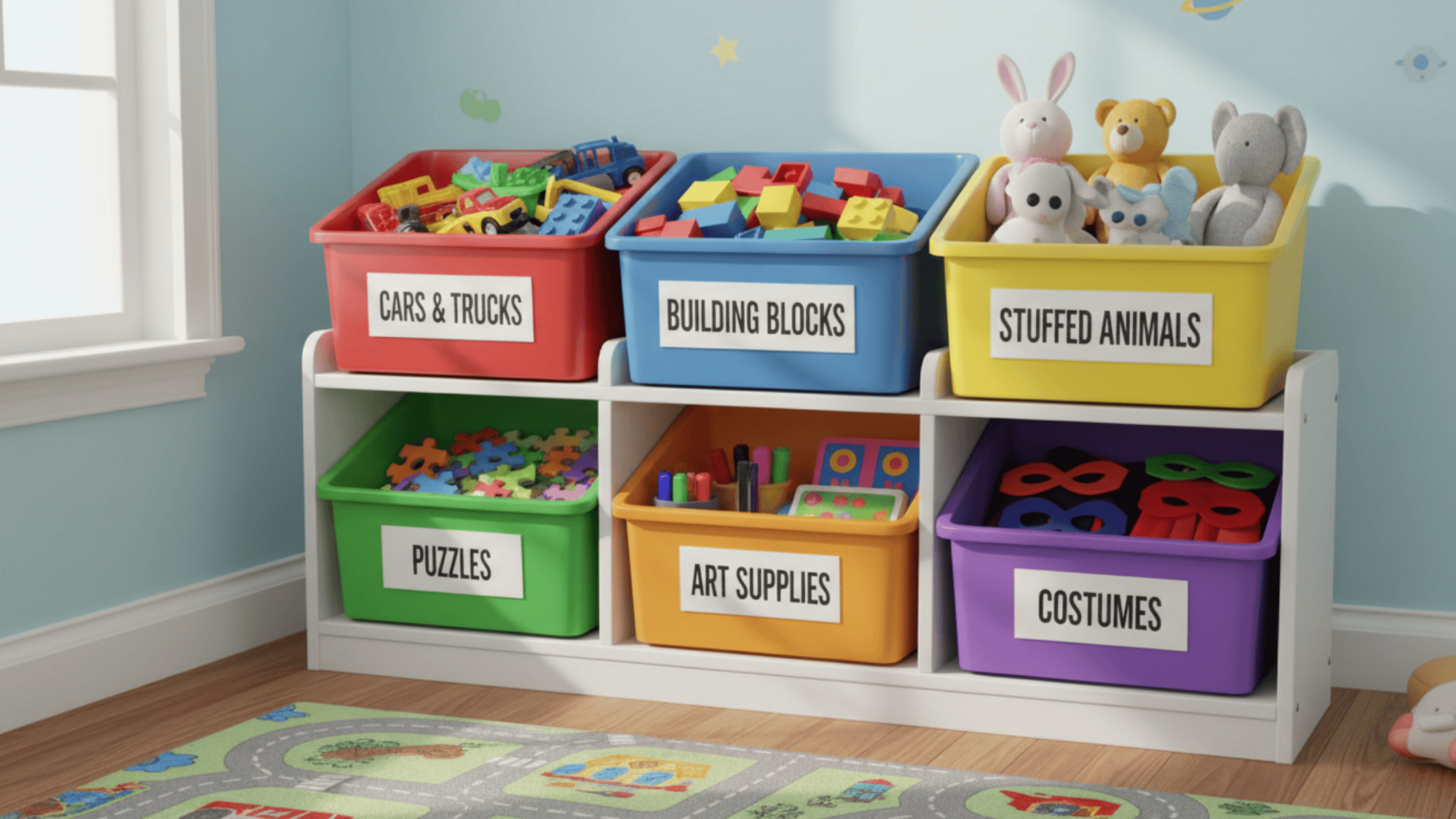
Label-based sorting bins are containers with a label on each one that tells you what goes inside. For example, one bin says “cars,” another says “dolls,” and another says “blocks.”
This teaches kids where to put things back after playing. The labels can use words or pictures for younger kids who can’t read yet.
When every toy has a home, cleaning up becomes much faster and easier. Kids feel proud when they can do it all by themselves.
24. Toy Chest with Lid
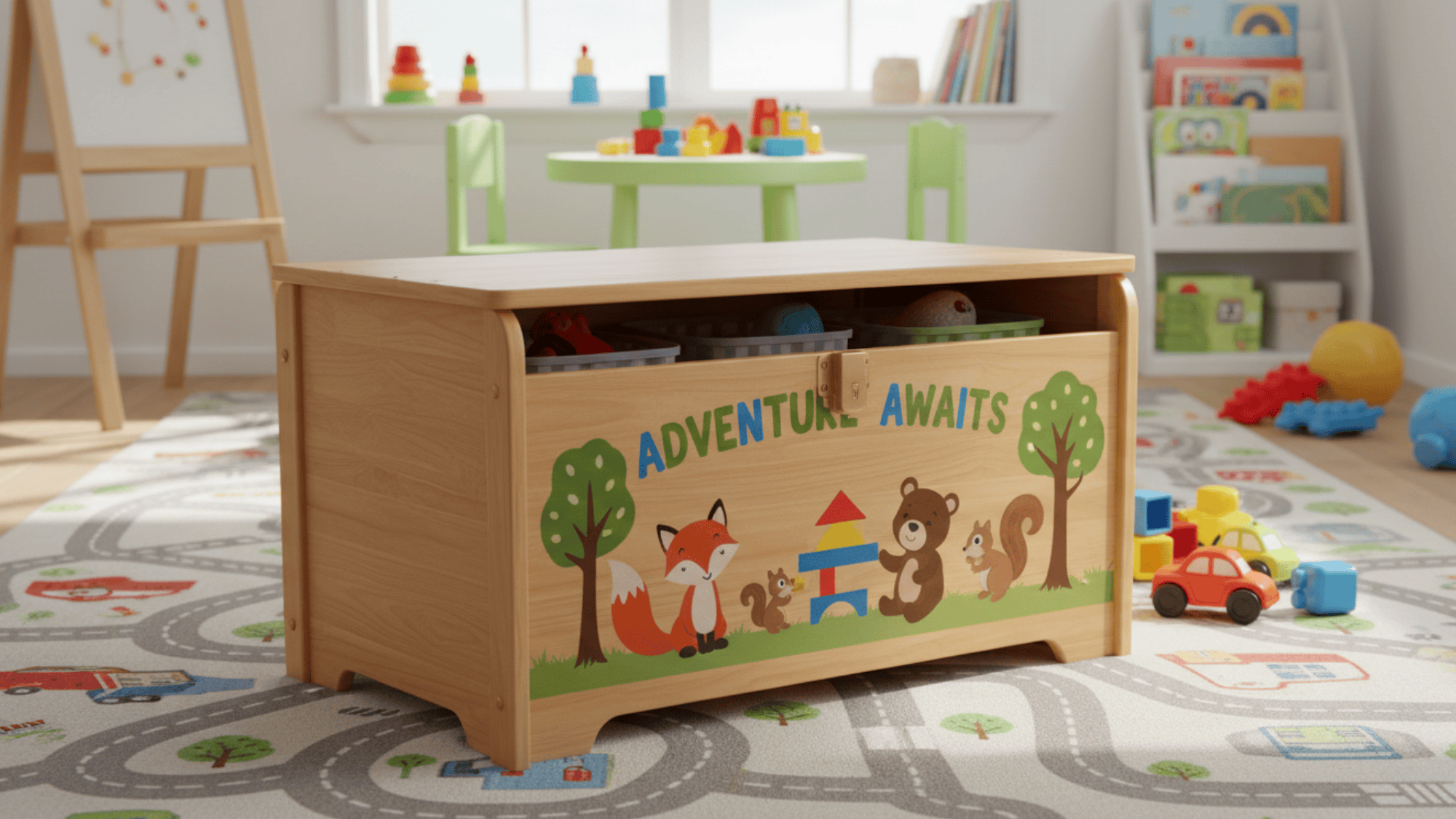
A toy chest is a big box with a lid that holds lots of toys inside. It is great for storing large items like balls, stuffed animals, and building sets.
The lid keeps everything hidden, so the room looks clean. Make sure the lid has a safety hinge so it doesn’t slam shut on little fingers.
Place the toy chest in a corner or against a wall. It is one of the easiest and most classic ways to store many toys at once.
25. Foldable Fabric Bins
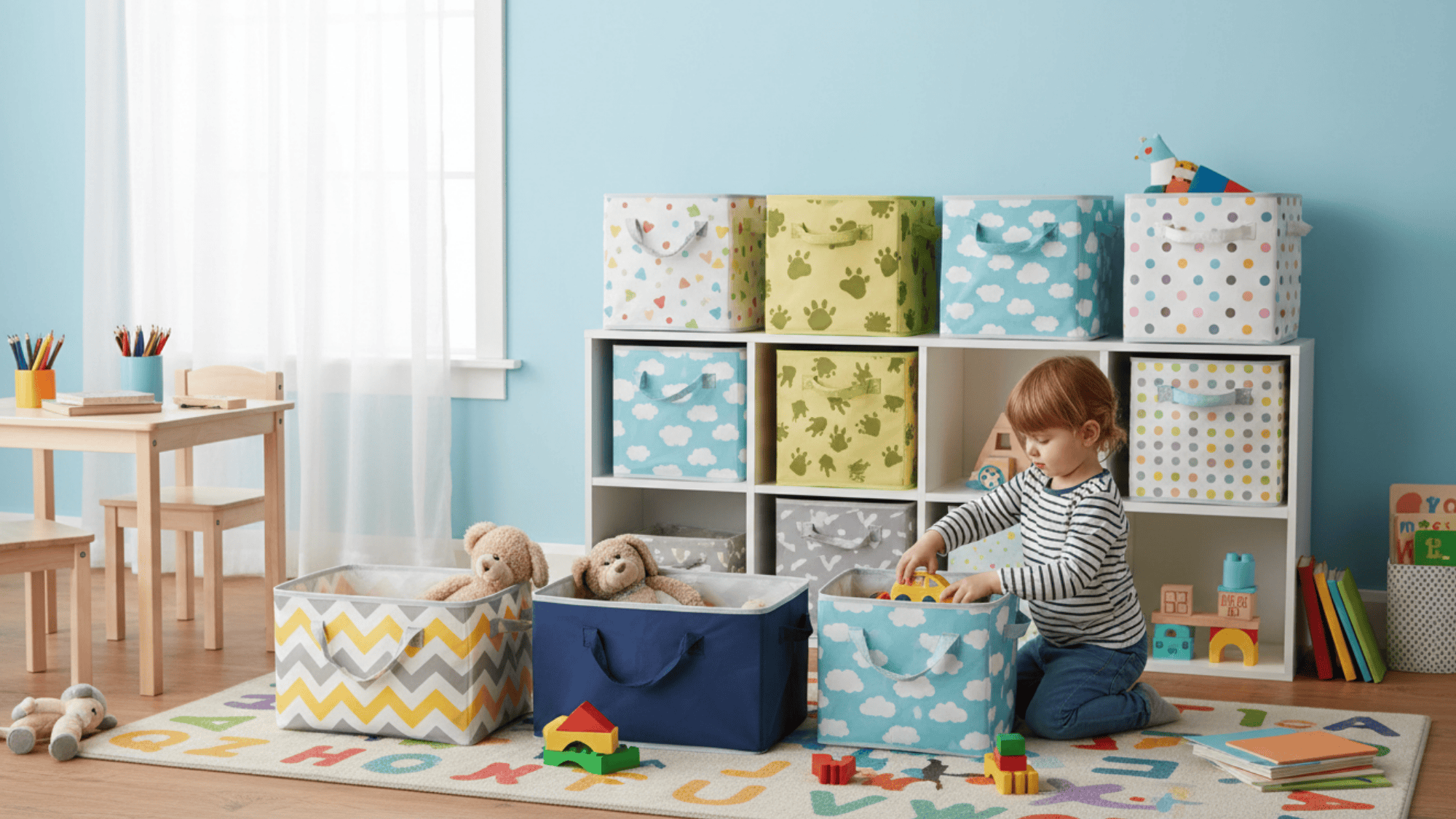
Foldable fabric bins are soft containers that collapse flat when not in use. When you need them, just open them up, and they hold toys, clothes, or blankets.
They are lightweight and easy for kids to carry. You can place them on shelves or in cubbies. They come in many fun colors and patterns.
When a bin is empty, fold it flat to save space. They are a cheap and easy storage fix that works well in any size playroom.
26. Slide-Out Cabinet Storage
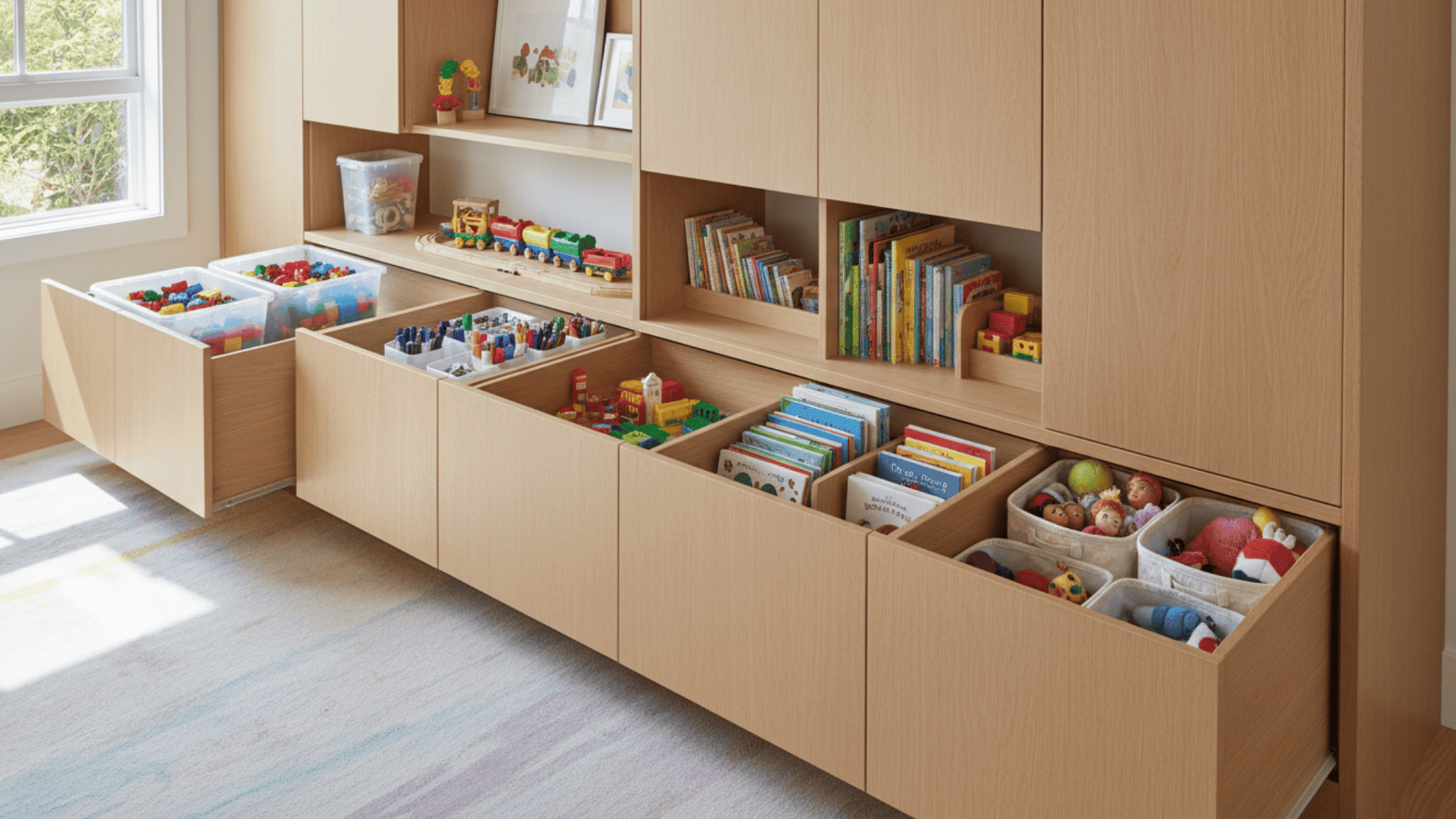
Slide-out cabinet storage means adding shelves or bins inside a cabinet that pull out like a drawer. Instead of digging through the back of a deep cabinet, everything slides right out.
This makes it easy to find toys without making a mess. You can add slide-out bins to an old cabinet or buy one that already has them.
They are great for storing art supplies, puzzles, or board games in a neat, easy-to-reach way.
27. Puzzle Storage Trays
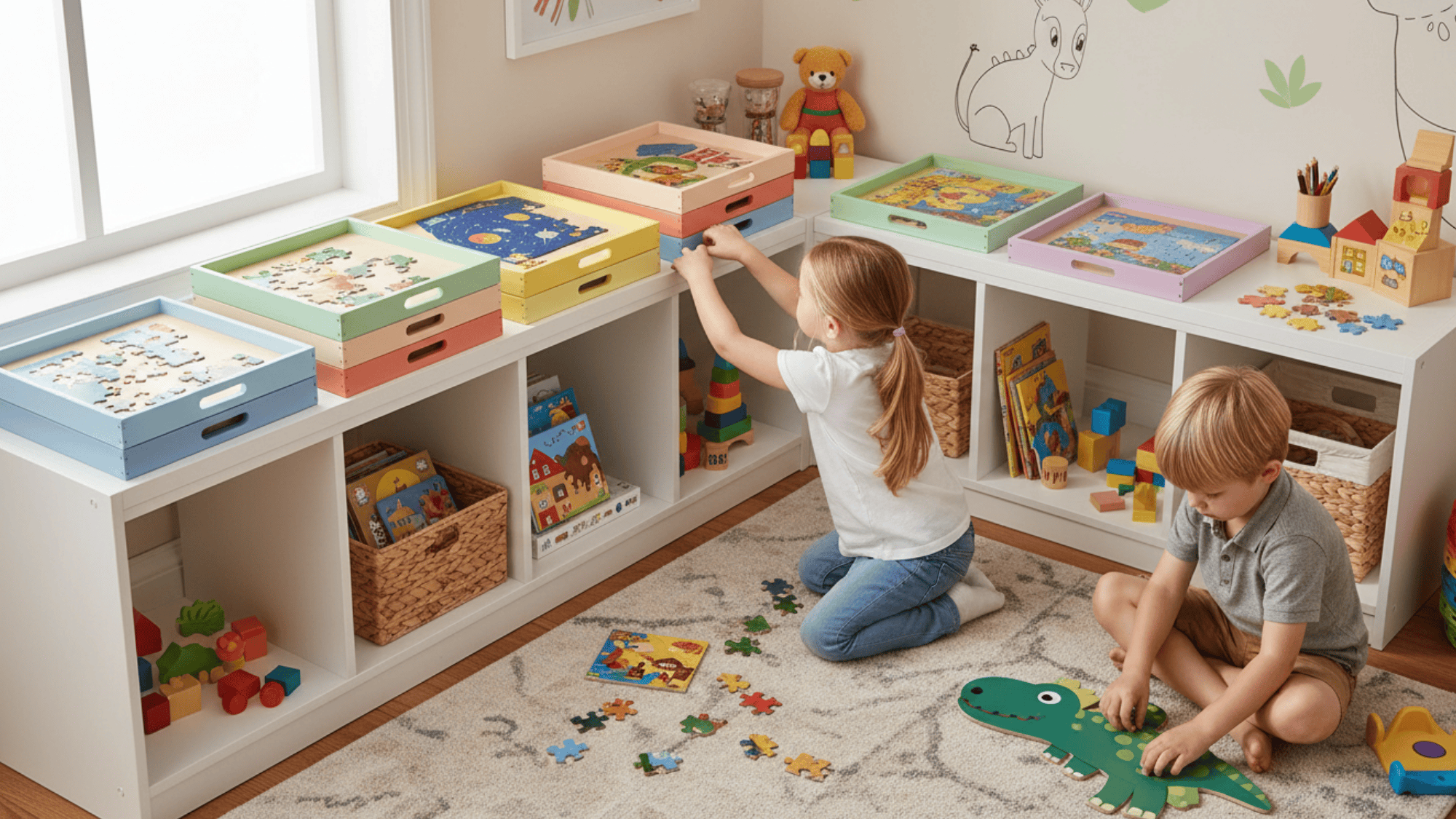
Puzzle storage trays are flat trays that hold one puzzle each. Instead of keeping puzzles in boxes that can get crushed or ripped, each puzzle sits in its own tray.
The pieces stay together and don’t mix with other puzzles. You can stack the trays on a shelf so you can see them easily.
When a child wants to do a puzzle, they just grab the right tray. It saves time looking for pieces and keeps everything sorted and ready to use.
28. Lego Table with Drawers
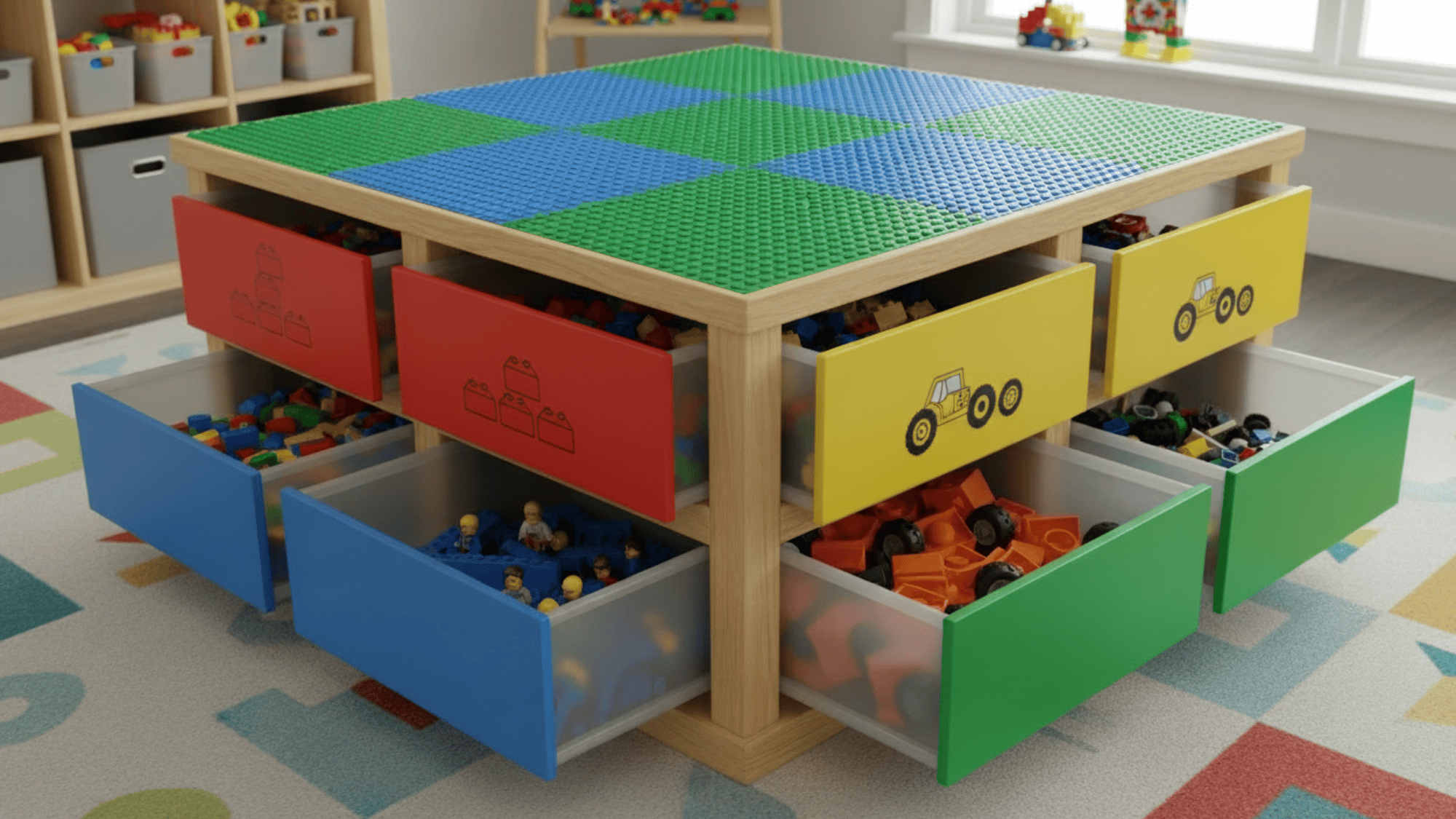
A Lego table is a low table with a Lego building surface on top and drawers underneath. Kids can build right on the table and store all the Lego pieces in the drawers below.
This keeps tiny Lego pieces off the floor where they can get lost or stepped on. The drawers can be sorted by color or size.
When playtime is over, everything goes back into the drawers. It is a smart all-in-one storage and play solution for Lego fans.
29. Hanging Shoe Organizer
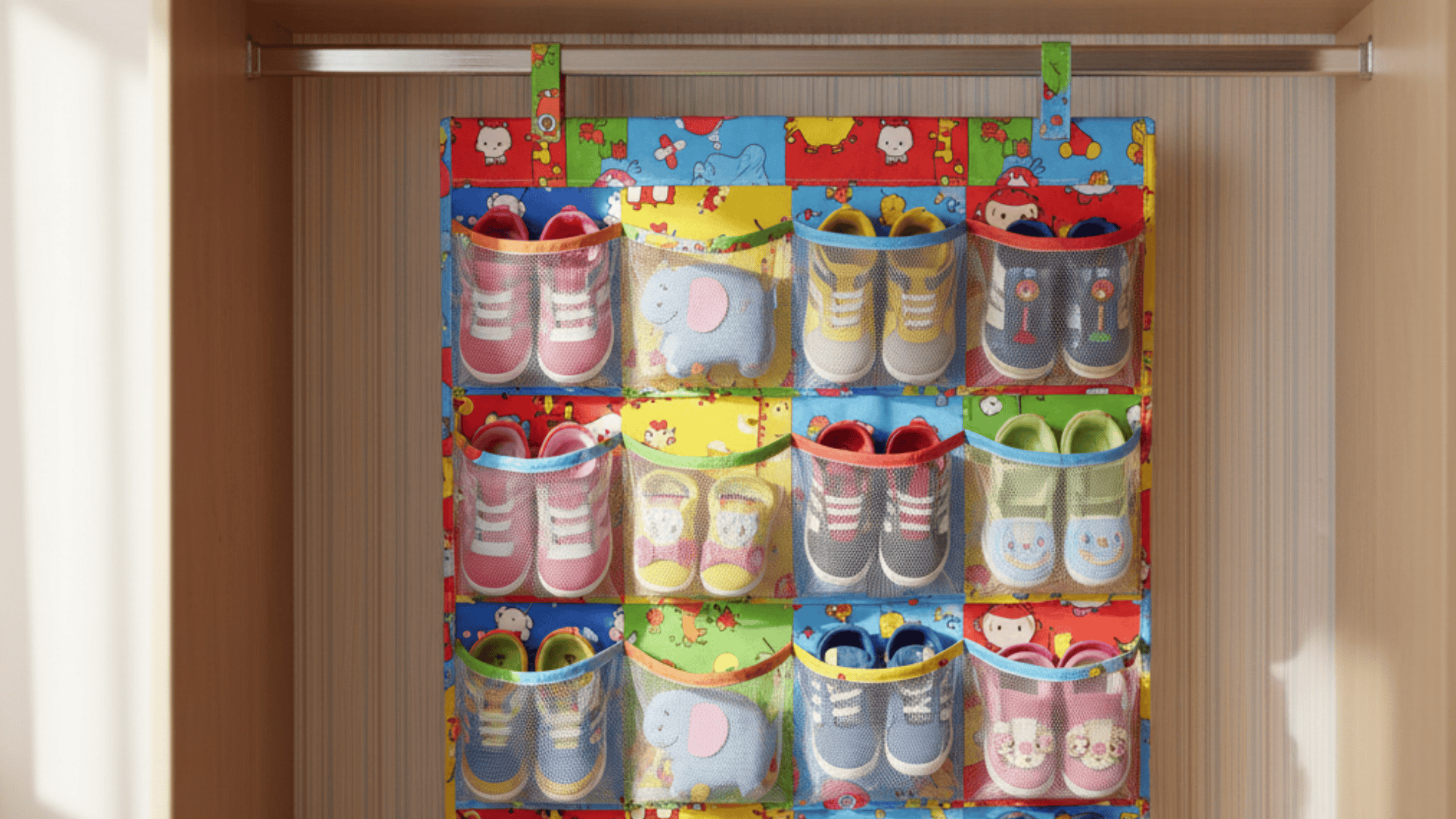
A hanging shoe organizer is a long fabric panel with rows of pockets. It hangs on a door or wall. Even though it is made for shoes, it works great for storing small toys, crayons, small dolls, or craft supplies.
Each pocket holds one type of item. Kids can see everything at a glance and grab what they need fast. It uses door or wall space instead of shelf or floor space. It is cheap and very easy to hang up.
30. Wall-Mounted Cubbies
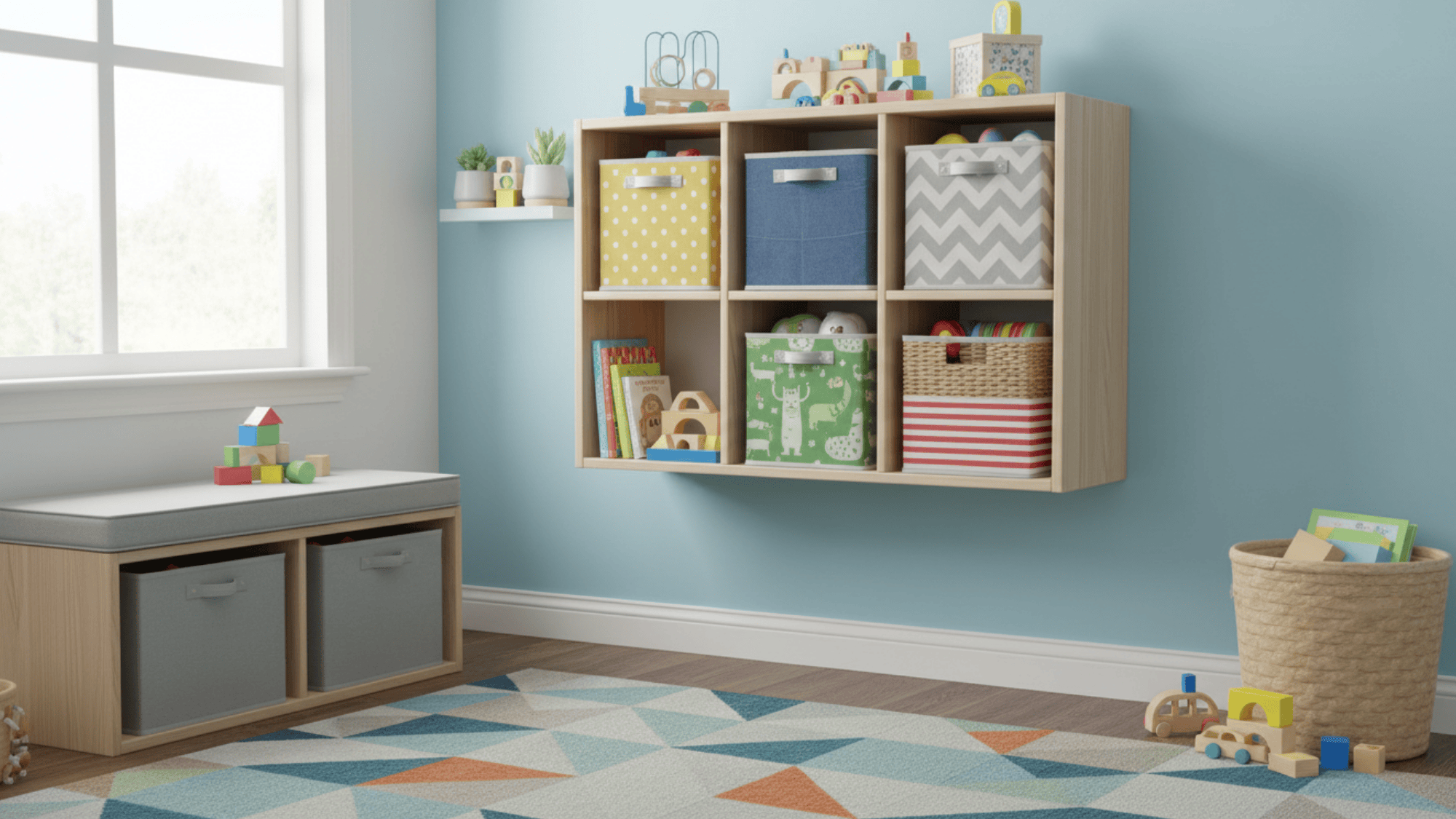
Wall-mounted cubbies are small box-shaped shelves that are fixed to the wall. Each cubby holds one item or a small group of toys.
They look like a grid on the wall, making things easy to see and reach. You can put baskets inside each cubby for extra storage.
Since they are on the wall, they don’t take up any floor space. They work great for books, small toys, or bins. They make the playroom look organized and fun.
31. Hidden Storage Behind Curtains
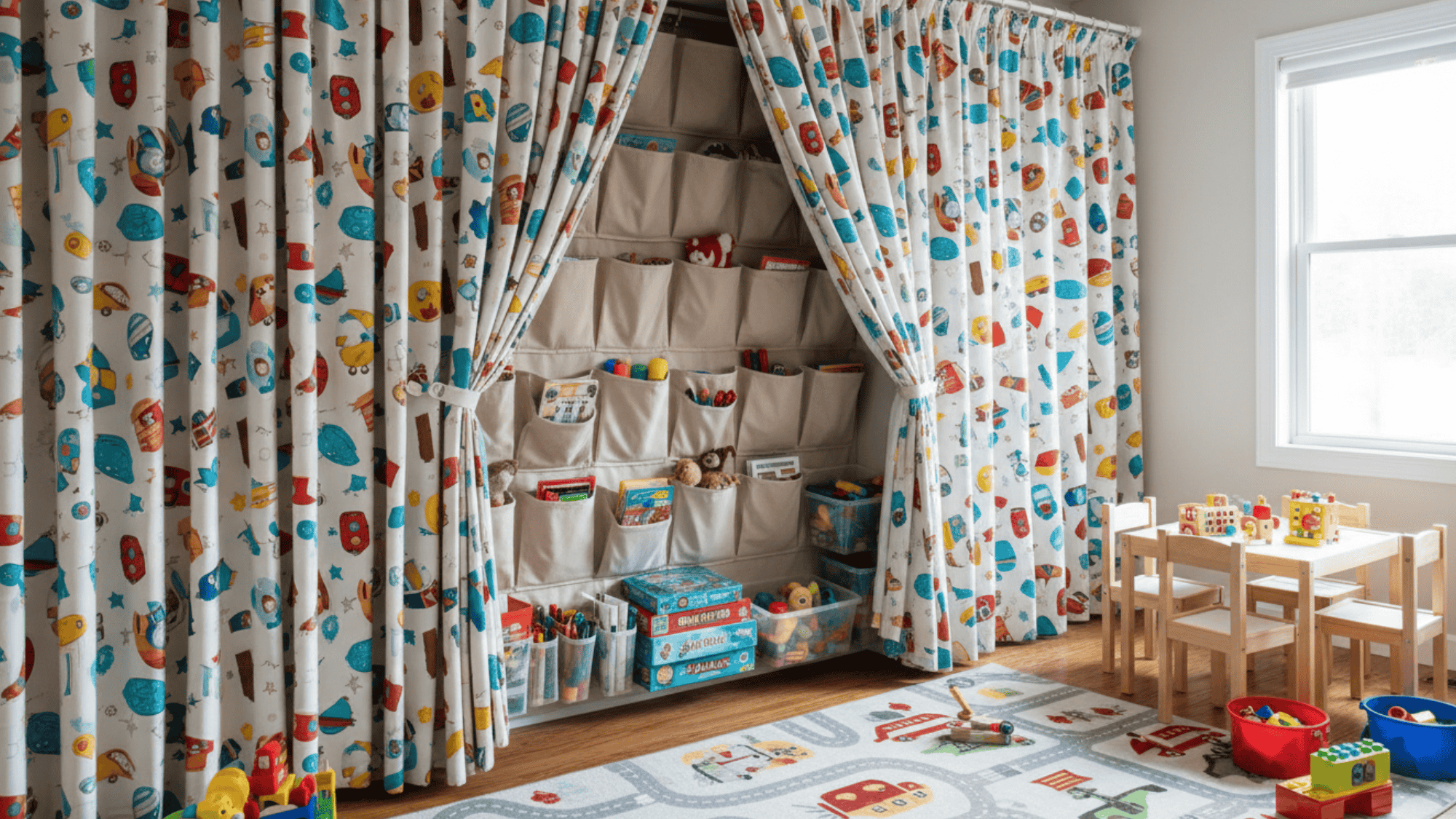
Hidden storage behind curtains means putting shelves or bins in a space and covering them with a curtain.
The curtain hides all the toys and clutter behind it, making the room look clean and neat. You can hang a curtain under a table, along a wall, or in front of a low shelf.
It is a cheap and easy trick. When kids need a toy, they just pull back the curtain. It works great for hiding a lot of storage without building anything new.
32. Clear Acrylic Storage Drawers
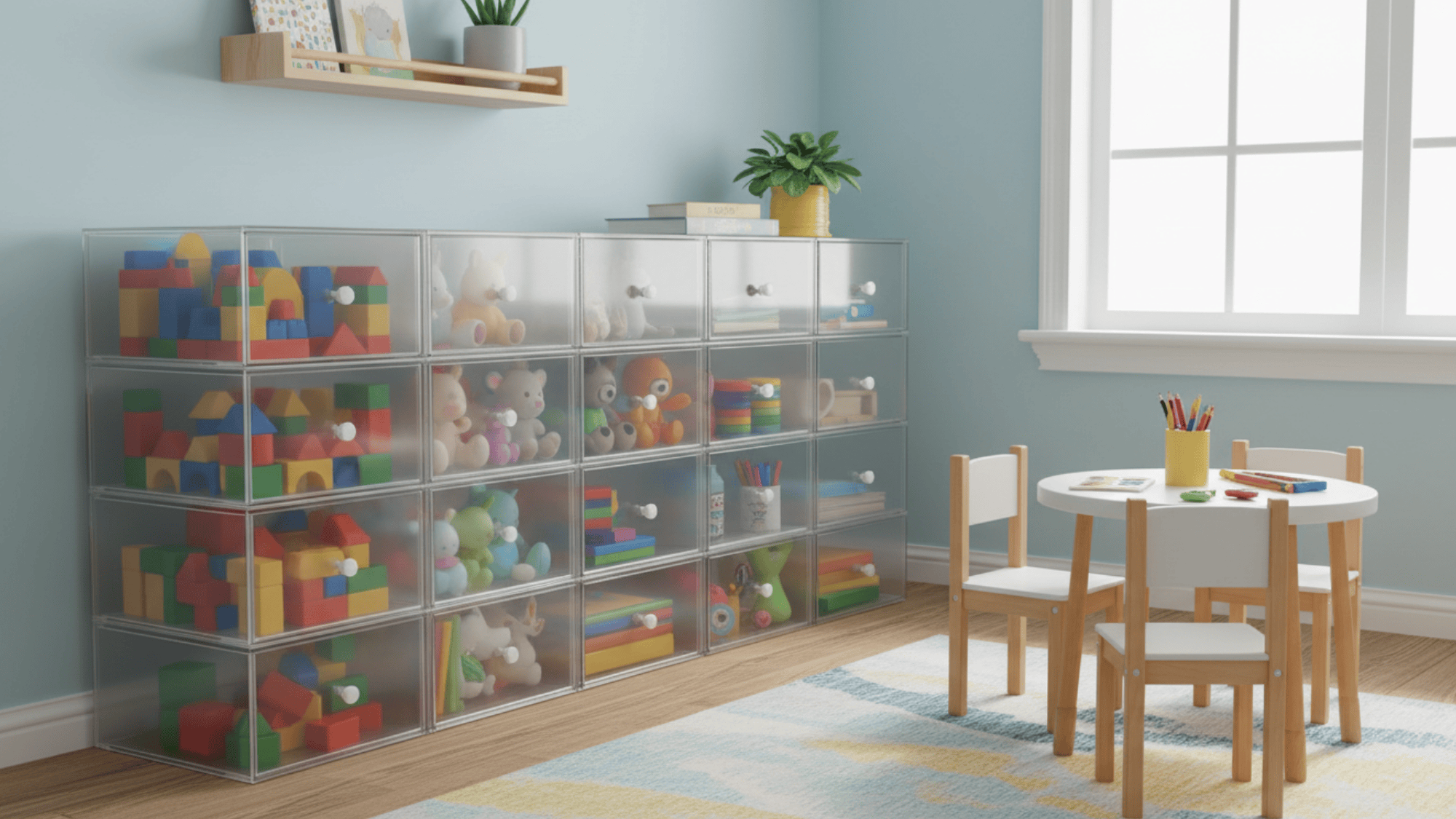
Clear acrylic storage drawers are great for keeping toys visible and easy to find. Kids can quickly see what is inside without opening every drawer.
This saves time and keeps things neat. These drawers work well for small toys like blocks, puzzles, and art supplies.
You can stack them or place them on shelves. They also give the playroom a clean and simple look while keeping everything in order.
33. Toy Storage Wall Rails
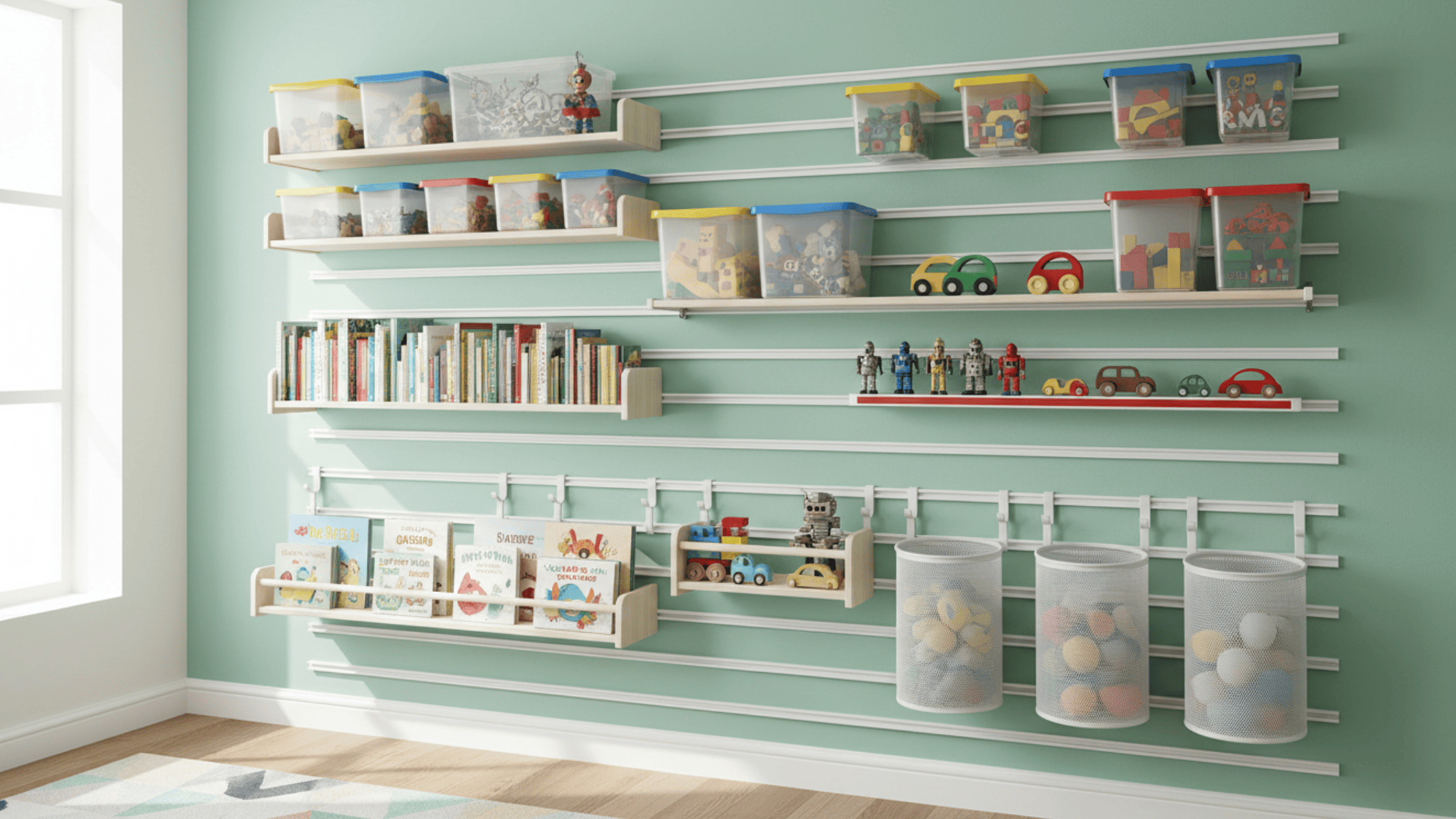
Toy storage wall rails are fixed on the wall and hold bins or small containers. They keep toys off the floor, helping save space in the room.
You can slide or move the bins along the rail to fit your needs. They work well for small toys, craft supplies, books, and everyday items.
Place them at kid height so children can easily reach and put things back. This setup keeps the playroom neat, simple, and easy to manage every day.
Easy Daily Organization Tips
Keeping a playroom neat every day doesn’t have to be hard. These simple habits will help you and your kids stay on top of the mess without spending a lot of time or energy.
| Tip | What to do | Why it helps |
|---|---|---|
| Use Labels | Stick a label on every bin and shelf. Use pictures for little kids and words for older ones. | Kids always know where things go, so cleanup is fast and easy. |
| Rotate Toys Weekly | Keep only some toys out. Store the rest and swap them each week. | Less mess on the floor, and kids stay more interested in their toys. |
| Easy Access Items | Put toys used every day on low, easy-to-reach shelves. | Kids can grab and put things back on their own without any help. |
| Teach Cleanup Habits | Set a short cleanup time after play. Use a timer or song to make it fun. | Cleanup becomes a normal routine, and kids stop fussing about it. |
| Declutter Monthly | Once a month, sort toys into keep, donate, and throw away piles. | Fewer toys means less clutter and more room to play freely. |
| Create Play Zones | Make simple areas for art, building, reading, and play. | Toys stay in their zone, naturally reducing spread around the room. |
Final Thoughts
Keeping a playroom clean needs both smart planning and simple design. These playroom storage ideas work well because they match how kids really play and use the space.
Keeping a playroom neat does not have to be hard. Simple playroom storage ideas like labeled bins, rolling carts, cube shelves, and toy rotation can make a huge difference.
When everything has its own spot, kids clean up faster, and the room stays tidy longer. You do not need to buy expensive things or change everything at once.
Start small. Pick one or two playroom storage ideas that feel easy and try them this week. Once you see how well they work, you can slowly add more. Small changes lead to big results over time.
From my own experience, when we set up labeled bins and a simple toy rotation system, cleanup time went from 20 minutes to just 5. It really works!
Ready to get started? Pick one idea from this list today and make your playroom a cleaner, happier space for your child!
Frequently Asked Questions
What is the Best Way to Organize a Playroom?
Use bins, shelves, and labels to give each toy a place. Keep items easy to reach so kids can find and return toys quickly.
How to Store Too Many Toys?
Use rotation bins and keep only some toys out. Store the rest in boxes or closets and switch them weekly to reduce clutter.
How to Get Kids to Clean Up their Toys?
Make cleanup a simple routine with a timer or song. Use labels so kids know where things go and can clean up on their own.