

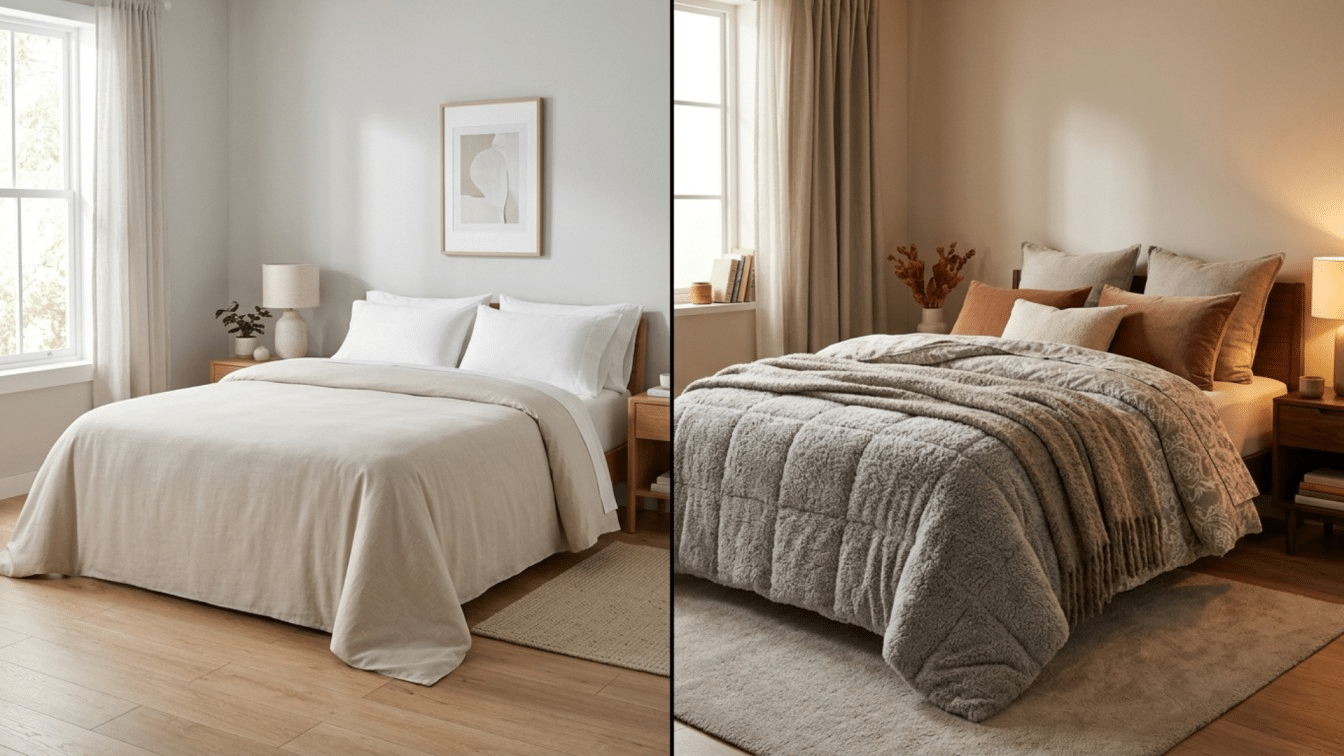
I’ve often stood in a store or scrolled online, wondering which bedding option actually makes sense. If you’re trying to decide between a bedspread and a comforter, you’re not alone.
The topic of bedspreads vs comforters can feel confusing at first, especially when both seem so similar.
In this guide, I’ll explain what each one is, how they differ, and when you should choose one over the other.
I’ll also share a few practical tips that can help you pick the right option based on your daily use. This way, you can make a choice that feels right and works well over time.
By the end, you’ll have a clear idea of what truly fits your needs and your bedroom best for everyday comfort.
What Is a Bedspread?
A bedspread is a lightweight layer that covers your entire bed, often reaching down to the floor.
I like using a bedspread when I want my bed to look neat without much effort. It’s usually thinner than a comforter, making it a good choice for warmer weather or layering.
You’ll find bedspreads in many styles, colors, and patterns, so it’s easy to match them with your room. They are also simple to fold and store when not in use.
Some people use them mainly for decoration, while others use them for light and warmth at night.
If you prefer a clean, flat look on your bed, a bedspread can be a great option. It keeps things simple while still adding style.
What Is a Comforter?
A comforter is a thick, quilted blanket designed to provide warmth and coziness. It is usually filled with materials such as cotton, polyester, or down, which help trap heat and keep the body warm on colder nights.
Unlike a bedspread, a comforter typically does not reach the floor and is primarily used for comfort rather than full bed coverage.
Comforters come in a wide range of colors, patterns, and sizes, making them a popular choice for both style and function. Many are part of bedding sets that include matching pillow covers for a coordinated look.
They are commonly used as the top layer of bedding and can be paired with a duvet cover for added protection.
Overall, a comforter offers a soft, warm, and inviting feel for everyday use.
Bedspread vs Comforter: Key Differences You Should Know
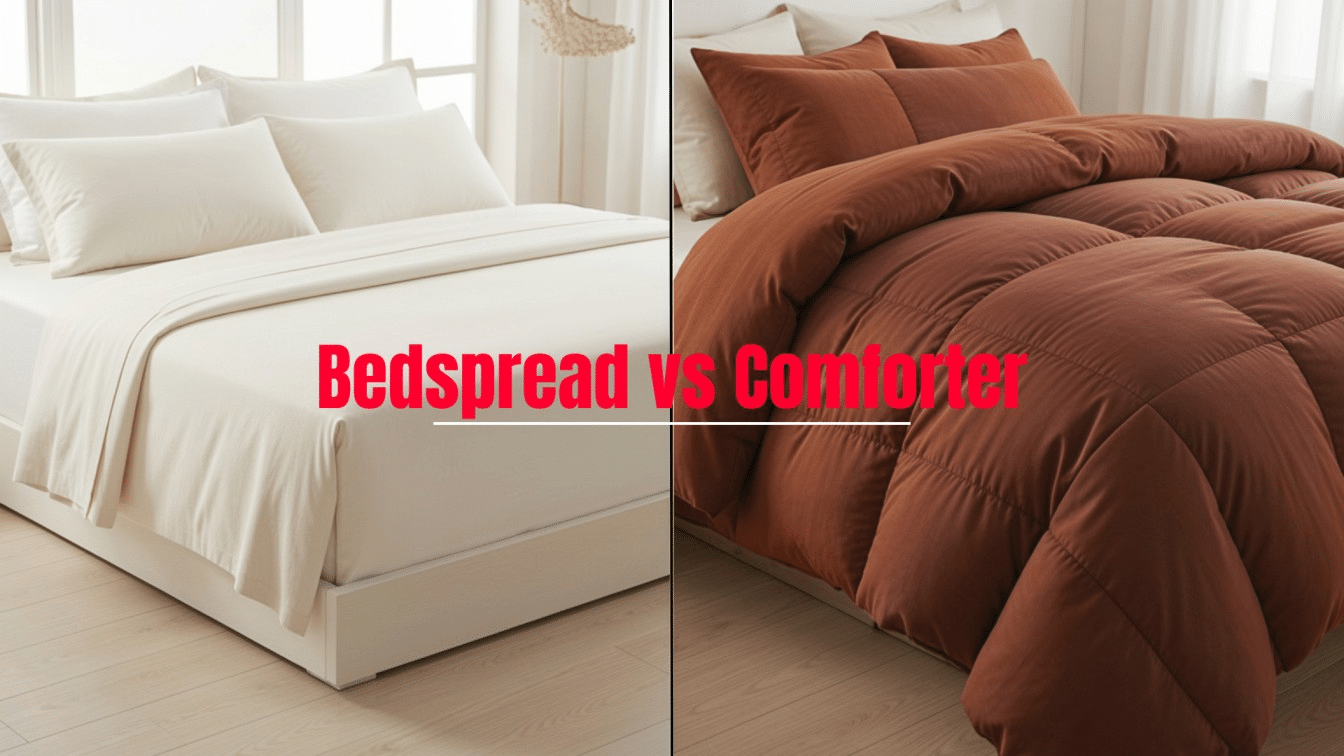
Understanding the key differences between a bedspread and a comforter can help in making a better choice. Each serves a different purpose based on comfort, style, and season.
1. Warmth and Thickness
A bedspread is usually thin and lightweight, making it ideal for warmer weather or for layering with other blankets. It provides a neat look but offers little insulation.
In contrast, a comforter is thick and filled with materials like cotton or down, which helps trap heat. This makes it a better option for colder months.
The difference in thickness is one of the main factors that affects comfort and daily use.
2. Coverage and Fit
A bedspread is designed to cover the entire bed, often reaching all the way to the floor. This gives a smooth, polished look without requiring extra layers.
A comforter, on the other hand, is shorter and typically covers just the top of the bed. It is mainly used for warmth rather than full coverage.
Because of this, a comforter is often paired with other bedding items for a complete look.
3. Style and Appearance
Bedspreads offer a simple, clean style that works well in both minimalist and traditional bedroom setups. They usually have flat designs with subtle patterns.
Comforters provide a fuller, fluffier appearance, adding a cozy feel to the bed. They come in bold colors and modern patterns, making them a popular choice for adding personality to a room.
Both options can enhance the look of a bedroom in different ways.
4. Maintenance and Care
Bedspreads are generally easier to clean and maintain because they are lighter and less bulky. They can be washed and dried quickly at home.
Comforters, due to their thickness, may require more effort to clean. Some may need large washing machines or even professional cleaning.
Regular care is important to keep both options fresh, but bedspreads are usually more convenient for everyday use.
5. Weight and Feel
A bedspread is light and smooth, making it easy to handle and arrange on the bed. It does not feel heavy, so it works well for those who prefer a simple and airy layer.
A comforter, however, has a heavier and plusher feel due to its thick filling. This added weight creates a cozy, snug sleeping experience, especially on colder nights, but it may feel too bulky for some users.
This difference in feel can impact overall sleep comfort.
6. Versatility and Layering
Bedspreads are often used as a top decorative layer and can be paired with sheets and blankets underneath. They work well in layered bedding setups without adding too much bulk.
Comforters are usually used as the main blanket, reducing the need for extra layers. While they provide enough warmth on their own, they are less flexible for layering and styling.
This makes bedspreads more adaptable for changing seasons.
Which Bedding Option is Best for You?
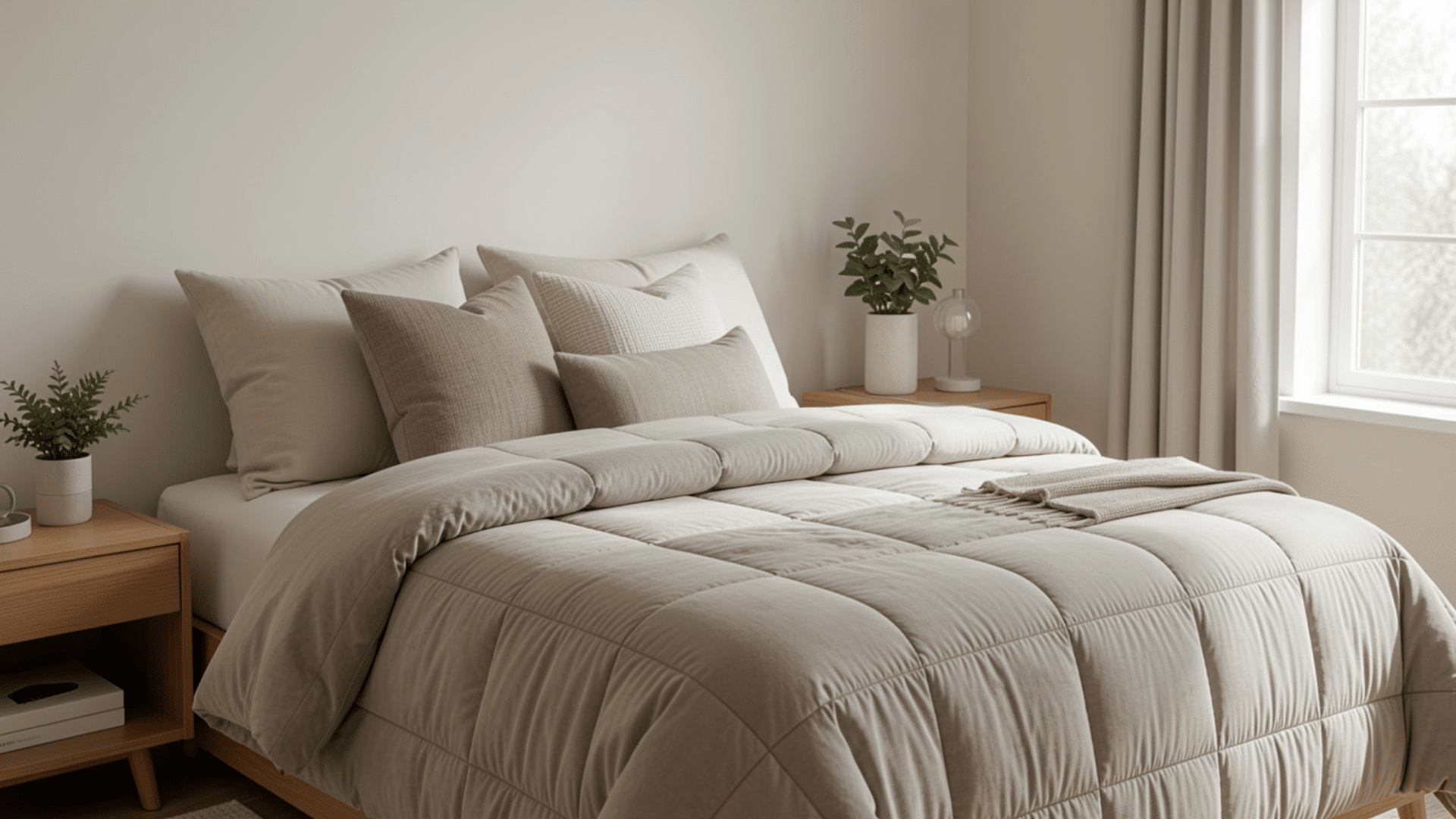
Choosing the right bedding depends on personal comfort, climate, and style preferences. A bedspread works well for those who prefer a light layer and a neat, clean look.
It is a good option for warm weather or for use in guest rooms where style matters more than warmth.
On the other hand, a comforter is better suited for colder climates or for anyone who wants a cozy, warm sleeping experience.
Those who prefer easy maintenance may lean toward a bedspread, while those who value softness and warmth may prefer a comforter. Budget, room style, and daily use should also be considered.
In the end, the best choice is the one that fits comfort needs and makes the bed feel inviting every day.
Overall Difference: Bedspread vs Comforter vs Quilt vs Duvet
Choosing between these bedding options can feel confusing at first. A simple comparison makes it easier to understand how each one differs in use and comfort.
| Feature | Bedspread | Comforter | Quilt | Duvet |
|---|---|---|---|---|
| Thickness | Thin and lightweight | Thick and fluffy | Medium thickness | Varies |
| Warmth | Light warmth | High warmth | Moderate warmth | Adjustable warmth |
| Coverage | Covers the entire bed to the floor | Covers the top of the bed | Covers the top, may not reach the floor | Covers top, used with cover |
| Style | Flat, neat look | Puffy and cozy look | Stitched, classic design | Clean and modern look |
| Maintenance | Easy to wash | Bulky to clean | Easy to maintain | Cover is easy, insert harder |
| Use | Warm weather or decor | Cold weather use | All-season use | Flexible for all seasons |
Helpful Tips to Choose Between Bedspread vs Comforter
Making the right choice becomes easier when you focus on your daily needs and comfort preferences. A few simple tips can help narrow down the best option.
- Climate and Weather: Choose a bedspread for warm or humid climates where a light layer is enough, while a comforter is better for cold weather or winter use when extra warmth is needed.
- Sleeping Preference: Go for a bedspread if a light, breathable feel is preferred, whereas a comforter suits those who enjoy a soft, cozy, and warm sleeping experience.
- Maintenance Needs: Bedspreads are easier to wash and handle regularly, while comforters usually require more space, time, and effort to clean properly.
- Bedroom Style: Bedspreads create a flat, neat, and minimal look, while comforters add a fluffy, cozy, and more layered appearance to the bed.
- Budget Consideration: Bedspreads are often more affordable overall, whereas comforters can vary widely in price depending on the material and quality
Final Thoughts
Choosing between a bedspread and a comforter really comes down to what feels right for your space and your comfort.
Both options have their own benefits, and the best choice depends on your climate, style, and how you like your bed to feel at the end of the day.
A lighter bedspread can keep things simple and fresh, while a comforter can add warmth and a cozy touch when needed.
In my experience, I found myself switching to a bedspread during warmer months and using a comforter when temperatures dropped. It made a noticeable difference in comfort.
Instead of looking for a perfect answer, focus on what works best for your daily routine. Have you tried both options before? Share your experience or preference in the comments below!
Frequently Asked Questions
Can a Bedspread be Used as a Blanket?
Yes, but it provides only light warmth and may not be enough for cold nights.
Do Comforters Make a Bed Look Bulky?
Yes, comforters create a fuller and more layered appearance on the bed.
Which Option is Better for Small Bedrooms?
Bedspreads are better because they create a neater, less bulky look.
How Often Should Bedding be Replaced?
Most bedding should be replaced every 3–5 years, depending on use and care.