

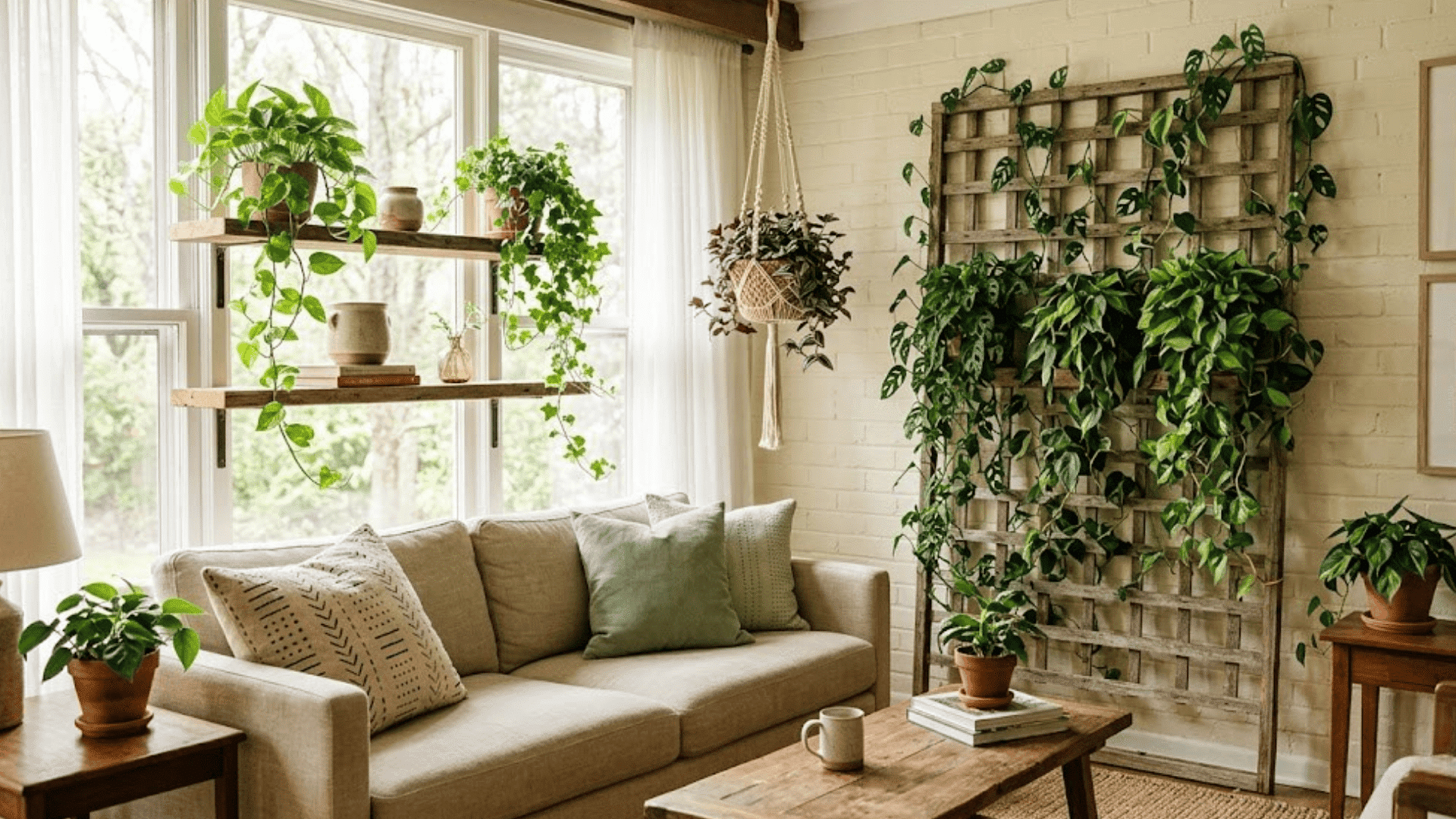
I’ve always liked adding greenery to my home, but large plants can take up too much room. That’s why I started growing indoor vine plants.
They fit into small spaces, grow in hanging pots or shelves, and make a room feel fresh without much effort. Some even grow well in low light, which helped me a lot in my apartment.
In this guide, I’m sharing the best indoor vine plants for small spaces and easy ways to care for them.
You’ll find plants for bright rooms, darker corners, hanging baskets, and tiny apartments. I’ll also cover watering tips, light needs, and simple ideas to style them in your home.
If you want plants that look good and don’t need a lot of work, this list will help you pick the right ones for your space.
Why Indoor Vine Plants Make Our Home Feel Lush?
If your home feels like it is missing something, it might just need a vine plant or two. They have a way of softening a room and making it feel more comfortable and put together.
Vine plants are one of the most flexible plants you can grow indoors. You can trail them, climb them, or hang them depending on the space you have. That makes them useful in both small apartments and large rooms.
They are also some of the easiest plants to care for. Many grow well in low light and only need watering once a week or less.
On top of that, several varieties are known to filter indoor air. So they are not just good to look at. They are genuinely good for your home.
Vines adapt well indoors because most of them evolved under forest canopies, competing for filtered light rather than full sun. That makes them naturally suited to the light levels most rooms provide.
It also explains why so many vine species tolerate drought; they had to survive between rain events in unpredictable tropical environments.
Indoor Vine Plants for a Lush Home
From easy-care trailers to rare flowering climbers, these vining plants bring real greenery to any indoor space.
1. Pothos
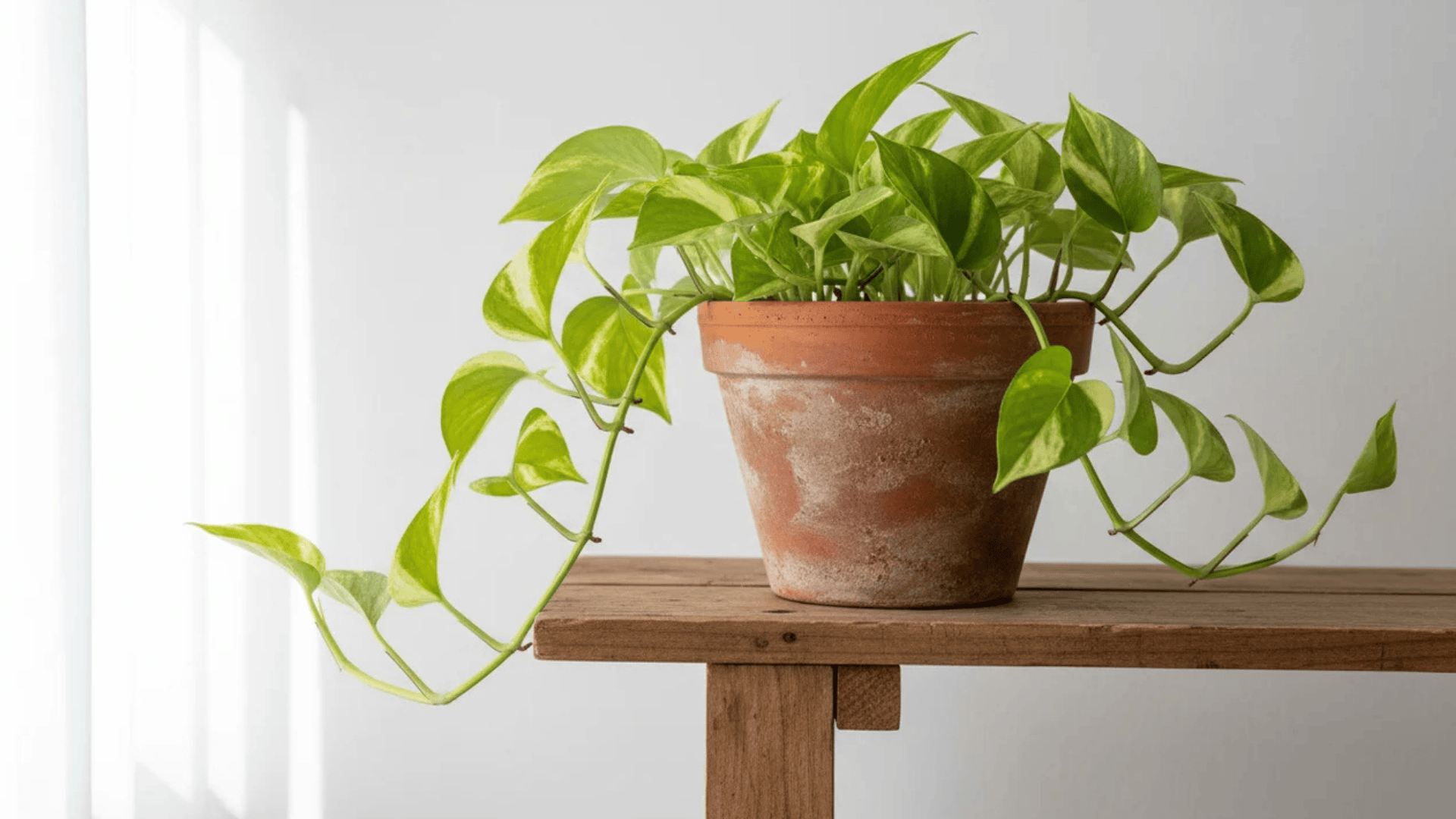
Pothos ranks among the most popular indoor vine plants for good reason. Heart-shaped leaves come in shades of green, yellow, and white, and the plant grows quickly with very little effort.
It trails beautifully from a shelf or hanging basket and handles low light better than most vines. Wait until the top inch of soil feels dry before watering.
I grew my first pothos in a dim corner of my bedroom, and it lasted for years with little attention from me.
Plant Care at a Glance:
- Light: Low to bright indirect light
- Water: When the top inch of soil feels dry
- Mature Size: 6 to 10 feet indoors
- Toxicity: Toxic to cats and dogs
2. Heart Leaf Philodendron
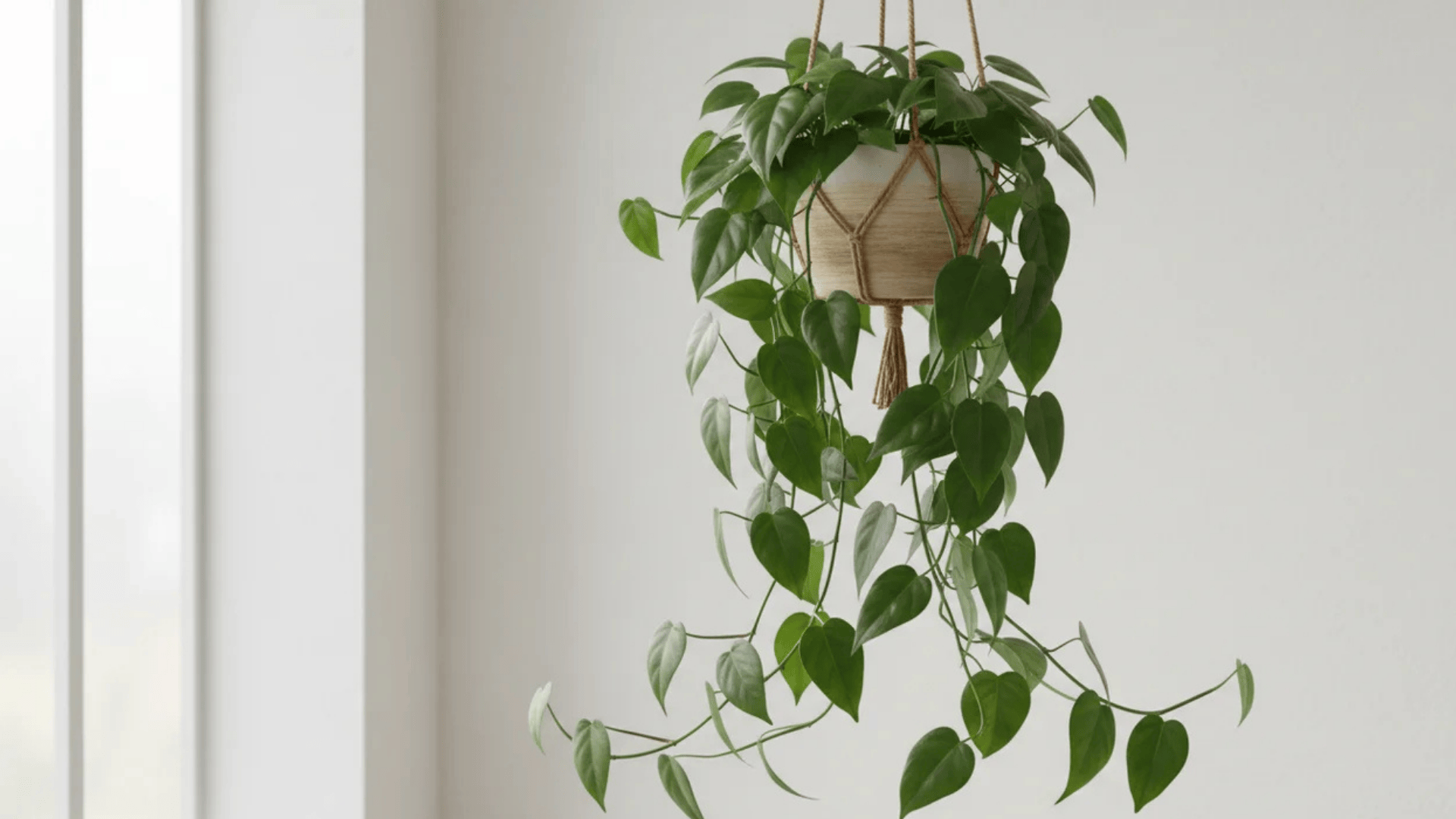
The heartleaf philodendron has glossy, heart-shaped leaves that trail beautifully from shelves and hanging baskets. A north-facing room or a spot several feet from a window suits it just fine.
Water it when the top layer of soil dries out, and never let it sit in soggy soil.
My friend kept one in her office hallway with almost no natural light, and it grew faster than anything else in the room. It is also very forgiving when watering gets missed.
Quick Plant Care Guide:
- Light: Low to moderate indirect light
- Water: When the top layer of soil dries out
- Mature Size: Up to 10 feet indoors
- Toxicity: Toxic to cats and dogs
3. English Ivy
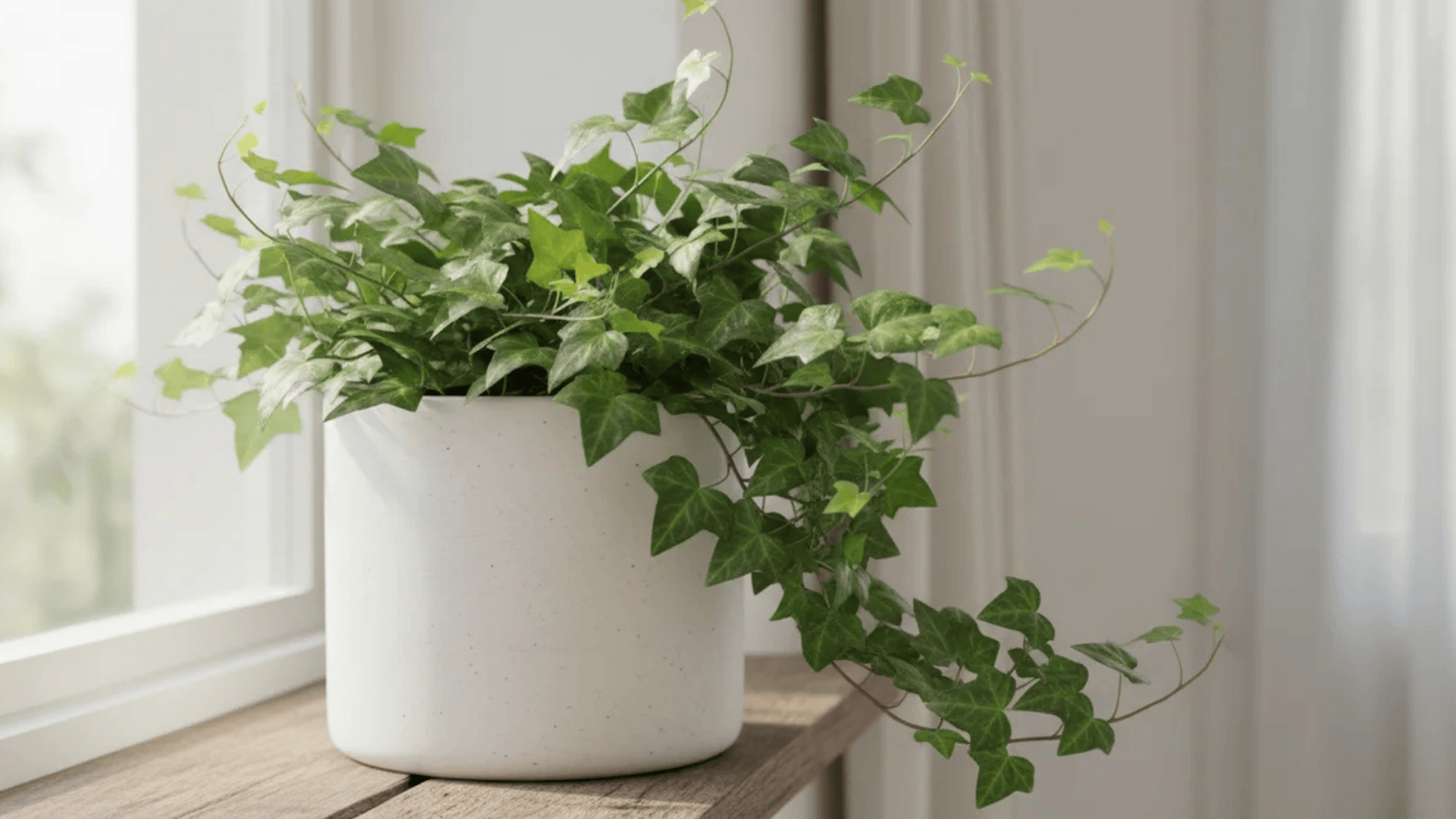
English ivy is a well-known trailing vine with lush evergreen leaves that work in hanging baskets, on shelves, or along windowsills.
A cool room with filtered light or even a shaded corner keeps it content. Keep the soil consistently moist but not waterlogged.
Regular pruning keeps it looking full and prevents it from getting too leggy over time.
Keep it out of reach of pets and children, as ingestion can cause toxicity. It is one of the more classic choices for a trailing indoor vine display.
Plant Care at a Glance:
- Light: Low to moderate indirect light
- Water: Keep soil consistently moist, not waterlogged
- Mature Size: Up to 8 feet indoors
- Toxicity: Toxic to cats, dogs, and humans
4. Arrowhead Vine
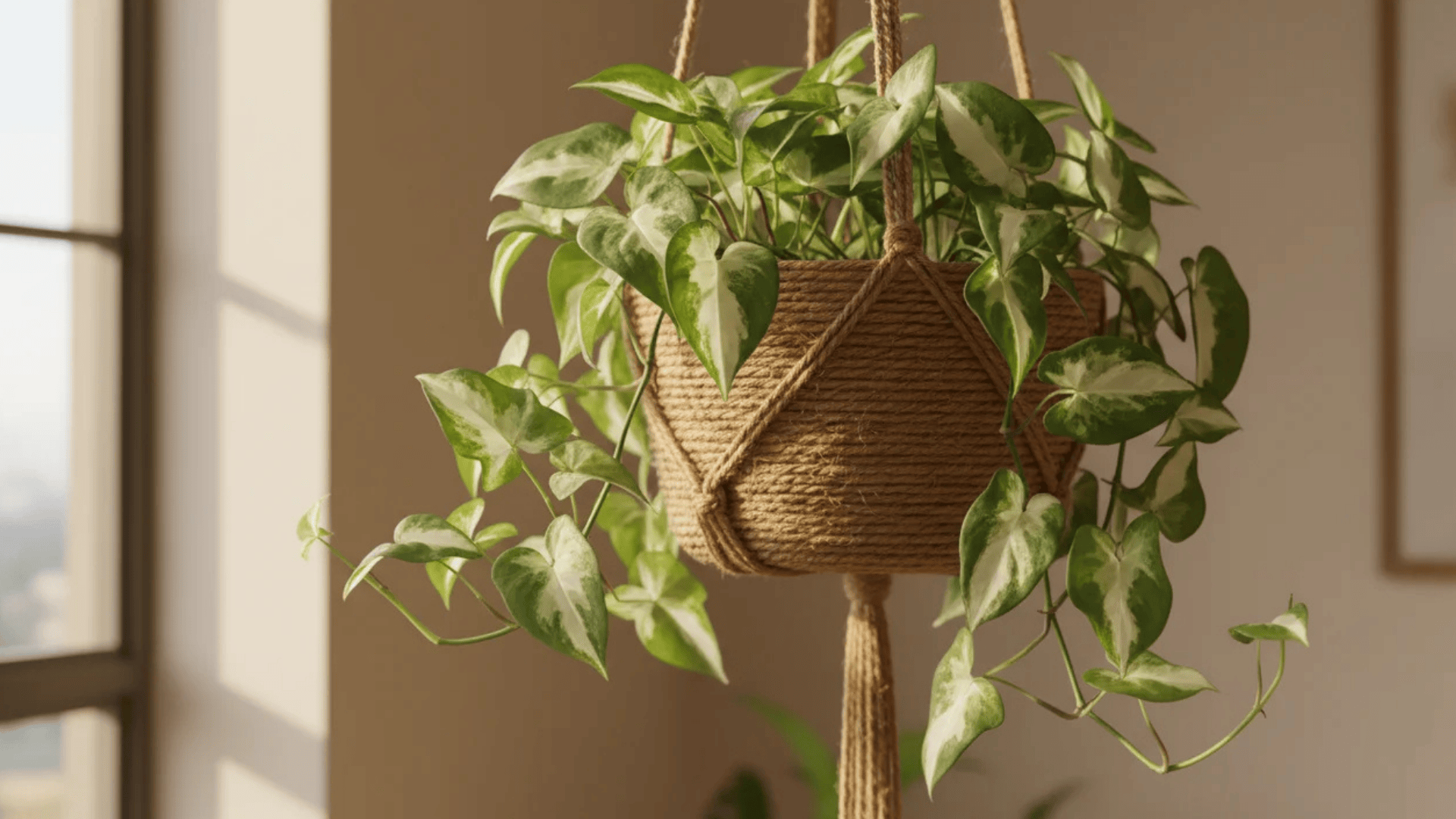
The arrowhead vine gets its name from the pointed shape of its leaves, which broaden into multi-lobed sections as the plant matures.
It adapts easily to most indoor lighting situations, from dim hallways to bright living rooms.
Let the soil dry out slightly between waterings and mist it during the drier winter months.
I added an arrowhead vine to a living room bookshelf last winter, and within a few months, it had fully draped over the lower shelves in a really satisfying way.
Plant Care Basics:
- Light: Low to bright indirect light
- Water: Allow soil to dry slightly between waterings
- Mature Size: 3 to 6 feet indoors
- Toxicity: Toxic to cats and dogs
5. Monstera
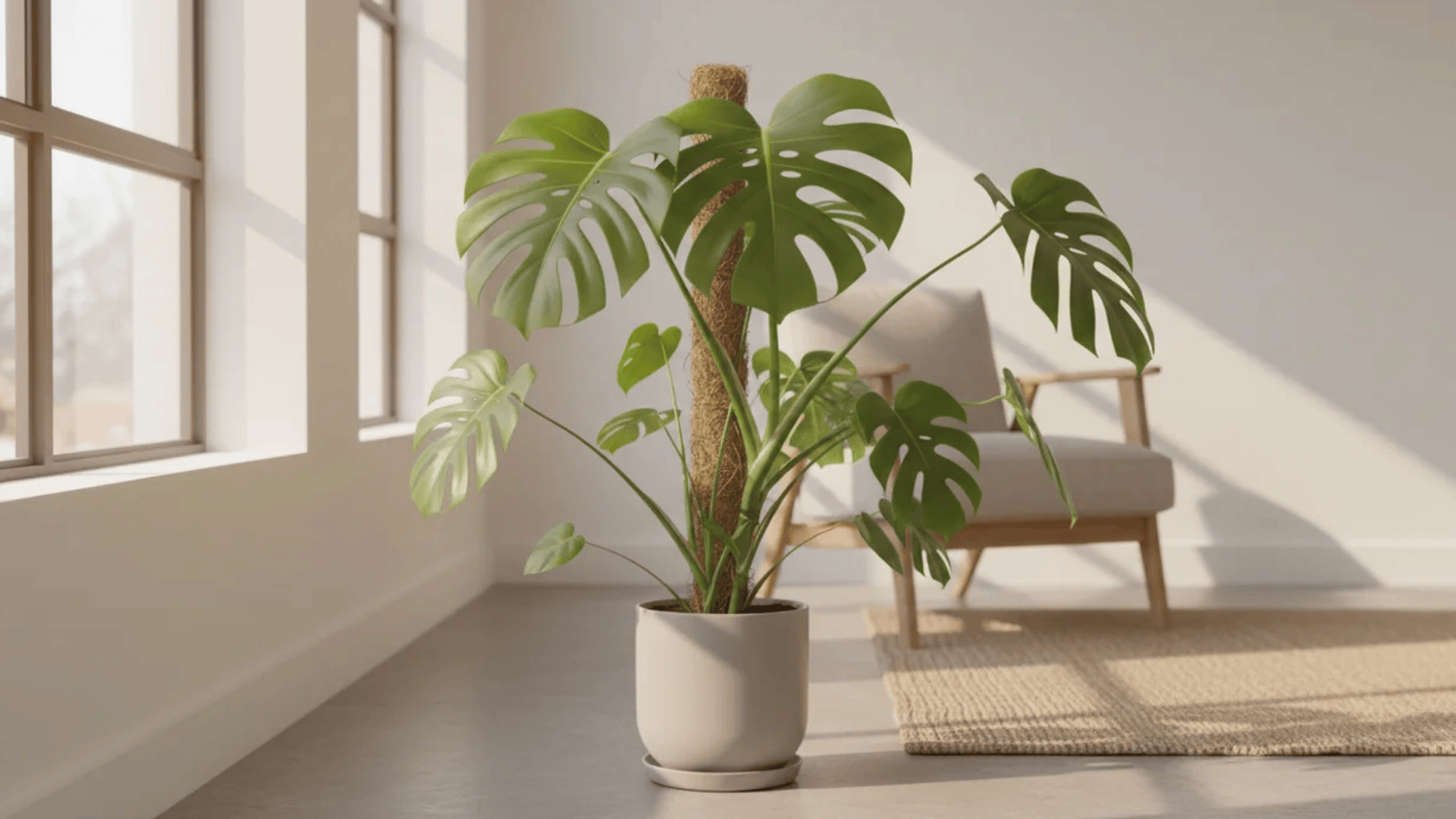
Monstera is a statement plant with large, deeply split leaves that bring a bold tropical feel to any room.
Place it near a bright window but out of direct sun, and it will reward you with fast, dramatic growth.
Wait until the top two inches of soil feel dry before watering again. Monstera needs space and a sturdy support structure, such as a moss pole or trellis, to grow upright indoors.
It can reach 10 to 15 feet tall, so it works best in rooms with high ceilings and plenty of floor space.
Indoor Plant Care Tips:
- Light: Medium to bright indirect light
- Water: When the top two inches of soil feel dry
- Mature Size: 10 to 15 feet indoors
- Toxicity: Toxic to cats and dogs
6. Hoya
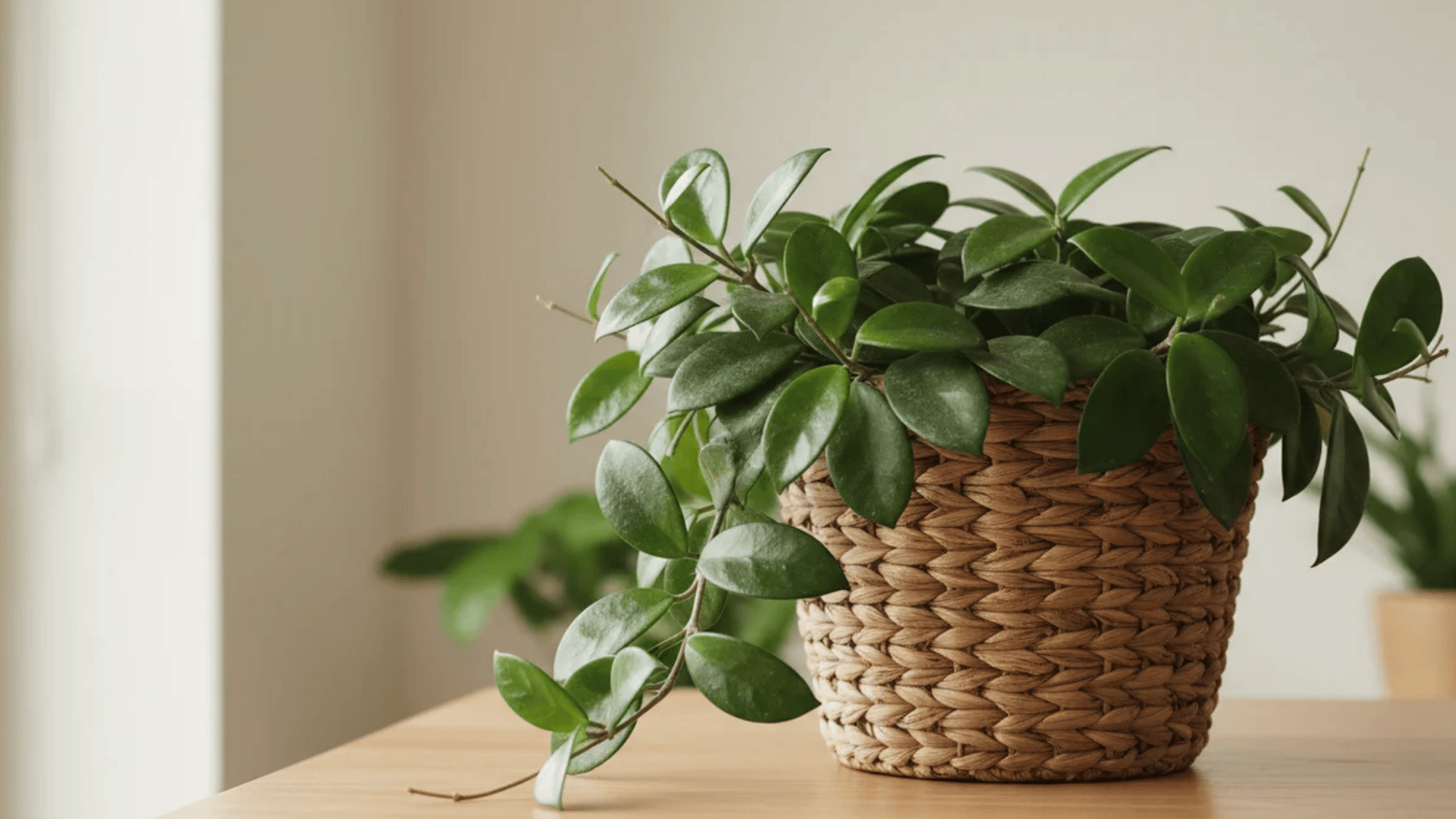
Hoya, also called the wax plant, has thick, waxy leaves and produces clusters of small, fragrant, star-shaped flowers, making it stand out among indoor vines.
A spot near an east or west-facing window gives it the steady brightness it needs without the harshness of direct afternoon sun.
It does well in hanging baskets and grows happily in higher-humidity spaces like bathrooms. Some plants last up to 30 years with consistent basic care.
Plant Care at a Glance:
- Light: Bright indirect light
- Water: Allow to dry out fully between waterings
- Mature Size: Up to 4 feet indoors
- Toxicity: Non-toxic to cats and dogs
7. String of Hearts
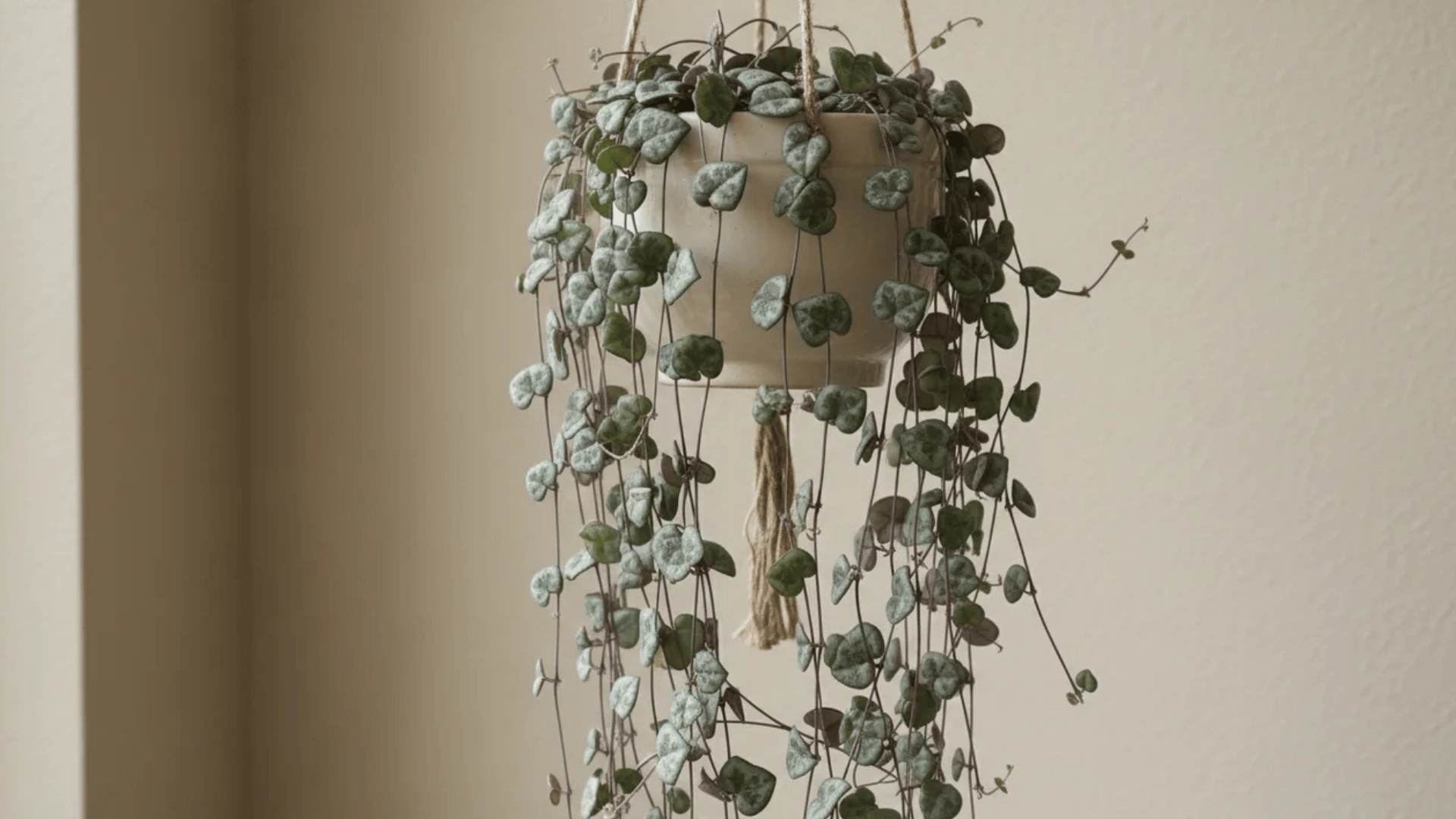
String of hearts has tiny heart-shaped leaves in shades of gray, green, and purple that trail along thin stems up to 12 feet long.
It prefers a few hours of gentle morning sun or a bright windowsill without harsh midday exposure. Allow the soil to dry out fully between waterings to prevent root rot from developing.
It is native to Africa and handles drier indoor conditions far better than most other trailing plants available for indoor use.
Easy Plant Care Overview:
- Light: Bright indirect light
- Water: Allow soil to dry out fully between waterings
- Mature Size: Up to 12 feet indoors
- Toxicity: Non-toxic to cats and dogs
8. Satin Pothos
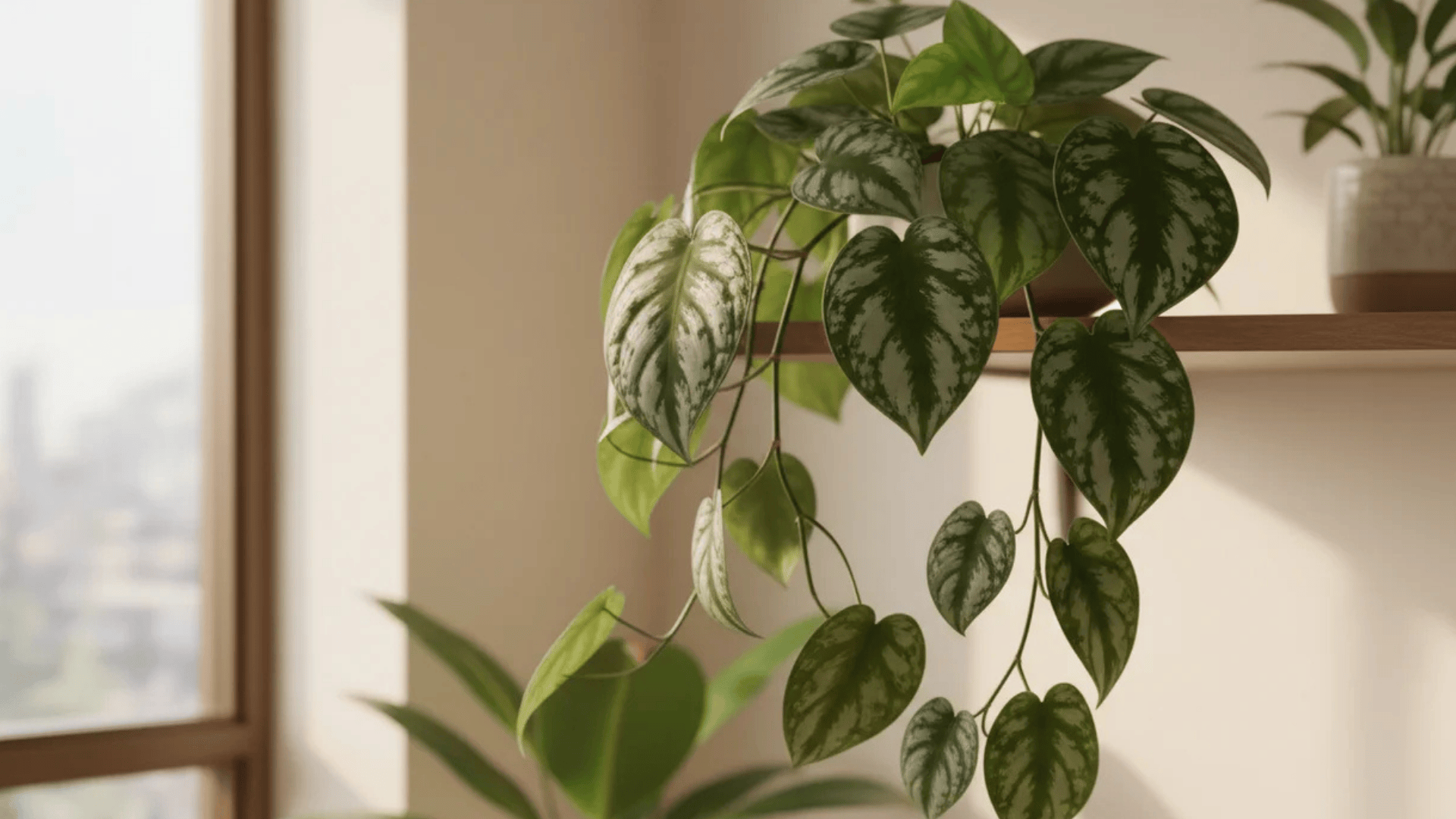
Satin pothos is not a true pothos, but it shares the same easygoing growing habits that make pothos so widely recommended.
Medium to bright indirect light keeps the silver markings on its leaves looking sharp and defined.
Large, heart-shaped leaves in deep green with silver and gray markings give it a soft, velvety appearance, unlike most other trailing vines.
It only needs watering when the soil dries out. Satin pothos grows more slowly than regular pothos but stays just as forgiving over time. It works well trailing from a high shelf or displayed in a hanging basket.
Basic Care Guide for Plants:
- Light: Medium to bright indirect light
- Water: When the soil dries out completely
- Mature Size: 4 to 5 feet indoors
- Toxicity: Toxic to cats and dogs
9. Rex Begonia Vine
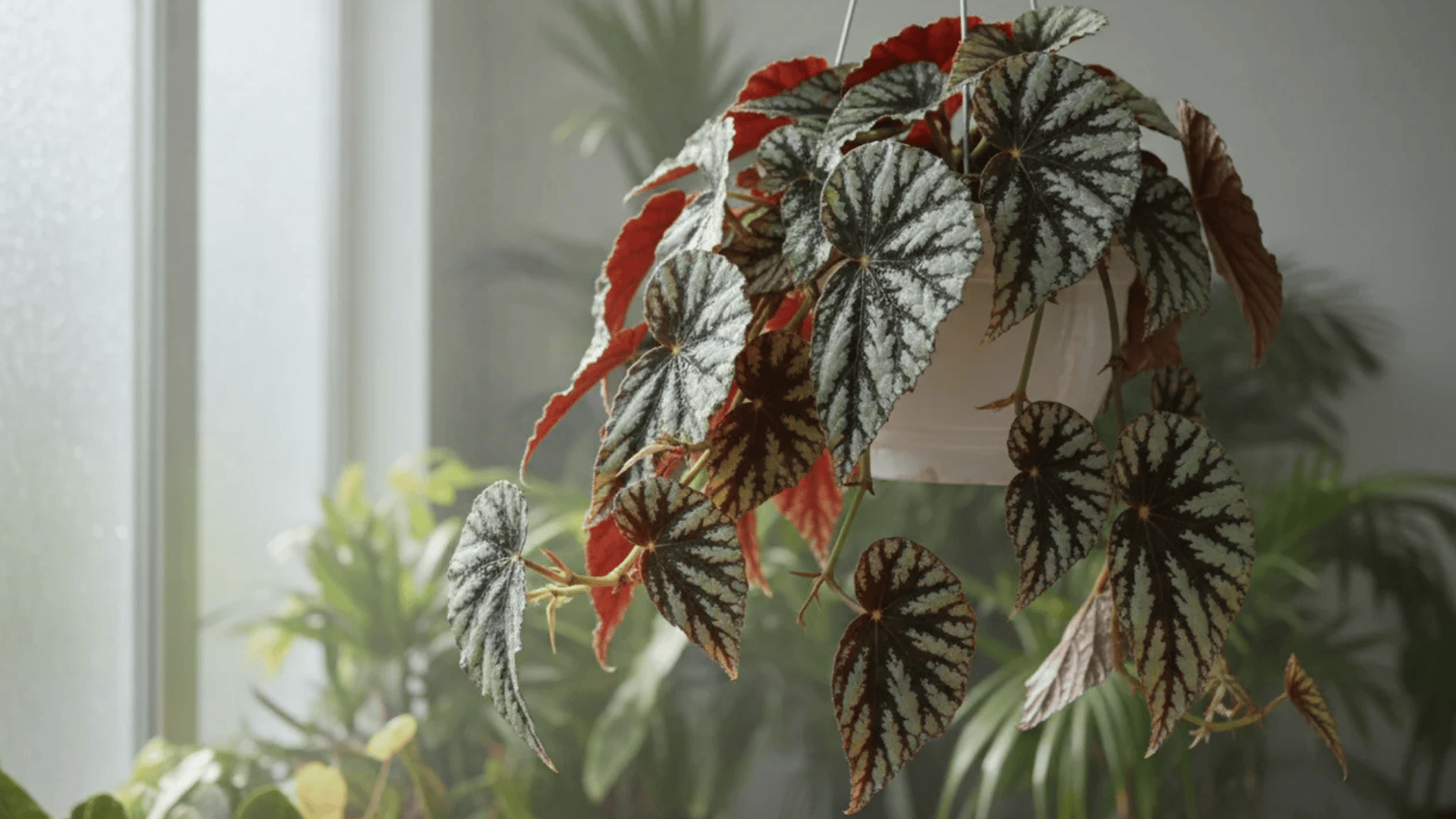
Rex begonia vine has some of the most eye-catching foliage of any indoor climbing plant.
Large leaves with a velvety texture and patterns of green, silver, and purple make it stand out in any room. Bright, filtered light from a nearby window brings out the full depth of its leaf coloring.
I grew one in my bathroom for about a year, and the humidity from daily showers kept it looking fuller and healthier than any other spot I tried.
Water it when the top inch of soil feels dry to avoid overwatering issues.
Plant Care Basics:
- Light: Bright indirect light
- Water: When the top inch of soil feels dry
- Mature Size: Up to 4 feet indoors
- Toxicity: Toxic to cats and dogs
10. Spider Plant
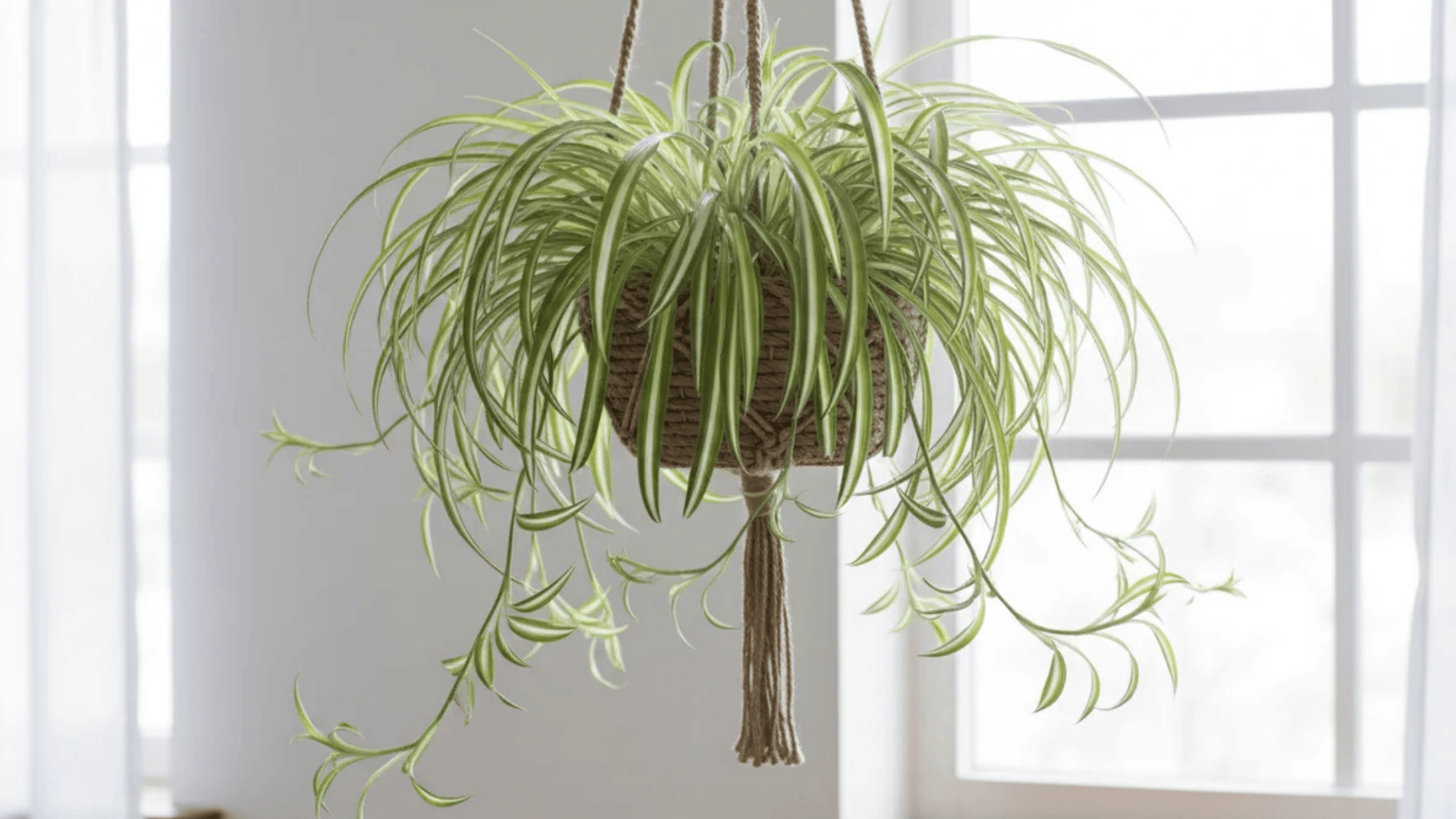
Spider plant is a reliable indoor vine with long, thin, arching leaves that trail naturally from hanging baskets and shelves.
It is remarkably unfussy about light and settles in comfortably anywhere from a bright kitchen to a dim hallway.
It produces small offshoots along its trailing stems that can be removed and propagated easily at home.
Water it when the soil feels dry and keep it away from direct sun to prevent leaf scorch. Spider plant is one of the simplest vines to multiply and share with others.
Plant Care at a Glance:
- Light: Low to moderate indirect light
- Water: When the top inch of soil feels dry
- Mature Size: 2 to 3 feet with stems trailing up to 3 feet
- Toxicity: Non-toxic to cats and dogs
11. Grape Ivy
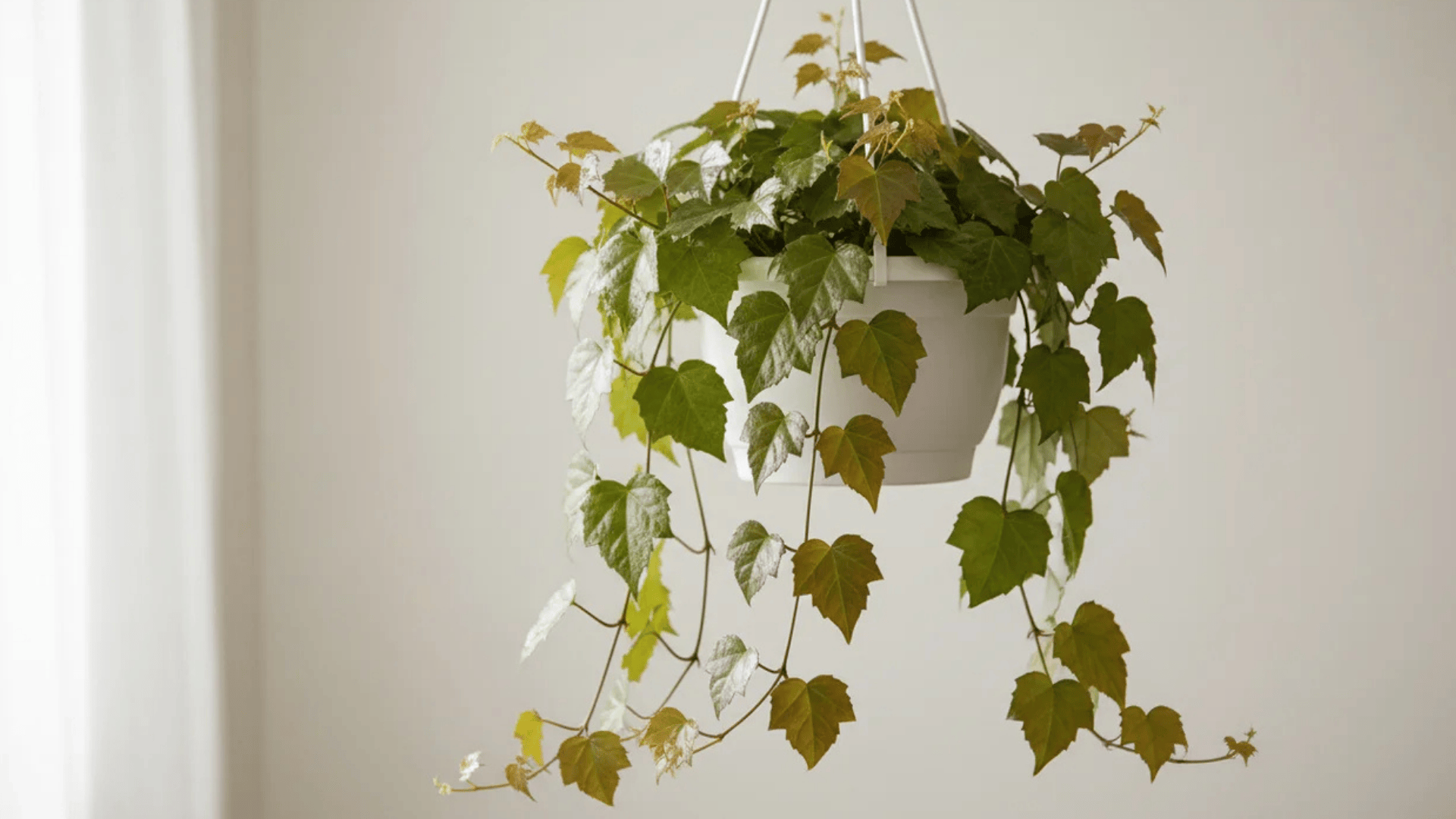
Grape ivy belongs to the same plant family as grapes, and its leathery, serrated green leaves with a hint of bronze make that connection easy to spot.
It tolerates dim corners as comfortably as it handles bright, filtered rooms, giving it a flexible role in the home.
It forms tendrils that allow it to climb and attach to surfaces, making it a strong choice for vertical indoor displays.
Grape ivy goes several days without water without issue. It works equally well in a hanging basket or trained up a support structure, depending on the space.
Quick Plant Care Guide:
- Light: Low to bright indirect light
- Water: Every few days, allowing slight drying between waterings
- Mature Size: Up to 6 feet indoors
- Toxicity: Non-toxic to cats and dogs
12. String of Pearls
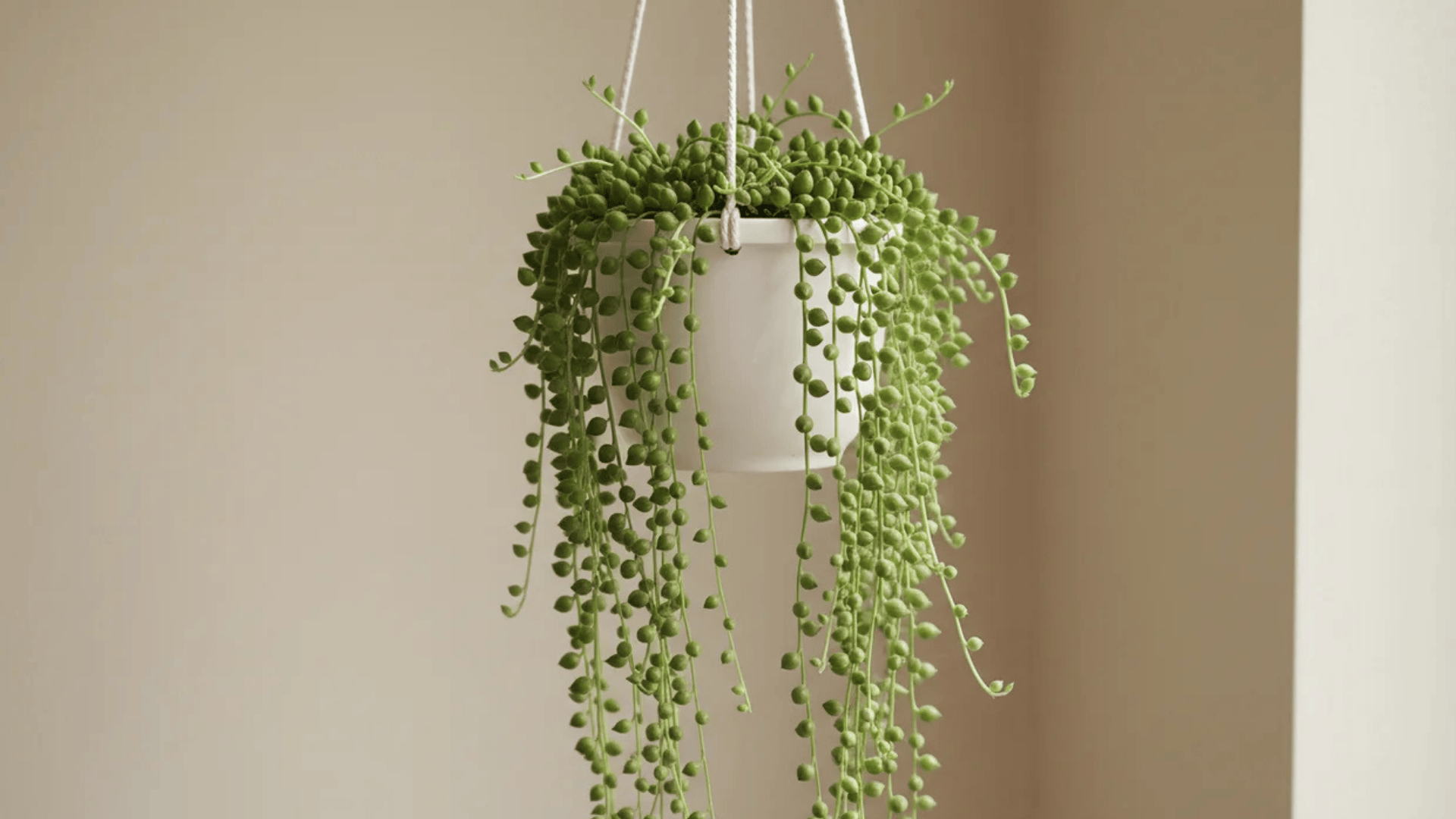
String of pearls is a trailing succulent with small, round, bead-like leaves that hang from thin stems in a long cascade.
It grows on a bright windowsill where it can soak up a few hours of gentle sun each day. It stores water in its round leaves, so very infrequent watering is all it needs.
Overwatering is the most common reason this plant fails indoors, so always let the soil dry out completely between waterings.
Plant it in well-draining soil and display it in a hanging basket where its long trailing stems hang freely. The visual effect is unlike most other vines.
Plant Care at a Glance:
- Light: Bright indirect to some direct light
- Water: Allow soil to dry out completely between waterings
- Mature Size: Trailing stems up to 3 feet long
- Toxicity: Toxic to cats and dogs
13. Philodendron Brasil
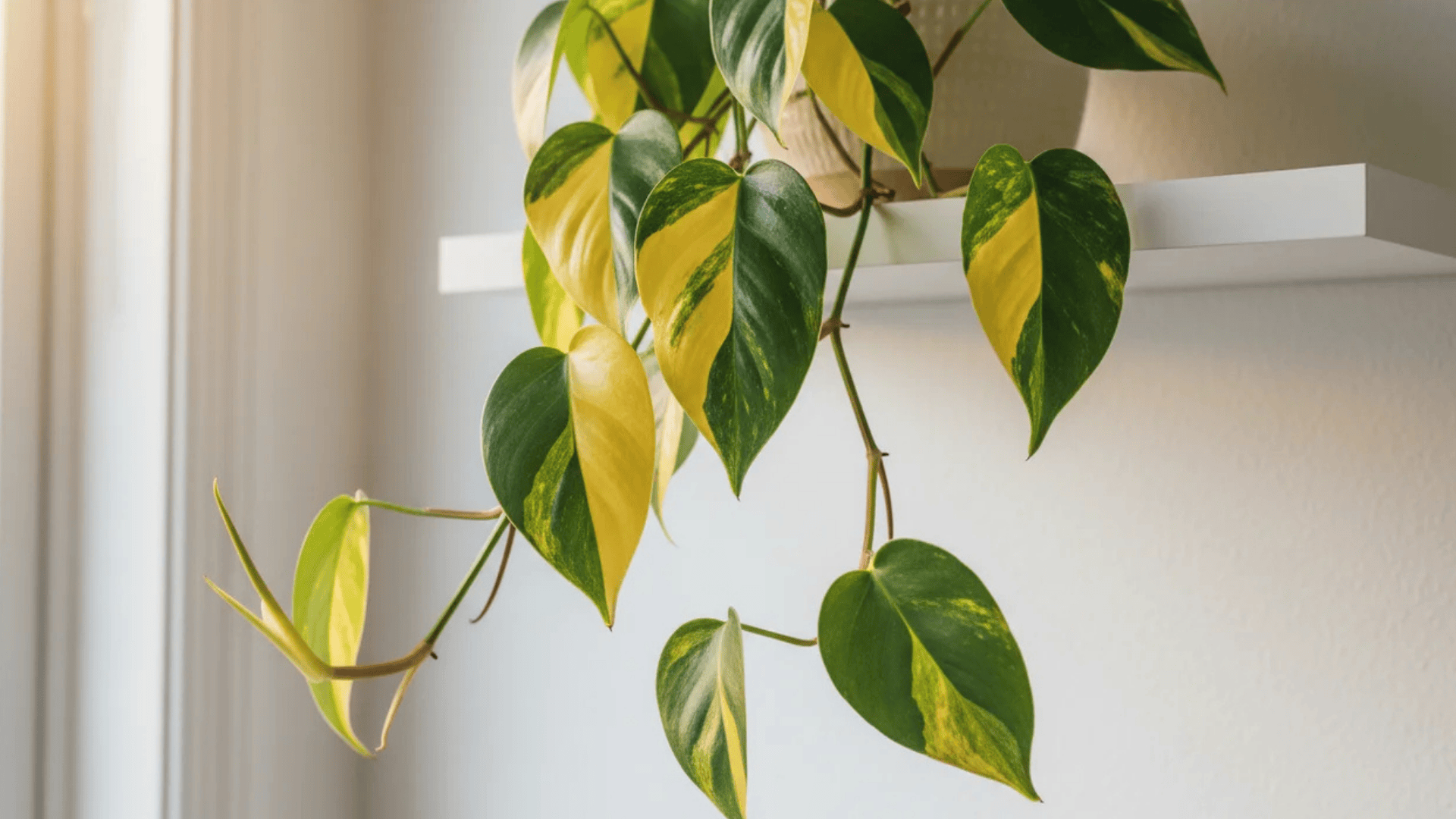
Philodendron Brasil is a variegated variety of the heartleaf philodendron with bold splashes of yellow, cream, and green across its leaves.
The closer it sits to a bright window, the more vivid the color contrast across each leaf becomes.
Wait until the top inch of soil dries out before watering. I picked one up at a farmers’ market on a whim, and it quickly became the most commented-on plant in my home.
It trails well from shelves and baskets and grows at a fast, steady pace that rewards consistent care.
Simple Plant Care Guide:
- Light: Low to bright indirect light
- Water: When the top inch of soil dries out
- Mature Size: Up to 10 feet indoors
- Toxicity: Toxic to cats and dogs
14. Creeping Fig
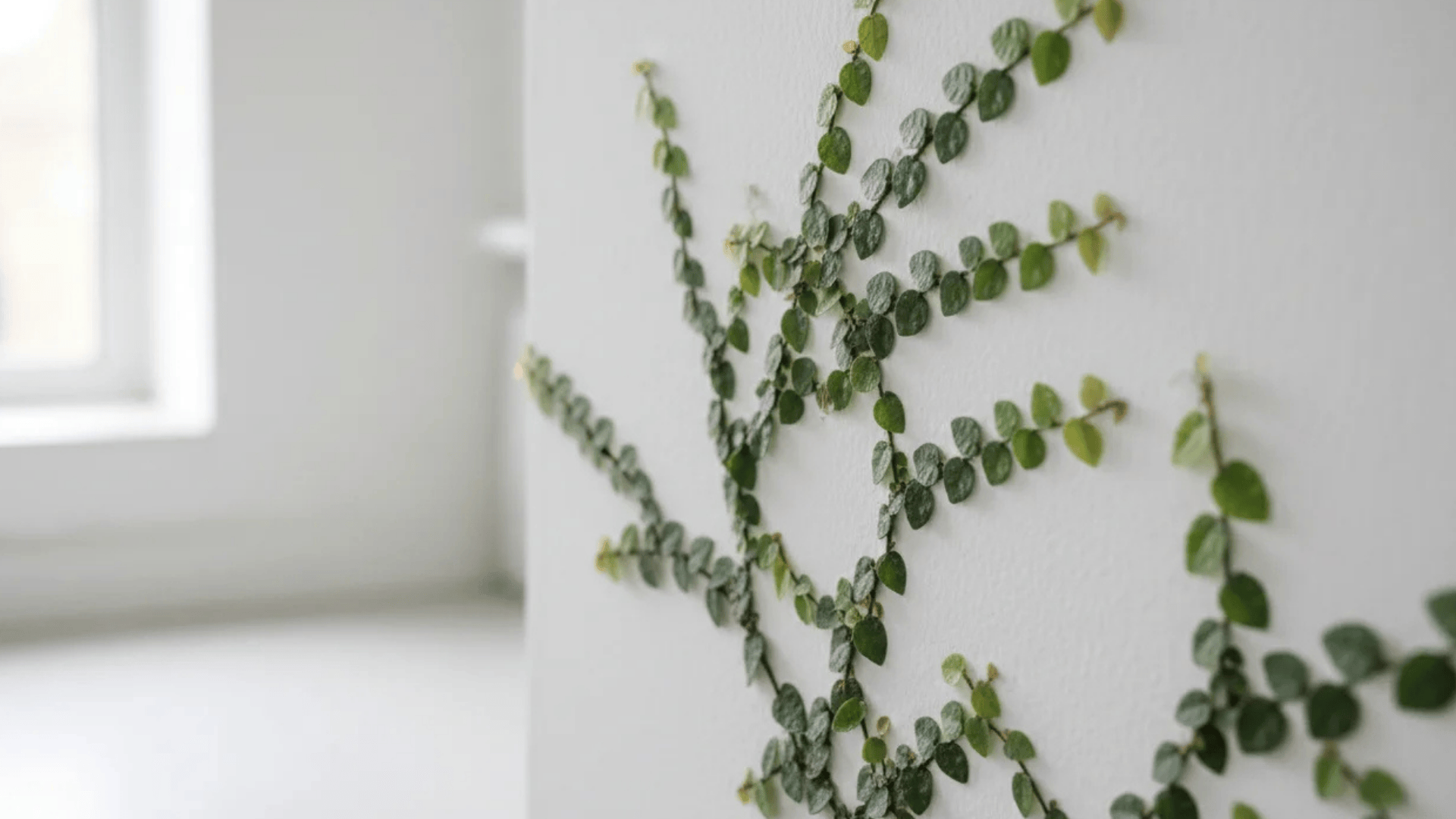
Creeping fig is a fast-growing vine with small, heart-shaped leaves that cling to walls, trellises, and surfaces using small root-like structures.
It does best in a well-lit room where it receives consistent brightness throughout the day without sitting in harsh direct rays. It prefers consistently moist soil to keep up with its active growth.
Creeping fig covers a wall or large surface quickly under the right conditions, making it a strong option for creating a green wall feature indoors.
Trim it regularly to keep the overall shape looking neat and intentional rather than wild.
Easy Plant Care Overview:
- Light: Medium to bright indirect light
- Water: Keep soil consistently moist
- Mature Size: Can spread several feet across a wall indoors
- Toxicity: Toxic to cats and dogs
15. Passion Flower Vine
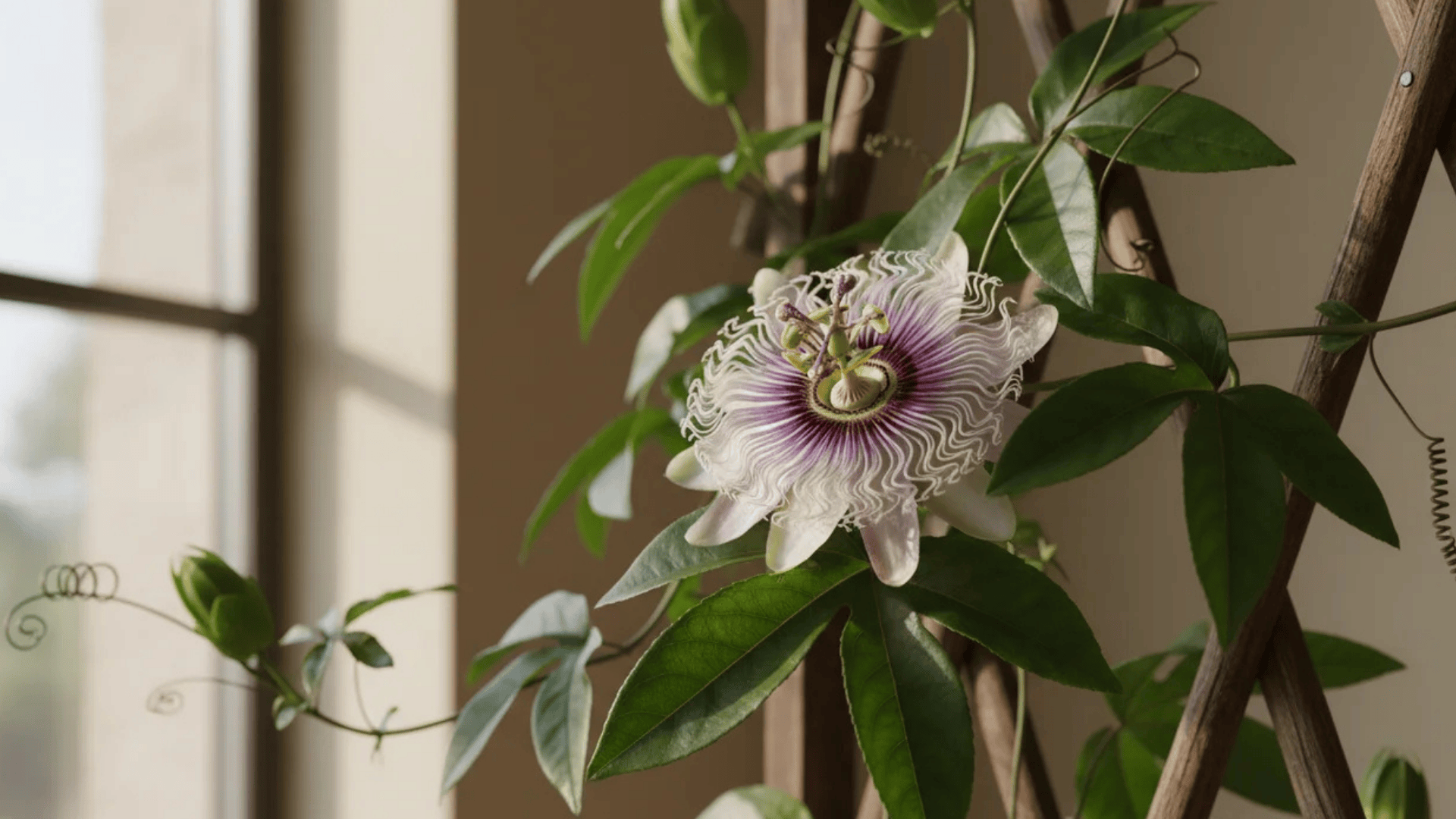
Passion flower vine is known for its dramatic, exotic blooms in shades of purple, blue, and white that appear in late summer and early fall.
Full sun or a south-facing window gives it the energy it needs to produce those striking flowers reliably. It needs a trellis or support structure to climb properly indoors.
Keep the soil moist during the growing season and reduce watering through winter.
Despite its exotic appearance, it handles indoor conditions well.
Basic Care Guide for Plants:
- Light: Bright,t direct to indirect light
- Water: Keep moist during the growing season, reduce in winter
- Mature Size: Up to 8 feet indoors
- Toxicity: Mildly toxic to cats and dogs
16. String of Nickels
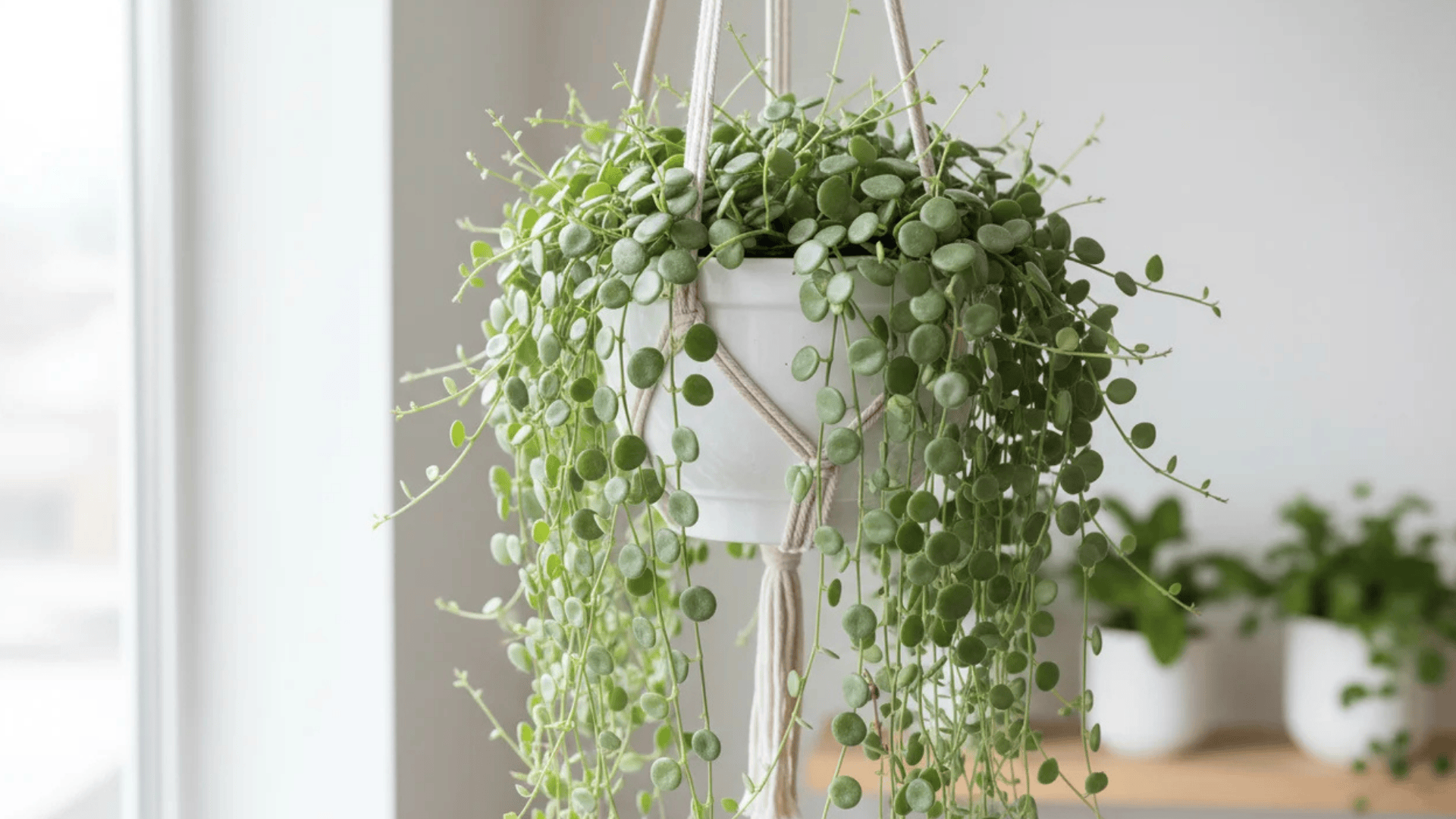
String of nickels is a lesser-known indoor vine with small, round, coin-shaped leaves that cascade from hanging pots or shelves.
It is an epiphytic plant, meaning it naturally grows on trees rather than in soil, so it needs a very well-draining or epiphytic potting mix.
String of nickels does best in bright, indirect light and needs very little water once established.
It’s a slow grower, but well worth the wait for its clean, minimal trailing look.
Plant Care at a Glance:
- Light: Bright indirect light
- Water: Sparingly, once established
- Mature Size: Trailing stems up to 3 feet long
- Toxicity: Non-toxic to cats and dogs
17. Tradescantia
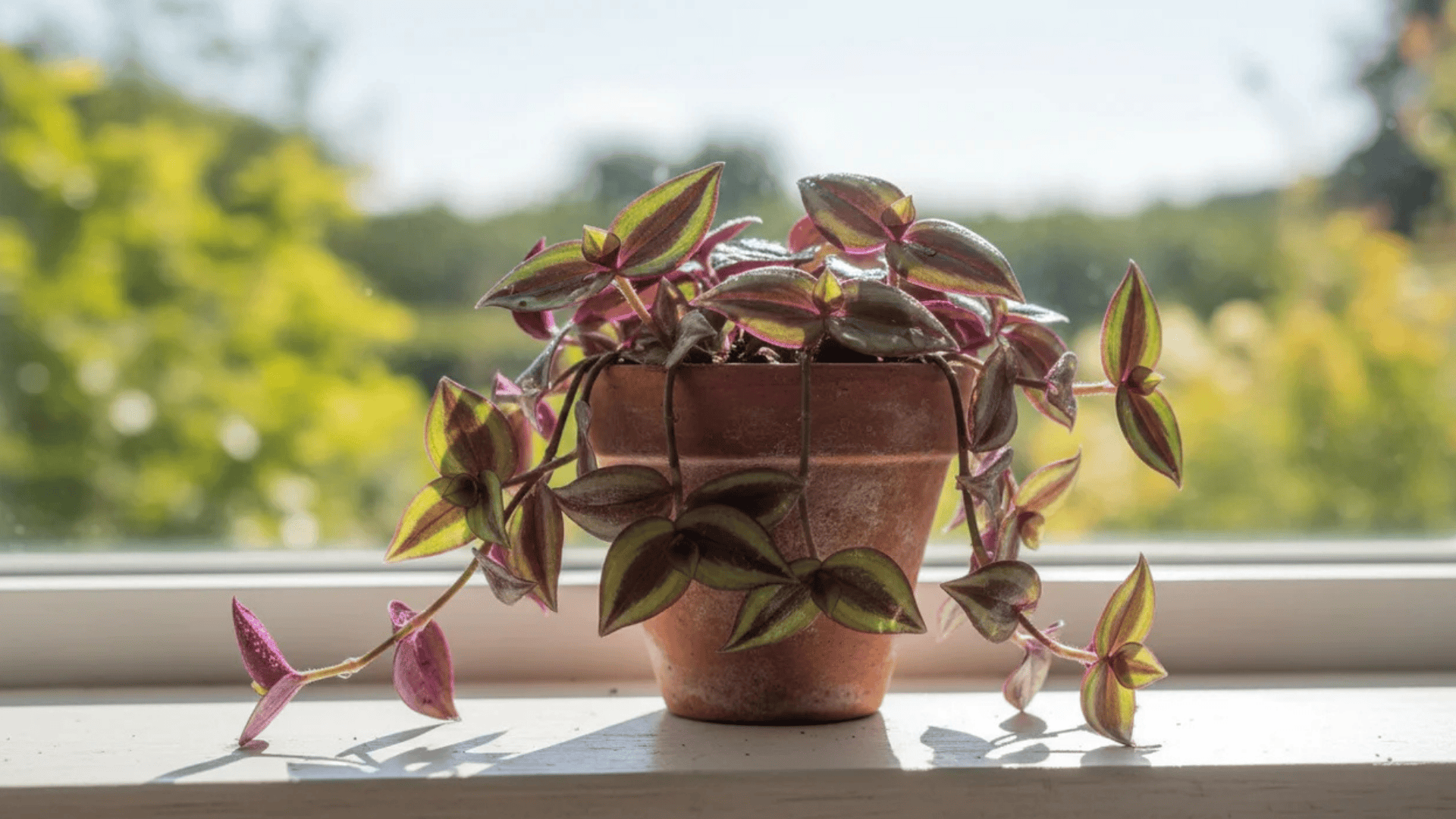
Tradescantia, often called the zebra plant, is a fast-spreading trailing vine with two-toned foliage in green and purple that creates a strong visual contrast.
Give it a bright spot, and it will spread aggressively; pull it back to a shadier area, and growth slows to something more manageable.
It prefers consistently moist soil throughout the growing season.
I saw an enormous tradescantia spilling out of a hanging basket at a garden center last spring, and it looked like something from a magazine spread.
Pinch back the stems regularly to keep the plant bushy and prevent straggly growth from taking over.
Plant Care Made Simple:
- Light: Bright indirect light
- Water: Keep soil consistently moist
- Mature Size: Trailing stems up to 2 feet long
- Toxicity: Mildly toxic to cats and dogs
18. Betel Leaf
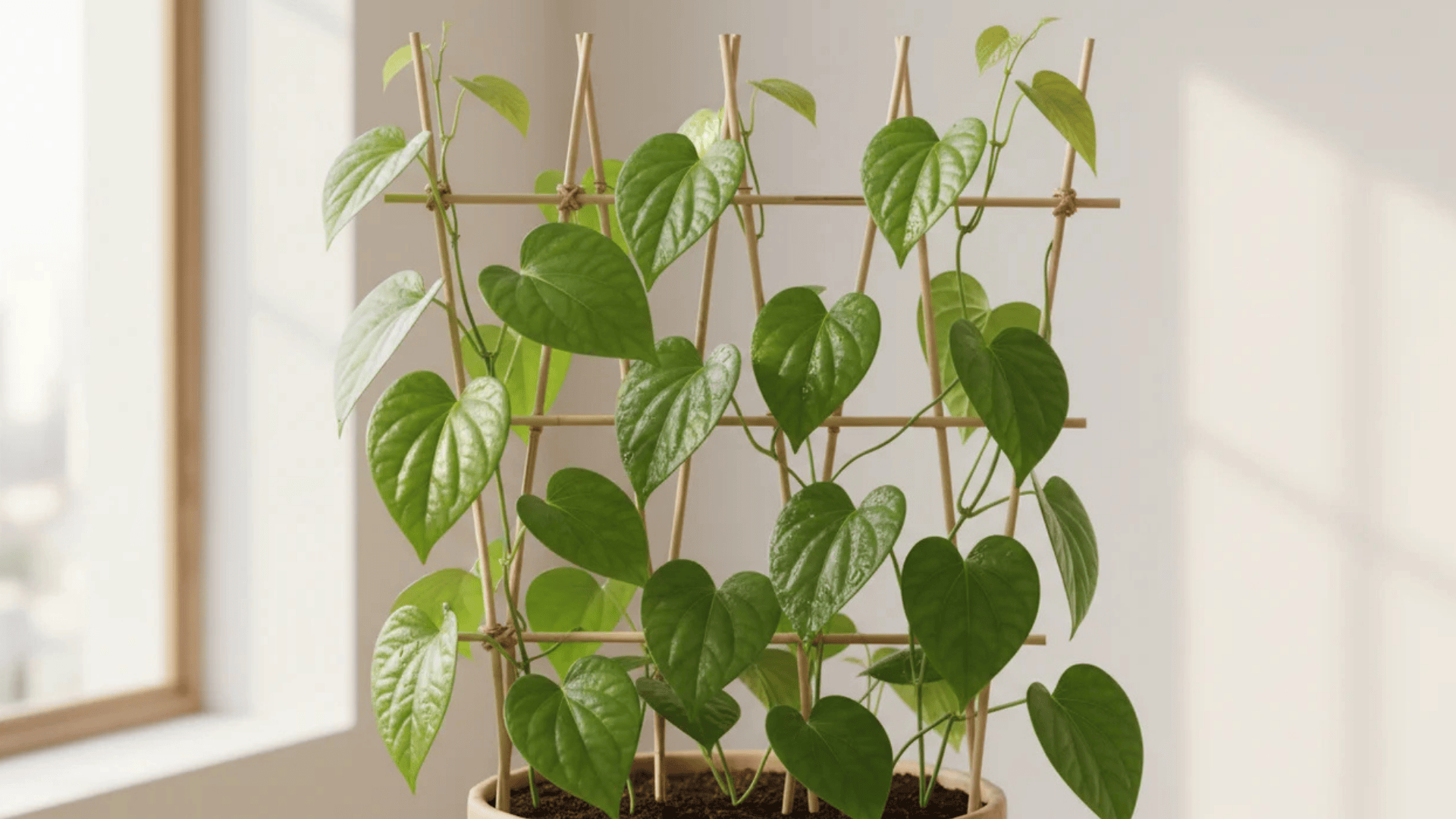
Betel leaf is a slow-growing vine native to India with heart-shaped, waxy leaves and a mild fragrance that sets it apart from most indoor vines.
It does best in a warm, well-lit spot where it never receives direct sun on its leaves.
It produces small white flowers in spring and prefers consistently moist soil. Leaves can be harvested once the plant is around six months old, making it one of the few indoor vines with actual culinary and medicinal uses.
Mist it regularly to keep humidity levels comfortable for steady, healthy growth.
Plant Care at a Glance:
- Light: Bright indirect light, away from direct sun
- Water: Keep soil consistently moist
- Mature Size: Up to 5 feet indoors
- Toxicity: Non-toxic to cats and dogs
19. String of Dolphins
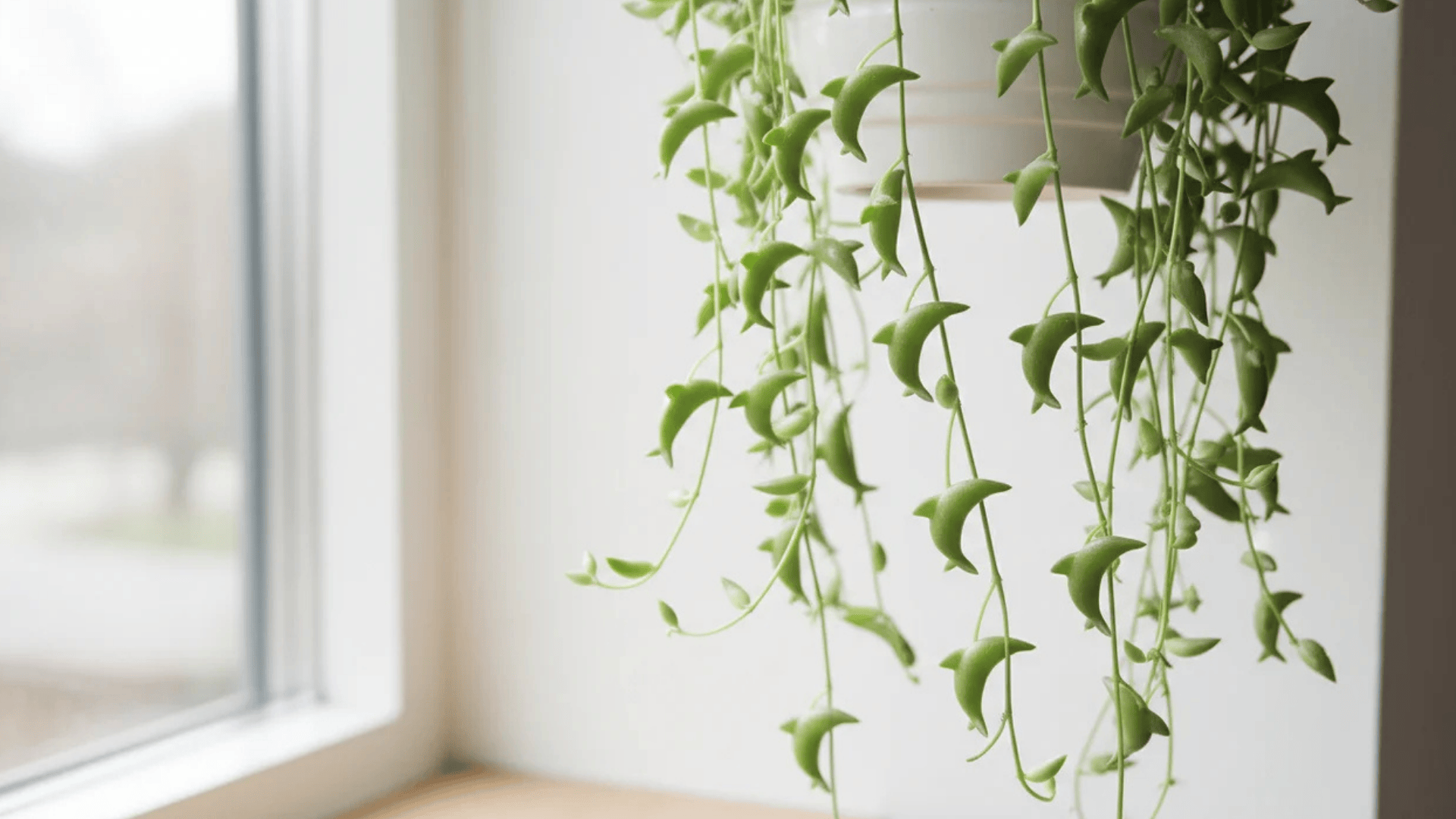
String of dolphins is a trailing succulent named after its small, dolphin-shaped leaves that hang from thin stems in playful-looking clusters.
Position it near a bright window where it gets strong light without the intensity of direct midday sun beating down on it. It is drought-tolerant and needs very little water, making it one of the lower-maintenance plants on this list.
It tolerates temperatures as low as 40 degrees Fahrenheit, making it more cold-hardy than most indoor succulents.
Simple Plant Care Guide:
- Light: Bright indirect light
- Water: Sparingly, allowing full drying between waterings
- Mature Size: Trailing stems up to 3 feet long
- Toxicity: Toxic to cats and dogs
20. Lipstick Plant
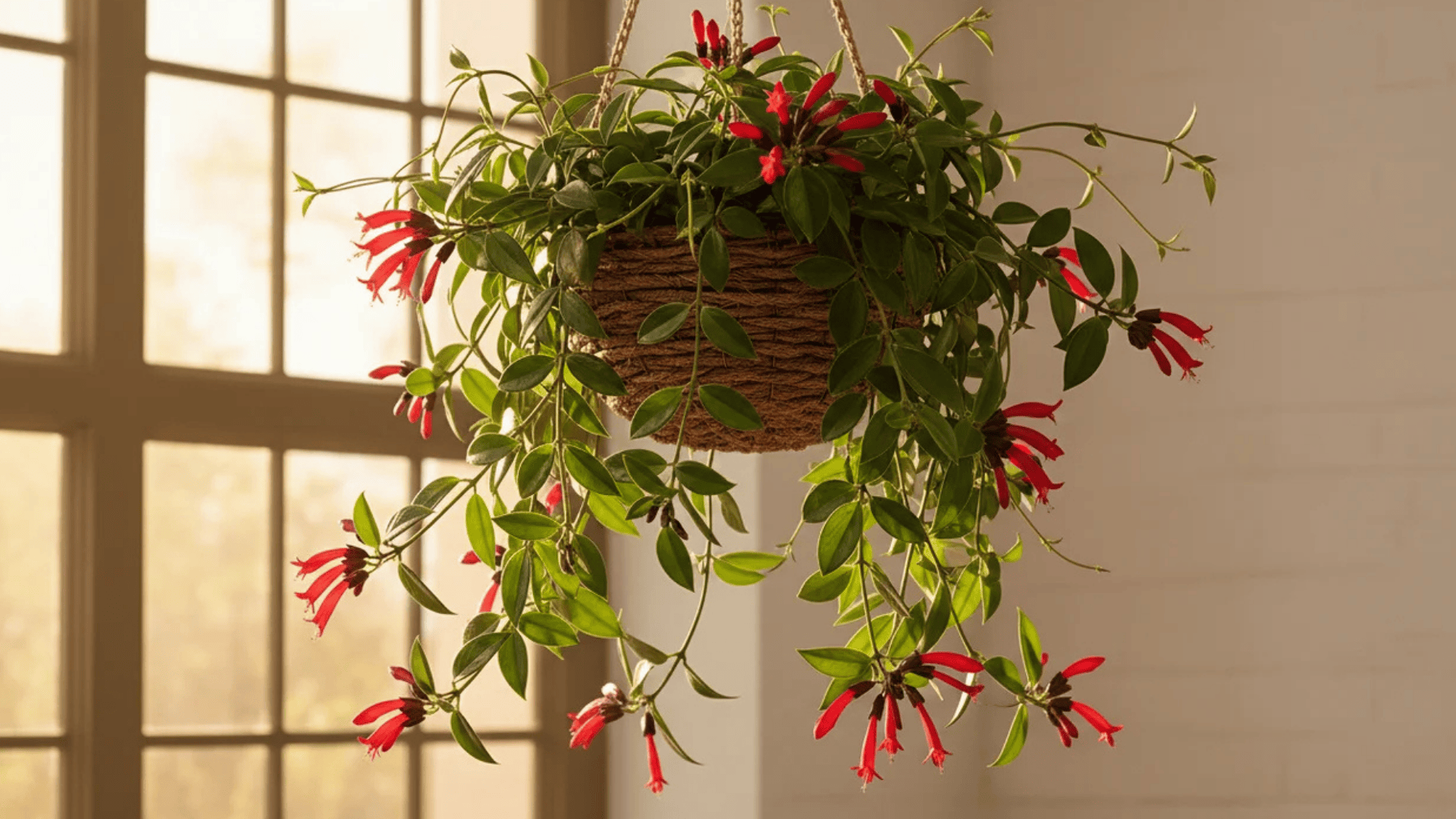
The lipstick plant is a trailing vine with glossy dark green leaves and bright red tubular flowers that bloom from spring through fall in a vivid seasonal display.
Strong, indirect light from a south or east-facing window encourages the most consistent flowering throughout the season.
It prefers higher-than-average humidity, making it a natural fit for kitchens and bathrooms.
Plant it in a hanging basket where its trailing stems and colorful blooms get full visual exposure. Wait until the top inch of soil feels dry before watering to avoid root issues.
Easy Plant Care Overview:
- Light: Bright indirect light
- Water: When the top inch of soil feels dry
- Mature Size: Trailing stems up to 3 feet long
- Toxicity: Non-toxic to cats and dogs
21. Cebu Blue Pothos
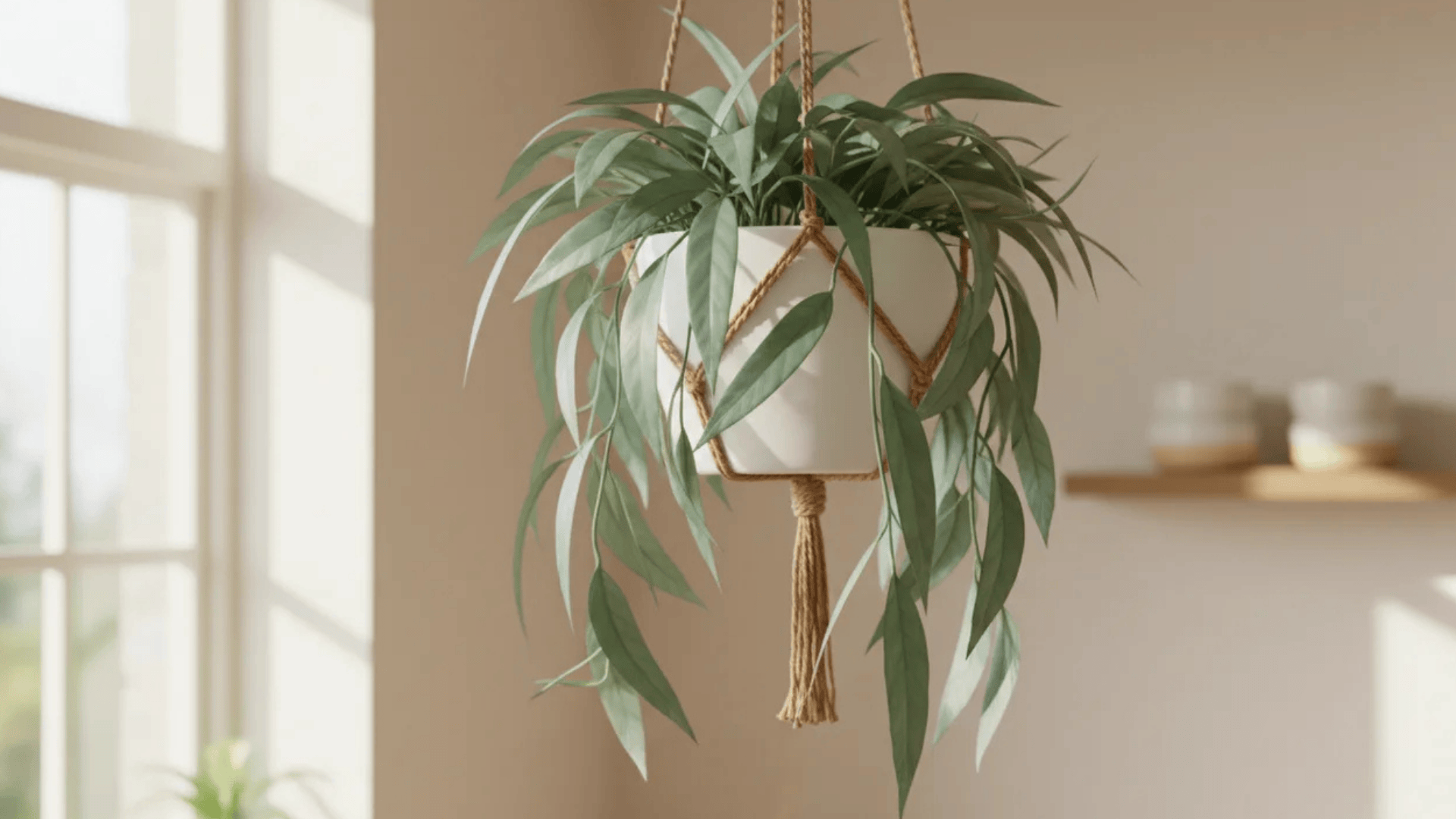
Cebu Blue pothos is a standout variety with long, narrow leaves in a silvery blue-green shade that looks different from most other pothos types available.
Stronger light sharpens the silvery tone of its leaves, while too little causes them to fade toward a flat, dull green.
It can climb or trail depending on the support available. Larger, more dramatic leaves develop when the plant is allowed to climb a moss pole or trellis over time.
Water it when the top inch of soil dries out, and keep it away from direct sunlight to protect the unusual coloring.
Plant Care at a Glance:
- Light: Bright indirect light
- Water: When the top inch of soil dries out
- Mature Size: Up to 10 feet indoors
- Toxicity: Toxic to cats and dogs
22. Watermelon Dischidia
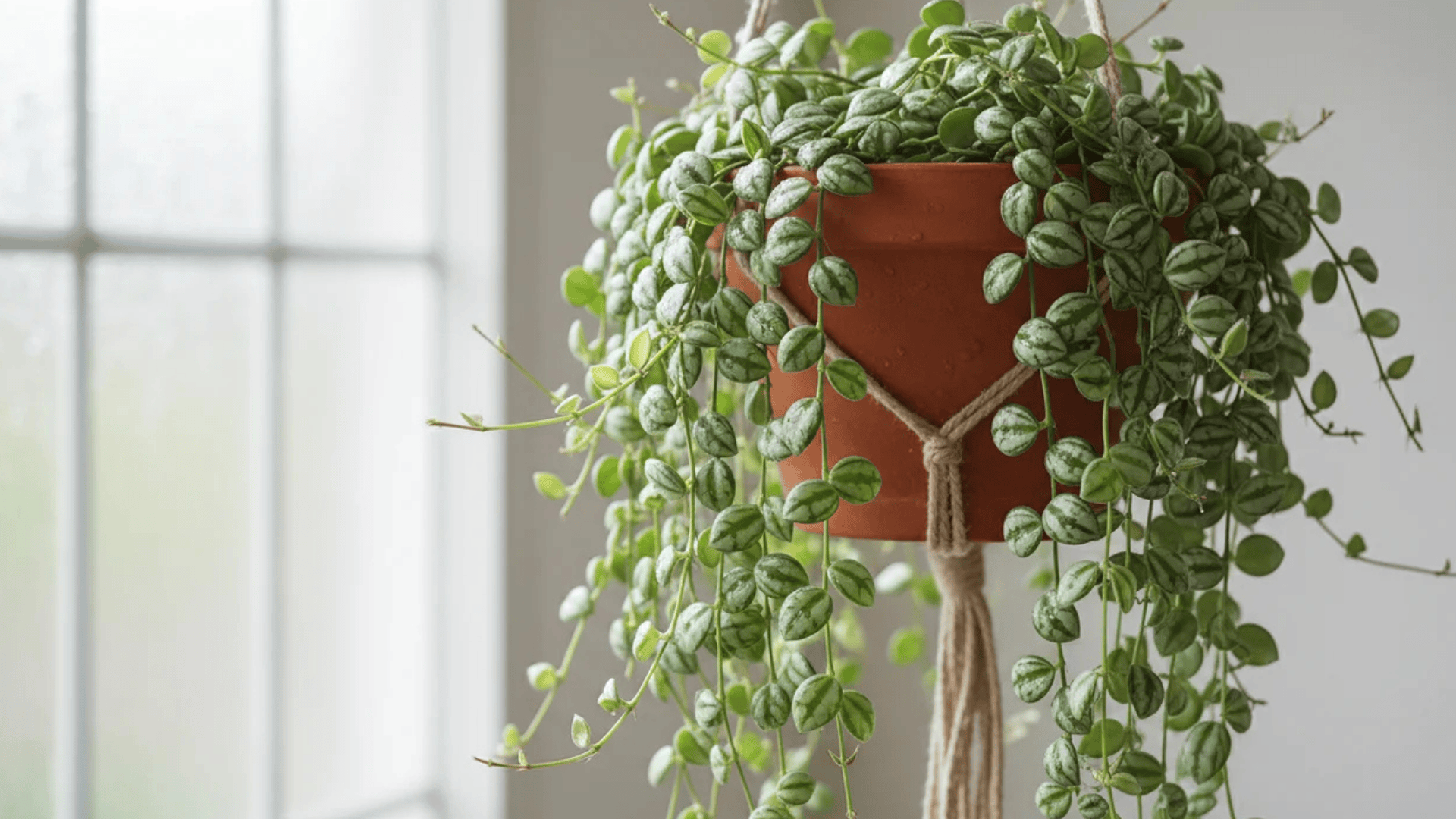
Watermelon dischidia is a tropical epiphytic vine with small leaves marked in green and silver stripes that closely resemble the pattern of a watermelon rind.
It wants warmth, humidity, and gentle brightness; a steamy bathroom near a frosted window suits it surprisingly well.
It needs very well-draining soil and does not tolerate overwatering under any conditions. Mist it regularly to maintain the humidity levels it prefers for steady growth.
Watermelon dischidia grows slowly, but it adds a genuinely distinctive look to any indoor plant collection or display arrangement.
Plant Care Basics:
- Light: Bright indirect light
- Water: Sparingly, in very well-draining soil
- Mature Size: Trailing stems up to 2 feet long
- Toxicity: Non-toxic to cats and dogs
23. Christmas Cactus
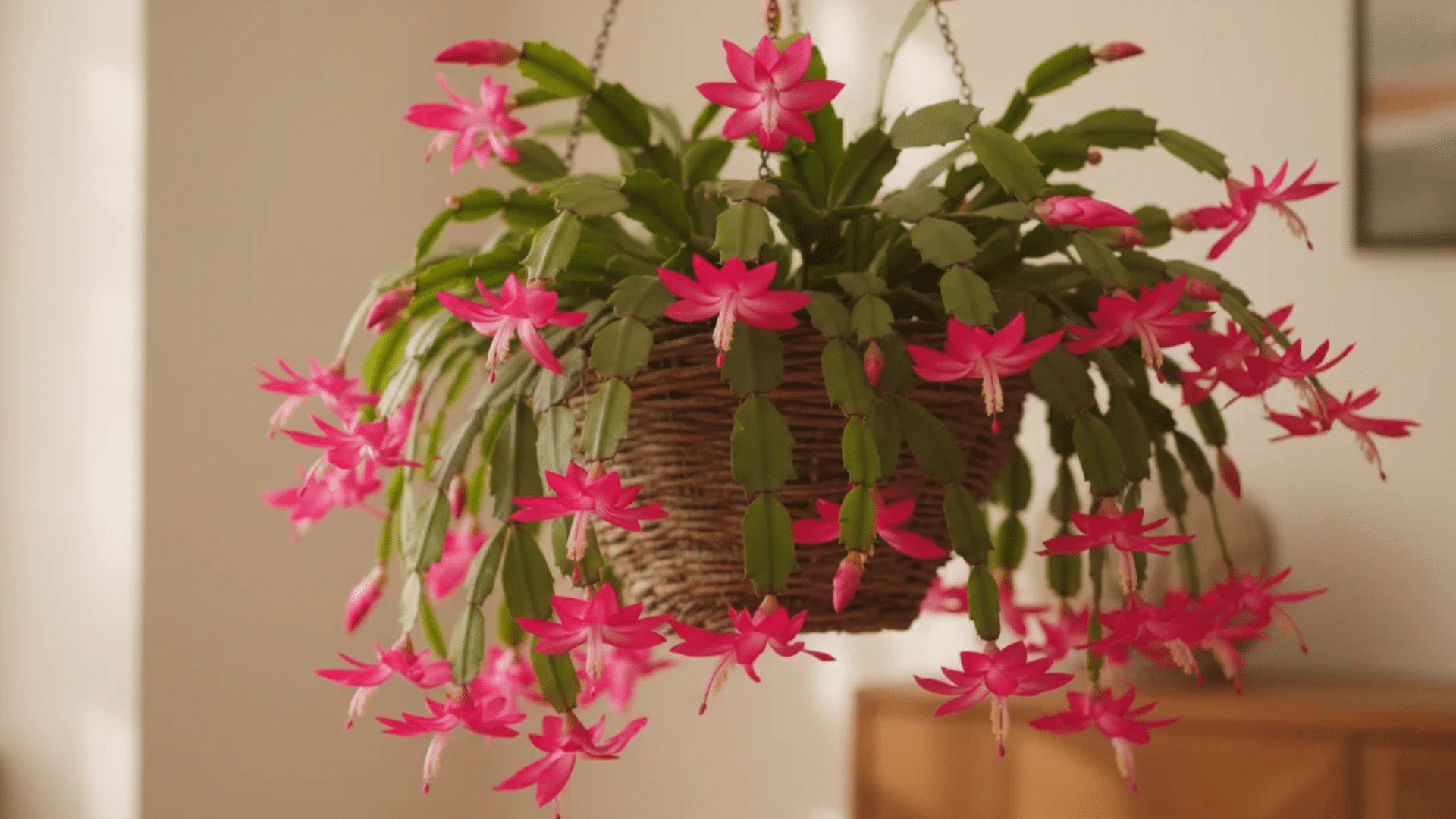
Christmas cactus is a trailing plant with flat, segmented stems and vivid pink or red flowers that bloom in late fall and winter when most other plants are dormant.
Unlike most flowering plants, it manages well in lower light conditions and does not need a sunny windowsill to perform.
It needs very little watering outside its blooming season. With basic care, it can live for 20 to 30 years, making it one of the longest-lasting plants on this list.
Display it in a hanging basket where its arching stems and seasonal blooms are visible and have room to trail freely.
Plant Care at a Glance:
- Light: Low to bright indirect light
- Water: Sparingly outside blooming season, more during active growth
- Mature Size: Up to 2 feet with trailing stems
- Toxicity: Mildly toxic to cats and dogs
24. Swiss Cheese Plant
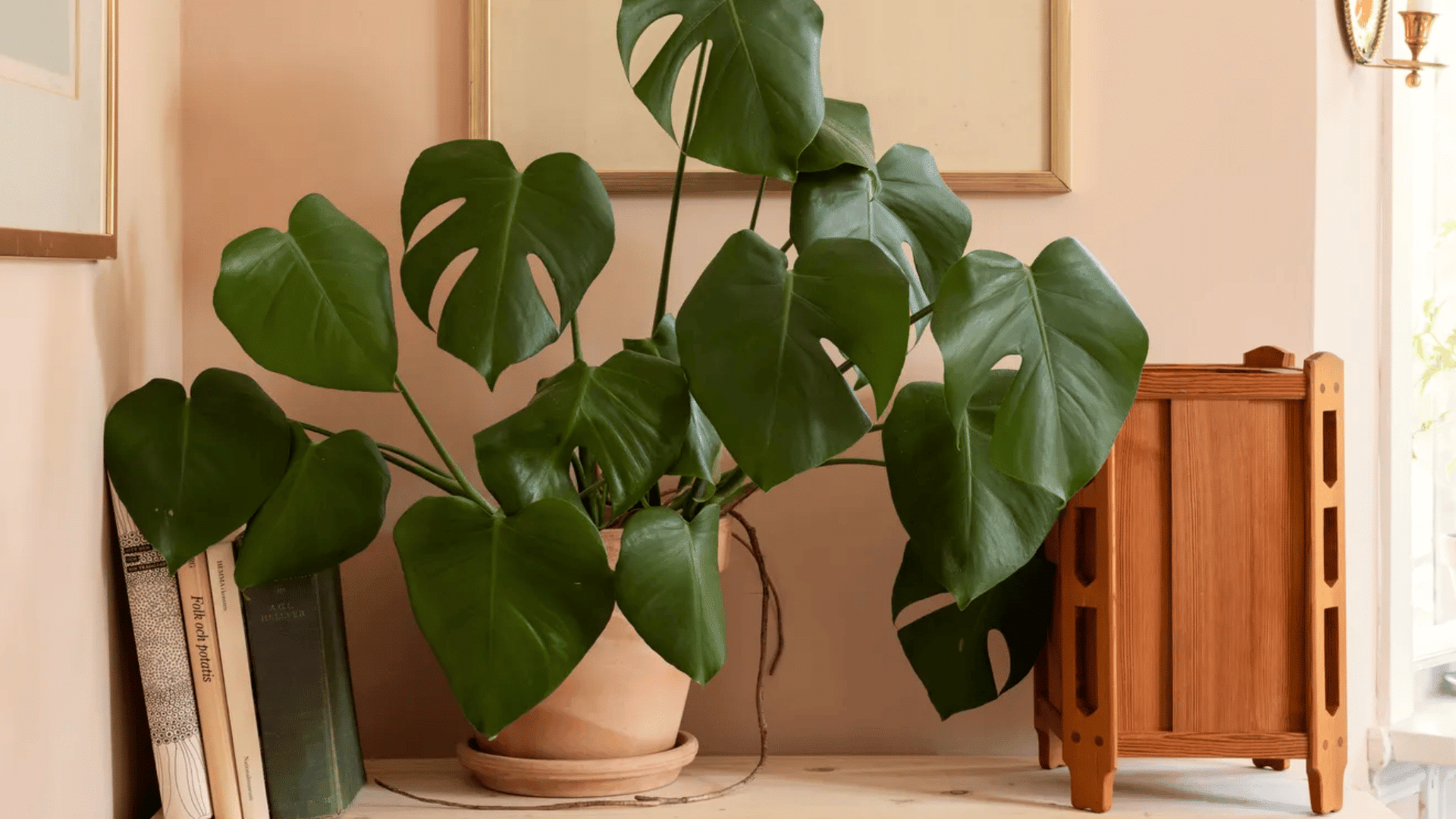
The Swiss cheese plant is a bold tropical climber with large, fenestrated leaves that develop their signature holes and splits naturally as the plant matures.
A bright room with good ambient light keeps it growing steadily and producing the oversized leaves it is known for. It prefers to dry out slightly between waterings to avoid soggy soil conditions.
A strong support structure, such as a moss pole, is needed to help it grow upright.
It can reach up to 10 to 15 feet tall, so it works best in spacious rooms that offer both good light and generous vertical clearance.
Quick Plant Care Guide:
- Light: Medium to bright indirect light
- Water: Allow the top two inches of soil to dry between waterings
- Mature Size: 10 to 15 feet indoors
- Toxicity: Toxic to cats and dogs
25. String of Turtles
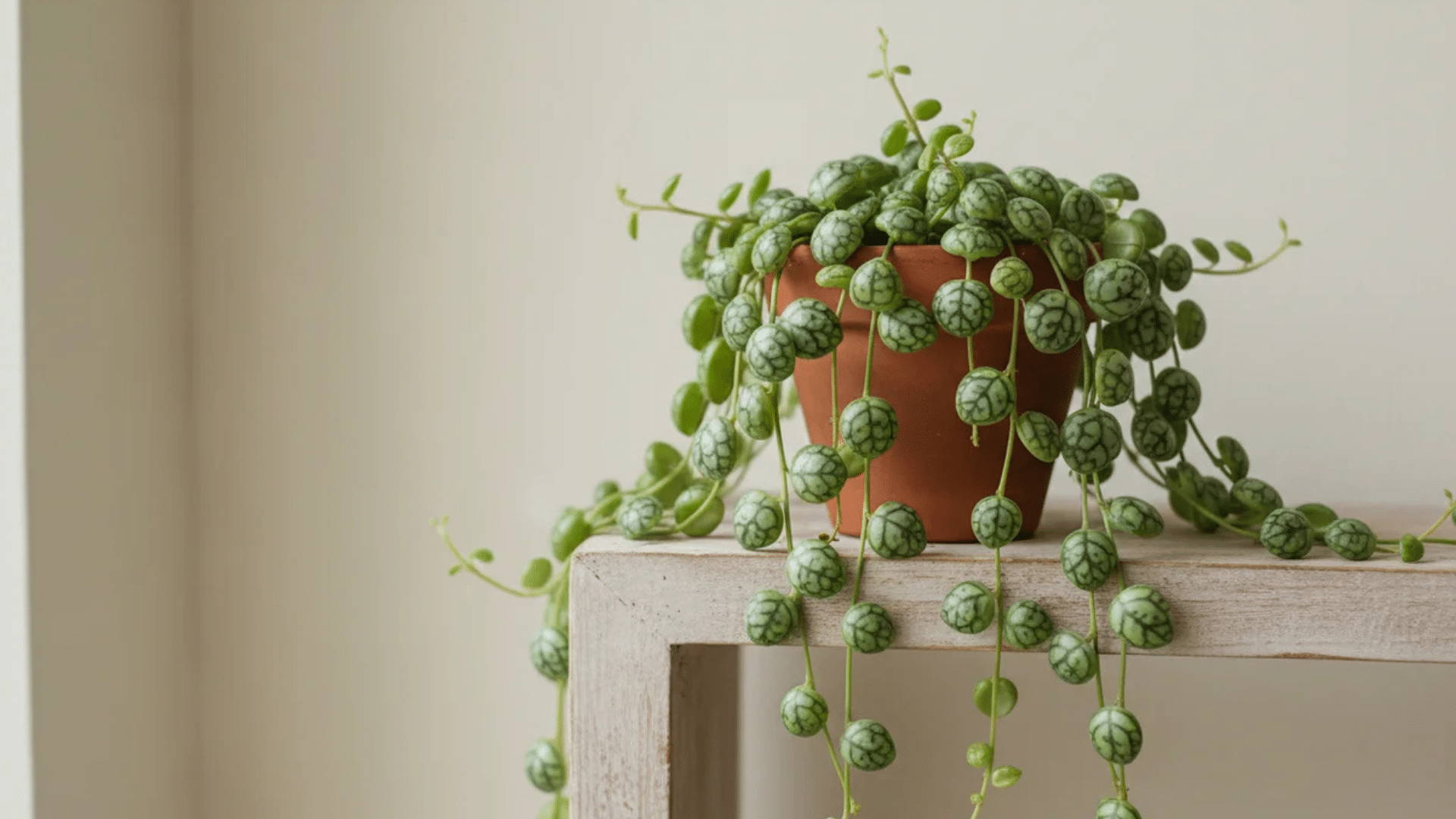
String of turtles is a compact trailing vine with small, rounded leaves marked with intricate patterns that closely resemble the shell of a turtle.
It appreciates consistent brightness but sulks in direct sun, so a spot near a window with a sheer curtain works well.
It needs very little water, making it a good fit for small pots and narrow shelves without much fuss.
It is one of the slowest-growing vines on this list, but rewards patience with detailed leaf markings and a neat trailing habit. Water it sparingly and make sure the pot has good drainage to prevent root rot.
Plant Care at a Glance:
- Light: Bright indirect light
- Water: Sparingly, allowing soil to dry between waterings
- Mature Size: Trailing stems up to 12 inches long
- Toxicity: Non-toxic to cats and dogs
26. Wax Plant
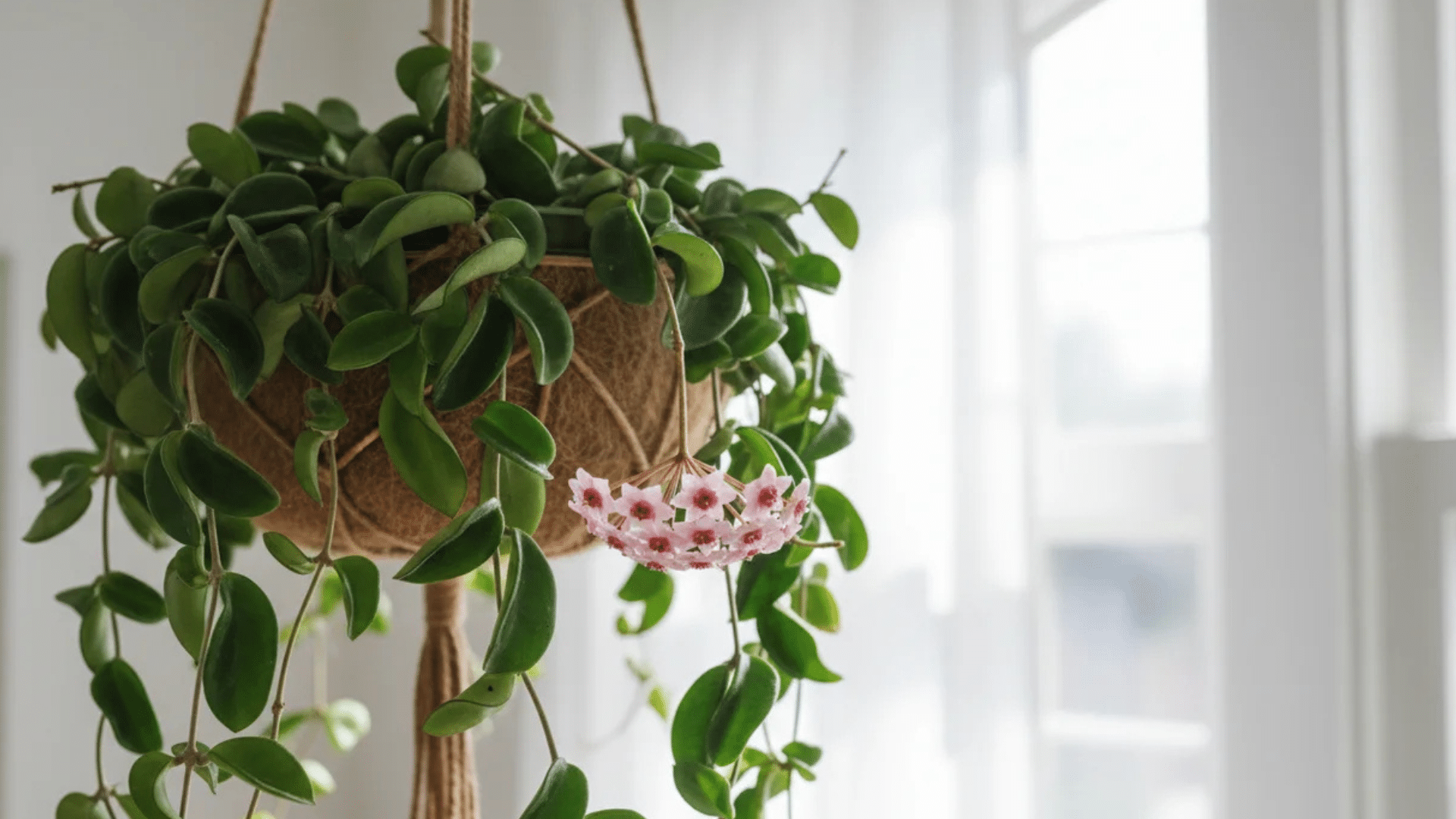
Wax plant is a hardy climbing vine with thick, waxy leaves and clusters of fragrant, star-shaped flowers that bloom reliably under the right indoor conditions.
It flowers most freely when given several hours of bright, indirect light each day without being pushed into direct sun.
Wax plant prefers to dry out between waterings rather than sitting in consistently moist soil. Some plants last up to 30 years with consistent basic care, making it one of the longest-lived vines on this list.
Wax plant does well trained along a trellis or displayed in a hanging basket and appreciates a humidity boost during drier winter months.
Easy Plant Care Overview:
- Light: Bright indirect light
- Water: Allow to dry out fully between waterings
- Mature Size: Up to 4 feet indoors
- Toxicity: Non-toxic to cats and dogs
27. Black Eyed Susan Vine
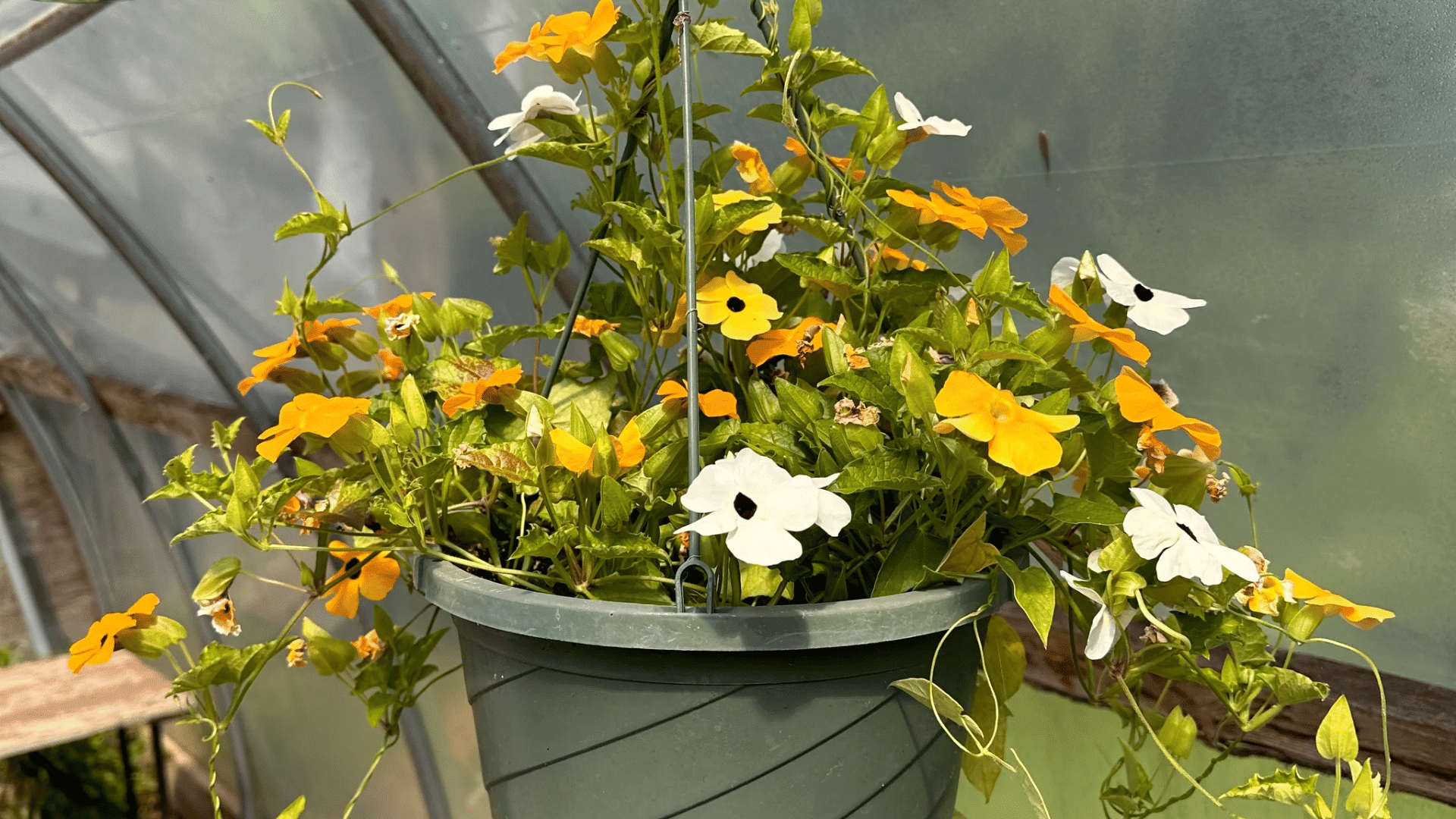
Black-eyed Susan vine is a fast-growing climbing plant that produces cheerful flowers in yellow, orange, white, and red throughout the summer months.
It needs as much sun as a typical indoor space can offer, so a south-facing window is the best placement available. It needs a trellis or support structure to climb properly indoors and can reach up to 8 feet long with the right conditions.
Keep the soil consistently moist during the growing season and reduce watering through fall and winter when growth slows.
The flower display it puts on through summer makes the extra care effort completely worthwhile.
Plant Care at a Glance:
- Light: Bright, direct to indirect light
- Water: Consistently moist during the growing season, reduces in fall and winter
- Mature Size: Up to 8 feet indoors
- Toxicity: Mildly toxic to cats and dogs
28. Burro’s Tail
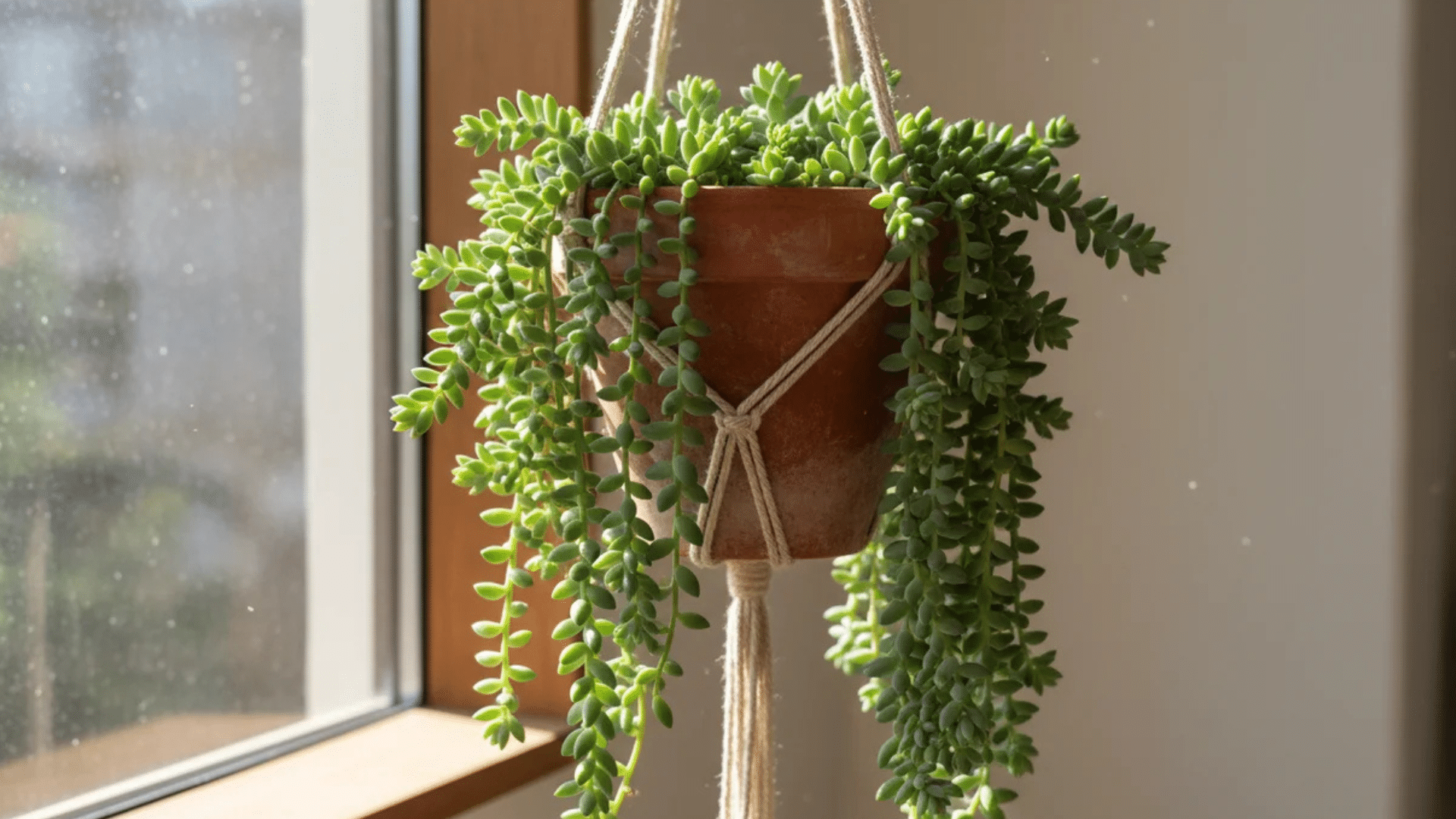
Burro’s tail is a trailing succulent with thick, overlapping blue-green leaves that form long, rope-like stems as the plant continues to grow.
A sunny windowsill where it catches several hours of direct or near-direct light each day keeps it at its best.
It needs dry soil between waterings and does not handle cold drafts at all. Handle it carefully, as the leaves detach very easily when touched.
Basic Care Guide:
- Light: Bright indirect to some direct light
- Water: Very sparingly, allowing full drying between waterings
- Mature Size: Trailing stems up to 4 feet long
- Toxicity: Non-toxic to cats and dogs
29. Jade Vine
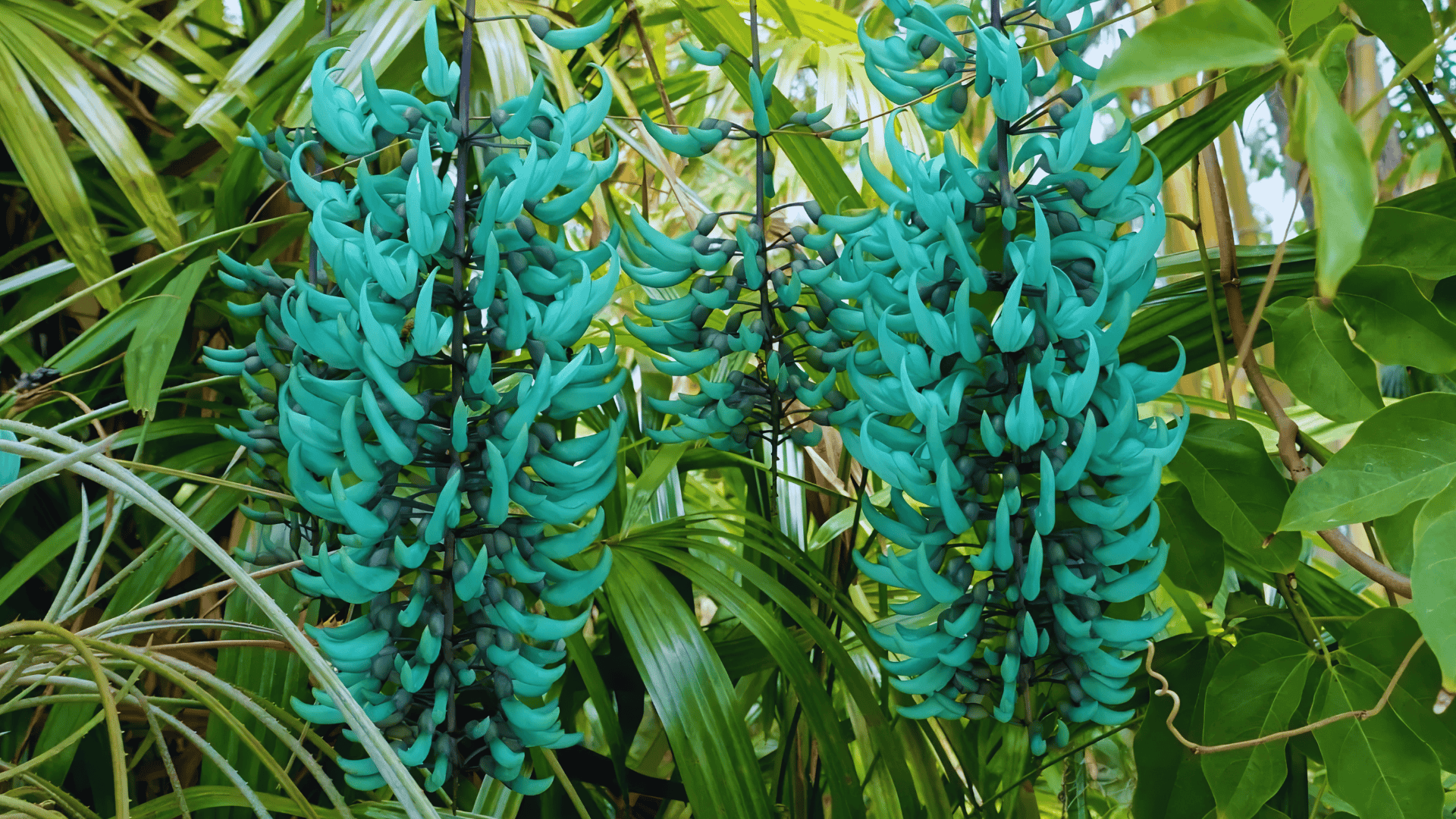
Jade vine is a rare and visually striking plant with turquoise-green flowers that make it one of the most distinctive indoor vines available to dedicated plant growers.
It needs bright light and high humidity, so a sunroom or greenhouse window works best indoors. Jade vine also needs a strong trellis or support structure to hold up its heavier stems as it grows.
It needs more space and ongoing care than most other vines on this list, but it delivers a look very few other plants can match.
Water it regularly and keep it warm for the best results.
Plant Care at a Glance:
- Light: Bright indirect light
- Water: Regularly, keep the soil moist but not waterlogged
- Mature Size: Can reach several feet indoors with support
- Toxicity: Mildly toxic to cats and dogs
30. Maidenhair Vine
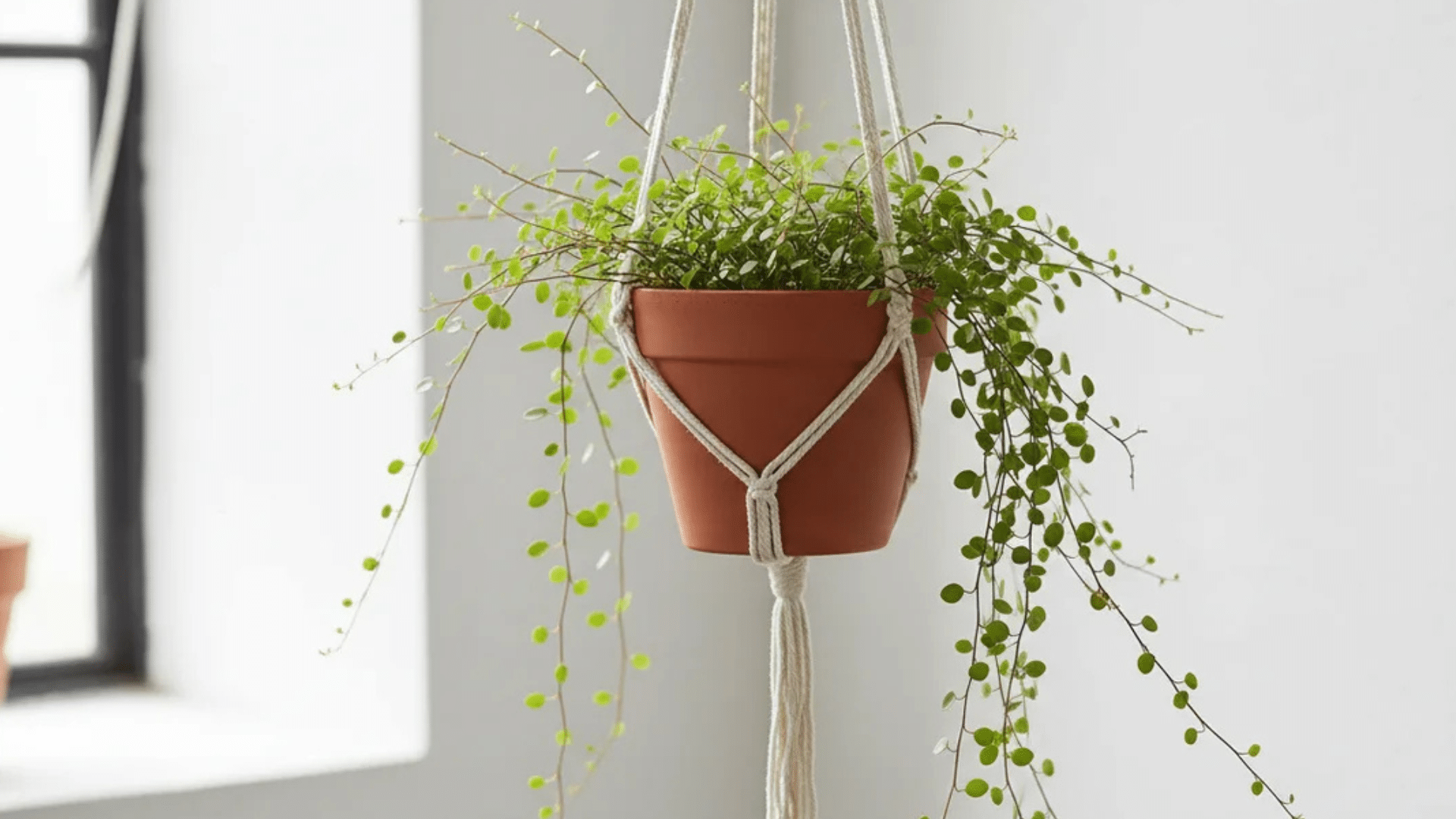
Maidenhair vine is a light, airy trailing plant with tiny, round leaves on thin, wiry stems that give it a soft, feathery appearance, unlike most other indoor vines.
It settles happily in a spot with soft, even ambient light and no direct sun, making it a good candidate for interior shelves or side tables away from windows.
Keep the soil lightly moist and avoid exposing it to harsh rays, which dry out the fine leaves quickly.
Maidenhair vine has a soft, trailing look that pairs well with fuller leafy vines indoors.
Easy Plant Care Overview:
- Light: Moderate indirect light
- Water: Keep soil lightly moist at all times
- Mature Size: Trailing stems up to 2 feet long
- Toxicity: Non-toxic to cats and dogs
31. Arrowhead Syngonium
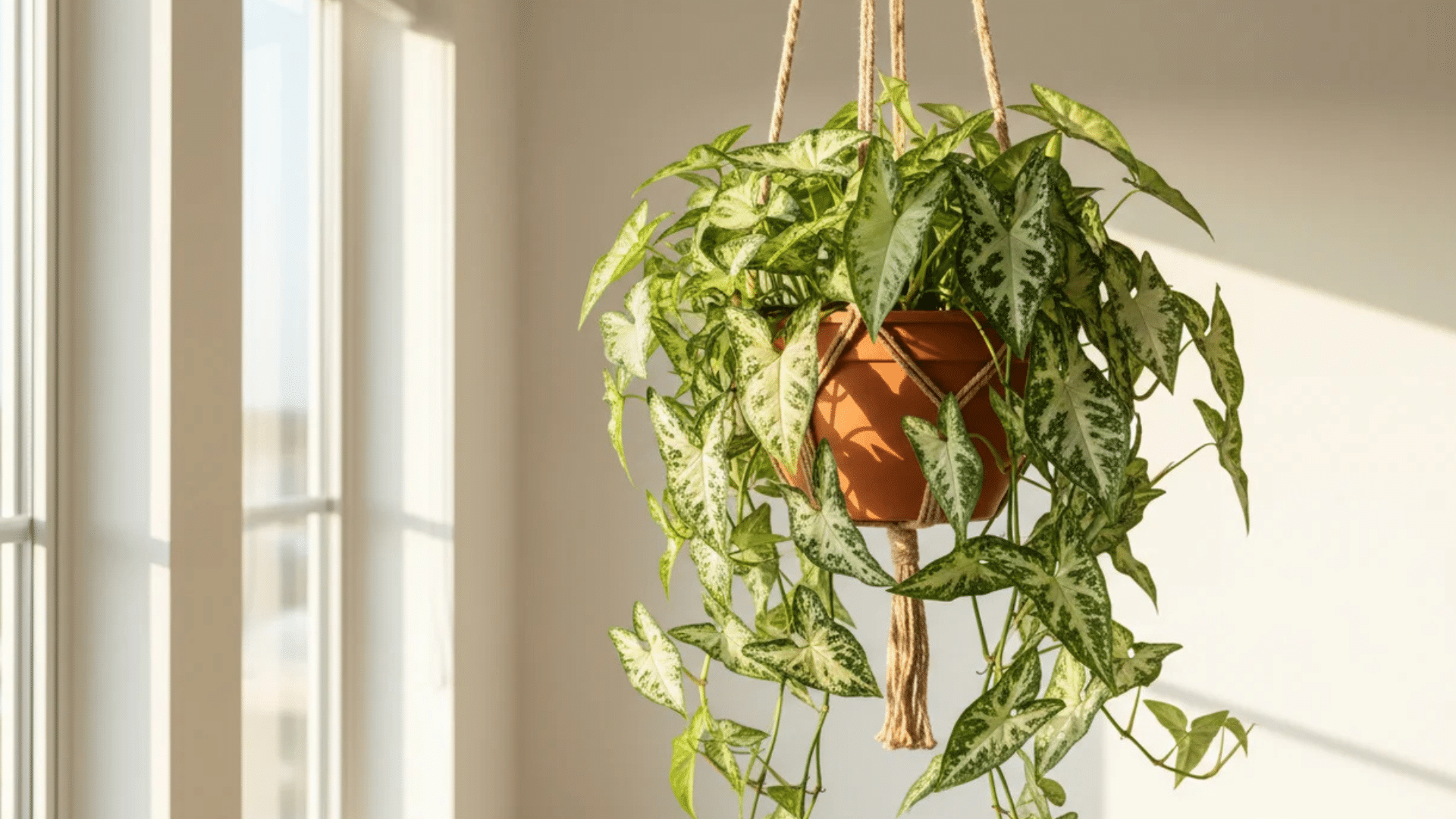
Arrowhead syngonium is a flexible vine that works equally well as a trailing plant or a climber, depending on the support available.
It grows well in both low light and bright spots near a window.
Leaves come in green, bronze, and variegated varieties and shift in shape as the plant matures from a compact bush into a full vining plant.
It suits hanging baskets, open shelves, and trellised displays with equal ease.
Water it when the soil feels dry and mist it occasionally through the drier winter months to keep it growing.
Plant Care at a Glance:
- Light: Low to bright indirect light
- Water: When the soil feels dry, mist occasionally in winter
- Mature Size: Up to 6 feet indoors
- Toxicity: Toxic to cats and dogs
How to Display Your Indoor Vine Plants Beautifully?
The way a vine plant is displayed makes as much difference as the plant itself.
A good display brings out the natural trailing or climbing habit of the plant and fits it into the room without looking forced.
Hanging baskets work well for trailing varieties like pothos, string of pearls, and burro’s tail.
A high shelf or ceiling hook gives trailing vines the vertical drop they need to look their best.
For climbing plants like monstera and passion flower vine, a trellis or moss pole gives the stems something to grip and grow along.
Wall-mounted trellises are another strong option for larger spaces.
They keep climbing vines tidy and create a green focal point on an otherwise bare wall. Mix trailing and climbing plants in the same display for a fuller, more layered look.
Tips for Growing Indoor Vine Plants at Home
A few simple habits go a long way in keeping indoor vines healthy and growing well all year round.
- Light: Most indoor vines do best in bright indirect light. Low-light-tolerant varieties like pothos and heartleaf philodendron can handle dimmer spots.
- Watering: Water when the top inch of soil feels dry, and always use pots with drainage holes. Overwatering causes more problems than underwatering for the majority of indoor vines.
- Winter Care: Reduce watering during the colder months, as most vines slow their growth. Hold off on fertilizing until spring, when active growth resumes.
- Humidity: Most tropical vines prefer higher humidity. A weekly mist or a pebble tray filled with water placed under the pot works well in drier indoor environments.
- Pruning: Trim back long or leggy stems regularly to keep the plant looking full and tidy. Pruning also encourages bushier growth and prevents the vine from taking over its space.
Conclusion
There is no shortage of great indoor vine plants to choose from, and that is part of the fun. Some people start with a simple pothos on a shelf and end up with vines trailing across every room.
Others pick one statement plant and let it take center stage.
Both approaches work. The key is finding plants that match the light, space, and time you have available.
Start small, pay attention to how each plant responds, and adjust from there. Most indoor vines are forgiving enough to give you room to learn.
Every plant collection looks different, and that is what makes it personal.
If any of the plants on this list caught your attention, drop a comment below and share which ones made your shortlist.
Frequently Asked Questions
Can Indoor Vine Plants Grow in Air Conditioning?
Yes, most indoor vines tolerate air-conditioned rooms. However, AC reduces humidity, so mist your plants regularly or use a pebble tray to compensate for the drier air.
How to Stop a Vine Plant from Getting Leggy?
Pinch back the growing tips regularly and ensure the plant gets adequate light. Leggy growth almost always signals insufficient brightness rather than a watering or soil issue.
Do Indoor Vine Plants Attract Pests?
They can. Common pests include mealybugs, spider mites, and fungus gnats. Inspect leaves regularly, avoid overwatering, and wipe foliage occasionally with a damp cloth to keep infestations from developing.
Does the Vine Plant Need to Be Repotted Every Year?
Not necessarily. Repot only when roots start escaping the drainage holes, or growth visibly slows. Most indoor vines prefer slightly snug pots and do not need annual repotting.