

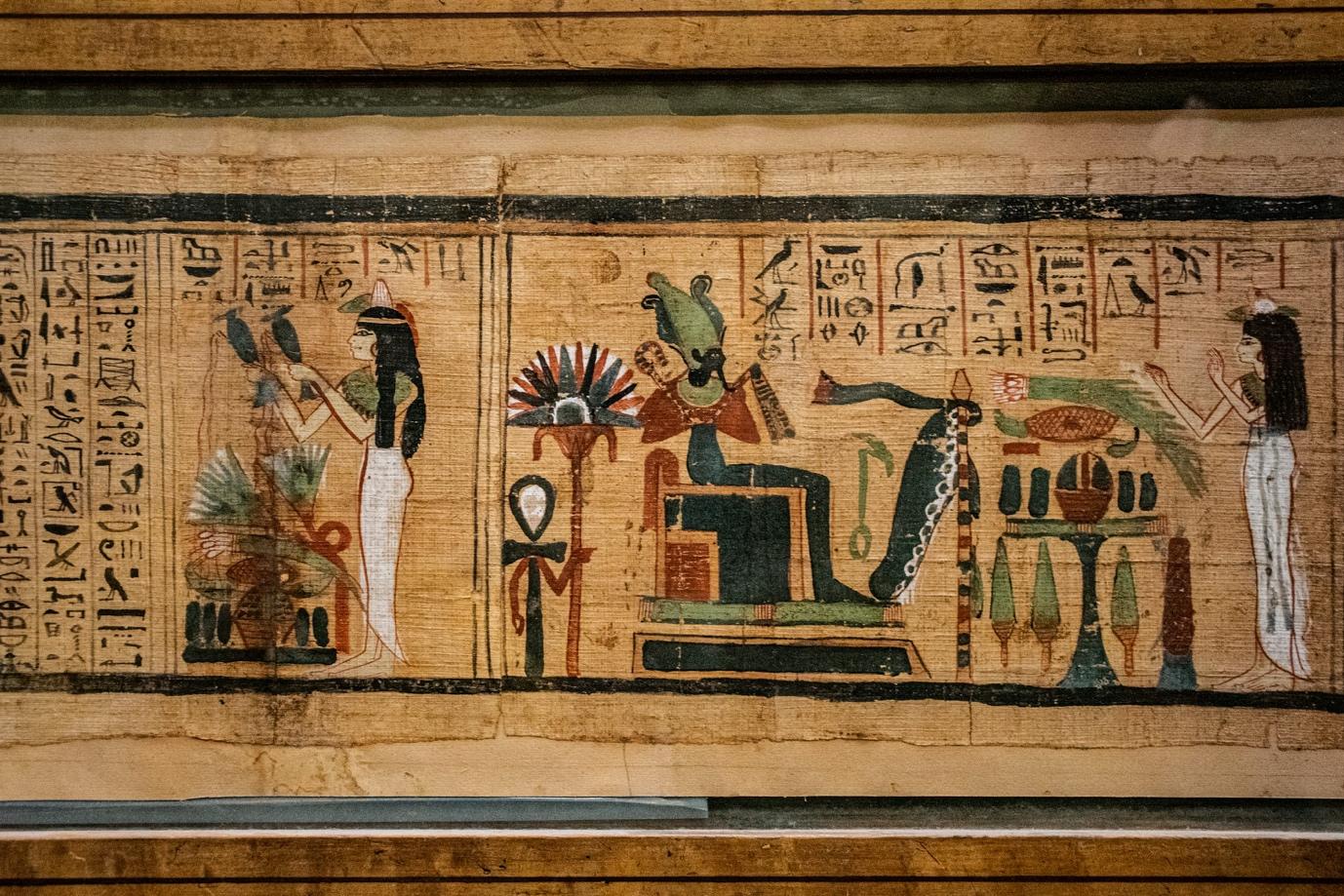
The influence of ancient Egypt is plain for all to see: representations of spirituality and gods in art; stone constructions and architectural techniques, and concepts such as the afterlife and immortality of the soul. And, in a slightly less grand manner, the designs of jewelry and pottery. But how might the ancient civilization be influencing your home, your dinner parties, and your cooking?
Kitchen and home designs
Modern kitchens often favour natural materials and geometric patterns. Last year, Sotheby’s reported that the Egyptian revival had begun again in modern homes: opulent designs, once reserved for pharaohs, are now seen in luxury apartments.
Yasmina Makram, a studio based in Cairo, gives a “nod to ancient Egypt”, according to founder Yasmina Makram Ebeid. Meanwhile Denham Place hired Alex Kravetz’s studio in London, who chose “pseudo-hieroglyphic” panels in the style of the 19th century Egyptian revival.
Jewish culture and Passover
In Jewish culture, the Seder plate is a central platter enjoyed during the Passover Seder to symbolize the story of the Exodus from Egypt.
Traditionally, the plate includes a shank bone, a roasted egg, bitter herbs, a dipping vegetable, a charoset, and matzah, a type of unleavened flatbread and an integral element of Passover. During the festival, a silver Seder plate is often chosen for the matzah, which is considered mandatory for all guests.
The flour is ground from one of five grains: wheat, barley, spelt, rye, or oat, as specified in Jewish law. (Outside of Passover, matzah may use any kosher ingredients.) The Seder tells the story of Israelites being liberated from slavery in ancient Egypt.
Modern cooking
Ancient Egypt had a profound influence on modern cooking, particularly in Egypt of course. When the Nile River flooded, fertile silt was spread and made the cultivation of wheat, barley, and legumes all possible – and all became staples of Egyptian foods and drinks, including breads and koshary.
The latter is the country’s national dish and a popular street foot. The contemporary version includes pasta, rice, lentils and chickpeas combined with tomato sauce and onions.
And modern Egyptian cooking is influential across the world – the restaurant Khufu has been internationally lauded and named the best restaurant in the country. Executive chef Mostafa Seif grew up in rural Egypt; he partnered with restaurateur Giovanni Bolandrini who first visited the country around the turn of the century.
There was something about Egypt, Bolandrini has recalled, that “captured [his] heart”: its “energy” as well as its “beauty”. The local flavors and dishes, including muammar rice with smoked beef and a signature koshari, made Khufu one of The World’s 50 Best Restaurants in 2025.
Ahead of their day
Makram Ebeid has suggested that designers continually refer to ancient Egypt because the civilization “were so ahead of their day”. Ancient Egyptian architecture, materials, and lighting all continue to influence modern designs. And still today, nobody knows exactly how the pyramids were built.
A professor at the University of North Carolina recently said there was still debate among scientists on how “these heavy blocks” were lifted to such great heights. Maybe one day we’ll catch up.