

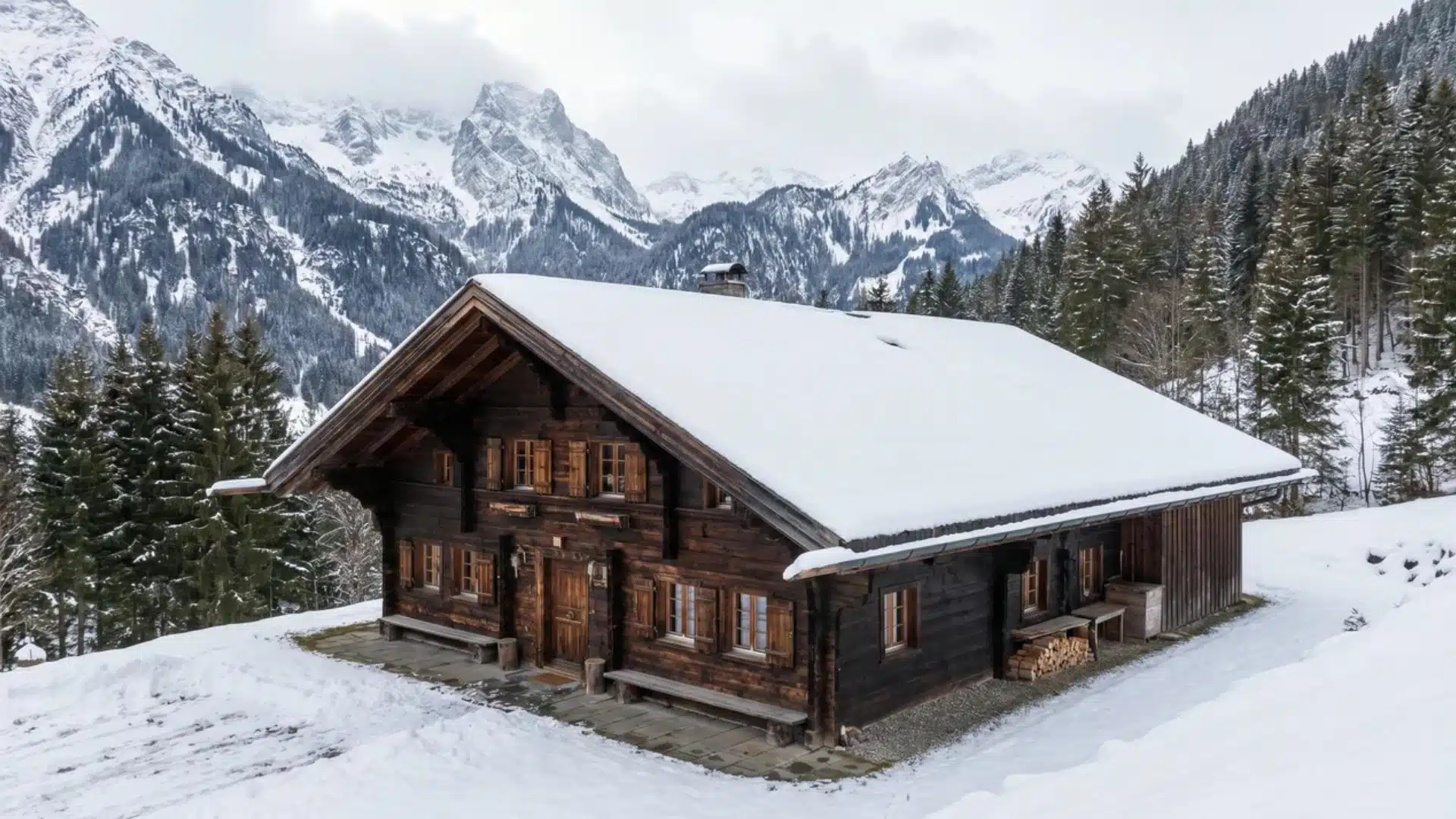
Chalet often appears in listings for ski cabins, lake houses, and modern rentals, yet the term is used loosely, creating confusion about its true meaning.
Search for “chalet,” and you’ll see ski cabins, lake houses, and modern rentals all using the same label. The problem is, not all of them actually match the original idea.
The confusion starts when the name gets used loosely, but the structure behind it comes from a very specific Alpine design shaped by snow and mountain living.
What is a Chalet?
A chalet is a wooden Alpine-style house with a gently sloping roof and wide overhanging eaves.
It originally comes from the Swiss and French Alps, where it was built to handle heavy snow and cold mountain weather.
Today, the word is also used more loosely. You’ll see it used for vacation homes outside the mountains too, as long as they keep that same wooden, sloped-roof style.
The key thing to understand is this: a chalet is defined by its shape and structure, not just its location. If the roof is steep enough to shed snow and the eaves extend far out to protect the walls, you’re looking at a chalet-style home.
Where Did Chalets Come From? History & Origin
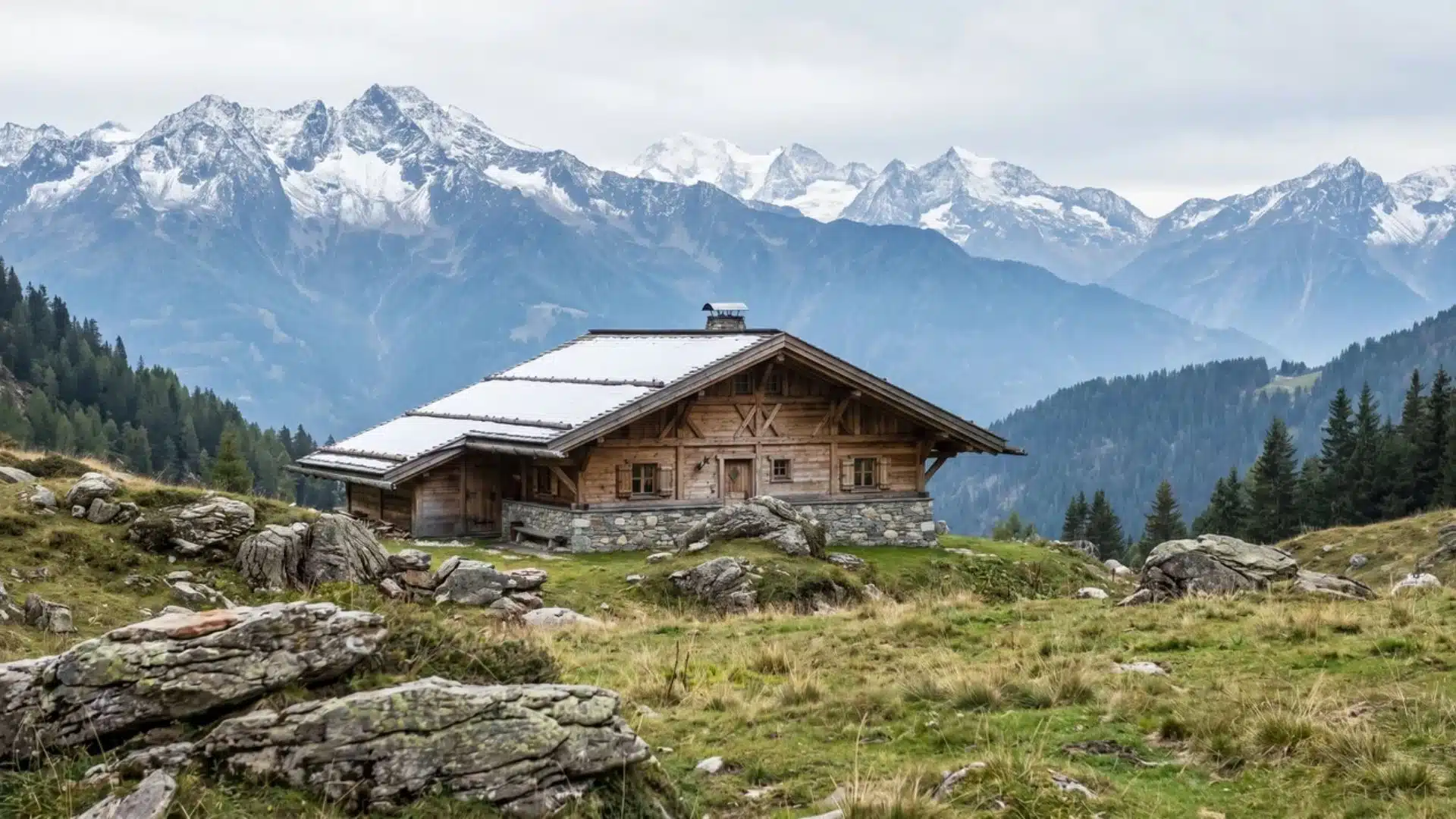
A chalet started as a seasonal shelter in the Swiss and French Alps. It was built for herders who moved livestock up into mountain pastures during warmer months. It was never meant to be a luxury home at the start.
These early structures were practical in every way. Thick wood walls held in heat during cold nights. The roof shape pushed snow off so the structure would not collapse under the weight.
Over time, these huts stayed in place long enough to become part of mountain life, not just temporary stops.
From Farm Hut to Vacation Home
Chalets slowly shifted from working shelters to places people wanted to stay. By the Romantic period, mountain travel had become popular, and these wooden huts began to feel like peaceful escapes.
What once served farmers began serving visitors. The structure stayed the same, but the purpose changed completely.
The Word and Its Origin
The word chalet comes from Franco-Provençal. It originally meant a simple herder’s hut or small mountain shelter.
That meaning still shapes how the word is used today. Even when the homes get larger or more modern, the name still carries that same Alpine origin.
What Makes a House a Chalet? Key Features
A single detail does not define a chalet. It’s a combination of structure, materials, and shape working together in a very specific way.
These features are what let you recognize one instantly, even if it sits outside the Alps or has modern updates.
- Sloping roof with wide eaves: The roof is steep enough to shed heavy snow, while the long eaves push meltwater away from the walls and foundation. This design comes from real mountain pressure, not decoration.
- Heavy timber and wood structures: Most chalets use thick wood framing that retains heat and withstands cold weather. Modern versions may mix stone and glass, but wood still defines the core look.
- Large windows and balconies: Big openings bring in light and frame mountain views. Balconies extend living space outward, often carved in wood that matches the structure.
- Open, warm interiors: Spaces feel airy with high ceilings and exposed beams. The layout is designed to trap warmth while still feeling connected to the outside environment.
Taken together, these features create a home that feels tied to mountain living, even when it’s built far from the mountains.
Chalet vs. Cabin: What Actually Changes?
These two are often mixed up because both are mountain or nature-linked homes. The real difference shows up in structure, design intent, and how each one responds to its environment.
| Factor | Chalet | Cabin |
|---|---|---|
| Roof style | Steep sloping roof with wide eaves for snow control | A simple pitched or flat roof for basic shelter |
| Structure | Timber-heavy, often multi-level | Usually simpler, often single-level |
| Origin | Alpine mountain regions (Switzerland, France) | Forest and rural North American shelters |
| Materials | Wood with stone and glass accents | Logs or basic timber construction |
| Purpose | Seasonal mountain living, often leisure use today | Basic shelter or rustic getaway |
| Feel | Structured, weather-engineered comfort | Minimal, rugged simplicity |
A chalet is shaped around harsh snow conditions, which is why the roof and eaves matter so much. A cabin doesn’t need that level of engineering, so it stays simpler and more enclosed.
Chalet vs. Cottage vs. Lodge
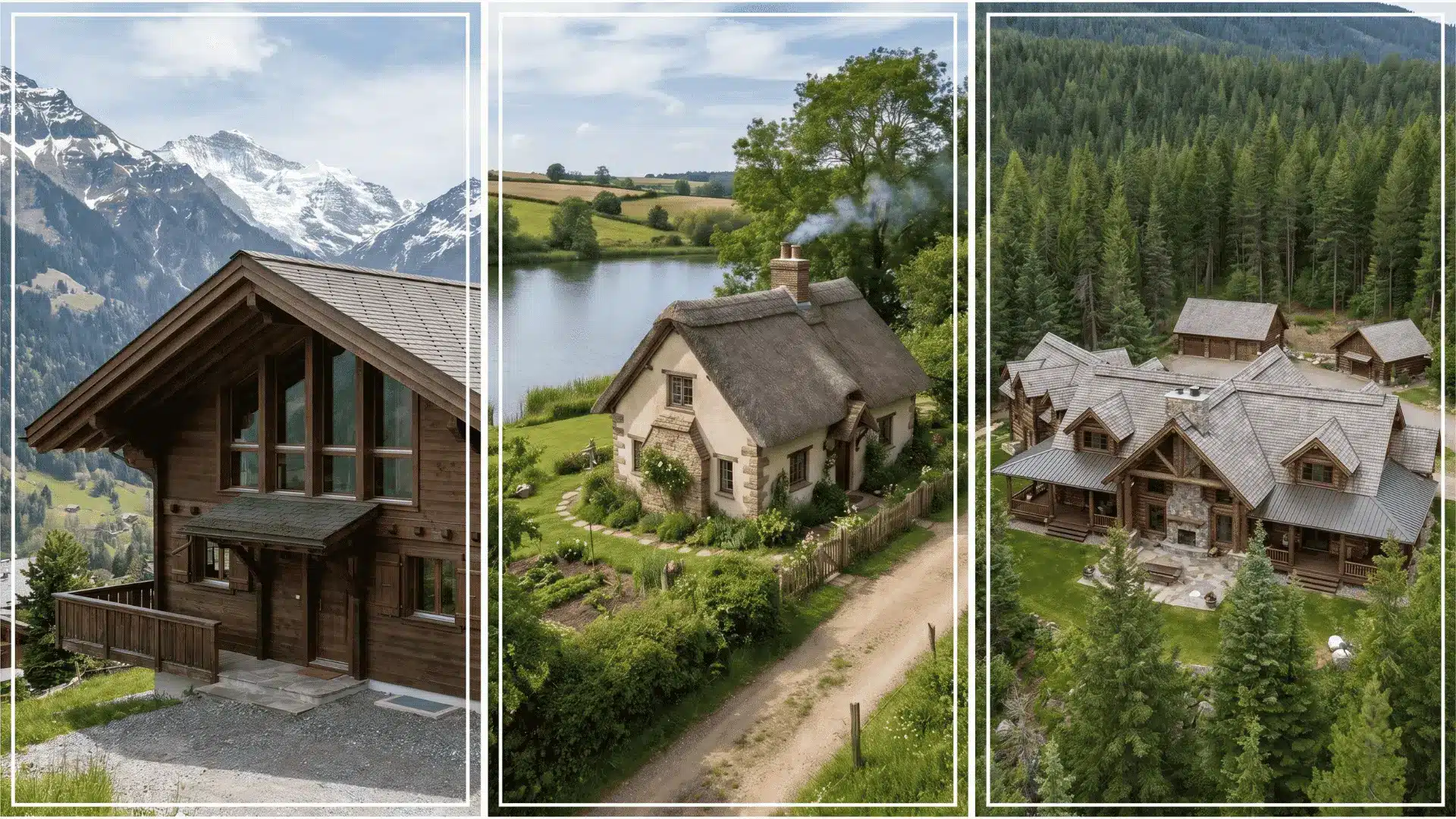
At first glance, these homes can look similar, especially in photos or listings. The difference becomes clear when you focus on how much space they hold, how they’re built, and the kind of living they’re designed for.
| Type | Roof Style | Materials | Size | Typical Setting | Feel |
|---|---|---|---|---|---|
| Chalet | Sloping roof with wide eaves | Heavy timber, wood, and glass mix | Medium | Alpine regions, mountain-style builds | Structured, weather-focused |
| Cottage | Simple, varied roof forms | Mixed materials | Small | Countryside, lakeside | Soft, comfortable |
| Lodge | Large, multi-section roofs | Wood and stone mix | Large | Resorts, wilderness areas | Spacious, communal |
The chalet is shaped around snow and slope, which is why the roof and eaves matter so much. A cottage leans toward comfort in small living spaces, and a lodge scales up for groups and shared use.
Why Are Chalets Often Misused in Modern Listings?
The word “chalet” is often used loosely in modern real estate listings. It no longer always means a true Alpine-style home.
Many listings use it for marketing. A basic wooden house or lake cabin may be labeled a chalet because the word feels more premium and vacation-like.
This creates confusion. Many buyers expect sloping roofs, wide eaves, and a mountain-style structure, but find standard homes with only light rustic styling.
In many regions, especially outside Europe, “chalet” is used to refer to any holiday home. The original meaning gets stretched far beyond its Alpine roots.
In practice, the building itself matters more than the label. Roof shape and structure tell the real story.
Conclusion
A chalet is simple once you strip away the labels and look at how it’s built. The sloping roof, wide eaves, and timber-heavy structure all come from real mountain needs, not styling choices.
That’s the key thread running through everything above when answering what a chalet is: the definition, the history, and even the modern confusion all circle back to the same point. Form follows function, especially in harsh Alpine weather.
The term now gets used loosely in listings, so you’ll often see “chalet” applied to homes that only share the look. The only reliable check is structure, not the name on the listing.
Once you understand what a chalet is, you can spot the real thing in seconds, even in places far from the Alps.
Frequently Asked Questions
What qualifies as a chalet?
A chalet qualifies by its Alpine-style design: a wooden or timber-framed house with a gently sloping, heavy roof, wide overhanging eaves, and often a balcony. It started as a herder’s hut in the Swiss and French Alps and now refers to vacation homes built in the same recognizable style.
What’s the difference between a chalet and a cabin?
The biggest differences are the roof and the shape. A chalet has the classic Alpine sloping or A-frame roof with wide eaves and is usually two stories. At the same time, a cabin is simpler, frequently log-built, and traditionally a single story with a more rustic, enclosed feel.
Why is it called a chalet?
The word comes from Franco-Provençal, a language once spoken across the Swiss and French Alps, where it meant a herder’s hut or mountain shelter. Over time, it came to describe the wooden mountain homes built in that region and the Alpine style they inspired.
Does a chalet have to be in the mountains?
Not anymore. Traditionally, chalets were Alpine homes, but today the term is used for vacation rentals near beaches, lakes, and resorts across the United States, as long as the home has the rustic, wood-built, sloping-roof look associated with the style.