

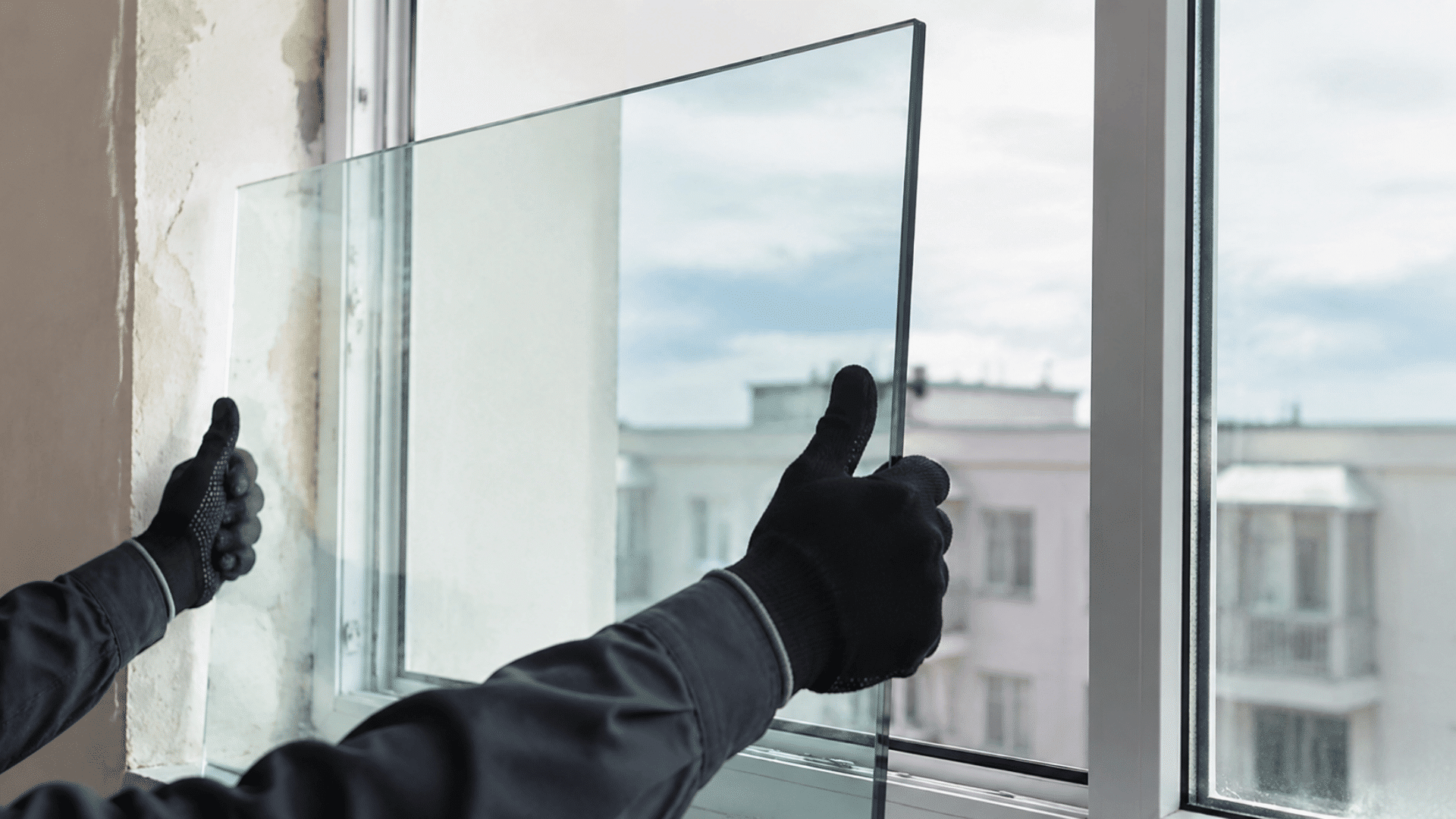
Glass is a material we encounter every day, from windows and doors to appliances and vehicles. But not all glass is created equal.
If you’ve ever asked what tempered glass is and why it shows up everywhere from shower doors to car windows, this article gives you a clear answer.
I’ll cover key properties, practical uses, and why it’s stronger, safer, and more durable than ordinary glass. You’ll also learn how it’s manufactured, the different types available, and the advantages it offers in homes, commercial buildings, and automobiles.
By the end, you’ll know exactly what to look for when selecting tempered glass for safety, durability, or design.
What is Tempered Glass?
Tempered glass is a type of safety glass made by heating regular glass to extreme temperatures and then cooling it rapidly. That process, called tempering, makes it four to five times stronger than standard glass.
It also changes how the glass behaves when it breaks.
Instead of shattering into jagged, dangerous shards, tempered glass breaks into small, blunt pieces. That single characteristic is why it’s classified as safety glass and why building codes require it in so many applications.
You’ll find it in car side windows, shower enclosures, glass doors, oven panels, and anywhere else where a break could cause serious injury.
Types of Tempered Glass
Not all tempered glass is the same. Different manufacturing steps and base materials produce glass suited for specific environments and performance requirements.
| Type of Tempered Glass | Description |
| Standard Tempered Glass | Commonly used in windows, doors, and furniture. Heat-treated to be stronger and safer than normal glass. |
| Heat-Soaked Tempered Glass | Undergoes additional high-temperature testing to trigger and eliminate panels at risk of spontaneous breakage from nickel sulfide inclusions. |
| Tinted Tempered Glass | Has color added during manufacturing to reduce glare and solar heat gain, improving comfort and energy efficiency. |
| Low-Iron Tempered Glass | Contains less iron than standard glass, removing the faint green tint and delivering higher clarity and light transmission. |
| Patterned or Textured Tempered Glass | Features surface designs for privacy or decoration while maintaining the strength and safety of standard tempered glass. |
The right type depends on where the glass is going. For overhead or hard-to-access glazing, heat-soaked is worth the extra cost. For display cases or frameless partitions where appearance matters, low-iron is the cleaner choice.
A note on spontaneous breakage: A small percentage of tempered glass panels can crack without any external impact. This is caused by nickel sulfide inclusions, microscopic impurities that expand slowly over time due to repeated temperature changes. Heat-soaked tempering is specifically designed to catch these panels before they’re installed.
How Does It Differ From Regular Glass?
Tempered glass goes through a treatment process that changes its physical properties at a structural level. The differences aren’t cosmetic; they affect how it performs under stress and how it fails.
- Strength: Tempered glass is four to five times stronger than regular glass, with significantly higher resistance to impact and bending.
- Breakage Pattern: Regular glass breaks into long, jagged shards. Tempered glass shatters into small, blunt pieces, far less likely to cause serious injury.
- Heat Resistance: Tempered glass tolerates sudden temperature changes of up to 200–300°C without cracking. Standard glass cannot.
- Durability: It resists scratches, surface stress, and edge damage more effectively than annealed glass.
- Post-processing limitations: Once tempered, the glass is in its final state. It cannot be cut, drilled, or etched without shattering.
That last point matters practically. All cutting and shaping has to happen before tempering. If you order the wrong size, the panel can’t be trimmed on-site.
How is Tempered Glass Made?
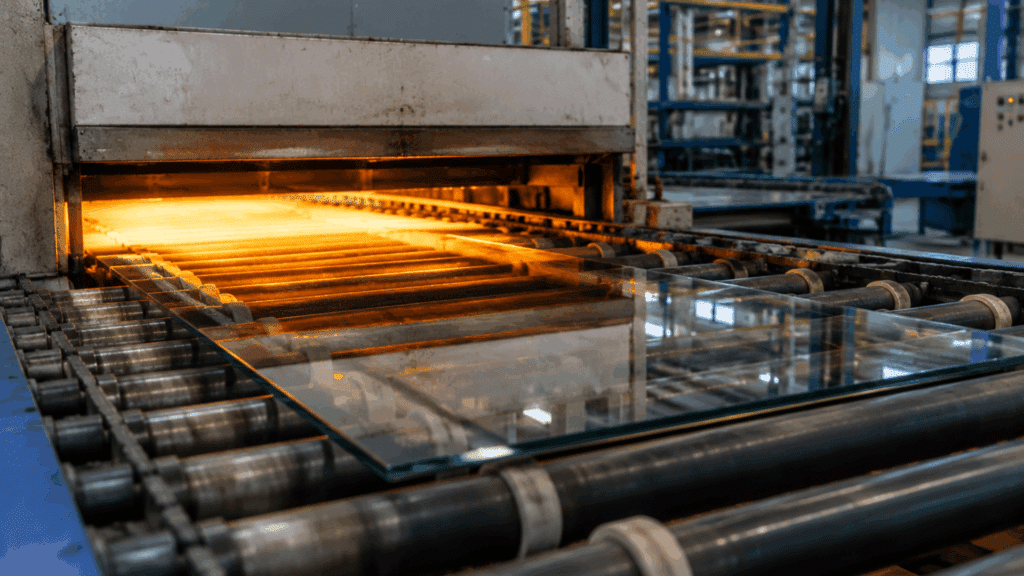
Tempering is a precisely controlled heat treatment. Get any part of the process wrong and the panel fails quality checks or, worse, fails in the field.
1. Cutting and Shaping
The glass is cut to its final size and shape while it’s still untreated. Edges are ground smooth to eliminate weak points.
This step is permanent. Tempered glass cannot be cut after the process is complete, so exact dimensions are critical before anything else begins.
Very large or thick panels require specialist equipment at this stage. Getting the sizing right here prevents waste and costly remakes later.
2. Cleaning
Before entering the furnace, the glass is cleaned thoroughly to remove dust, grease, and debris.
Any contamination on the surface affects how heat distributes across the panel. Uneven heating creates uneven stress, and that produces a weaker, less predictable product.
Clean glass also maintains optical clarity through the process. Surface marks baked in during heating don’t come out afterward.
3. Heating
The glass moves into a tempering furnace and is heated to around 620–650°C (1,148–1,202°F) — hot enough to soften without melting.
Thickness determines how long this takes. A standard 6mm panel typically needs around four minutes. A 12mm panel needs closer to eight.
Precise temperature control matters here. Too cool and the glass won’t develop the internal stresses needed for strength. Too hot and the panel warps.
4. Rapid Cooling (Quenching)
Once the furnace cycle is complete, high-pressure air jets blast both surfaces of the glass simultaneously.
The outer layers cool and solidify first. The inner core stays hot longer and cools more slowly. As the core contracts, it pulls against the already-rigid outer layers.
This creates a permanent state of surface compression on the outside and internal tension at the core. Those two opposing forces are what give tempered glass its strength — and what determines how it breaks. When the panel fails, the stored energy releases all at once, producing small, blunt pieces rather than sharp shards.
5. Quality Control and Testing
Every panel is inspected for cracks, surface defects, and uneven stress patterns before it leaves the facility.
Tests cover thickness consistency, impact strength, and thermal resistance. Panels that fall outside tolerance are discarded; there’s no reworking a tempered panel.
This stage is why tempered glass from reputable manufacturers carries certification markings. If it passed quality control, it carries a permanent stamp in the corner.
What is Tempered Glass Used For?
Its combination of strength, thermal resistance, and safe breakage behavior makes tempered glass the right choice across a wide range of settings, from residential bathrooms to commercial storefronts.
- Architectural Windows and Doors: Used in buildings for doors, windows, and glass partitions where safety and structural strength are required.
- Shower Enclosures: Provides a shatter-resistant barrier in wet areas where a fall against regular glass could cause serious injury.
- Automotive Glass: Side and rear car windows use tempered glass so that a break in an accident produces small, blunt pieces rather than dangerous shards.
- Furniture and Tabletops: Glass tables, shelves, and display cabinets use tempered glass for impact resistance and durability under daily use.
- Appliances and Electronics: Oven doors, refrigerator panels, and smartphone screen protectors rely on its heat and stress resistance.
- Commercial Safety Barriers: Offices, retail spaces, and public buildings use it in partitions and protective screens where foot traffic and impact risk are high.
Where Building Codes Require It
In many locations, tempered glass isn’t optional; it’s a legal requirement. Specifying the wrong glass type in these areas means failing inspection and replacing panels at your own cost.
Building codes commonly mandate tempered glass in:
- Shower and bathroom enclosures: any glazing in wet areas prone to slip-and-fall risk
- Swinging, sliding, and bifold doors: regardless of panel size
- Stair railings and glazing adjacent to stairways: where impact from a fall is a realistic scenario
- Large low windows: panels within 18 inches of the floor in high-traffic areas
Check your local building code before specifying glass type on any renovation or new build. It’s a five-minute check that can prevent an expensive fix after inspection.
Properties of Tempered Glass
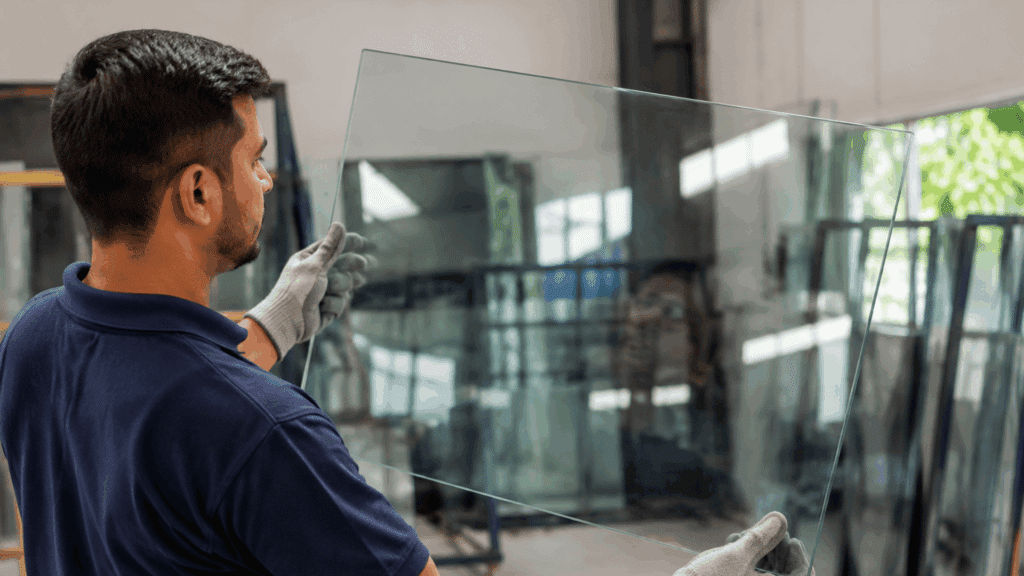
Each property of tempered glass follows directly from how it’s made. The same stress pattern that gives it strength also determines how it breaks, resists heat, and holds up over time.
1. Strength and Impact Resistance
Tempered glass is four to five times stronger than annealed glass of the same size and thickness.
That strength comes from the compression locked into the outer surfaces during quenching. To break the panel, an impact first has to overcome that compression before it can propagate through the glass.
Windows, doors, furniture, and automotive panels all benefit from this. In high-use settings where regular glass would need periodic replacement, tempered glass holds up without maintenance.
2. Thermal Resistance and Temperature Limits
Tempered glass tolerates temperature differences of 200–300°C (392–572°F) without cracking.
Regular glass fails under sudden temperature change because the expanding and contracting forces are uneven across the panel. The compression built into tempered glass resists that movement.
Kitchens, building facades, and industrial settings rely on this stability. Temperature swings that would crack ordinary glass leave tempered panels unaffected.
3. Breakage Pattern (Small Granular Chunks)
When tempered glass breaks, the stored energy from the internal stress pattern releases all at once. The entire panel shatters simultaneously into small, blunt pieces.
Regular glass breaks along the point of impact, sending long jagged shards outward. Tempered glass doesn’t — the break is total and the pieces are small enough that serious lacerations are unlikely.
In shower doors, car windows, and public spaces, that predictable break pattern is a real safety advantage. It’s also why it’s classified as safety glass rather than just strong glass.
4. Optical Clarity and Surface Finish
Tempering doesn’t alter the optical properties of the base glass. Light transmission, solar radiance, and visual clarity are unchanged by the heat treatment.
What changes is the base glass used. Low-iron tempered glass delivers noticeably higher clarity than standard options — reduced iron content removes the faint green tint present in most float glass, which matters in display cases, frameless partitions, and anywhere the glass itself is part of the aesthetic.
The surface also resists minor scratching, which helps maintain clarity in high-traffic visible installations over time.
5. Safety and Durability Combined
Most materials trade one off against the other. Tempered glass is both safe in failure and durable in use — which is why it appears across so many different applications.
It resists impacts, temperature changes, and surface damage without requiring any special maintenance. And if it does fail, it does so in the least harmful way possible.
That combination is what makes it the default choice for glass in safety-critical environments, not just a premium upgrade.
Pros and Cons of Tempered Glass
Tempered glass performs well across most conditions, but it has real limitations worth knowing before you specify or purchase it.
| Aspect | Pro | Con |
| Weight | Lightweight, easier to handle and install | Cannot be cut or drilled after tempering; all sizing must happen before |
| Chemical Resistance | Resists chemicals; safe for kitchens and lab environments | Higher cost than standard glass due to the tempering process |
| Durability | Long-lasting with minimal maintenance required | Limited available shapes and sizes; complex custom work must be done pre-tempering |
| Environmental Impact | Recyclable and made from natural materials | Requires specialized manufacturing equipment |
| Appearance | Sleek, modern finish that suits contemporary design | Vulnerable to edge impacts and concentrated point loads |
| Safety | Non-toxic; breaks safely around children and pets | Full panel replacement required if damaged; no patching or partial repair |
How to Identify if Glass is Truly Tempered?
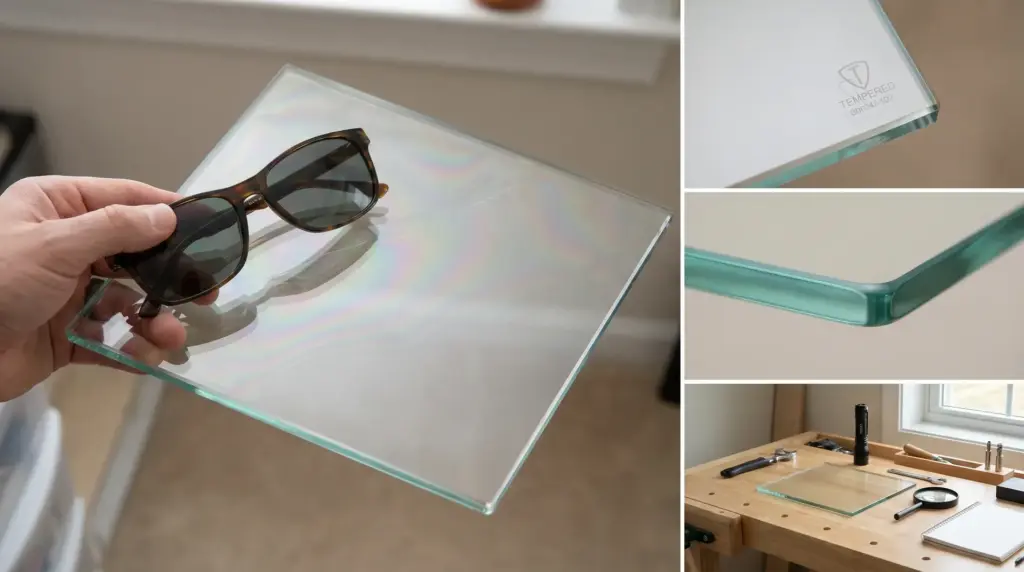
If you’re buying glass secondhand, assessing existing installations, or just want to verify what you have, there are a few reliable ways to check. None of them require specialist tools.
- Safety Stamp: Look for a small etched or sandblasted mark in one corner. Genuine tempered glass carries a permanent certification mark showing the safety standard it meets. No stamp is a red flag.
- Polarized Light Test: Put on polarized sunglasses and look at the glass at an angle toward a light source. Tempered glass shows a pattern of dark spots or lines from its internal stress distribution. Regular glass shows nothing.
- Edge Inspection: Tempered glass edges are smooth and slightly rounded from the grinding process. Regular glass edges are sharp and unfinished.
- Tap Sound Test: Tap the glass gently with a knuckle. Tempered glass produces a higher, clearer ring. Regular glass gives a dull, flat thud.
- Uniform Thickness: Tempered glass is consistently thick across the entire panel. Irregular thickness suggests it hasn’t been properly processed.
The stamp is the most reliable check. If it’s there, the glass was certified. If it’s missing, the other tests help build a picture, but none are definitive on their own.
Is Tempered Glass Environmentally Friendly?
Yes, tempered glass is durable, made from natural materials, and recyclable at end of life.
It’s produced primarily from sand and soda lime, both of which can be melted down and reused in new glass manufacturing.
Because it lasts significantly longer than regular glass, it also reduces replacement frequency — and that means less material going to waste over the life of a building or product.
Recycling tempered glass does require handling it separately from standard glass due to its different stress properties. When processed correctly, it re-enters the supply chain rather than landfill.
Tempered Glass Pricing and Budget Tips
Tempered glass costs more than standard glass, and the price varies considerably depending on how the panel is specified. Knowing what drives cost helps you budget accurately and avoid surprises.
- Thickness: Thicker panels require more raw material and longer furnace time. A 12mm panel will cost meaningfully more than a 6mm panel of the same size.
- Panel Size: Larger panels increase material costs and require more care in handling, shipping, and installation.
- Customization: Non-standard shapes, cutouts, or curved glass require additional pre-tempering work, which adds to production cost.
- Installation: Heavy or large panels typically need professional installation with lifting equipment — factor that into the total cost, not just the glass price.
- Quality and Certification: Certified glass from established manufacturers costs more than uncertified alternatives, but it comes with documented safety standards and consistent performance.
- Bulk Orders: Ordering multiple panels at once usually reduces the per-unit price. If you’re fitting several rooms or a full project, consolidating your order is worth negotiating.
A standard 4×8 sheet typically runs between $200 and $500 depending on thickness and finish. Custom work, specialty coatings, or heat-soaking add to that baseline.
Tempered Glass vs. Laminated Glass
These are the two most common safety glass options, and they behave very differently when they break — which makes the choice between them matter.
Tempered glass shatters completely on impact. The entire panel goes at once, breaking into small, blunt pieces that fall away from the frame. The glass is gone, but injury risk is low.
Laminated glass holds together. A polyvinyl butyral (PVB) interlayer bonds the panes, so the glass cracks but stays in position. It looks broken but doesn’t fall.
That difference determines where each one belongs:
- Use tempered glass for shower enclosures, car side windows, interior doors, and furniture — situations where contained breakage and low injury risk are the priority.
- Use laminated glass for windshields, skylights, glass floors, and security glazing — anywhere the panel needs to stay in place after impact, prevent entry, or stop a person falling through.
Neither is universally better. They solve different problems. Choosing the wrong one for the application is a more common mistake than most people expect.
Comparison with Other Types of Glass
Tempered glass sits in a specific performance bracket. Here’s how it compares to the other glass types you’re most likely to encounter.
| Type of Glass | Strength | Safety | Heat Resistance | Common Uses |
| Tempered Glass | 4–5× stronger than regular glass | Shatters into small, blunt pieces | High — handles sudden temperature changes | Windows, doors, shower enclosures, car windows, appliances |
| Annealed Glass | Standard glass strength | Breaks into sharp shards | Low — cracks under heat stress | Picture frames, low-risk windows, decorative panels |
| Laminated Glass | Strong, reinforced by a PVB interlayer | Holds together when broken | Moderate — depends on glass type used | Car windshields, skylights, glass floors, security panels |
| Bulletproof/Impact Glass | Extremely strong | Designed to resist penetration | High — specialized formulations | Banks, armored vehicles, security installations |
| Float/Ordinary Glass | Basic glass strength | Breaks into sharp shards | Low — not heat-resistant | Windows, mirrors, picture frames |
Conclusion
Tempered glass earns its place in safety-critical applications because it delivers on two things at once — it’s strong enough to handle real-world stress and safe enough that a failure doesn’t cause serious injury.
Understanding how it’s made, where it’s required, and how it compares to alternatives puts you in a much better position to specify or select the right glass for any application.
Whether you’re renovating, building, or just trying to verify what’s already installed, the information here gives you what you need to make an informed call.
Frequently Asked Questions
What Is Another Name for Tempered Glass?
Tempered glass is also known as toughened glass or safety glass because it is heat-treated to improve strength and reduce injury risk when broken.
How Much Does a 4×8 Sheet of Tempered Glass Cost?
A 4×8 sheet of tempered glass usually costs between $200 and $500, depending on the glass thickness, edge finish, tint, and supplier pricing.
Can a Bullet Go Through Tempered Glass?
Yes, a bullet can go through standard tempered glass. Tempered glass is designed for impact safety and heat resistance, not ballistic protection.
What are Type 1, Type 2, and Type 3 Glass?
Type 1 glass is standard annealed glass, Type 2 is heat-strengthened glass, and Type 3 is fully tempered safety glass.