

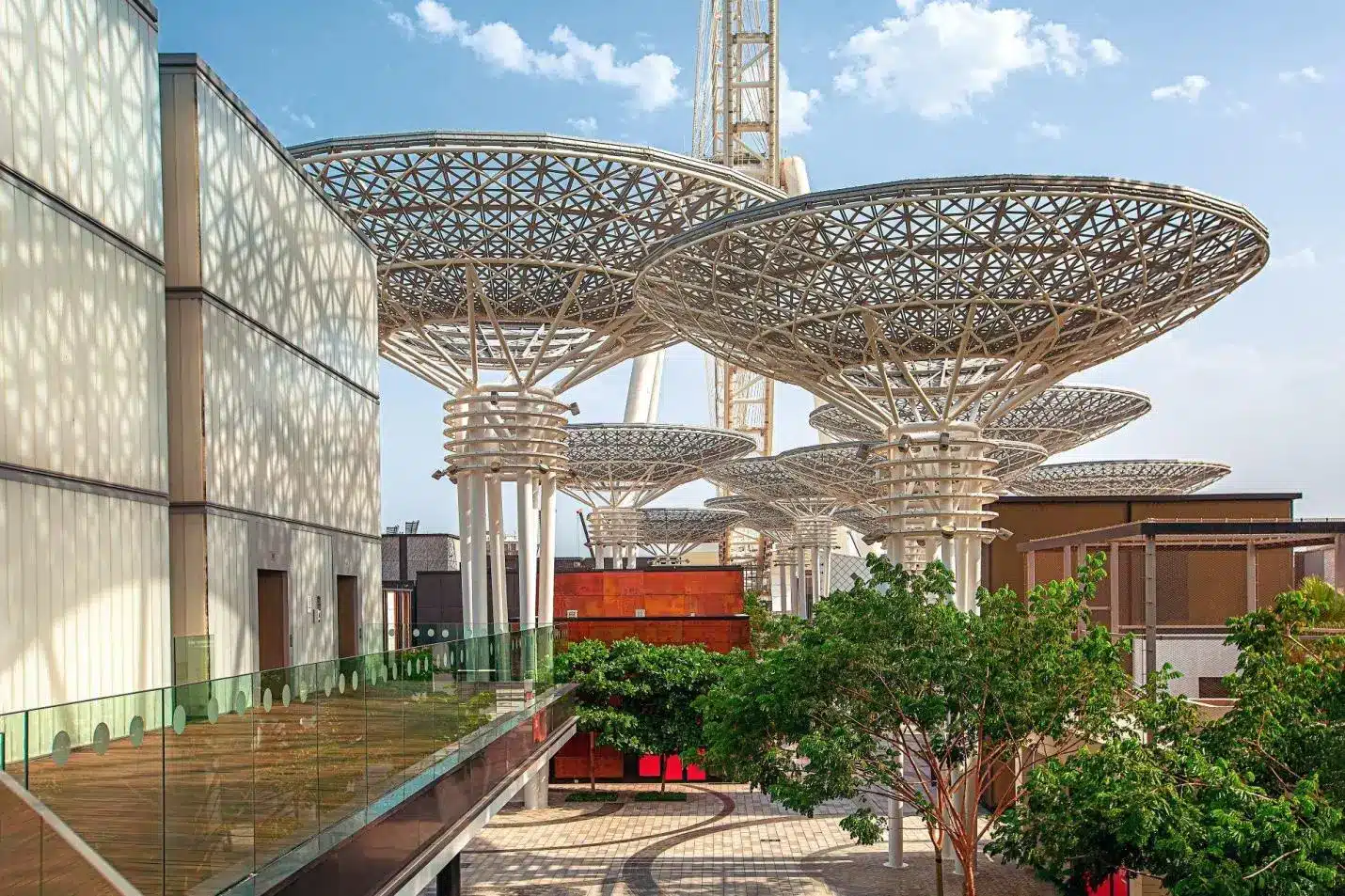
Bluewaters Island stands out because its design brings land, water, buildings, and public spaces together in a clear and organised way. Its architecture is not only about tall structures or attractive views. It is also about how people move, live, relax, and connect with the waterfront. The island shows how careful planning can turn a coastal site into a modern urban space with a strong identity.
Man-Made Island Engineering
A man-made island must be planned from the ground up, and Bluewaters Island follows that need. The base has to support roads, services, buildings, open areas, and steady access to the mainland. For apartments in Bluewaters, this engineering base matters because homes need safe access, stable surroundings, and a well-planned location near views and public routes.
Mixed-Use Master Planning
Bluewaters Island is planned as a mixed-use area, where homes, leisure spaces, dining areas, and public walkways are arranged within one connected area.
This type of planning makes the island feel more complete and well organised. Quiet residential areas are planned close to active public spaces, but each space keeps its own clear role. The result is a layout where private living, leisure, and visitor activity work together comfortably.
Modern Design Style of Bluewaters Island
The design style of Bluewaters Island is clean and modern. The buildings have simple shapes, glass fronts, balconies, and soft exterior colours. These choices suit the waterfront because they keep the look light and let the sea, sky, and open spaces remain part of the view.
The architecture does not need heavy decoration to make an impression. Its value comes from proportion, spacing, light, and connection to views. This gives the island a neat appearance while keeping the design simple to understand.
Waterfront-Oriented Building Design
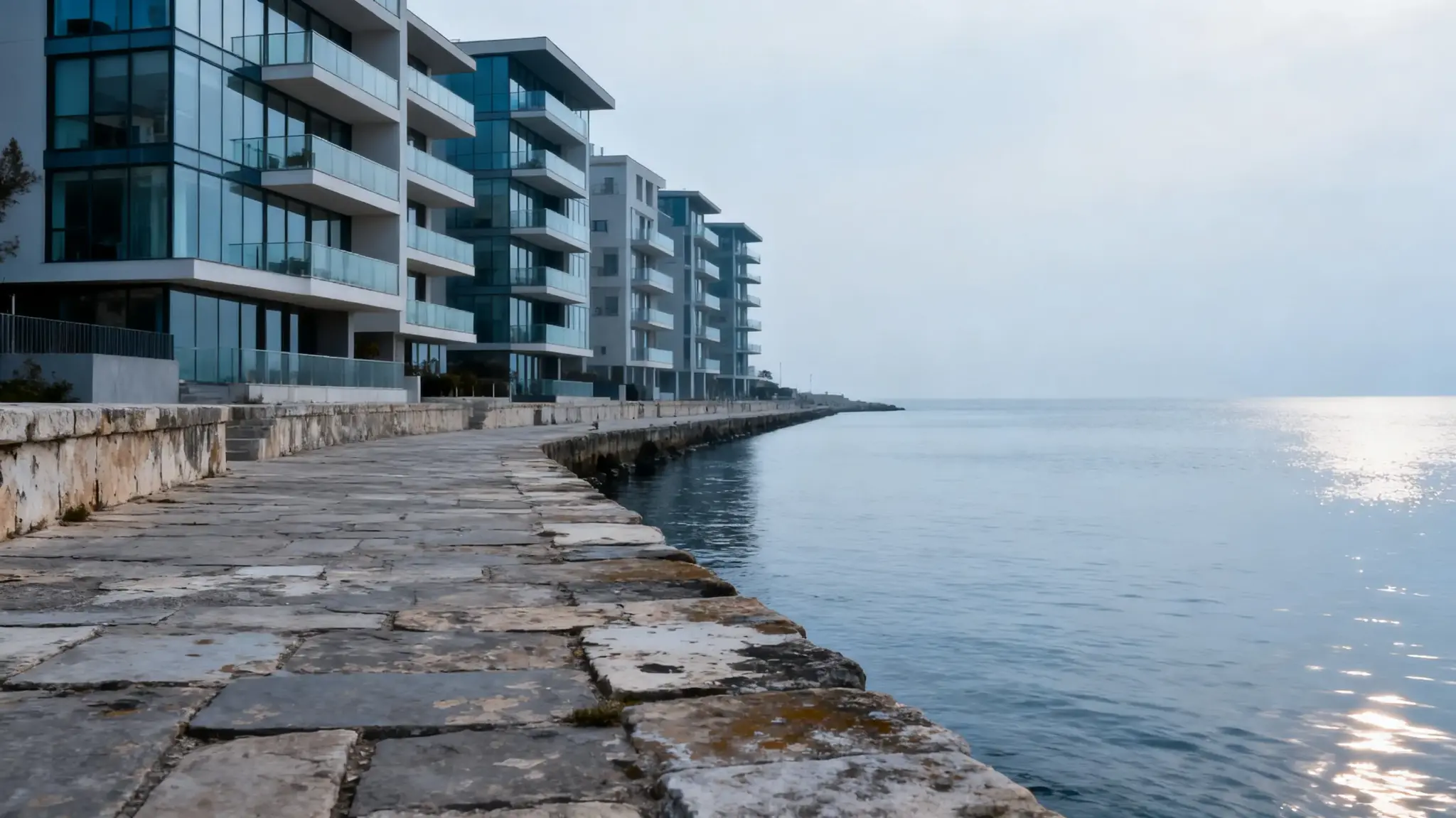
Water is central to the way Bluewaters Island is planned. Many buildings and open spaces are planned to face the waterfront, so the sea becomes part of everyday life. Balconies, terraces, windows, and open walkways support this connection.
A waterfront design also needs comfort. People should be able to pause, walk, sit, and look across the water without feeling closed in. For this reason, shaded paths, open edges, and clear view lines are important design parts.
Pedestrian-Focused Urban Layout
Bluewaters Island gives importance to walking. Wide promenades, open plazas, and connected walkways make movement simple across the island. These spaces keep the ground level active and comfortable, while giving clear access to waterfront areas, shops, and public zones.
The layout is planned so buildings open towards walkways instead of feeling separate from them. Entrances, seating areas, greenery, and public paths are placed close to one another. This makes the island easier to move through and more pleasant at ground level.
Ain Dubai as the Architectural Focal Point
Ain Dubai gives Bluewaters Island a clear centre in its overall design. Its circular shape looks different from the straight lines of nearby buildings, which makes it easy to notice from different parts of the island. The open areas around it also give people enough space to view the structure clearly.
It also makes the island easier to navigate while moving through the area. As a large landmark, it works as a simple reference point near walkways and public spaces. This gives the island a stronger visual identity and connects the skyline with activity at ground level.
Conclusion
The architecture behind Bluewaters Island comes from the way its parts are planned together. The artificial base, mixed-use layout, modern buildings, waterfront edges, walking routes, and central landmark shape the island. Its design is not only about appearance. It shows how a coastal area can be organised so that structure, comfort, views, and movement work in a clear and balanced way.