
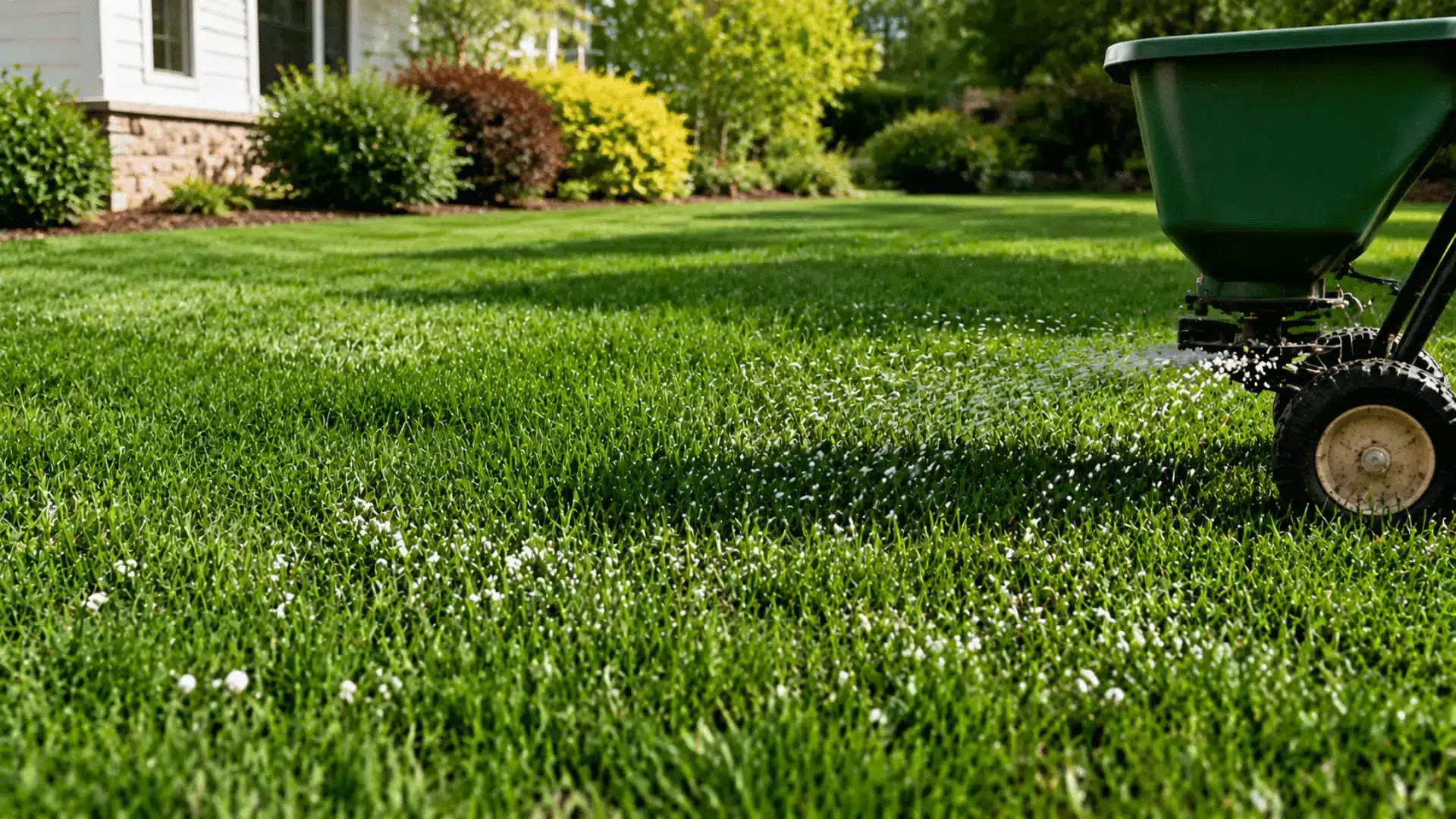
Getting the timing right for when to fertilize your lawn can change everything for your yard, and I will show you the simple steps that matter.
I have seen lawns struggle when fertilizer goes on too early or too late, and you can avoid those mistakes by watching how grass grows.
The right schedule depends on your grass type and local weather, so I will help you understand the signs your lawn is ready for feeding.
Here, I will explain to you when to apply fertilizer with more confidence and keep your lawn healthier through each season using a simple plan.
What Decides When You Should Fertilize Your Lawn?
Your grass type decides when to fertilize, not the month printed on a calendar or the schedule shown on a bag of fertilizer.
Cool-season grass and warm-season grass grow on completely different schedules, so feeding both at the same time can waste fertilizer and give you weaker results.
Where you live also shifts the exact timing, since two lawns with the same grass type can become active several weeks apart because of local temperatures and weather.
A lawn that hasn’t started actively growing yet isn’t ready for fertilizer, no matter what the date on the calendar says or how warm one afternoon feels.
Get the grass type right first, and every other part of your fertilizing schedule, from the first feeding to later applications, will build from that decision.
When to Fertilize Lawn: The Quick Answer by Grass Type
Cool season grasses such as Kentucky bluegrass and fescue need most of their feeding in early fall, from September through October, with an optional light feeding in spring.
Warm season grasses such as Bermuda and zoysia do best with feeding from late spring through midsummer, once the lawn has fully greened up.
In both cases, wait until soil temperature and active growth confirm the lawn is ready before applying anything.
Soil temperature near 55 degrees Fahrenheit is a reliable signal that grass roots are active enough to actually use the nutrients in fertilizer, which is usually reached in March or April for most of the country.
Signs Your Lawn Needs Fertilizer
Even with the right season, your lawn will show you when it’s actually running low on nutrients. Catch these signs early, and a feeding usually turns things around within a couple of weeks:
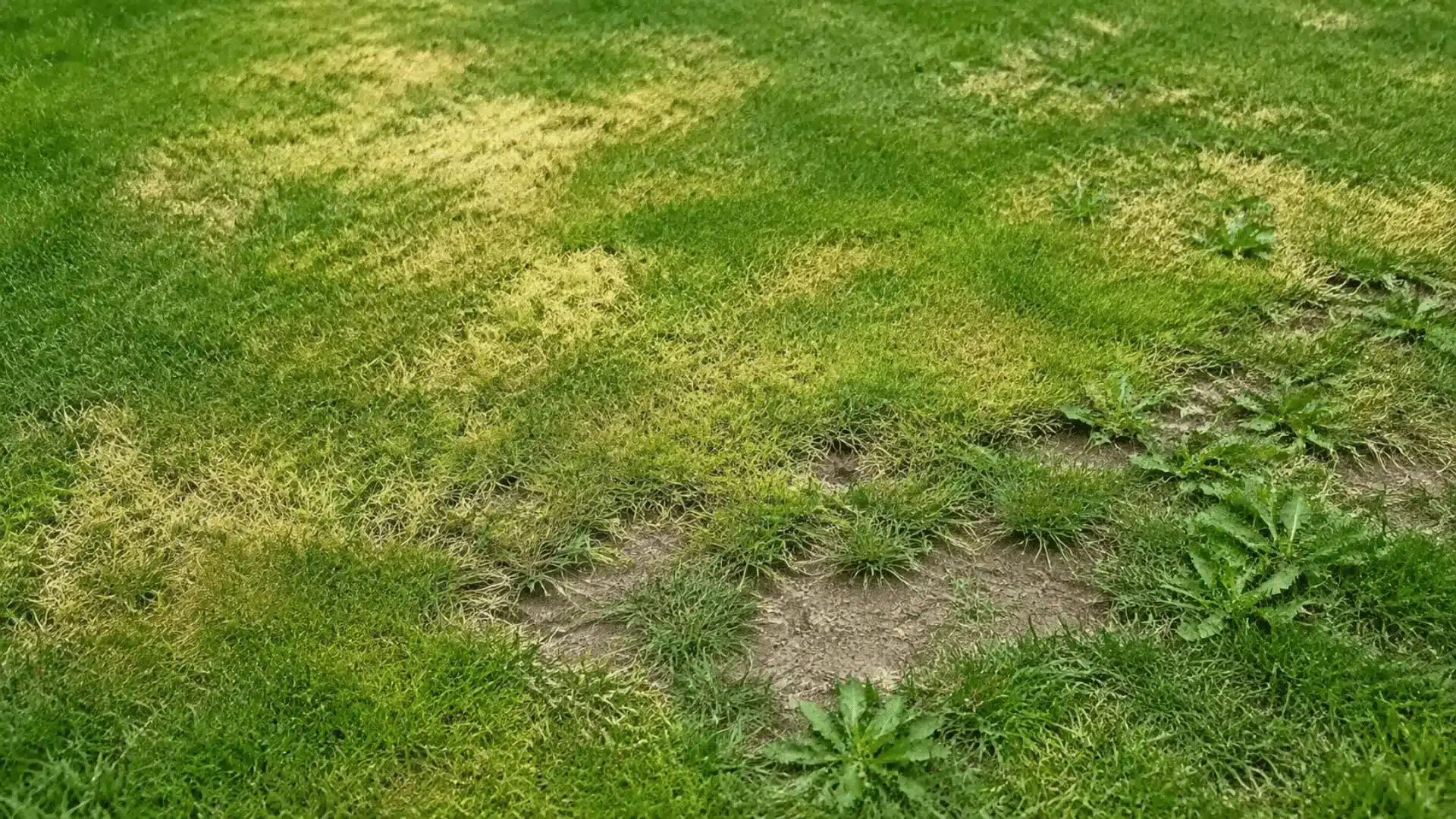
- Yellowing or pale patches: Usually a sign of low nitrogen, even when the grass looks otherwise healthy.
- Thinning or bare spots: These spread slowly across the lawn if left unfed.
- Faster weed spread: Thin grass gives weeds room to take hold.
- Slower recovery: The lawn bounces back more slowly after mowing or foot traffic than it used to.
If your lawn is already showing several of these common lawn problems, waiting too long only makes the recovery slower once you do fertilize.
When to Fertilize Cool-Season Grass?
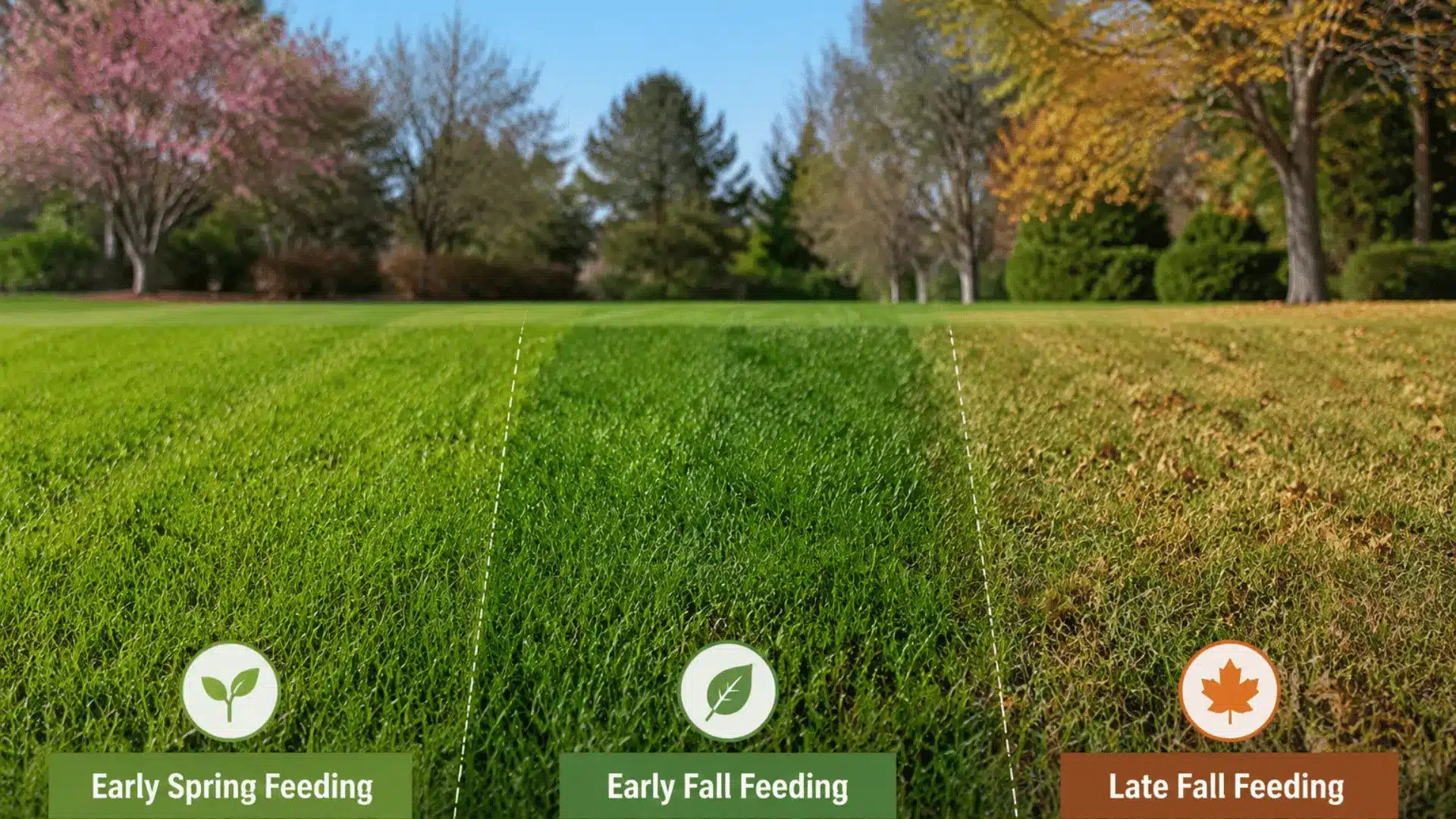
Cool-season grasses like Kentucky bluegrass and fescue follow a schedule built around two seasons, spring and fall, with fall carrying most of the weight.
1. Early Spring Feeding
Give your lawn a light feeding in March or April once it starts turning green after winter, supporting new growth as it wakes up.
Don’t go heavy here, since too much fertilizer this early pushes fast top growth before the roots are ready for it.
This step is optional. Skip it if your lawn already looks strong and go straight to the fall feeding instead.
2. Early Fall Feeding
This is the feeding that matters most for cool-season grass, and it works in a way most people don’t expect.
Grass roots grow best in cool soil, and fall gives them weeks of steady growth before winter shuts everything down. Those roots carry the lawn through winter and fuel the green-up you see next spring.
Michigan State University Extension lists fall as the best window overall, recommends waiting until May if you missed it and need a spring application instead, and warns against fertilizing frozen or waterlogged ground.
Apply fertilizer in September or October for the strongest results.
While you’re out there in fall, it’s also a good time to aerate your lawn, since loosened soil helps roots take in the nutrients you just applied.
3. Late Fall Feeding (Optional)
A light feeding in late fall helps your lawn store extra energy before it goes fully dormant for the winter months. This step isn’t required every year, so skip it if your lawn already looks healthy heading into the cold season.
If you do apply it, keep the amount light since the goal is stored energy, not fresh new growth right now.
When to Fertilize Warm-Season Grass?
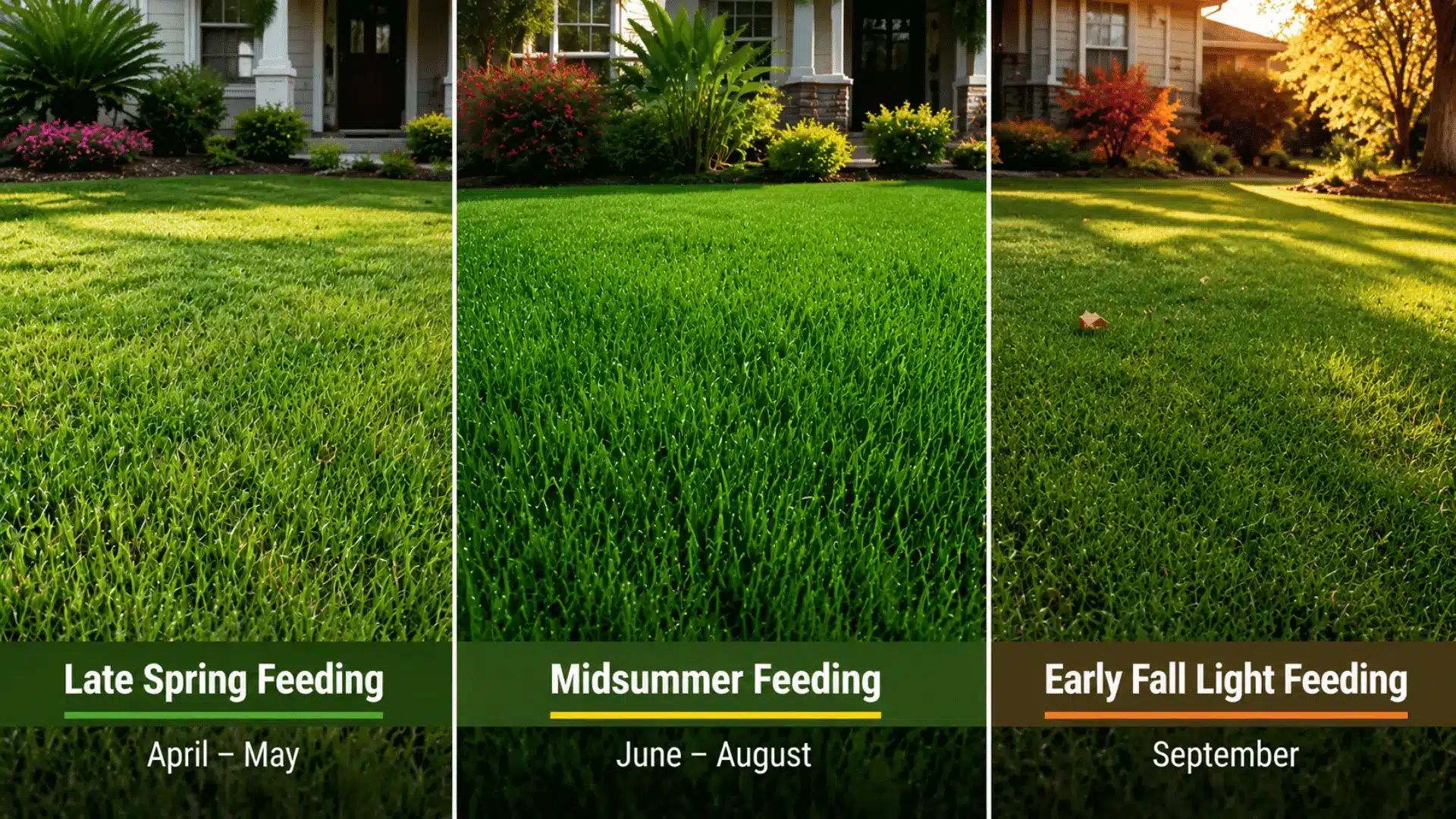
Warm-season grasses like Bermuda and zoysia follow their own clock, built around their peak growing months instead of spring and fall.
1. Late Spring Feeding
Wait until your lawn has fully greened up before applying any fertilizer, usually in April or May, depending on your region.
Feeding too early, while the grass is still coming out of dormancy, wastes fertilizer since the roots aren’t active enough to use it yet.
Full green-up is your signal, not the date on the calendar, so watch the lawn instead of the month.
2. Mid-Summer Feeding
This is the priority feeding for warm-season grass, since growth and heat tolerance both peak together during June through August.
Your lawn can use more nutrients now than at any other point in the year, which is why this window matters most.
Apply fertilizer during this stretch to support the thick, active growth warm-season grass is capable of in real heat.
3. Early Fall Light Feeding
Give your lawn one final light feeding in September, before growth naturally slows down as temperatures start to drop.
This isn’t a heavy feeding. The goal is just to ease the lawn toward dormancy without pushing fresh growth too late.
Skip this step if your region cools down early, since pushing growth right before dormancy can do more harm than good.
How Do You Know When to Fertilize Your Lawn?
Your lawn tells you it’s ready through soil temperature, mowing frequency, and its own stress signals, not through the date circled on a calendar.
In two decades spent tending gardens and lawns across shifting climates, I’ve learned that the soil tells the real story long before the calendar does.
Check the soil temperature first, since your grass type needs warm enough soil to actually use the nutrients you’re giving it.
Notice how often you’re mowing. Regular mowing means the grass is in active growth, not just sitting there dormant.
Look for signs of stress too, like drought or extreme heat, since fertilizing during these periods can do more harm than good.
If your lawn checks all three boxes, it is ready for fertilizer. If not, give it more time and wait until the grass is actively growing before you feed it.
Signs of Over-Fertilizing (And how to Fix It)
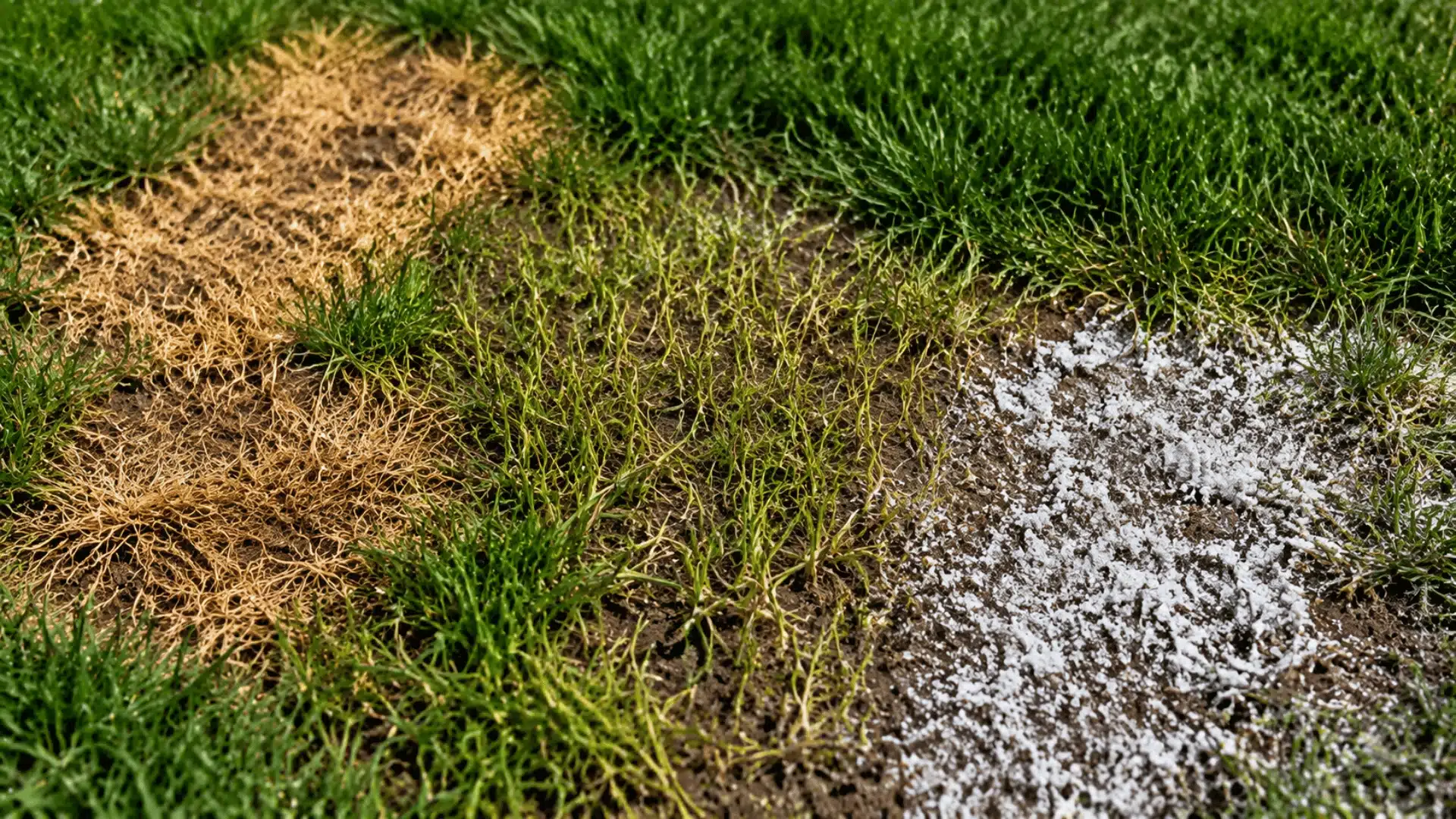
Too much fertilizer can damage your lawn faster than using too little, especially when excess nutrients build up and start stressing the grass. Watch for:
- Burned-looking patches: Yellow or brown areas form when too much nitrogen sits in the soil and pulls moisture away from the grass roots.
- Growth that collapses: Grass grows quickly at first but then becomes thin, weak, and unable to maintain healthy growth.
- A white or gray soil crust: This forms when excess fertilizer salts collect on top and start affecting the soil around your grass.
If you notice these signs, stop fertilizing right away and water deeply to help move the excess nutrients through the soil and away from the root zone.
A Cornell University horticulture professor interviewed by Consumer Reports puts it simply: most lawns do best with no more than two feedings a year, timed to when the grass is growing more roots than blades.
How Often to Fertilize and the Best Time of Day?
Most lawns do best with 3 to 4 feedings a year, spaced roughly 6 to 8 weeks apart. Cool-season grass usually gets fed in spring and fall, while warm-season grass gets fed through spring and summer.
Stick closer to 3 feedings if you’re using a slow-release fertilizer, since it keeps feeding the soil longer between applications.
This Old House recommends roughly 1-2 pounds of nitrogen per 1000 square feet each year, split between a spring and a fall application, which lines up closely with the schedule above.
Once you’ve picked the day, apply fertilizer in the early morning or early evening, never during peak afternoon heat.
Feeding during the hottest part of the day can scorch your grass and waste the nutrients before roots absorb them.
Tips for Keeping Your Lawn Fertilizing Schedule on Track
A few small habits make it easier to stay consistent with fertilizing, without turning it into extra work each season.
- Keep a simple log: Track when you feed your lawn each season so you’re not guessing next year, and check your fertilizer shelf life before using leftover bags.
- Water lightly after fertilizing: This helps nutrients reach the roots. Otherwise, they sit on the surface and go to waste.
- Avoid fertilizing before a heatwave or storm: Both conditions waste product fast. They also stress the grass right when it’s vulnerable.
- Stick to your grass type’s schedule: Consistency matters more than chasing a perfect date. Year after year, this builds a stronger lawn.
- Check your mower blade height: Cutting too short stresses the grass. This happens right when it needs to recover the most.
Follow these habits and your lawn stays on track, even if the exact dates shift from year to year.
Conclusion
Getting your lawn fertilizer timing right comes down to watching your grass, and I hope you now feel ready to make better choices each season.
I have found that a simple schedule works best when you pay attention to growth, soil conditions, and the signs your lawn shows before feeding.
Your grass does not need guesswork, and you can keep it healthier by following the right fertilizer routine instead of relying only on dates.
I recommend checking your lawn regularly, adjusting as needed, and starting your next fertilizing step today to give your grass the care it needs. Start with these tips today.
Frequently Asked Questions
What Months Should You Not Fertilize?
Avoid fertilizing during dormancy, which falls in peak summer heat for cool-season grass and winter for warm-season grass. Extreme heat or drought also makes poor timing, since the lawn can’t use the nutrients, and fertilizer may stress the grass instead of helping it.
Should You Fertilize Before or After It Rains?
Fertilize before light rain when you can, since it helps carry nutrients into the soil without washing them away. Avoid applying right before heavy rain or storms, since runoff can waste the fertilizer before your lawn absorbs it. If the rain has just passed, wait until the soil drains first.
What Month Should You Start Fertilizing?
The starting month depends on your grass type. Cool-season lawns usually start in March or April as growth resumes after winter. Warm-season lawns start once full green-up happens, typically in April or May. Watching your soil and mowing needs works better than following the month alone.