

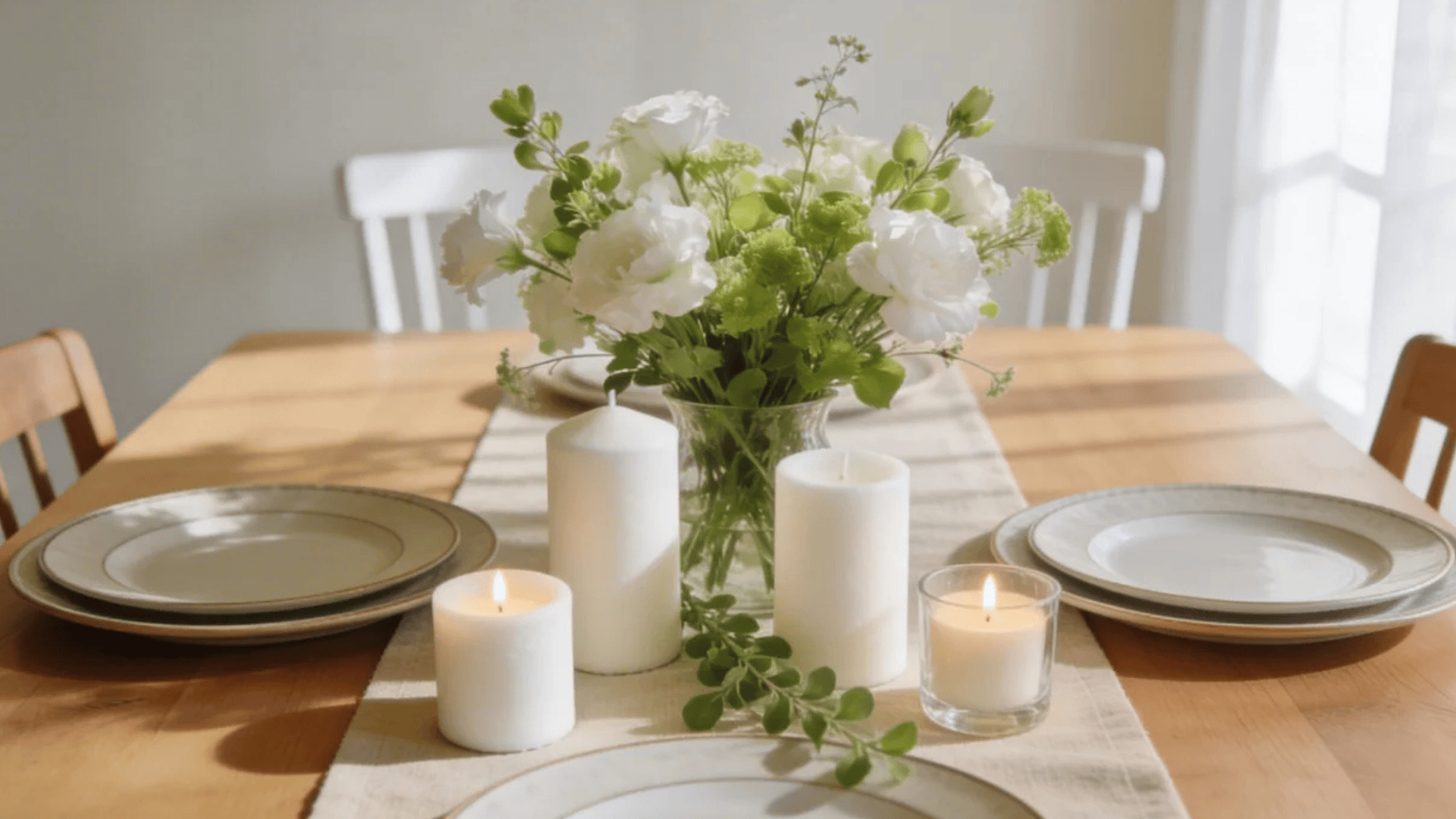
Your dining table is one of the hardest-working surfaces in the house, and the centerpiece sitting at its middle does more design work than most people give it credit for.
After years of helping clients style their homes, I can tell you that a well-chosen centerpiece is one of the fastest ways to make a room feel genuinely designed rather than just furnished.
It doesn’t require a large budget or a full room refresh.
It requires the right object, the right scale, and a clear understanding of how you actually use the table every day.
In this guide, you will find ideas ranging from the truly effortless to the quietly crafted, organized to help you find what works for your table shape, your style, and the occasion you’re styling for.
Why Your Centerpiece Matters More Than You Think?
A centerpiece sets the visual balance of the entire dining area. I have seen well-designed rooms still feel off just because the table center was ignored.
Sometimes it was empty, sometimes overcrowded, and sometimes just the wrong size for the table.
The centerpiece acts as a focal point. It connects colors, textures, and the overall feel of the room in a simple way. Different choices create different moods. Candles bring warmth and a calm feel.
Fresh flowers add softness and life. A wooden tray with layered pieces gives a grounded, natural look.
The best part is how easy it is to update. It costs little but changes the whole space. You can also switch it by season without changing anything else.
Quick-Reference Guide: Centerpiece by Table Shape & Occasion
Choosing the right centerpiece depends on your table shape and how you use the space. A simple match makes styling easier and keeps the table balanced for daily meals or special gatherings.
| Table Shape | Best Centerpiece Format | Everyday Use | Dinner Party |
|---|---|---|---|
| Long rectangular | Linear tray arrangement, candle row, trailing vine planter | Simple tray with 2–3 objects | Full candle row or floral runner |
| Round | Single statement piece — vase, lantern, or bowl | Fruit bowl or small potted plant | Pillar candle cluster or floral dome |
| Square | Grouped objects in odd numbers (3 or 5) | Trio of bud vases or candle holders | Terrarium, geometric vase trio, or lantern |
| Oval | Low elongated arrangement — similar to rectangular logic | Low wooden tray or herb planter | Mixed-height candle grouping |
Dining Table Centerpiece Ideas for Any Time of Year
From two-minute fixes to weekend projects, these centerpiece ideas cover every style, budget, and season, so your table always looks like you put thought into it.
1. Simple Bowl of Fresh Fruit
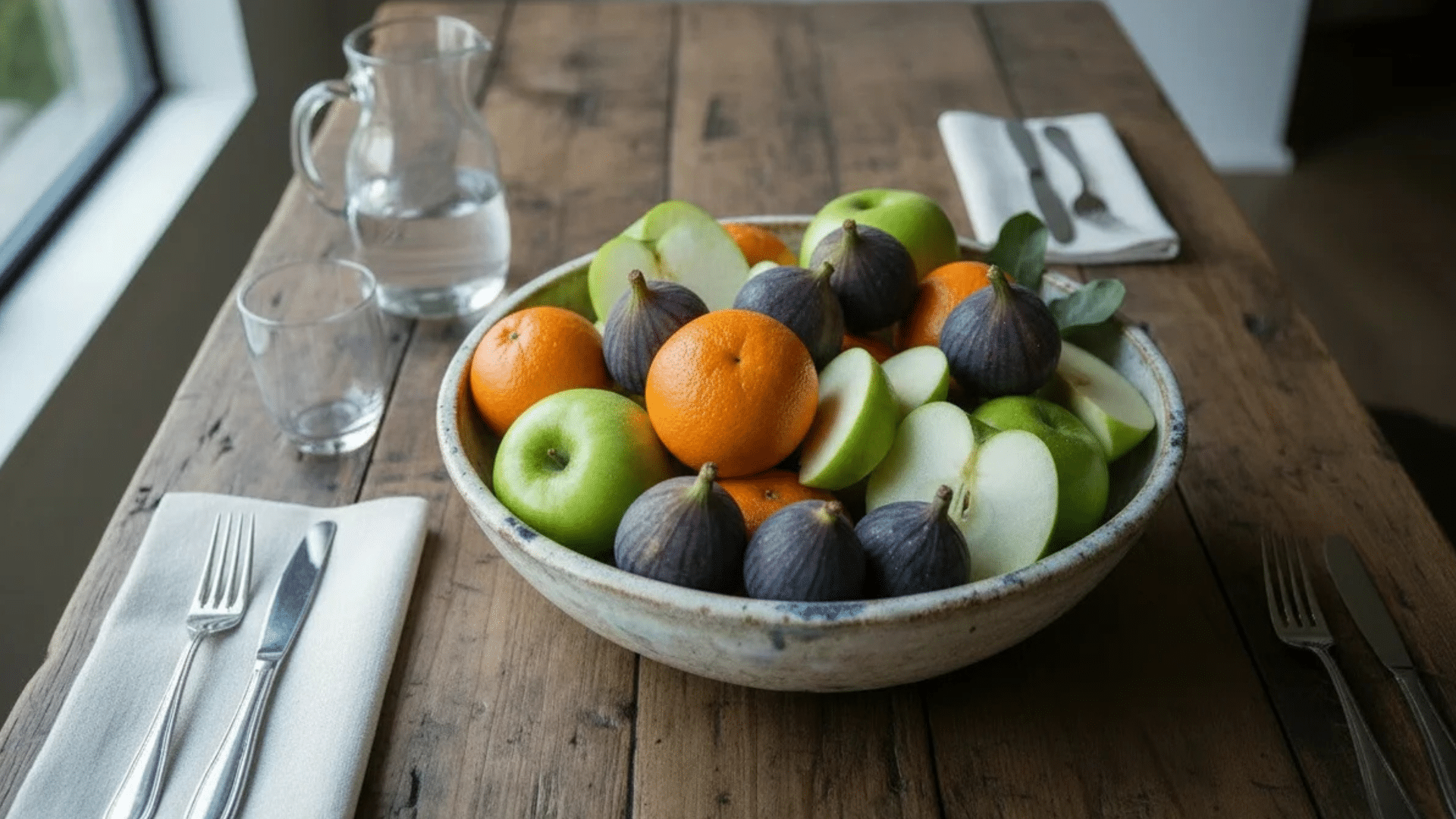
I keep a wide ceramic bowl on my dining table year-round and rotate what goes in it by season: blood oranges in winter, figs and plums in late summer, green apples and pears through autumn.
It costs nothing extra since I’m buying the fruit anyway.
The trick is using a bowl that’s slightly too large for the amount of fruit, so pieces aren’t stacked but rather spread out.
A mix of sizes and colors does more visual work than a single fruit type, and the bowl itself becomes part of the display.
2. Single Statement Vase
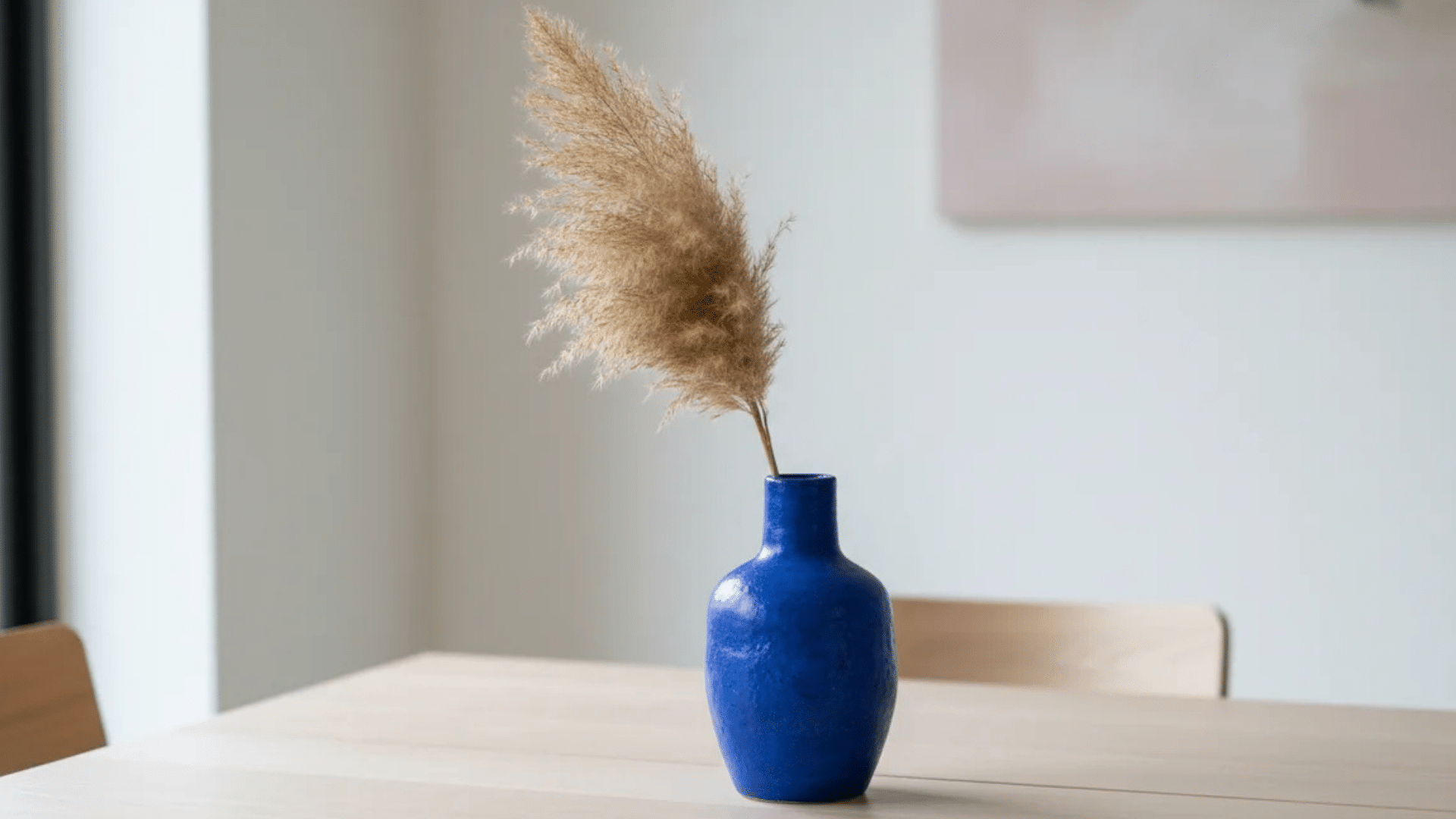
One well-chosen vase can anchor a table more confidently than a crowded arrangement.
Look for a piece with genuine character, a hand-thrown ceramic with an uneven glaze, a tall bottle-neck vase in deep cobalt, or a squat stoneware form with visible thumb marks from the maker.
Drop in a single oversized stem, a bundle of dried grasses, or leave it bare entirely. The vase does the work.
Scale matters: a vase that’s too small for the table reads as an afterthought, while one that’s too tall blocks conversation across the table.
3. Minimalist Taper Candles In a Row
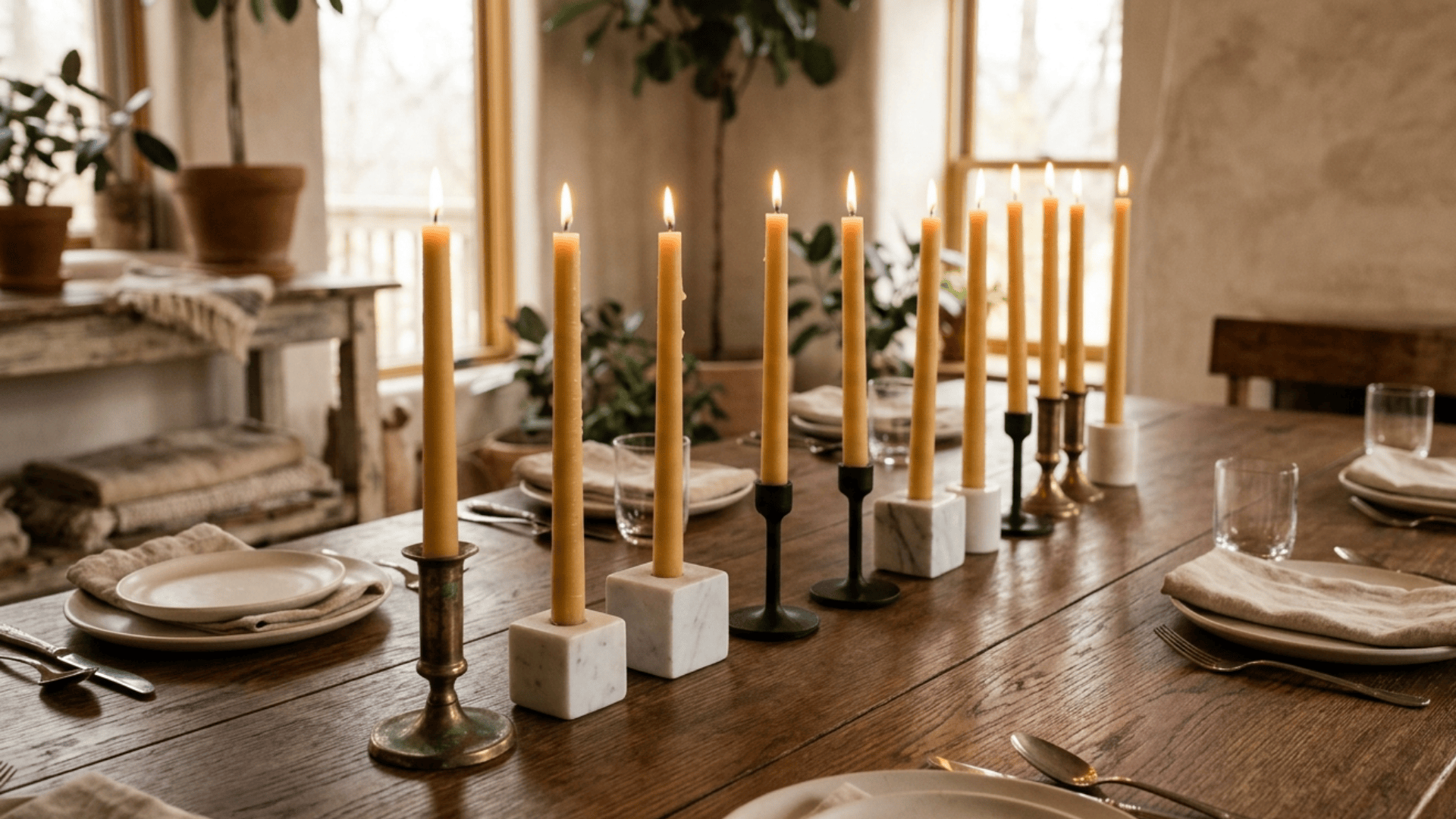
A straight row of taper candles in mismatched holders, all burning the same candle color, has a ritualistic, almost altar-like quality that feels both modern and ancient.
Brass, marble, and black iron holders all work without competing when the candles themselves are uniform. This format suits long rectangular tables especially well, pulling the eye down the full length of the surface.
Choose unscented candles for the table so they don’t compete with food aromas.
Beeswax tapers burn significantly slower and drip less than standard paraffin, which makes them worth the slightly higher price for dinner gatherings.
4. Small Potted Herb Garden
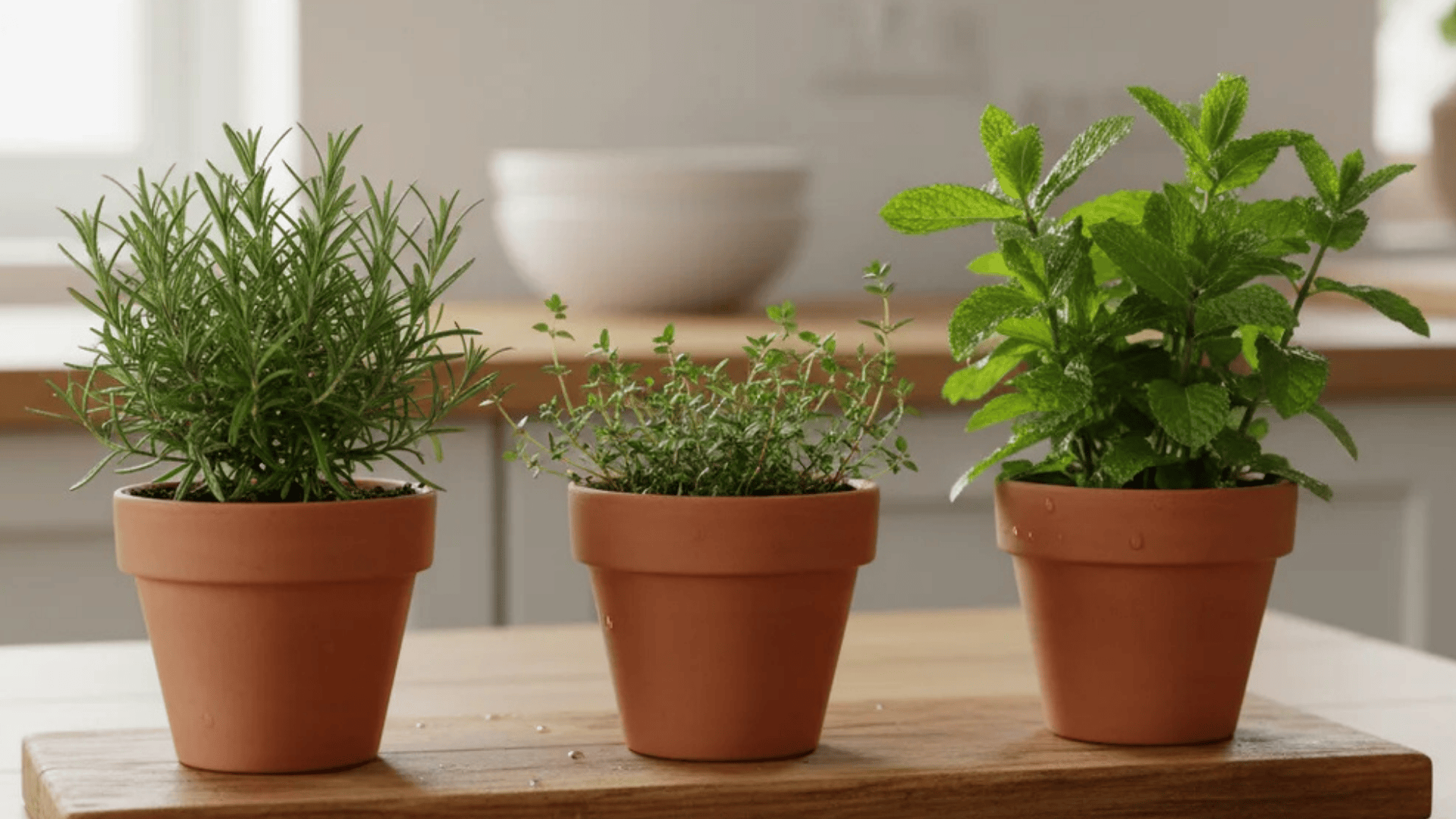
My friend set up a trio of potted herbs on her kitchen table last spring and ended up leaving it there permanently: rosemary, thyme, and a trailing oregano in terracotta pots on a narrow wooden board.
What started as a temporary centerpiece became a functional part of her cooking. She pinches directly from the pots while prepping meals.
For fragrance and a bit of visual softness, mint is a strong addition to any herb grouping.
Keep pots within a close height range so the display reads as a cohesive unit. The narrow wooden board underneath makes it easy to lift the whole arrangement off the table when needed.
5. Wooden Tray with Layered Décor
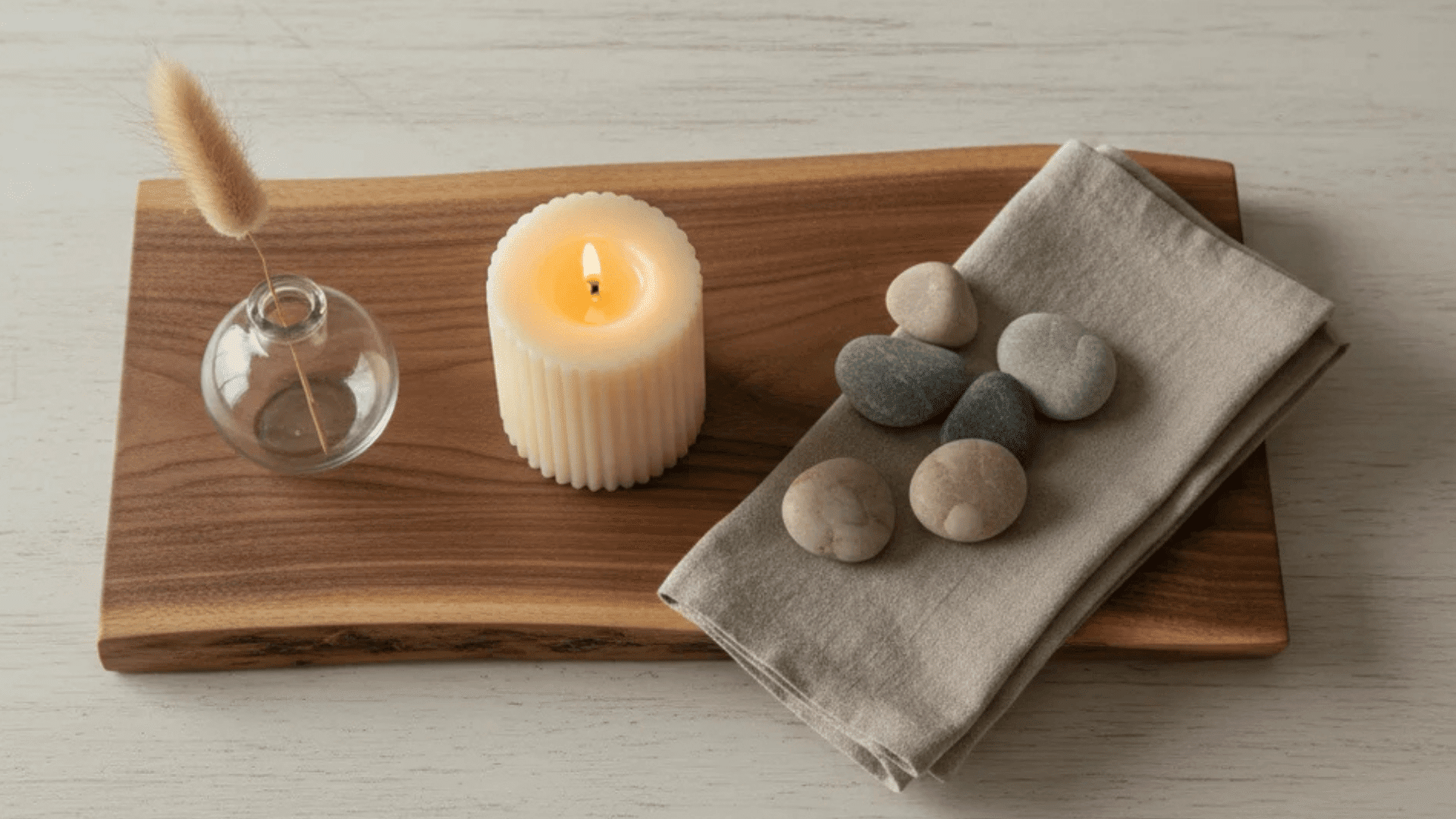
A tray gives any centerpiece arrangement a defined footprint, which prevents it from spreading and looking messy.
Start by placing your tallest item, a candle, a small bottle vase, or a plant, slightly off-center.
Then fill in around it with lower objects: a smooth stone, a folded cloth napkin, a small bowl of nuts or dried botanicals.
The layering principle is simple: tall at the back or center, low and loose at the front and sides. Acacia and walnut trays both age well and develop more character with use, unlike lacquered or painted alternatives.
6. Pillar Candles on a Mirrored Tray
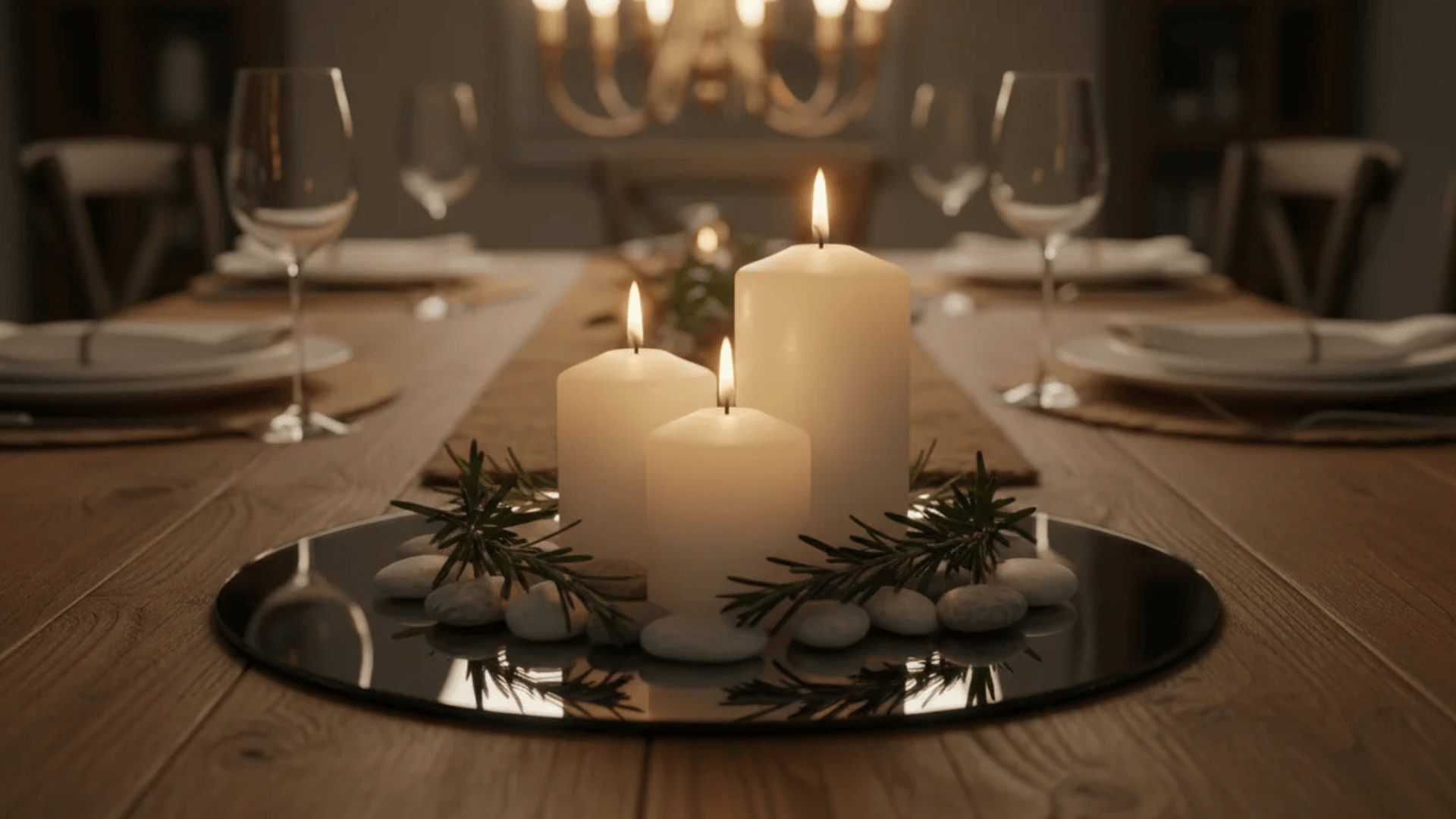
You can put together this exact setup for a dinner party two years ago using a mirrored tray from a home goods clearance shelf and three white pillar candles in graduated heights.
The reflection doubled the candlelight, changing the whole table.
Tuck a few sprigs of rosemary and some small smooth pebbles between the candles to fill the space without cluttering it. The total cost was under ten dollars.
Mirrored trays pick up the colors around them, so they shift naturally with the seasons, depending on what else is on the table.
7. Cluster of Mismatched Candle Holders
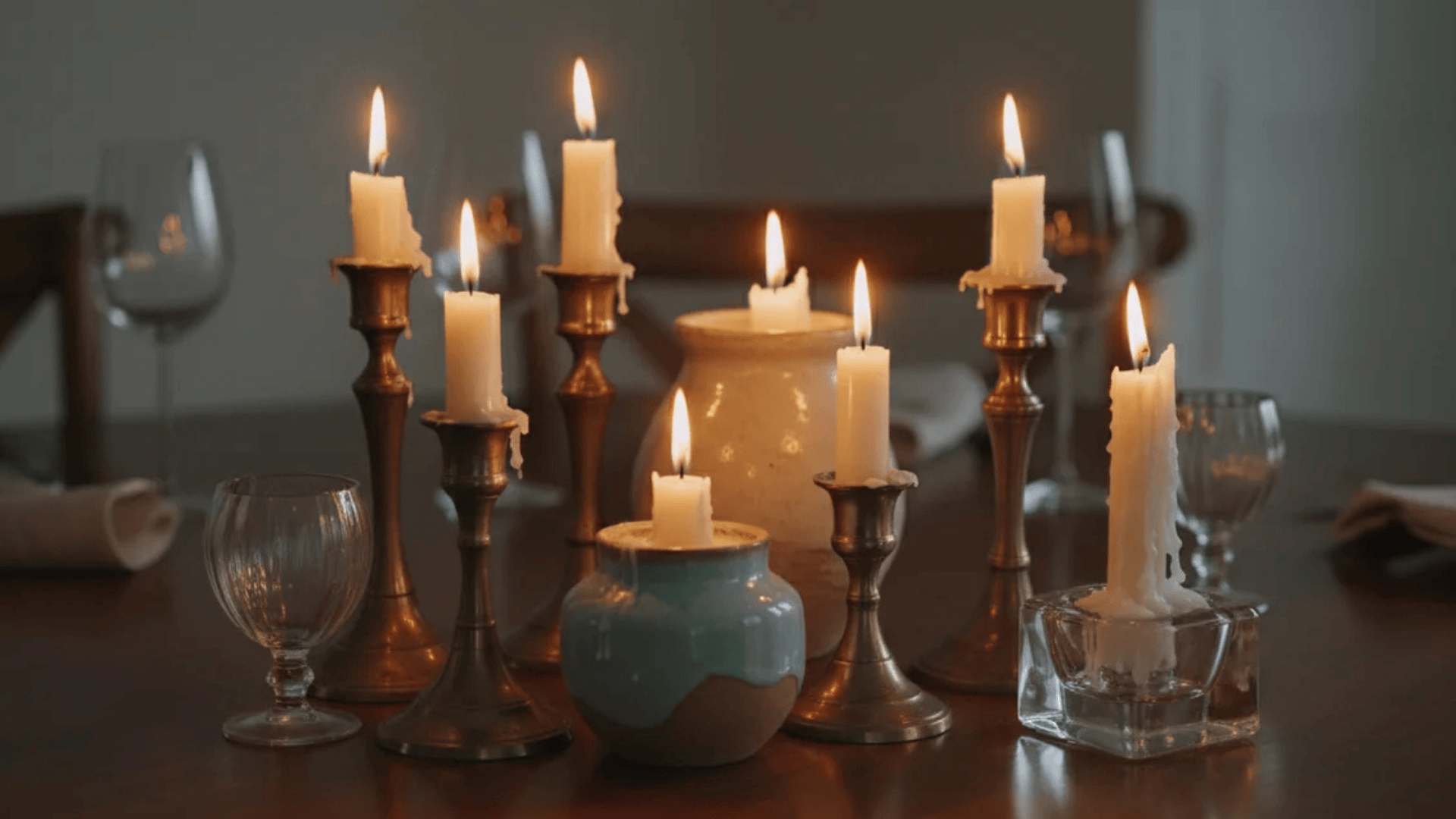
The secret to making a mix of mismatched candle holders look collected rather than random is choosing one unifying candle color across all of them.
The holders themselves, brass thrifted pieces, a squat ceramic, tall glass votives picked up at a market, can vary freely in material and height.
Group them in odd numbers: three, five, or seven feels more natural than four or six.
Arrange them in a loose triangle rather than a straight line to give the group depth. This is a centerpiece that improves the more eclectic it gets.
8. Lanterns with LED or Real Candles
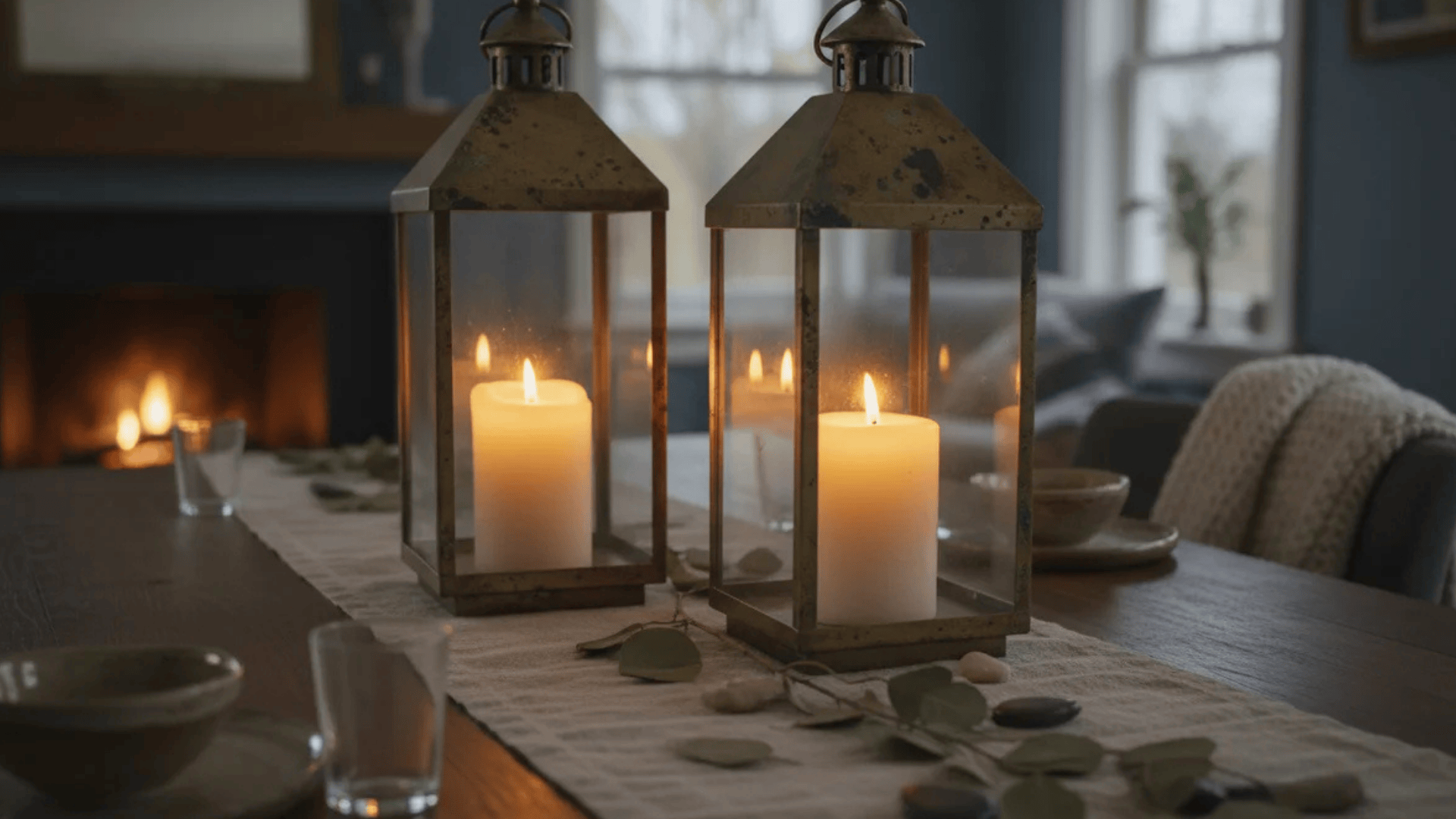
A lantern does something other centerpiece formats can’t: it frames the light source and creates a sheltered, intimate glow.
Two matching lanterns at either end of a long table draw the eye along the full length, while a single oversized one centered on a round table anchors the space naturally.
For outdoor dining or homes with young children, high-quality LED candles with a real-flame flicker setting are genuinely convincing and far safer.
For indoor formal occasions, a real pillar candle inside a lantern adds warmth that no LED can fully replicate. Black iron and aged brass lanterns suit the widest range of table styles.
9. Floating Candles in a Glass Bowl
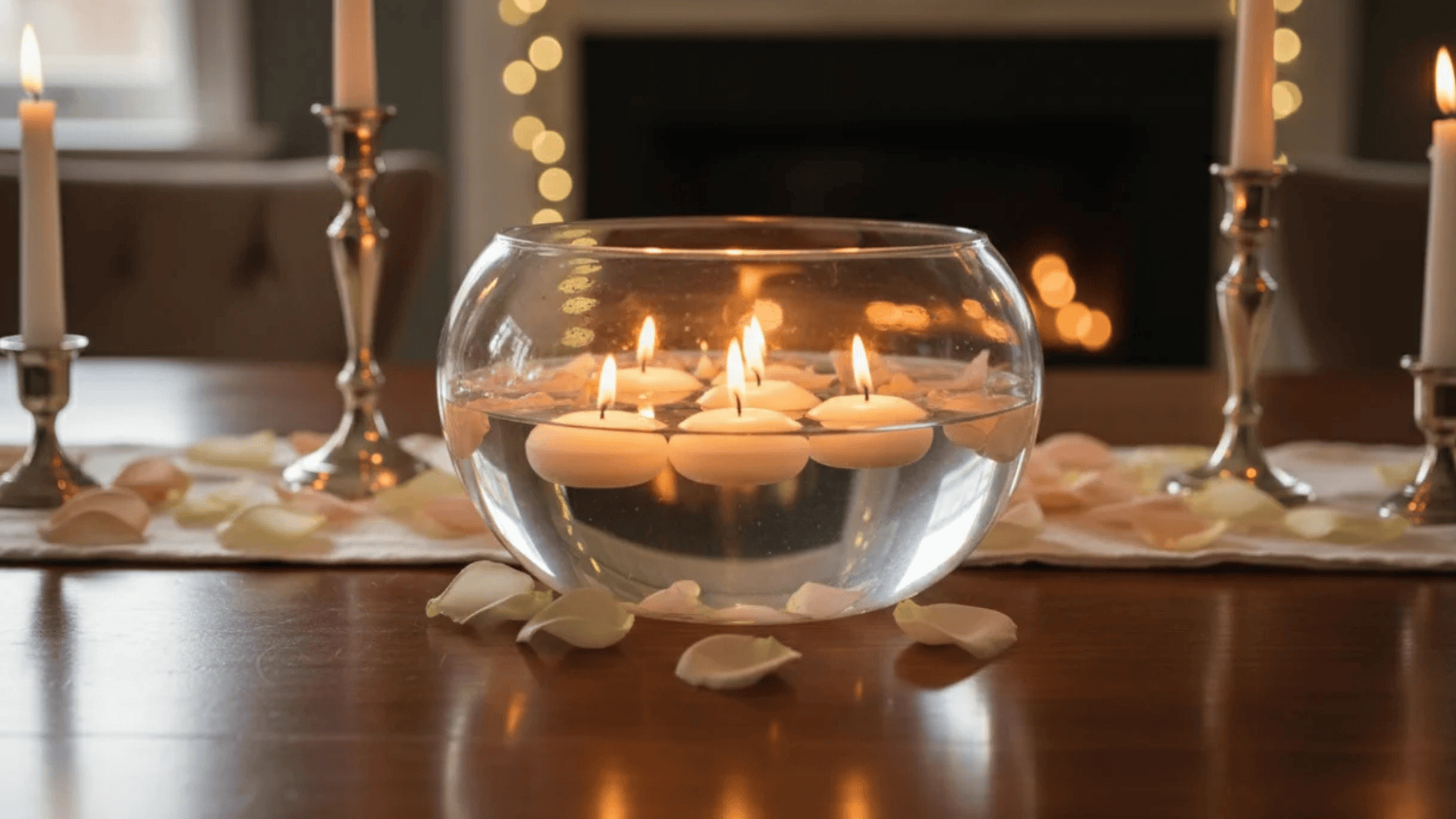
I first tried this for a late-autumn dinner when I had almost nothing in the house.
A large glass bowl, three floating candles from the grocery store, and a handful of rose heads plucked from a bouquet past its prime.
The petals floated around the candles, and the whole thing looked intentional and composed.
Adding a few drops of food coloring to the water is worth trying: deep burgundy for winter, pale blue for summer evenings.
The bowl should be at least 10 inches wide for the candles to float freely without clustering.
10. Classic Floral Arrangement in Mason Jars
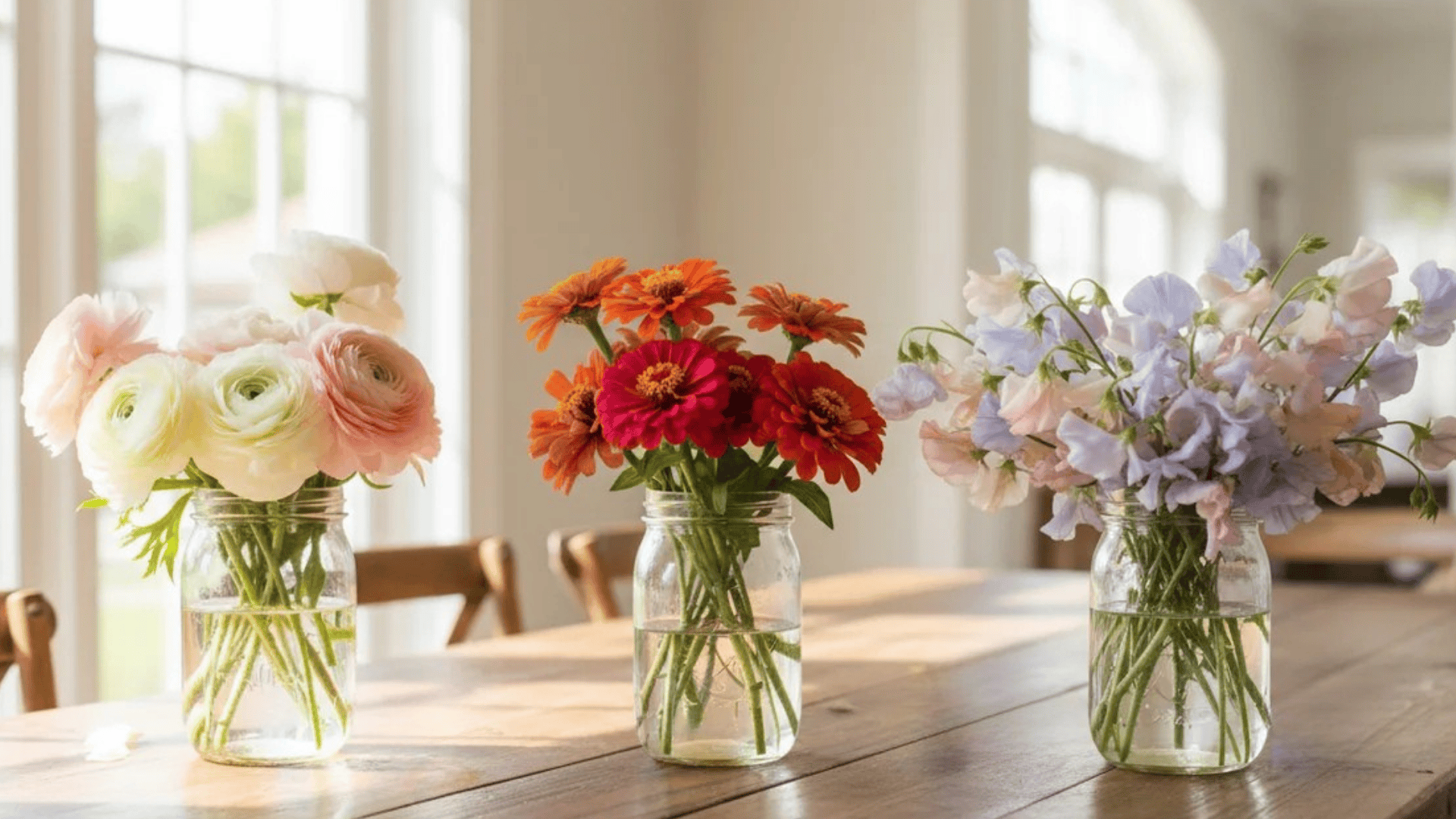
Mason jars work as vases because the utilitarian vessel keeps the focus entirely on the flowers.
A loose handful of mixed garden blooms, ranunculus, cosmos, zinnias, and sweet peas dropped in without fuss looks more alive than a tightly structured florist arrangement.
Trim stems to different lengths so the flowers sit at varied heights inside the jar.
For a more layered table display, line up three jars of different widths down the center of a long table, each holding a different flower type but sharing a common color family.
Change the water every two days to extend the life of the blooms.
11. Eucalyptus and Wildflower Bundle
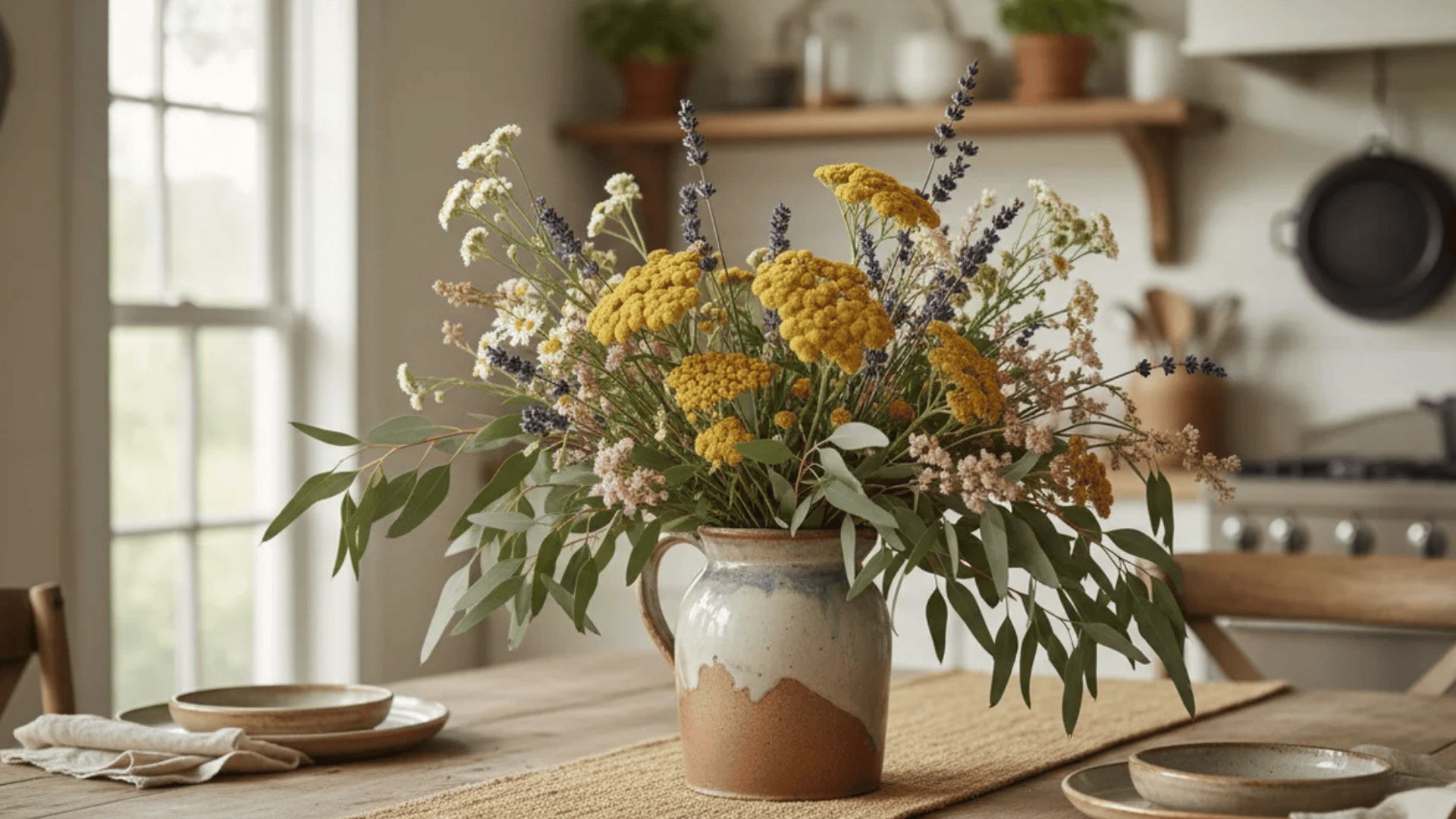
Eucalyptus bought from a florist or farmers’ market lasts for weeks, either fresh in water or dried upright in an empty vase.
Pairing it with wildflowers, dried yarrow, fresh chamomile, statice, or lavender adds color without pulling the arrangement away from its loose, foraged character.
The silver-green of eucalyptus leaves pairs well with dusty pink, yellow, and white tones.
Place the bundle in a stoneware jug, an enamel pitcher, or a wide-neck bottle rather than a formal vase so the relaxed quality of the arrangement carries through to the vessel. The fragrance is a genuine added benefit at the table.
12. Single Large Bloom in a Bud Vase
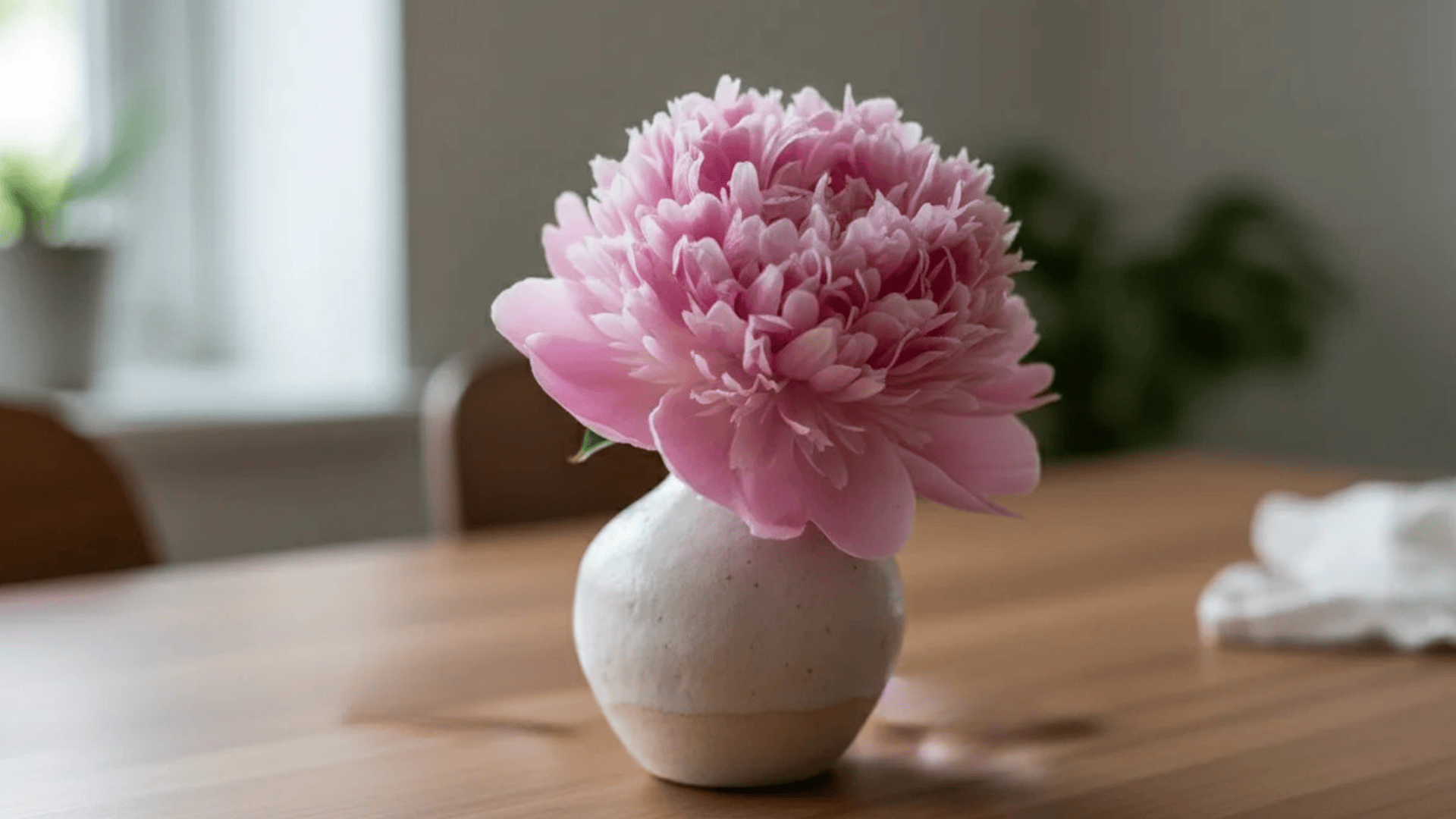
There’s a confidence in placing one flower on a table and leaving it at that. I started doing this after buying a single peony from a flower stall and realizing it needed absolutely nothing around it.
A fat peony, a wide-open garden rose, a dahlia in full bloom, or a protea with its alien geometry, each one holds attention on its own.
The bud vase matters too: a handmade ceramic with visible texture suits garden flowers, while a slim glass tube looks sharper with architectural stems like agapanthus or allium.
Three bud vases grouped, each with a different bloom, also works beautifully.
13. Trailing Ivy or Vine in a Long Planter
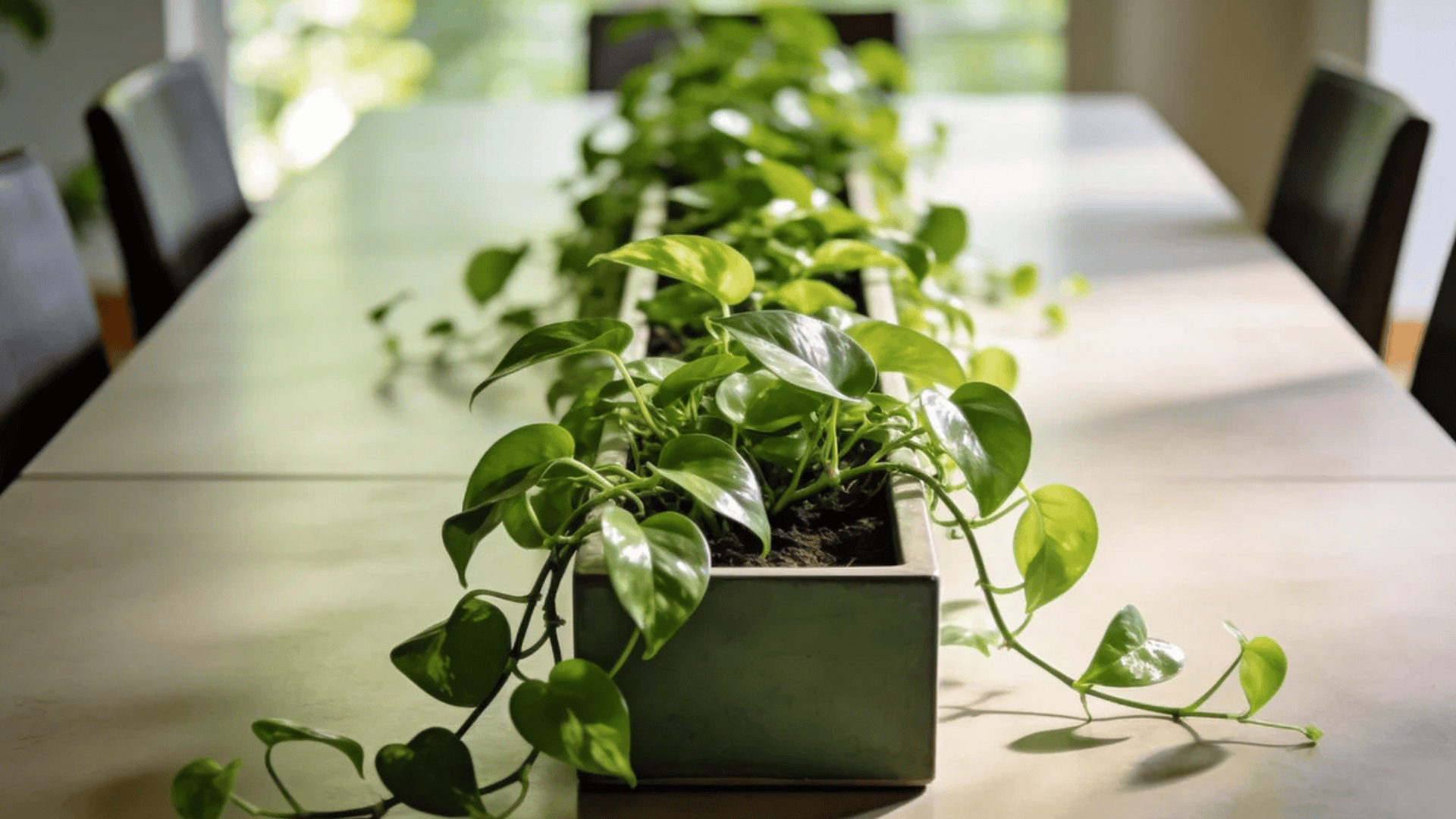
A narrow rectangular planter running down the center of a dining table, filled with trailing pothos or English ivy, functions like a living runner.
The vines spill naturally over the sides, creating an organic, untamed quality that cut flowers can’t match.
Pothos is particularly forgiving; it tolerates low light, irregular watering, and dry indoor air better than most houseplants.
For a mixed display, tuck a small taper candle or a bud vase into the planter between the plants. The trailing effect is more pronounced on longer tables, where the vines have more visual space to spread across.
14. Pumpkin and Gourd Cluster for Fall
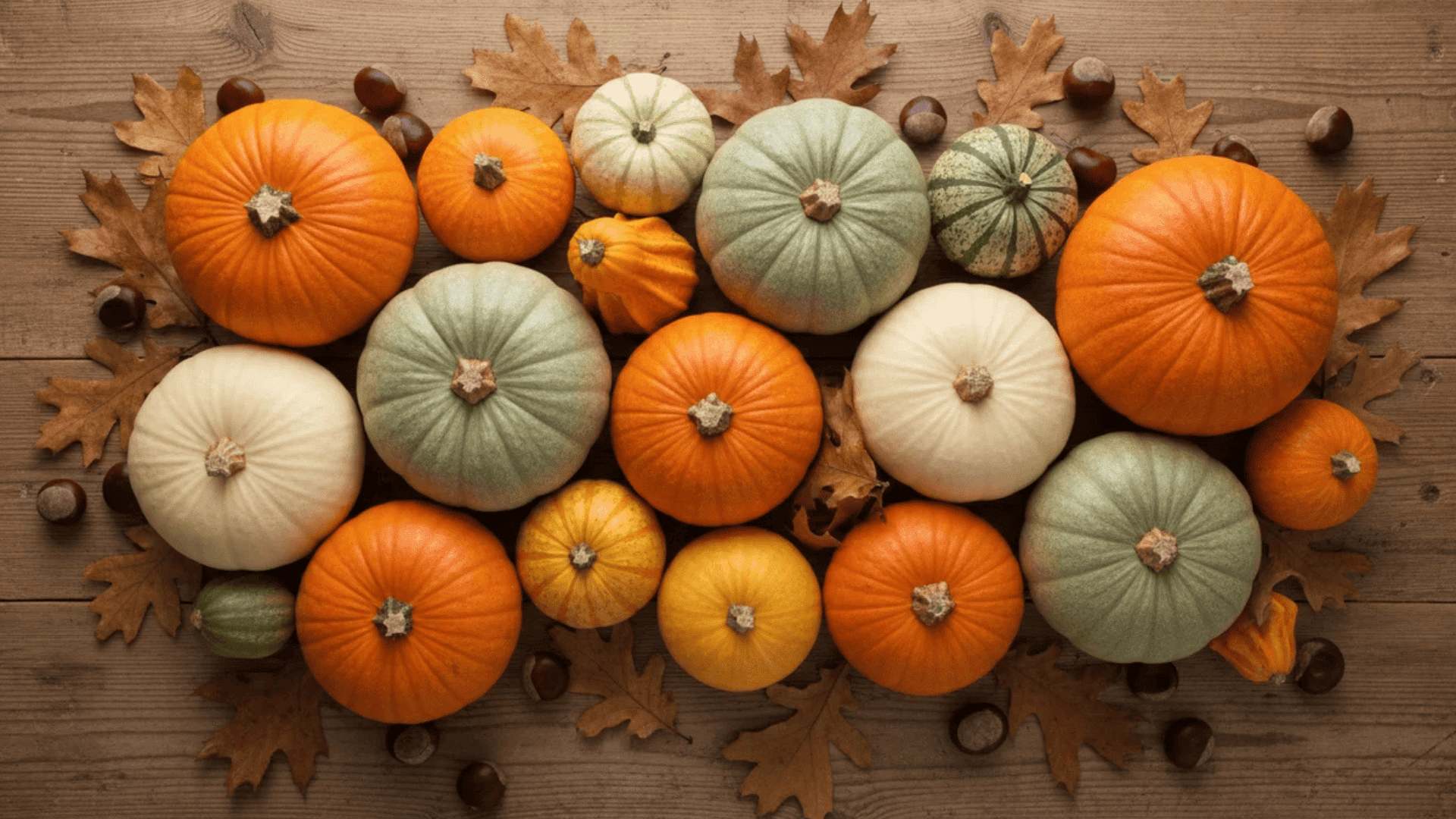
The best fall centerpieces lean into the fact that gourds are already decorative objects, no vase, no arrangement skills, no water required.
Group an odd number of pumpkins and gourds in a mix of sizes: one large, two medium, and two or three small ones. The variety found at farmers’ markets in late September is far wider than in grocery stores.
Look for the pale-warted Hubbard types, the flat Cinderella pumpkin, and small black gourds alongside the standard orange.
Nestle in a few dried oak leaves, some bittersweet vines, or a handful of chestnuts to finish the cluster at ground level.
15. Pine Cones and Holly for the Holidays
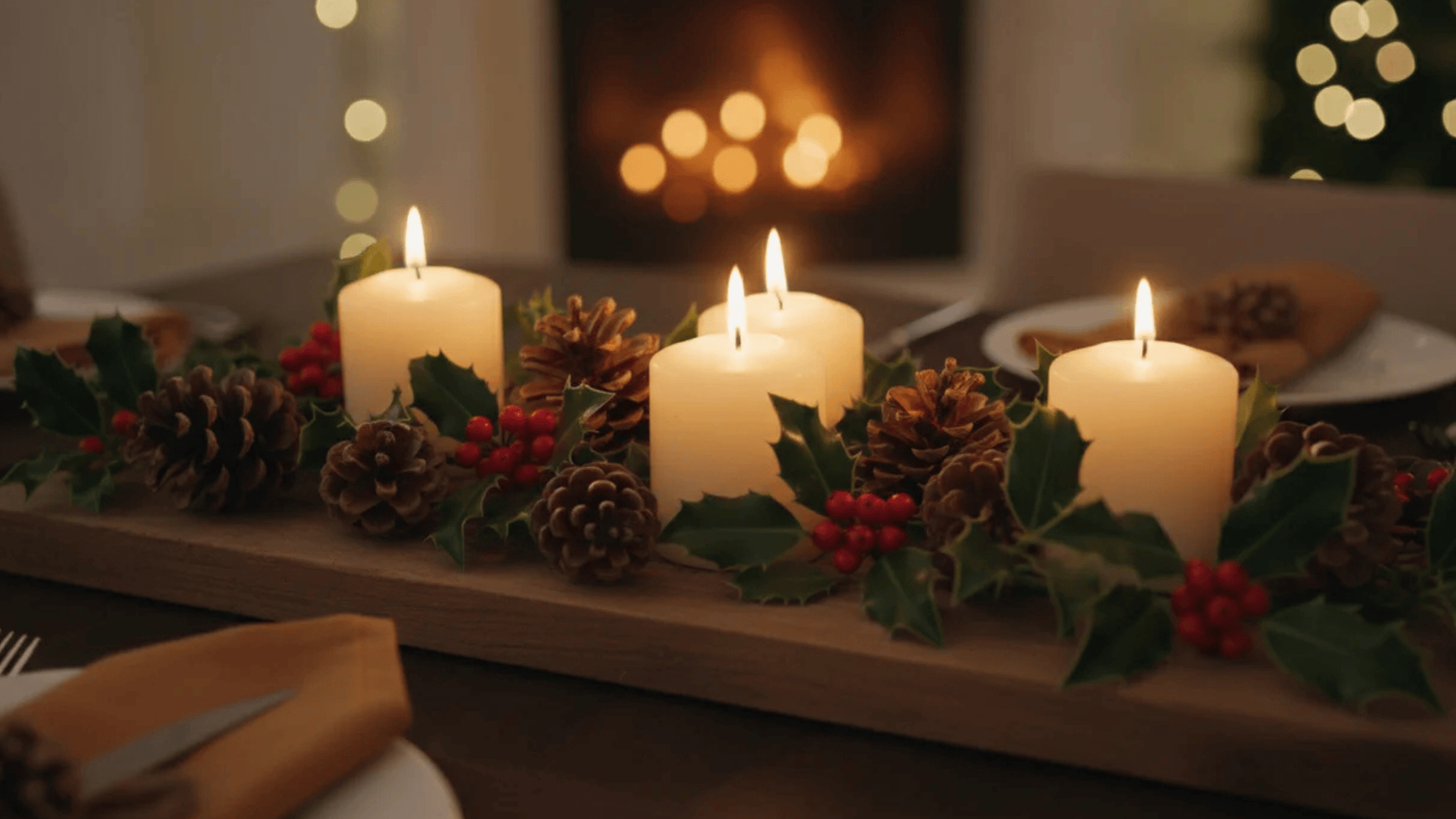
A low tray or wooden board, scattered with pine cones, holly sprigs, and a few short pillar candles, conveys all the classic holiday signals without tipping into excess.
Collect pine cones from outside and give them a light spray of gold or silver paint on just the tips for a subtle festive touch.
Painting them entirely looks cheaper than leaving them natural. Fresh holly berries add vivid red without any additional decoration needed.
If real holly isn’t available, dried rosehip branches read similarly and last longer. For a quieter holiday palette, swap red holly for white ilex berries and ivory candles.
16. Pastel Eggs and Moss for Spring
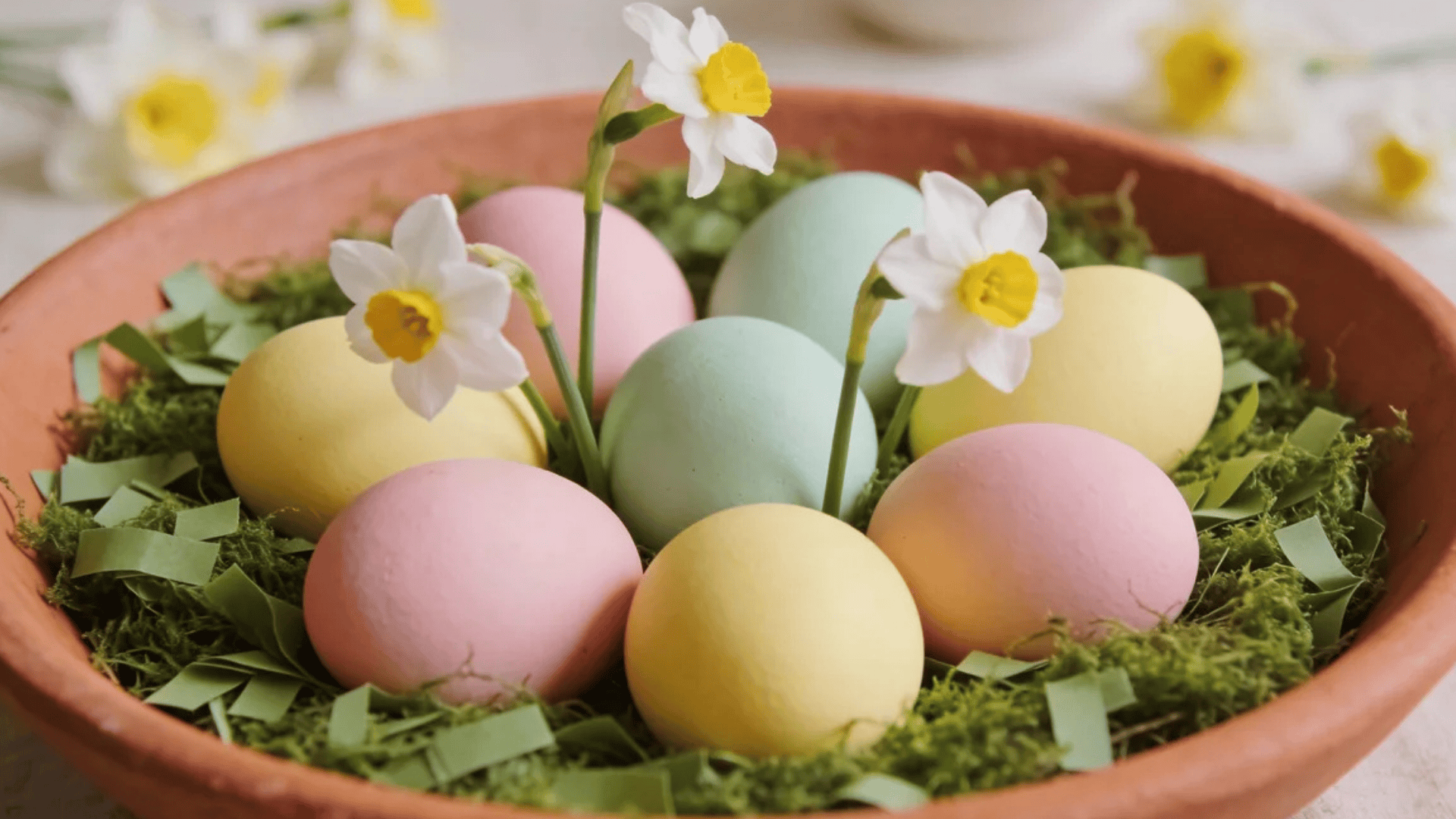
I put this together one Easter using a bag of sheet moss from a craft store, a shallow terracotta dish, and a mix of dyed eggs in blush, sage, and pale yellow. The whole thing took about eight minutes.
The moss stays fresh for several days when lightly misted with water, and the eggs can be real or ceramic, depending on how long you want them to last.
Add a few small narcissus stems directly into the moss to add height, and they stayed upright just from the density of the moss. It’s the kind of centerpiece that looks effortful when it genuinely isn’t.
17. Coastal Shell and Driftwood Display for Summer
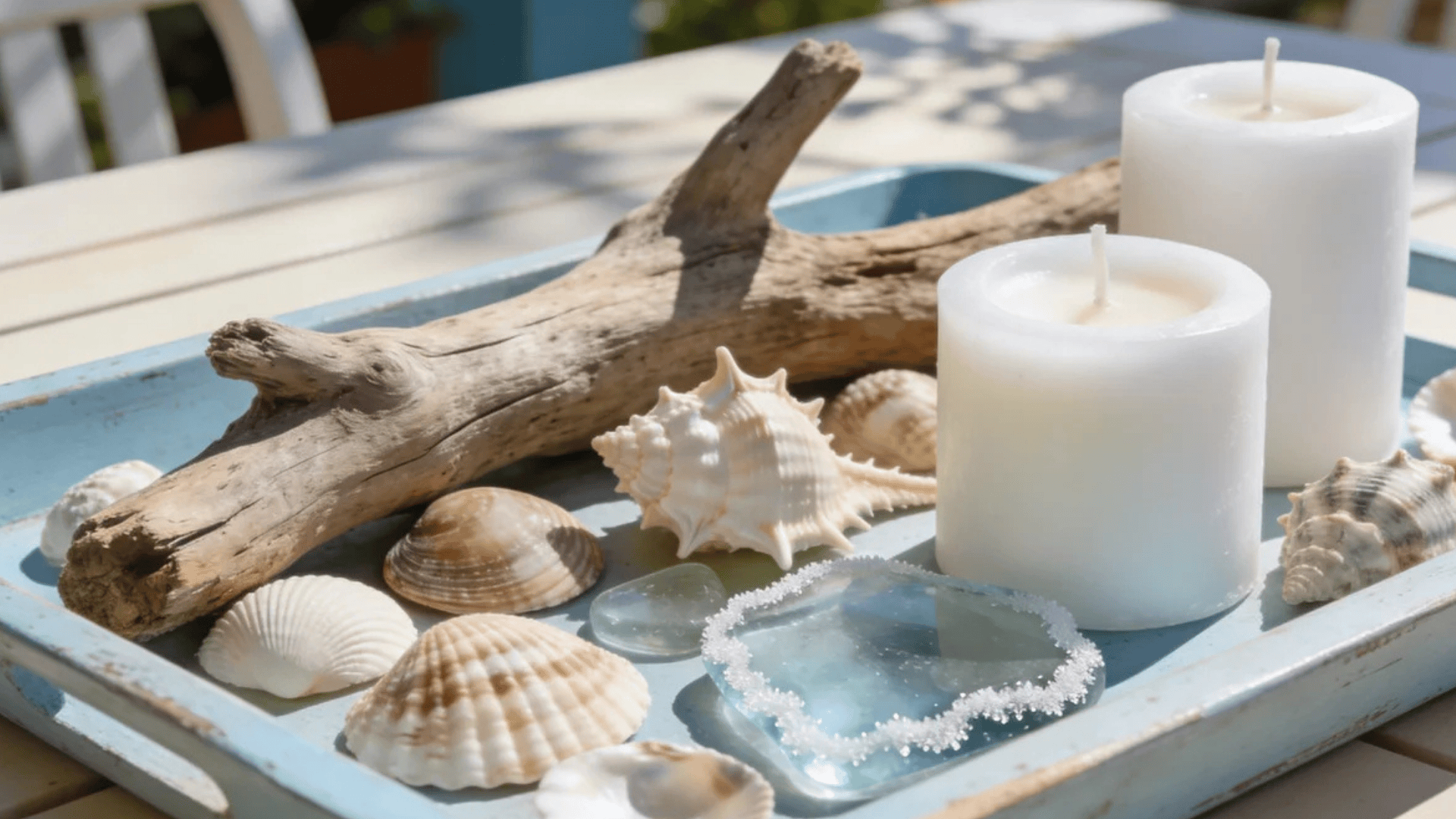
Shells, sea glass, and driftwood gathered directly from a beach have a different quality than store-bought versions. The worn edges and weathered surfaces carry actual history.
Arrange a few flat pieces of driftwood as a base layer on a shallow tray, then build up with shells placed at different angles to catch the light.
Sea glass in soft blues and greens fills gaps naturally.
Two white hurricane vases or pillar candles at either end of the arrangement bring the display together as a cohesive unit. This works for outdoor summer tables as much as indoor ones and needs no maintenance.
18. Boho Macrame and Dried Flower Display
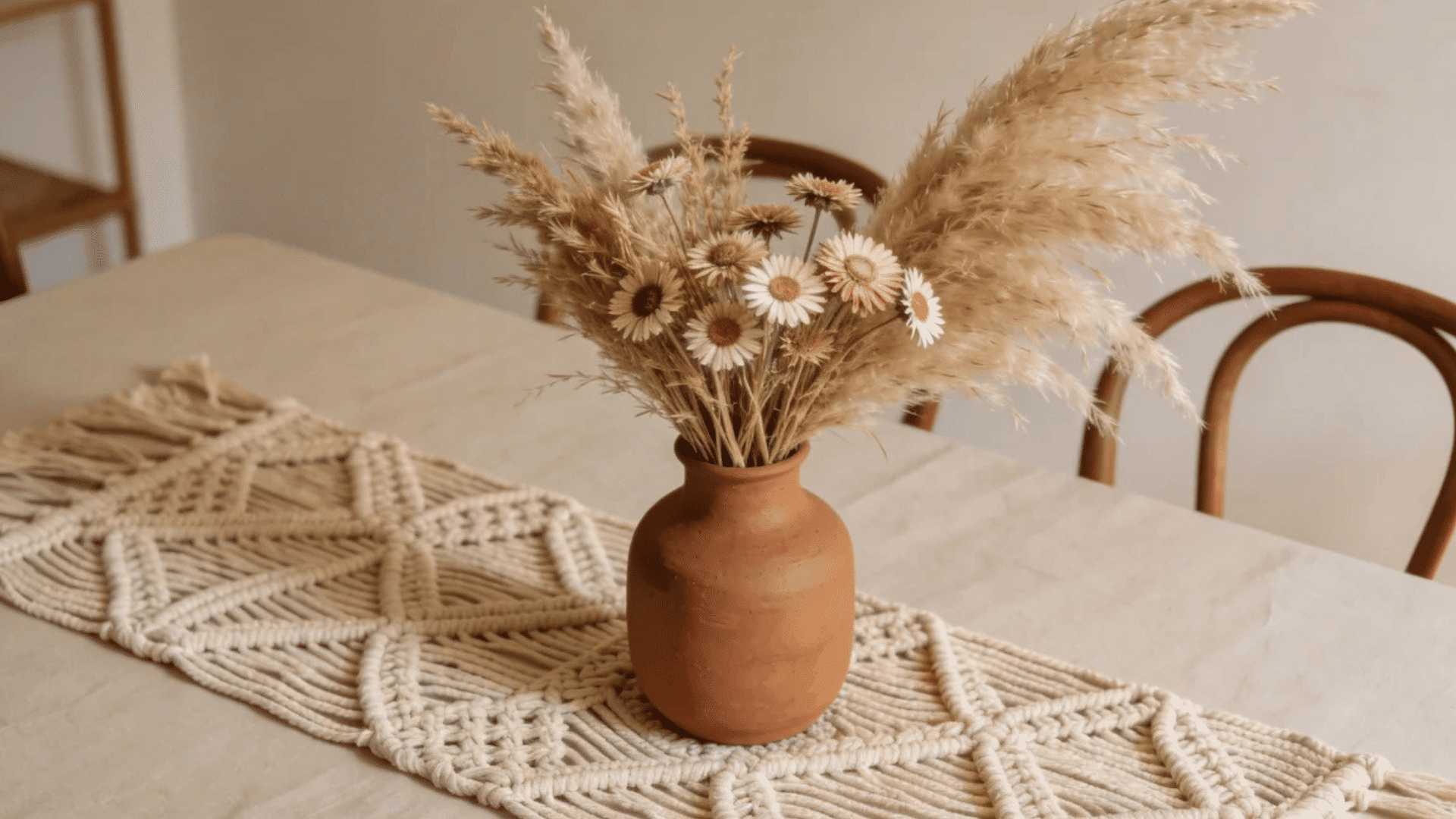
A small macrame mat laid flat as a table base, with a bundle of dried flowers resting across it or standing in a vase on top, creates a strong textural contrast between the knotted fiber and the papery petals.
Pampas grass, lunaria, dried strawflowers, and bunny tail grass all hold their shape for months without water.
The warm neutral tones of natural cotton macramé, undyed or lightly bleached, pair well with blush, terracotta, and oat-colored dried flowers.
This type of centerpiece works particularly well on raw wood tables where the natural material palette reinforces the overall look of the room.
19. Rustic Wood Slice with Candles
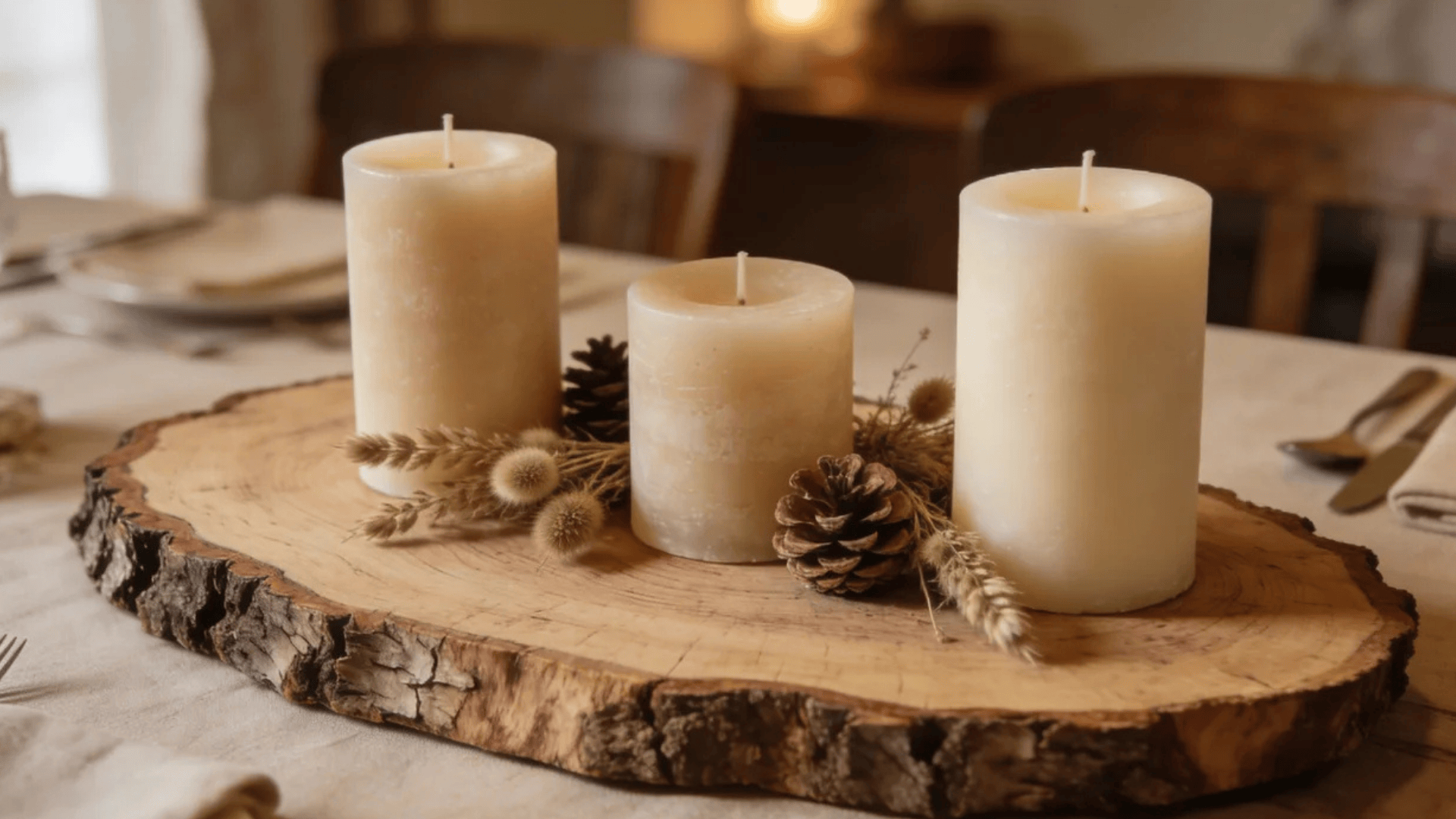
I found a large wood slice at a craft market a few years ago, and it’s been the most-used item on my table since.
The bark edge makes it look like a piece of the outdoors brought in. I place three pillar candles directly on, it’s no tray, no liner, er and the wax that drips onto the wood actually adds to the look over time.
Between the candles,s I tuck whatever’s seasonal: small pine cones in winter, a succulent cutting in spring, dried seed heads in autumn.
Wood slices are sold at most craft stores and should be sealed with a light coat of wax to prevent cracking.
20. Modern Geometric Vase Trio
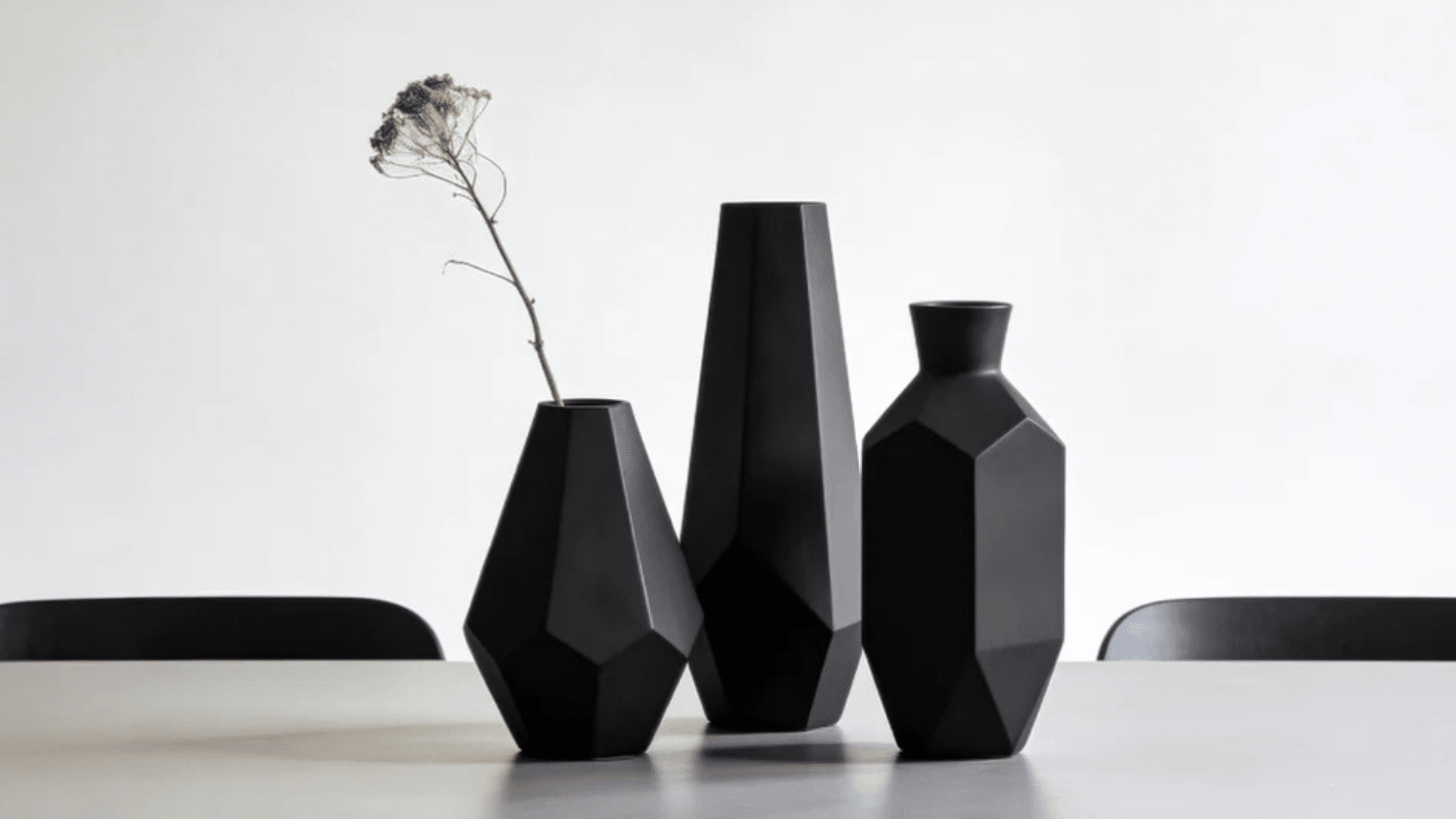
Three vases with angular, faceted, or geometric silhouettes grouped make a centerpiece that reads as intentional even when empty.
The forms do the work that flowers would in a traditional arrangement.
For this to succeed, the vases need to share at least one quality: the same material, the same color family, or a consistent visual weight while differing in shape and height.
Matte black, warm white, and raw concrete finishes all suit this format.
A single dried stem in one of the three, and the other two left bare, gives the grouping more breathing room than filling all three.
21. Vintage Books and Bud Vase Stack
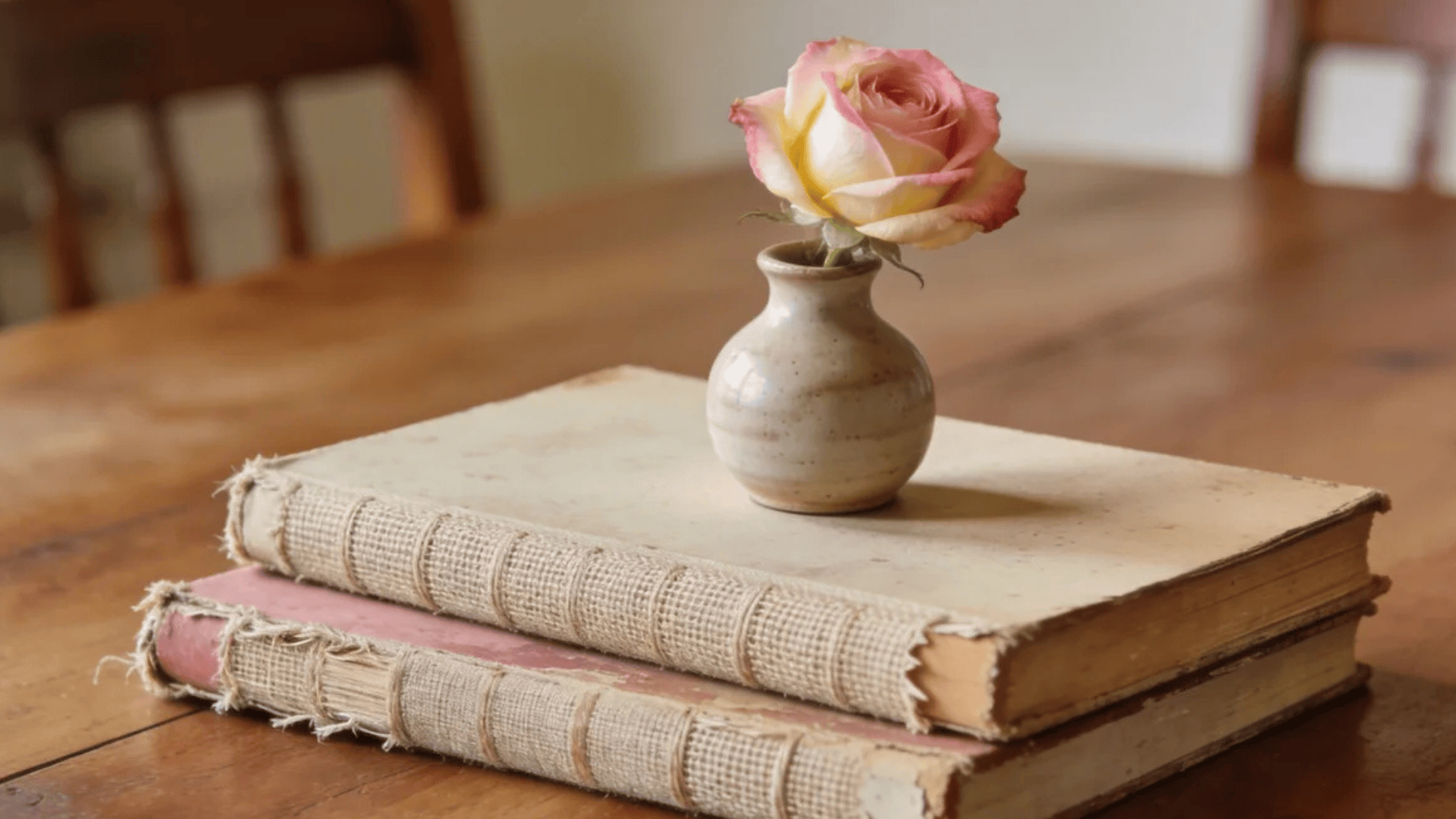
Two or three hardcover books with worn spines stacked flat create an elevated platform with instant character. Set a small bud vase, a votive candle, or a tiny potted succulent on top to complete the display.
Books with linen covers in muted tones, faded green, terracotta, dusty blue, suit this better than glossy modern editions.
The display gains more personality when the books have some personal significance: a worn cookbook, a field guide, a novel with a visible crease in the spine.
Keep the stack low enough that it doesn’t block conversation, and add a small found object beside it to give the arrangement a base layer.
22. Repurposed Wine Bottle Vase
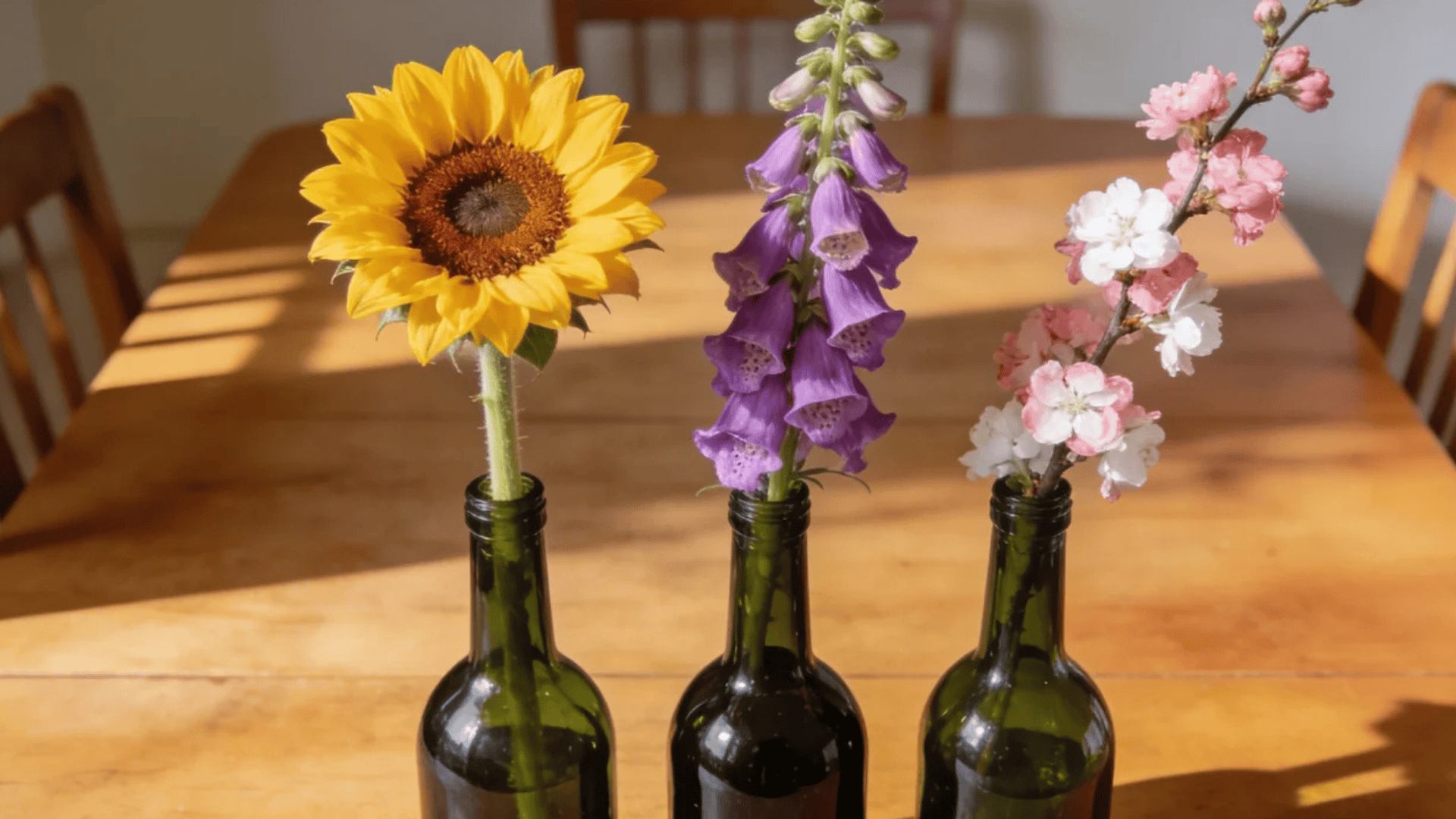
My friend started saving wine bottles after a dinner party when she needed a last-minute vase and grabbed an empty one from the recycling bin.
She’s kept the habit going ever since. Dark green glass bottles suit single tall stems particularly well a sunflower, a foxglove spike, or a long branch of blossom.
Soaking the label off in warm, soapy water takes about 20 minutes and leaves a clean surface.
You can arrange three bottles together at the center of her table, each with a different stem, and swap them out as flowers come and go.
The bottles themselves cost nothing, and the look is genuinely considered.
23. Dollar Store Basket Filled with Greenery
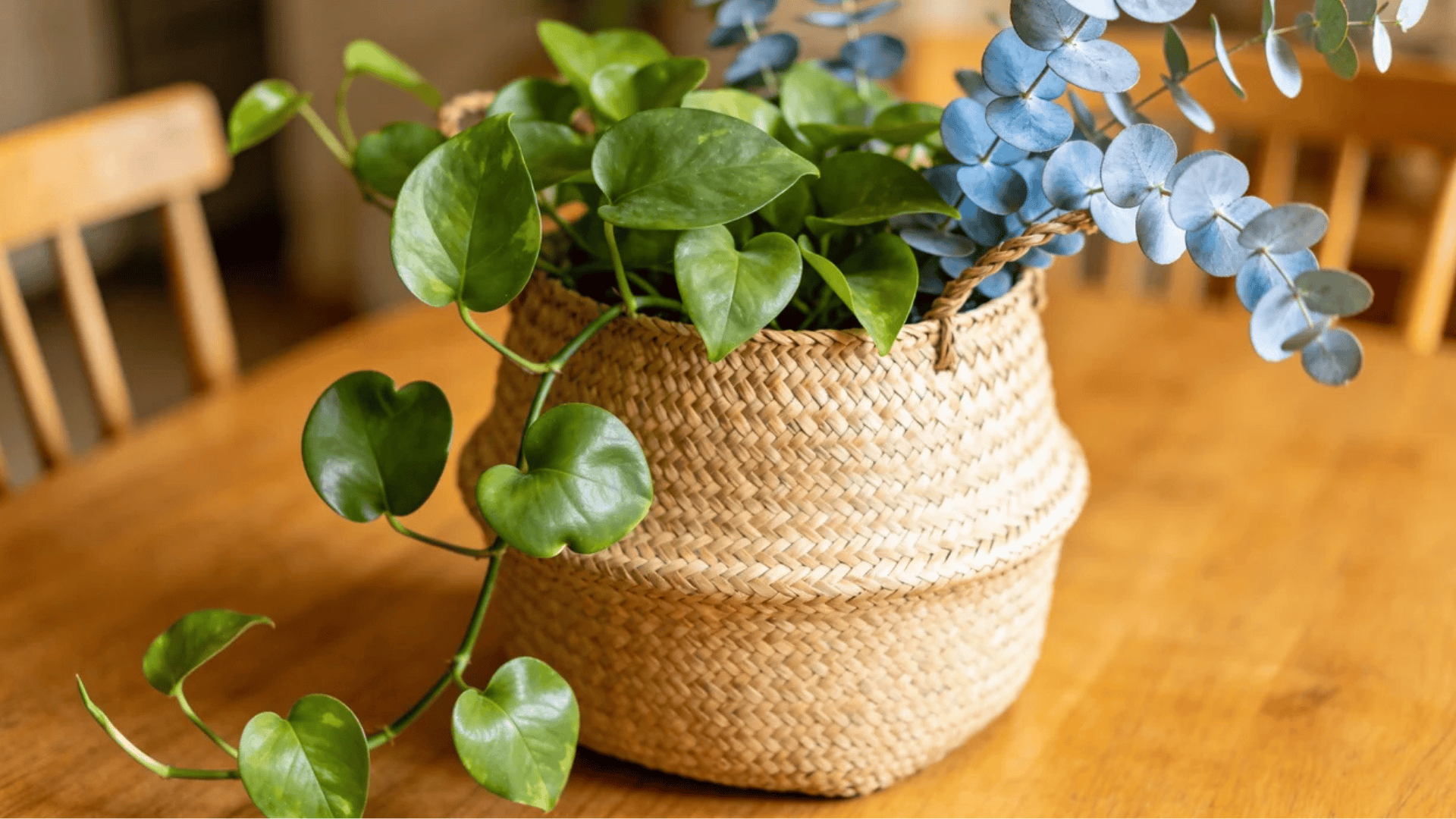
A plain woven basket lined with a small piece of plastic sheeting and filled with fresh or trailing greenery can pass for a boutique purchase without the price tag.
The plastic liner protects the basket from moisture so that you can water the plants inside it. Trailing pothos, ivy cuttings rooted in water, or small fern fronds all work.
If adding height is the goal, tuck in a few eucalyptus branches to stand above the trailing foliage.
The basket’s natural texture adds warmth that a ceramic pot often can’t. Replace the greenery as needed; the basket itself will last for years.
24. DIY Terrarium in a Glass Jar
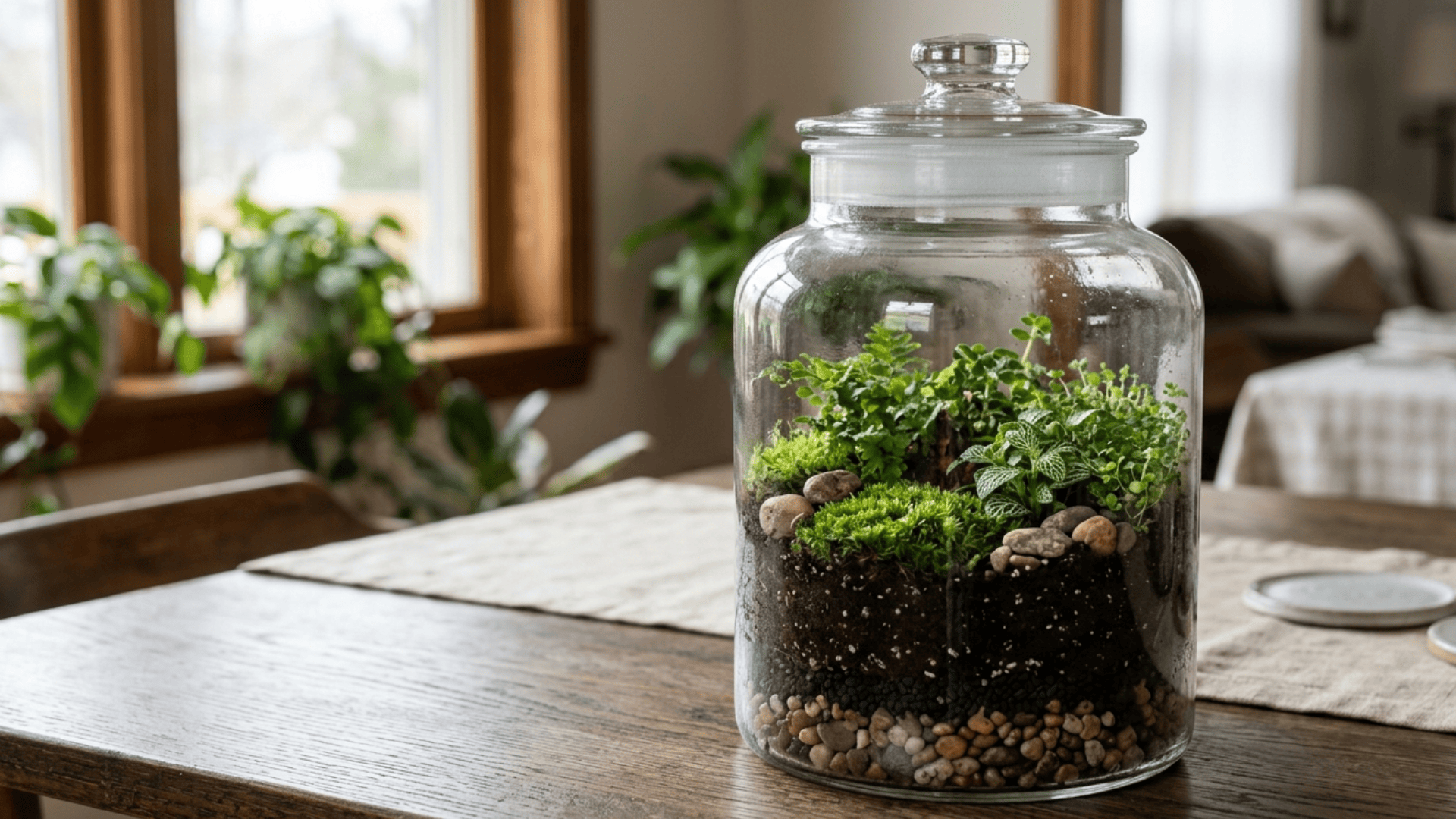
Building a closed or open terrarium is one of the more satisfying afternoon projects a dining table has ever benefited from.
Start with a layer of small pebbles or horticultural grit for drainage, then a thin layer of activated charcoal to prevent mold, followed by potting mix.
Plant slow-growing compact species, nerve plant, mind-your-own-business, small ferns, or air plants at varying heights. A wide-mouth apothecary jar or a large glass cookie jar works well as the vessel.
An open terrarium suits air plants and succulents; a closed one with a lid suits moisture-loving ferns and moss, which thrive with minimal attention.
25. Simple Twine-Wrapped Candle Grouping
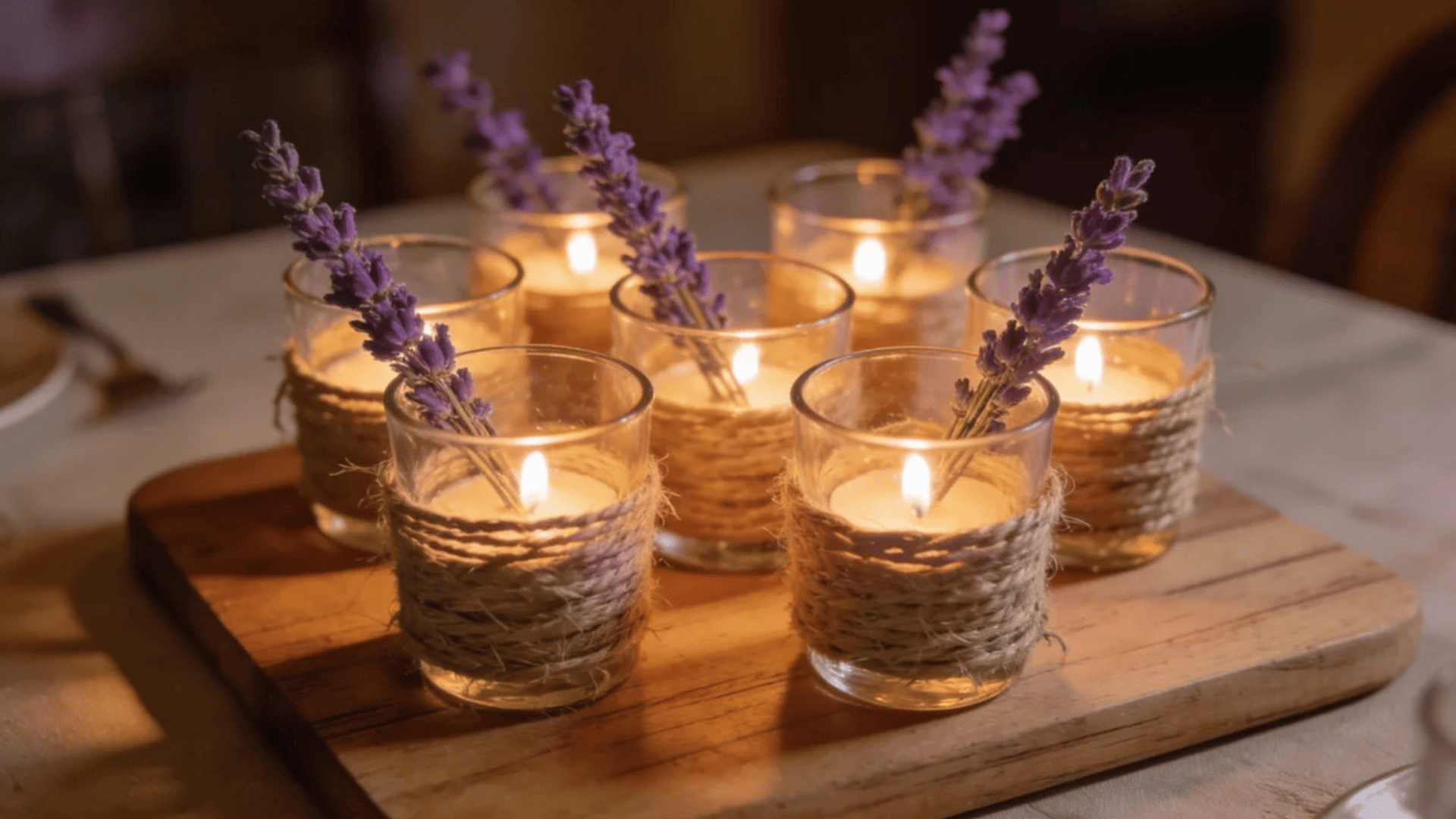
I saw this at a friend’s cabin table a few winters ago and recreated it. She had wrapped plain glass votives in jute twine using a dab of hot glue at the start and end of each wrap, then tucked a small dried lavender sprig under the knot.
The candles glowed warm amber through the weave of the twine when lit.
Grouping seven of them in a loose cluster on a small wooden board created a centerpiece that looked handmade in the best possible way.
The materials cost next to nothing, and the whole project takes under thirty minutes. It suits any table that already has natural wood, linen, or woven elements nearby.
How to Transition One Centerpiece Across All Four Seasons?
One of the most practical techniques I use with clients is building a base centerpiece that stays in place year-round, with seasonal layers added on top.
Start with a sturdy tray and one or two anchor objects: a set of pillar candle holders, a low ceramic bowl, or a trailing planter.
These stay fixed. Then swap the fill layer with each season: dried citrus and pine in winter, fresh moss and eggs in spring, shells and sea glass in summer, gourds and dried leaves in autumn.
This approach means the table never looks bare during transitions, and you don’t have to rebuild from scratch four times a year.
Most clients find that keeping a small labeled bin for each season’s objects makes the swap genuinely effortless.
Tips for Styling Your Dining Table Centerpiece Like a Pro
Small styling choices can make a bigger difference than expected. Here are a few simple tips to help the table always look its best.
- Keep the Height Low: A centerpiece that sits too tall blocks eye contact across the table. A good rule: if it’s taller than a wine bottle, it’s too tall for everyday use.
- Use Odd Numbers: Grouping three or five objects looks more natural and balanced than even numbers. It’s a simple trick that works every time.
- Stick to Two or Three Colors: Too many colors make a table feel busy and mismatched. Picking a simple color story keeps the whole setup looking clean and intentional.
- Mix Different Textures: Pairing soft, hard, natural, and metallic elements adds depth without adding clutter. A candle next to a wooden tray next to a small plant is a great example.
- Less Is More: A clean, simple setup almost always looks better than an overcrowded one. If something feels like too much, it probably is. Take one piece away and see the difference.
Conclusion
Styling a dining table doesn’t have to be complicated or expensive. Sometimes all it takes is a simple tray, a few candles, or a small bunch of fresh stems to make the whole space feel different.
The ideas are meant to be a starting point, not a strict rulebook. Take what feels right, leave what doesn’t, and make it work for your table and your home.
There’s no perfect centerpiece. The best one is simply the one that makes the space feel like yours.
If any of these ideas sparked something, give one a try this week. It doesn’t have to be big or elaborate; even the smallest change can shift the whole feel of the room.
Tried one of these ideas? Have a favorite setup at home? Share it in the comments below. I would love to hear what’s working for you.
Frequently Asked Questions
What Is a Good Centerpiece for the Dining Table?
A good centerpiece fits the size of the table and stays low enough not to block eye contact. Candles, fresh flowers, and simple trays all work well.
How Tall Should a Dining Centerpiece Be?
Most centerpieces should stay under 12 inches tall for everyday use. Anything taller can block conversation across the table.
What to Use as a Centerpiece if I’m on a Budget?
A simple bowl of fruit, a few candles grouped, or a small potted plant all make great low-cost options.
How to Choose a Centerpiece for a Small Dining Table?
Stick to one small focal point rather than multiple objects. A single vase works best without taking up too much surface space.
What Is the Rule of 3 for Centerpieces?
The rule of 3 means grouping three items together for a balanced look. It creates a natural, visually pleasing arrangement that feels simple, cohesive, and easy to style on any table.