

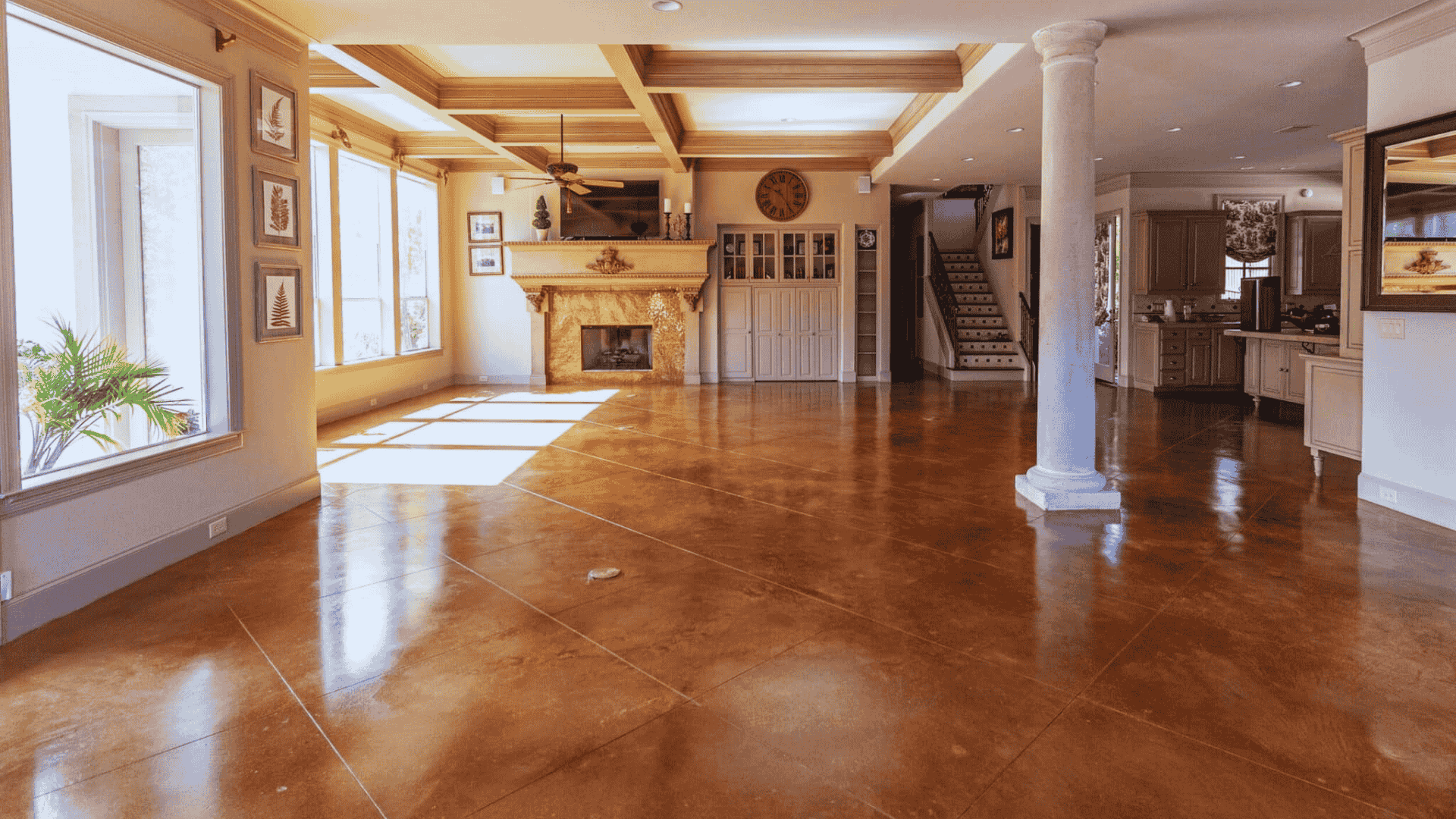
Many homeowners want a floor that looks rustic yet stands up to everyday use. Wood floors are common in farmhouse homes, but they can scratch, stain, and need regular care.
That is why many people choose farmhouse-stained concrete floors as a simple and durable option. Stained concrete gives a home a natural, slightly worn look that complements wood beams, neutral colors, and open layouts.
The surface can take different stain shades, which helps create a warm farmhouse feel without using traditional wood flooring.
Farmhouse stained concrete floors mix durability with a warm, rustic look.
Maintenance tips and key benefits are included so you can understand how this flooring performs in everyday spaces like kitchens, living rooms, and large open farmhouse interiors.
What Are Farmhouse Stained Concrete Floors?
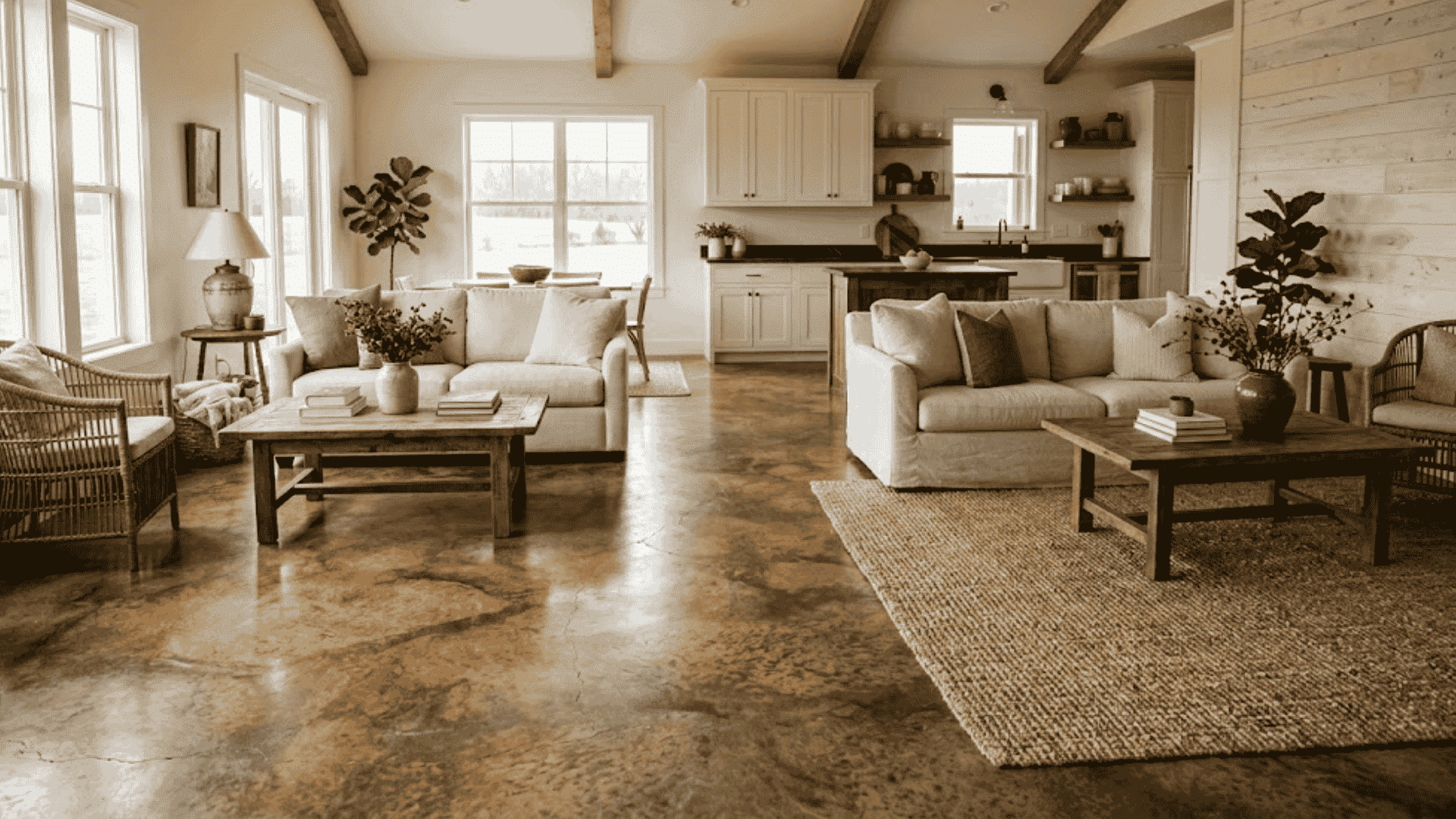
Farmhouse-stained concrete floors are regular concrete slabs that receive color and texture through a staining process. Instead of covering the floor with wood, tile, or vinyl, the concrete itself becomes the finished surface.
The stain sinks into the concrete, creating natural color variation across the floor.
Concrete stain absorbs into the surface rather than sitting on top of it. This helps the floor look more natural and less uniform.
Many farmhouse homes use soft browns, weathered gray tones, or earthy shades that match wood beams, neutral walls, and simple furniture.
These floors work well in open farmhouse layouts where the same flooring runs through multiple rooms. Kitchens, living areas, and barndominiums often use stained concrete because it handles daily wear with little upkeep.
The result is a floor that feels simple, durable, and well-suited to farmhouse living.
Popular Farmhouse Stain Colors
The color of stained concrete floors plays a big role in the overall farmhouse look. Most homeowners choose natural shades that work well with wood, neutral walls, and simple decor.
- Warm Brown: Warm brown stains give the floor a natural wood-like look. They work well with rustic furniture, wood beams, and farmhouse kitchens.
- Weathered Gray: Weathered gray creates a calm and clean farmhouse style. It pairs well with white walls, black fixtures, and simple decor.
- Tan or Sand: Tan and sand tones help brighten the room. These light shades work well in open farmhouse spaces with lots of natural light.
- Charcoal Gray: Charcoal gray adds contrast without making the space feel heavy. It fits well in modern farmhouse homes with darker accents.
- Deep Brown: Deep brown stains give the floor a rich and grounded look. They work best in larger rooms where darker flooring balances the space.
Why Homeowners Choose Stained Concrete Floors?
Many homeowners want a floor that looks good but also holds up to daily life. Stained concrete floors offer a strong surface that works well in busy homes.
They do not scratch as easily as wood and can handle heavy furniture, pets, and foot traffic.
One of the biggest reasons people choose stained concrete is durability. Concrete is already strong, and the stain adds color without weakening the surface.
When properly sealed, the floor can last for many years with little maintenance. Another benefit is simple care.
Stained concrete floors are easy to clean and maintain. Most of the time, sweeping and occasional mopping are enough to keep the surface looking good. Homeowners also like the design flexibility.
Different stain colors and finishes can create a warm farmhouse feel while still keeping the floor simple and practical for everyday living.
Farmhouse Design Ideas with Stained Concrete
Stained concrete floors work well in farmhouse homes because they are easy to clean and match many design styles.
They also add a warm and natural look that fits both modern and rustic farmhouse spaces.
1. Farmhouse Kitchens
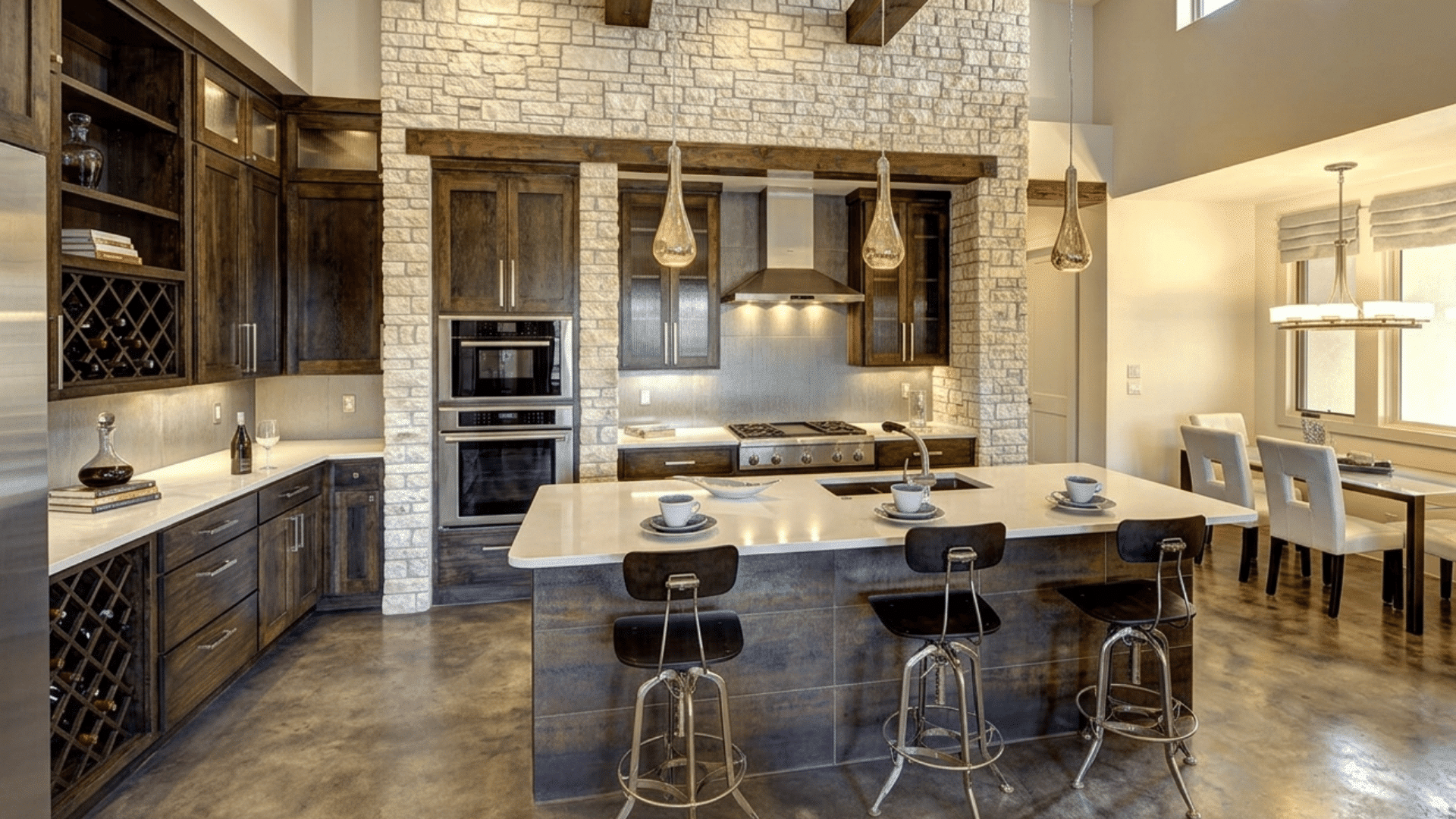
Stained concrete works well in farmhouse kitchens because it handles spills, scratches, and heavy foot traffic with ease.
Warm brown or soft gray stains pair nicely with white cabinets, wood shelves, and black hardware for a balanced look. A smooth, sealed surface also makes cleaning simple after cooking or family meals.
Place a runner mat near the sink and stove where standing time is longest.
This helps reduce foot fatigue and protects a high-wear area at the same time while keeping the farmhouse kitchen comfortable and easy to maintain every day.
2. Open Living Rooms
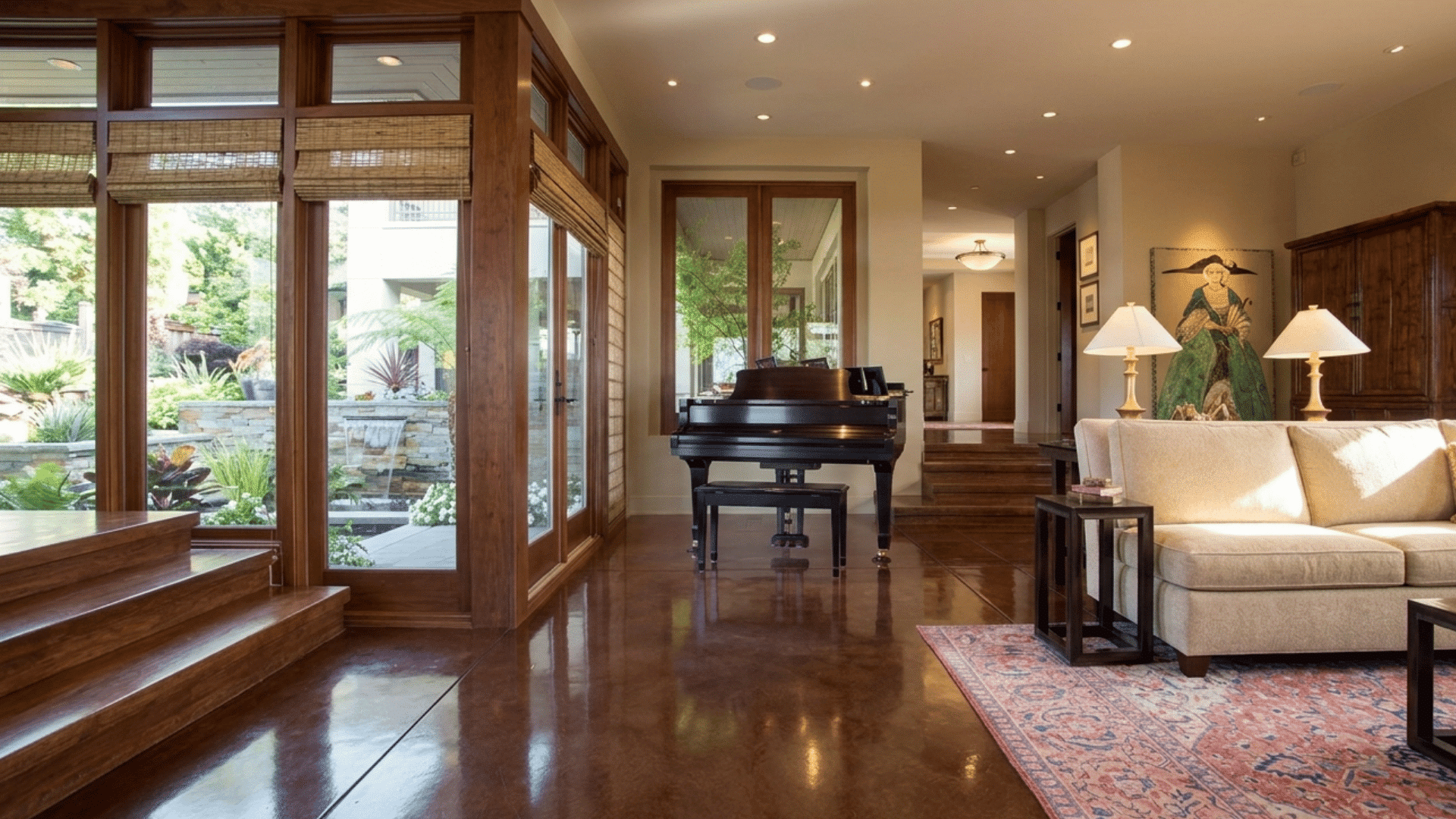
Large farmhouse living rooms often use one continuous floor to create a more open and connected layout.
Stained concrete helps the room feel spacious while still matching rustic wood furniture, ceiling beams, and soft neutral colors.
The natural texture of the floor adds depth without making the space feel too busy. Large area rugs can define the seating area and add comfort underfoot. Rugs also help reduce echo in rooms with hard flooring surfaces.
This design works especially well in homes with open floor plans and high ceilings.
3. Barndominium Interiors
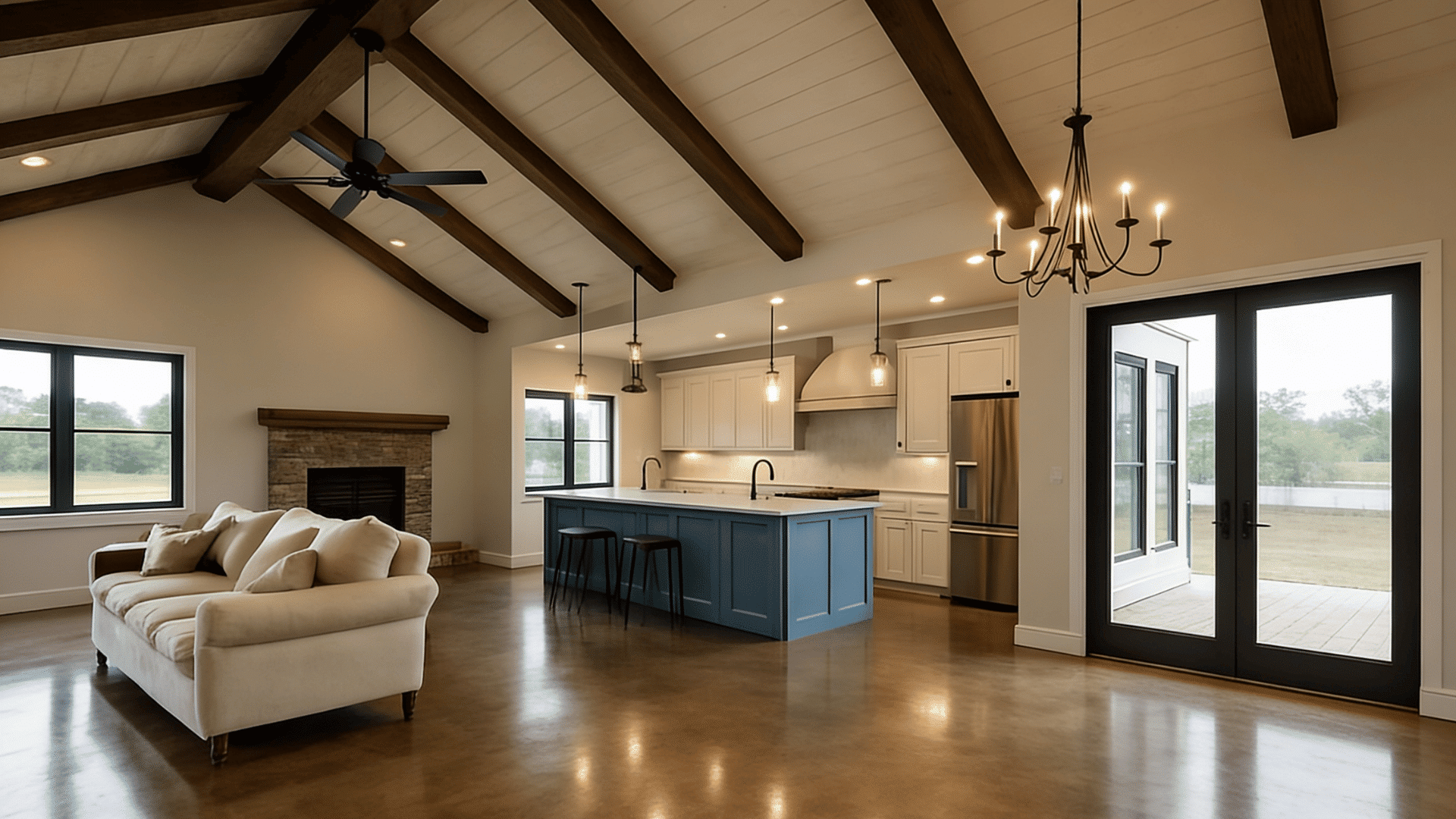
Barndominiums often come with concrete slab flooring already installed, making stained concrete a practical and cost-friendly choice.
Adding stain gives the floor color, texture, and a finished farmhouse appearance without replacing the surface. Earth tone stains pair nicely with metal accents, wood walls, and large open spaces commonly found in barndominiums.
Many homes also include radiant heat tubing inside the slab. Concrete holds heat well, which helps make in-floor heating more effective and comfortable during colder months.
The durable surface also handles pets, boots, and heavy furniture with ease.
Stained Concrete vs Wood Floors
Stained concrete and wood floors are both common choices in farmhouse homes. Each option offers a different balance of durability, maintenance, and style.
| Feature | Stained Concrete | Wood Floors |
|---|---|---|
| Durability | Very strong and handles heavy traffic well | Can scratch or dent over time |
| Maintenance | Easy cleaning and occasional resealing | May need refinishing after years |
| Moisture Resistance | Handles moisture better | Can warp or swell with water |
| Cost Over Time | Often lower long-term cost | Higher upkeep and repair costs |
| Installation | Uses the existing concrete slab in many homes | Requires installing wood planks |
| Appearance | Rustic concrete look with stain colors | Natural wood grain appearance |
| Comfort Underfoot | Hard surface | Slightly softer than concrete |
Design Elements that Pair with Concrete Floors
These design details help farmhouse spaces feel warm, balanced, and comfortable throughout the home. Simple materials and soft textures can make concrete floors feel more natural and inviting every day.
- Wood Beams: Natural wood ceiling beams add warmth and help balance the cool look of stained concrete flooring.
- Neutral Wall Colors: Soft white, beige, cream, and gray walls create a clean background that works well with farmhouse interiors.
- Area Rugs: Large rugs soften the hard floor surface and make living rooms and bedrooms feel more comfortable.
- Black Metal Fixtures: Matte black lights, faucets, and cabinet handles pair nicely with concrete floors and modern farmhouse decor.
- White Cabinets: White kitchen cabinets brighten the space and create contrast against darker stained concrete finishes.
- Rustic Wood Furniture: Farmhouse tables, shelves, and benches add texture and make the room feel warm and relaxed.
- Stone Fireplaces: Stone fireplaces match the earthy look of concrete floors and fit naturally into farmhouse living spaces.
- Warm Lighting: Pendant lights and warm bulbs help concrete floors feel softer and more welcoming during the evening.
Pros and Cons of Stained Concrete Floors
Stained concrete floors offer durability and a simple look that fits farmhouse homes. However, they also have a few limitations that homeowners should consider before choosing this flooring.
| Pros | Cons |
|---|---|
| Very durable and handles heavy foot traffic well | A hard surface that can feel uncomfortable when standing for long periods |
| Easy to clean with simple sweeping and mopping | Can feel cold in cooler climates |
| Long lifespan when sealed properly | Cracks may appear over time in the concrete |
| Works well in open farmhouse layouts | Limited softness compared to carpet or wood |
| Many stain colors are available for design flexibility | Requires resealing after a few years |
| Resists moisture better than wood floors | Installation and preparation can take time |
| Uses the existing concrete slab in many homes | The surface can be slippery if not sealed properly |
How to Maintain Stained Concrete Floors Long-Term?
Maintenance is where stained concrete genuinely outperforms most other flooring options, but it is not zero-effort.
The sealer is what protects the stain, and when the sealer wears down, the floor becomes vulnerable to staining and scuffing.
Most residential sealers need to be reapplied every two to four years, depending on traffic levels and the type of sealer used. Solvent-based sealers last longer but require better ventilation during application.
Water-based sealers are easier to apply in occupied homes and have improved significantly in durability over the last several years.
For daily care, a dry dust mop picks up grit that would otherwise act like sandpaper on the sealer surface. Wet mopping with a pH-neutral cleaner once a week keeps the floor looking fresh without degrading the sealer.
Avoid vinegar, bleach, or ammonia-based cleaners, as all three break down the sealer over time.
I typically recommend homeowners do a quick water bead test once a year: if water no longer beads up on the surface, resealing is overdue.
What to Check Before You Stain Your Concrete Floor?
A little preparation can help the stain look more even and last longer over time. Checking the floor condition first also helps prevent peeling, patchy color, and sealing problems later.
- Floor Condition: Make sure the concrete surface is solid and free from major cracks, chips, or uneven areas before staining.
- Moisture Levels: Check for moisture problems because trapped water under the slab can affect how the stain and sealer perform.
- Existing Coatings: Remove old paint, glue, wax, or sealers since they can block the stain from soaking into the concrete properly.
- Surface Cleanliness: Clean the floor well to remove dust, grease, oil stains, and dirt that may cause uneven coloring.
- Concrete Age: New concrete should fully cure before staining because fresh slabs may not absorb color evenly.
- Color Testing: Test the stain on a small hidden section first to see how the final color looks on your specific floor.
- Floor Texture: Smooth concrete and rough concrete absorb stains differently, so check the surface texture before starting the project.
- Sealer Choice: Pick the right sealer finish because matte, satin, and glossy sealers can change the final appearance of the floor.
Conclusion
Farmhouse-stained concrete floors can give a home a strong, practical base while still matching the relaxed feel of the farmhouse style.
They work well with natural materials like wood, simple furniture, and neutral wall colors. This balance helps create spaces that feel warm, open, and easy to live in.
Many homeowners also like that concrete floors are durable and easy to maintain, making them a good option for busy homes.
Before choosing this flooring, it helps to think about your space, lighting, and the overall look you want to create.
The right stain color and proper sealing can make a big difference in how the floor fits into the room. If you have stained concrete floors in your farmhouse home, share your tips and ideas in the comments below.
Frequently Asked Questions
Can Stained Concrete Floors Crack Over Time?
Yes, small cracks can appear as the concrete settles. These are usually minor and can add to the natural rustic look.
Are Stained Concrete Floors Comfortable for Daily Use?
They are strong but can feel hard underfoot. Adding rugs or mats can improve comfort in high-use areas.
Do Stained Concrete Floors Need Sealing?
Yes, sealing helps protect the surface from stains, moisture, and wear, and it keeps the color looking fresh.
Are Stained Concrete Floors Good for Homes with Pets?
Yes, they handle scratches and mess well, making them a practical option for homes with pets.