

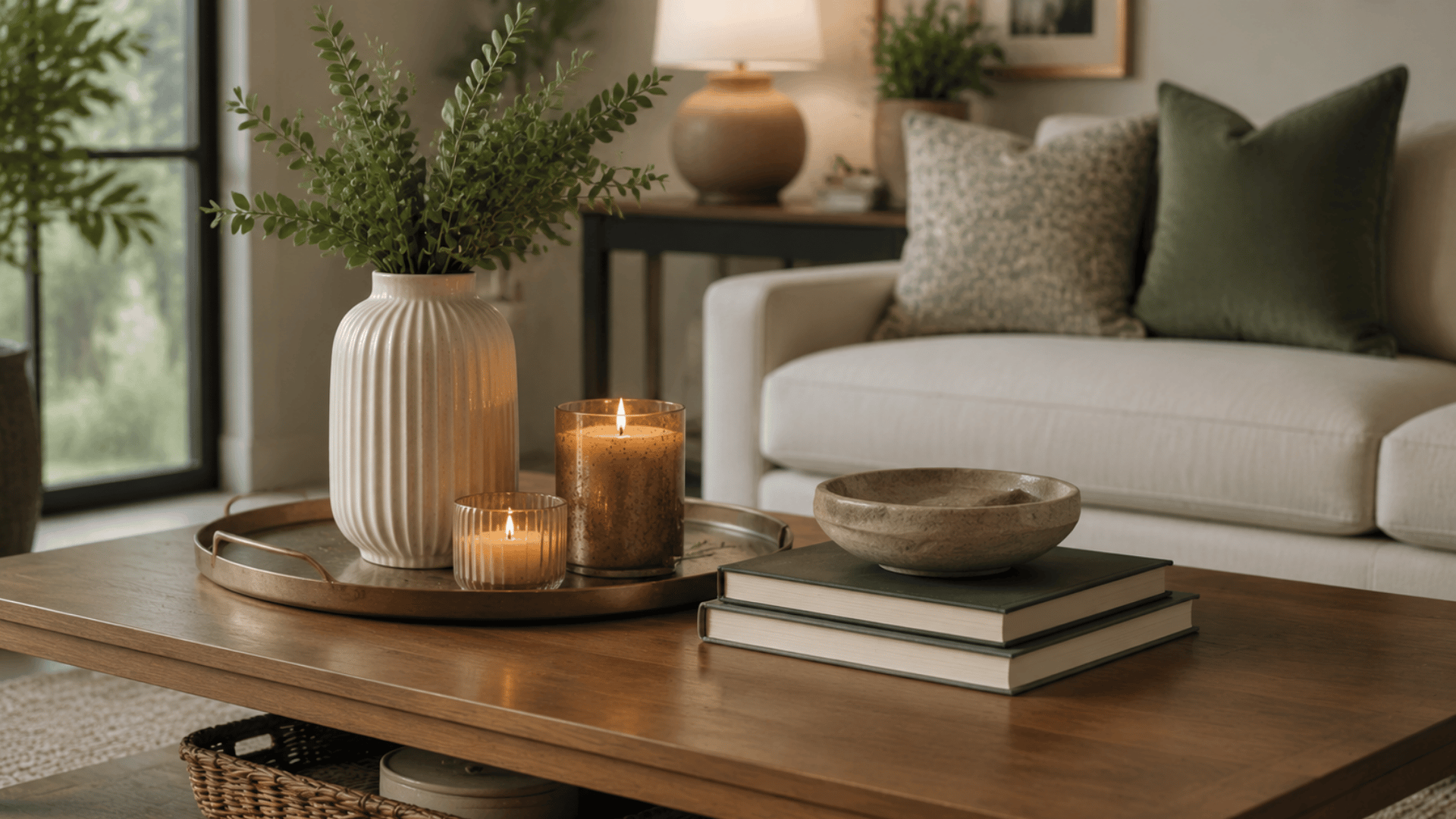
A coffee table often becomes the center of a living room, but styling it can feel harder than it looks. Too many decorations make it look crowded, while too few can leave it feeling unfinished.
In this guide, I’ll show you how to decorate a coffee table with simple ideas that create a balanced, polished look without making the space feel busy.
You’ll learn styling tips for arranging decor with the right layout and for decorating round, square, and rectangular tables.
I’ll also share easy ideas that work with different home styles and budgets, along with common mistakes to avoid.
By the end, you’ll have clear steps you can follow to style your coffee table with confidence and make it both beautiful and useful every day.
How Does a Coffee Table Accent a Room?
A coffee table accents a room by creating a focal point and adding balance, texture, and personality, while complementing surrounding furniture and decor.
A coffee table sits at the center of most seating arrangements, shaping the room’s overall design.
Decorative items such as books, trays, candles, plants, and flowers help tie together the colors and materials used throughout the space.
Varying the height, shape, and texture of these accents creates visual interest without making the table look crowded.
At the same time, leaving some open space keeps the arrangement practical for everyday use. Combining useful and decorative pieces helps the entire room feel more balanced, welcoming, and complete.
How to Decorate a Coffee Table?
A well-decorated coffee table should look balanced, useful, and connected to the rest of the room.
1. Start with a Decorative Tray
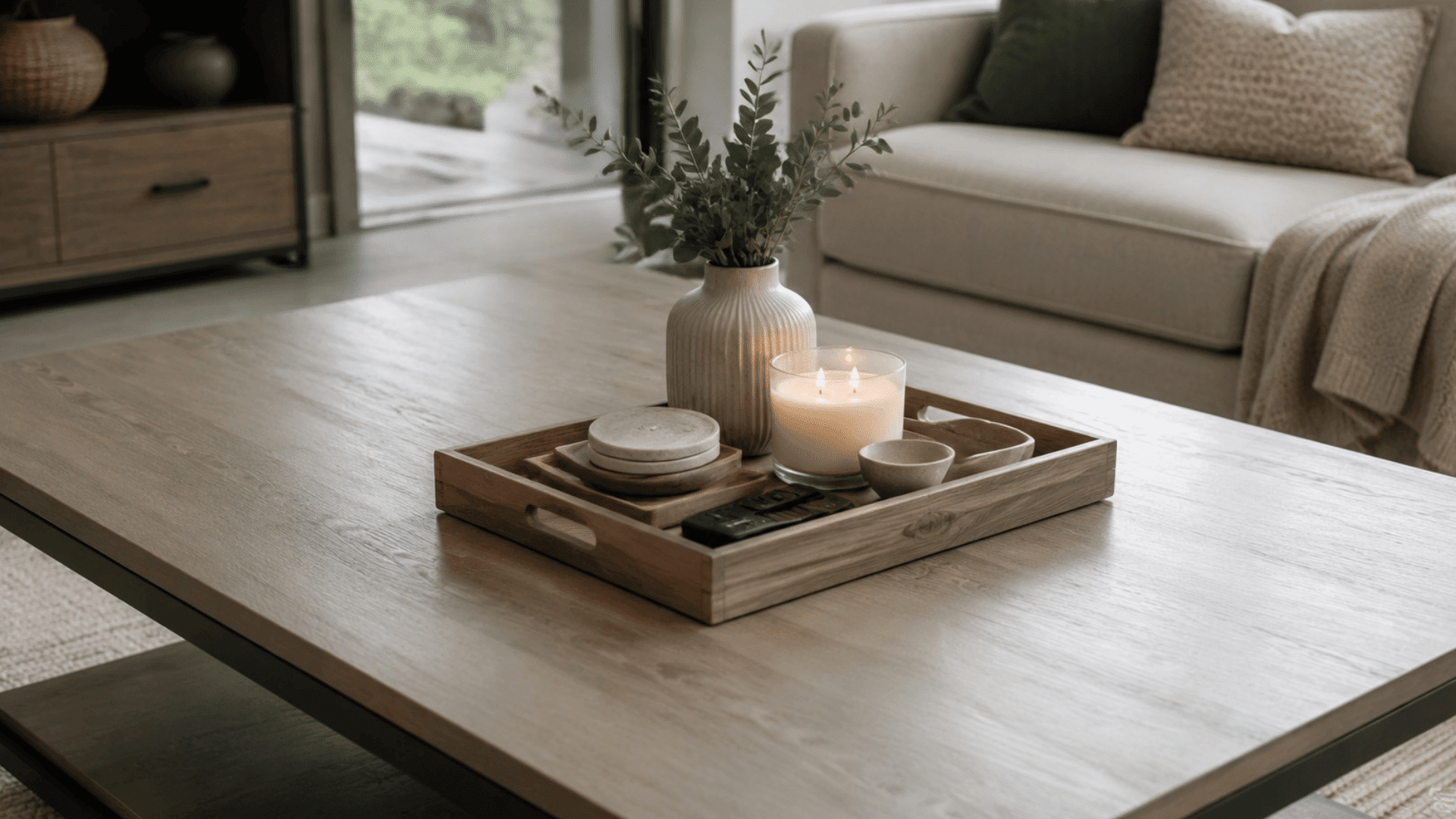
A decorative tray gives your coffee table arrangement a clear base and helps smaller items look organized. It works well for candles, coasters, small bowls, remotes, or a vase.
Choose a tray that suits the table shape and room style, such as wood for warmth, metal for polish, or woven material for texture.
Leave some open space around it so the table still feels useful.
- Best For: Large coffee tables, family rooms, and organizing everyday items.
- Pro Tip: Use a tray that covers about one-third of the tabletop for a balanced appearance.
2. Stack Coffee Table Books
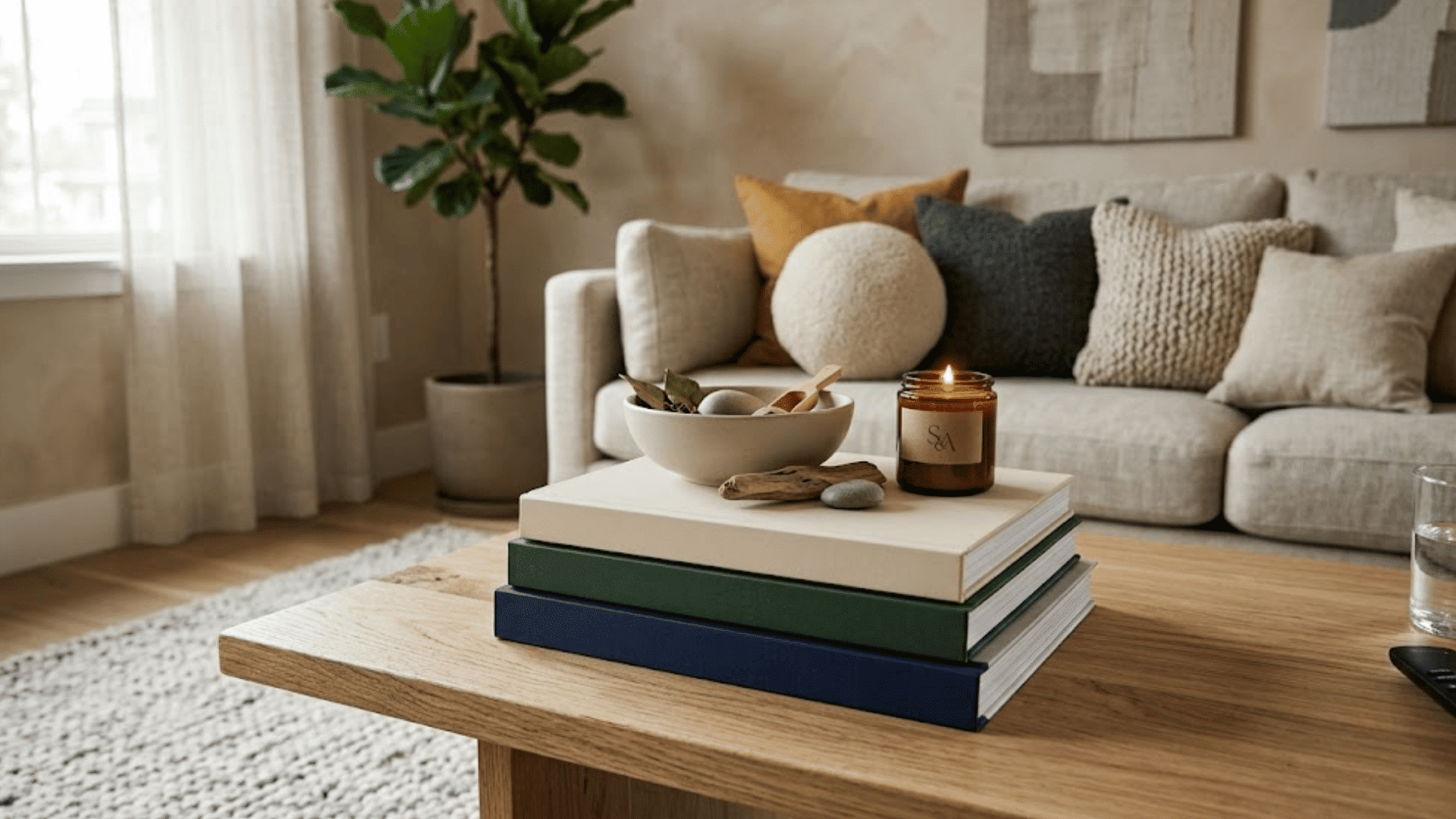
Coffee table books add height, color, and personality. Stack two or three books with clean covers that match the room’s mood or your interests. Place a small object, candle, or bowl on top to create a finished look.
Avoid using too many books, as a very tall stack can make the table feel heavy.
- Best For: Adding height and showcasing hobbies or interests.
- Pro Tip: Choose books with neutral or coordinated covers for a cohesive display.
3. Add Fresh Flowers
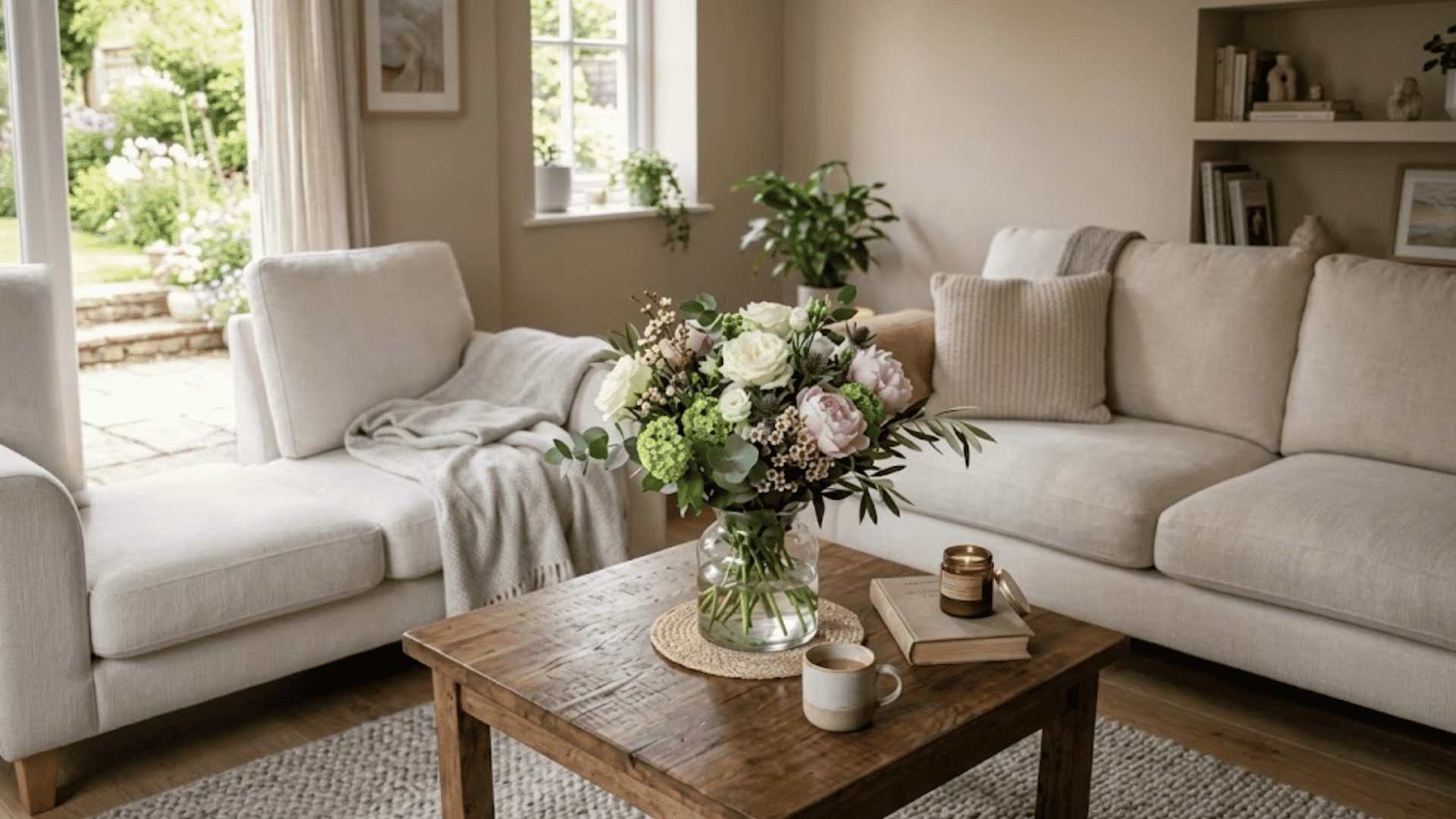
Fresh flowers bring softness and life to the table. A simple vase with seasonal blooms can make the room feel brighter without much effort.
Keep the arrangement low enough so it does not block conversation or the view across the room. For a cleaner look, use one flower type or a simple color palette.
- Best For: Brightening living rooms and seasonal decorating.
- Pro Tip: Trim stems regularly and replace the water every few days to keep flowers fresh.
4. Use Greenery or a Small Plant
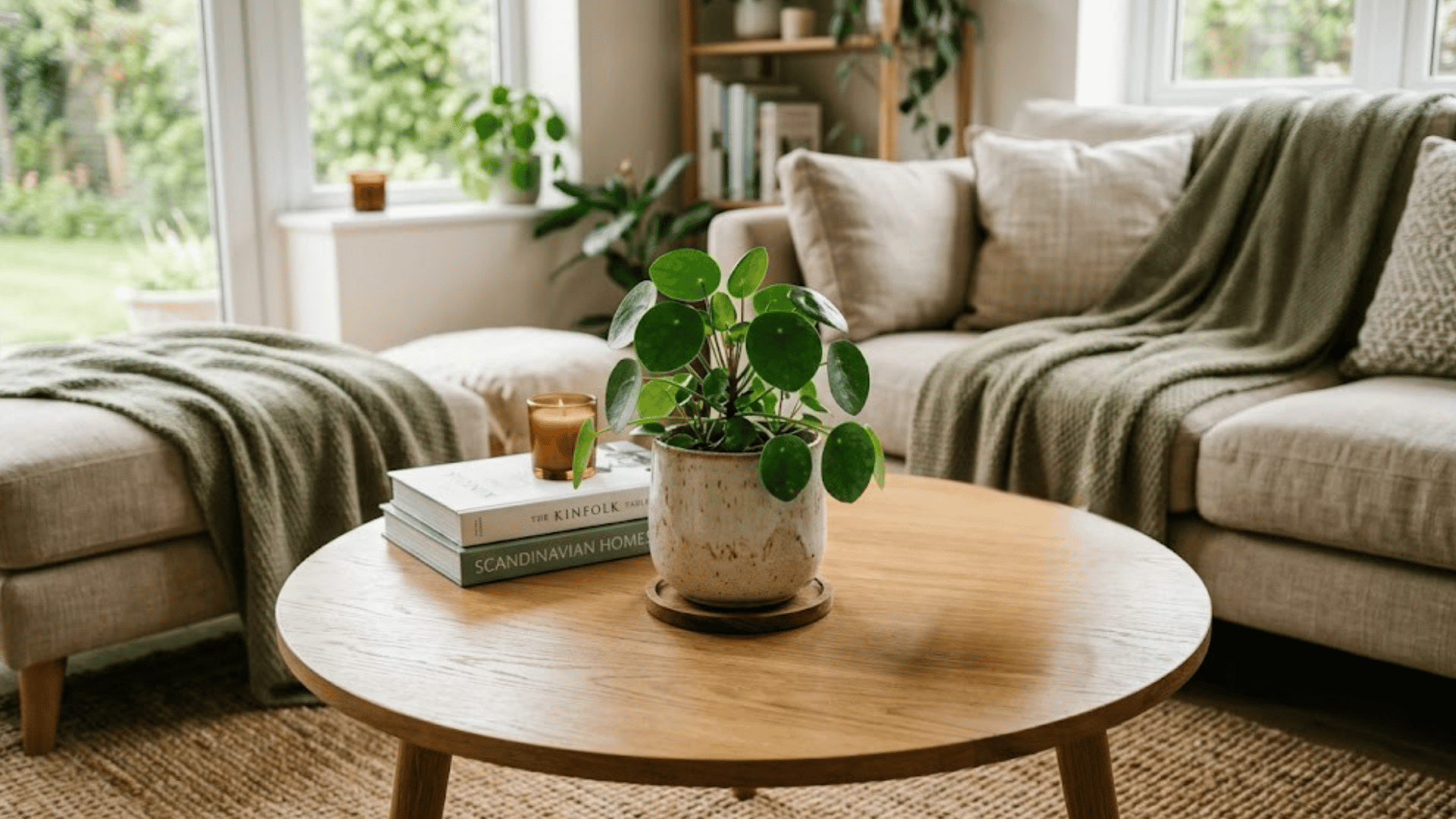
Greenery is a practical option if you want something longer lasting than flowers. A small plant, eucalyptus stems, or a simple leafy arrangement can add freshness and texture.
Choose a pot or vase that matches your decor style. Keep the size in proportion to the table so the plant does not take over the surface.
- Best For: Low-maintenance decorating and natural interiors.
- Pro Tip: Select plants that thrive indoors, such as pothos or snake plants.
5. Mix Different Heights
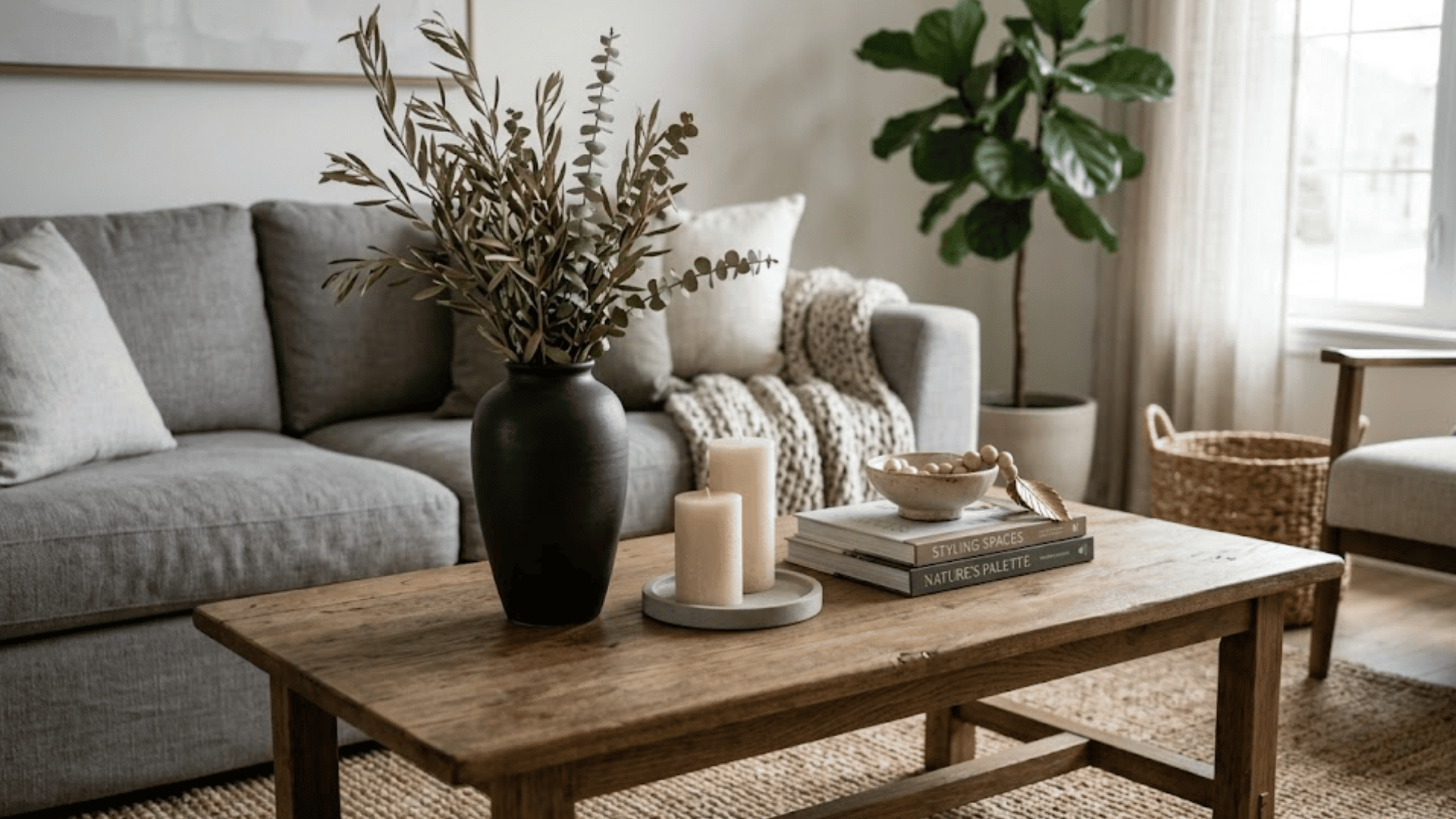
A coffee table looks more interesting when decor items are not all the same height. Pair a tall vase with medium candles and a low bowl or book stack.
This creates movement and helps the eye travel across the display. The goal is balance, not clutter, so keep the height changes simple and natural.
- Best For: Creating visual depth on medium and large tables.
- Pro Tip: Keep the tallest item under eye level when seated to maintain open sightlines.
6. Combine Different Textures
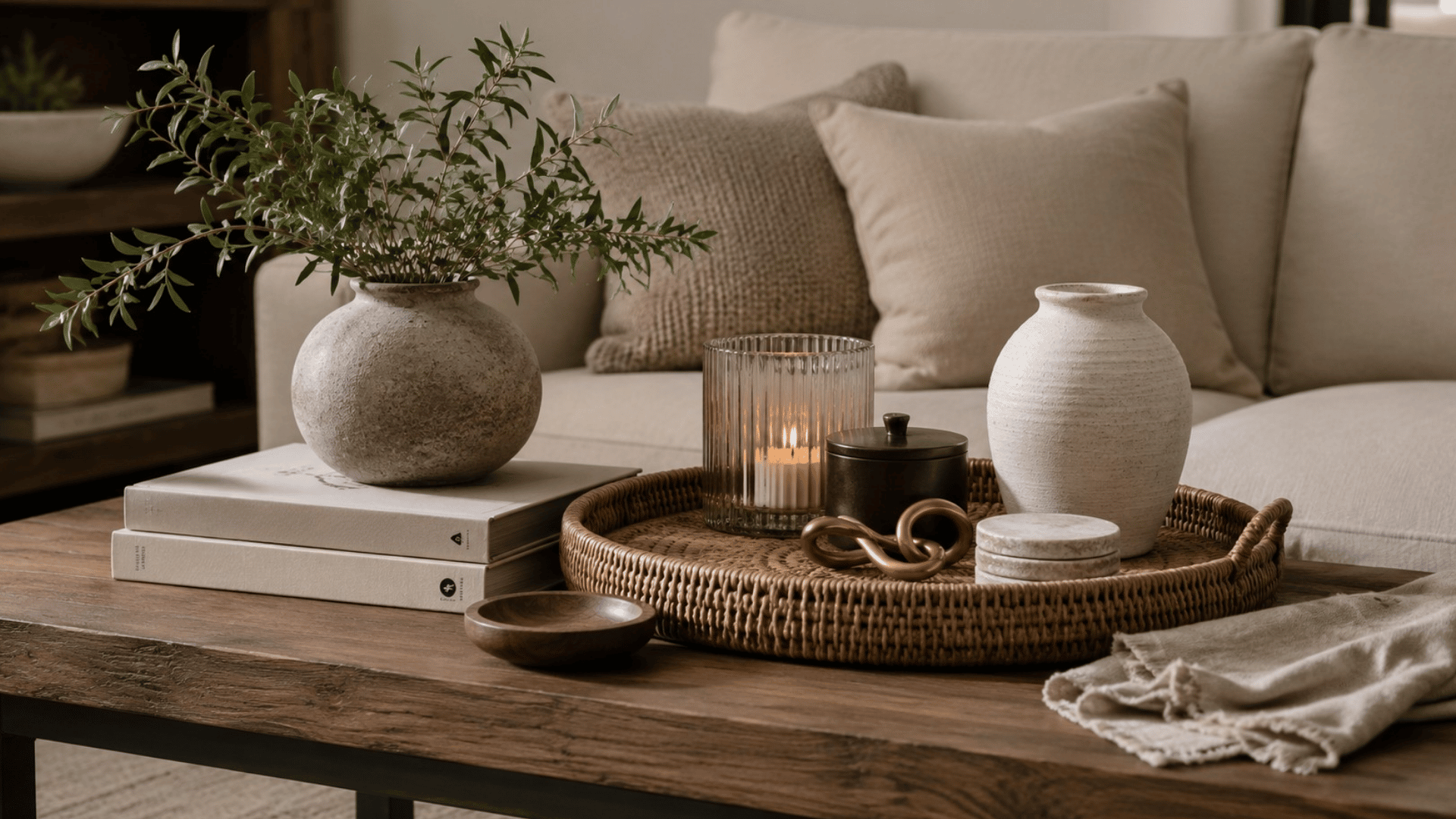
Texture makes coffee table decor feel layered and warm. Mix smooth, rough, shiny, and soft materials, such as glass, ceramic, wood, metal, linen, or woven pieces.
This adds depth without needing too many colors. Keep the overall palette calm so the different textures work together instead of competing for attention.
- Best For: Neutral and monochromatic living rooms.
- Pro Tip: Combine three or four different materials for a balanced layered look.
7. Decorate in Groups of Three
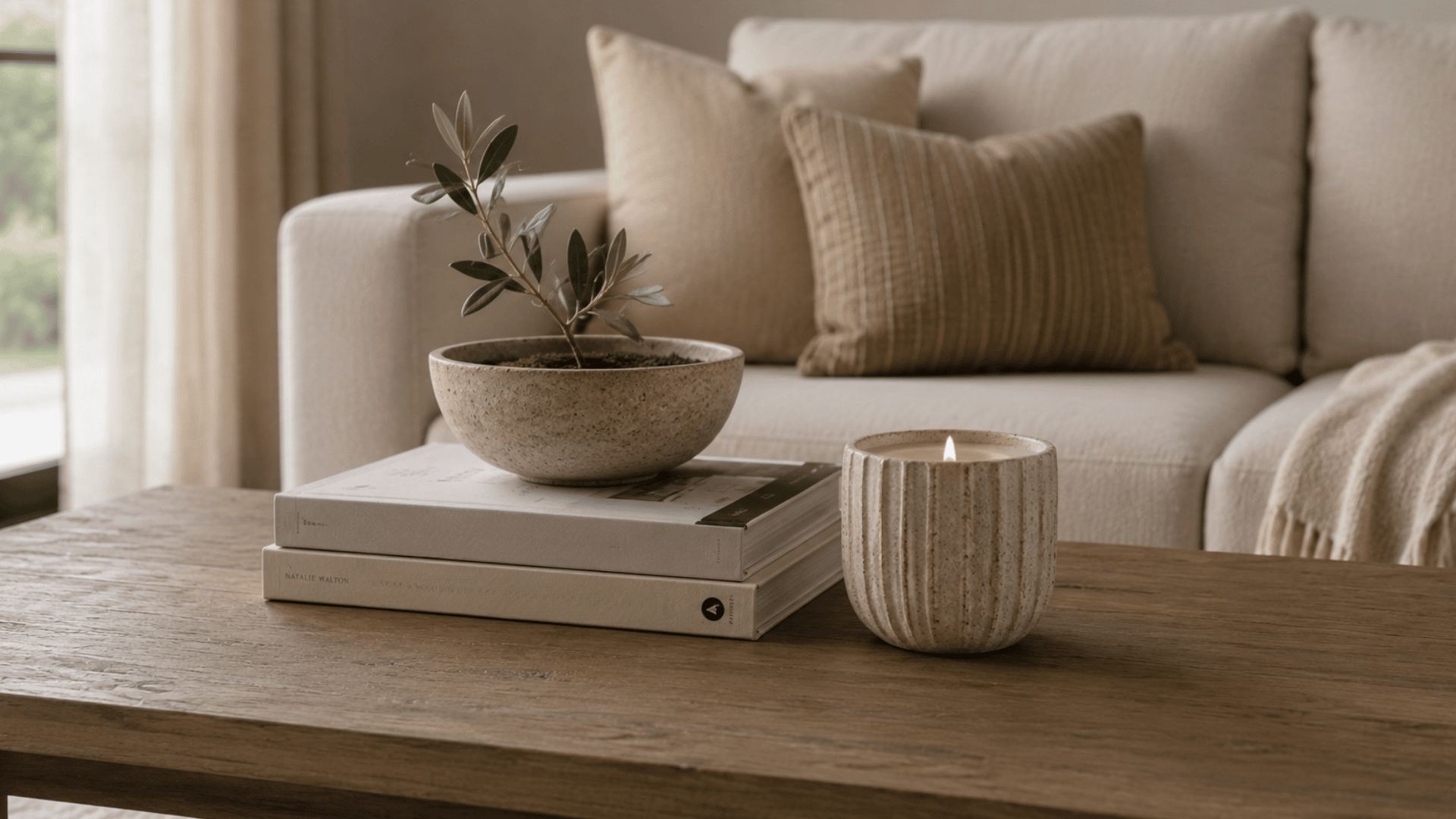
Grouping items in threes often looks more natural than placing objects in even numbers. Try a candle, a stack of books, and a small plant together.
Each item should have a slightly different size, shape, or texture. This simple styling rule helps the table look planned while still feeling relaxed and easy to live with.
- Best For: Beginner-friendly coffee table styling.
- Pro Tip: Vary the height and shape of each item to create visual interest.
8. Add a Candle for Warmth
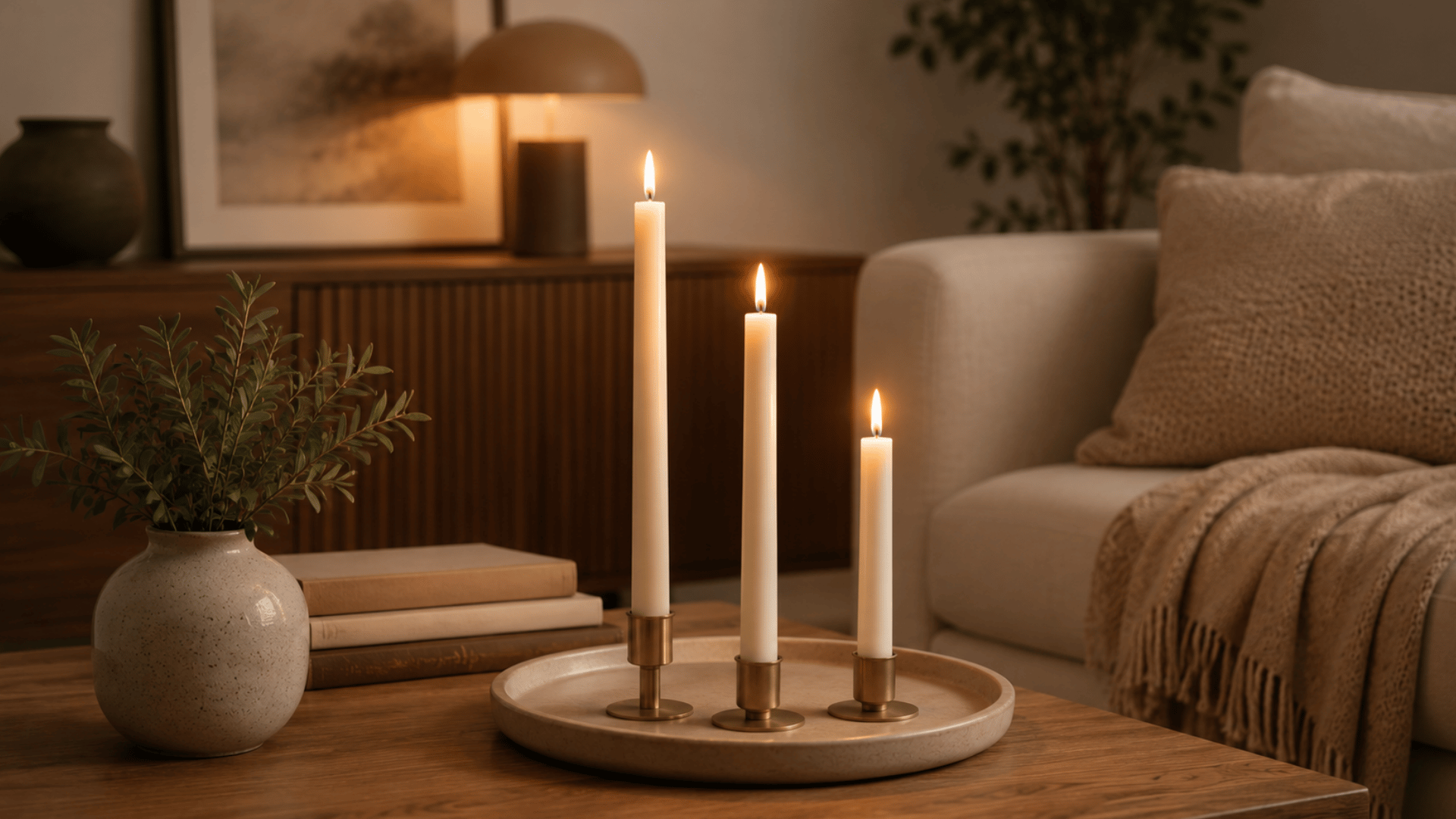
Candles add warmth, scent, and a cozy feeling to the room. Use one larger candle or a small group of candles in different heights.
Place them on a tray or beside books to keep the arrangement neat. Choose simple containers that match your room’s style so the candle looks decorative even when it is not lit.
- Best For: Cozy, traditional, and modern interiors.
- Pro Tip: Use unscented candles in entertaining spaces to avoid overwhelming food aromas.
9. Use a Decorative Bowl
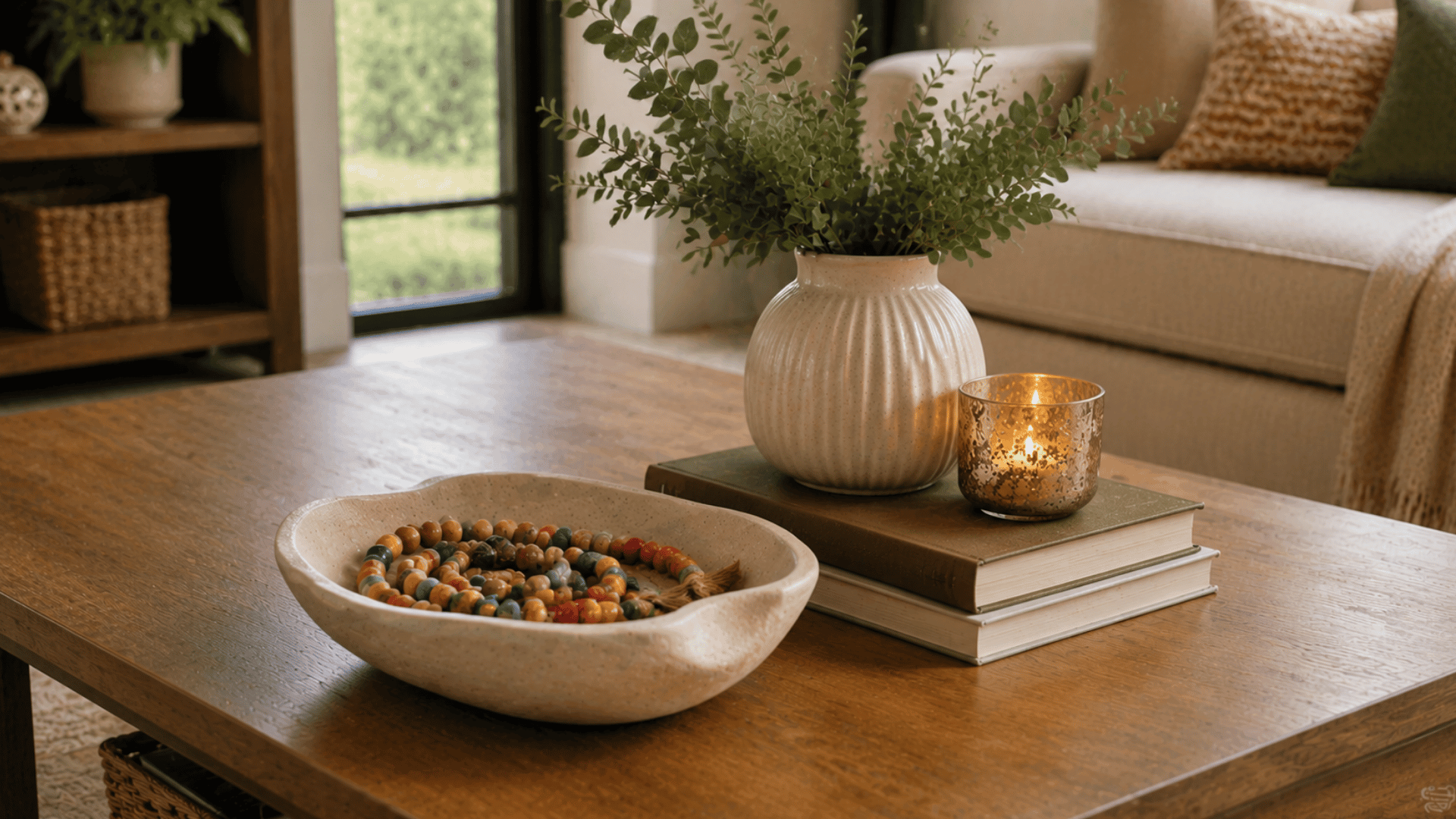
A decorative bowl works well as both a style piece and a practical catchall. It can hold beads, matches, wrapped sweets, small stones, or nothing at all.
Choose a bowl with an interesting shape, material, or finish to add character. On a larger table, place it beside books or a vase for balance.
- Best For: Everyday storage with decorative appeal.
- Pro Tip: Keep the bowl partially filled instead of overflowing for a cleaner appearance.
10. Add a Sculptural Object
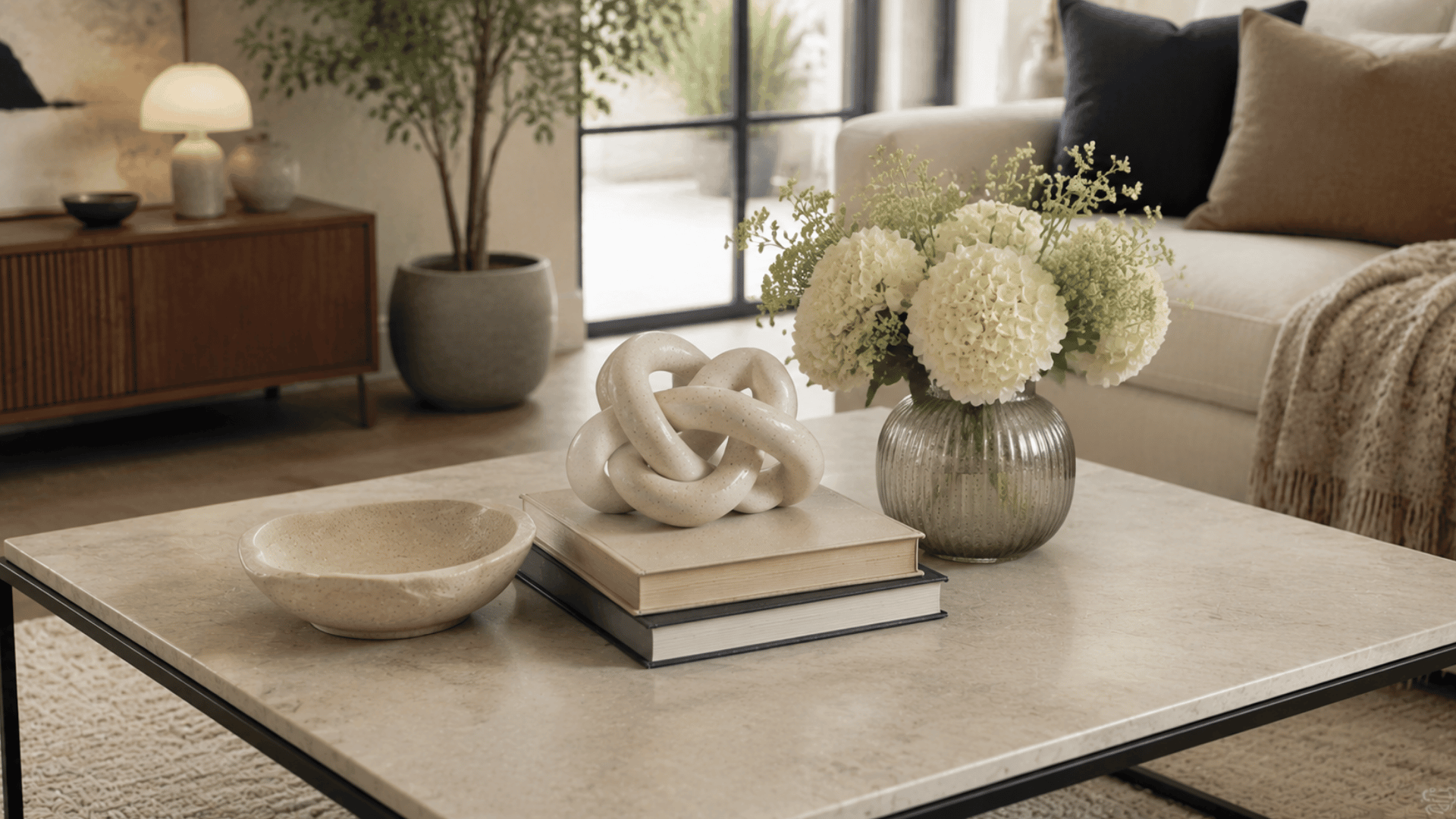
A sculptural object gives the table a designer-style touch without needing many items. It could be a ceramic knot, a small statue, a glass object, or a carved wooden piece.
Choose one that fits the room’s color scheme and does not feel too large for the table. This type of decor works best when paired with simpler items.
- Best For: Modern and luxury-inspired living rooms.
- Pro Tip: Choose a single statement sculpture rather than several smaller decorative pieces.
11. Keep Coasters Within Reach
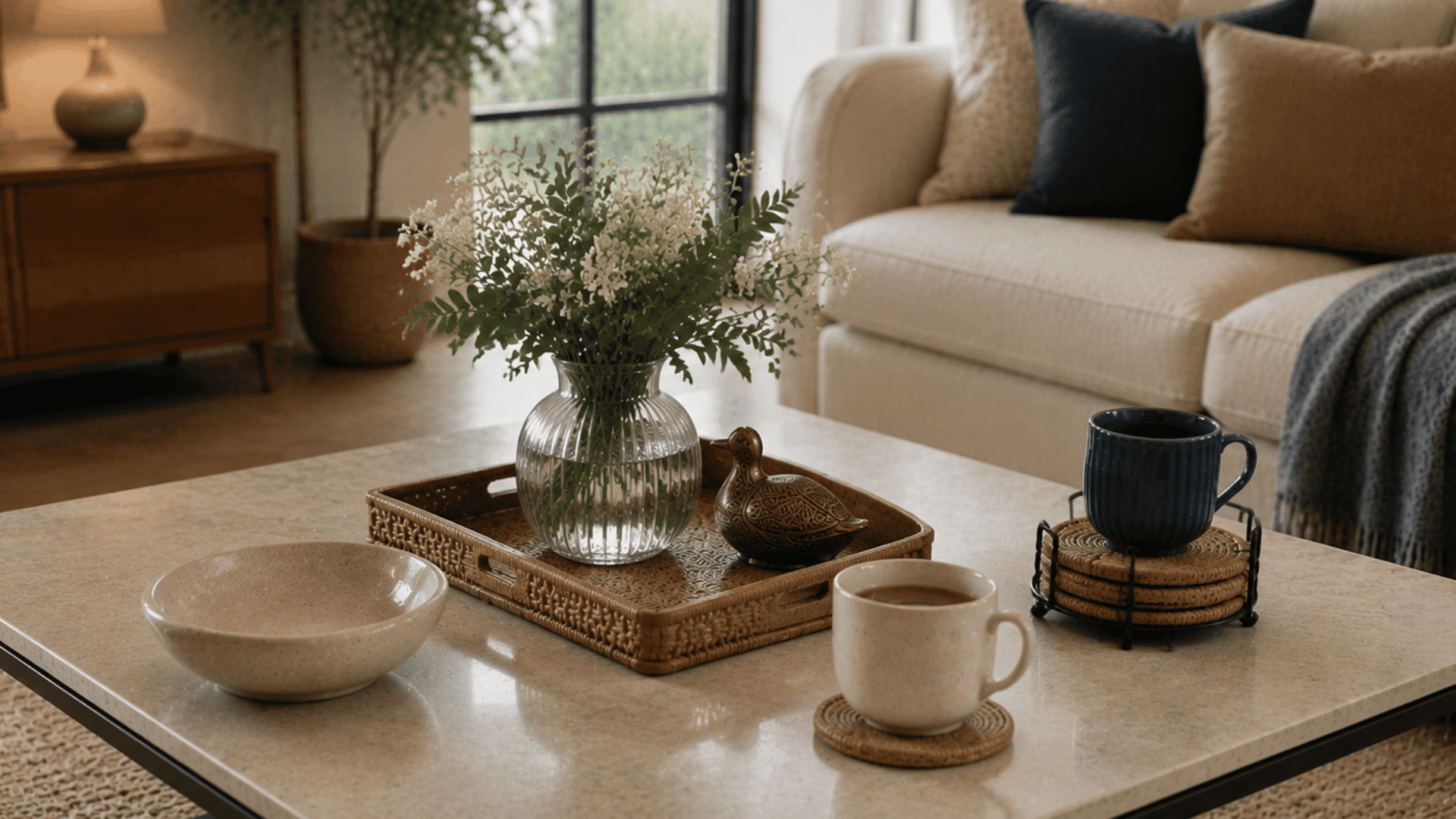
Coasters are useful, but they can also be part of the decor. Choose coasters made from marble, wood, ceramic, leather, or woven material to match the room.
Stack them neatly on a tray or place them near the seating area. This keeps the table practical while protecting the surface from water rings and daily use.
- Best For: Homes where the coffee table is used daily.
- Pro Tip: Match coaster materials with your tray or tabletop for a cohesive look.
12. Style with a Decorative Box
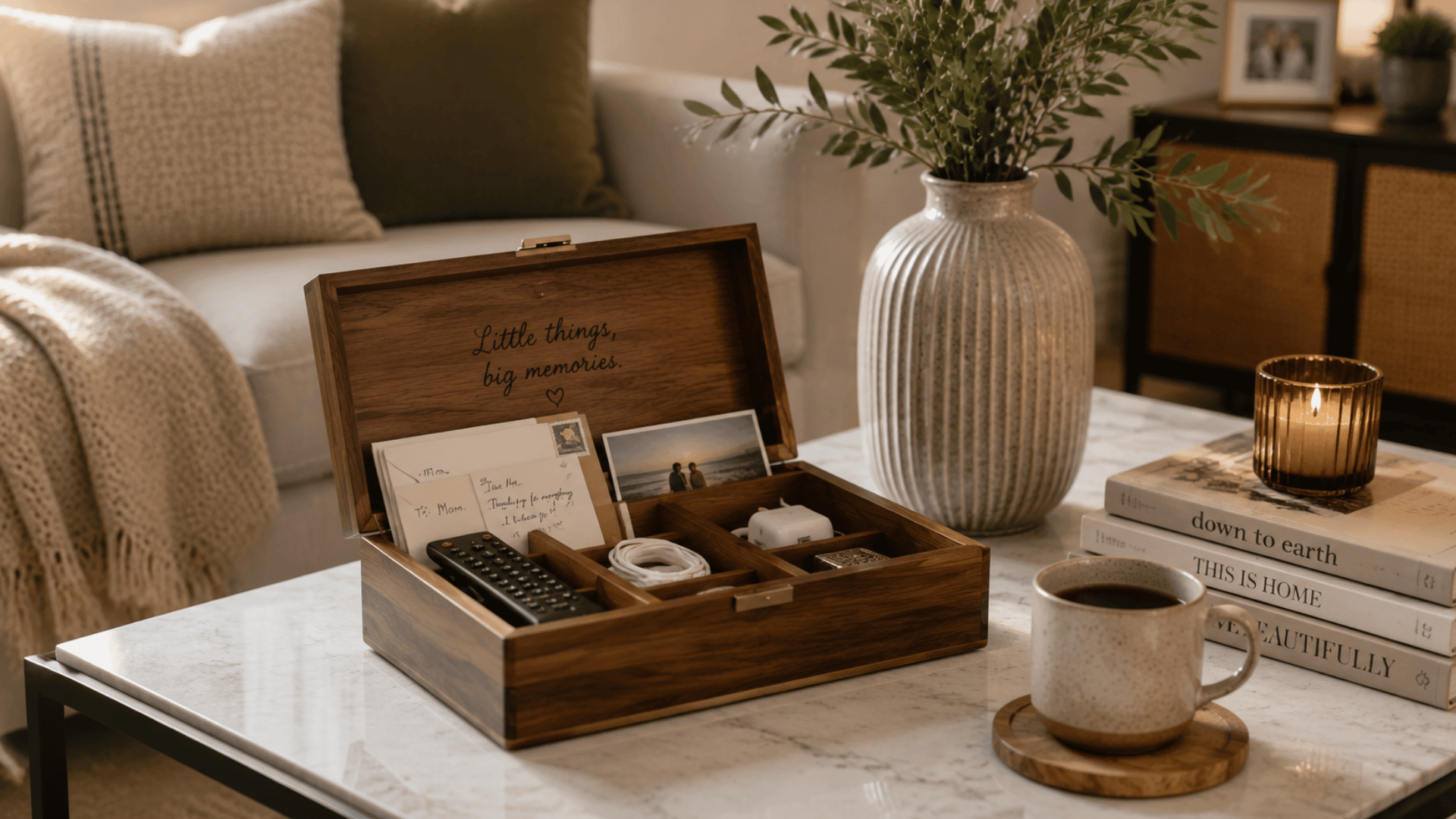
A decorative box is a smart way to hide small everyday items. Use it for remotes, matches, chargers, or other pieces that can make the table look messy.
Boxes also add height and structure to the arrangement. Pick a finish that fits your room, such as wood, lacquer, marble, woven material, or linen.
- Best For: Family rooms and multifunctional spaces.
- Pro Tip: Choose a box with a lid for quick, clutter-free storage.
13. Repeat Colors from the Room
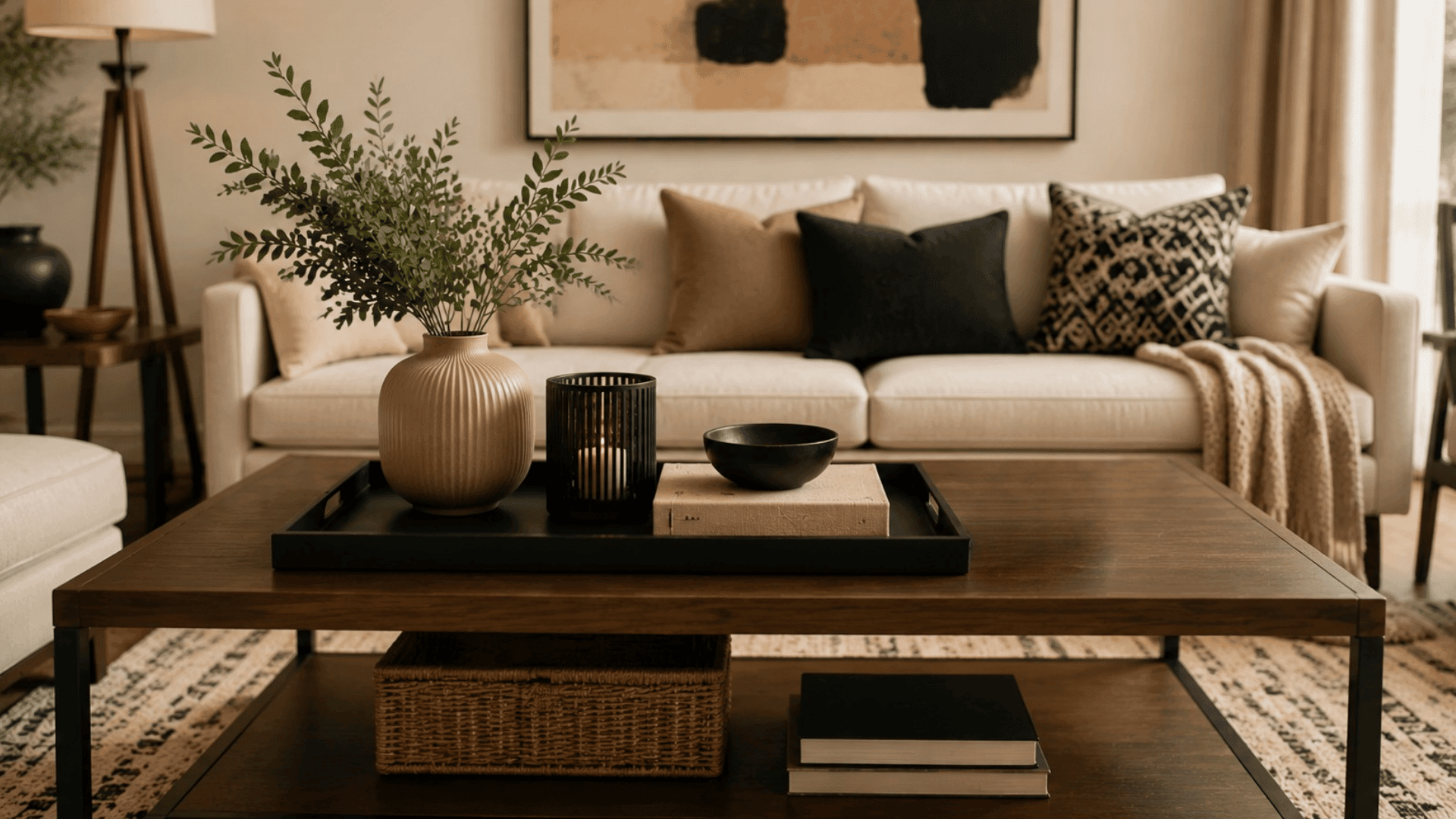
A coffee table looks more connected when it repeats colors already used in the space. Pull tones from pillows, rugs, curtains, artwork, or furniture.
For example, if the room has warm beige and black accents, use a beige book, black tray, or dark candle holder.
Repeating colors helps the table feel styled rather than separate.
- Best For: Creating a cohesive room design.
- Pro Tip: Repeat two or three accent colors instead of introducing new ones.
14. Add a Personal Touch
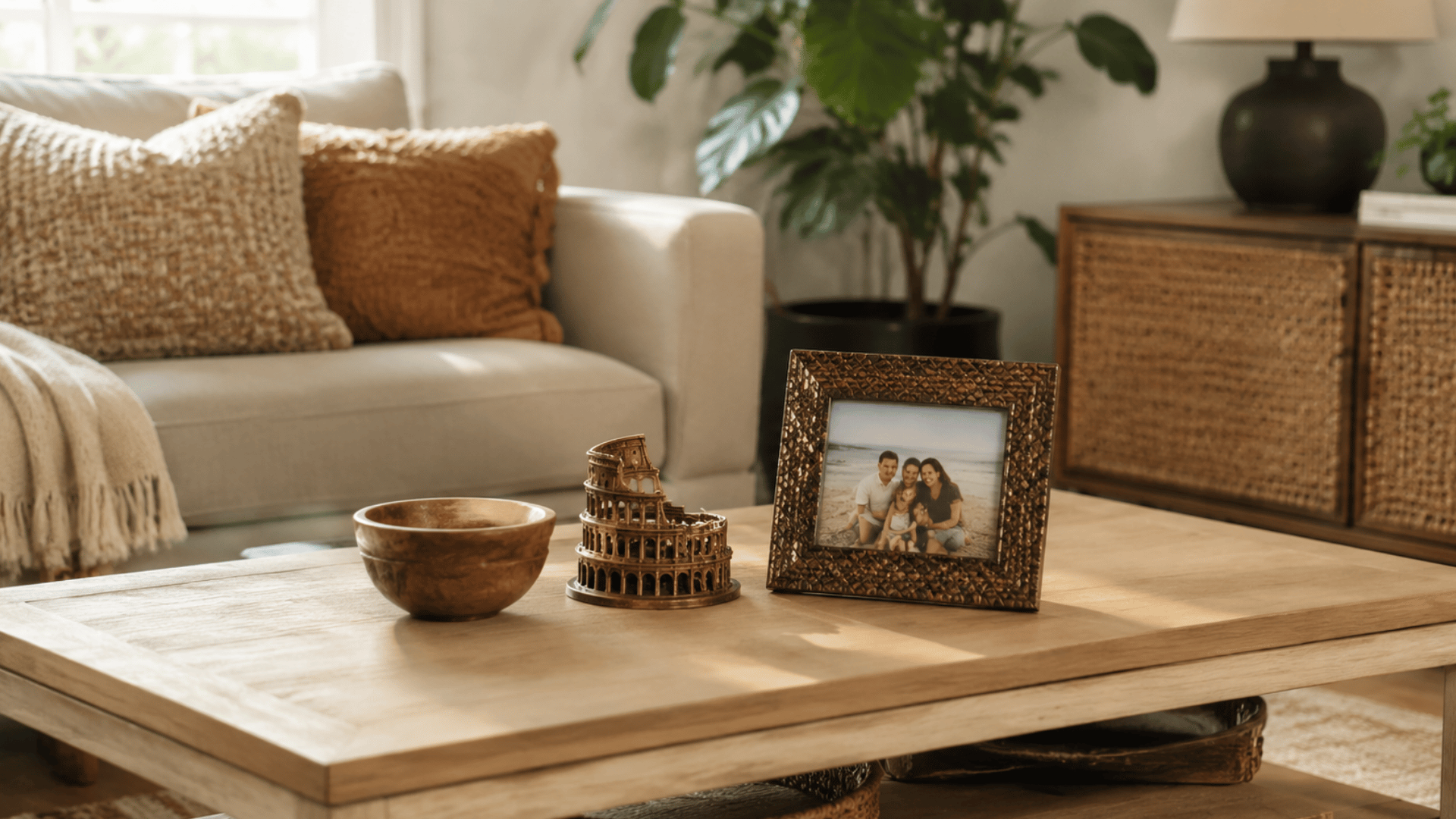
Personal items make the table feel less staged and more like home. This could be a small travel souvenir, a handmade bowl, a family photo, or another meaningful object.
Keep it limited to one or two pieces so the display stays clean. Personal decor works best when it blends with the table’s overall color and style.
- Best For: Making the room feel unique and welcoming.
- Pro Tip: Rotate meaningful items occasionally to keep the display fresh.
15. Use Seasonal Decor Lightly
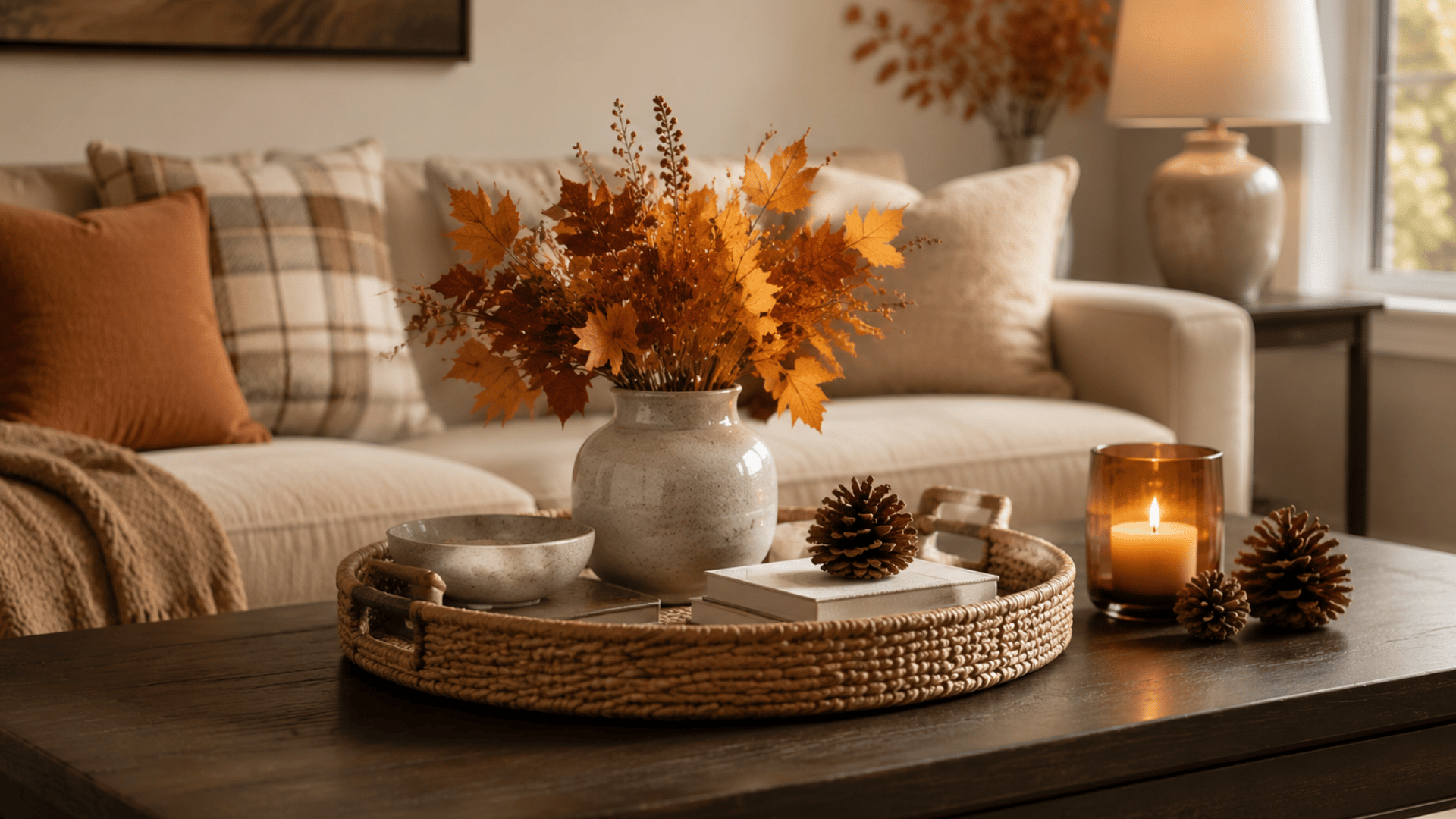
Seasonal decor can refresh a coffee table, but it should not overwhelm the setup. Add small touches such as pinecones, spring flowers, autumn leaves, or a festive candle.
Keep the base arrangement the same and swap only a few pieces. This makes the table easy to update while still looking elegant and balanced.
- Best For: Updating decor throughout the year.
- Pro Tip: Replace only one or two accessories each season to maintain consistency.
16. Match Arrangement Height to Table Height
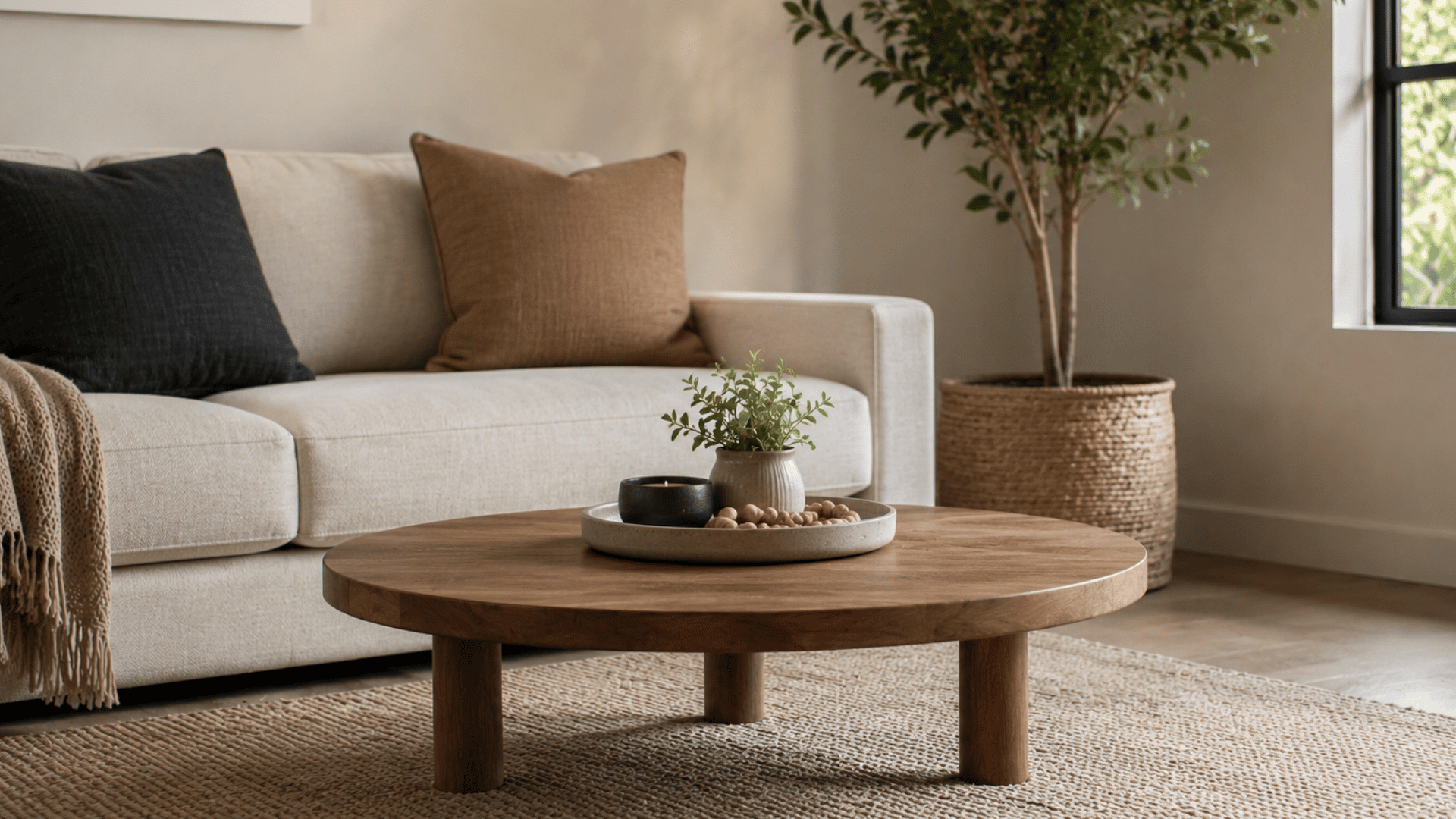
Arrangement height should relate to your table, not the room.
Keep the tallest piece at roughly one-third to one-half of the table’s own height, so nothing towers over a low-profile table.
On a standard 16- to 18-inch table, this lands between six and ten inches. Oversized tables can handle a taller centerpiece, closer to twelve inches.
- Best For: Styling that looks slightly off but hard to pinpoint.
- Pro Tip: Measure your tallest item before buying it so it fits the table, not the store shelf.
17. Add Storage Underneath for Practicality
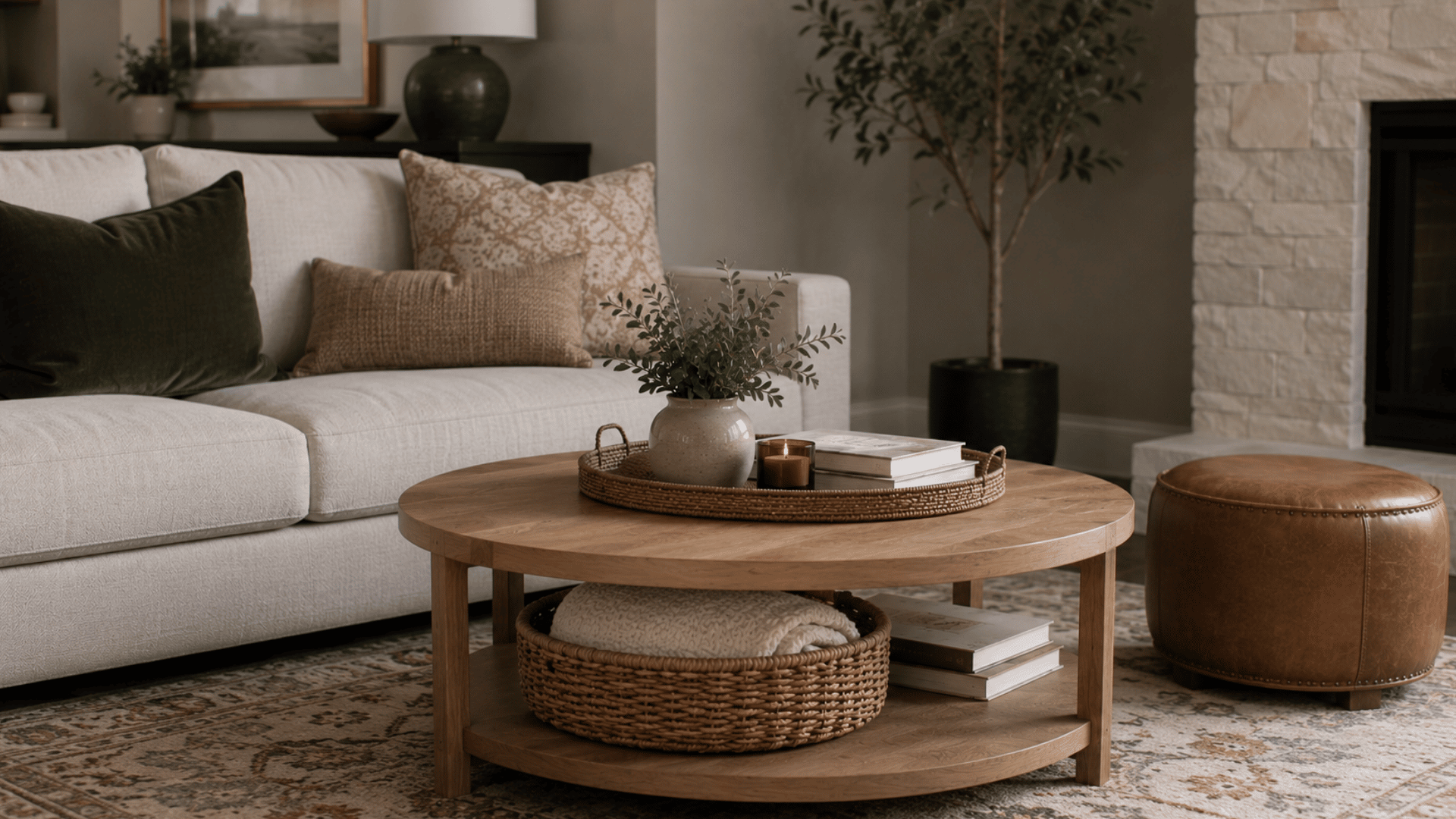
A coffee table can also do quiet work below the surface.
If your table has an open shelf or sits above a rug with room to spare, add a low basket or a stack of extra throws for grab-and-go storage.
A small ottoman tucked nearby gives guests a place to rest their feet without cluttering the top.
- Best For: Small living rooms and multifunctional spaces.
- Pro Tip: Choose an underneath basket in a material that repeats something already on the tabletop, like wood or woven fiber.
How to Decorate a Coffee Table Based on Its Shape?
The shape of your coffee table affects how to arrange decor. Matching the layout to the table’s design creates a more balanced and functional display.
| Coffee Table Shape | Best Layout | Recommended Decor | Styling Tip |
| Round | Single central cluster | Vase, candle, small tray | Keep decor low and leave space around the edges. |
| Square | Four balanced sections | Books, bowl, plant, candle | Distribute items evenly to avoid one heavy corner. |
| Rectangle | Two or three zones | Tray, books, vase, decorative object | Divide the table into sections for a balanced look. |
| Oval | Soft layered center | Flowers, candles, books | Use rounded decor to complement the table’s curves. |
| Glass | Minimal arrangement | Small tray, greenery, books | Keep decor light to maintain an open, airy appearance. |
| Nesting Tables | Style the larger table first | Tray, candle, small plant | Leave the smaller table mostly clear for flexibility. |
Must-Have Pieces for a Classy Coffee Table Decor
A few carefully chosen accessories can make your coffee table look polished while keeping it practical for everyday use.
- Decorative Tray: Organizes smaller accessories into one neat arrangement while adding structure and making the coffee table look balanced and less cluttered.
- Coffee Table Books: Add height, color, and personality while creating a sturdy base for candles, bowls, or other decorative accents.
- Fresh Flowers: Bring natural color and freshness to the room while creating an inviting focal point that changes beautifully with the seasons.
- Scented Candle: Creates a warm, cozy atmosphere while serving as a decorative accent even when not in use.
- Decorative Bowl: Adds visual interest while providing a practical place to hold keys, coasters, wrapped treats, or other small essentials.
- Sculptural Object: Introduces artistic character and creates a designer-inspired focal point without overwhelming the rest of the arrangement.
- Coasters: Protect the tabletop from water rings while blending into the decor through attractive materials like marble, wood, or leather.
- Personal Accent: Displays meaningful items, such as travel souvenirs or handmade pieces, adding a unique and welcoming touch to the coffee table.
Coffee Table Decor Ideas by Budget
Choose decor that matches your budget by investing in key statement pieces while saving on practical accessories that are easy to replace.
| Budget Tier | Where to Spend | Where to Save |
| Budget-Friendly | Invest in one thrifted tray or decorative bowl to create a strong focal point for the arrangement. | Skip expensive fresh flowers and use a realistic faux arrangement or a low-maintenance houseplant instead. |
| Mid-Range | Buy a quality scented candle and a stylish coffee table book that complements your room’s color palette. | Choose affordable coasters, trinket dishes, and small accessories from budget-friendly home decor stores. |
| Splurge | Spend on one standout statement piece, such as a designer vase, sculptural object, or handcrafted centerpiece. | Save on everyday functional items like coasters and small utility pieces since they experience the most wear and are easy to replace. |
Coffee Table Styling Rules Designers Follow
Designers style coffee tables by focusing on balance, proportion, layering, and functionality rather than filling every empty space.
They often begin with one focal point, such as a vase or decorative tray, and build the arrangement around it.
They vary the height, shape, and texture of accessories to add depth while avoiding visual clutter. A common approach is the rule of three, where odd-numbered groupings create a more natural appearance.
Designers also leave negative space so each object stands out and the table remains functional for everyday activities.
Finally, they repeat colors or materials found elsewhere in the room to create a cohesive look.
Common Coffee Table Styling Mistakes to Avoid
Small styling mistakes can make a coffee table feel cluttered or unfinished. Avoid these common decorating errors to create a display that looks balanced, practical, and visually appealing.
- Overcrowding the table: Use fewer decorative items and leave some empty space so the table feels open, balanced, and functional.
- Ignoring scale and proportion: Choose accessories that suit the table’s size and include a mix of heights for added visual interest.
- Decorating without a focal point: Start with one standout piece, such as a tray, vase, or sculptural object, and arrange the remaining decor around it.
- Using too many colors or styles: Stick to a consistent color palette and one decorating style to create a cohesive look.
- Blocking everyday function: Leave enough open space for drinks, books, remotes, and other items you use daily.
- Never refreshing the decor: Swap flowers, candles, or seasonal accessories occasionally to keep the arrangement looking fresh without redesigning the entire table.
Conclusion
Styling a coffee table does not have to be complicated. With the right mix of decorative pieces, thoughtful spacing, and a layout that suits your table’s shape, you can create a display that feels both beautiful and practical.
I believe the best coffee table reflects your personal style while still making everyday life easier.
Small changes, such as adding greenery, layering books, or using a decorative tray, can completely change the look of your living room without a major makeover.
Take your time, experiment with different arrangements, and do not be afraid to refresh your decor throughout the year.
Every home is different, and the perfect setup is the one that works for you. If these ideas helped, share your favorite coffee table styling tip or experience in the comments below. I would love to hear what worked in your home.
Frequently Asked Questions
What Is the 2/3 Rule for Coffee Tables?
The 2/3 rule suggests choosing a coffee table about two-thirds the length of your sofa for balanced proportions and comfortable access.
Is 20 Inches Too Tall for a Coffee Table?
Usually, yes. A coffee table should be the same height as the sofa seat or up to 2 inches lower, typically 16 to 18 inches.
What Size Coffee Table for an 84 Inch Sofa?
For an 84-inch sofa, choose a coffee table about 56 inches long, following the recommended two-thirds length guideline.
Which Is Better, a Round or a Rectangular Coffee Table?
Neither is universally better. Round tables suit smaller spaces and improve flow, while rectangular tables work best with longer sofas and larger seating areas.