

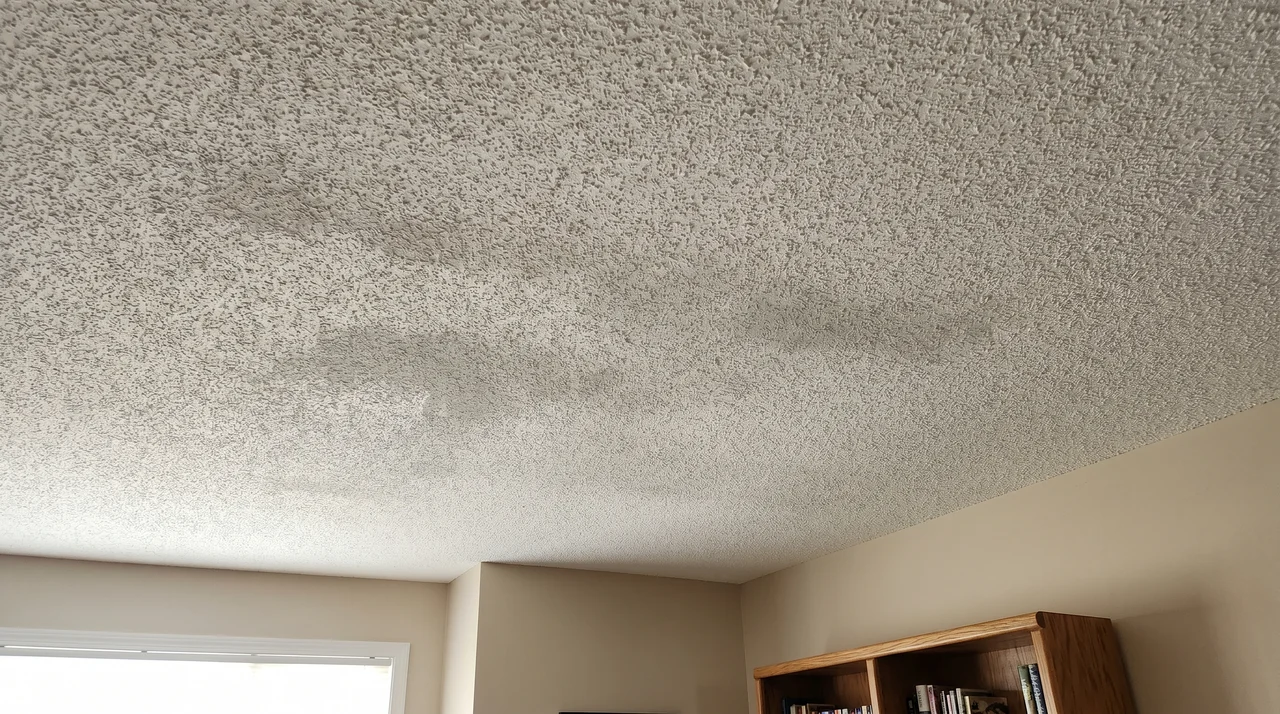
Millions of homes built before the mid-1980s have popcorn ceiling texture that may contain asbestos in the popcorn ceiling material. That doesn’t automatically mean you’re in danger.
The risk is conditional. An intact ceiling nobody has touched in decades is a very different situation from one that’s crumbling or about to be scraped.
Today, I’ll give you you a decision path based on age and condition. By the end, you’ll know whether to test, when to call a professional, and what to do before you touch anything.
What Was Asbestos Doing in Popcorn Ceilings?
Asbestos wasn’t a filler. Manufacturers added it to spray-on ceiling texture as a binding and fireproofing agent. That put it directly into a material people breathed under, not sealed inside insulation or buried in walls.
The texture became popular from around 1945 onward. Concentration ranged from 1% to 10% depending on the product. Higher concentrations mean more fiber release if the material gets disturbed.
The EPA banned asbestos in spray-on ceiling materials in 1978. But that ban stopped new production, not the use of existing stockpiles.
I’ve seen homeowners assume a 1981 ceiling is automatically safe. It’s not. The real risk window runs to the mid-1980s for high-probability material. Lower-concentration products stayed in circulation into the early 1990s.
How Do You Know If Your Popcorn Ceiling Has Asbestos?
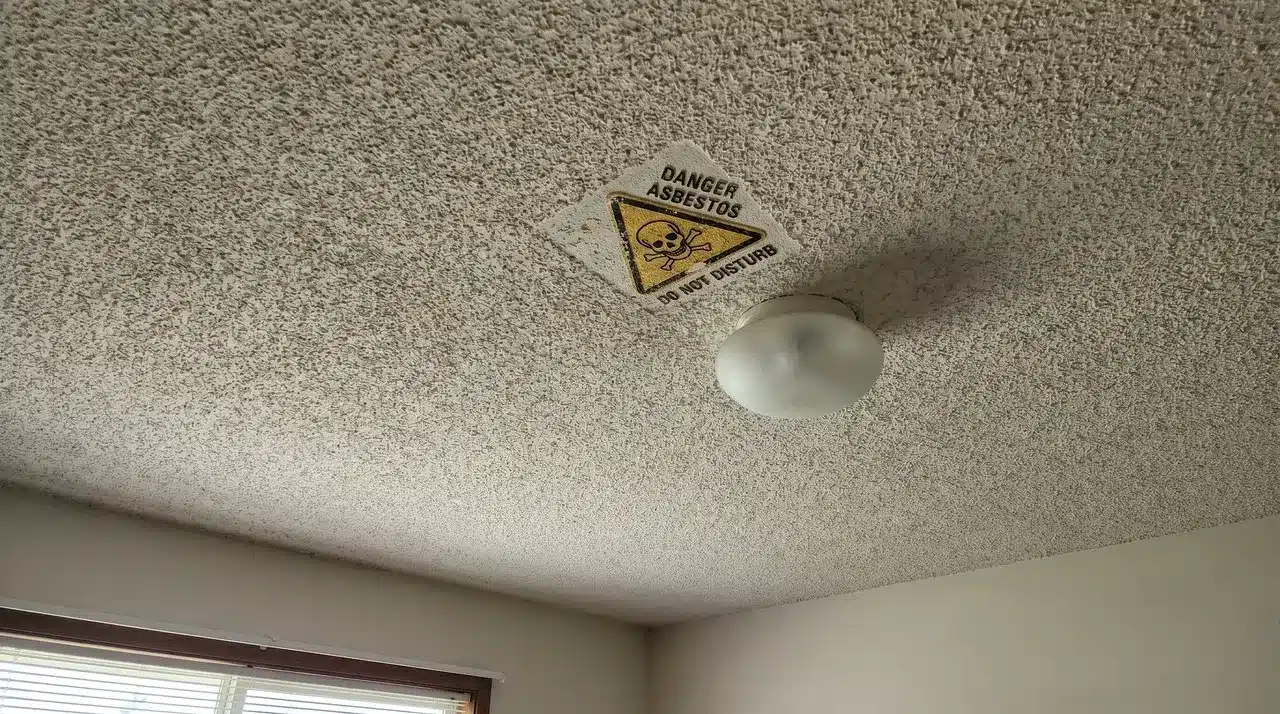
You can’t tell by looking. Asbestos fibers are microscopic, with no texture, color, or pattern to give them away.
A trained inspector staring at your ceiling without a sample can’t confirm it either. The only answer comes from a lab.
Using Installation Date and Condition as a Risk Indicator
What you can use is the installation date as a probability signal, combined with the ceiling’s current condition.
Here’s how to read the date:
- Before 1980: the chance of asbestos exposure was high.
- Between 1980 and 1993: the risk dropped but didn’t go away.
- 1978: ban ended manufacturing, not the use of stock already on shelves.
- After 1993: asbestos-containing texture was effectively off the U.S. market.
Two other things shift the picture. If the ceiling has been patched or retextured, a new layer may cover older asbestos-containing material.
What matters is the original layer’s age. And water stains, soft spots, or cracks don’t confirm asbestos, but they’re a sign the material may already be releasing particles.
What “Friable” Means and Why It Changes Everything
Friable is the EPA’s word for ceiling material that crumbles when you press it lightly.
That one word marks the line between a stable condition and an active problem. An intact ceiling holds its fibers in place. A friable ceiling is already shedding them.
If you’re not sure which you’re dealing with, press gently along a low-risk edge.
Stays firm? You’re in monitoring territory. Dust or flakes? Treat it as friable until a lab says otherwise.
How to Test a Popcorn Ceiling for Asbestos
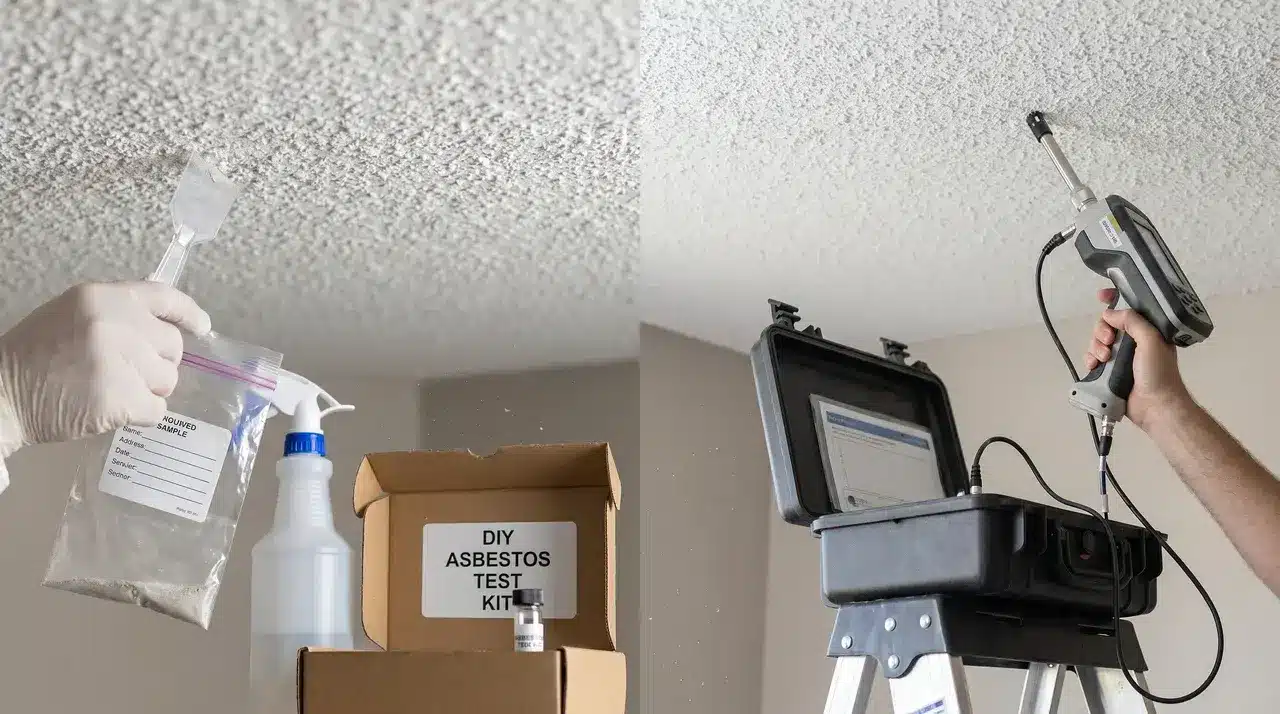
There are two paths for testing, and the condition of your ceiling decides which one you should take.
DIY Bulk Sampling Kits
A DIY bulk sampling kit lets you collect a small amount of ceiling material and mail it to a NIOSH-accredited lab.
Wet the surface first to keep loose fibers down, collect a pea-sized sample in the sealed container, and send it in.
This is a reasonable option for a stable, intact ceiling. If your ceiling is already crumbling or showing visible damage, though,
I’d steer you away from DIY. Sampling a friable surface means disturbing material that’s already releasing fibers, which makes your exposure worse, not better.
For anything that looks friable, go straight to a professional.
Use a Certified Inspector
A certified asbestos inspector samples with protective gear, controlled containment, and multiple samples from different ceiling areas.
That last part matters more than most people realize.
Asbestos concentration isn’t uniform across a single ceiling; one sample from one corner can miss contaminated patches entirely.
Use a professional when the ceiling is damaged, when renovation is coming, or when you need documentation. A professional report holds up for real estate disclosure, renovation permits, and legal purposes. A DIY kit result doesn’t.
Is It Safe to Live with an Asbestos Popcorn Ceiling?
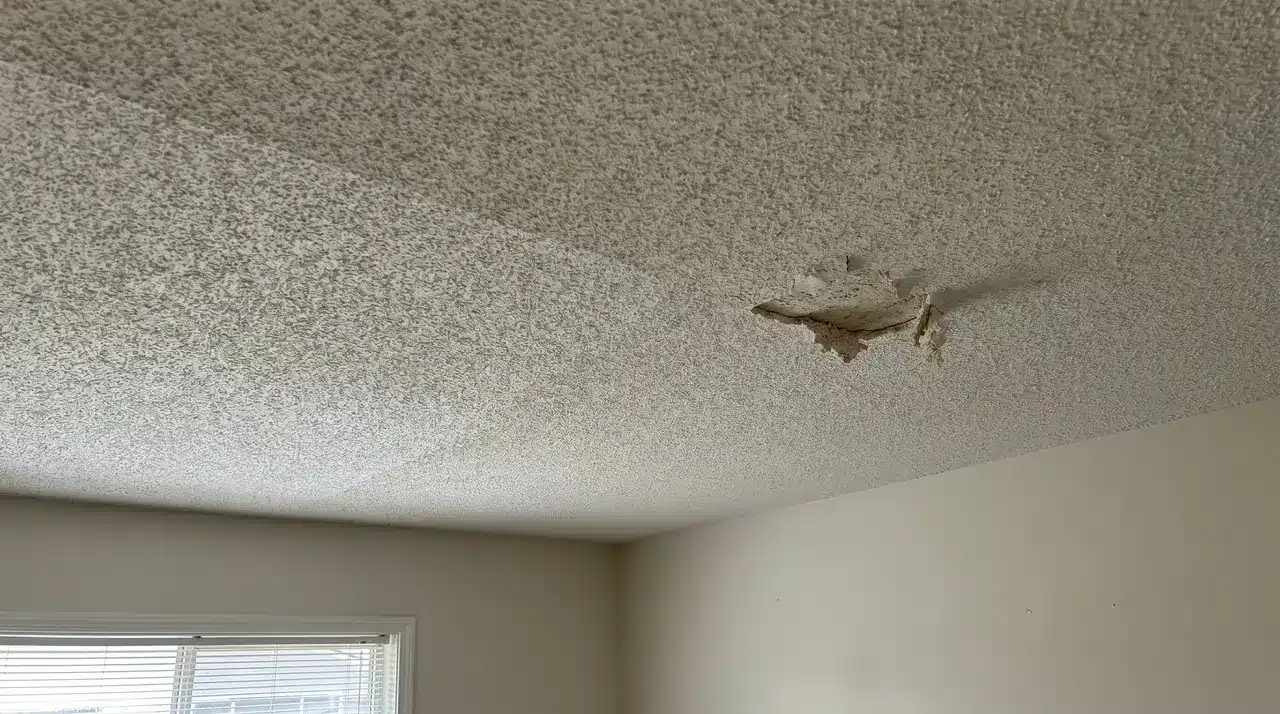
Here’s the core rule: an intact, undisturbed asbestos popcorn ceiling doesn’t release fibers at harmful levels. Understanding why that’s true is what keeps you from making a panicked decision.
Intact Ceilings: What the Risk Actually Is
Asbestos doesn’t off-gas. It doesn’t drift through the air by itself. Fibers only reach your lungs if the material gets physically broken up, and a firm, uncracked ceiling doesn’t do that.
If you’ve lived under a ceiling for years without scraping, drilling, or damaging it, your risk is very low even if asbestos is present. The hazard isn’t the presence of asbestos. It’s what happens when you disturb it.
What Creates Real Exposure
Scraping, sanding, drilling, and patching all of these break the material up and send fibers into the air you breathe. Water damage does the same thing more slowly.
I’ve missed water damage before myself because the ceiling looked fine from the floor, but the edge near some stain was already soft and crumbling.
The disease pathway from asbestos, including mesothelioma, requires repeated inhalation over a long time.
That’s the occupational exposure pattern: years of heavy contamination. A single brief disturbance is not the same thing. Handle it carefully, but don’t treat it as a catastrophe.
After an Accidental Disturbance
If you’ve already scraped or disturbed a part of the room, do these things now.
- Open windows to ventilate the room.
- Dampen any debris before you clean it up; wet material doesn’t send fibers airborne.
- Don’t dry-sweep.
- Stop touching the ceiling until you know what you’re dealing with.
A small, briefly disturbed area typically needs wet cleanup and nothing more. If a wide section came down, or you were scraping for a while, get a certified asbestos inspector in for air clearance testing before you use the room again.
What Are Your Options for an Asbestos Popcorn Ceiling?
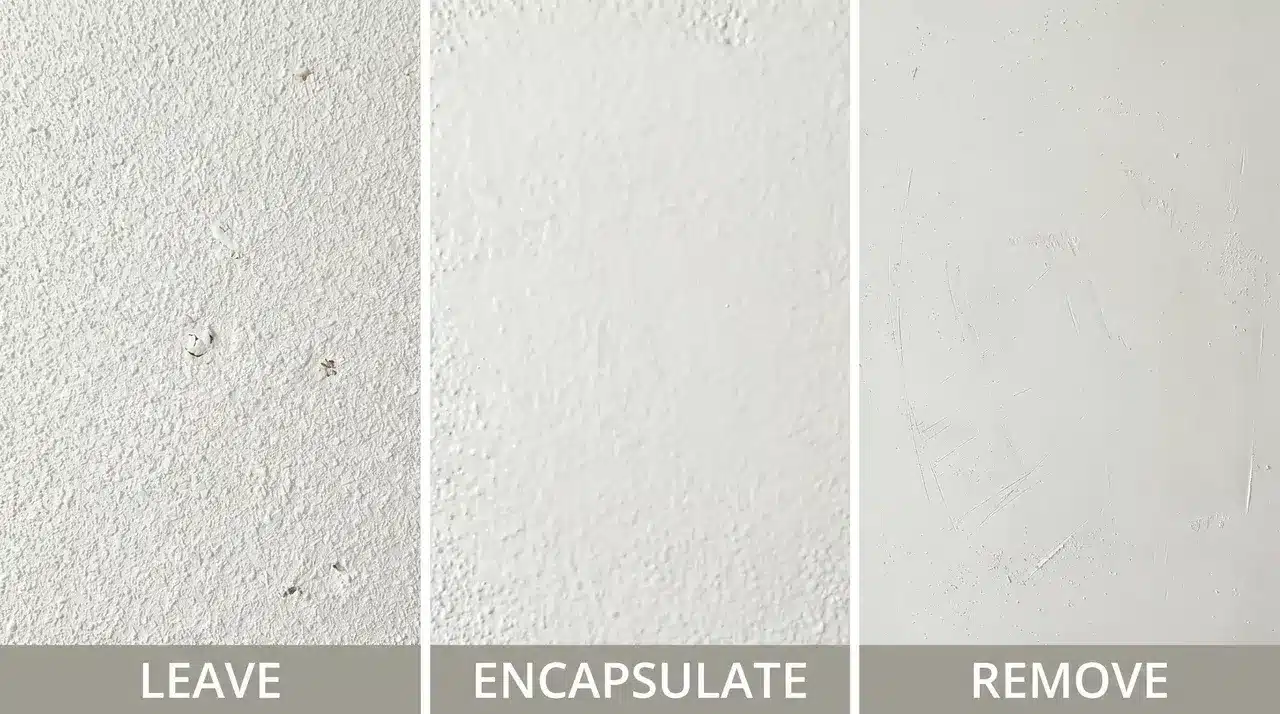
Three real paths exist once you know what you have. Which one fits your situation comes down to the ceiling’s condition, whether renovation is in your plans, and what you need the home to do long-term.
Leave It Alone
This is the EPA’s primary recommendation for intact, non-friable ceilings, and it’s the right call far more often than people expect.
A stable ceiling that isn’t crumbling doesn’t need you to do anything to it. Leaving it alone isn’t avoiding the problem. It is the answer.
Your job is monitoring. Check periodically for new cracks, water stains, or soft spots. If something changes, your plan changes too.
Encapsulation and Covering
This is where I see the most confusion, so let me be direct: paint and encapsulation are not the same thing.
Paint sits on the surface and can peel, and when it peels, it can pull ceiling particles with it. An encapsulant penetrates the texture and binds the fibers from inside, creating a real barrier between the material and the air you breathe.
Use an encapsulant rated for asbestos-containing materials. If you want a clean surface afterward, installing a layer of drywall over the existing texture is a solid alternative; it locks the old material in permanently. Paint alone is not a fix.
Professional Removal
If the ceiling is damaged or you’re renovating in a way that requires accessing it, you’ll likely need professional removal. In most U.S. states, that means a licensed asbestos abatement contractor, not a general contractor, with a respirator.
Here’s what proper abatement actually looks like:
- The contractor seals the work area with plastic sheeting and runs negative-air machines to keep the contained space under pressure.
- Removal is done by wet-scraping, keeping the material damp so fibers stay down. HEPA filters run throughout to catch microscopic particles.
- When the work is done, a third-party inspector performs air clearance testing before any containment comes down.
State rules on licensing, disposal, and notification vary. Check with your state environmental agency before any work starts.
Wrappung Up
If you’re not sure about your ceiling’s age or condition, the path forward isn’t complicated. Find out when the home was built.
Look honestly at the ceiling. Is it firm and intact, or showing cracks and water damage? If the age and condition put you in the risk window, test before you do anything else.
Every stage of an asbestos in popcorn ceiling situation has a manageable answer: leave intact ceilings alone, use a real encapsulant on damaged ones, and call a licensed abatement contractor when renovation is on the table.
The only move that makes all of this worse is disturbing the surface before you know what you’re working with.
Frequently Asked Questions
How likely is it that my popcorn ceiling has asbestos?
If it was applied before 1980, the probability is high that industry estimates put it around 70% for pre-1980 spray-on texture. Ceilings from 1980 to 1993 carry lower but real risk, since stockpiled materials stayed in use after the 1978 EPA restriction. Anything installed after 1993 should not contain asbestos under U.S. regulation.
What year did they stop putting asbestos in popcorn ceilings?
The EPA banned asbestos in spray-on ceiling materials in 1978, but use didn’t stop immediately. Contractors could legally work through existing stockpiles, so ceilings installed through the early-to-mid 1980s still carry meaningful risk. Asbestos-containing textured products were effectively off the U.S. market by the early 1990s.
What should I do if I accidentally scraped an asbestos popcorn ceiling?
Ventilate the room and clean up debris using wet methods, not dry sweeping. Stop disturbing the ceiling. A single brief incident isn’t the same as sustained occupational exposure, but if significant material came down, have the area air-tested by a certified asbestos inspector before using the room again.
Does asbestos testing show up on a home inspection or disclosure?
Standard home inspections don’t include asbestos testing. In most states, sellers must disclose known asbestos-containing materials a positive test result typically needs to be disclosed. What counts as “known” and when disclosure kicks in varies by state. Talk to a real estate attorney before you list.