

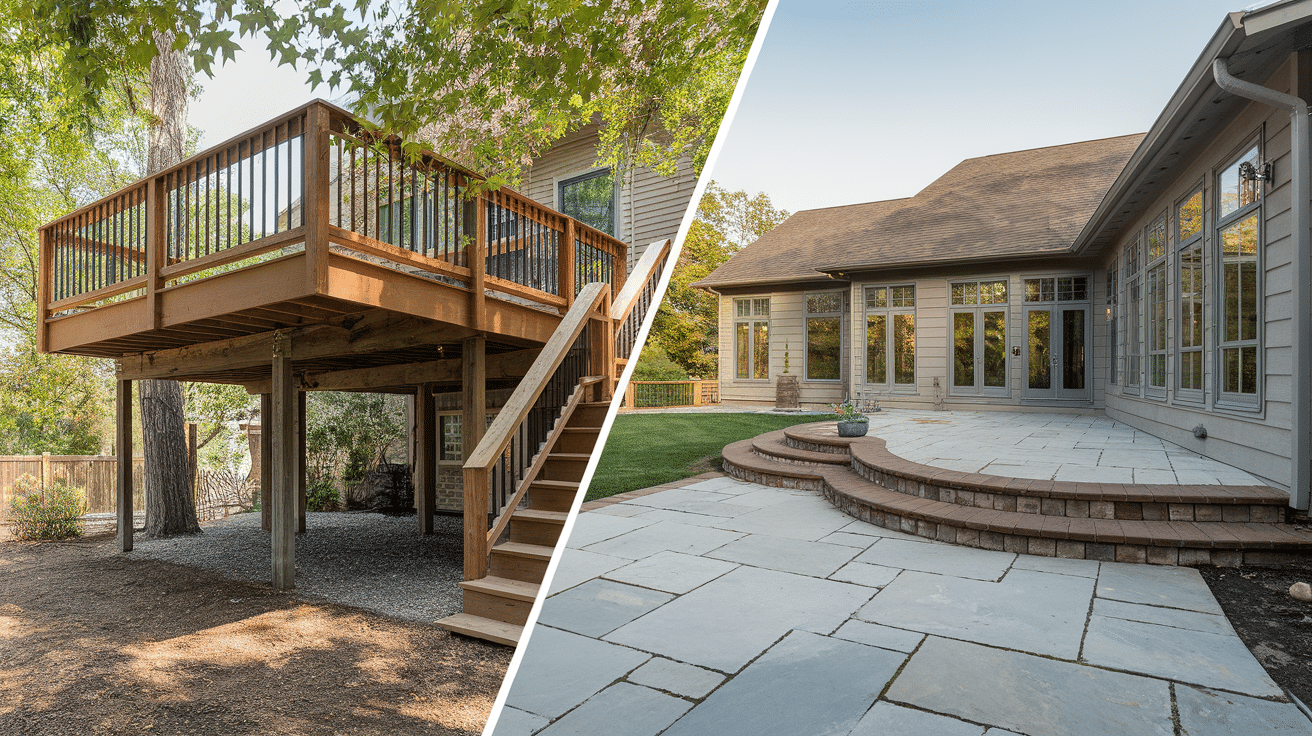
Outdoor living spaces add comfort and value to a home. Many homeowners think about building a deck or a patio to enjoy fresh air and extra space.
Both options create a place to sit, relax, and gather with others. They may look alike at first, but they are not the same.
Each one is built differently and works better in particular yards. Choosing the right option takes careful thought.
A clear understanding helps avoid poor choices later. Knowing the basics makes planning easier and leads to better results before any work begins.
What is a Deck?
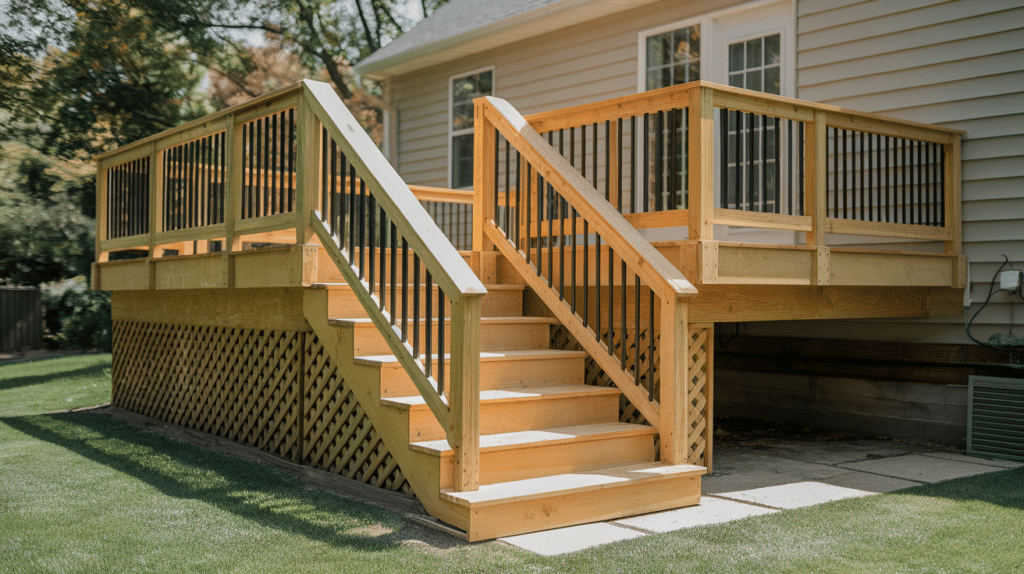
A deck is an outdoor structure built above ground level. It is usually attached to a house, but it can also stand alone in the yard.
Decks are commonly made from wood or composite boards. They are supported by posts and beams that lift the surface off the ground. Because of this design, decks work well on uneven or sloped yards.
Many decks include features like railings, stairs, and built-in seating. Some decks are simple platforms, while others have multiple levels or covered areas.
Decks create a smooth transition from the house to the outdoors, especially when built near doors or kitchens.
| Pros | Cons |
|---|---|
| Works well on sloped or uneven yards | Costs more to build than most patios |
| Feels warm and comfortable underfoot | Needs regular maintenance |
| Can be built in many shapes and heights | Can wear down faster in harsh weather |
| Connects easily to the house | Requires permits in many areas |
| Offers good views of the yard | Boards may need replacement over time |
What is a Patio?
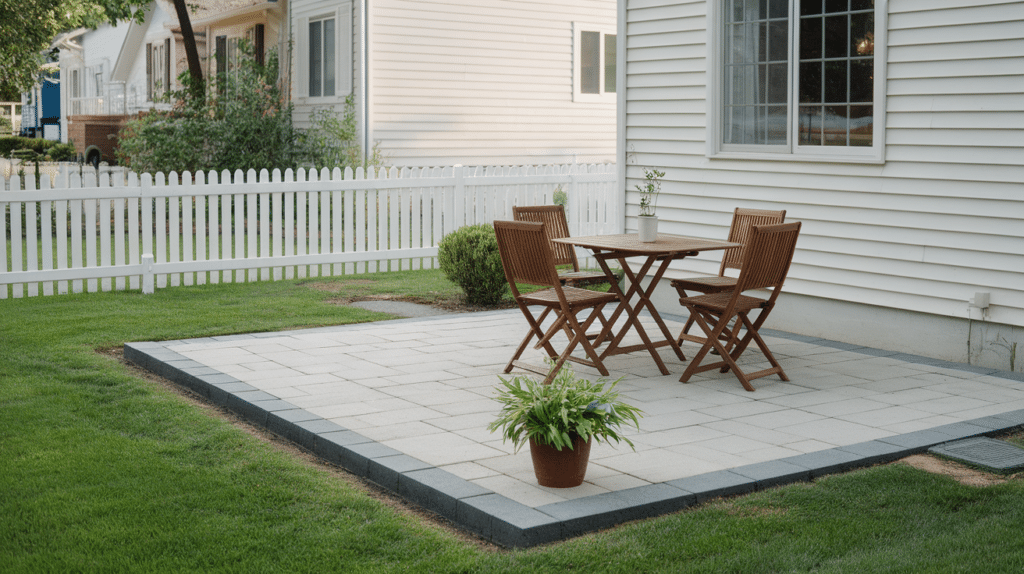
A patio is a flat outdoor surface built directly on the ground. It is usually placed next to a house, but it can also be set farther into the yard.
Patios are made from solid materials like concrete, brick, stone, or pavers. These materials are placed on a prepared base to keep the surface level and stable.
Because patios sit on the ground, they work best on flat yards. Sloped yards often need extra grading before a patio can be built.
Patios feel solid and blend well with landscaping, gardens, and walkways.
| Pros | Cons |
|---|---|
| Usually costs less than a deck | Needs flat ground or extra prep work |
| Needs very little maintenance | Can feel hard underfoot |
| Lasts many years with proper base work | The surface may get hot in direct sunlight |
| Handles heavy furniture and grills well | Cracks can form over time |
| No railings or stairs needed | Less flexible on uneven yards |
Key Differences Between Deck vs Patio
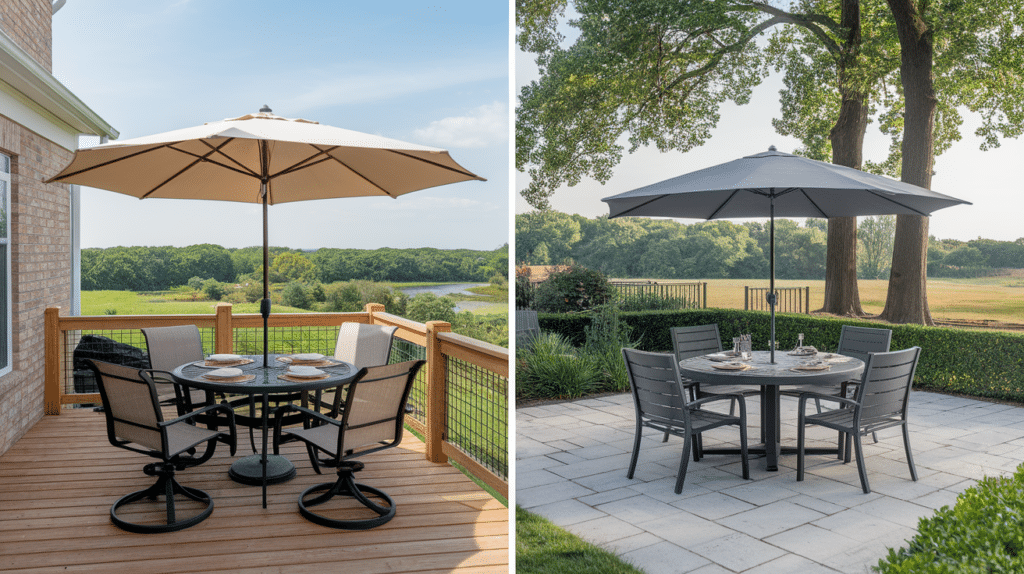
Understanding the main differences between a deck and a patio helps narrow down the right choice. The patio vs deck decision often comes down to structure, cost, and care.
1. Height and Structure
Decks are raised structures built above ground level using posts, beams, and framing. This design allows decks to sit higher than the yard, which works well on uneven or sloped land.
The space below helps with water drainage, but it also means the structure needs regular checks. Railings and stairs are often required, which adds to the cost and planning.
Patios are built directly on the ground and do not use posts or framing. They sit on a compacted base made of soil and gravel, which keeps the surface stable.
Because patios are ground-level, the yard must be flat or graded before building. This design makes patios easier to access and safer, since stairs and railings are not needed.
2. Materials Used
Decks are commonly made from pressure-treated wood, cedar, redwood, or composite boards. Wood decks offer a natural look but need regular sealing to prevent rot and damage.
Composite decking costs more upfront but lasts longer and resists moisture and insects. The material choice affects how much maintenance the deck needs and how long it will last.
Patios are built using solid materials such as concrete, brick, stone, or concrete pavers. These materials are heavy and durable, making them well-suited for long-term outdoor use.
They do not rot or warp and handle weather better than wood. Material choice affects the patio’s appearance, surface temperature, and overall cost, but maintenance stays low.
3. Cost Comparison
Decks usually cost more to build because they require framing, posts, railings, and stairs. Labor costs are higher due to the structure and safety requirements.
Material choice also affects price, with composite decking costing more than wood. Over time, maintenance costs like staining and repairs add to the total expense of owning a deck.
Patios are often less expensive to build, especially basic concrete patios. Since patios do not need framing or railings, labor costs are usually lower.
Stone and paver patios can cost more, but they still tend to be cheaper than decks of the same size. Long-term costs are lower because patios need less maintenance and fewer repairs.
4. Maintenance Needs
Decks require regular maintenance to stay safe and look good. Wood decks need cleaning, sealing, or staining every few years to protect against moisture and sun damage.
Boards may crack or rot over time and need replacement. Even composite decks need cleaning to prevent mold buildup. Skipping maintenance can shorten the deck’s lifespan and raise repair costs.
Patios are much easier to maintain than decks. Most patios only need sweeping and occasional washing with water. Paver patios may require weed removal between joints, but repairs are usually simple.
There is no sealing or staining required for most materials. This low maintenance is a major reason many homeowners prefer patios over decks.
5. Durability and Lifespan
Deck durability depends on the material and level of care. Wood decks can last 10 to 20 years with regular maintenance, while composite decks may last longer.
Exposure to sun, rain, and snow can cause wear over time. Without proper care, decks may weaken, fade, or develop rot, which can lead to safety concerns.
Patios are known for their long lifespan. Concrete, stone, and brick patios can last 25 to 50 years or more when installed correctly.
These materials handle weather well and do not rot or attract insects. Cracks can happen over time, but they are usually easy to repair. Overall, patios offer strong long-term durability.
6. Design and Style Options
Decks offer flexible design options, including multiple levels, built-in benches, rail styles, and covered sections.
They can be shaped to fit the home and yard layout. Decks often match siding or trim, helping them blend with the house and create a connected outdoor space.
Patios offer many design choices through material patterns, shapes, and borders. Pavers allow for curves and custom layouts.
Patios work well with fire pits, outdoor kitchens, and garden features. Their design often blends naturally with landscaping and hardscaping elements.
Permit Requirements for Decks and Patios
Permit rules can affect the cost, timeline, and planning of your outdoor project. Requirements vary by location, but decks usually have more rules than patios due to their structure.
| Feature | Decks | Patios |
|---|---|---|
| Permit required | Often required | Sometimes required |
| Reason for permit | Raised structure and safety concerns | Ground-level surface and drainage |
| Inspection needed | Usually required at one or more stages | Rare, but possible |
| Railing rules | Required for raised decks | Not required |
| Stair rules | Required if the deck is elevated | Not applicable |
| HOA approval | May be required | May be required |
| Local rules vary | Yes | Yes |
Which One is Right for You?
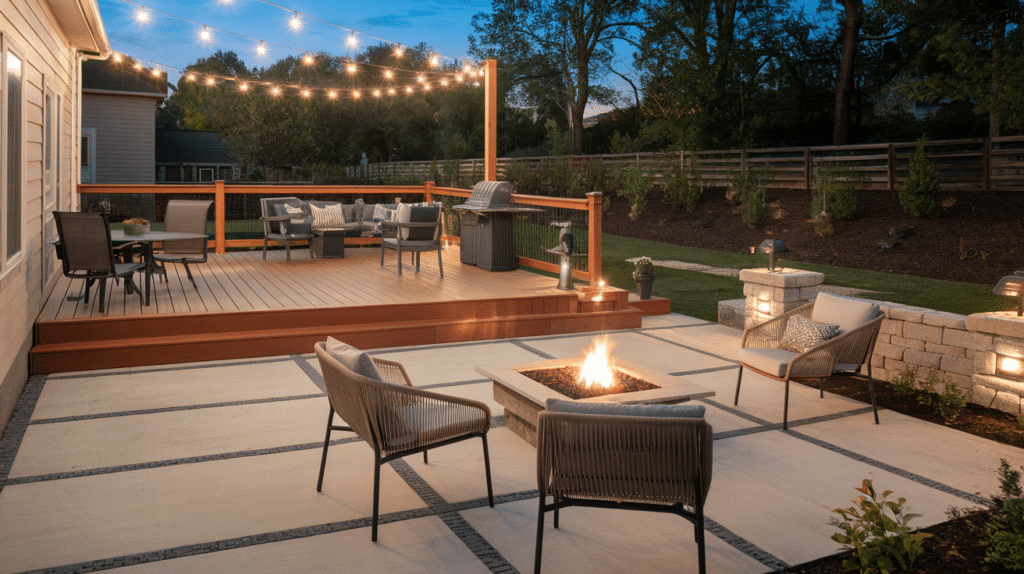
Choosing between a deck and a patio depends on your yard, budget, and lifestyle.
If you want a raised space, flexible design, and yard views, a deck may be the better choice. Just be ready for regular maintenance.
If you prefer a solid, long-lasting surface with low upkeep, a patio is often the better option.
Think about how you plan to use the space, how much care you want to handle, and how long you plan to stay in the home.
To Conclude
A deck or patio can change how a home feels and how outdoor time is enjoyed. Each option brings different benefits in daily use, long-term care, and overall cost.
Small details, like surface comfort and repair needs, can make a big difference later. Planning with these points in mind leads to better results and fewer surprises.
A clear decision now helps create an outdoor space that stays useful for years.
Ready to move forward? Take the next step by comparing quotes or talking with a local builder today.