

Planting rhubarb seems easy, but choosing the right spot can be tricky. Does it need full sun, or will it thrive in a shaded corner?
These are fair questions, and I had the same ones when I first tried growing rhubarb next to a fence that blocked the afternoon light. The stalks that grew looked thin and pale, which made me wonder what was going wrong.
The soil also felt dry, almost like it had not been fed well for weeks.
That experience made me look more closely at how light, heat, and water affect rhubarb plants.
In this article, you will learn how sun exposure affects rhubarb growth, what happens in shadier spots, and how to pick the right location so your plant actually grows.
An overview of the Rhubarb Plant
Rhubarb is a cool-season garden plant known for its thick stalks and large leaves. Many home gardeners grow it because it comes back every year after planting.
Once the roots settle in the soil, the plant forms a strong base called a crown that produces new stalks each season.
Rhubarb usually grows well in areas with cold winters, which helps the plant rest before the next growing season.
Gardeners often wait a year or two before harvesting, so the plant can build strength. With steady care, rhubarb can remain productive in the same garden bed for many years.
- Plant family: Rhubarb belongs to the Polygonaceae plant family.
- Scientific name: Rheum rhabarbarum.
- Harvest season: Stalks are usually harvested from mid-spring to early summer.
- Companion planting: It grows well near onions, garlic, and brassicas.
- Garden spacing: Plants are usually spaced about 3 feet apart.
- Cold tolerance: Rhubarb can survive freezing winter temperatures.
Does Rhubarb Need Full Sun?
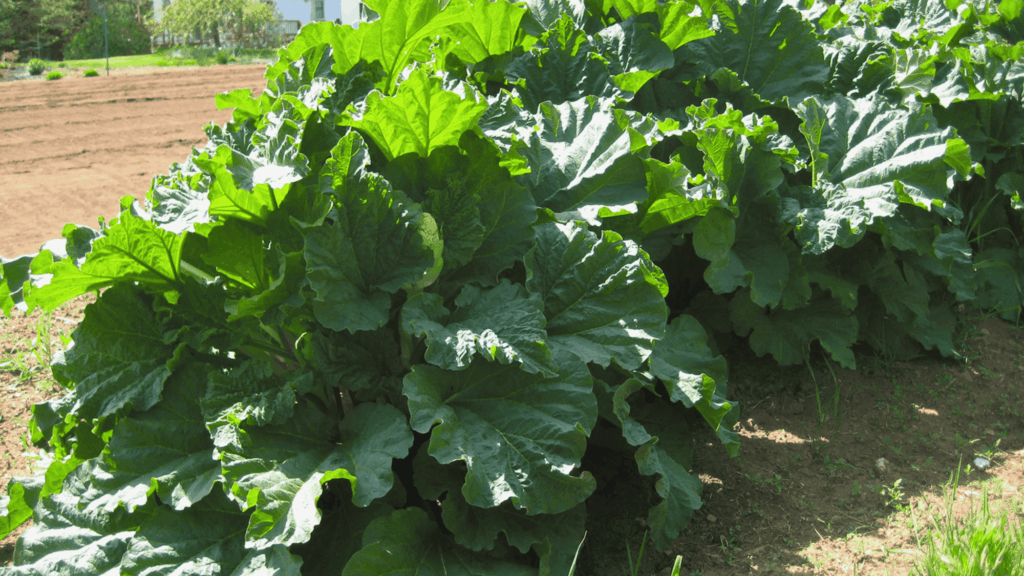
Yes, rhubarb grows best when it getsfull sun for at least 6 hours a day. Sunlight helps the plant produce thick, strong stalks and healthy leaves.
When rhubarb receives enough light, it can grow faster and stay productive during the growing season.
In cooler regions, full sun usually works very well because the plant can handle the temperature. In warmer areas, a little afternoon shade can help protect the plant from heat stress.
Rhubarb can still grow in partial sun, but the stalks may be thinner, and the plant may produce fewer harvests.
For steady growth, choose a garden spot that receives direct sunlight for most of the day.
Also, make sure the soil stays moist and rich. Good sunlight, healthy soil, and steady watering all help rhubarb grow strong.
Can Rhubarb Grow in Partial Sun or Shade?
Rhubarb can grow in partial sun, but it usually performs best with more direct light. If the plant receives at least 4 to 5 hours of sunlight, it can still grow and produce stalks.
However, the growth may be slower than plants that receive full sun. In shaded areas, rhubarb often forms thinner stalks and fewer harvests during the season.
Too much shade can also cause weak growth because the plant cannot make enough energy from sunlight.
In warmer regions, partial shade in the afternoon can actually help the plant avoid heat stress. The key is to place rhubarb where it gets steady morning sun and some light during the day.
This balance allows the plant to grow without overheating.
Good soil, regular watering, and enough space also help rhubarb stay healthy in spots that are not fully sunny.
Best Planting Locations for Rhubarb
Choosing the right spot for rhubarb is key to its growth. The ideal location should offer well-drained, fertile soil and plenty of light to keep the plant healthy and productive.
- Well-drained, fertile soil: Rhubarb grows best in loose, rich soil that does not hold water for too long, as soggy roots can cause rot and significantly slow growth.
- Spacing and airflow: Plant rhubarb at least three feet apart to allow good air circulation, which keeps the plant healthy and reduces the risk of fungal issues.
- East-facing garden spots: Placing rhubarb where it gets morning sun and afternoon shade gives it useful light without the stress of intense midday heat.
- Near taller plants or structures: Positioning rhubarb beside taller plants that block only late afternoon sun can help you make the most of limited light in your garden.
- Raised beds: Elevating your planting area lets you position rhubarb in the brightest available spot and improves drainage at the same time.
- Reflective surfaces: Placing light-colored stones, walls, or fencing nearby can bounce extra light onto your rhubarb, partially compensating for limited direct sun exposure.
Seasonal Sun Needs for Rhubarb
Rhubarb’s sun exposure needs vary by season. Full sun promotes vigorous growth in spring, while partial shade may be beneficial during summer heat or in hotter climates.
| Season | Sun Exposure | Key Considerations |
|---|---|---|
| Spring | Full Sun (6+ hours) | Rhubarb grows in full sun during the cooler spring months, ideal for vigorous growth and producing large, flavorful stalks that are perfect for harvesting. |
| Summer | Full Sun (6+ hours), or Partial Sun (3-6 hours) | In summer, rhubarb can handle full sun but may benefit from some partial shade during peak heat to avoid stress. |
| Hotter Climates | Partial Sun or Shade (to avoid excessive heat) | In hotter climates, rhubarb may suffer from heat stress if exposed to direct sunlight for long periods. Plant in partial sun or shaded areas during the hottest parts of the day. |
| Fall | Full Sun or Partial Sun | As temperatures cool down in the fall, rhubarb can handle full sun or partial sun. The cooler weather reduces the risk of heat stress. |
| Winter | Indirect Light or Light Shade | During winter, rhubarb goes dormant and doesn’t require direct sunlight. However, a little indirect light can help with any early growth if your climate isn’t too harsh. |
Signs Your Rhubarb Is Not Getting Enough Sun
Rhubarb plants need good sunlight to grow strong stalks and healthy leaves. When light is limited, the plant often shows a few clear changes that gardeners can easily notice.
- Thin stalks: Rhubarb may produce narrow, weak stalks that bend easily instead of thick, firm ones. This usually happens when the plant cannot make enough energy from sunlight.
- Pale stalk color: Stalks may look lighter than normal or slightly faded. Good sunlight helps develop stronger color in many rhubarb varieties.
- Slow spring growth: The plant may take longer to produce new stalks at the start of the growing season. Healthy rhubarb usually grows quickly in spring with enough light.
- Large leaves but small stalks: The plant may grow big leaves while the stalks remain short and weak. This is a common sign that the plant is trying to capture more light.
- Low harvest yield: Fewer stalks may grow during the season, which means less harvest for the gardener. Limited sunlight often reduces the plant’s overall productivity.
How Much Water Does Rhubarb Need in Sunny Locations?
Rhubarb needs steady moisture, especially when it grows in full sun. Sunlight helps the plant grow strong stalks, but it also dries the soil faster.
Most rhubarb plants need about 1 inch of water each week during the growing season.
If the weather becomes hot or dry, you may need to water a little more often. The soil should stay slightly moist but not soggy.
Dry soil can slow growth and lead to thin stalks. Water the plant deeply so the moisture reaches the roots below the surface. It also helps to add a layer of mulch around the base of the plant.
Mulch holds moisture in the soil and reduces how often you need to water.
Checking the soil every few days is a good habit during warm, sunny periods in the garden.
Common Rhubarb Care Tips
Rhubarb grows well with consistent watering and well-drained soil. Make sure to check moisture regularly, mulch around the base, and feed in early spring for the best results.
- Water deeply and consistently: Rhubarb needs about 1 inch of water per week, and in full sun, that may mean watering more often to keep the soil from drying out too quickly.
- Check soil moisture regularly: Stick your finger an inch into the soil, and if it feels dry, it is time to water, especially during hot summer months.
- Avoid waterlogged soil: Make sure your planting area drains well, as rhubarb roots sitting in standing water will rot quickly, regardless of how much sun the plant gets.
- Mulch around the base: A layer of mulch helps retain moisture, keeps soil temperature steady, and reduces how often you need to water in both full and partial sun.
- Feed in early spring: Apply a balanced fertilizer at the start of the growing season to give rhubarb a strong start, especially for plants in full sun, which grow faster and use more nutrients.
- Skip fertilizing in late summer: Feeding rhubarb too late in the season encourages new growth that will not survive the coming cold, so stop fertilizing by late July or early August.
Conclusion
Growing rhubarb becomes much easier once you understand how sunlight affects the plant. A spot with plenty of sun helps the stalks grow thick, strong, and ready for harvest.
If your garden gets less light, rhubarb can still grow, but it needs a bit more care with watering and spacing.
Small changes in planting location can make a big difference over time. Watching how your plant responds through the seasons will help you adjust and improve each year.
Gardening often involves learning through experience, and rhubarb is no different.
If you have grown rhubarb in full sun, partial sun, or even a shady corner, your experience could help other gardeners, too.
Share what worked for you in the comments below and let others learn from your garden journey.