

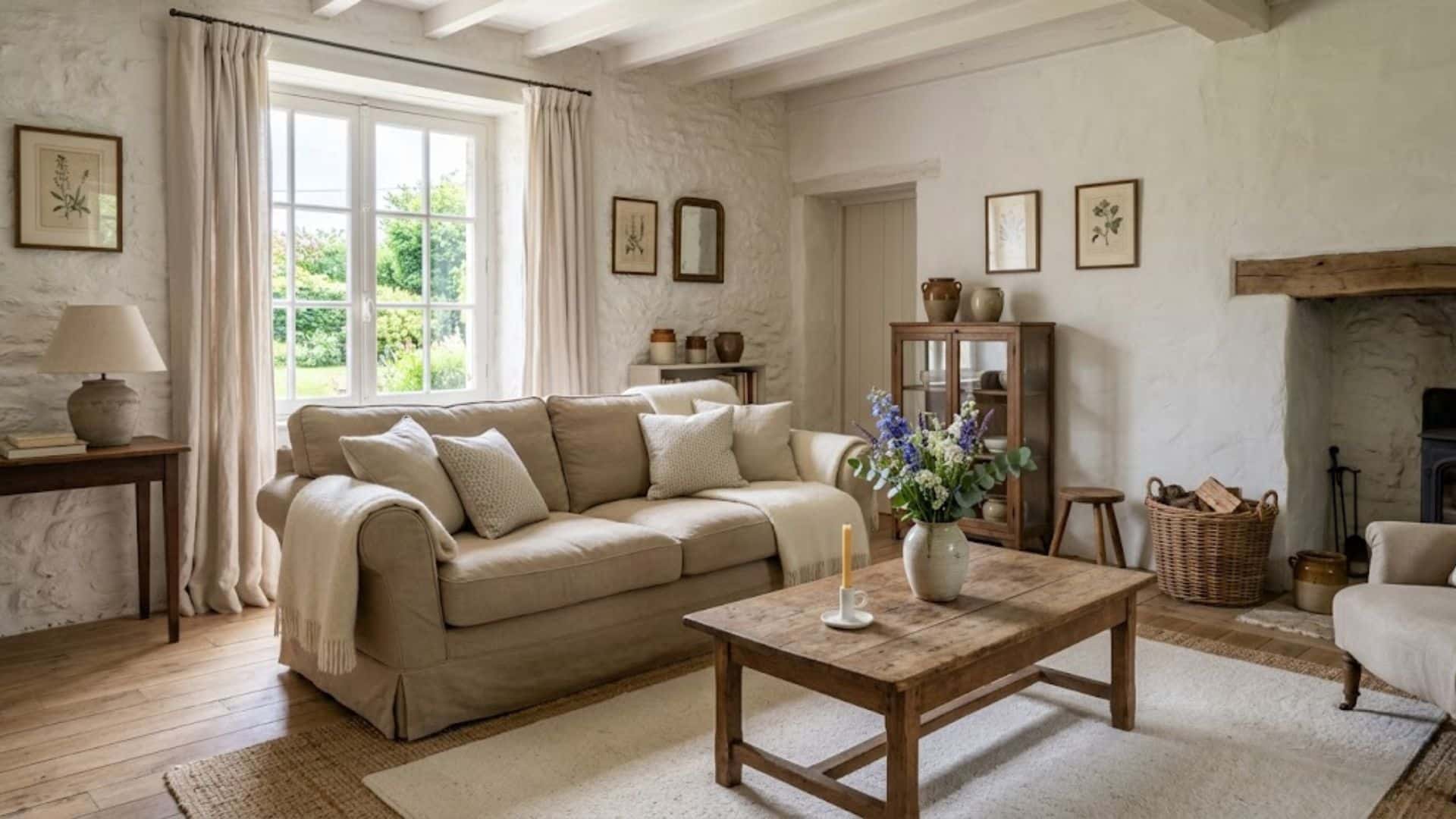
I’ve always loved spaces that feel warm, calm, and a little lived-in. There’s something special about a home that feels comfortable the moment you walk in, without trying too hard.
If that sounds familiar, French country interior design might be exactly what you’re looking for. It brings together vintage-inspired details in a way that feels simple and relaxed; nothing too polished, yet everything thoughtfully put together.
In this blog, I’ll share practical ideas for styling different rooms, choosing furniture, and adding the small details that make the biggest difference.
What Is French Country Interior Design Style?
French country interior design draws its inspiration from the rural farmhouses of Provence and the surrounding French countryside, where spaces are simple, relaxed, and built for everyday living.
The result is a home that feels warm, comfortable, and naturally beautiful, refined enough to feel considered, but never too polished to feel lived-in.
Instead of sharp or modern finishes, this style leans toward soft colors like cream, light gray, pale blue, and gentle green. These shades help rooms feel calm and welcoming without looking dull.
Materials play a big role here. You’ll often see wood, stone, and soft fabrics like linen used throughout the space. Furniture and decor usually have a slightly worn or aged look, which adds charm rather than making things feel old.
Small details like subtle patterns, textured surfaces, and simple shapes help bring everything together. The goal is not perfection, but a home that feels cozy, natural, and easy to enjoy every day.
Core Elements of French Country Home Decor
French country home decor brings together comfort, natural textures, and soft colors to create a relaxed space. These core elements help shape a home that feels warm, simple, and easy to live in.
| Element | Description |
|---|---|
| Soft, Natural Color Palette | Gentle tones like off-white, warm beige, dusty blue, and muted green help create a relaxed and airy feel. |
| Raw and Organic Materials | Materials such as natural wood, stone, cotton, and linen bring texture and a grounded, earthy look to the space. |
| Aged or Patina Finishes | Furniture and decor often feature worn, painted, or lightly distressed finishes that add charm and a sense of history. |
| Classic Printed Textiles | Fabrics with delicate florals, toile, or soft stripes add softness while keeping the design balanced. Toile, a classic French print featuring pastoral or scenic illustrations, is one of the most recognizable textiles in this style. |
| Rustic Architectural Touches | Features like wooden beams, plaster walls, and iron accents introduce structure and subtle rustic appeal. |
| Understated Decorative Pieces | Simple items like pottery, glass jars, framed art, and soft lighting enhance the space without making it feel crowded. |
French Country Interior Design Ideas
French country interior design ideas focus on creating a warm, relaxed, and timeless home. These ideas blend natural materials, soft colors, and simple details to build a space that feels calm and lived-in.
1. Rustic Stone Fireplace Feature
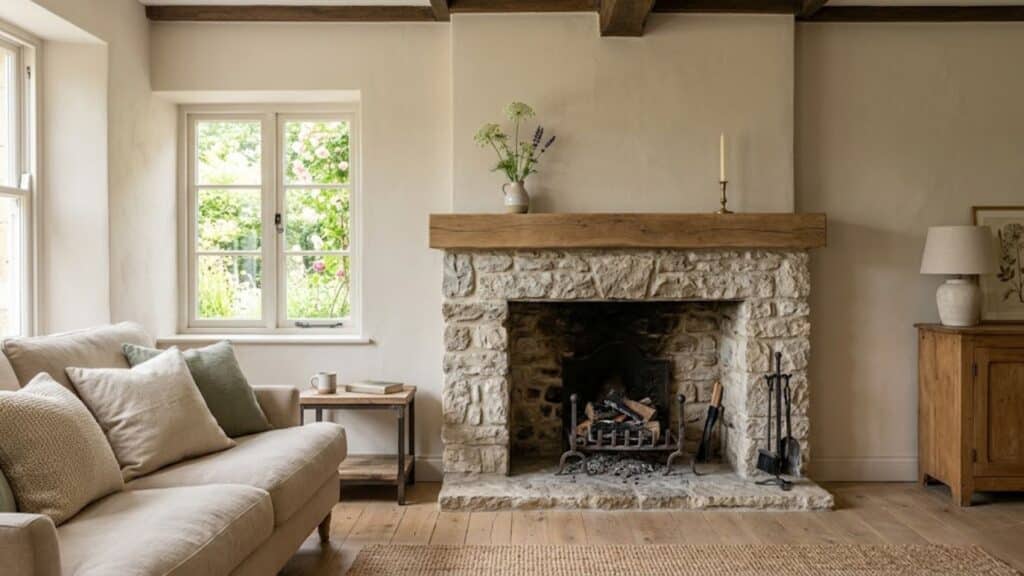
A rustic stone fireplace can easily become the heart of a French country home. The natural texture of stone adds depth without the need for extra decoration.
Light gray, beige, or off-white stones work best to keep the space bright. Even if you don’t have a real fireplace, a stone-look wall can give a similar feel.
Pair it with a simple wooden mantel and a few subtle decor pieces. This setup creates a warm and inviting area where people naturally gather and relax.
2. Distressed Wood Coffee Tables
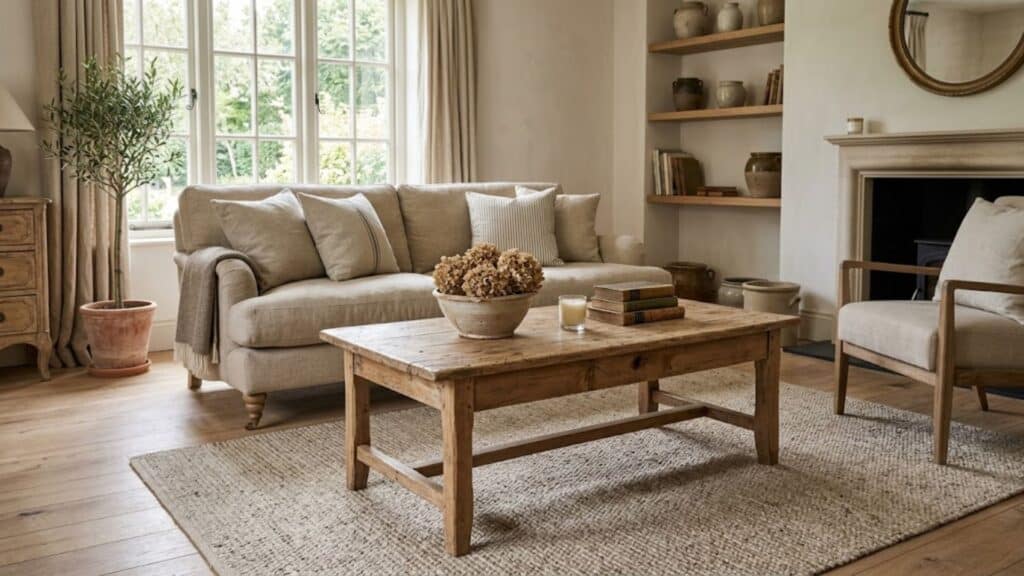
A distressed wood coffee table brings a relaxed and lived-in look to your living room. The slightly worn finish makes it feel natural and not overly polished.
Light to medium wood tones work well with soft sofas and neutral rugs. You don’t need perfect edges or smooth finishes here; small imperfections actually add charm.
This type of table blends easily with different decor styles. It helps create a space that feels comfortable, simple, and easy to use every day.
3. Linen Curtain Panels with Soft Draping
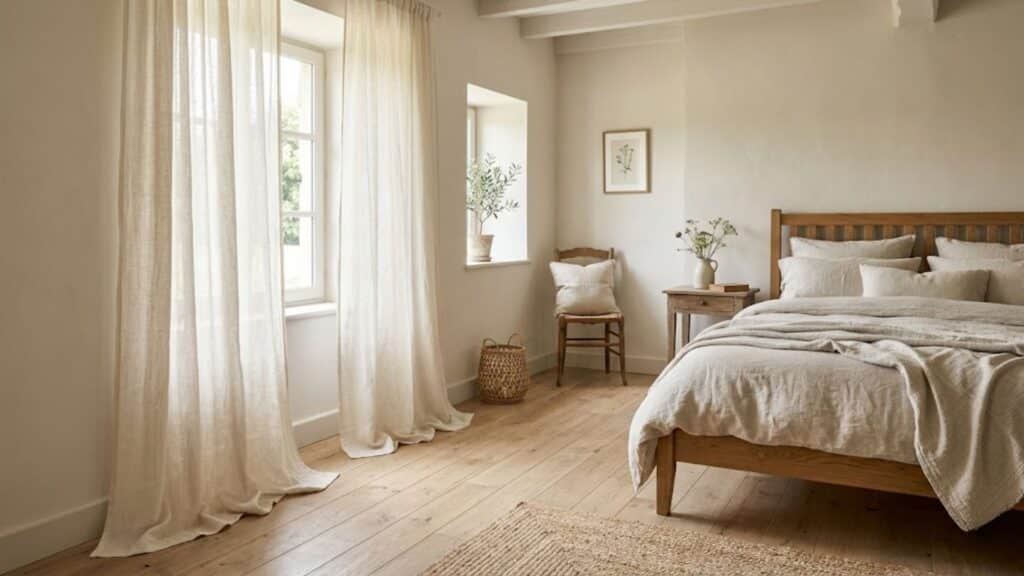
Linen curtains are a great way to add softness without making a room feel heavy. Their light texture allows natural light to pass through, keeping the space calm and airy.
Neutral shades like cream, white, or light beige work best. The slightly relaxed look of linen adds character without trying too hard.
Let the curtains fall naturally to the floor for a more elegant effect. This works well in living rooms and bedrooms where you want a peaceful, comfortable atmosphere.
4. Classic French Bistro Corner
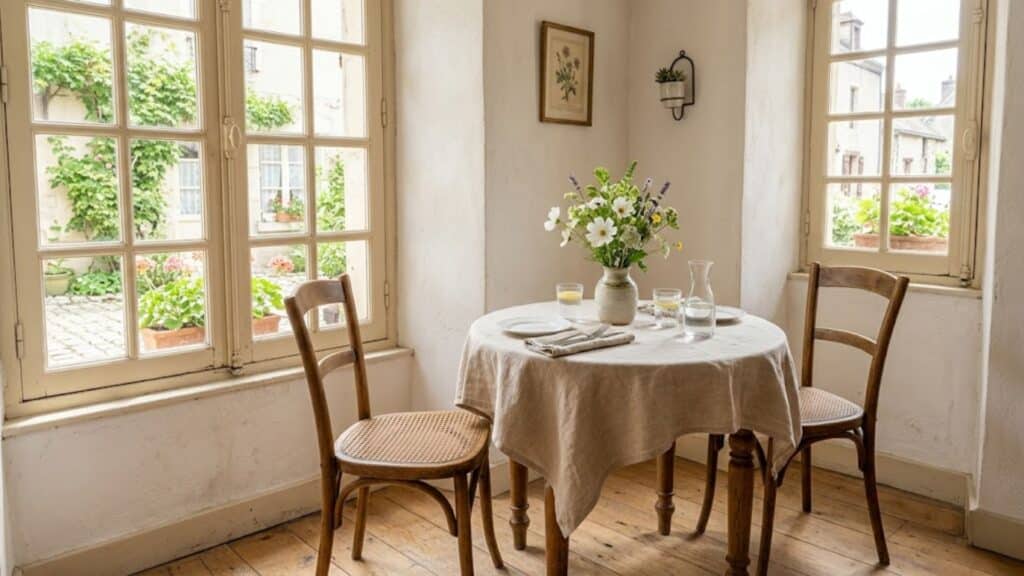
A small bistro-style corner can bring charm to even the smallest space. Use a round table with simple chairs to create a cozy setup.
This works perfectly in kitchens, balconies, or near a window. Keep the styling simple, a small vase, a candle, or a light tablecloth is enough.
It’s perfect for morning coffee or a quiet meal. That one small corner can add a casual yet stylish touch to the whole room.
5. Neutral Layered Rugs
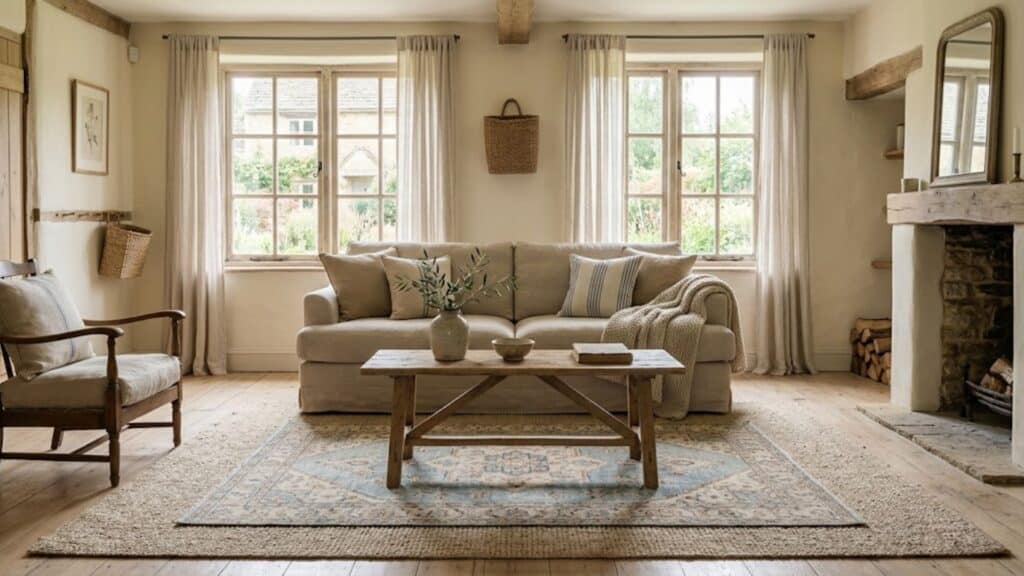
Layering rugs is a simple way to add warmth and depth to a room. Start with a larger neutral rug as the base, then place a smaller patterned rug on top.
Stick to soft colors like beige, gray, or faded blue to keep everything balanced. This method makes the space feel more comfortable without looking crowded.
It works well in living rooms and bedrooms where you want a cozy feel. The layers add visual interest while keeping the overall look calm.
6. Soft Floral Bedding Sets
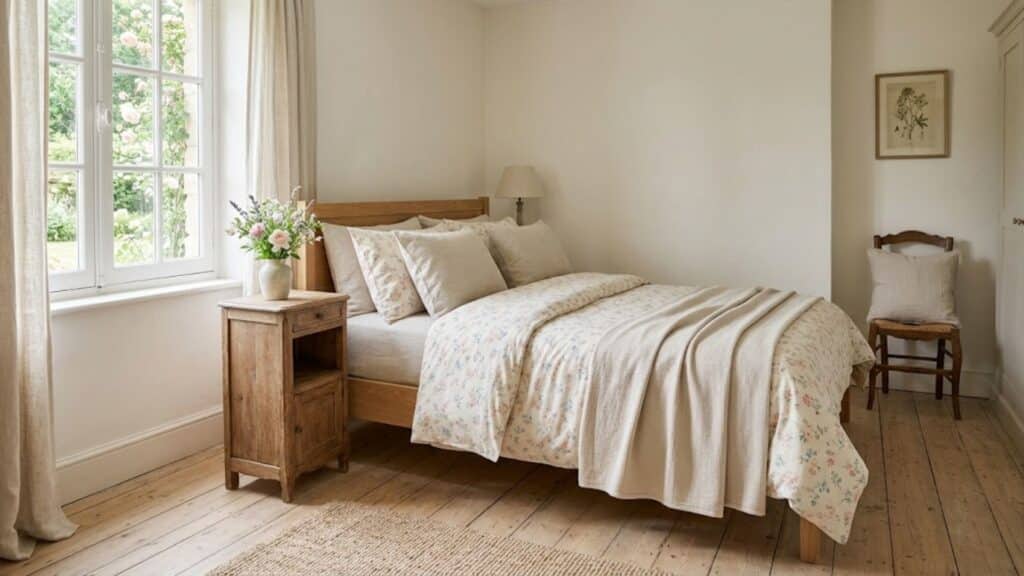
Floral bedding in soft tones can instantly make a bedroom feel calm and inviting. Choose patterns that are not too bold; pale pink, light blue, or soft green all work well.
These gentle designs add a classic touch without making the room look busy. Pair the bedding with plain pillows or light blankets to keep things balanced.
This works especially well when the rest of the room stays simple. The bedding stands out in a soft, natural way without competing with anything around it.
7. Wooden Window Shutters
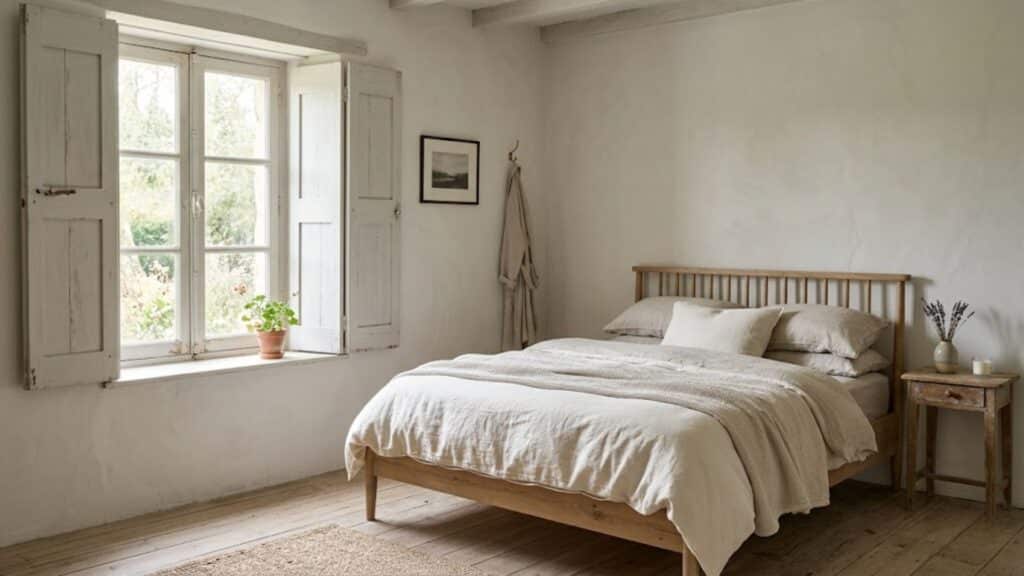
Interior wooden shutters are both practical and stylish. They help control light while adding structure to your windows.
Painted in white or soft neutral tones, they blend well with most French country interiors. Unlike heavy curtains, shutters keep the space feeling clean and open.
This works well in living rooms and bedrooms where you want privacy without losing natural light. They also add a classic touch that holds up in both modern and traditional homes.
8. Copper Kitchen Accents
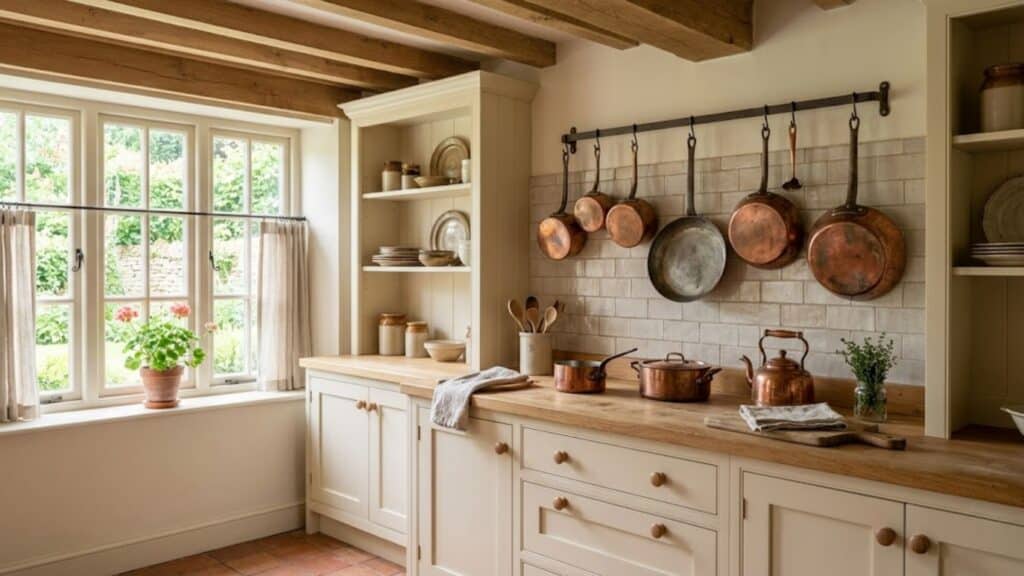
Copper accents can bring warmth and character to your kitchen without needing a full redesign. Items like pots, pans, or small containers add a soft shine that stands out against neutral backgrounds.
You can hang them on a rack or place them on open counters for easy access. The natural tone of copper pairs well with wood and light-colored cabinets.
Over time, copper oxidizes to a deeper, slightly mottled tone, closer to warm bronze than bright orange, which reads as aged and authentic rather than new and decorative.
9. Arched Doorways or Wall Openings
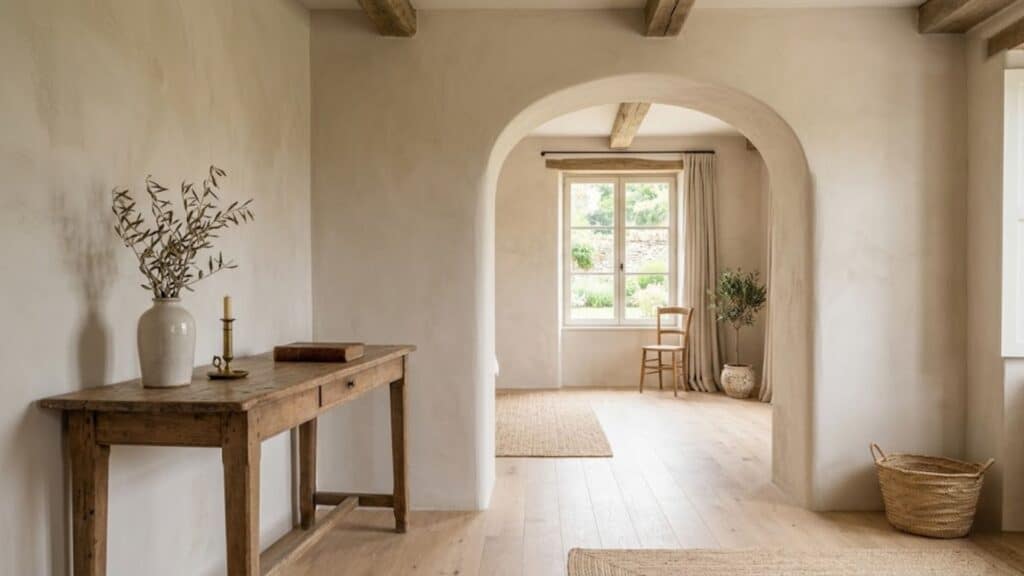
Adding arches instead of straight lines can soften the overall look of your home. Arched doorways or wall openings create a gentle flow between spaces without needing bold decor.
Even small changes, like an arched niche or entryway, can make a big difference. This works especially well in homes with neutral colors and natural materials.
If a full arched doorway isn’t possible, a smaller arched niche built into a wall to display pottery or candles achieves a similar effect with minimal construction.
Even an arched mirror leaning against a wall can introduce the soft curve that makes this detail work.
10. Weathered Wooden Benches
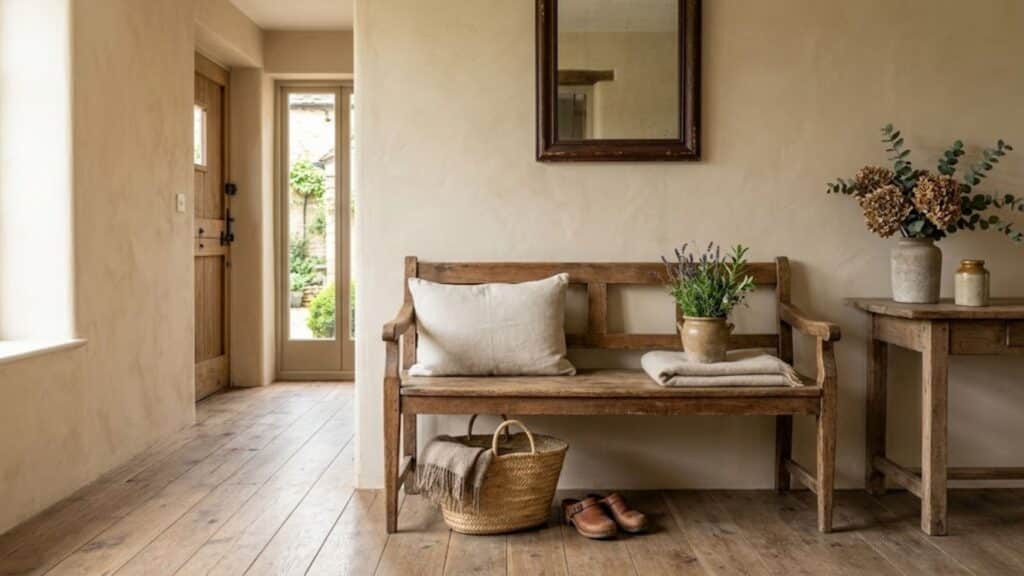
A weathered wooden bench is a simple yet useful addition that fits well in many areas of the home. Place it in an entryway for easy seating, at the end of a bed, or along one side of a dining table.
The slightly worn finish adds a relaxed, lived-in feel that matches French country style naturally. Choose natural wood tones or lightly painted finishes for a softer look.
You can add a thin cushion or keep it bare for a more rustic feel. Either way, it brings quiet character without asking for much attention.
11. Ceramic Pitchers as Decor
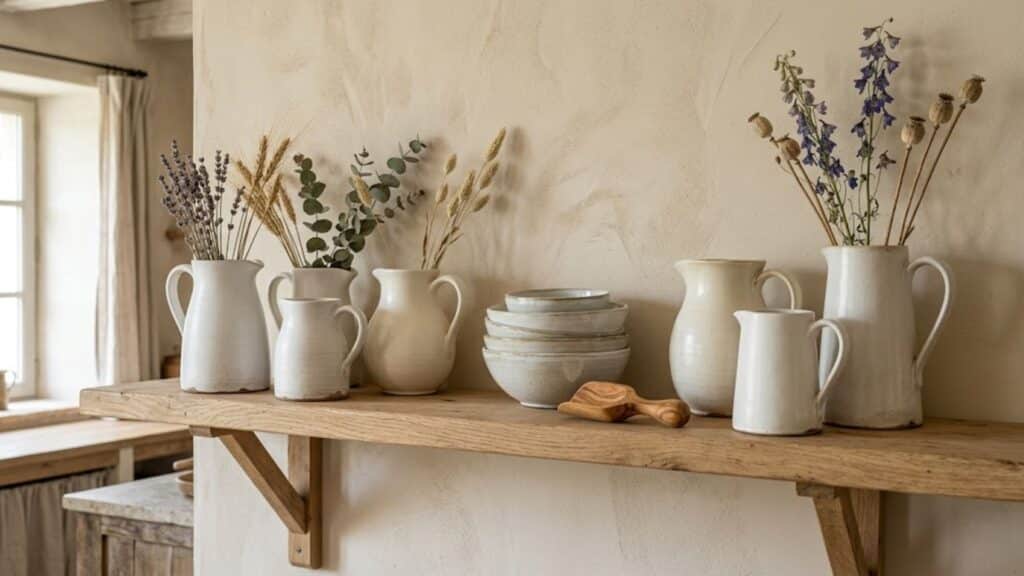
Ceramic pitchers are a small detail that can quietly elevate a space without adding clutter. They look beautiful on open shelves, dining tables, or kitchen counters, especially when grouped with other simple pieces.
Choose neutral shades like white, cream, or soft gray to keep everything balanced. You can use them to hold fresh flowers, dried stems, or even leave them empty for a clean look.
Their simple shape and soft finish blend easily with wood and linen. That makes them one of the easiest styling choices in a French country home.
12. Soft Candlelight Styling
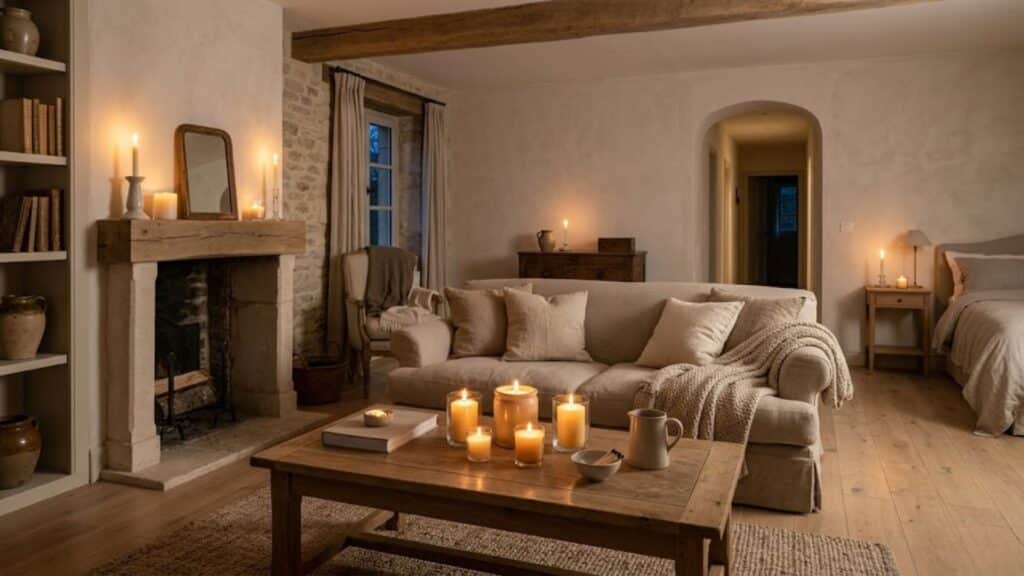
Soft candlelight can instantly make a room feel warm and comfortable without much effort. Place candles in simple holders made of glass, ceramic, or metal to keep the look clean and relaxed.
Arrange them on coffee tables, mantels, or bedside tables for a gentle glow in the evening. Mixing different heights adds visual interest while still keeping things simple.
Stick to neutral colors so they match the rest of your decor easily. It’s a small touch, but it shifts the whole mood of a room.
How to Use Lighting in French Country Interior Design?
Lighting plays an important role in shaping the feel of a French country home. The goal is a soft, layered glow; not the flat brightness of a single overhead light, which flattens texture and kills the warmth that makes this style work.
Start with natural light. Linen or cotton curtains in light neutral tones let sunlight filter through softly without blocking it. This keeps the space feeling open and airy during the day.
For the evening, layer three types of sources: one overhead fixture for general light, table or floor lamps for mid-level warmth, and candles or smaller accent lights at low level. This layering creates depth and makes the room feel alive rather than evenly lit.
For fixtures, wrought iron chandeliers, ceramic table lamps, and wooden wall sconces all fit the style naturally. Avoid chrome or modern metal finishes; they read as too sharp against soft textures and aged wood.
Across all sources, use warm-toned bulbs in the 2700K–3000K range. Cool white bulbs make neutrals look flat and strip the cozy quality that defines this style.
French Country vs. Farmhouse Style: Key Differences
French country and farmhouse styles may look similar at first, but they have distinct feels and details. Understanding the differences helps in choosing the right style for a home.
| Feature | French Country Style | Farmhouse Style |
|---|---|---|
| Overall Feel | Soft, refined, and relaxed | Simple, rustic, and practical |
| Color Palette | Muted tones like cream, blue, sage | Mostly white, black, and neutral |
| Furniture Style | Curved shapes with detailed woodwork | Straight lines with sturdy build |
| Materials | Stone, linen, aged wood | Raw wood, metal, and simple fabrics |
| Decor Approach | Layered and slightly decorative | Minimal and functional |
| Patterns | Floral, toile, soft prints | Checks, stripes, or plain fabrics |
| Lighting | Wrought iron chandeliers or ceramic-based table lamps | Simple metal or industrial lights |
Mistakes to Avoid in French Country Design
Getting the individual elements right is only half the work; how they sit together is what determines whether the room feels authentically French country or just generically rustic.
These are the mistakes most likely to push it in the wrong direction.
- Too many dark or bold colors. Strong or bright tones overpower the soft palette this style depends on. Stick to muted shades to keep the space light and relaxed.
- Heavy rustic elements with nothing to balance them. Too much raw wood or rough decor makes a room feel dense. Pair rustic pieces with lighter textures — linen, soft plaster, pale ceramics — to keep the space breathing.
- Sharp-lined, glossy furniture. Modern finishes break the softness of the overall look. Go for curved shapes and natural or aged finishes instead.
- Mixing too many patterns at once. More than two prints competing in the same room reads as busy. Pick one dominant pattern and let the rest stay plain.
- Ignoring natural materials. Without wood, linen, or stone, the warmth and texture that define this style simply aren’t there.
- Overdecorating. Each piece needs room to register. When every surface is full, nothing stands out and the space loses the calm it’s built around.
Wrapping Up
Creating a home that feels warm and relaxed doesn’t have to be complicated. With French country interior design, the focus is on simple choices that bring comfort and natural beauty into your space.
You don’t need to change everything at once. Start with small updates like soft colors, natural fabrics, or one vintage-style piece. Over time, these changes can transform how your home feels.
The key is to keep things balanced and simple. When you avoid overdoing it and let each piece stand out, the space feels calm and inviting. It’s not about perfection; it’s about creating a home that feels right for you.
Frequently Asked Questions
What Are the Key Elements of French Country Interior Design?
The key elements are soft, muted colors, natural materials like linen, wood, and stone, aged or distressed finishes, and classic textiles such as toile and soft florals. Together, these create a warm, relaxed, and lived-in feel.
What Colors Are Used in French Country Interior Design?
French country interiors use soft, faded tones inspired by Provence — pale blues, muted greens, warm creams, and light grays. These colors keep the space feeling calm and airy without looking flat or overly neutral.
How Is French Country Different from Farmhouse Style?
French country leans toward curved furniture, toile fabrics, and a more refined, layered look. Farmhouse style is simpler and more utilitarian, favoring straight lines, raw wood, and a mostly white-and-neutral palette.
Can French Country Interior Design Work in A Modern Home?
Yes. You don’t need old architecture to pull it off. Focus on soft colors, natural textures, and a few vintage-inspired pieces. Even one or two elements, like linen curtains or a distressed wood table, can shift the feel noticeably.